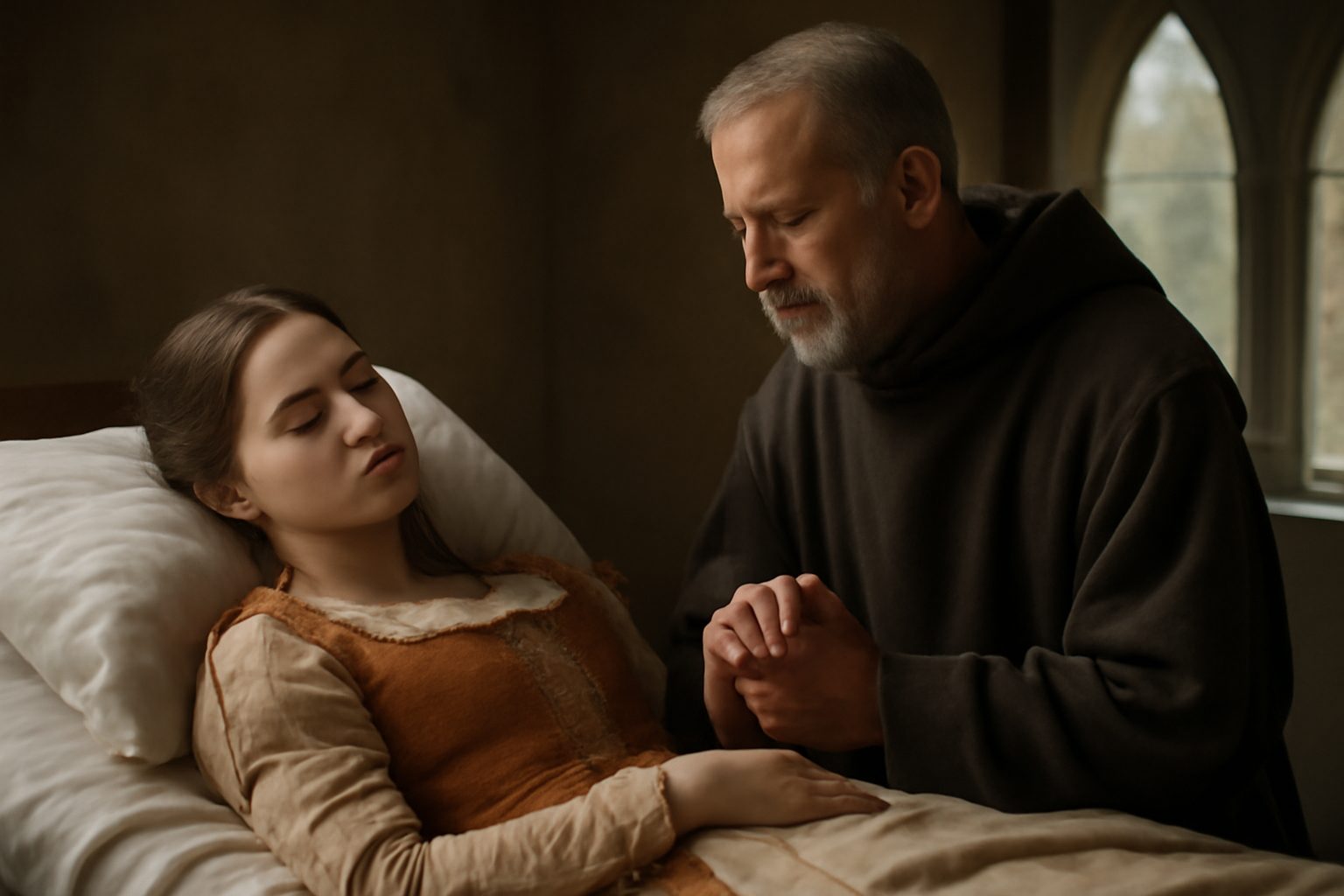
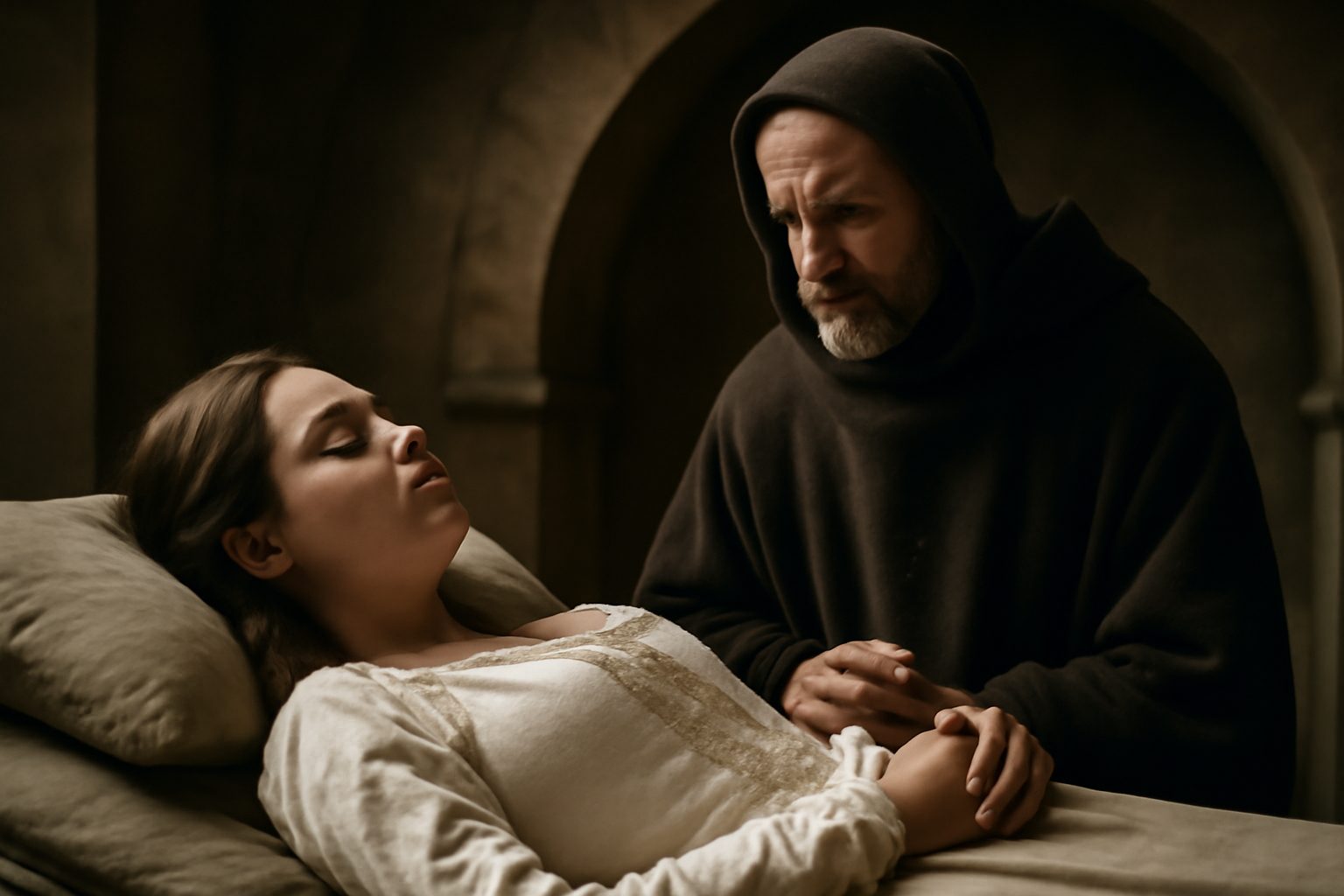
In Act 4, Scene 1 of Romeo and Juliet, Juliet has come to Friar Laurence in desperation after her father insists she marry Paris. Overwhelmed by the pressure and betrayal, she speaks these words, expressing how her suffering was already unbearable before others added their cruelty. The line captures her despair as she seeks a way to escape her impossible situation.
Juliet: "For it was bad enough before their spite."
In modern day english, we would say:
Things were already bad enough without their cruelty making it worse.
Frequently Asked Questions
Why does Juliet feel that things were bad enough before the spite of others?
Juliet feels this way because she is already suffering from her love for Romeo and the feud between their families, and now others' actions are making her situation even worse.
Connections to other verses:
Connections to "For it was bad enough before their spite."
The line "For it was bad enough before their spite." reflects Juliet's distress over the worsening of her already difficult situation due to others' malice. This connects thematically and emotionally to several other verses in the scene.
Expressions of Desperation and Grief
Juliet's sense of being overwhelmed by external pressures is echoed in "Come weep with me; past hope, past cure, past help", where she articulates her despair. Similarly, her readiness to embrace extreme measures is evident in "Be not so long to speak; I long to die", showing how "their spite" has pushed her toward thoughts of death.
Conflict with Family and Society
The interference and control exerted by others, implied in "their spite", are directly referenced in "My father Capulet will have it so" and "On Thursday next be married to this county", highlighting the forced marriage that exacerbates her plight. Paris's obliviousness to her true feelings in "Happily met, my lady and my wife!" further emphasizes the societal pressures contributing to her distress.
Seeking Solutions Amidst Adversity
In response to these challenges, Juliet turns to Friar Laurence for help, as seen in "Unless thou tell me how I may prevent it". The Friar's plan, involving a simulated death described in "And in this borrow'd likeness of shrunk death", is a direct attempt to counteract the "spite" she endures, offering a precarious hope for escape.