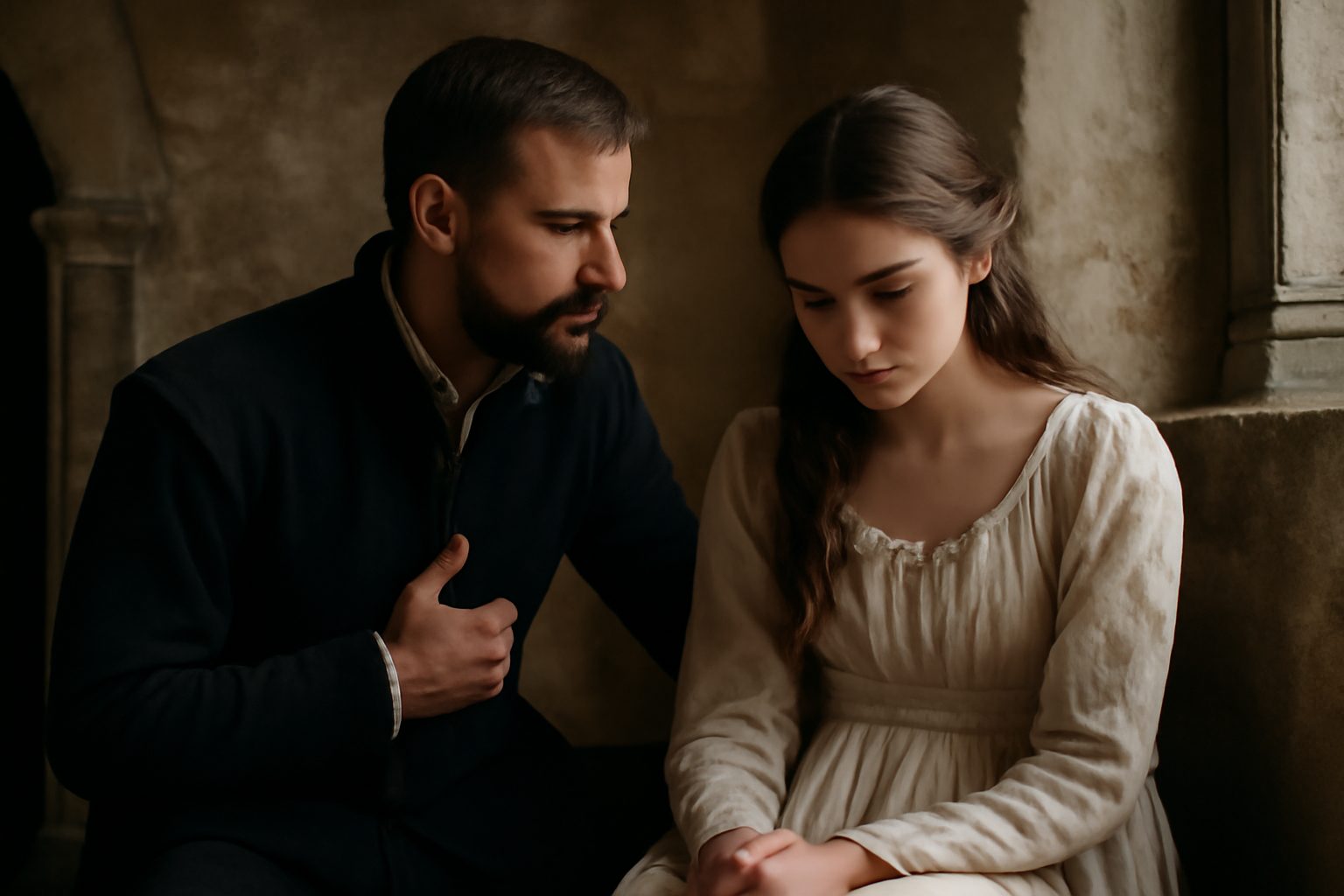
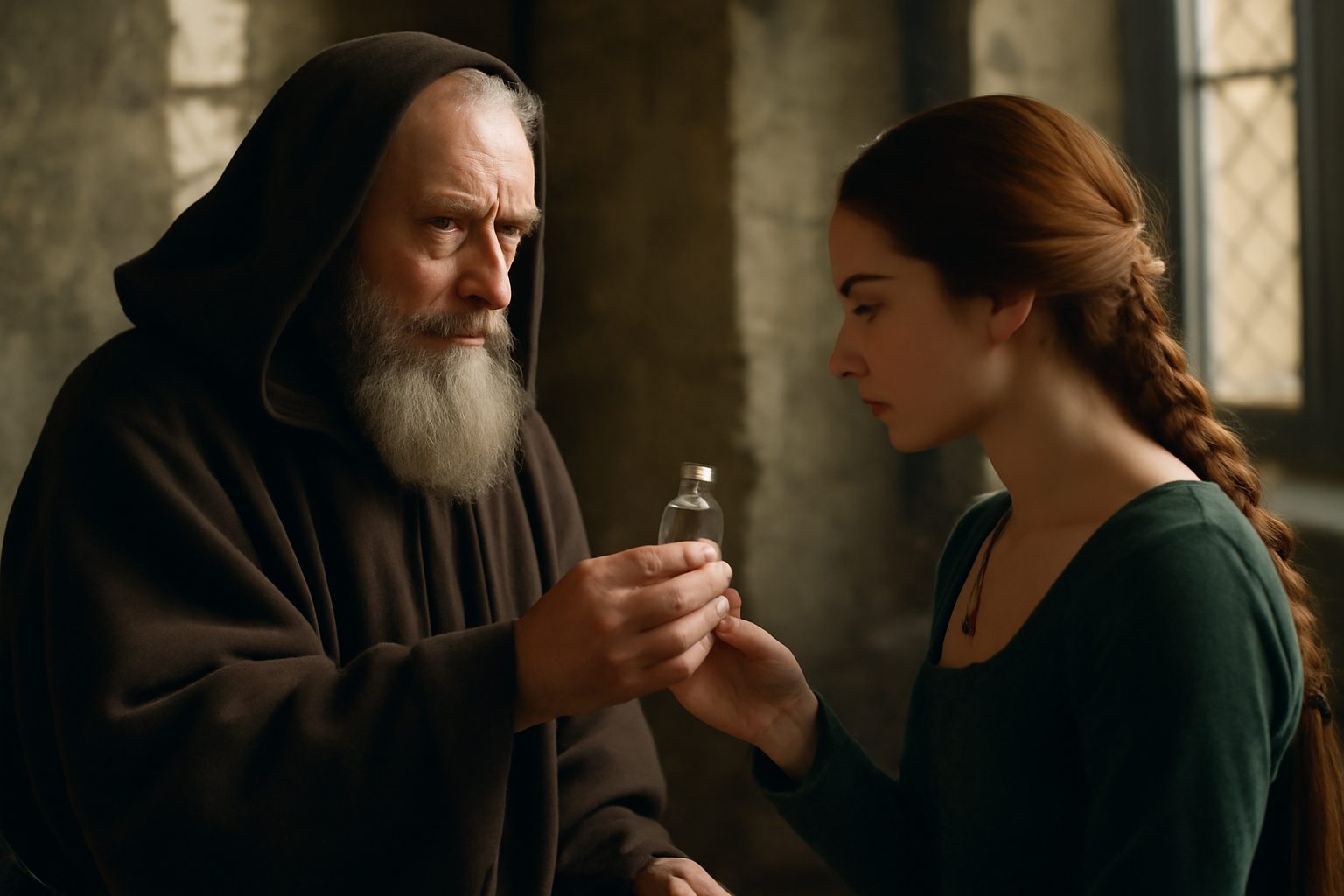
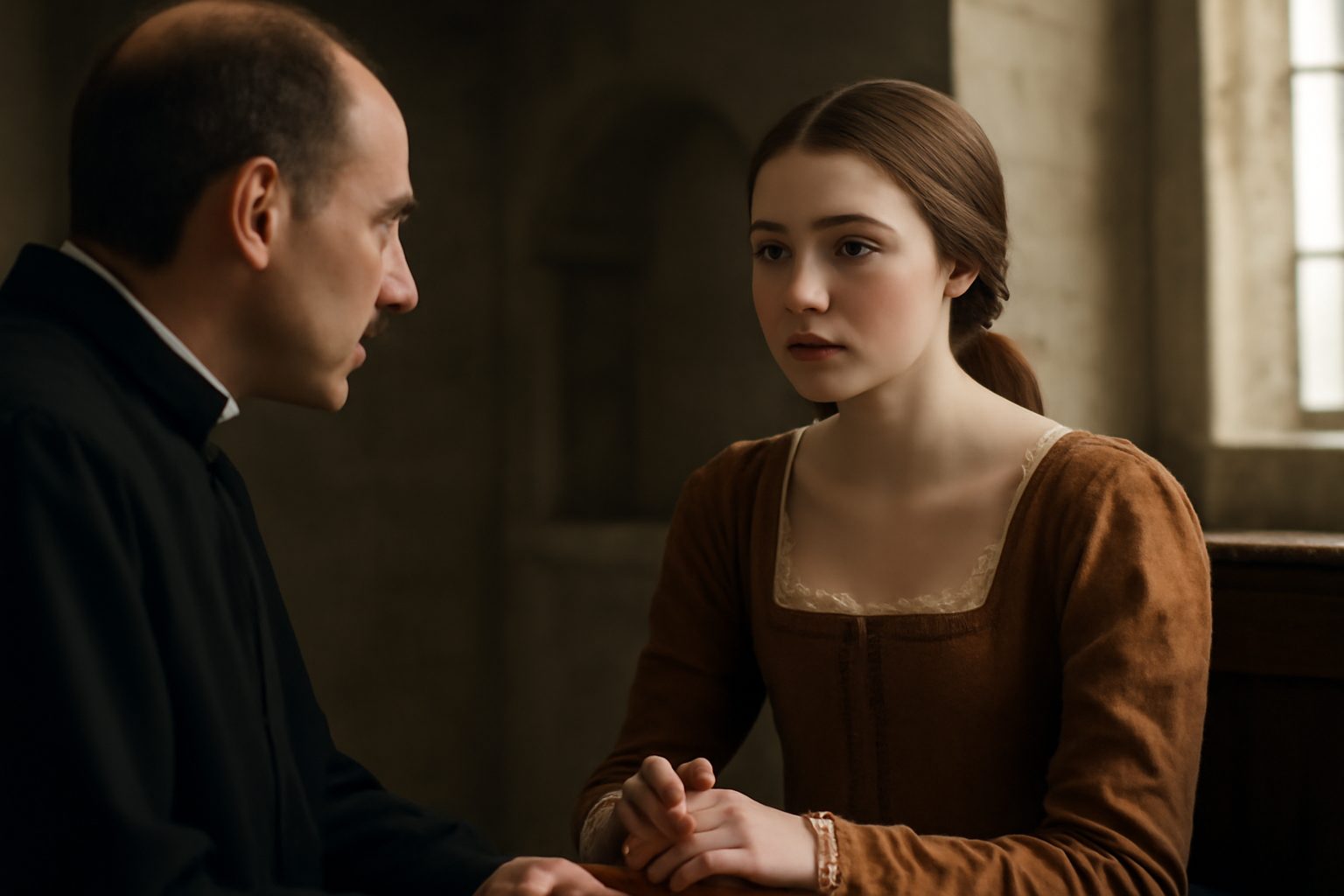
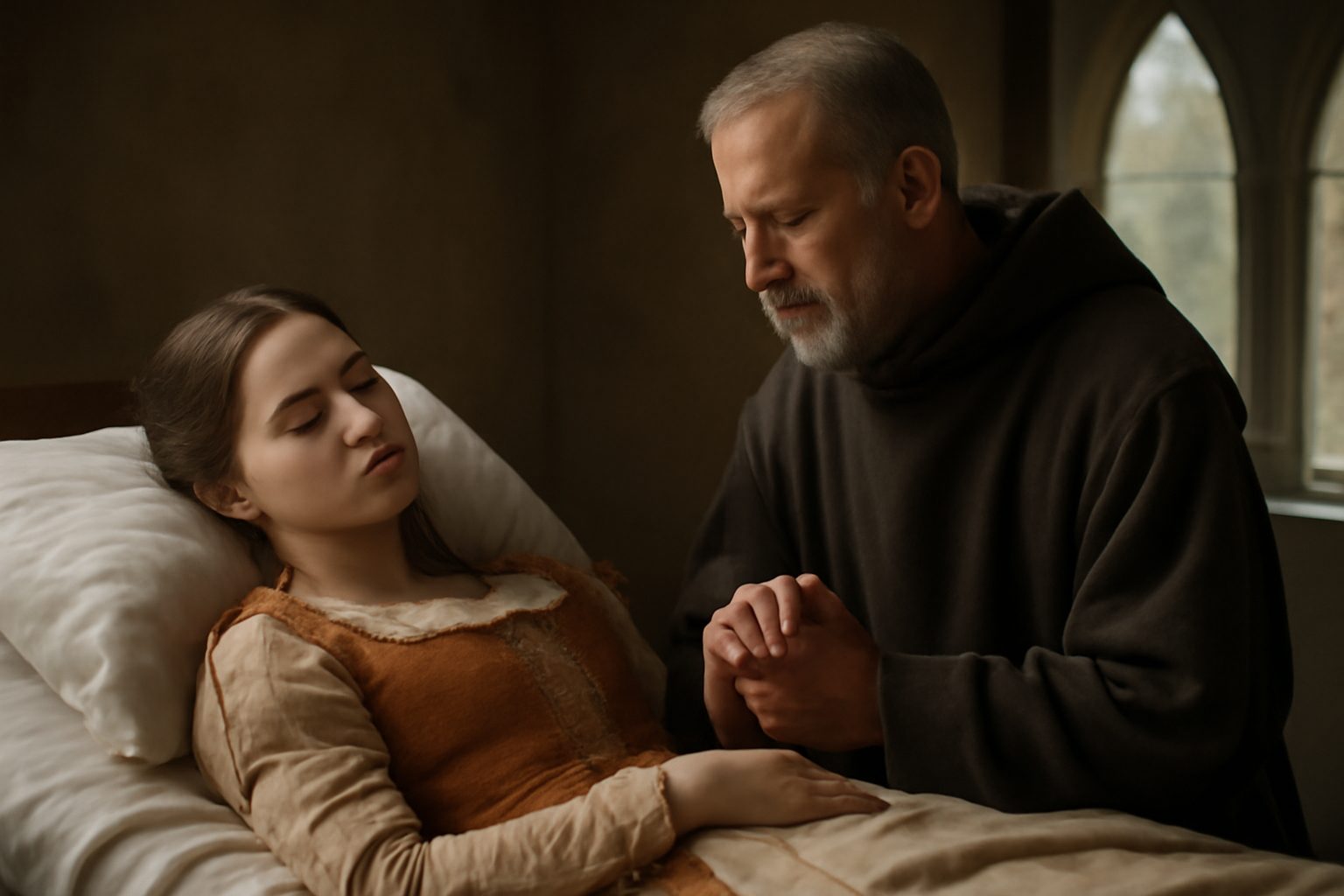
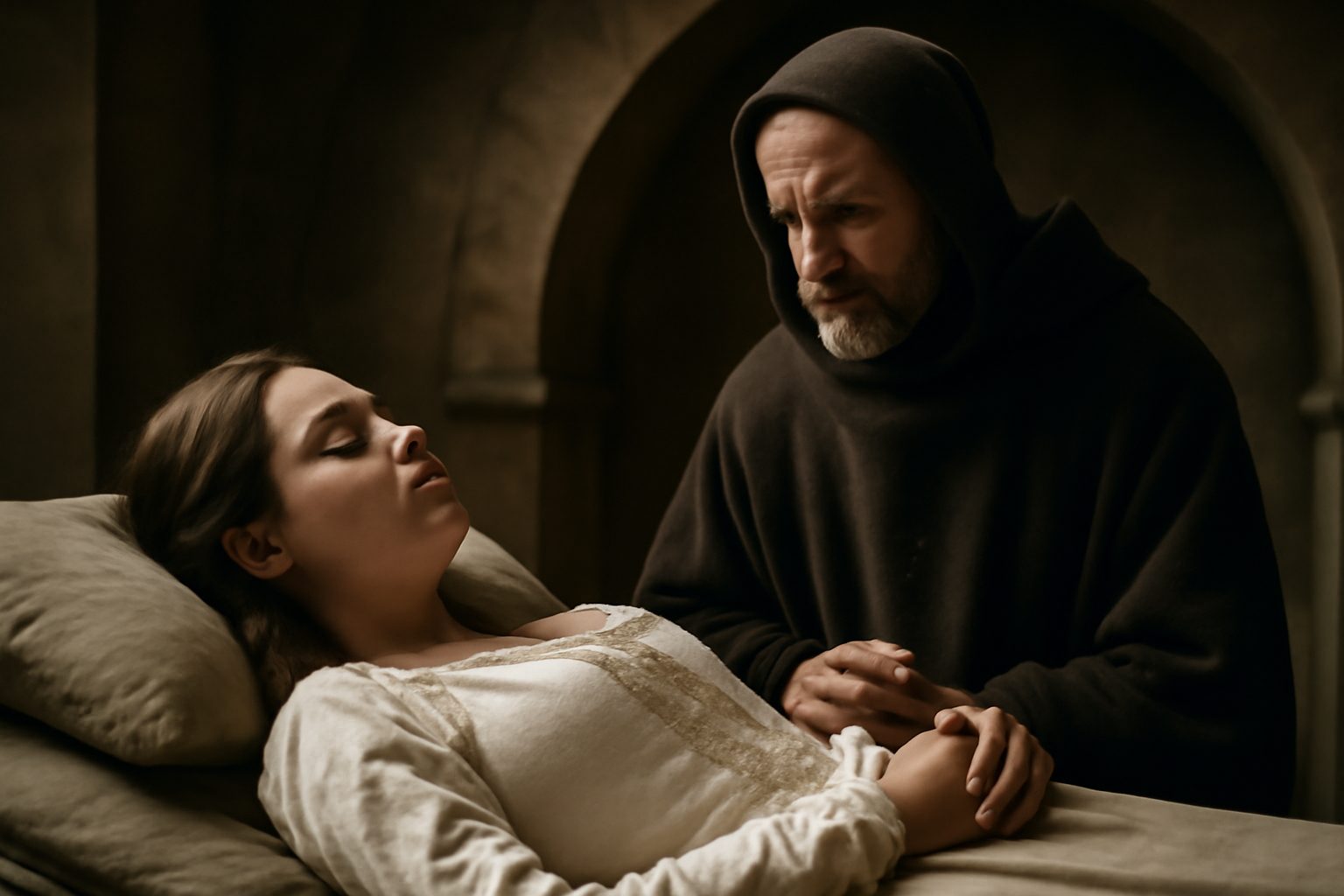
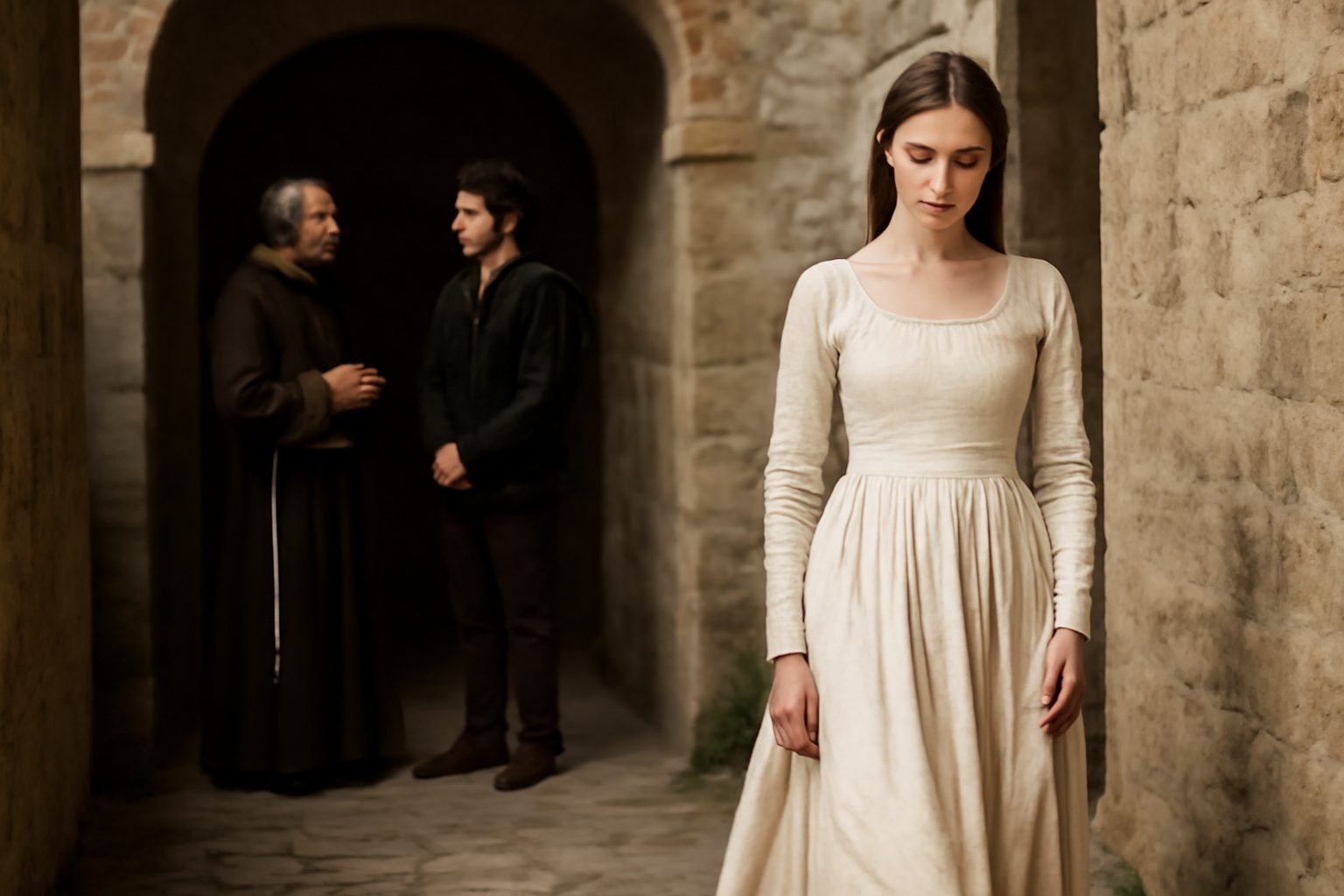
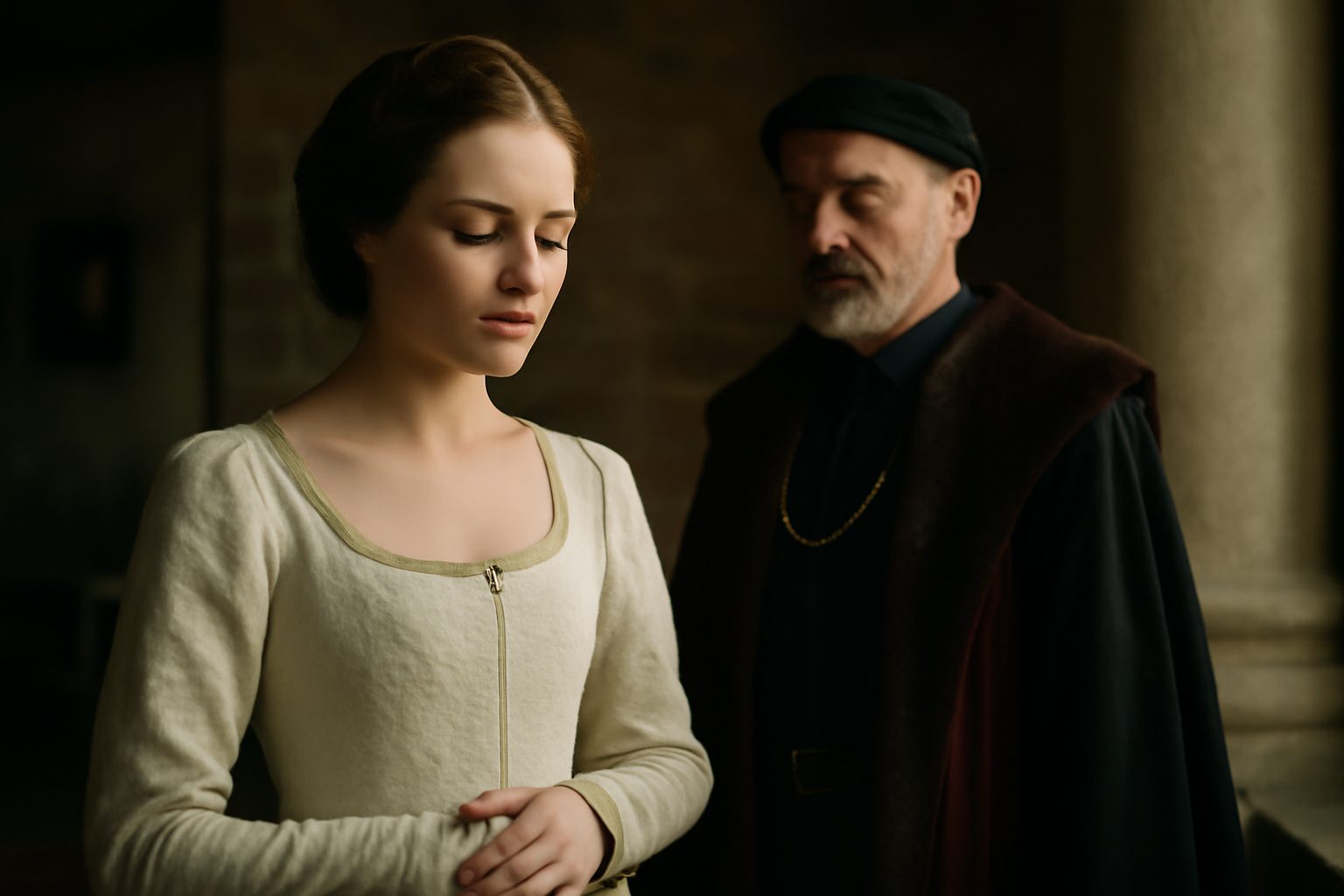
In Act 4 Scene 1 of Romeo and Juliet, Juliet visits Friar Laurence in desperation after her father, Lord Capulet, insists she marry Paris. The Friar, aware of her secret marriage to Romeo, devises a risky plan to reunite the lovers, but this line underscores the urgency of her forced betrothal. It highlights the mounting pressure on Juliet as her family prepares for the wedding, leaving her with few options.
Friar Laurence: "On Thursday next be married to this county."
In modern day english, we would say:
Next Thursday, you will marry Paris.
Frequently Asked Questions
Who is supposed to get married on Thursday according to Friar Laurence?
Juliet is supposed to marry Paris on Thursday.
Connections to other verses:
Connections to "On Thursday next be married to this county"
The verse "On Thursday next be married to this county" serves as the central conflict of Act 4 Scene 1, triggering Juliet's desperate actions and Friar Laurence's intervention. This forced marriage decree connects thematically and dramatically to multiple other verses in the scene.
Immediate Context and Resistance
Paris delivers this line to Juliet, confirming her father's arrangement. Juliet's response in "Tell me not, friar, that thou hear'st of this" shows her distress and refusal to accept this fate. Her desperation escalates to suicidal determination in "Be not so long to speak; I long to die", demonstrating she would rather die than betray Romeo.
Friar Laurence's Alternative Plan
The forced marriage timeline directly motivates Friar Laurence's potion scheme. His statement in "go home, be merry, give consent" refers to pretending to accept Thursday's wedding while actually preparing for the fake death. The plan's details connect to the marriage deadline through "To marry Paris: Wednesday is to-morrow", emphasizing the urgency of their scheme.
Juliet's Resolve
Juliet's willingness to undergo the potion's effects stems directly from avoiding this marriage, as shown when she declares "O, bid me leap, rather than marry Paris". Her commitment to the plan in "Give me, give me! O, tell not me of fear!" demonstrates how the marriage threat drives her to embrace extreme solutions.
Dramatic Irony
The verse creates dramatic irony when Paris says "Happily met, my lady and my wife!", unaware Juliet is already married and plotting to avoid this union. The audience knows what Paris doesn't - that this proposed marriage will never occur.