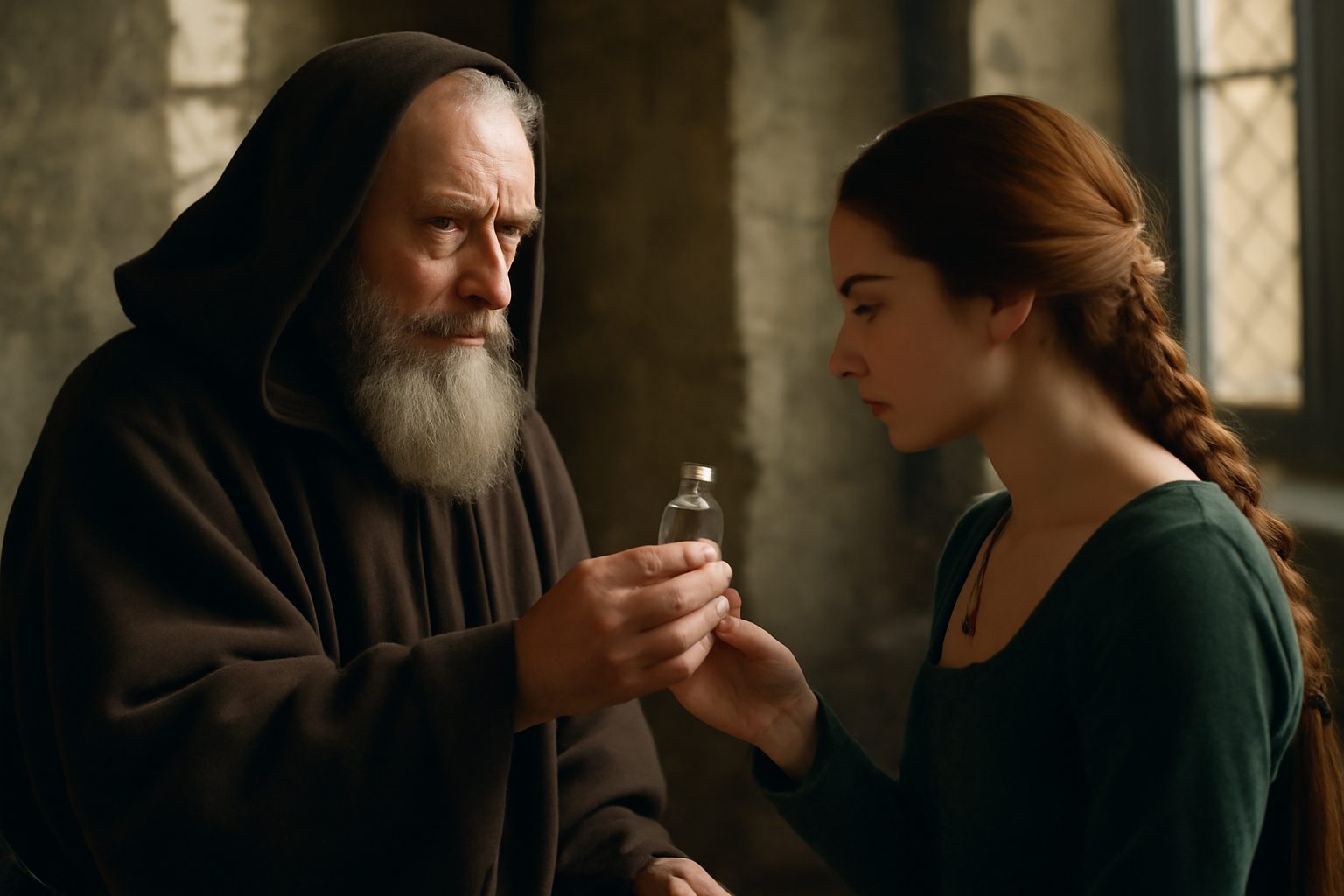
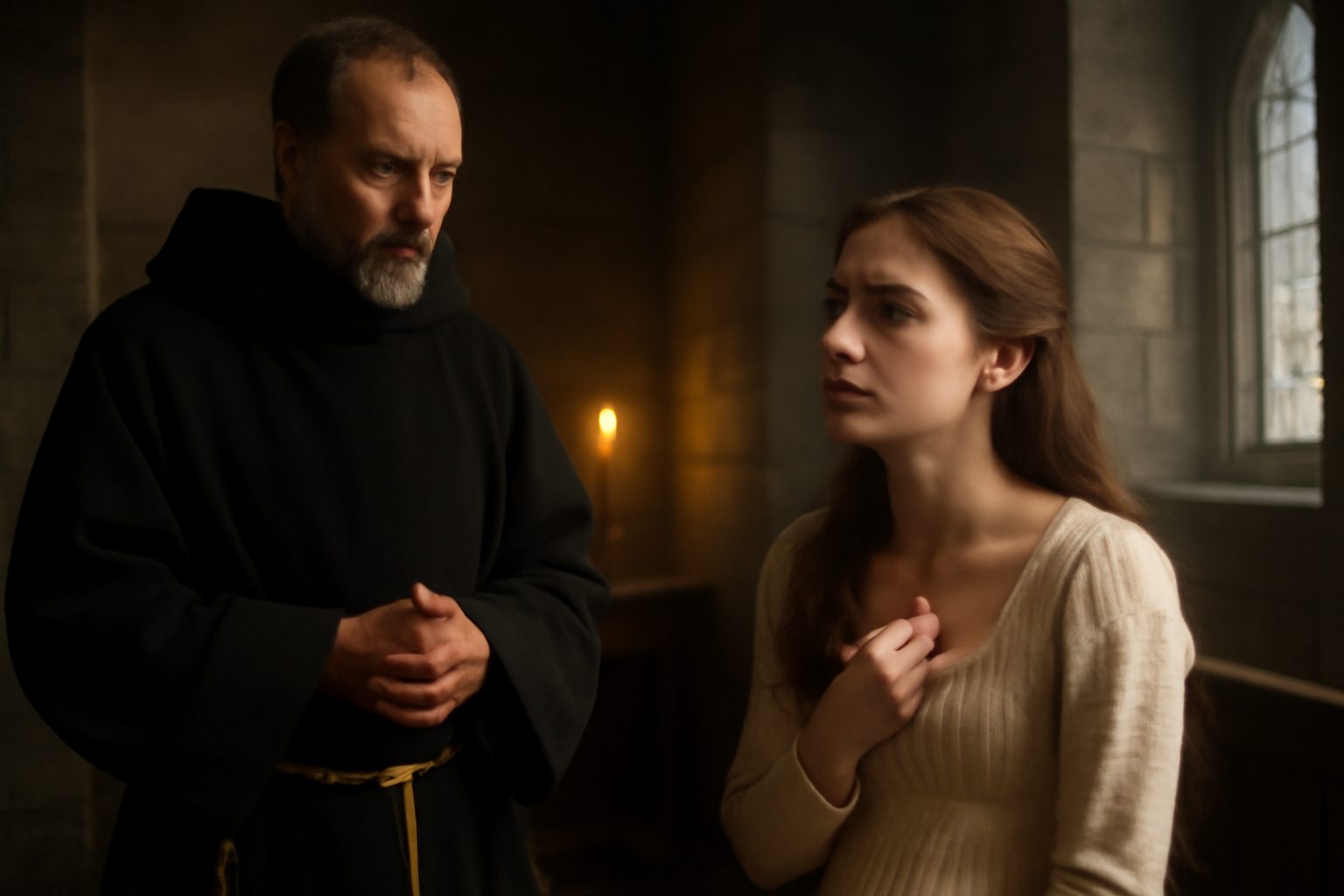
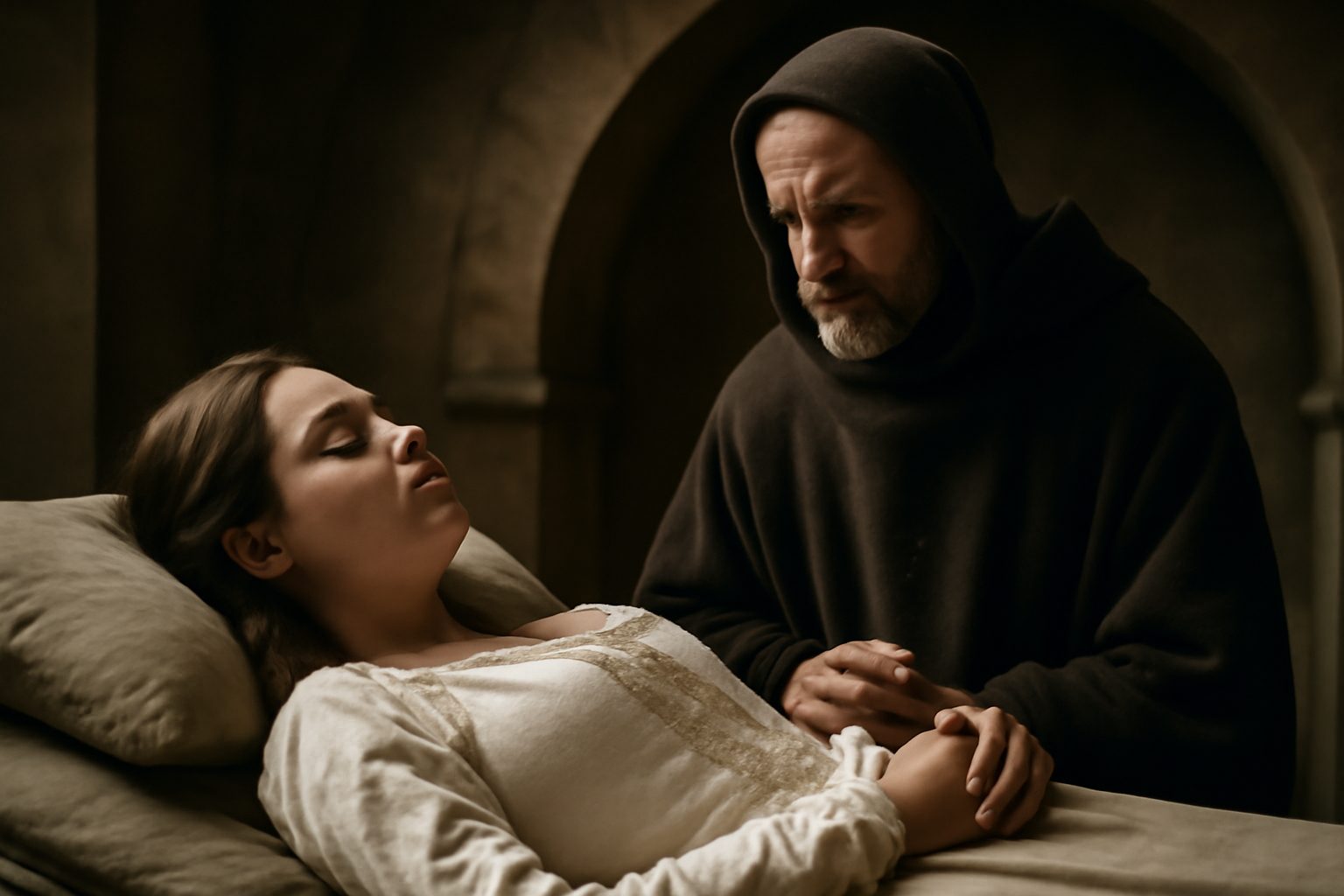
In Act 4, Scene 1 of Romeo and Juliet, Juliet is desperate to avoid marrying Paris after secretly wedding Romeo. Speaking to Friar Laurence, she expresses her terror at the prospect and declares she would rather endure unimaginable horrors than betray her true love. This line reveals the depth of her despair as she imagines lying among the dead to escape her fate.
Juliet: "And hide me with a dead man in his shroud;"
In modern day english, we would say:
Let me hide in a tomb with a dead body wrapped in its burial cloth.
Frequently Asked Questions
What does Juliet want to do with a dead man's shroud?
Juliet wants to hide herself in a dead man's shroud to escape her situation.
Connections to other verses:
Connections to "And hide me with a dead man in his shroud;"
This line, spoken by Juliet in desperation, reflects her willingness to embrace death-like scenarios to avoid marrying Paris. It connects thematically and contextually with several other verses in the scene:
Desperation and Imagery of Death
- O, bid me leap, rather than marry Paris – Juliet expresses a preference for suicide over the marriage, aligning with the morbid imagery in the target verse.
- Or bid me go into a new-made grave – Another example of Juliet invoking burial imagery to convey her despair.
- Or shut me nightly in a charnel-house – Further emphasizes her willingness to endure macabre settings.
- O'er-cover'd quite with dead men's rattling bones – Continues the theme of surrounding herself with death to escape her plight.
Friar Laurence's Plan and Its Consequences
- And in this borrow'd likeness of shrunk death – Refers to the feigned death Juliet will undertake, directly tying to the shroud imagery.
- No warmth, no breath, shall testify thou livest – Describes the physical state Juliet will enter, reinforcing the deception of death.
- Thou shalt be borne to that same ancient vault – Foretells Juliet’s placement in the Capulet tomb, linking to the "dead man in his shroud" concept.
Juliet's Resolve and Emotional State
- Thou hast the strength of will to slay thyself – Friar Laurence acknowledges Juliet’s desperation, which fuels her acceptance of extreme measures.
- And I will do it without fear or doubt – Juliet’s declaration of courage in facing the plan, including the shroud-like deception.
- Be not so long to speak; I long to die – Highlights her readiness for death or its semblance, contextualizing the shroud reference.