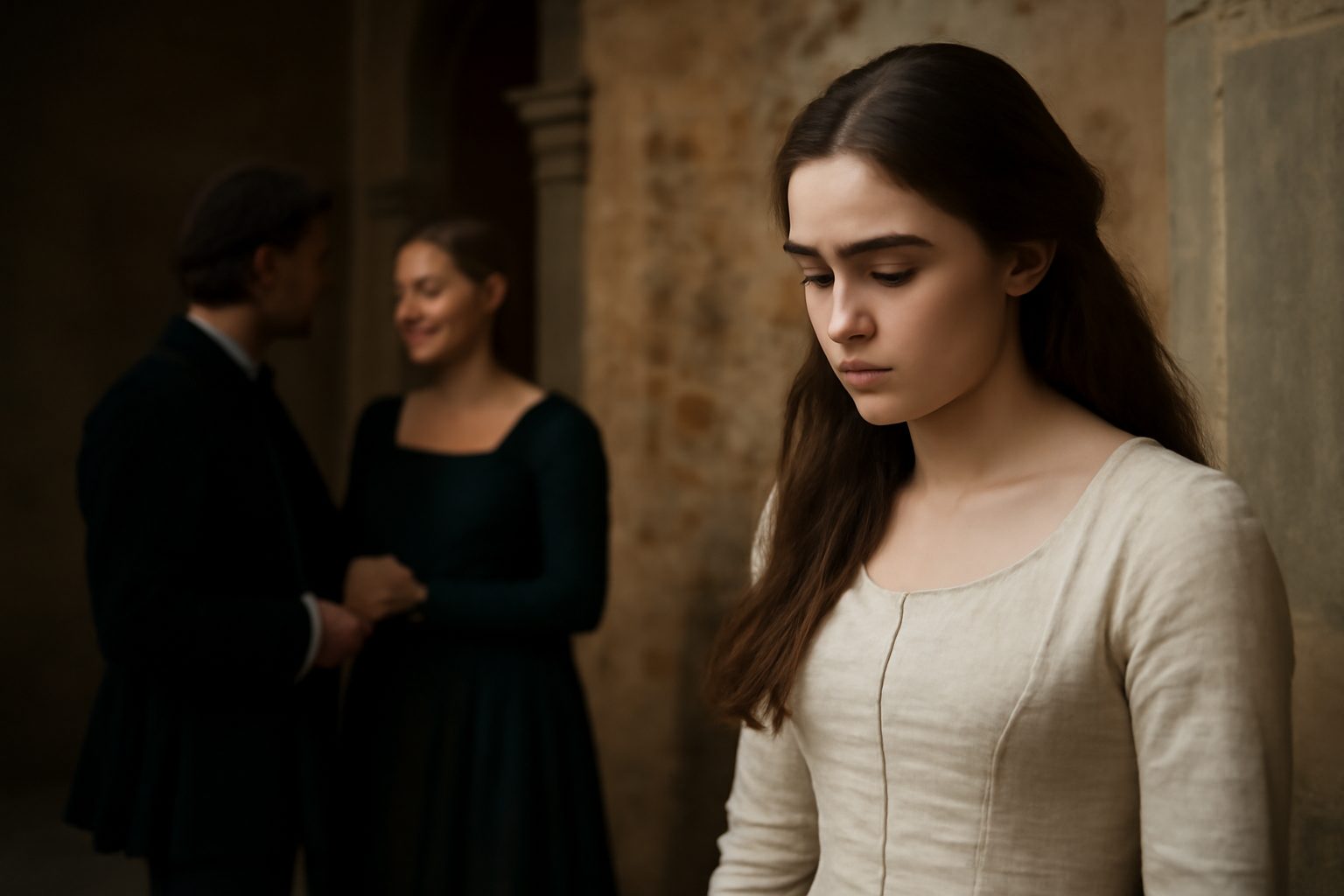
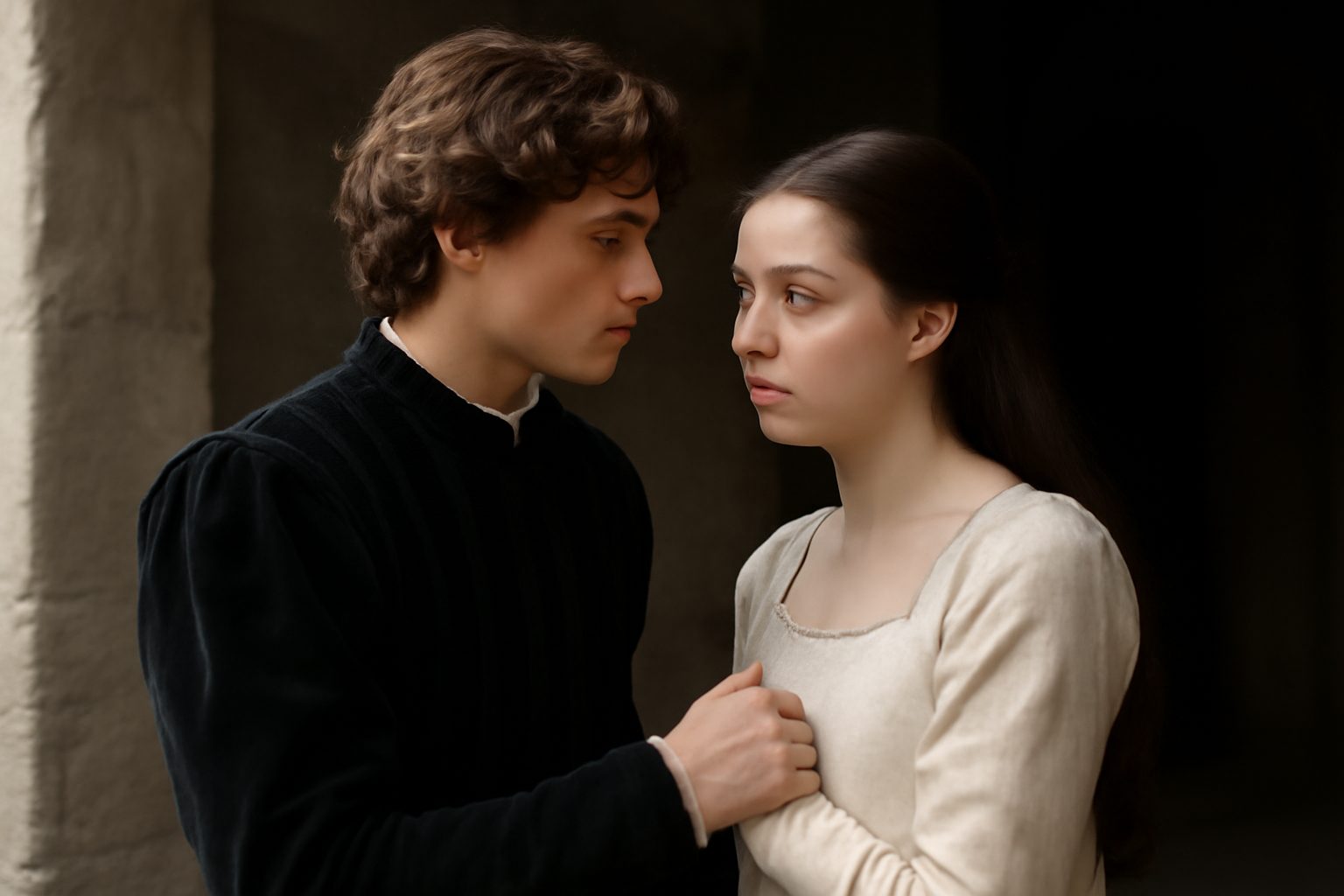
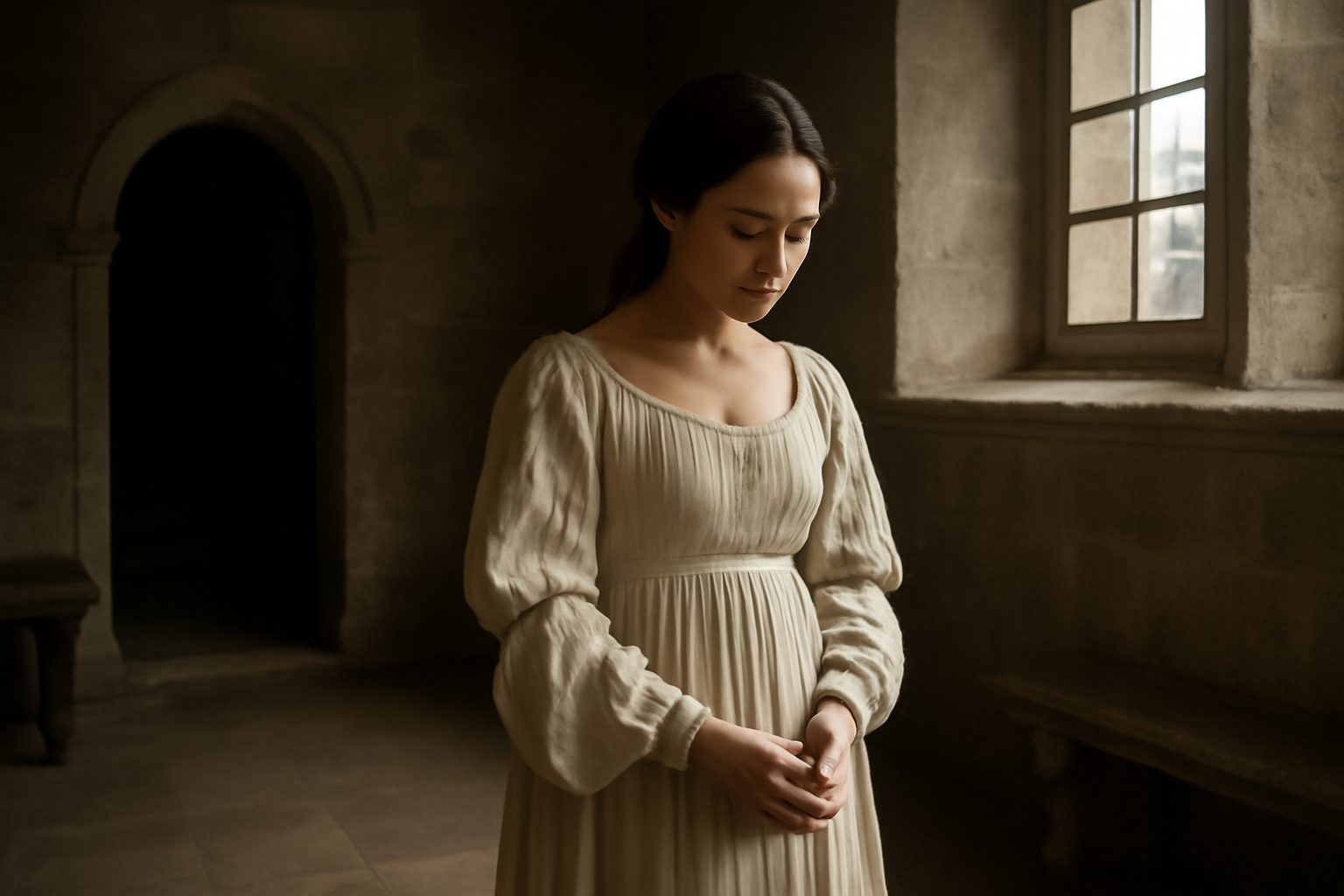
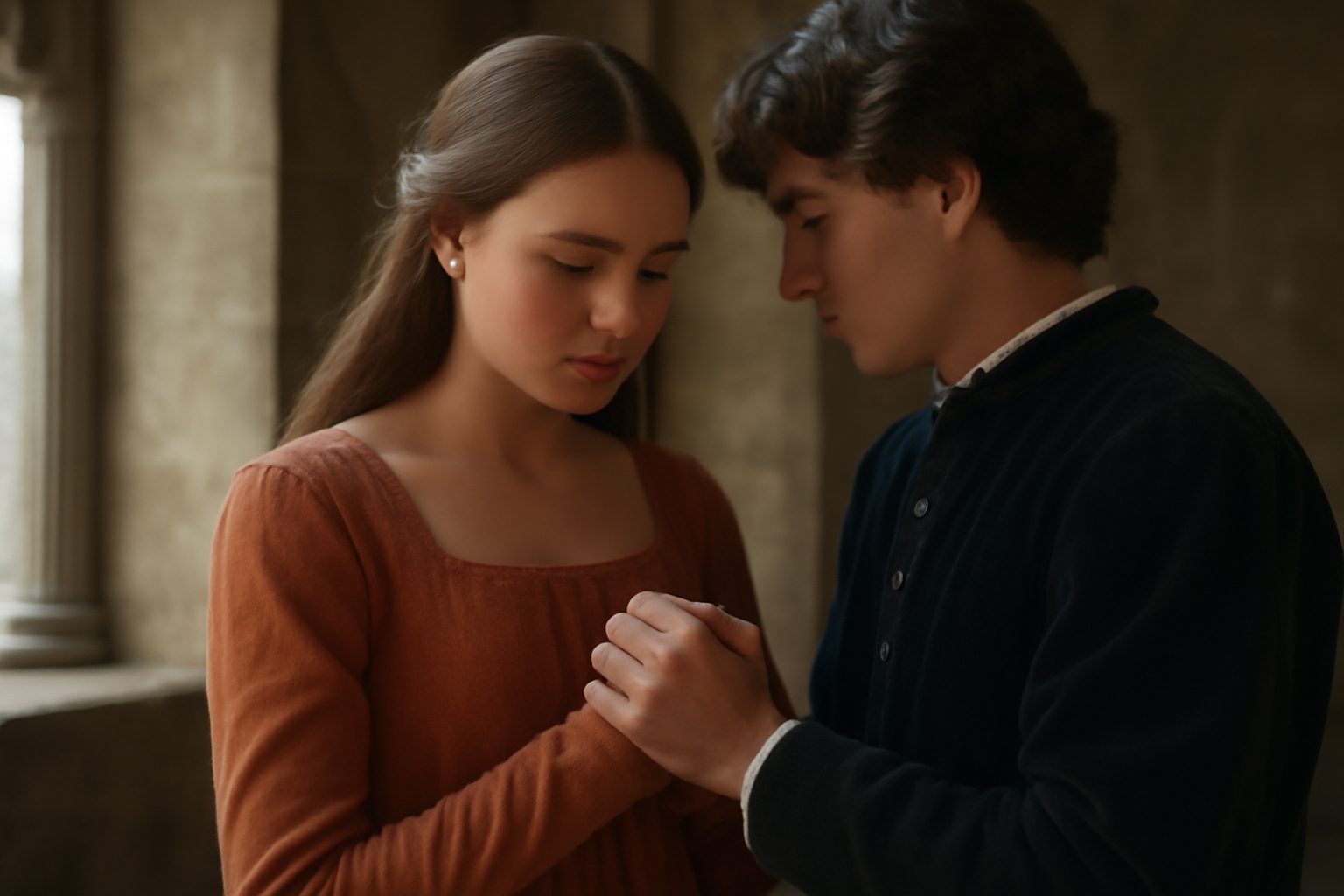
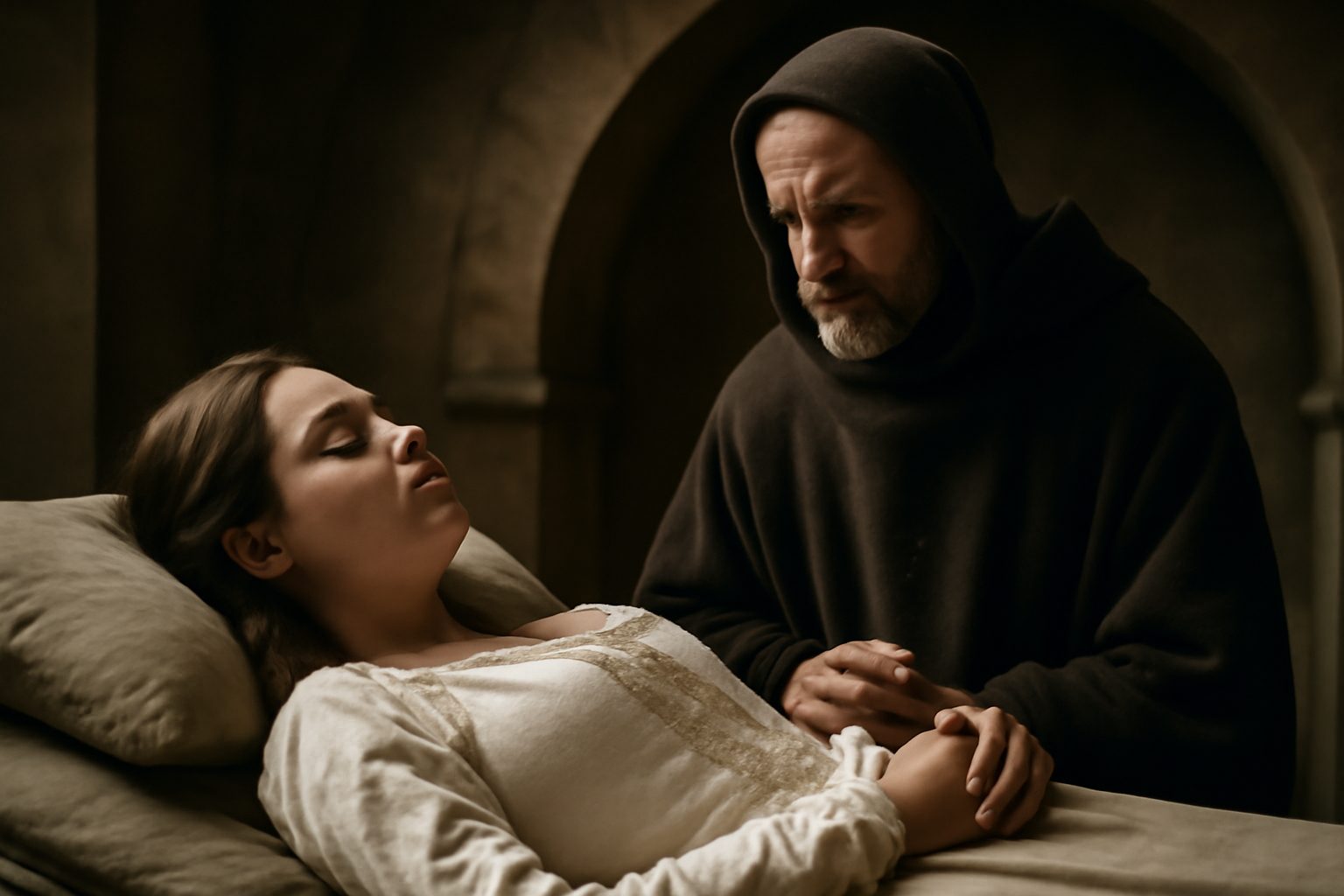
In Act 4, Scene 1 of Romeo and Juliet, Juliet is desperate to avoid marrying Paris after secretly wedding Romeo. Speaking to Friar Laurence, she expresses her willingness to face extreme danger rather than betray her vows. This line reveals the depth of her despair as she contemplates even death as a preferable alternative.
Juliet: "Or bid me go into a new-made grave"
In modern day english, we would say:
Tell me to go lie in a freshly dug grave instead.
Frequently Asked Questions
What does Juliet say she would rather do than marry Paris?
Juliet says she would rather be buried in a fresh grave than marry Paris.
Connections to other verses:
Connections to "Or bid me go into a new-made grave"
The verse Or bid me go into a new-made grave is part of Juliet's desperate plea to Friar Laurence, expressing her willingness to face death rather than marry Paris. This line is deeply connected to several other verses in the scene that highlight her despair, resolve, and the theme of death as a preferable alternative to dishonor.
Desperation and Imagery of Death
Juliet's mention of a "new-made grave" resonates with her earlier declaration: O, bid me leap, rather than marry Paris, where she prefers suicide over betrayal. This is further emphasized in Or shut me nightly in a charnel-house and And hide me with a dead man in his shroud, which paint vivid images of burial and decay, underscoring her horror at the prospect of bigamy.
Resolve and Defiance
Her unwavering determination is echoed in Be not so long to speak; I long to die, showing her readiness for death. Similarly, Thou hast the strength of will to slay thyself acknowledges her courage, which Friar Laurence later leverages when proposing the potion plan.
Friar Laurence's Remedy
The friar's response to Juliet's desperation begins with And, if thou darest, I'll give thee remedy, leading to the potion scheme that mimics death. This connects to And in this borrow'd likeness of shrunk death, describing the potion's effect, and And then awake as from a pleasant sleep, offering hope beyond the grave-like state.
Thematic Echoes
Juliet's grave imagery is foreshadowed in Paris's line Poor soul, thy face is much abused with tears, hinting at her suffering, and contrasted with the friar's plan for her revival in Shall Romeo bear thee hence to Mantua, which promises escape rather than permanent death.