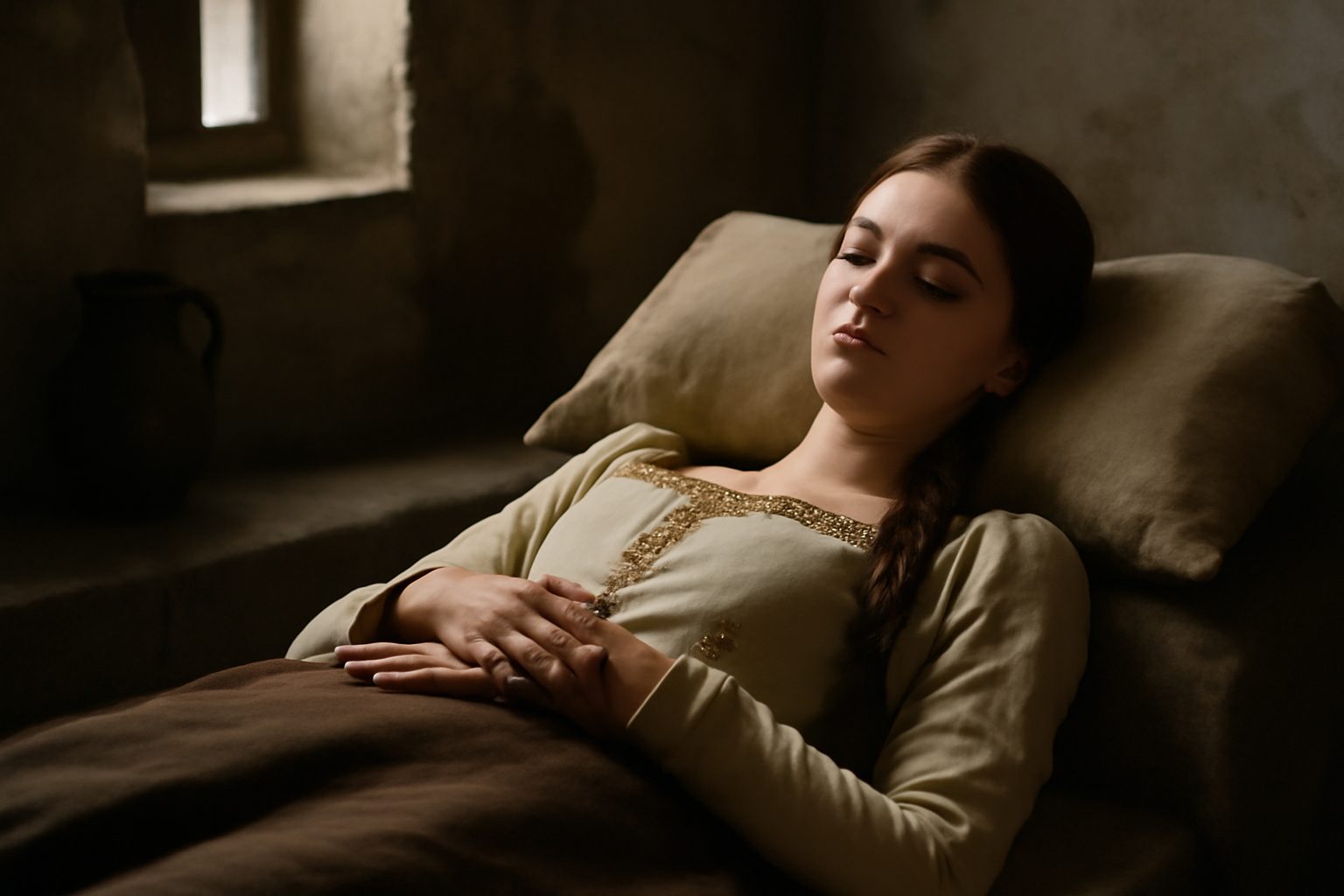
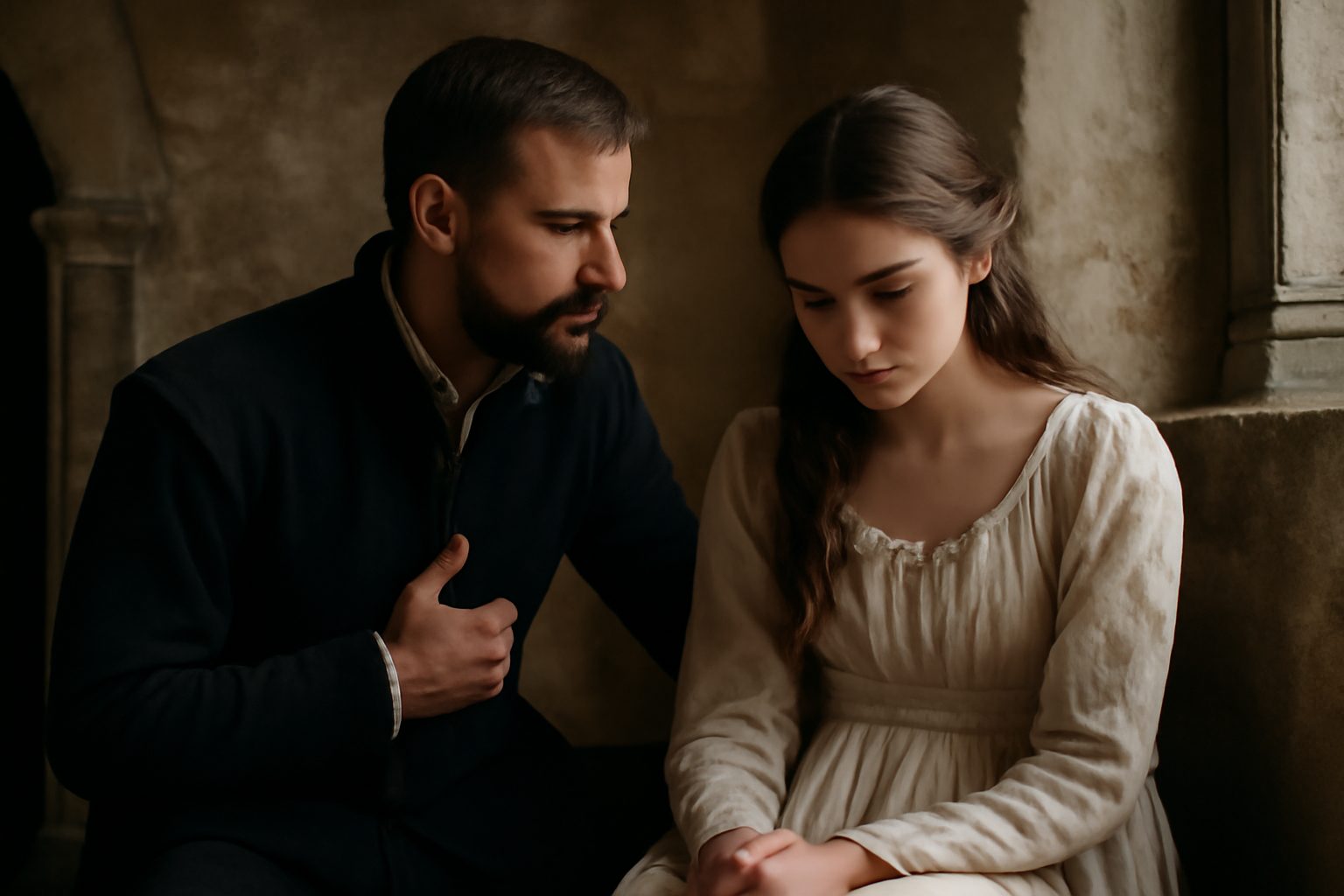
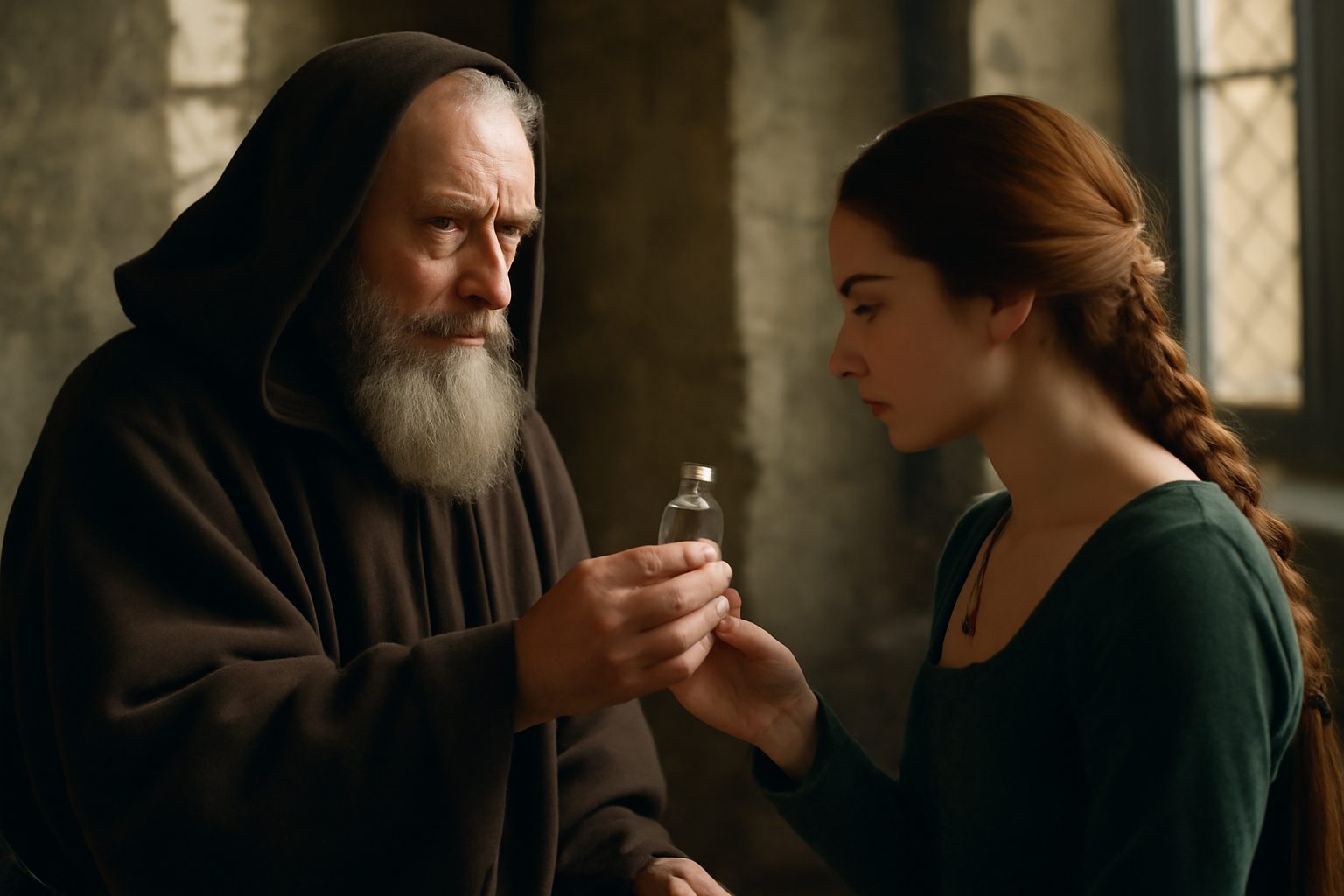
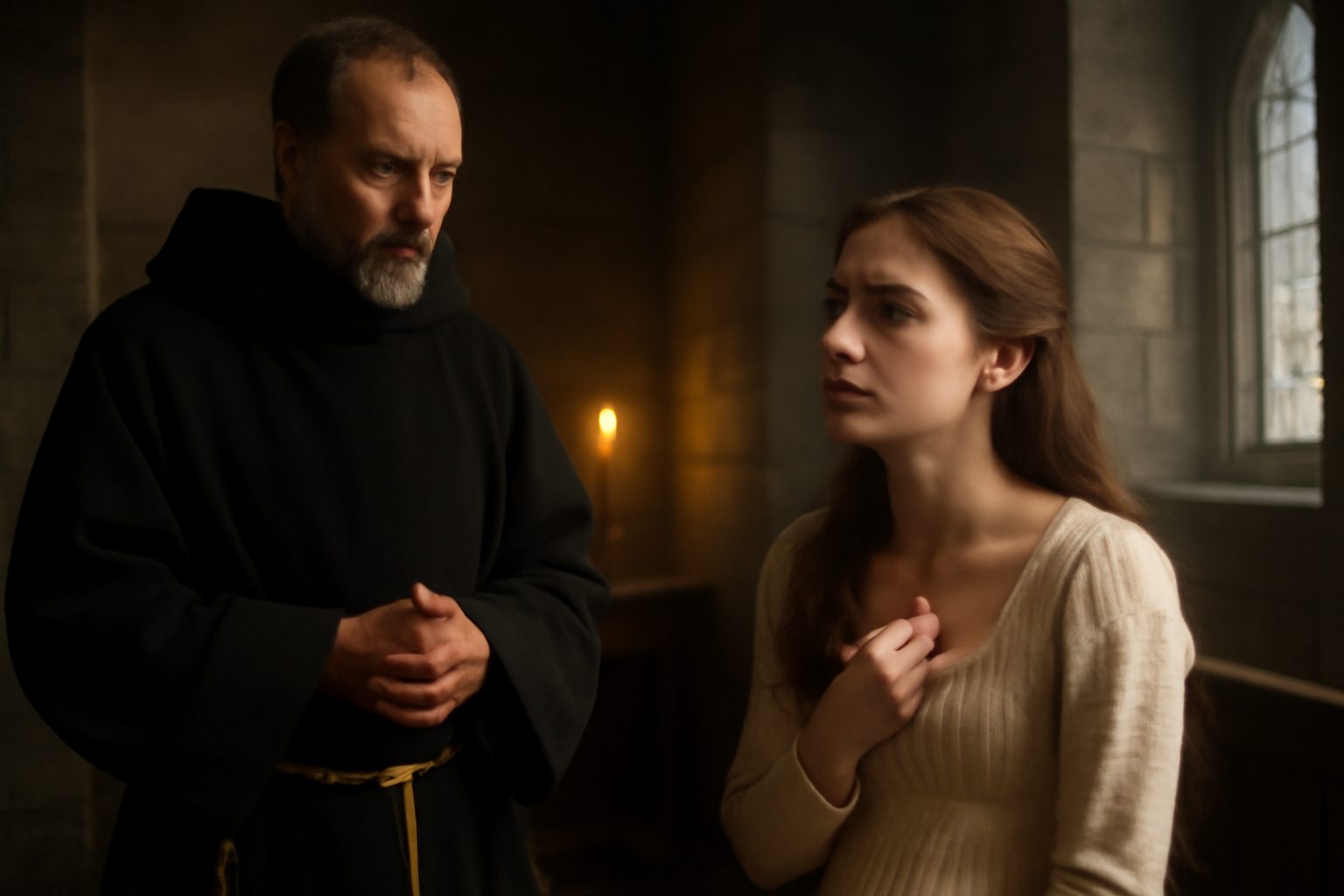
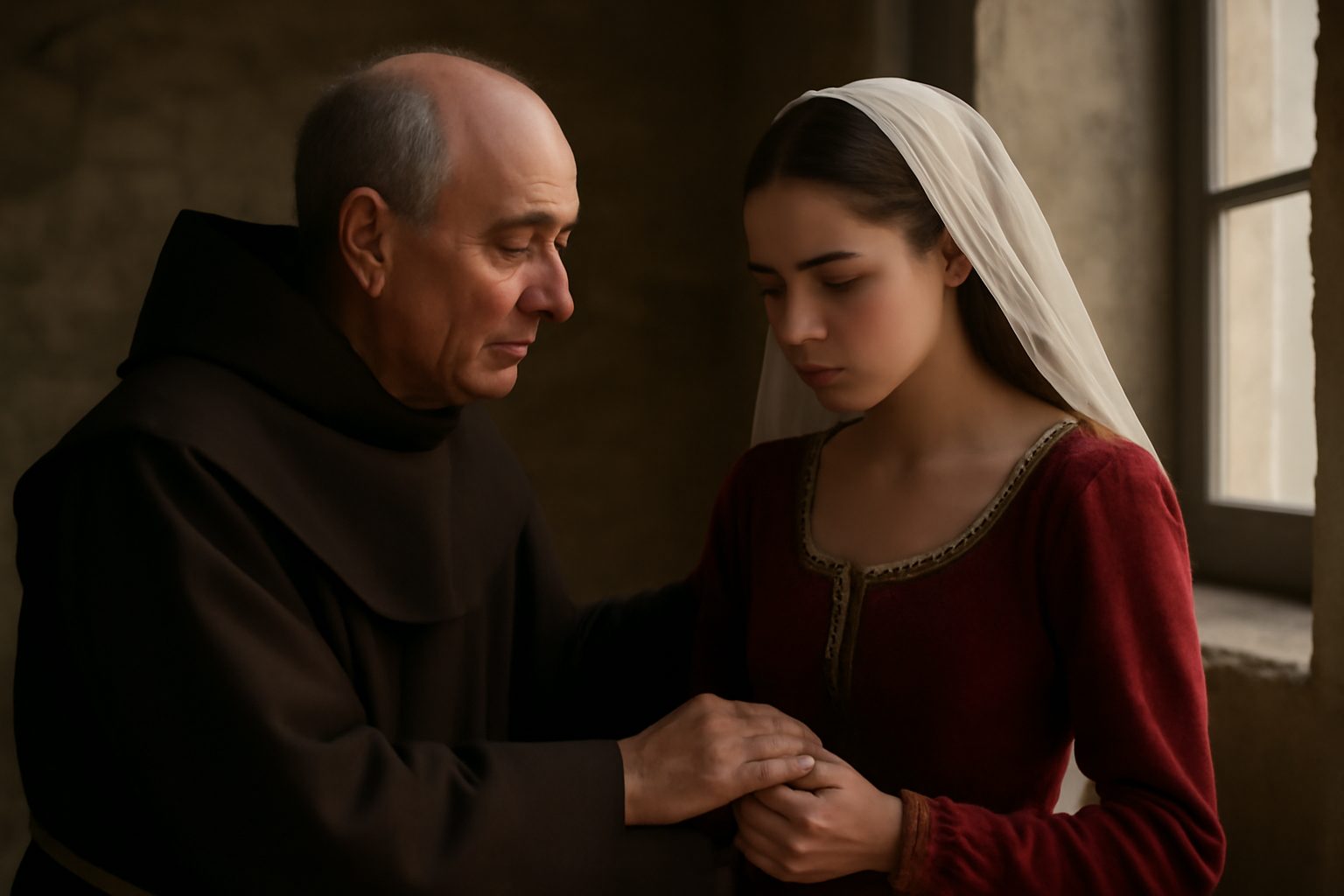
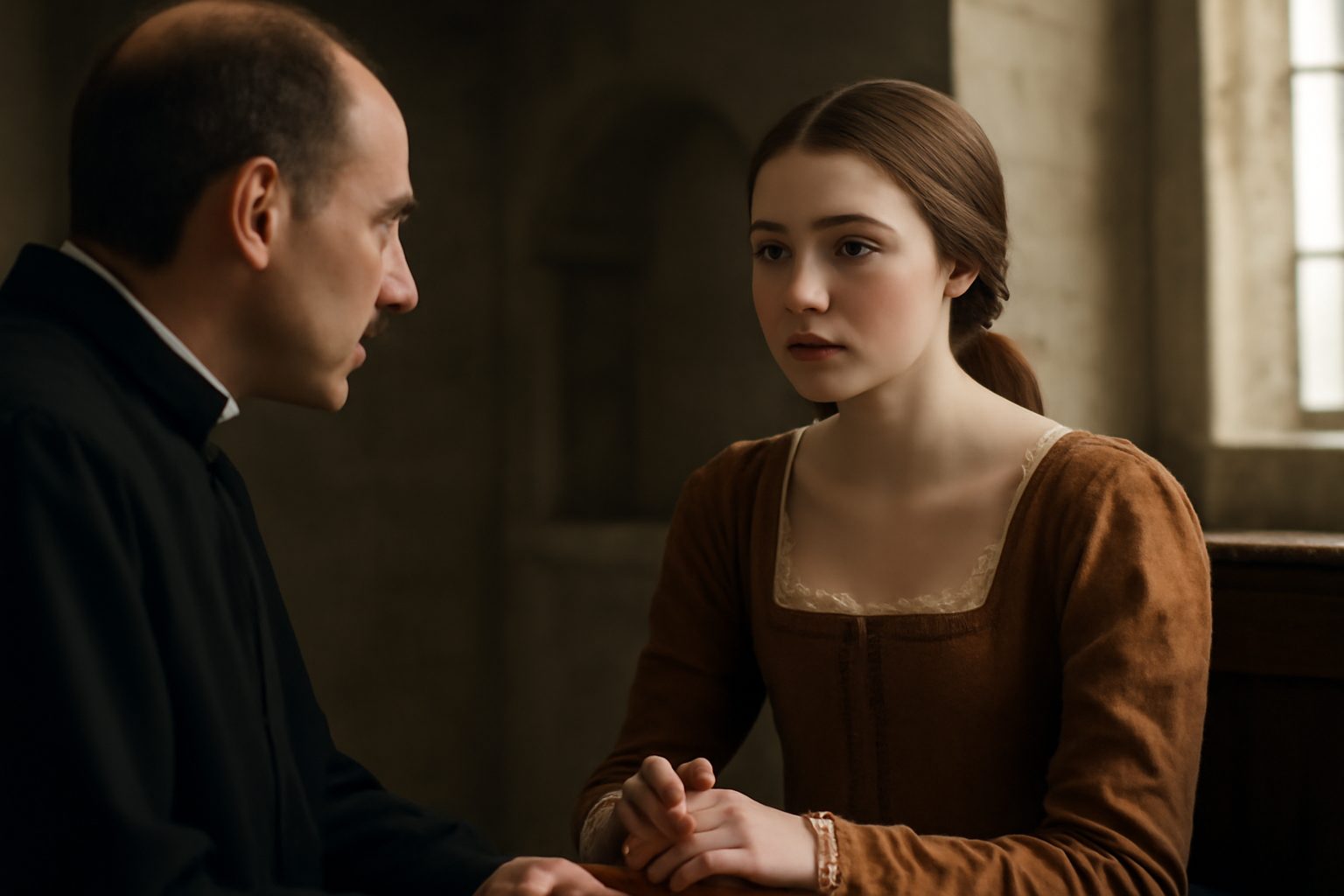
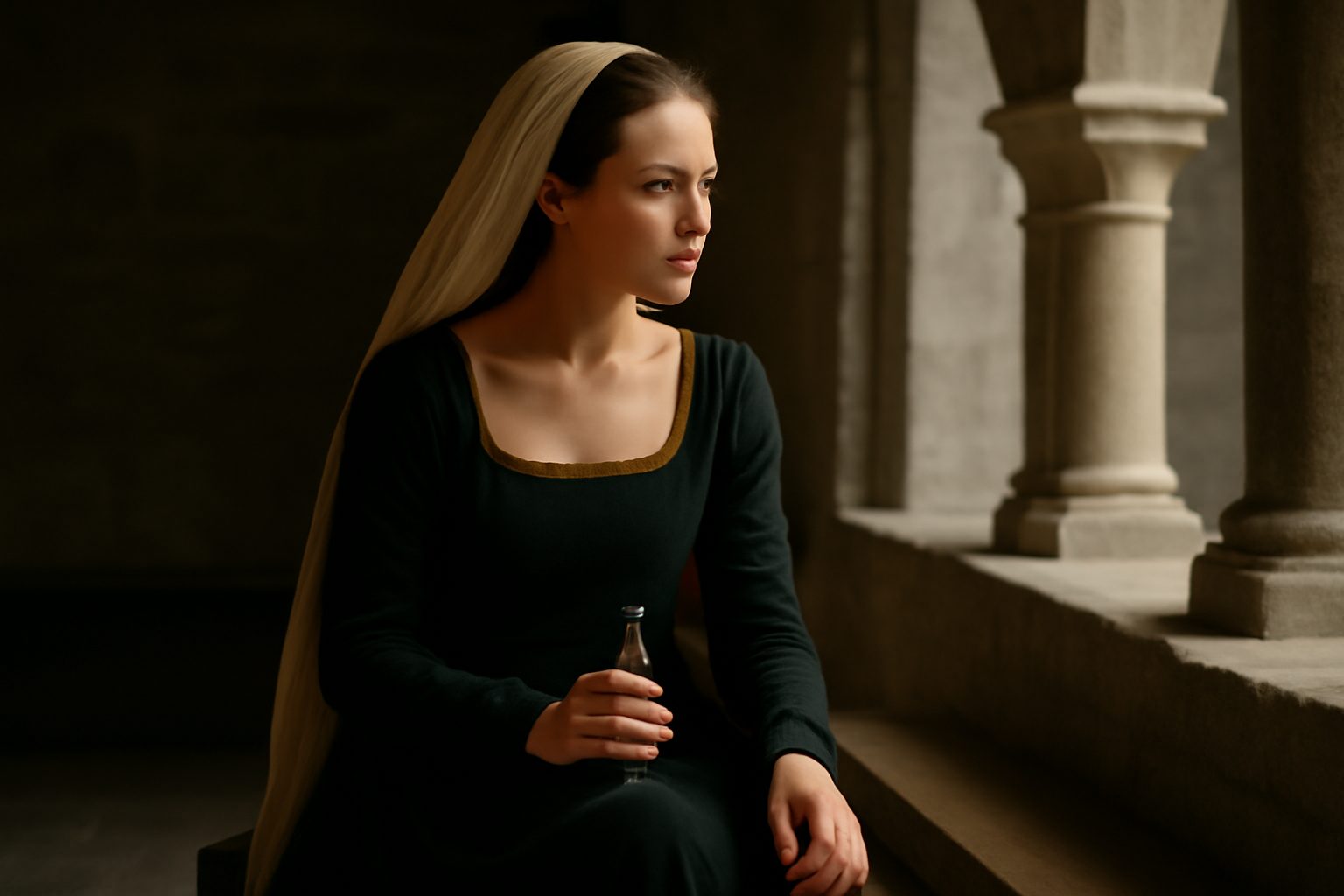
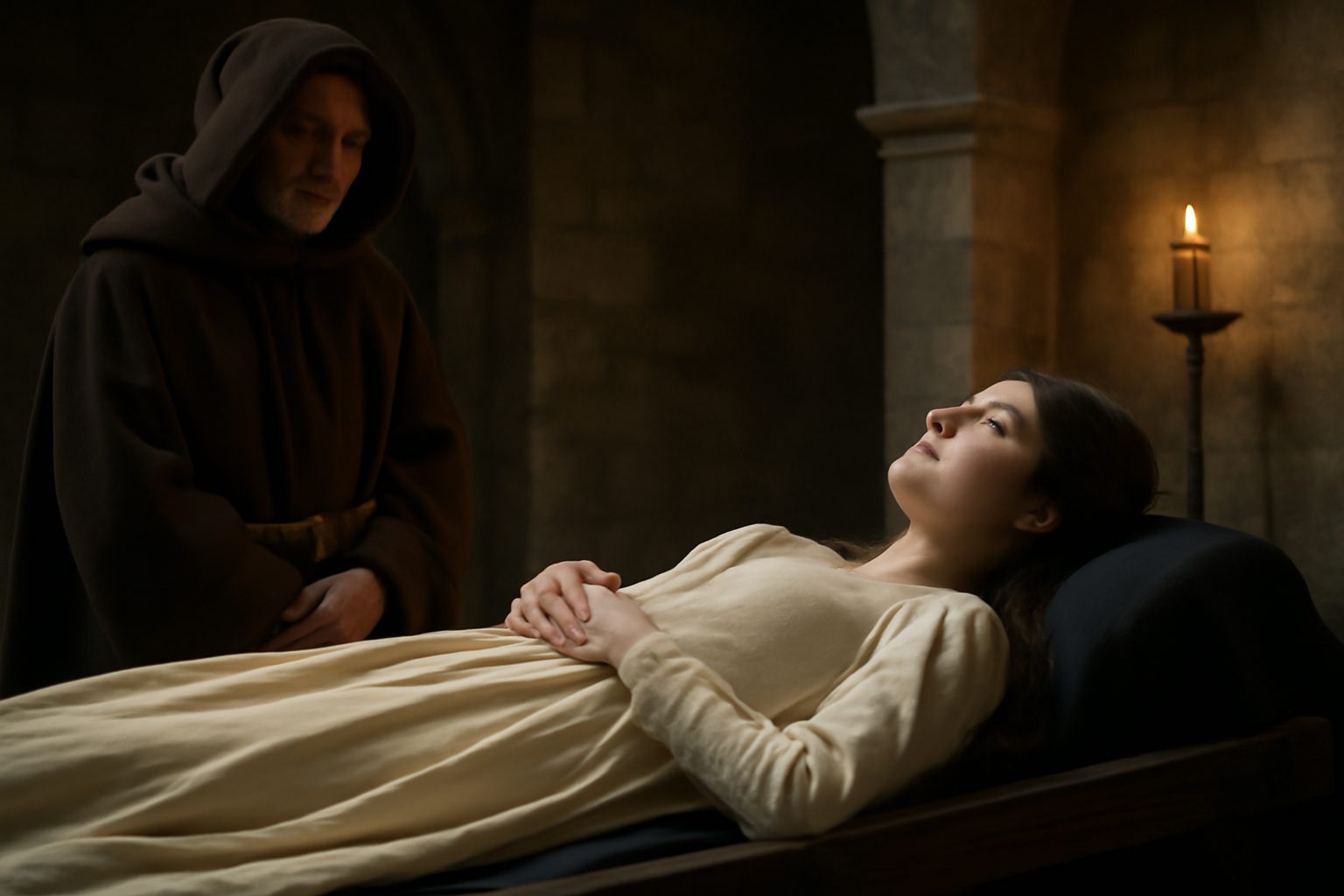
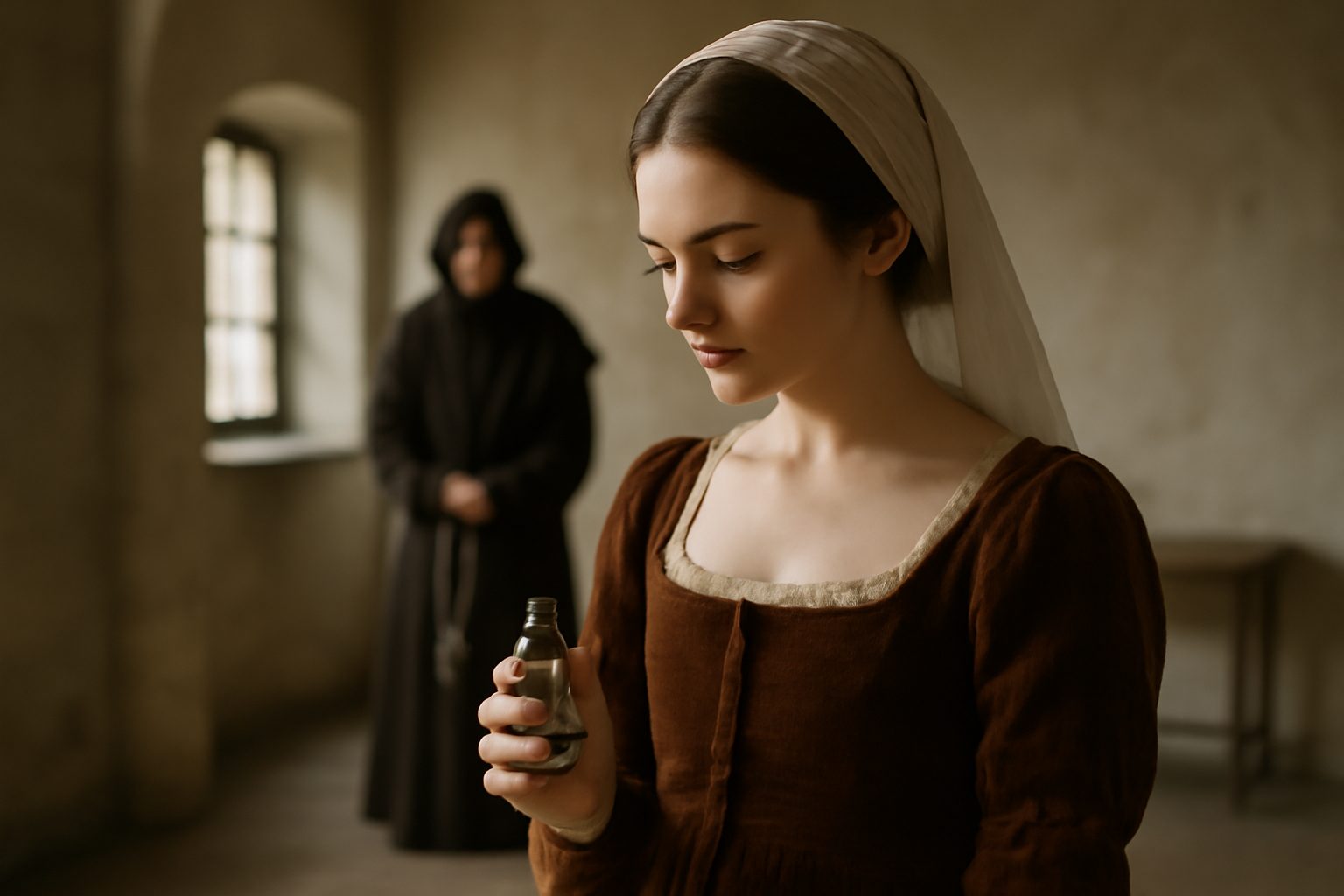
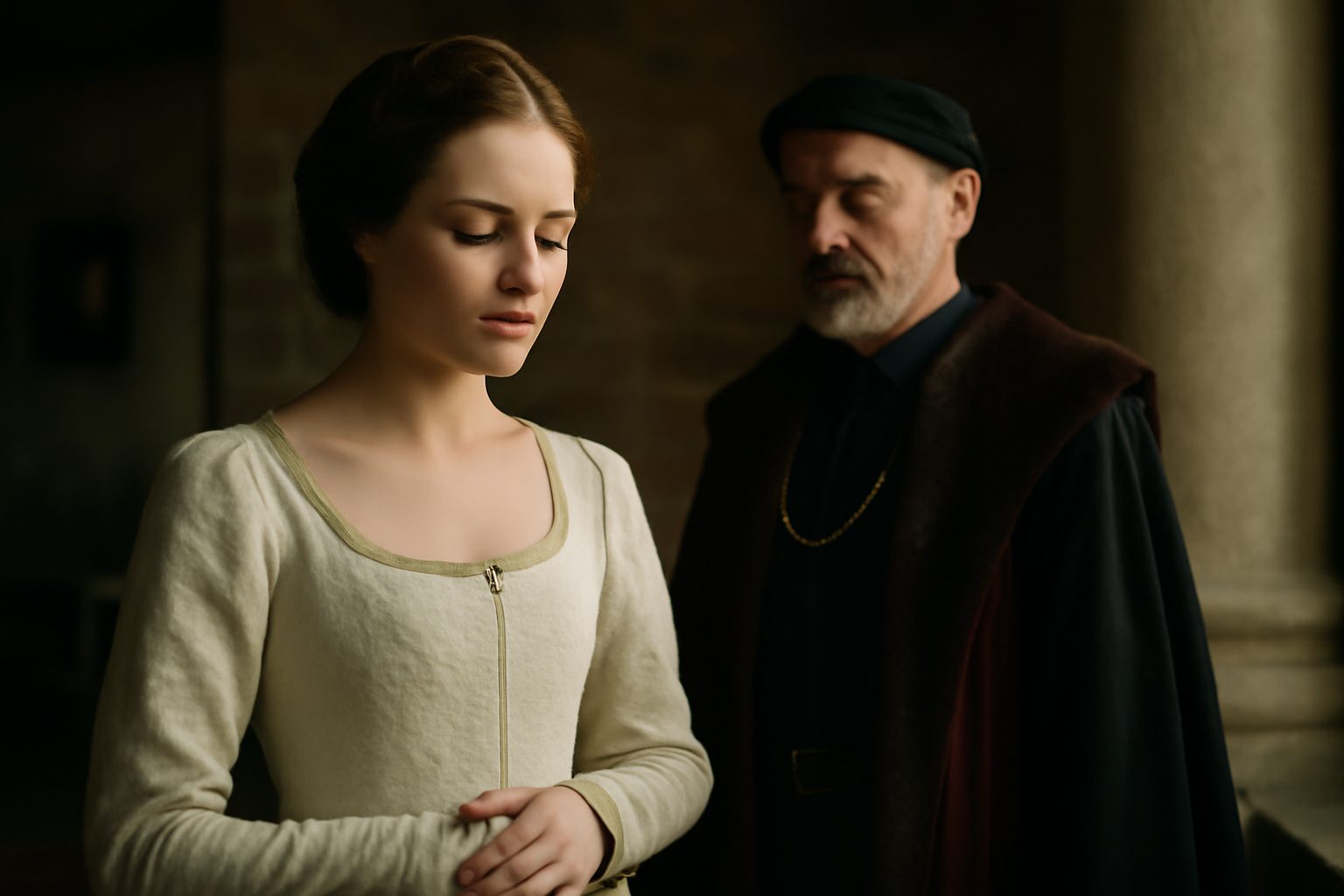
In Act 4, Scene 1 of Romeo and Juliet, Friar Laurence devises a desperate plan to reunite Juliet with Romeo after her forced marriage to Paris is arranged. As part of his scheme, he instructs Juliet to ensure she sleeps alone the following night, a crucial detail for the plan to work. This moment marks a turning point as Juliet commits to a risky course of action to escape her predicament.
Friar Laurence: "To-morrow night look that thou lie alone;"
In modern day english, we would say:
Make sure you sleep alone tomorrow night.
Frequently Asked Questions
What does Friar Laurence tell Juliet to do tomorrow night?
He tells her to sleep alone.
Connections to other verses:
Connections to "To-morrow night look that thou lie alone;"
This instruction from Friar Laurence is part of his detailed plan for Juliet's feigned death. It connects directly to his earlier direction in Take thou this vial, being then in bed, as both emphasize the necessity of privacy for the potion to take effect without discovery.
Privacy and Secrecy
The requirement for solitude links to Let not thy nurse lie with thee in thy chamber, reinforcing that no one must witness the transformation. This secrecy is crucial to the plan's success, as any observer would jeopardize the illusion of death.
Physical Effects of the Potion
The verse also relates to descriptions of the potion's impact, such as A cold and drowsy humour, for no pulse and No warmth, no breath, shall testify thou livest. These lines detail the physiological changes that will sell the deception, which require an isolated environment to go unnoticed.
Juliet's Resolve
Juliet's determination to follow this directive is evident in her earlier declaration, And I will do it without fear or doubt, showing her commitment to the desperate plan. Her willingness is further highlighted when she demands, Give me, give me! O, tell not me of fear!, embracing the friar's instructions despite the risks.
Symbolism and Foreshadowing
The isolation prescribed here echoes Juliet's earlier fears of confinement, such as in Or shut me nightly in a charnel-house, but now it becomes a calculated step rather than a desperate threat. It also sets the stage for the tragic miscommunication that follows, as her solitary state prevents Romeo from learning the truth in time.