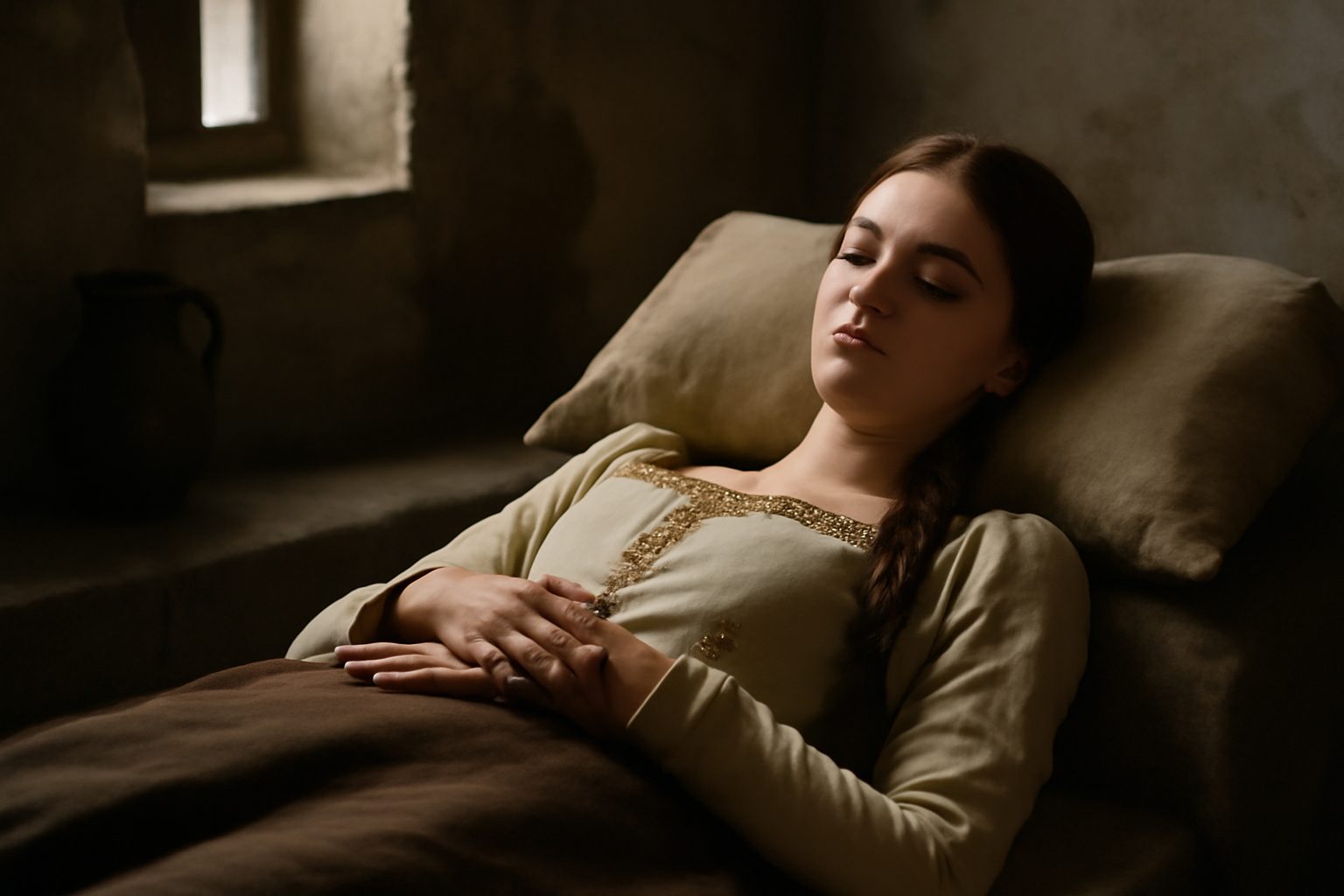
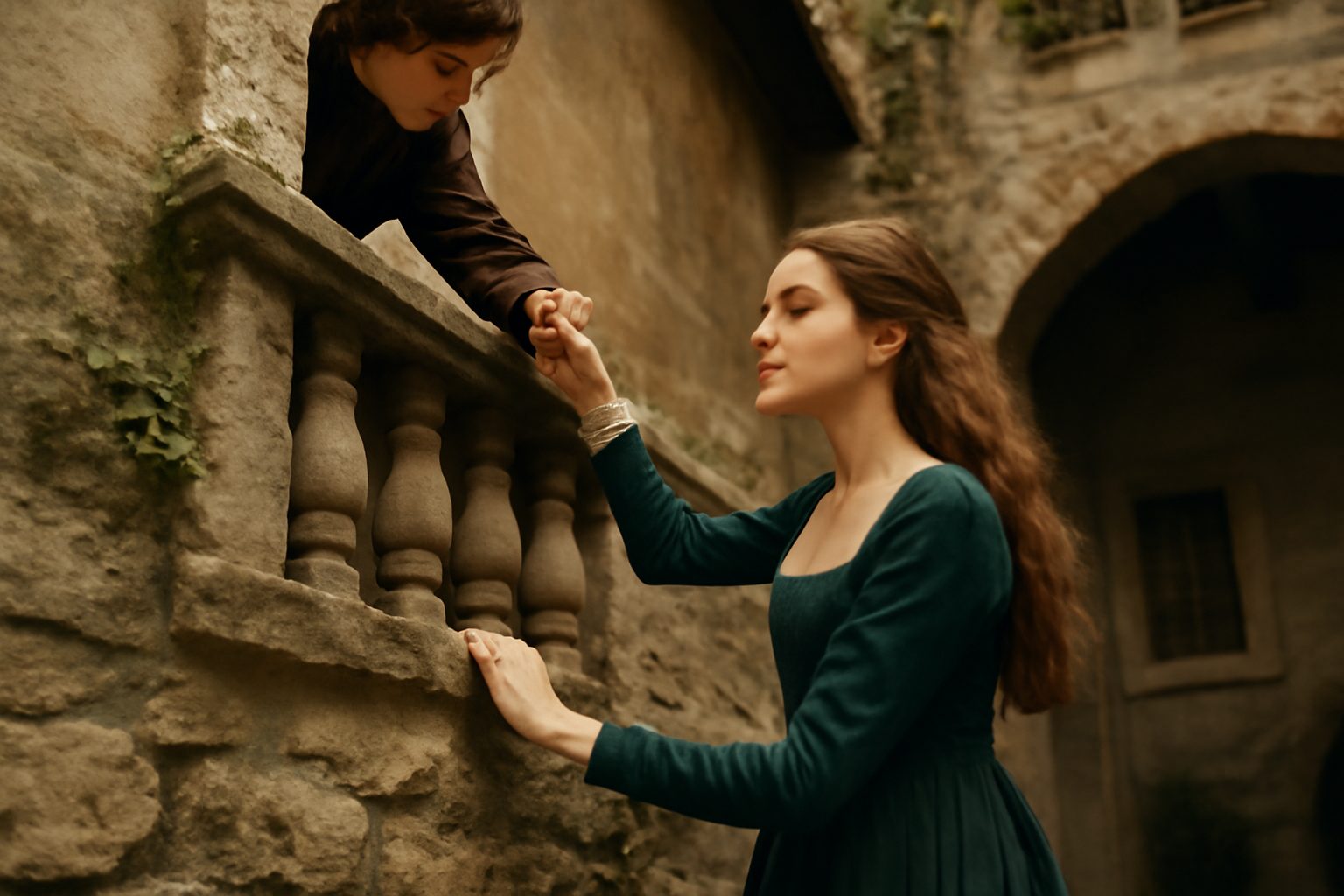
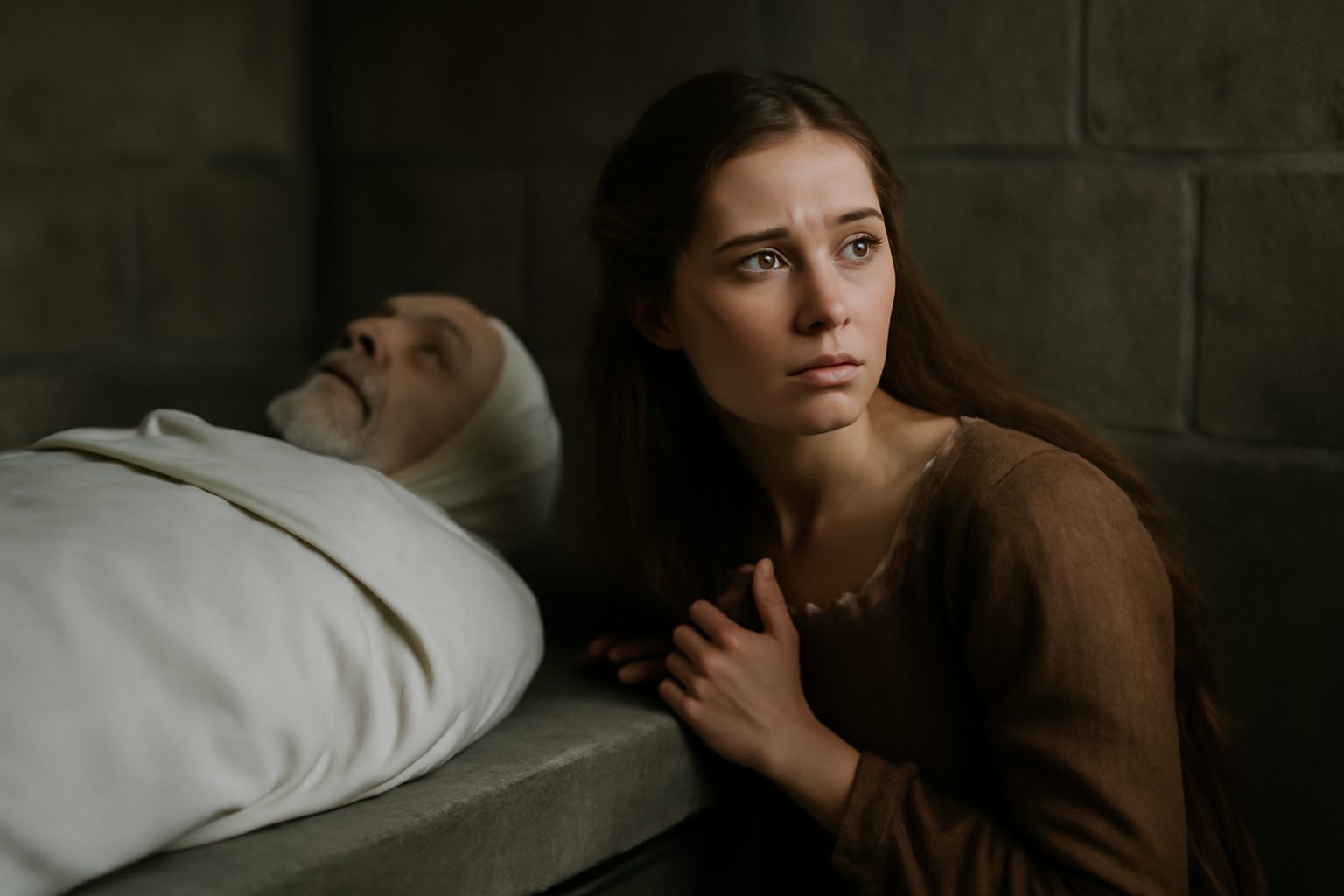
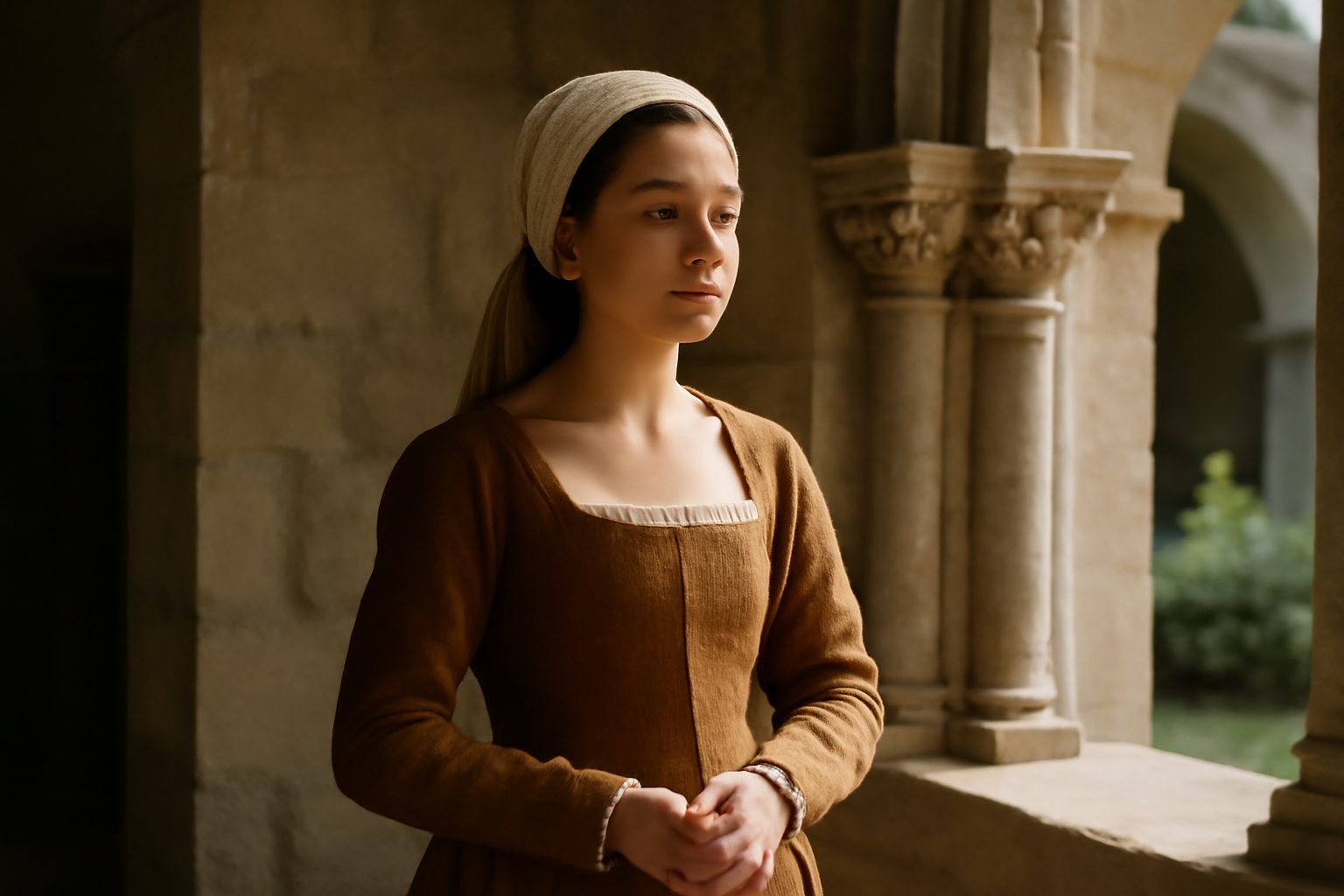
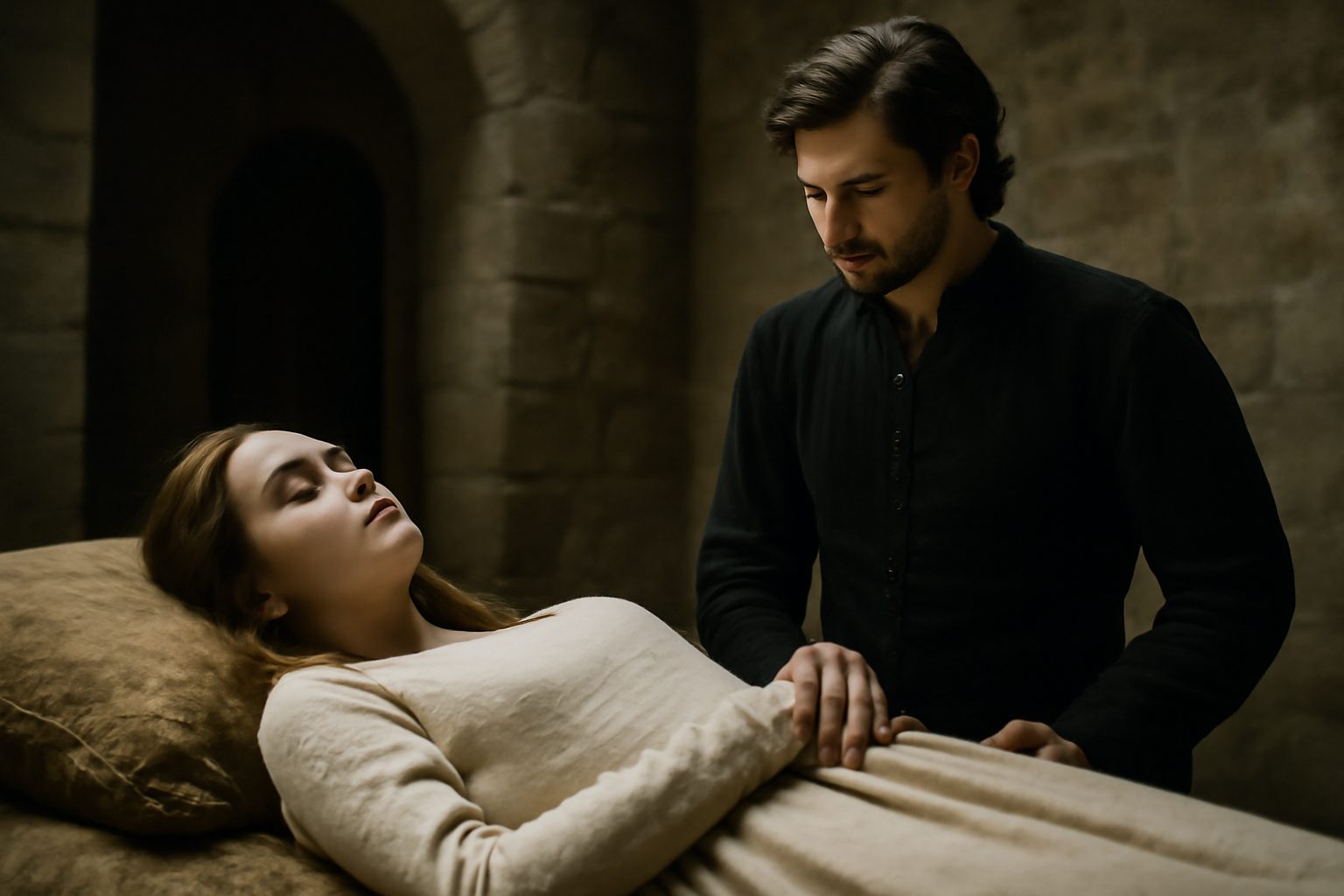
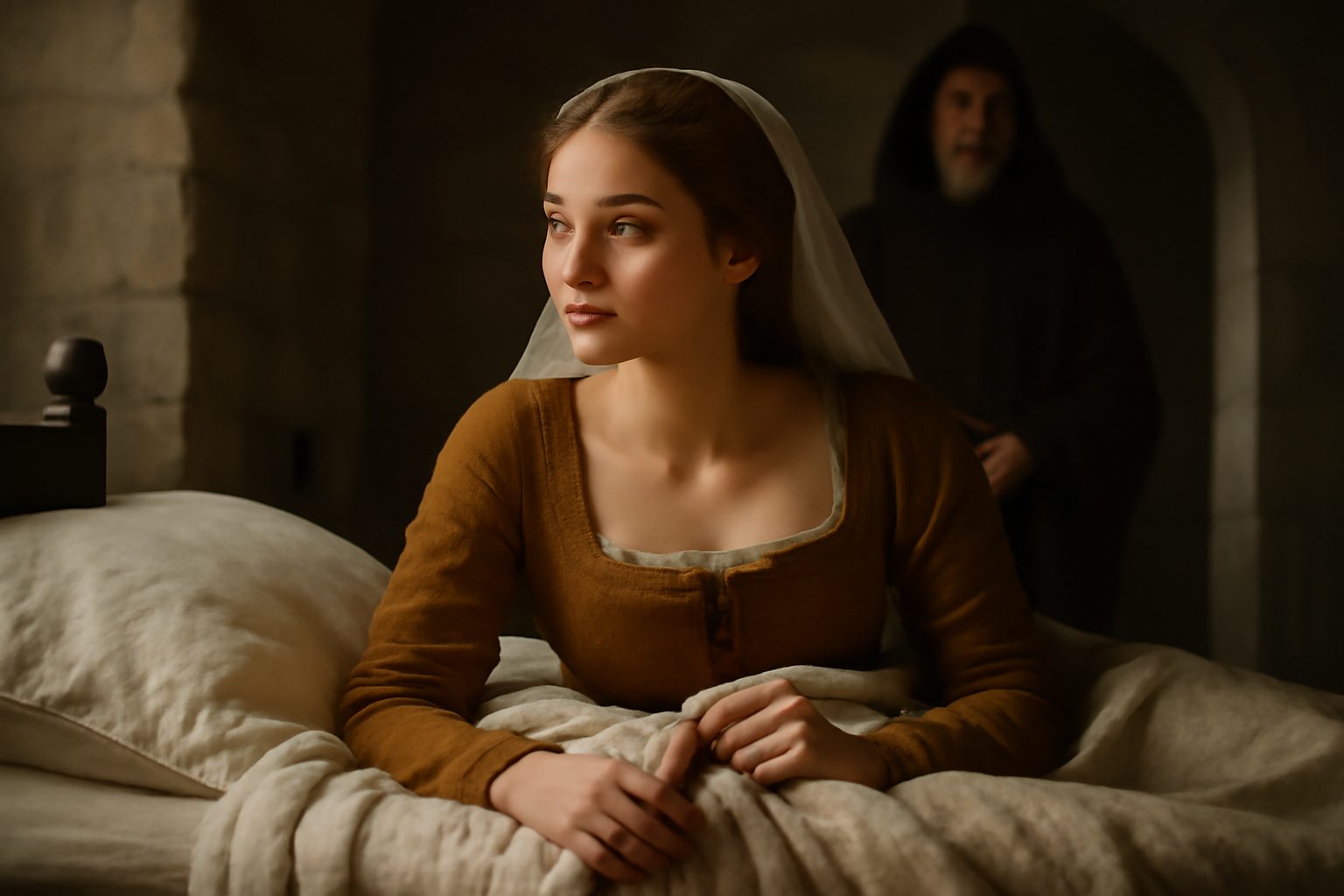
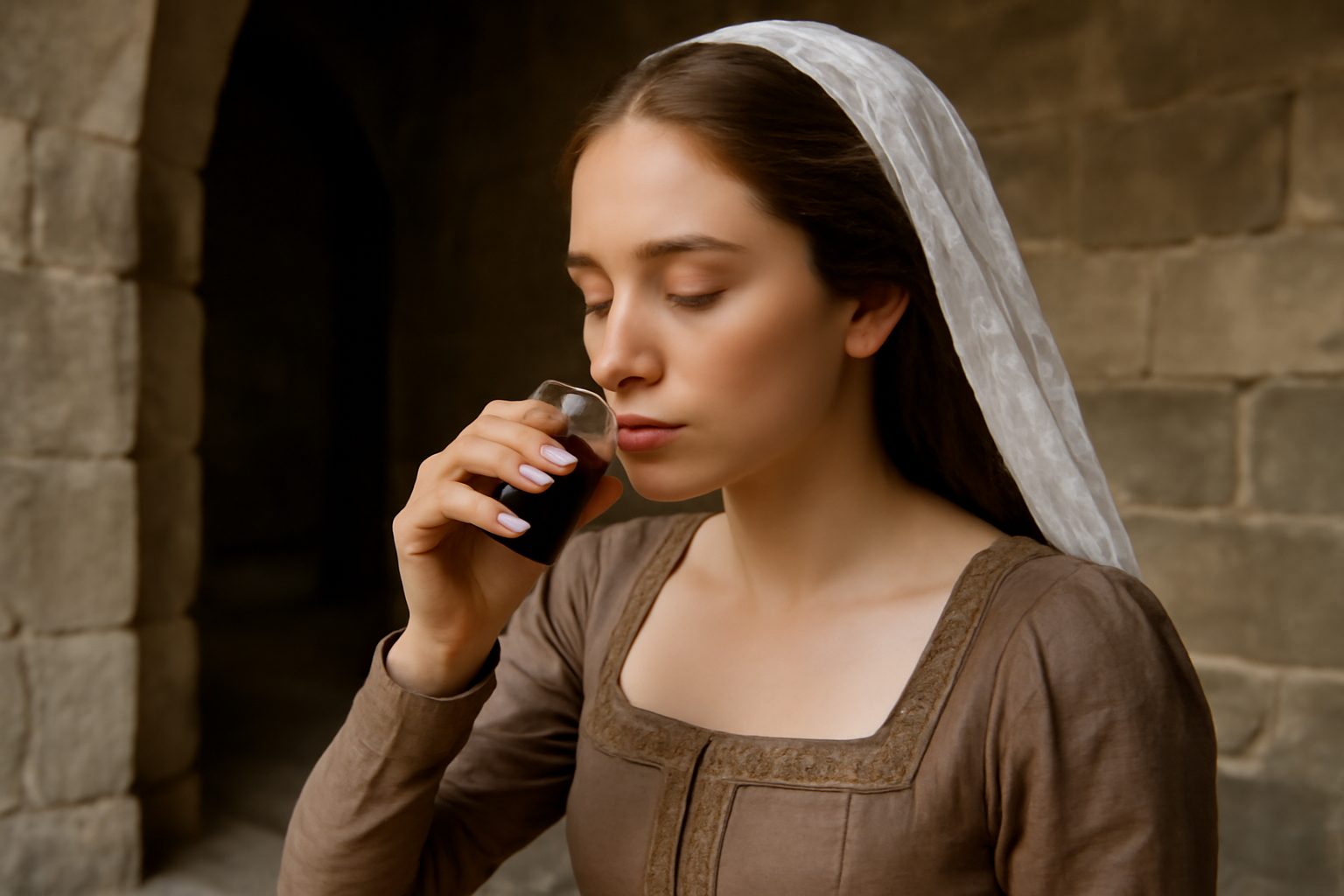
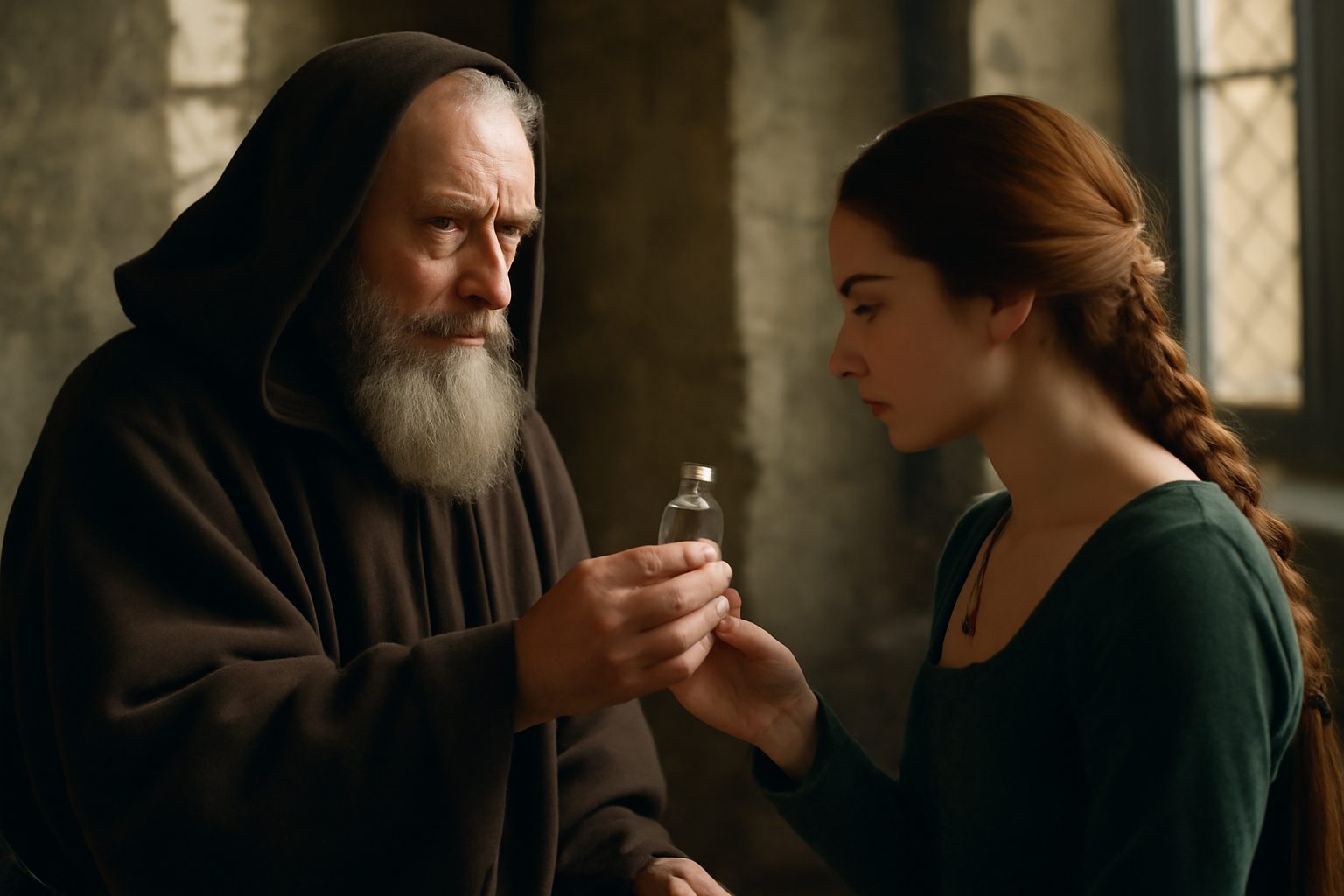
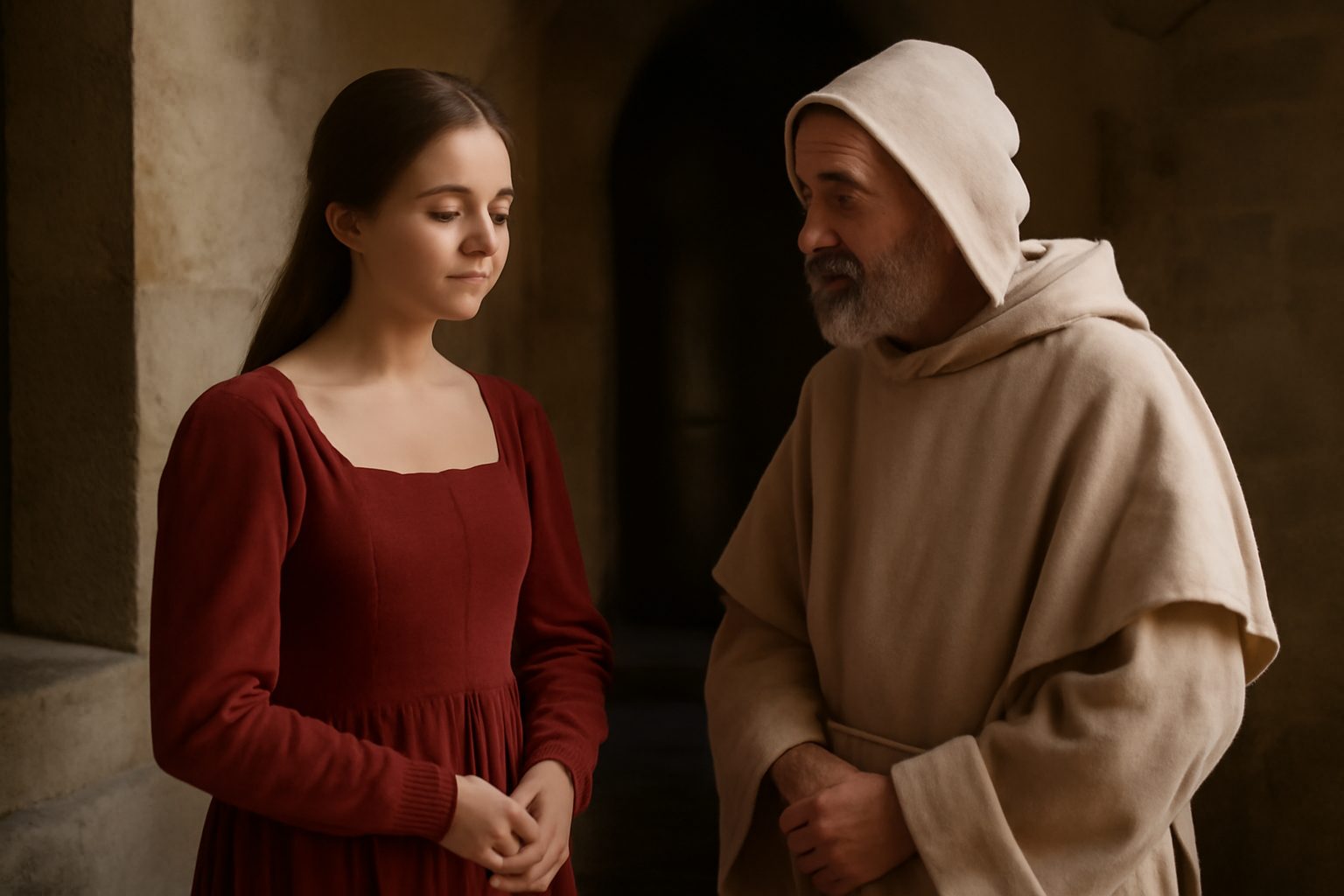
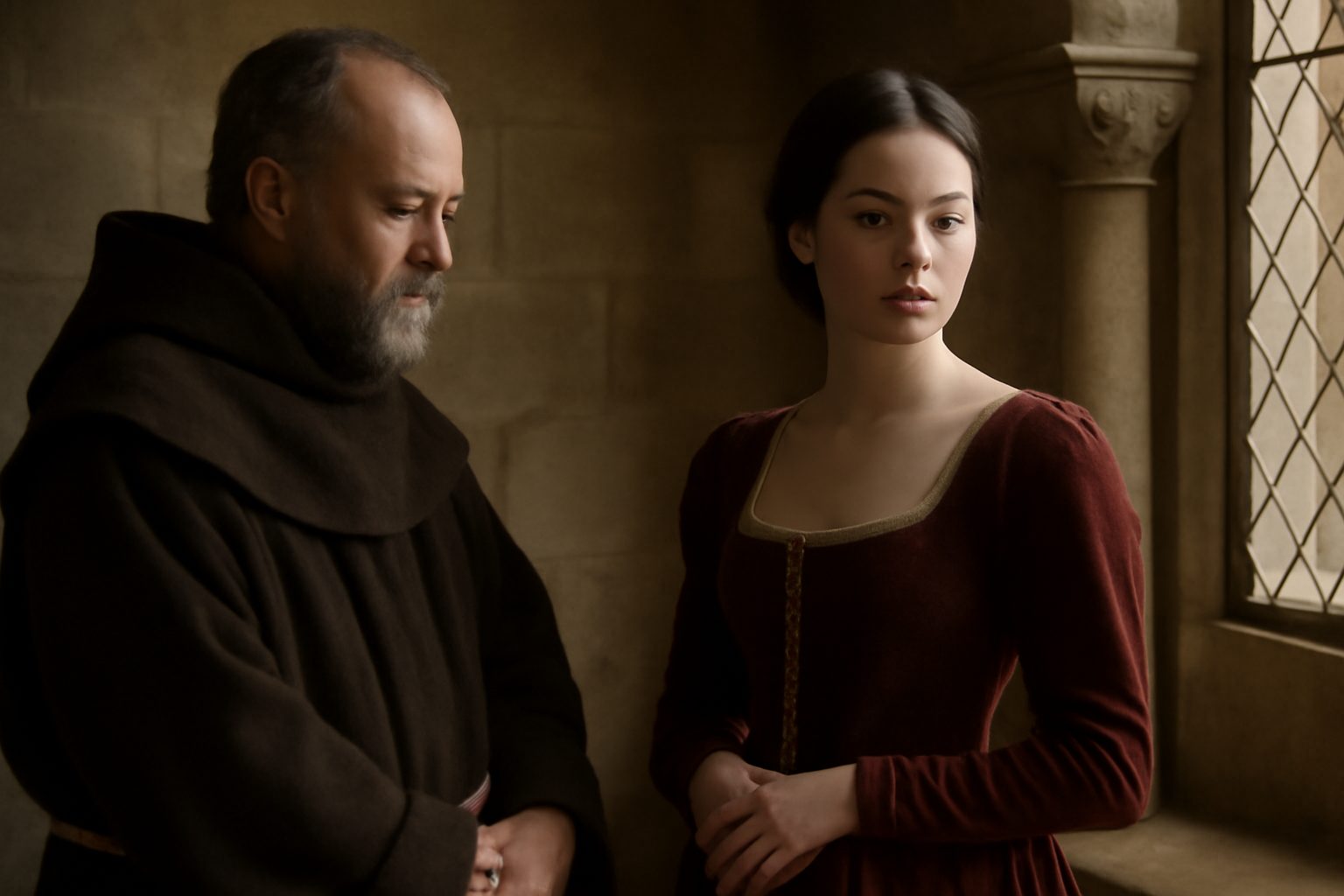
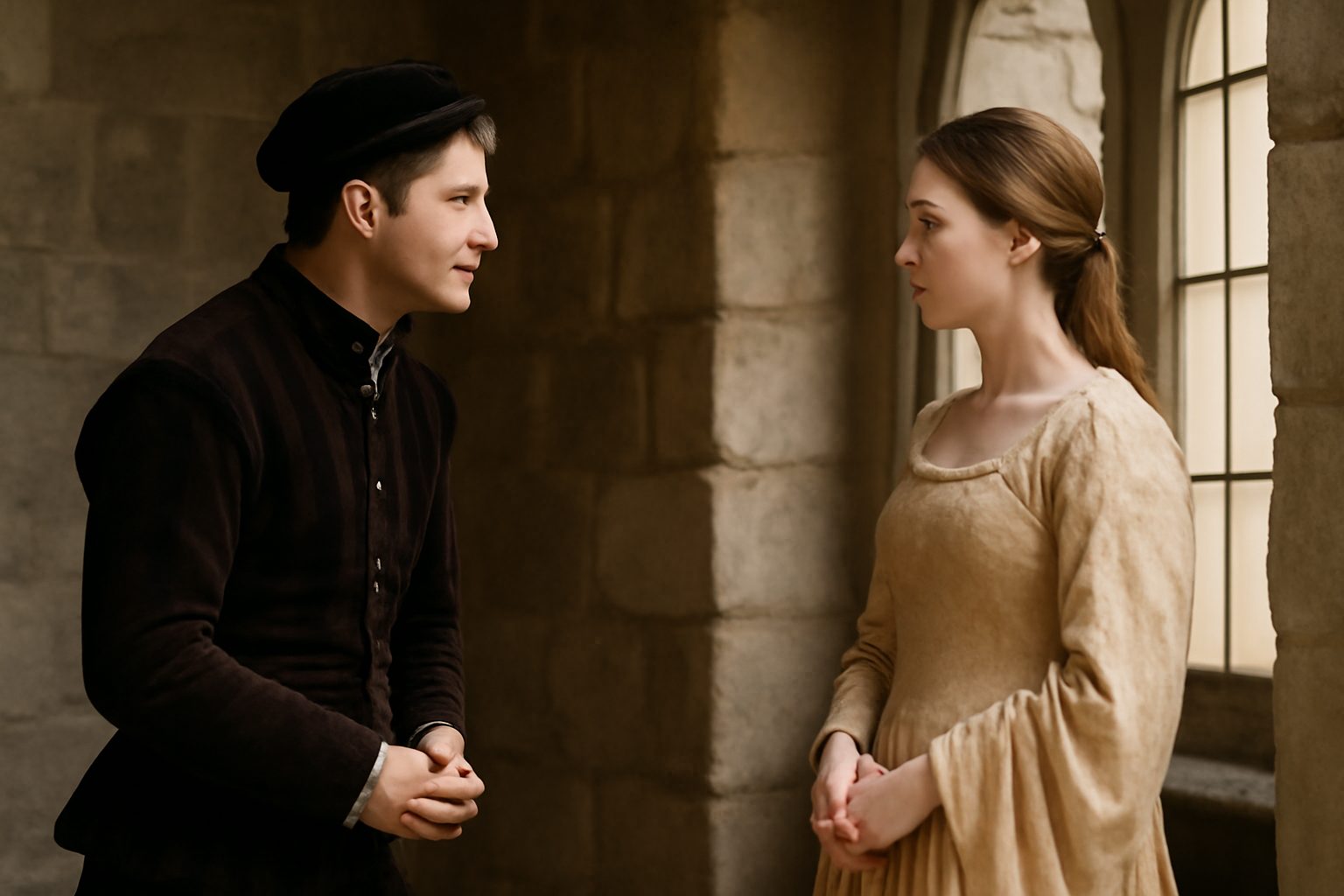
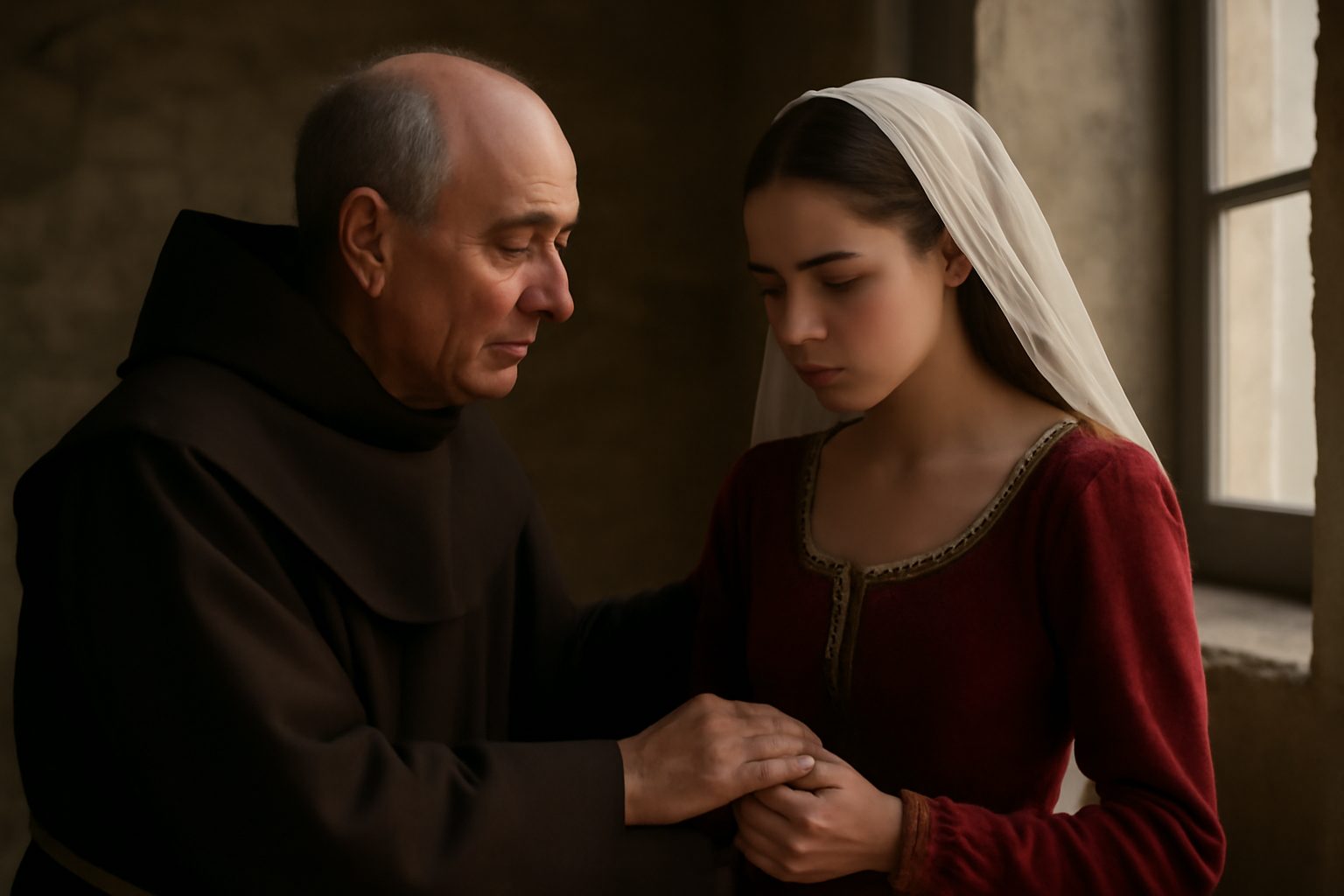
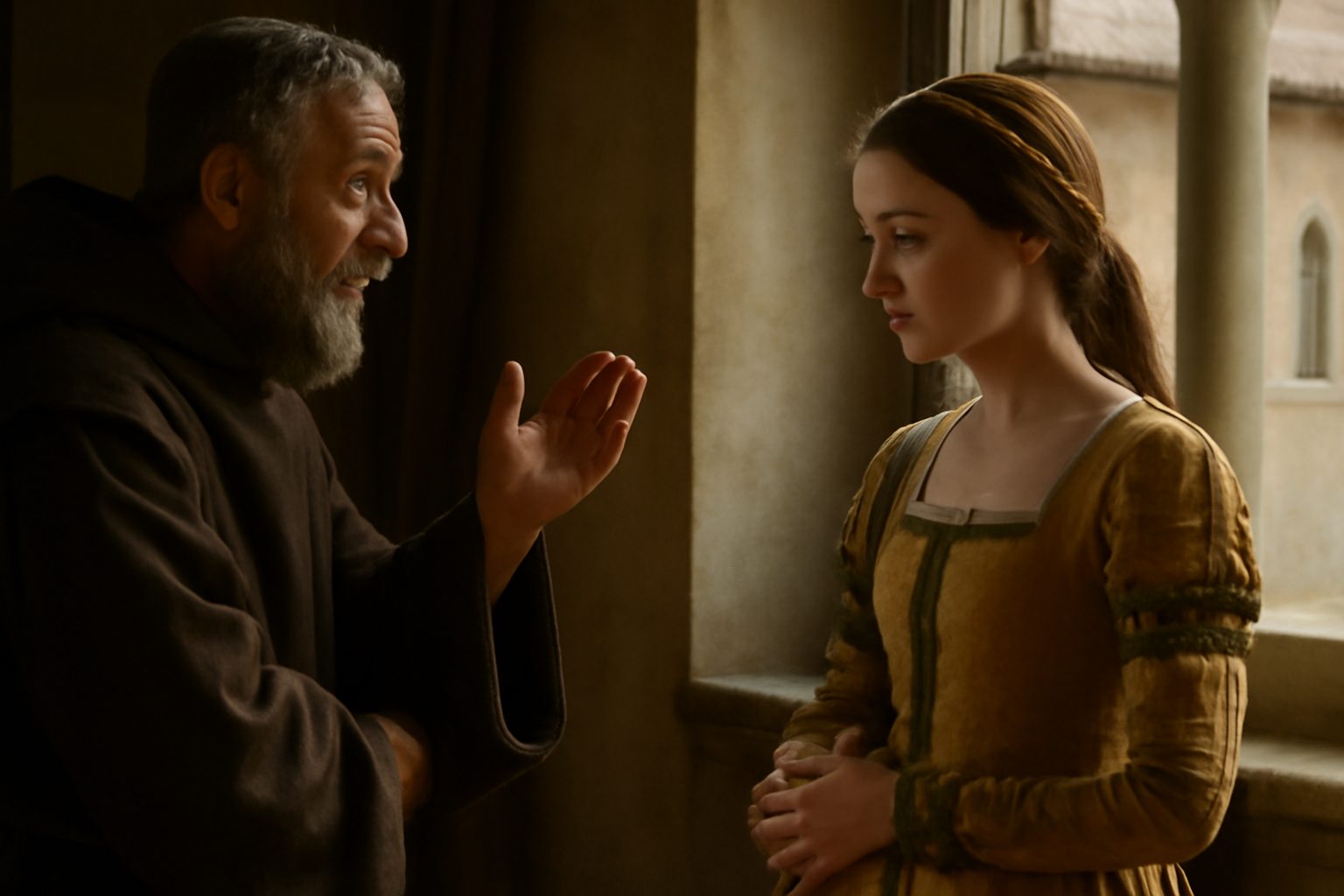
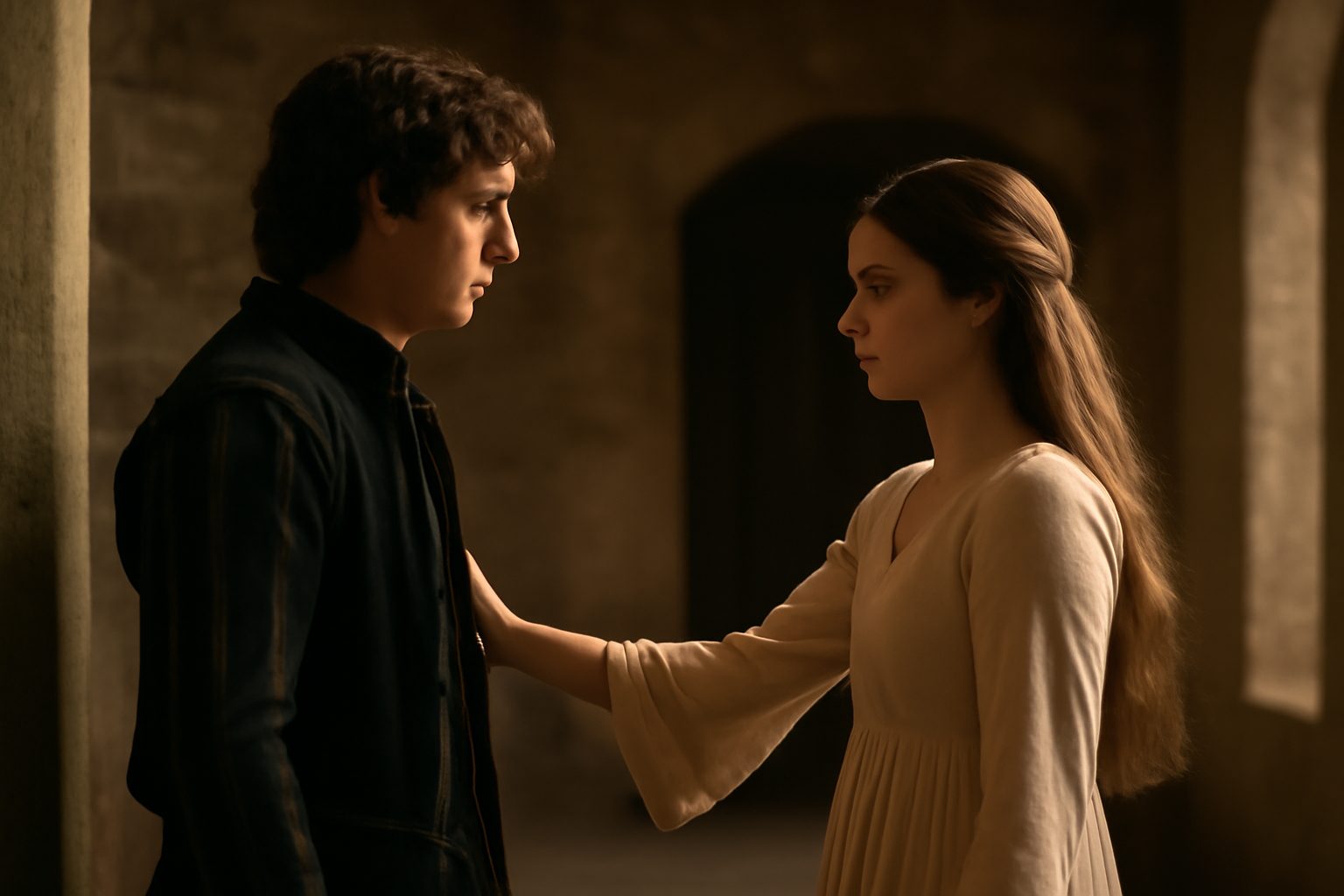
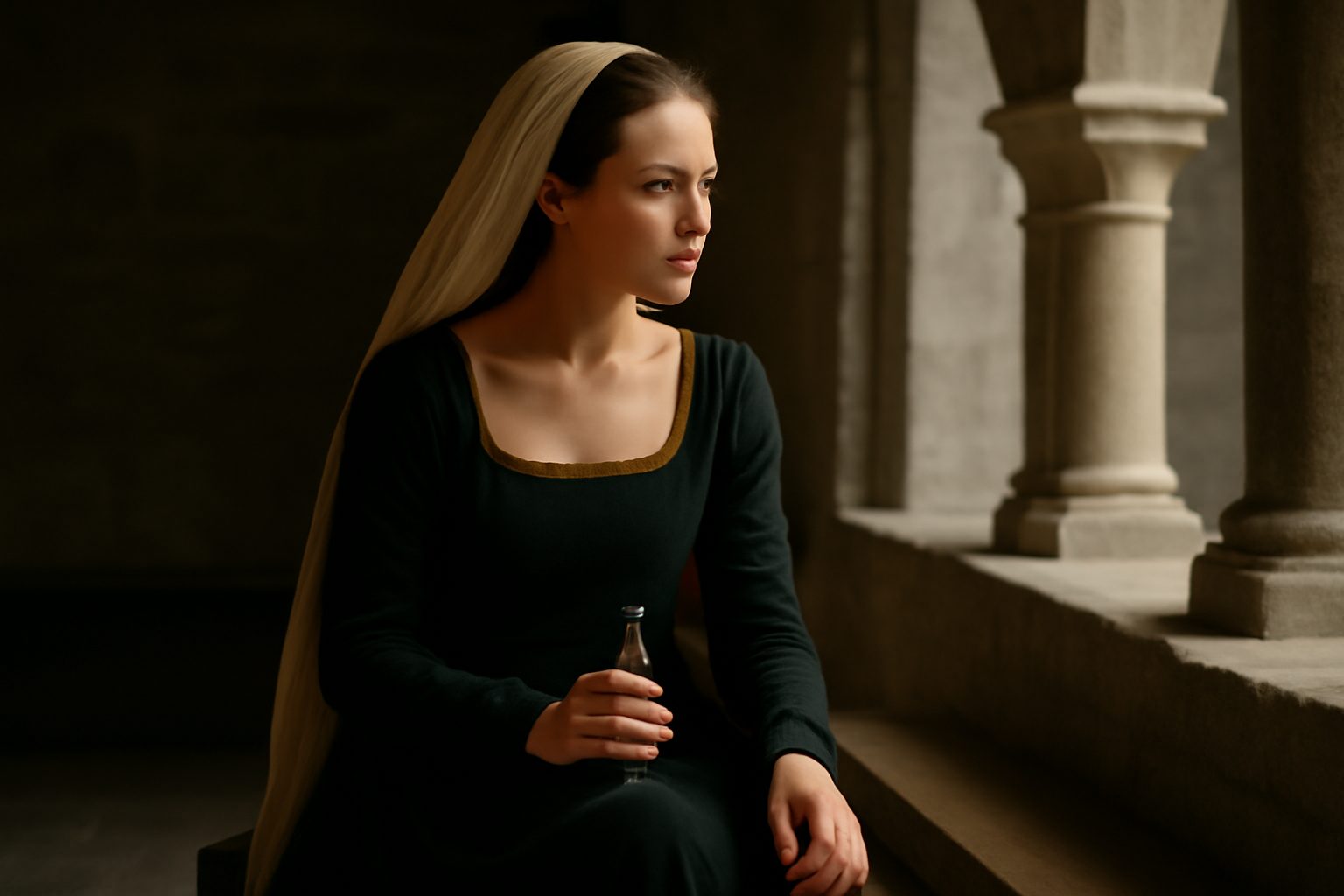
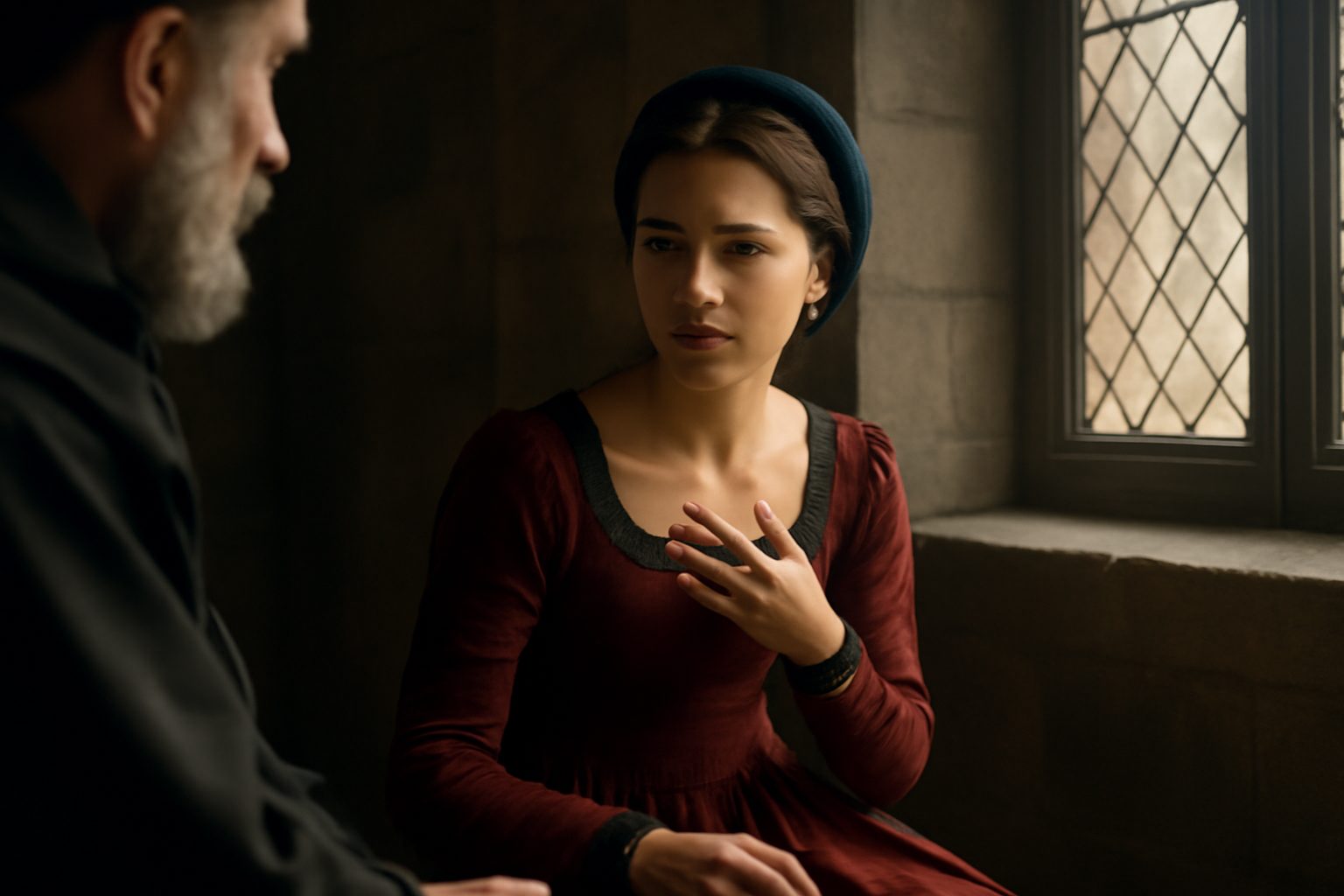
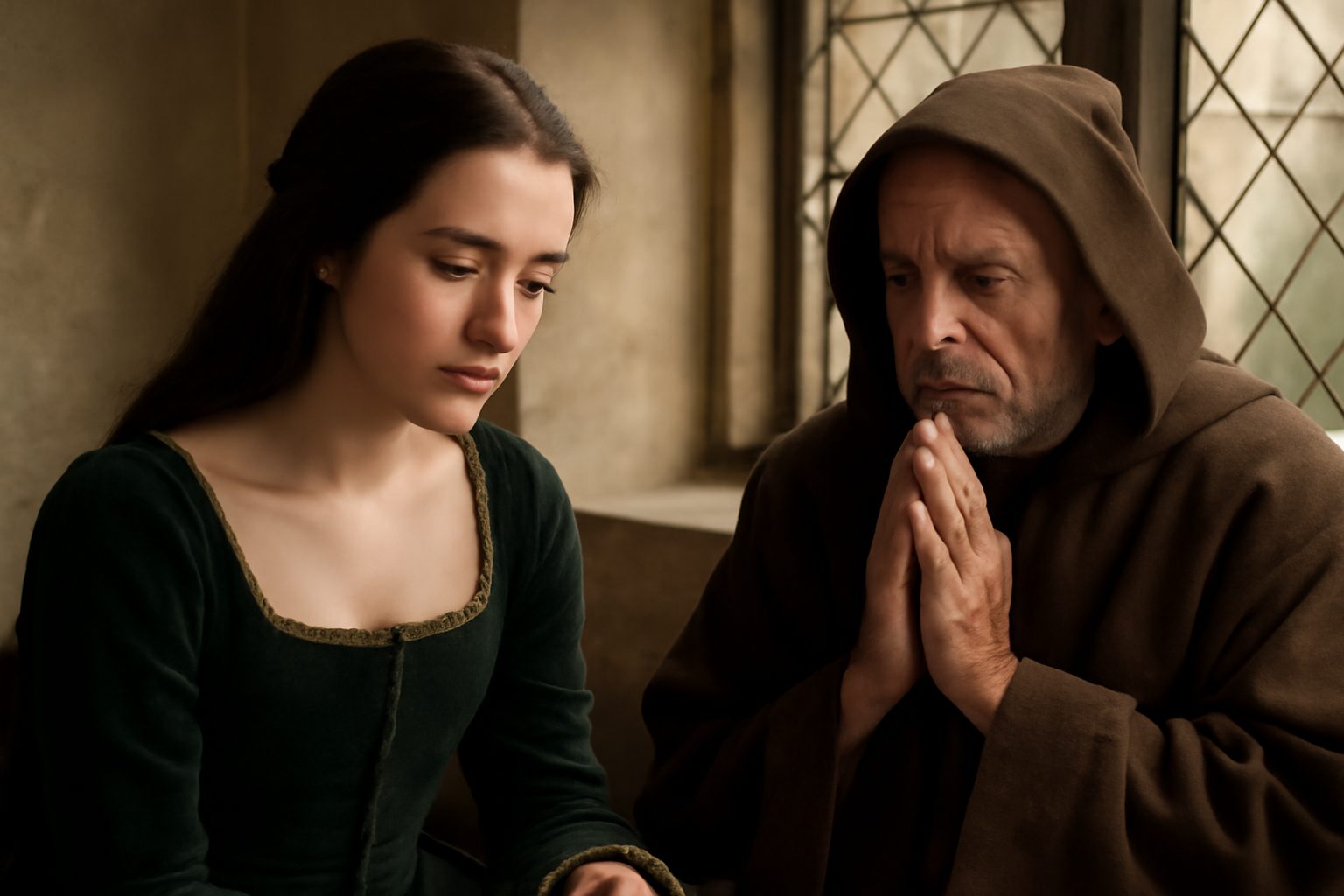
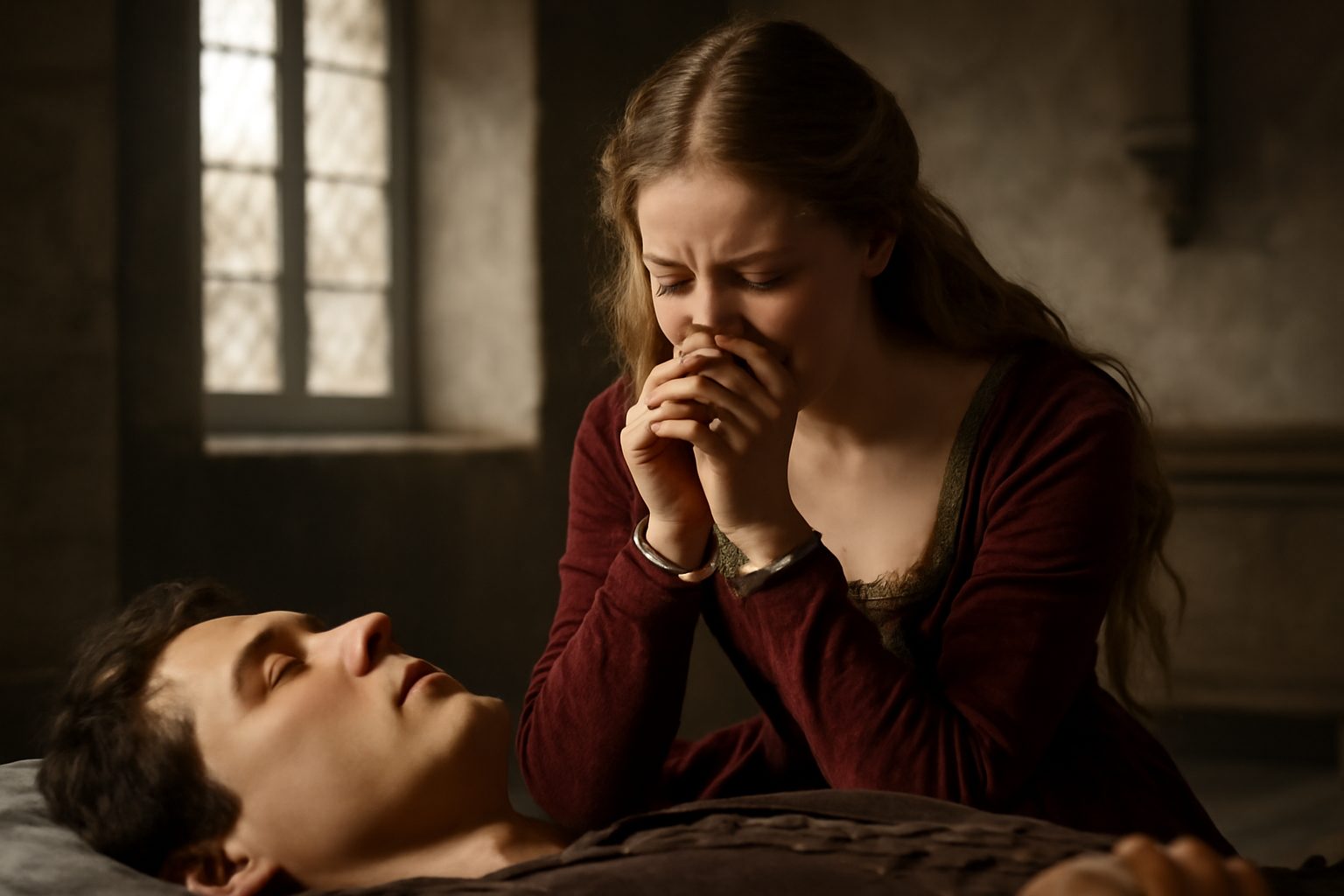
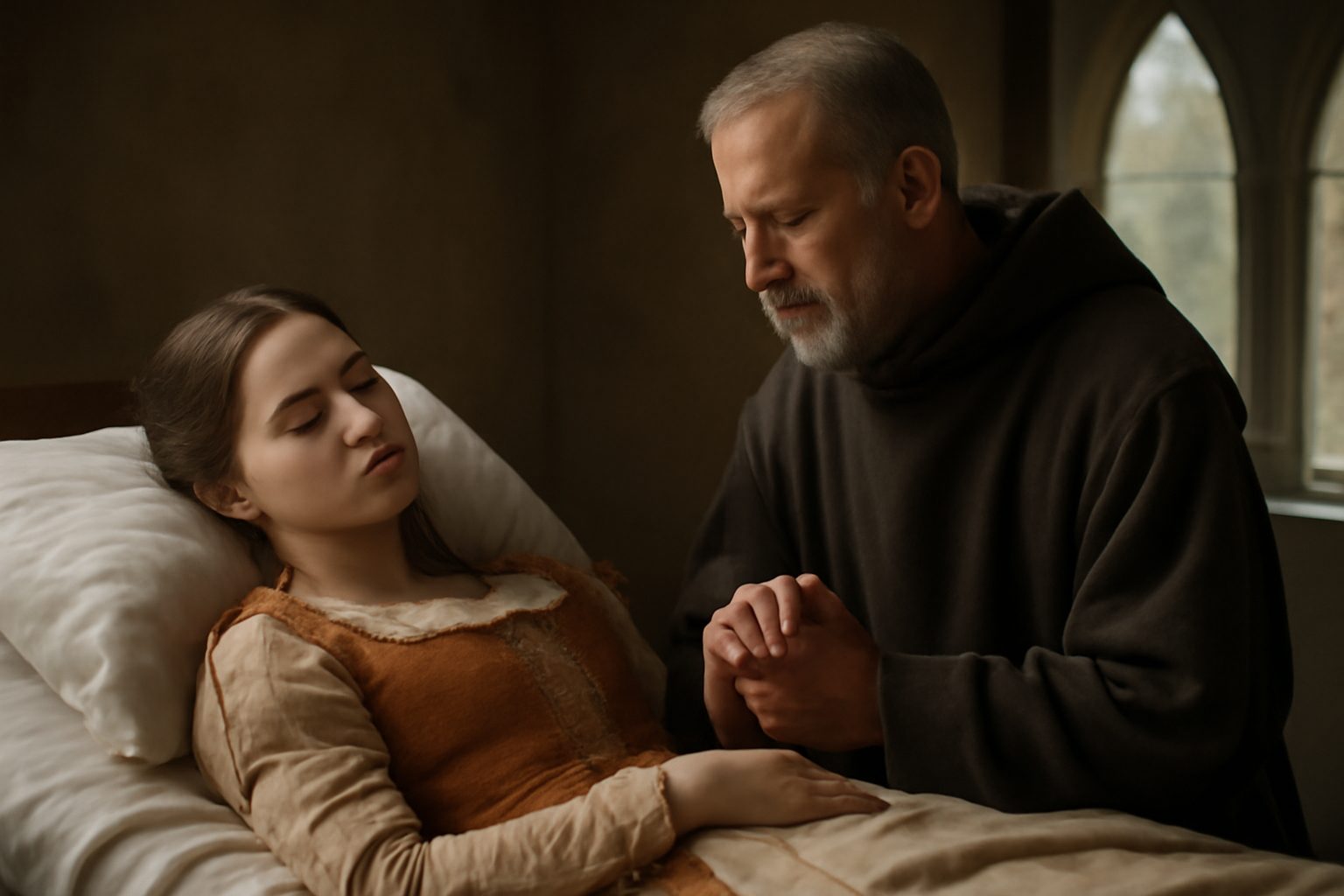
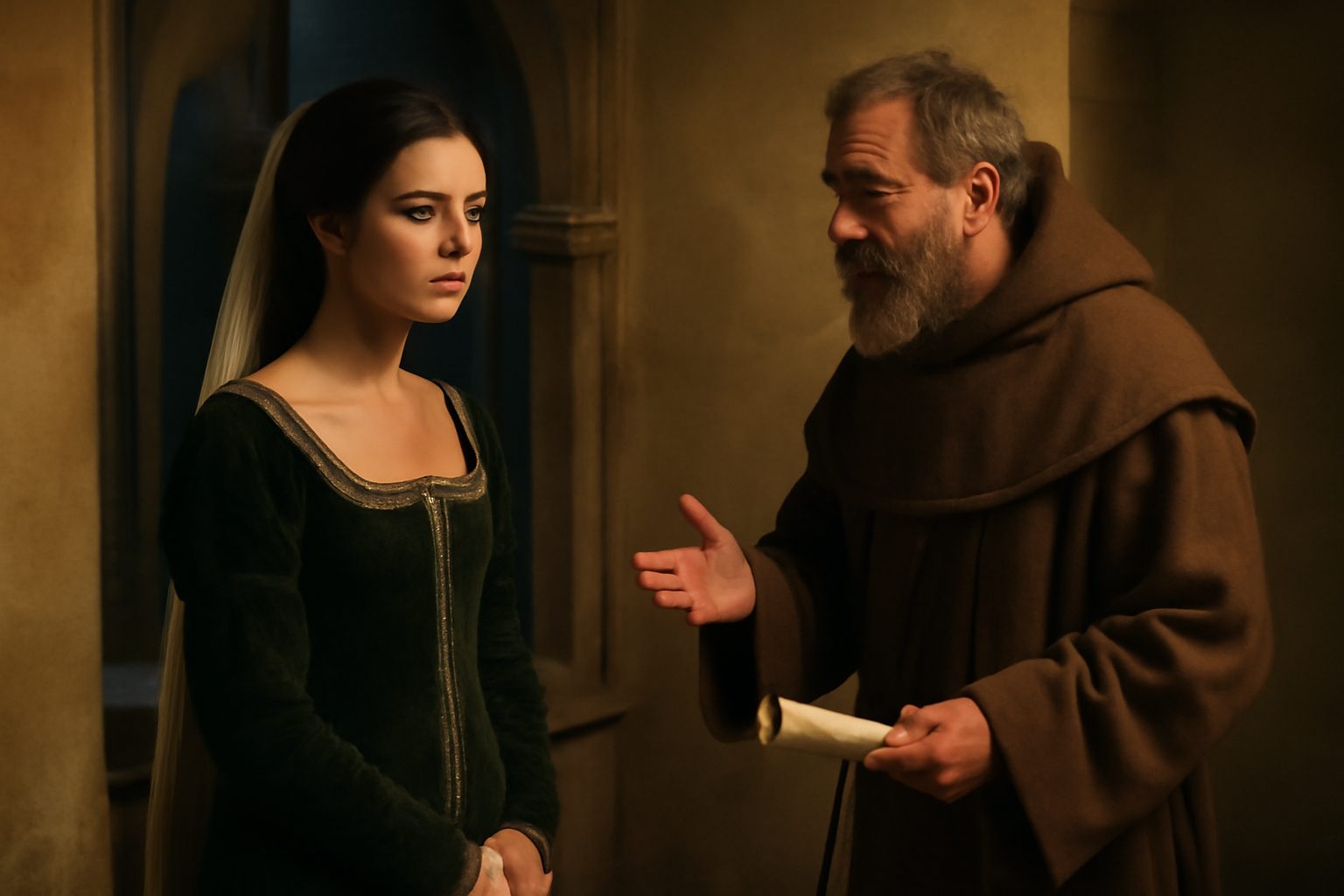
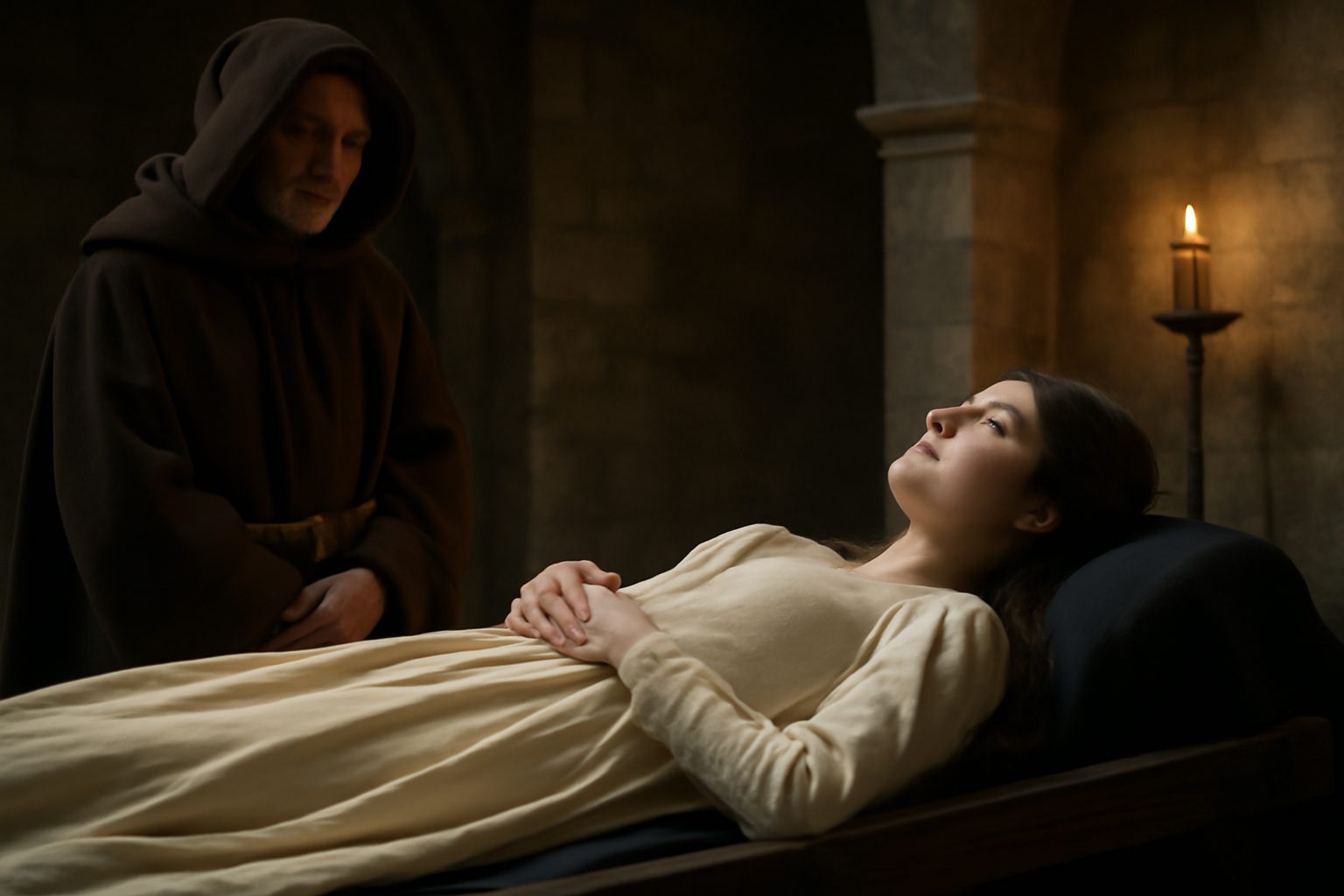
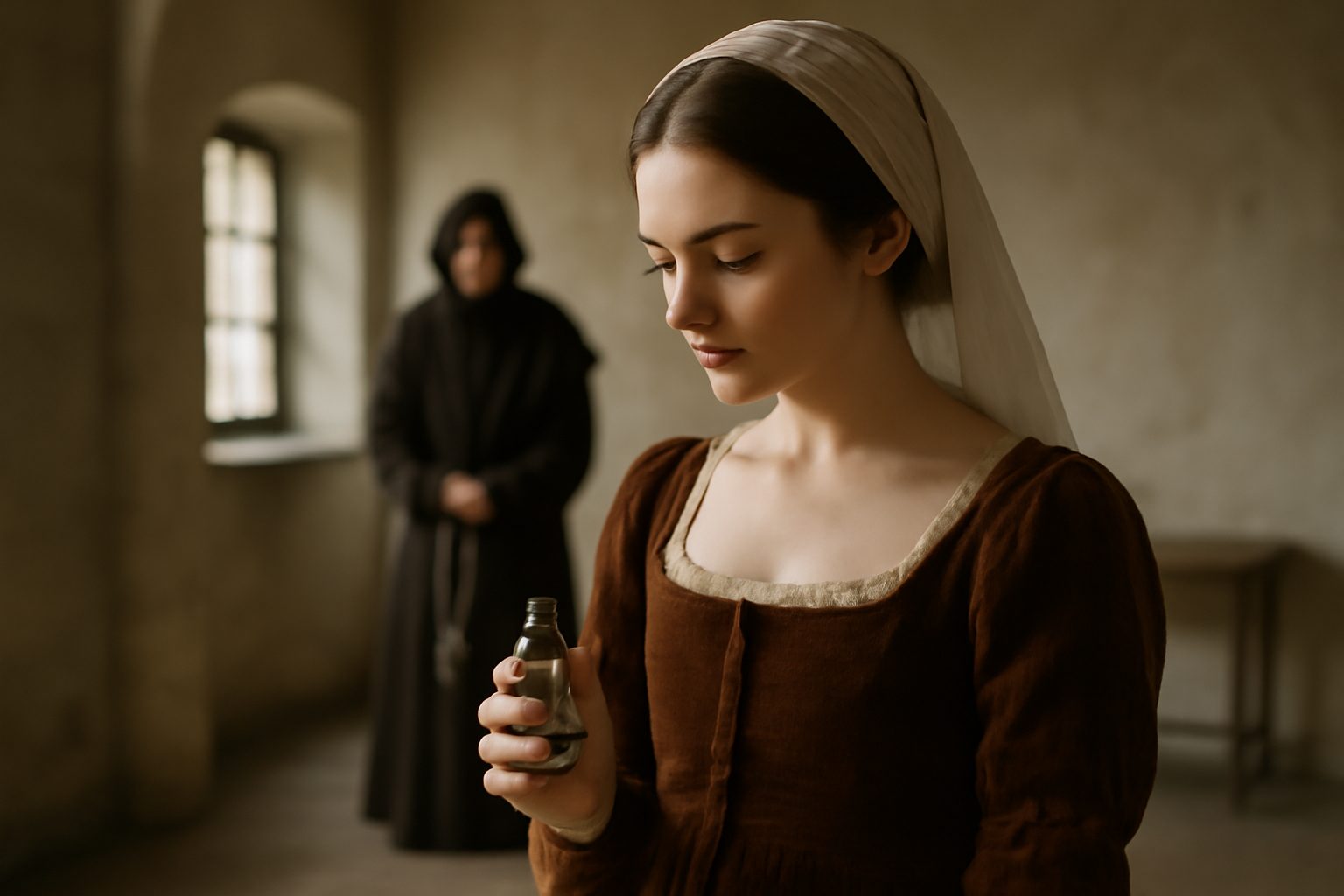
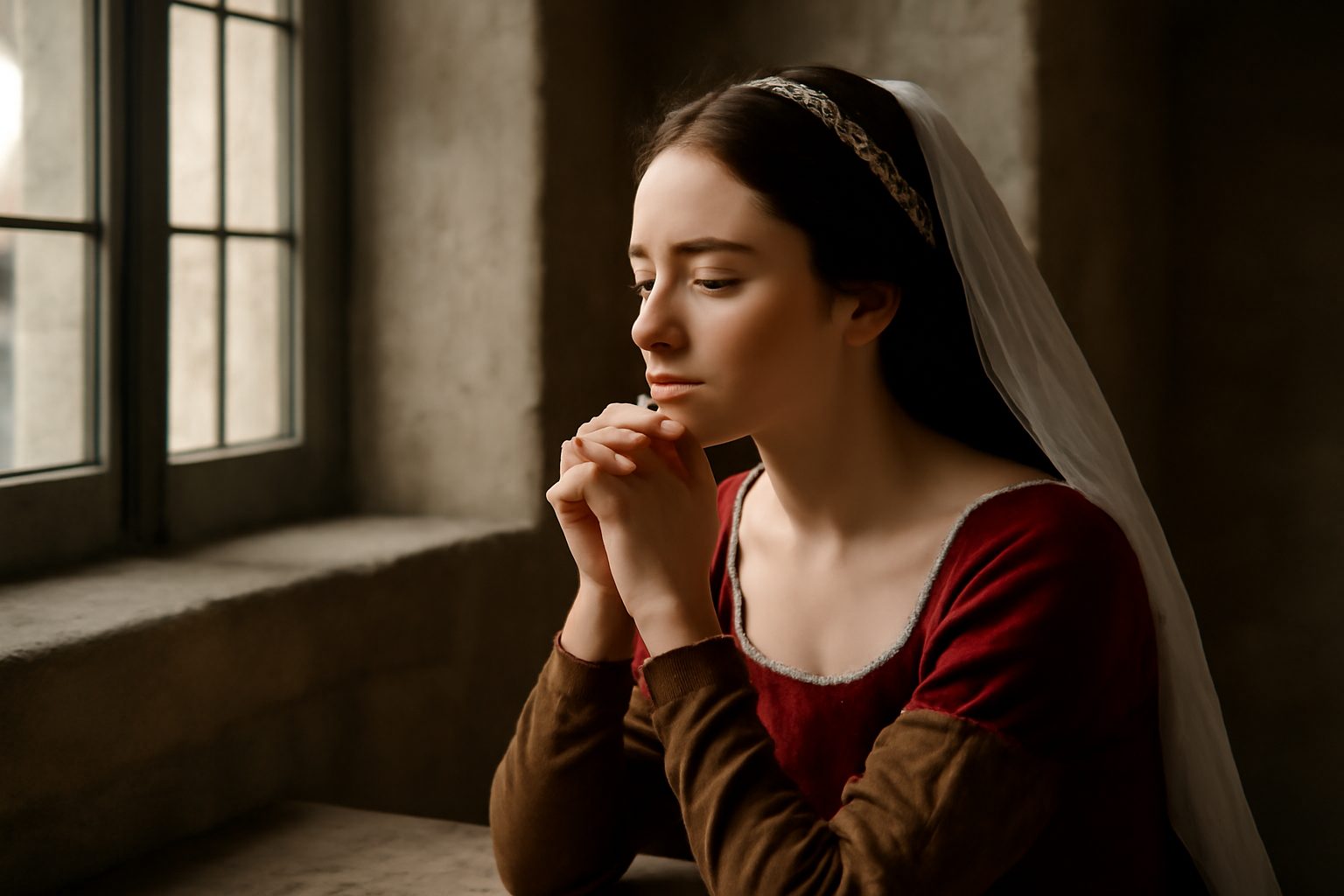
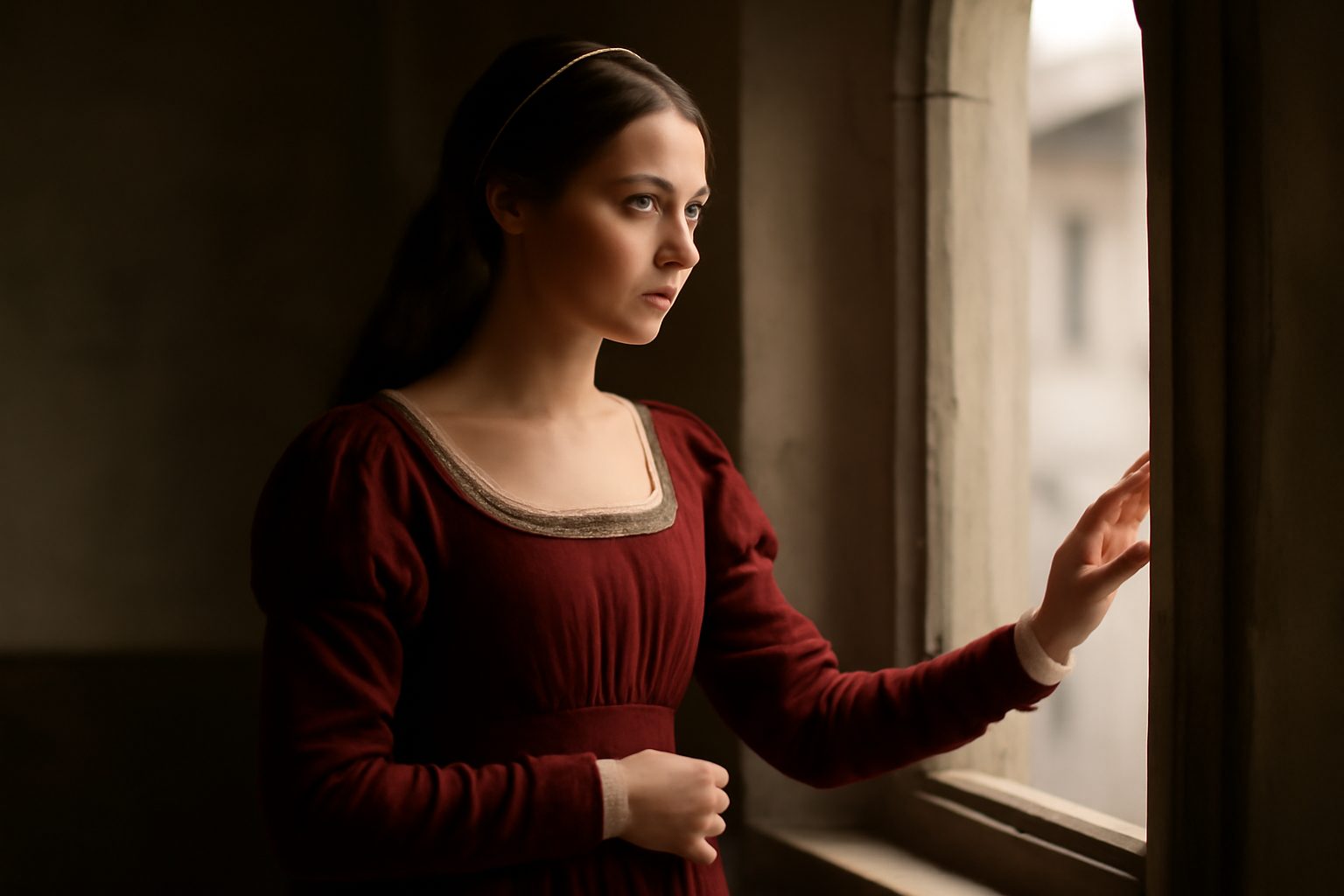
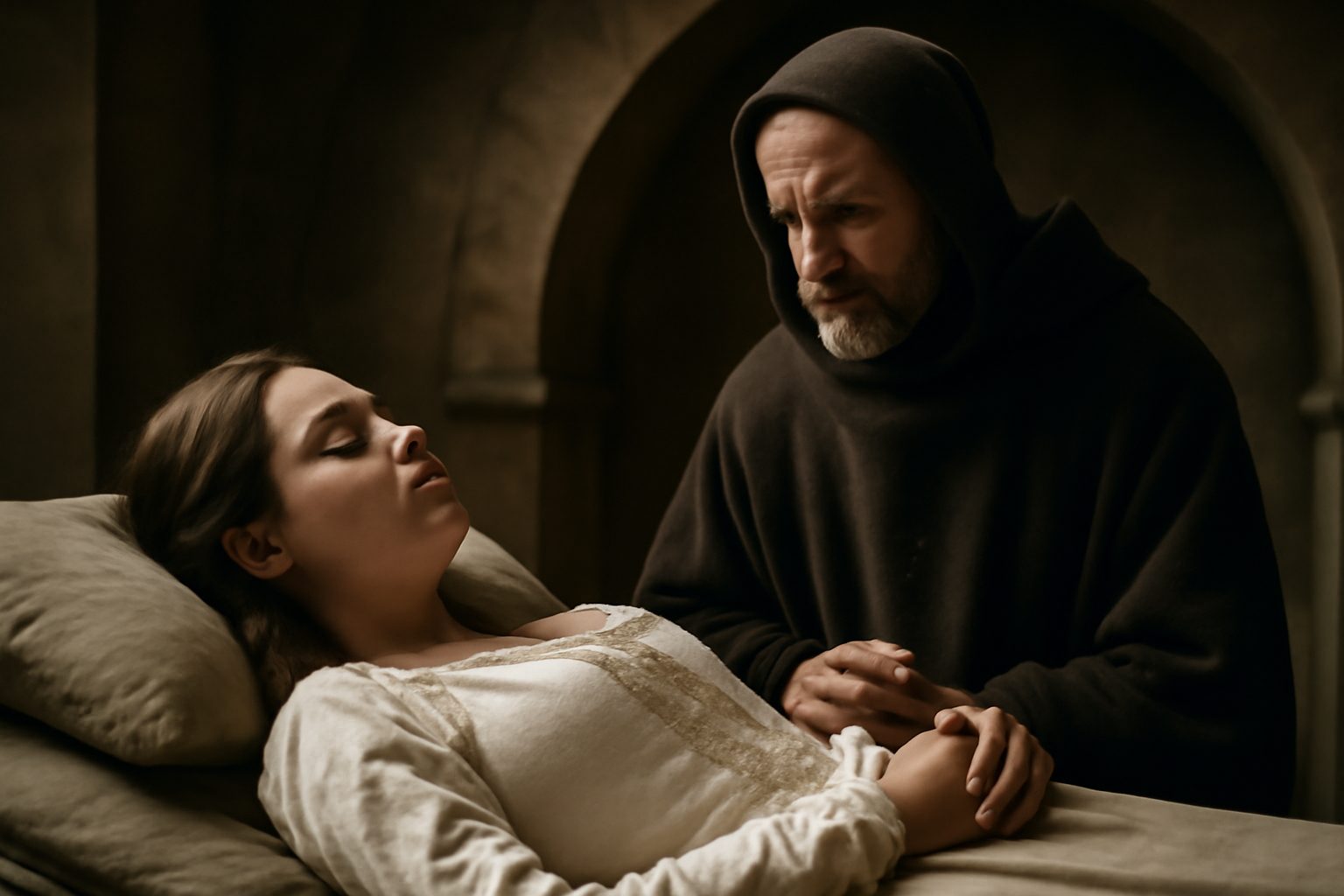
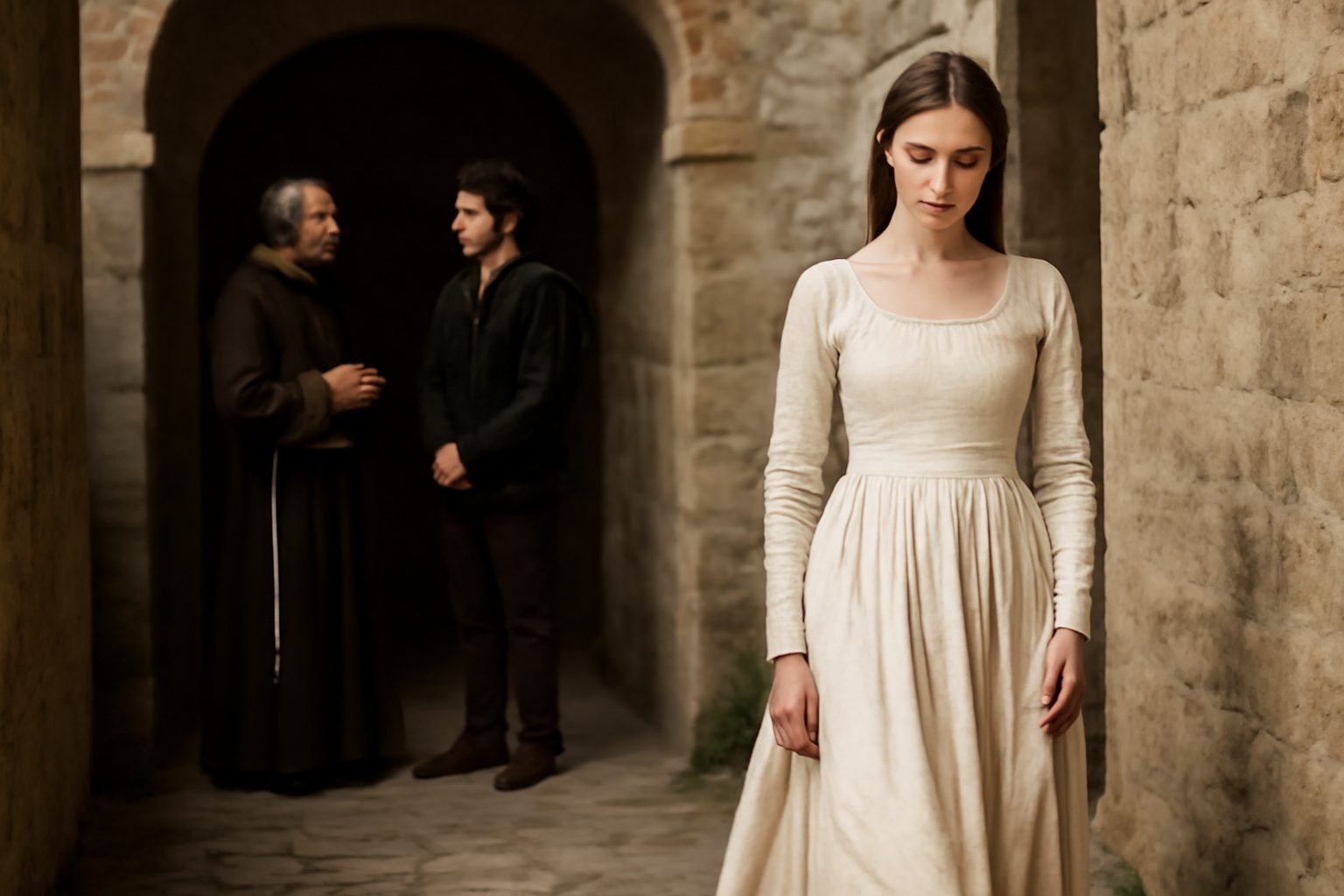
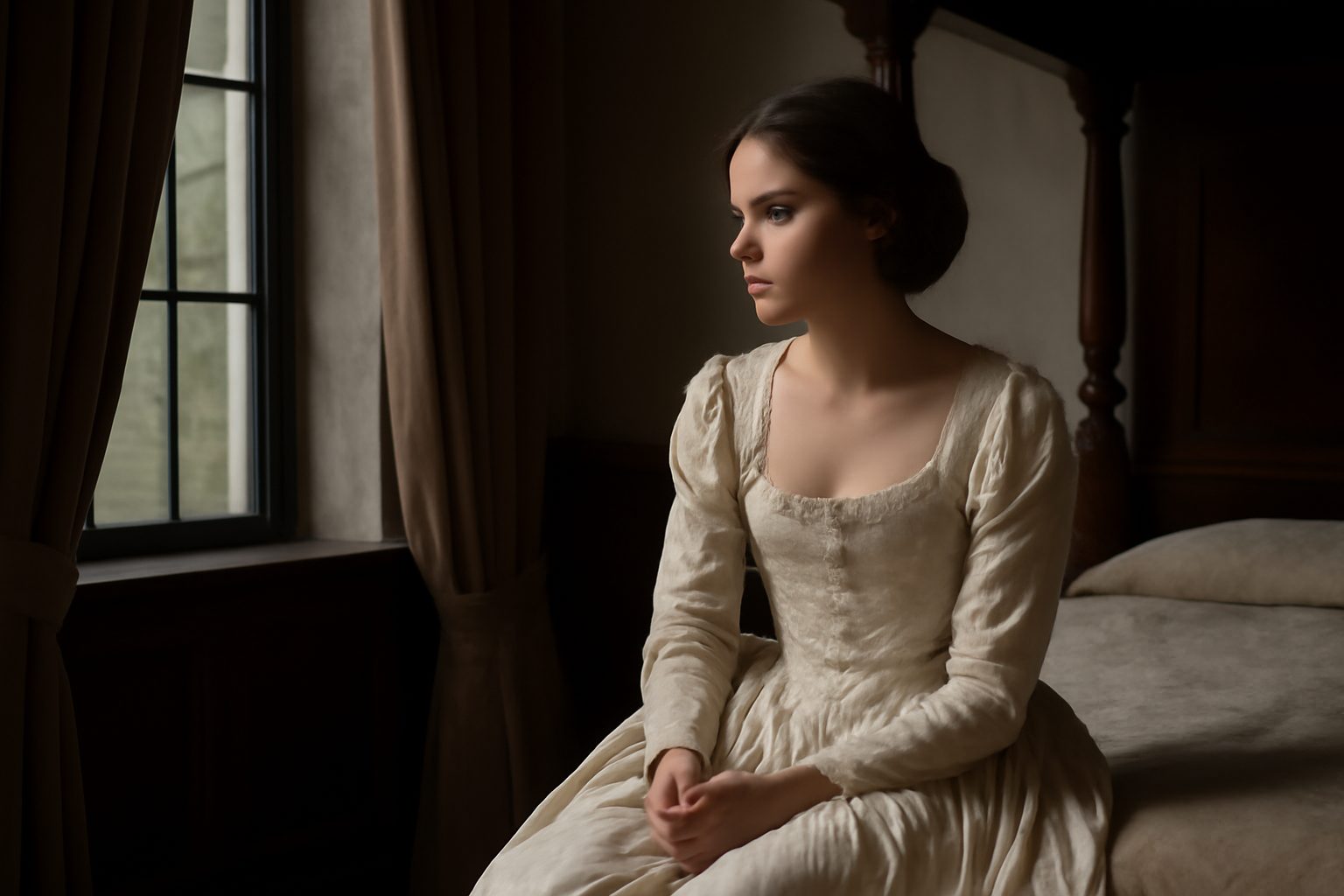
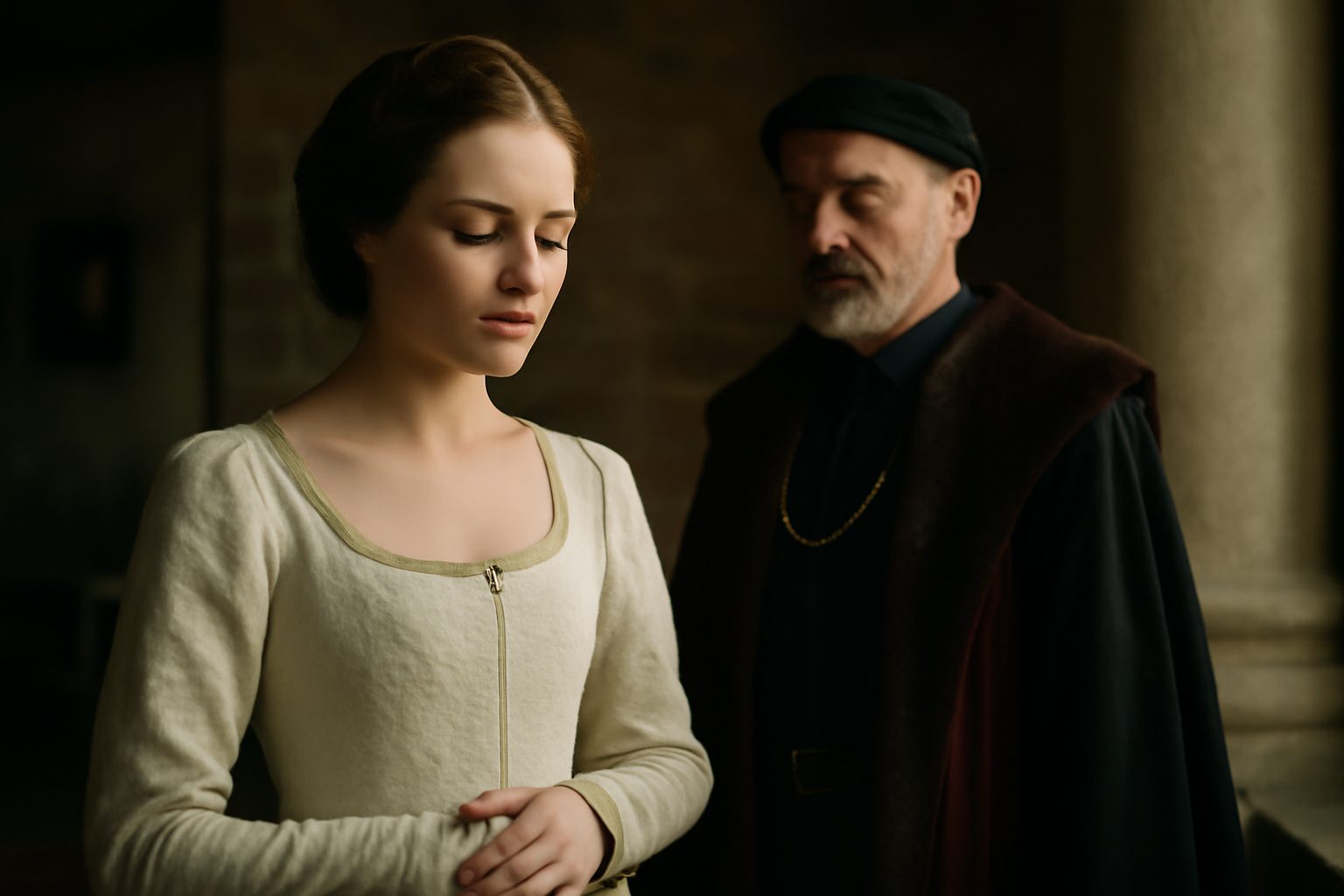
In Act 4, Scene 1 of Romeo and Juliet, Friar Laurence devises a desperate plan to help Juliet avoid marrying Paris. As he explains the details of the scheme, he instructs her to ensure she is alone in her chamber when she drinks the potion that will make her appear dead. This line emphasizes the need for secrecy, as the presence of her nurse could jeopardize the plan.
Friar Laurence: "Let not thy nurse lie with thee in thy chamber:"
In modern day english, we would say:
Don’t let your nurse sleep in your room with you tonight.
Frequently Asked Questions
What does Friar Laurence tell Juliet not to do with her nurse in her room?
He tells her not to let her nurse sleep in the same room with her.
Connections to other verses:
Connections to "Let not thy nurse lie with thee in thy chamber"
This instruction from Friar Laurence is part of his detailed plan for Juliet to feign death. It connects directly to "To-morrow night look that thou lie alone", establishing the necessity of solitude to maintain the illusion of death. The isolation prevents anyone from discovering Juliet's vital signs or interrupting the plan.
Preparation and Execution
The verse also relates to "Take thou this vial, being then in bed", as both describe actions Juliet must take while alone in her chamber. The nurse's absence ensures the potion's effects appear genuine, supporting "No warmth, no breath, shall testify thou livest", which emphasizes the need for the ruse to be undetectable.
Emotional Resolve
Juliet's determination to follow this risky plan is echoed in "Give me, give me! O, tell not me of fear!", showcasing her courage. The friar's warning about isolation aligns with his earlier reassurance in "And this shall free thee from this present shame", framing the instruction as a critical step toward liberation.
Symbolic and Thematic Links
The idea of solitude in death mirrors Juliet's earlier despair in "And hide me with a dead man in his shroud", highlighting her willingness to embrace death-like states for love. The friar's meticulous planning, including this detail, underscores the theme of secrecy and sacrifice central to the scene.