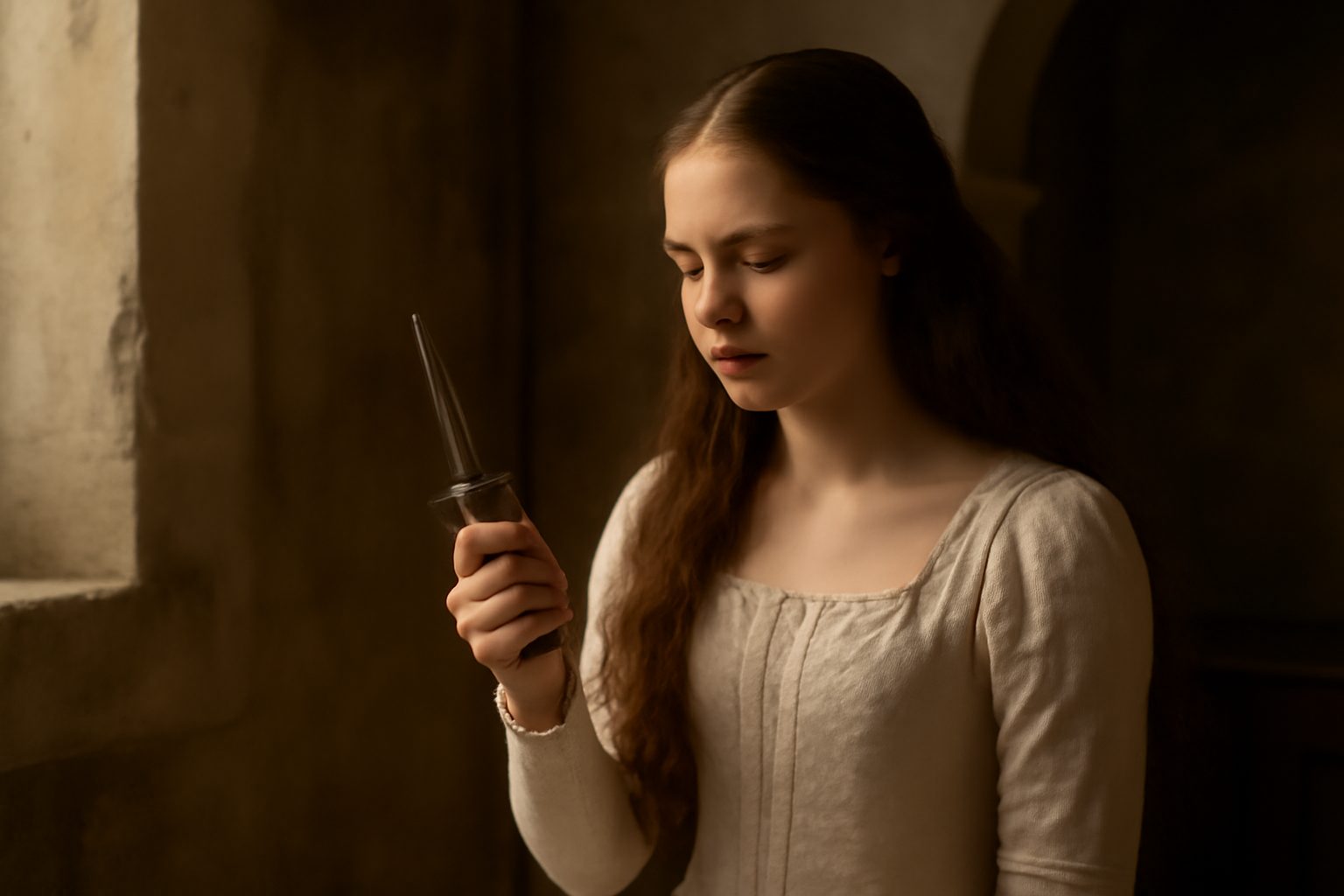
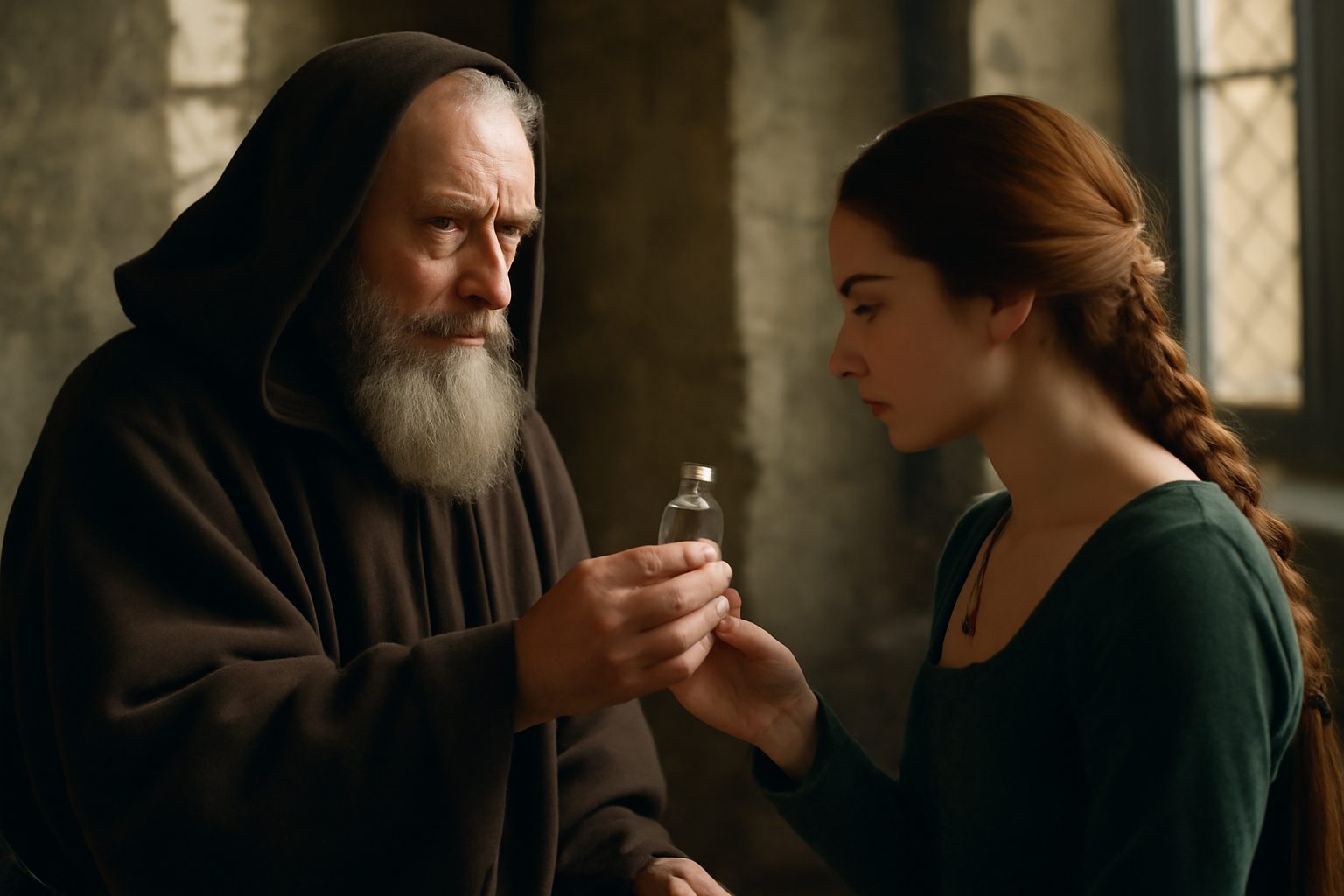
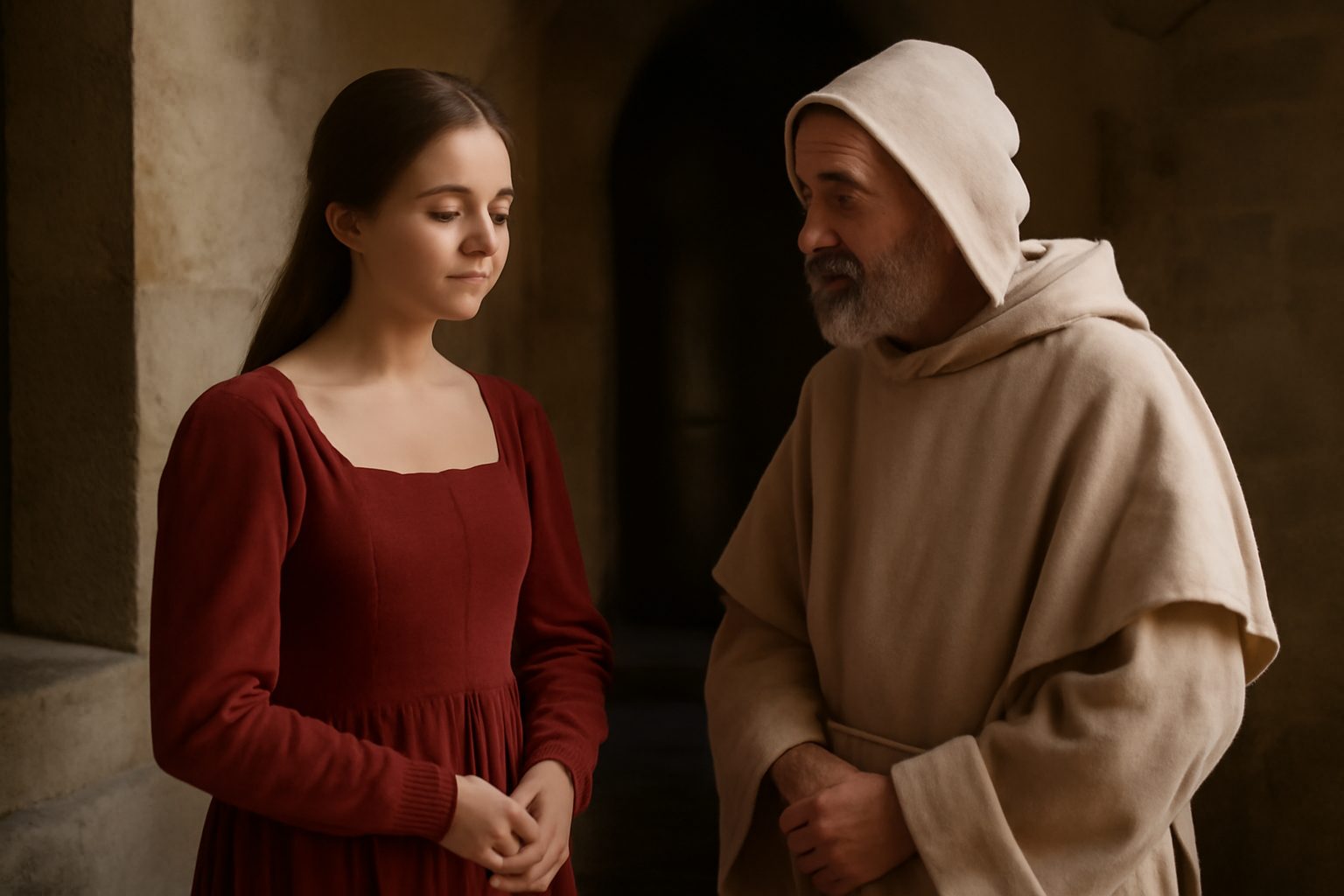
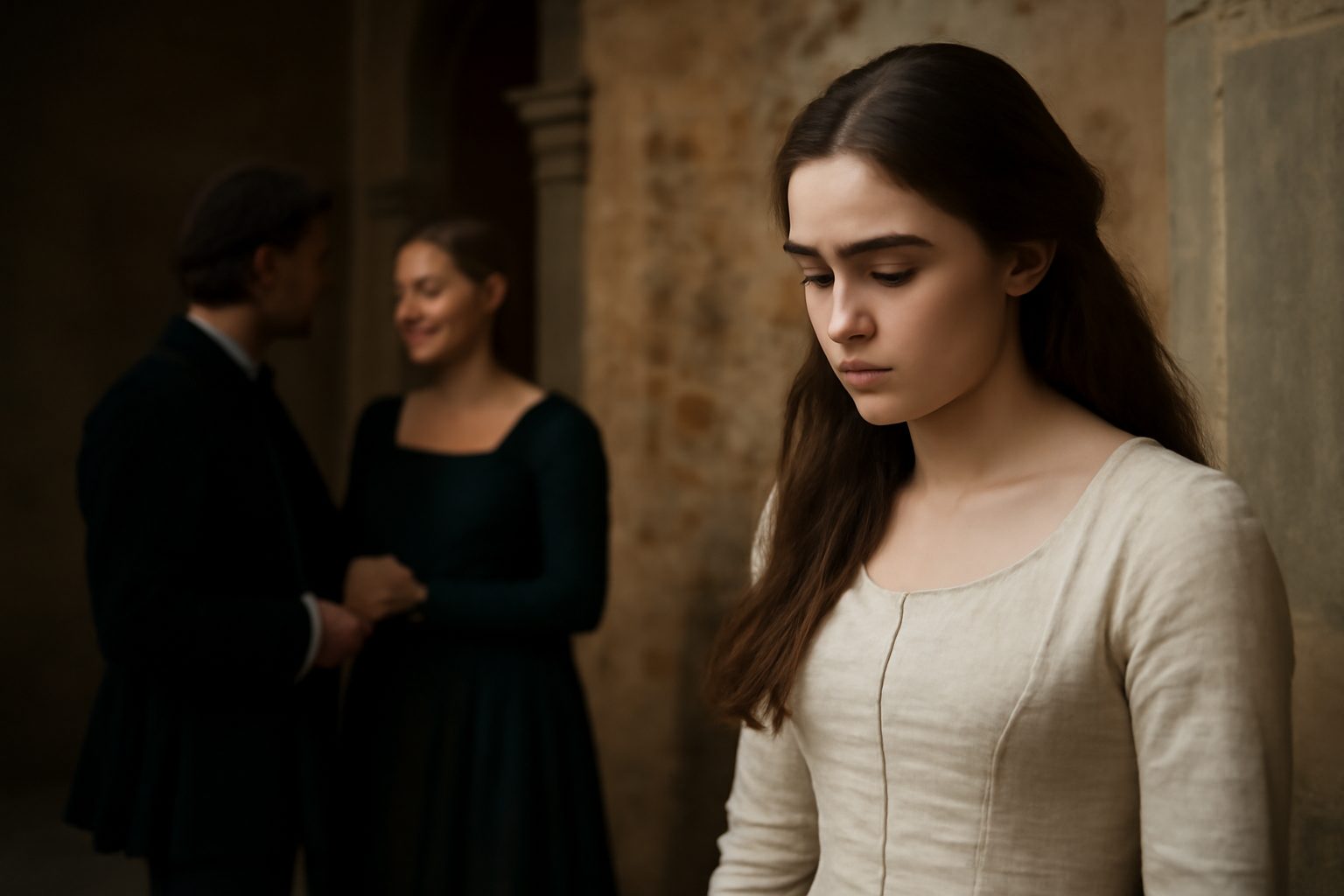
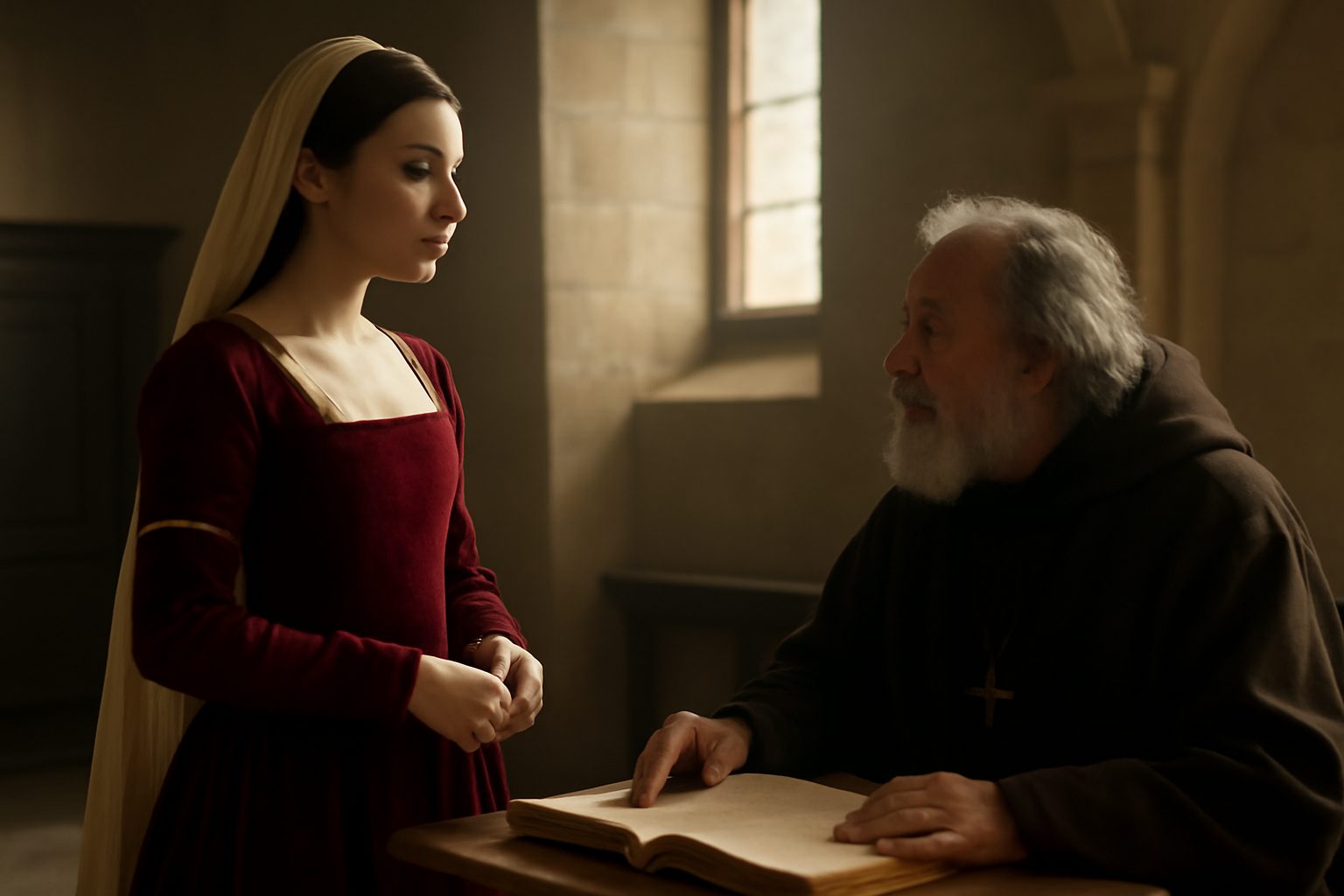
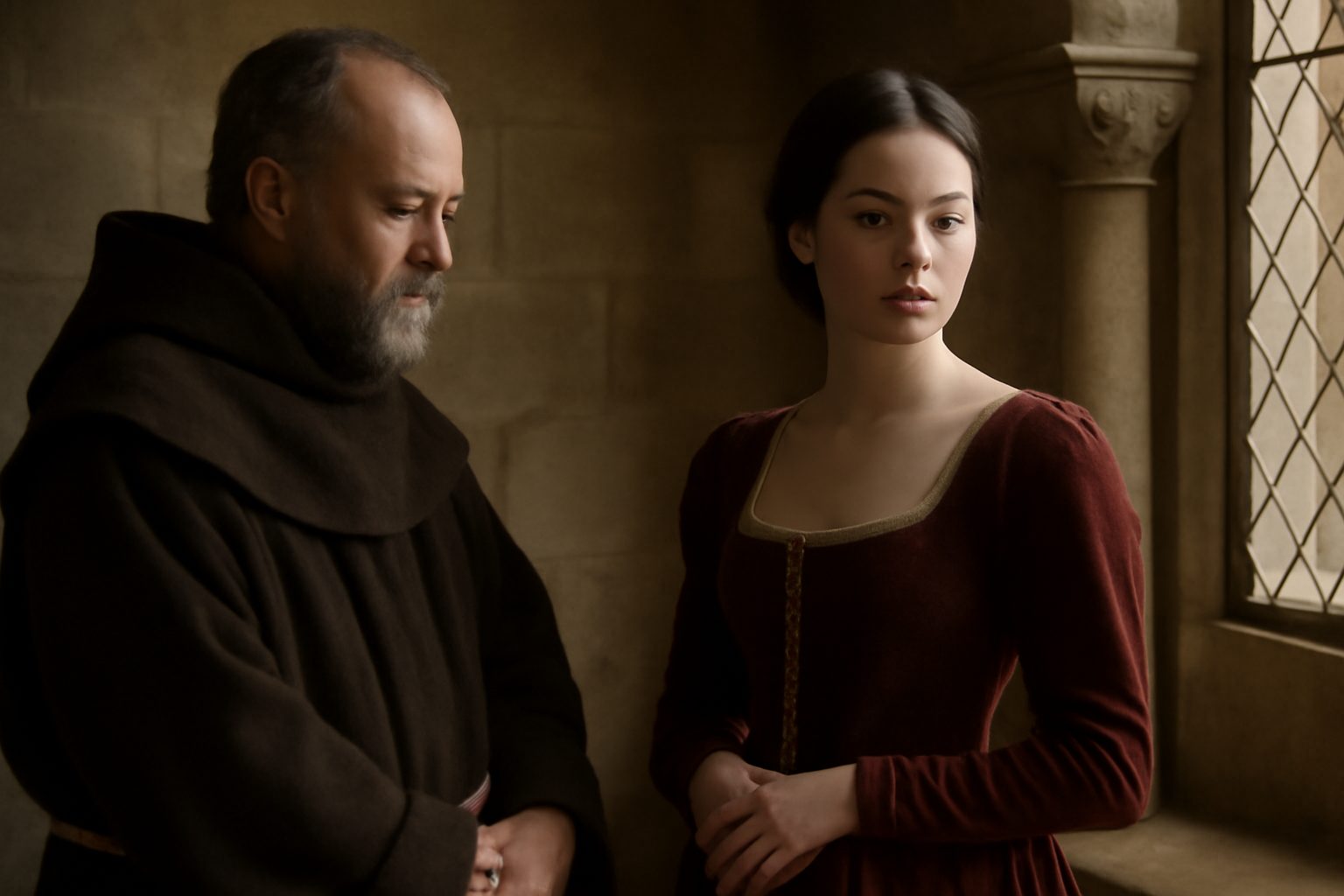
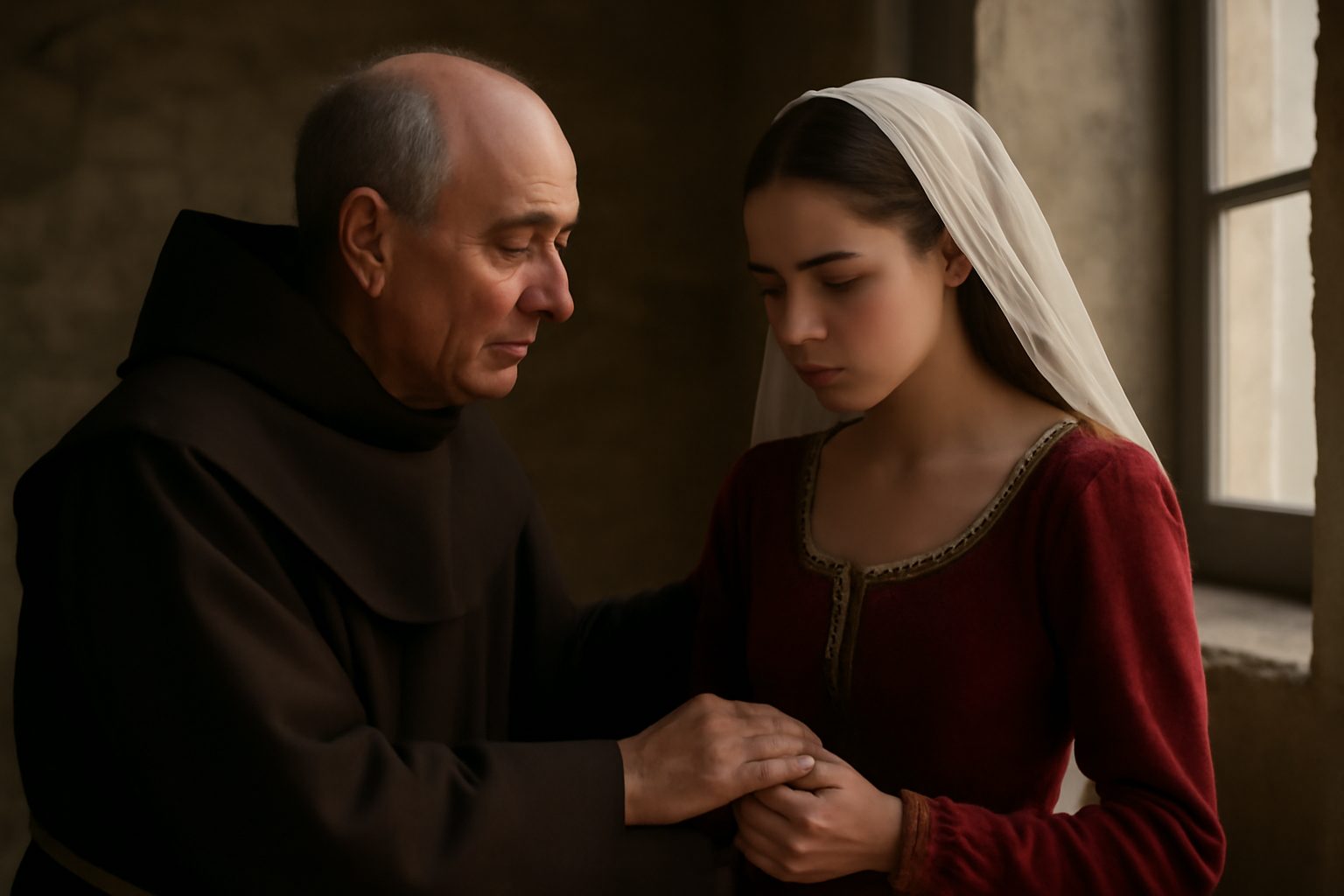
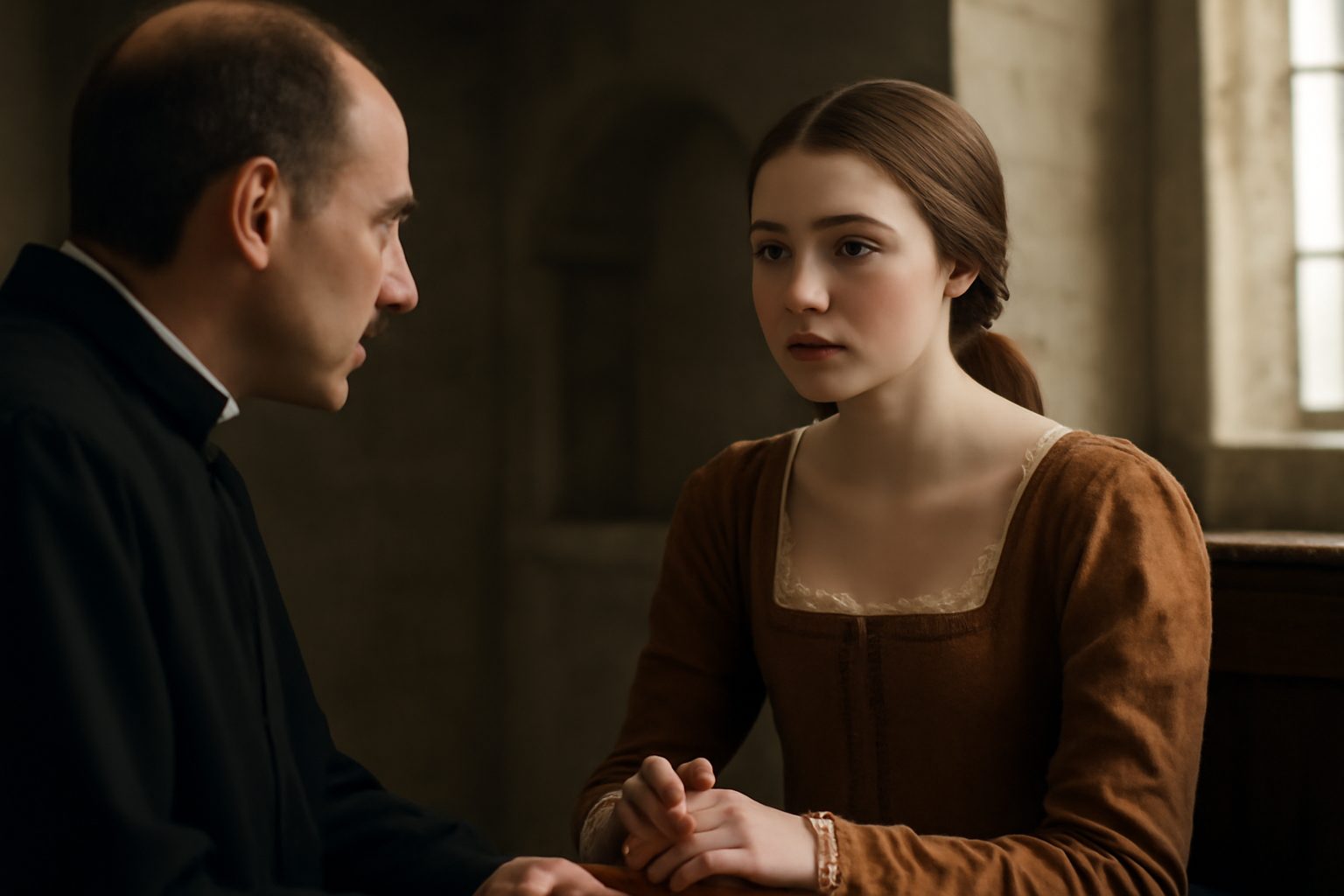
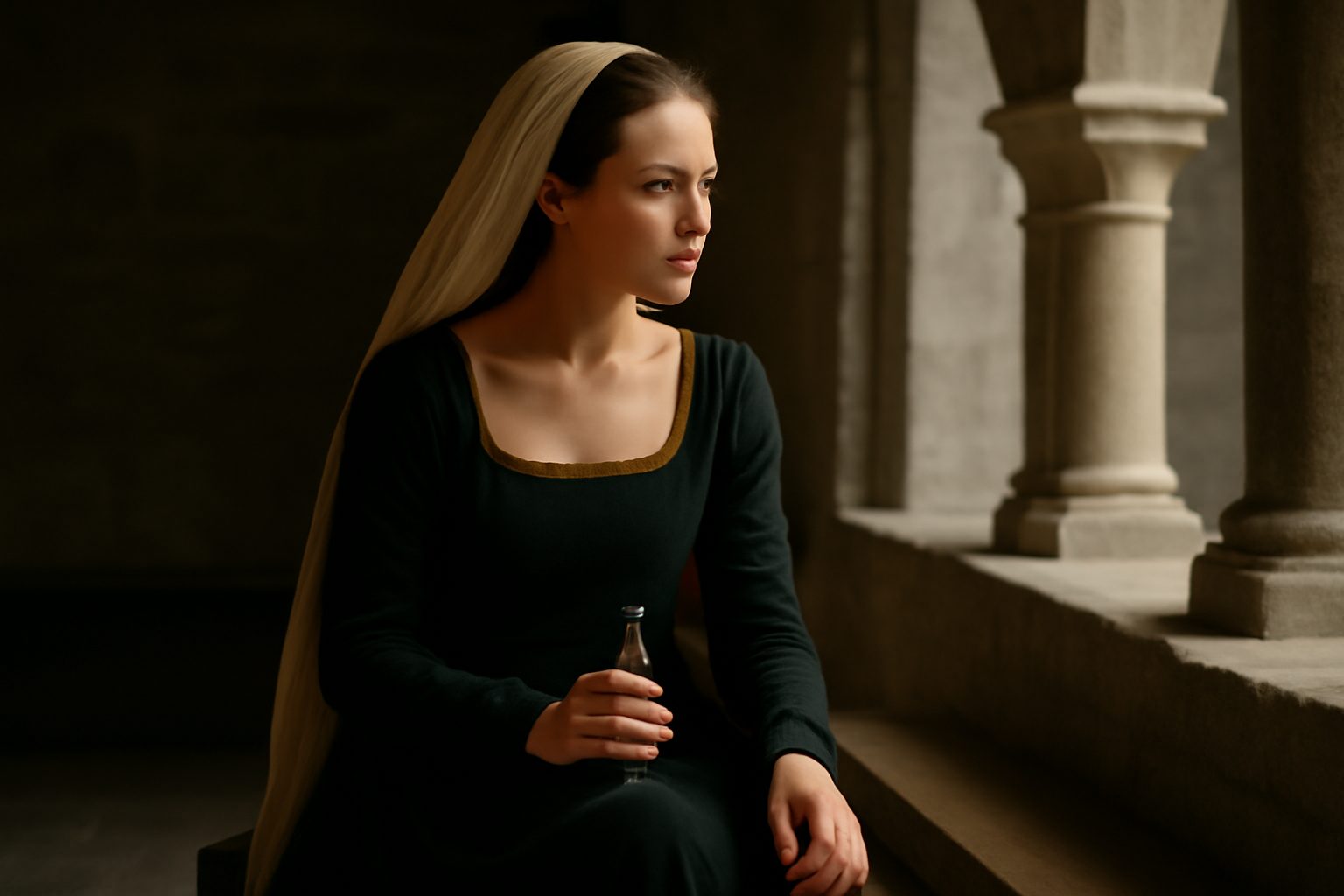
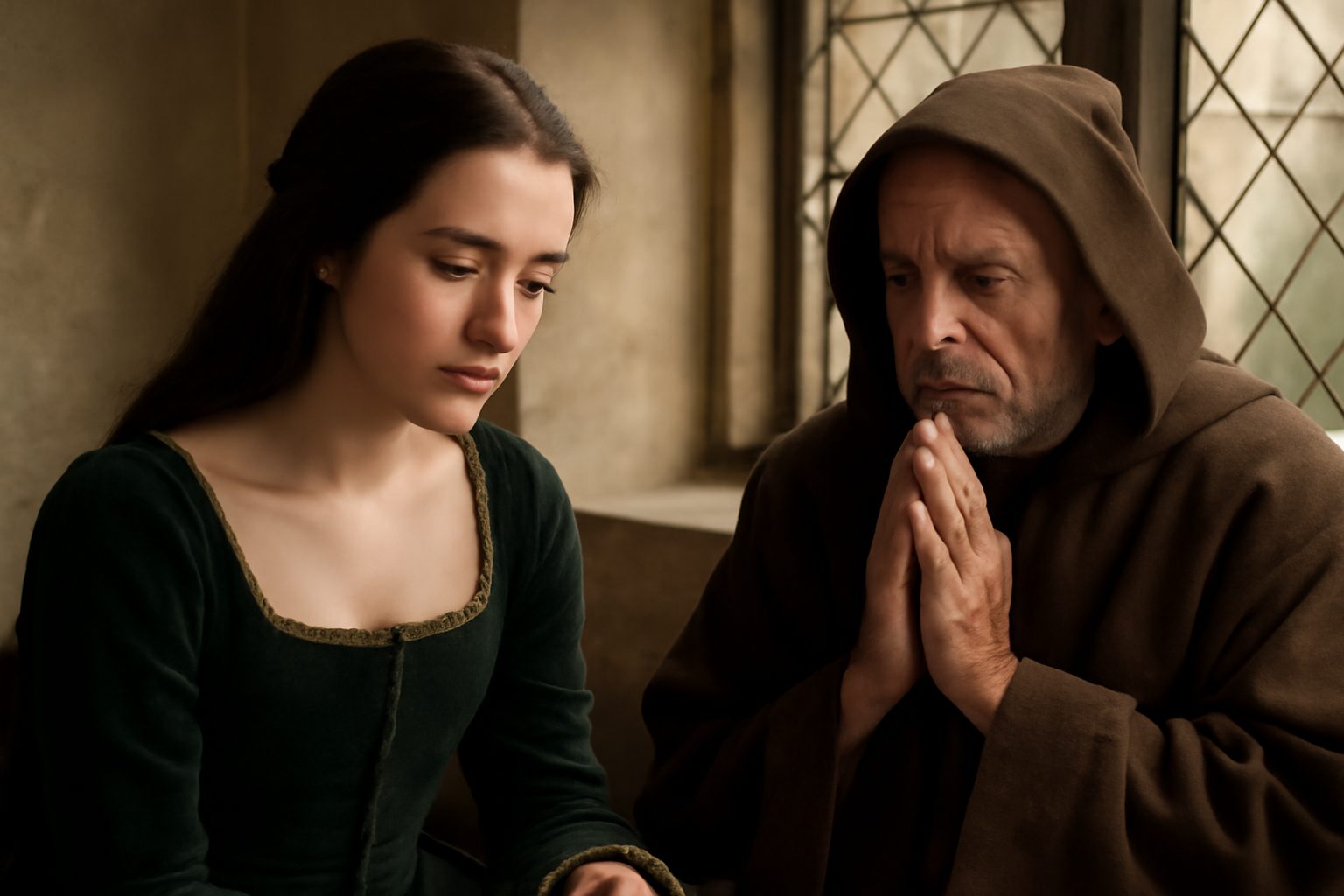
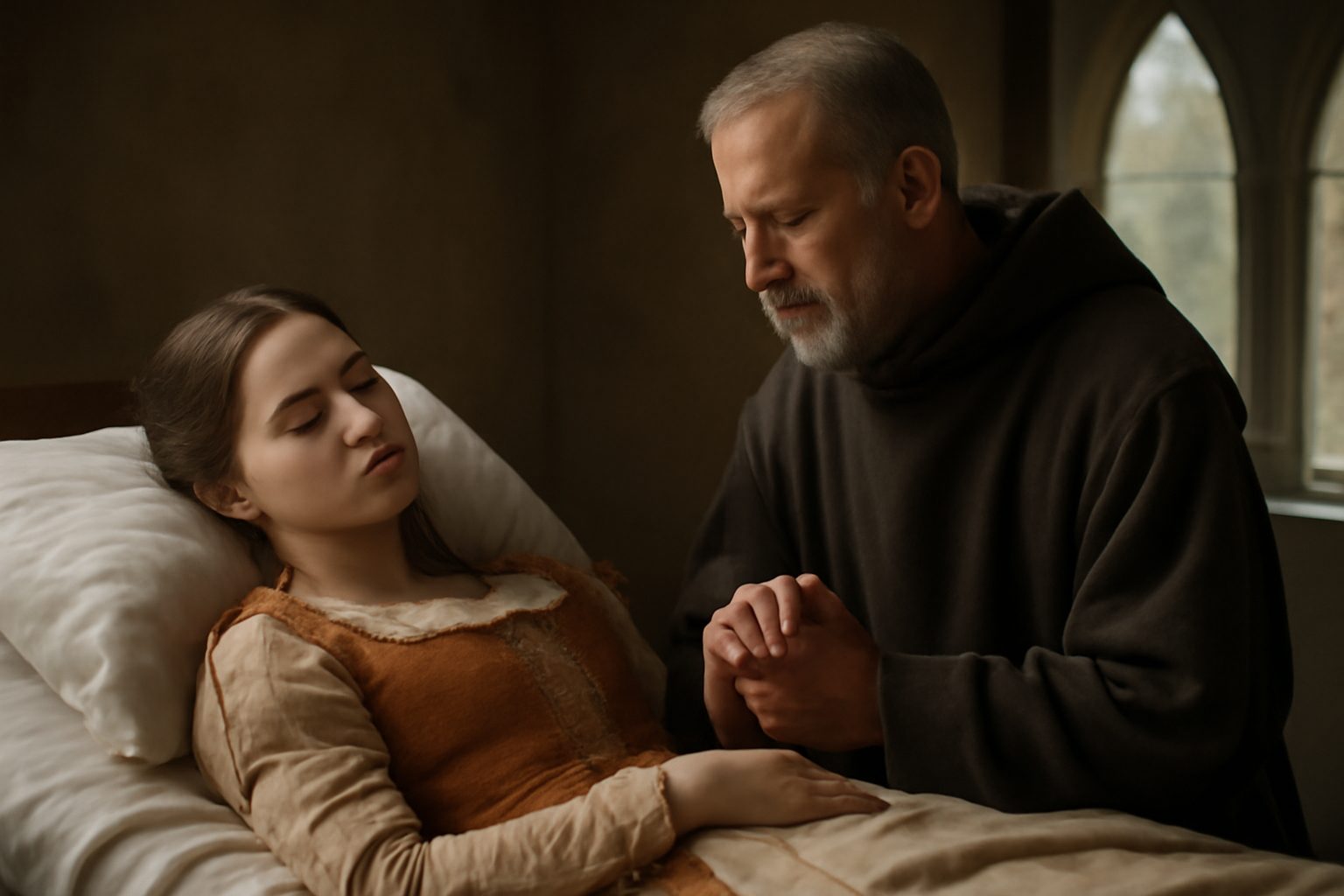
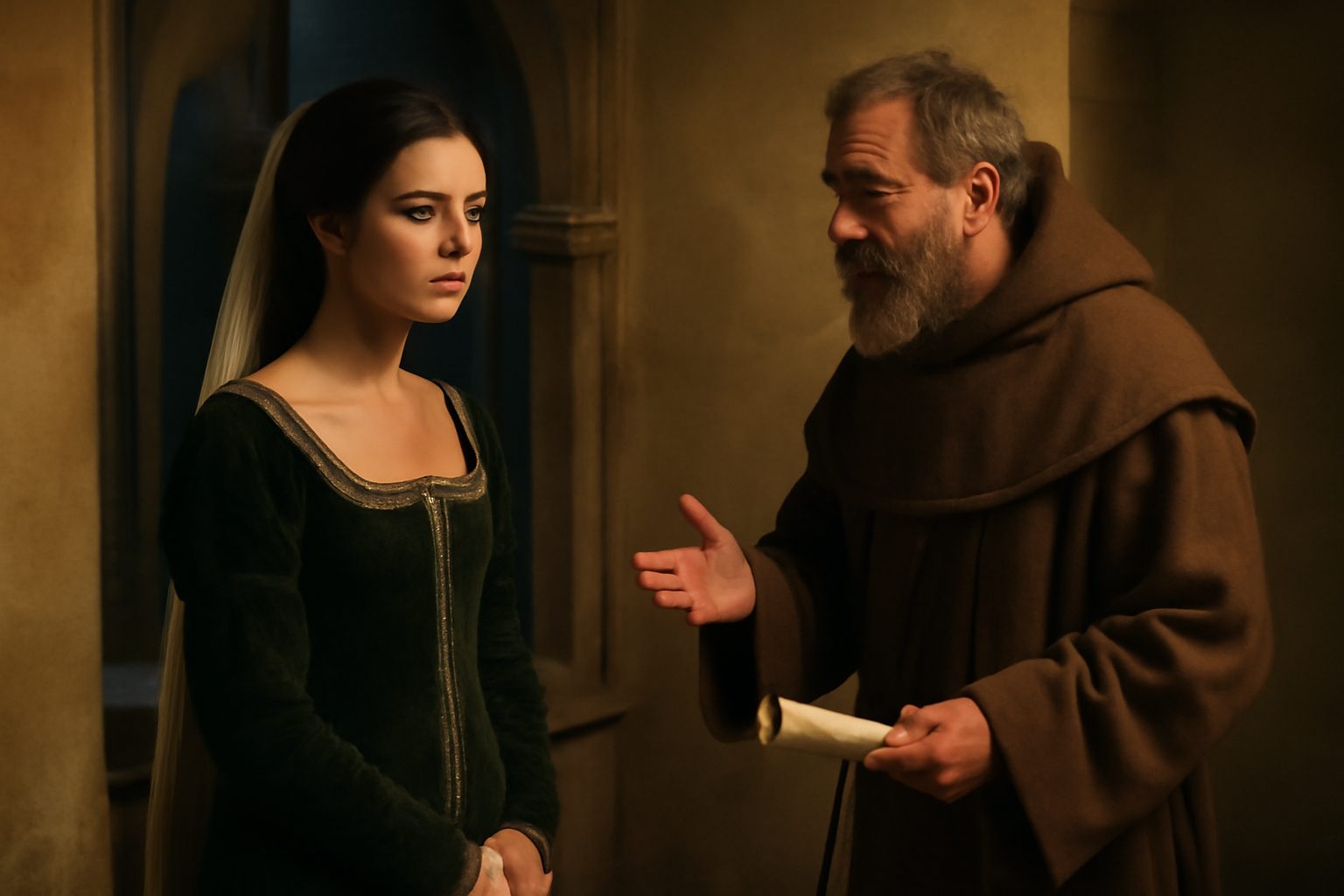
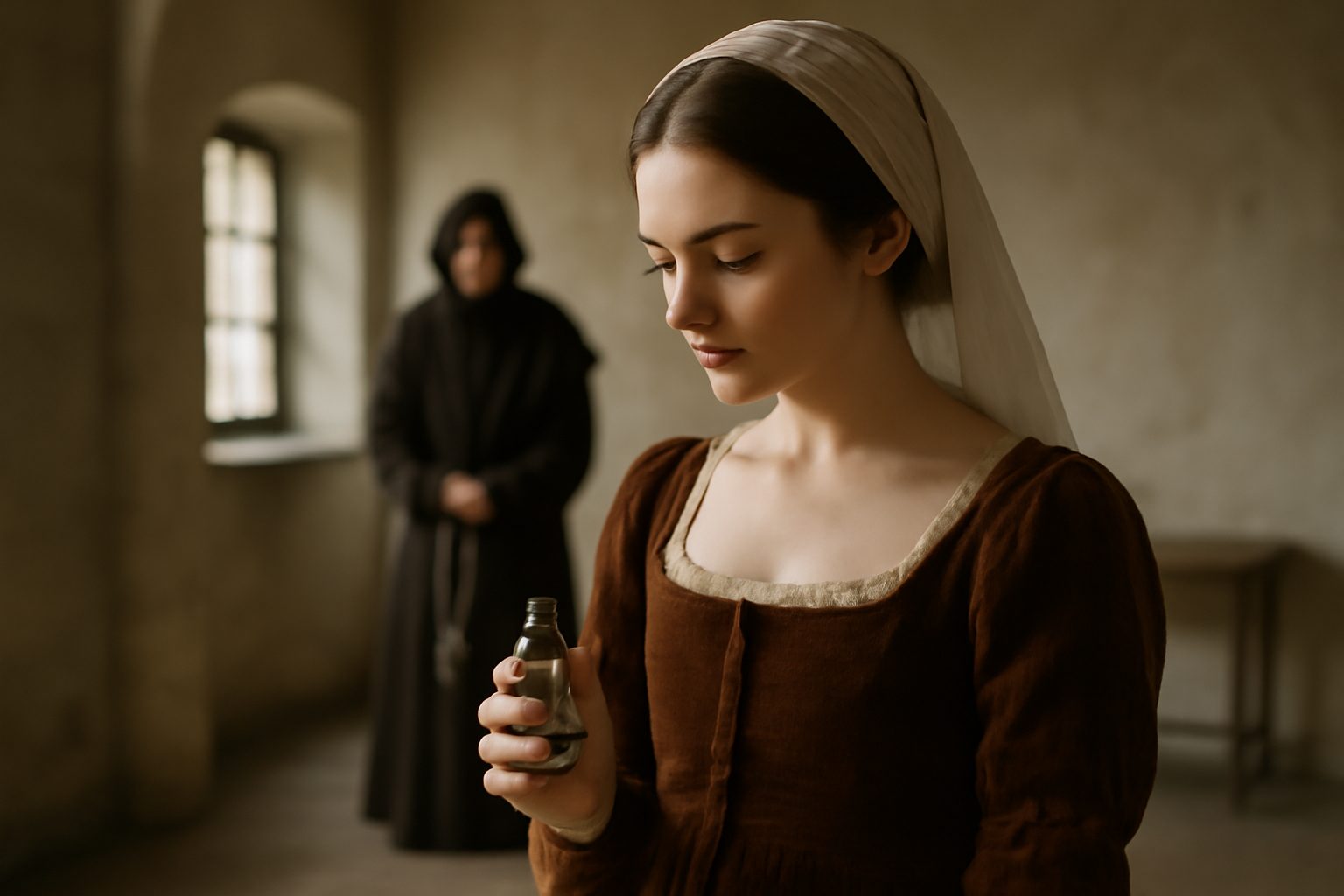
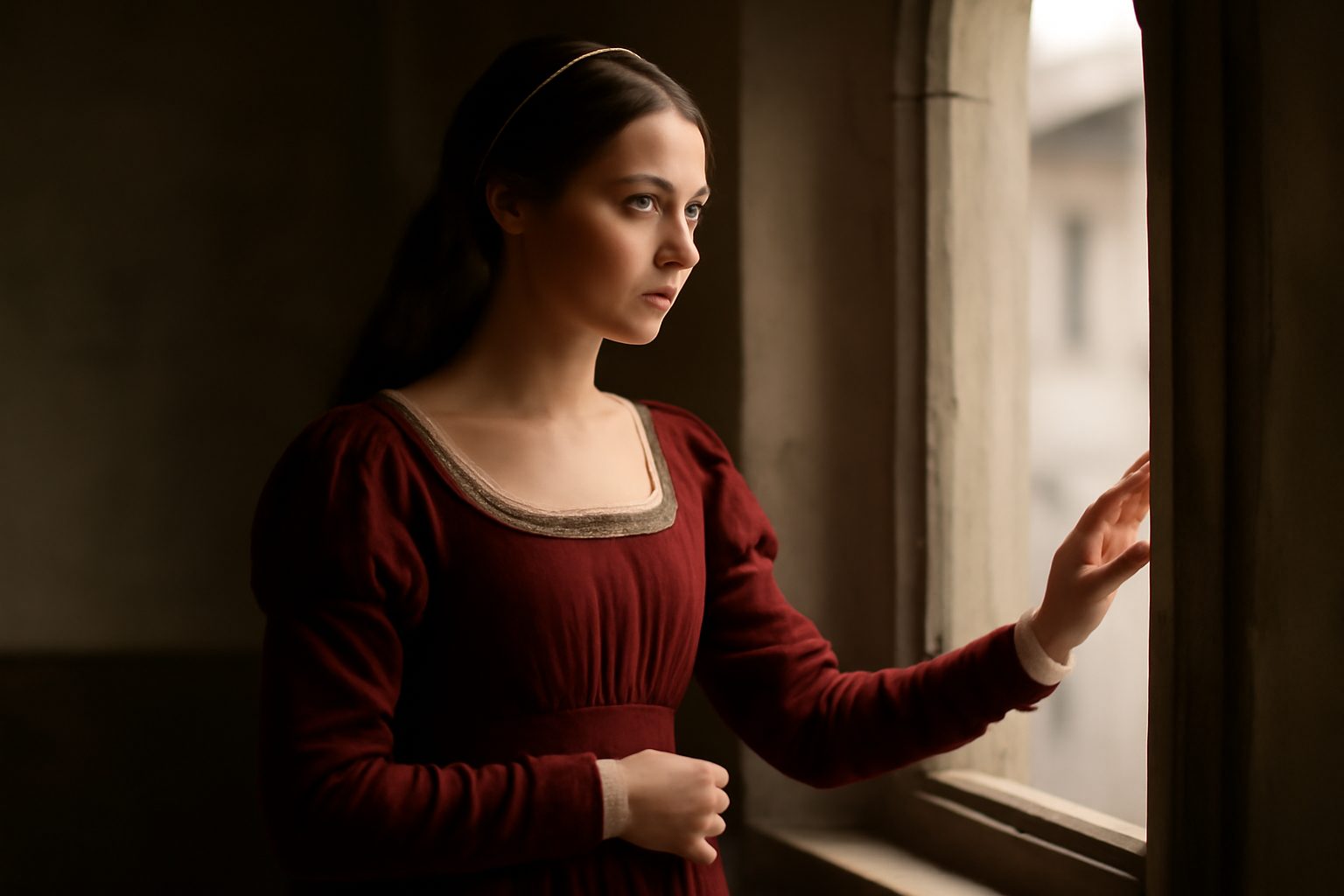
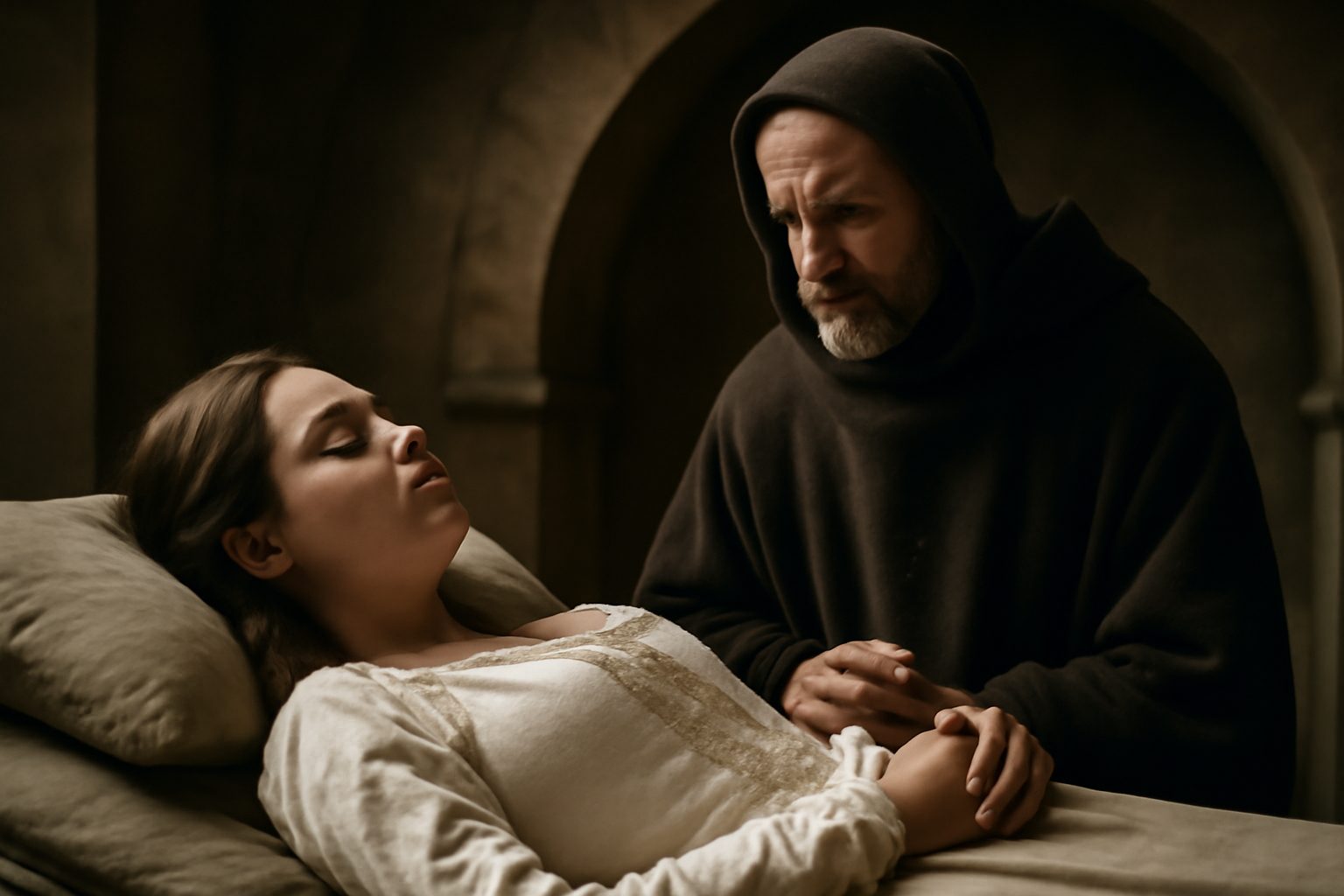
In Act 4, Scene 1 of Romeo and Juliet, Juliet visits Friar Laurence in desperation after her father demands she marry Paris. The friar, devising a plan to reunite her with Romeo, instructs her to take a potion that will make her appear dead. This line refers to the moment Paris, the intended bridegroom, arrives to claim his bride on their wedding day, unaware of Juliet's impending feigned death.
Friar Laurence: "Now, when the bridegroom in the morning comes"
In modern day english, we would say:
When the groom arrives in the morning to wake his bride.
Frequently Asked Questions
Who is the bridegroom that Friar Laurence is talking about in this line?
The bridegroom is Paris, who is supposed to marry Juliet the next morning.
Connections to other verses:
Connections to "Now, when the bridegroom in the morning comes"
This verse from Romeo & Juliet Act 4 Scene 1 – Now, when the bridegroom in the morning comes is part of Friar Laurence's plan for Juliet to feign death to avoid marrying Paris. It directly relates to the urgency of the wedding, as mentioned in On Thursday next be married to this county, which sets the timeline for the plan's execution.
Friar Laurence's Detailed Instructions
The verse is preceded by the friar's instructions for Juliet to drink the potion, as in And this distilled liquor drink thou off, and describes the physical effects she will experience, linking to Each part, deprived of supple government and Shall, stiff and stark and cold, appear like death. The "bridegroom" refers to Paris, whose arrival is anticipated in To rouse thee from thy bed, there art thou dead, emphasizing the deception.
Juliet's Resolve and the Plan's Outcome
Juliet's determination to avoid the marriage is clear in O, bid me leap, rather than marry Paris, which contrasts with the friar's strategy. The plan's success hinges on timing, as noted in Thou shalt continue two and forty hours, and aims to free her from shame, as stated in And this shall free thee from this present shame.
Symbolism and Irony
The "bridegroom" imagery is ironic, as Juliet's true bridegroom is Romeo, highlighted in God join'd my heart and Romeo's, thou our hands. The verse also connects to the theme of false appearances, echoing And in this borrow'd likeness of shrunk death, underscoring the tragedy of misunderstandings that drive the plot forward.