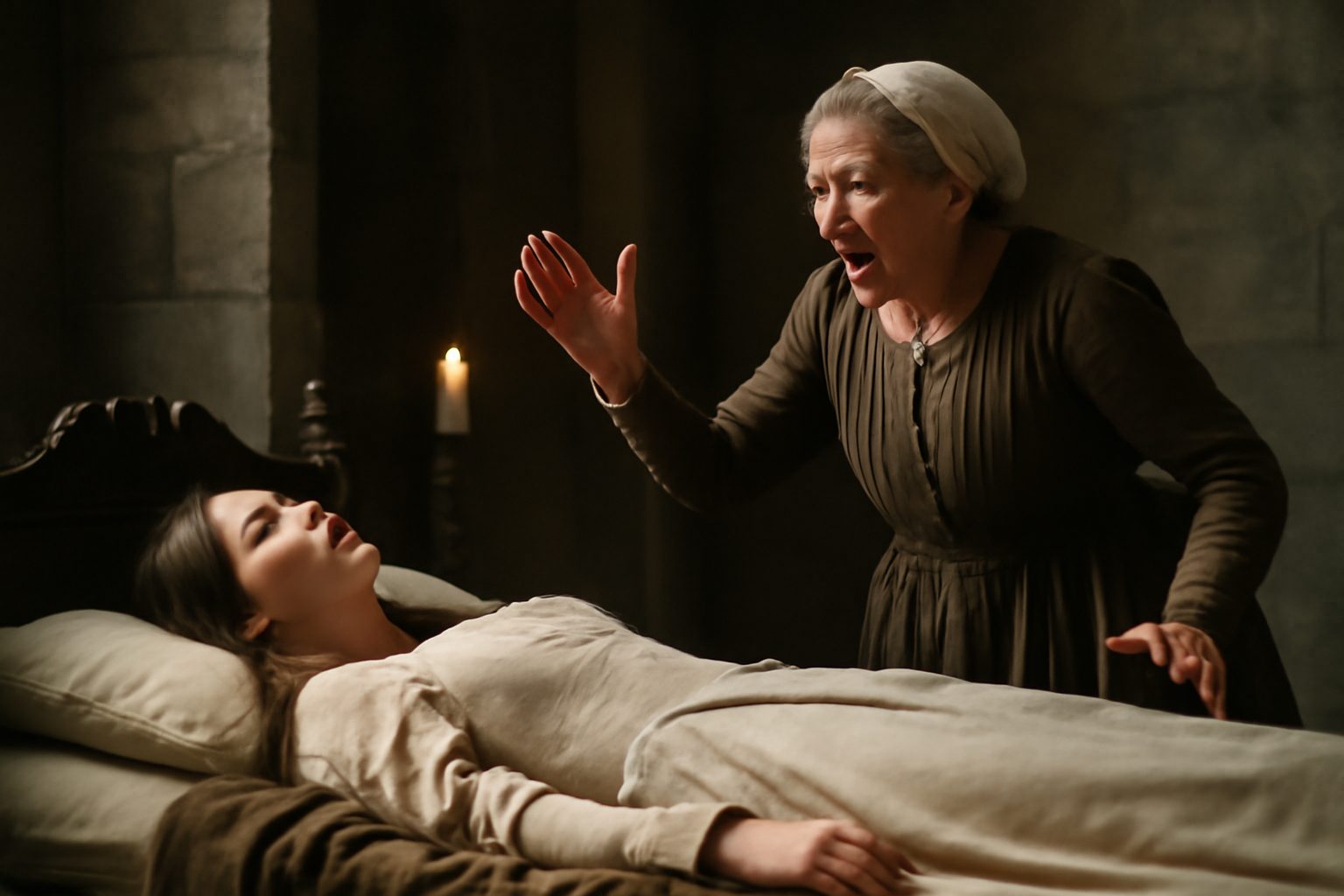
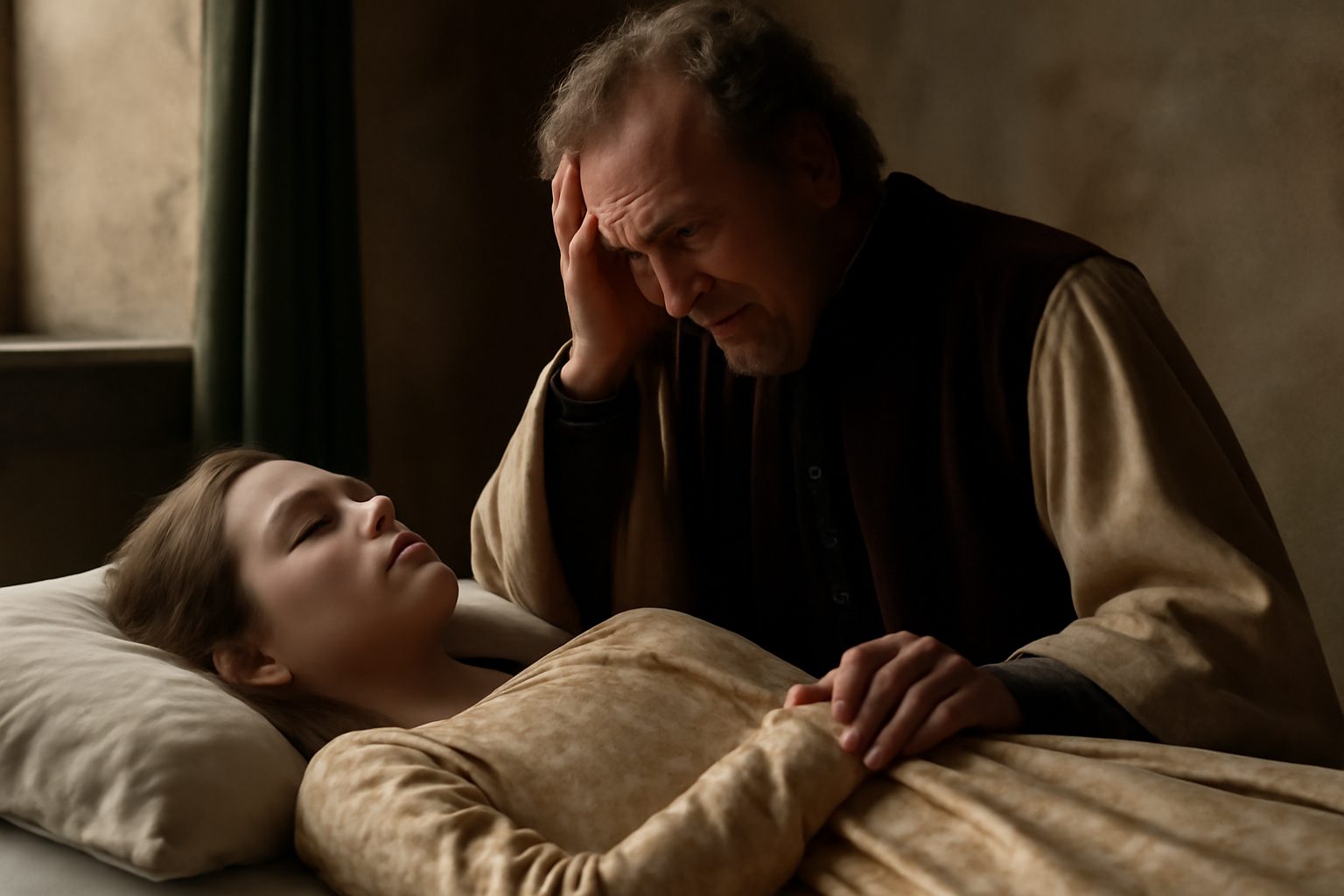
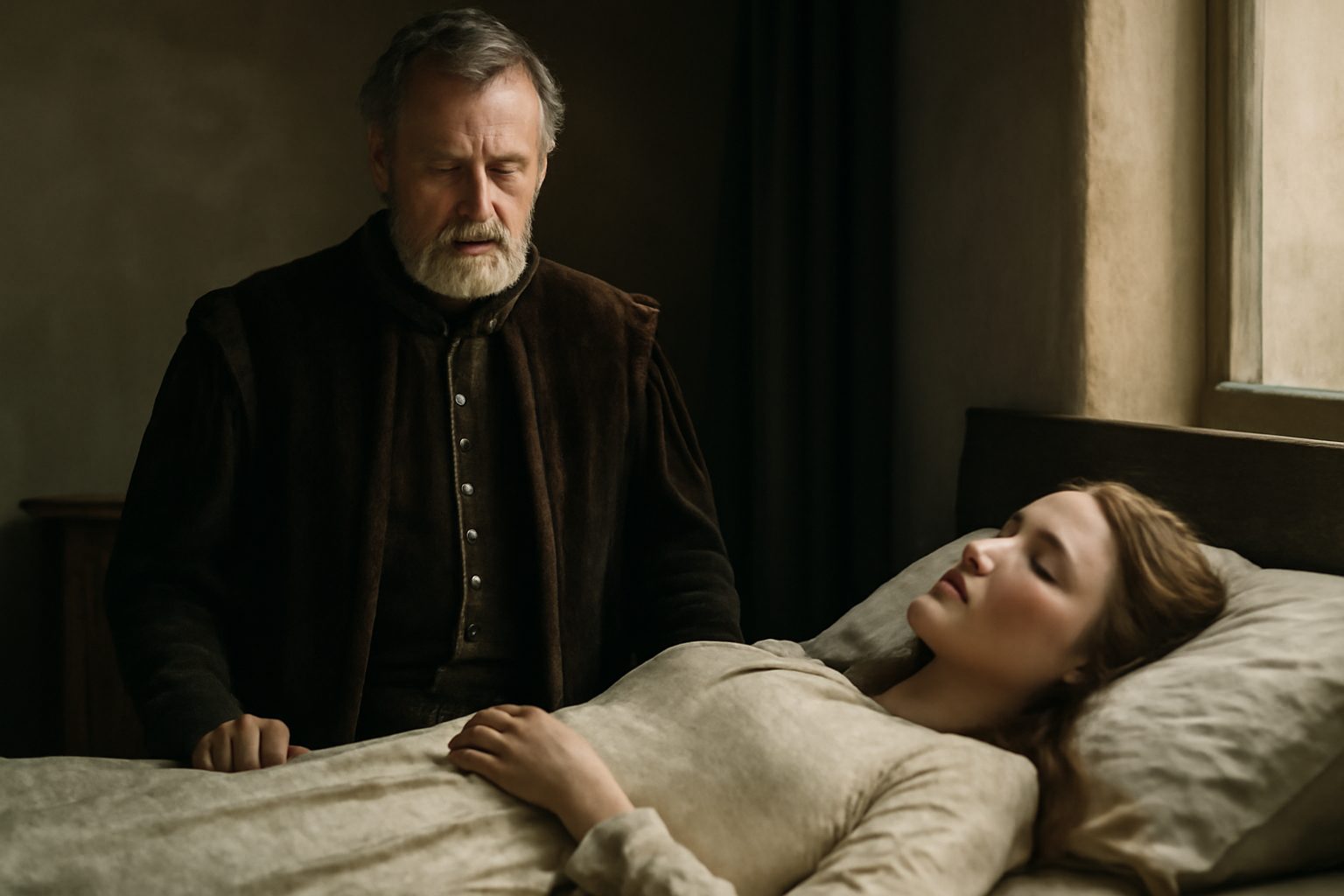
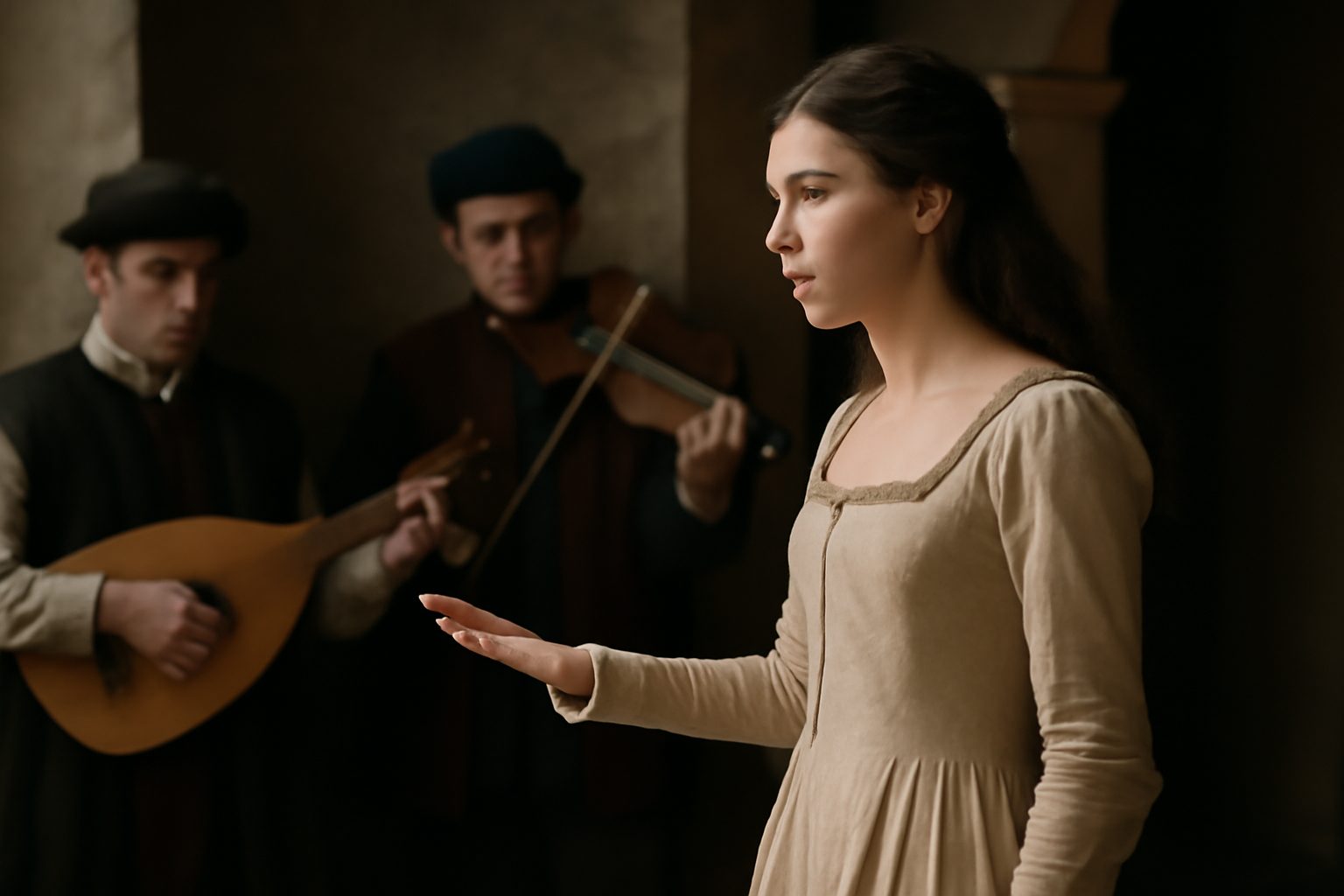
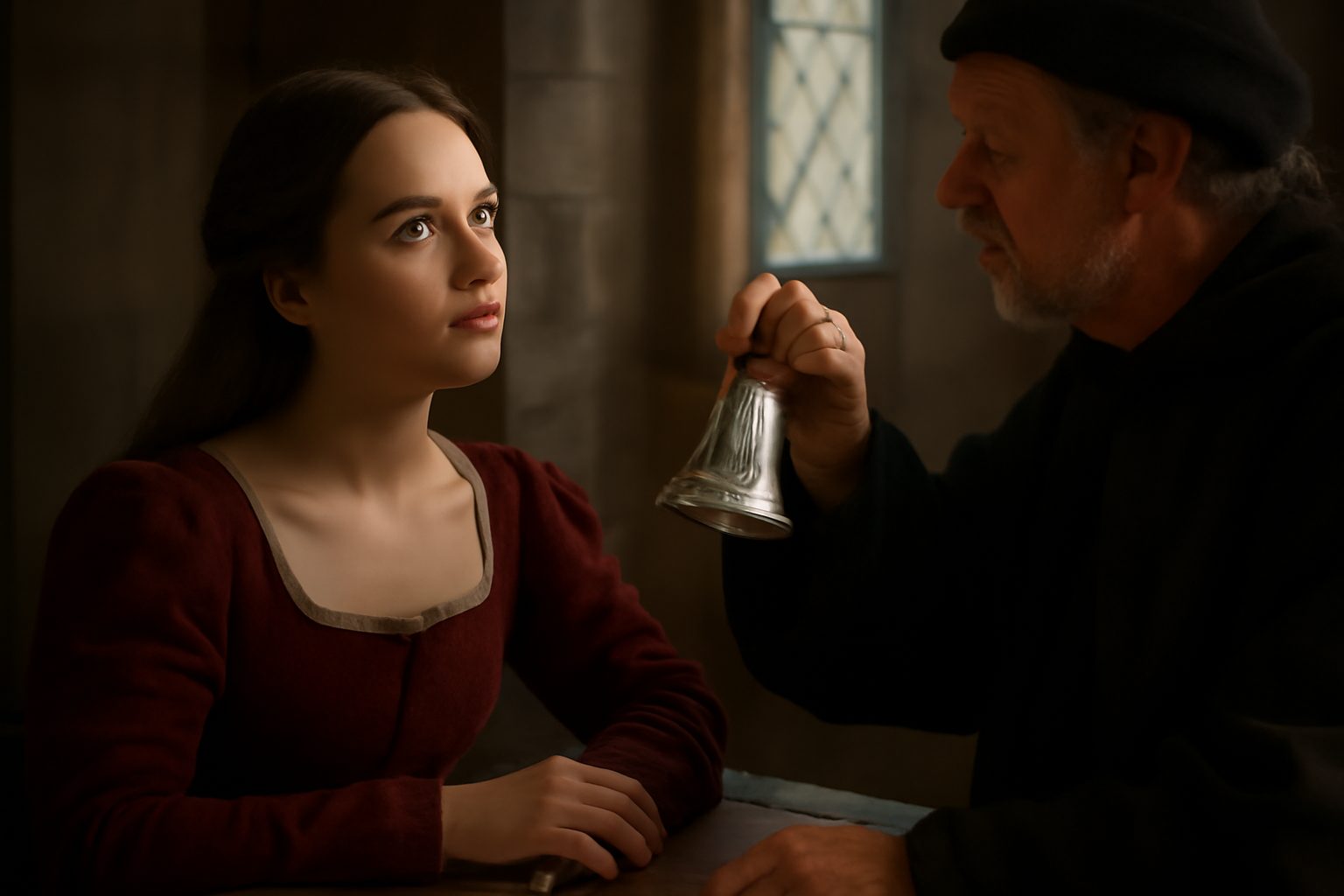
In Act 4 Scene 5 of Romeo and Juliet, the Capulet household is in chaos after Juliet is found seemingly dead. The Nurse and Peter engage in a moment of darkly comic banter, where Peter deflects blame with a jest about having nothing to offer but mockery. This line reflects the tension between grief and absurdity in the scene.
Peter: "No money, on my faith, but the gleek;"
In modern day english, we would say:
I swear, I have no money—just a joke to share.
Frequently Asked Questions
What does Peter say he has in this line from Romeo and Juliet?
Peter says he has no money, only the gleek (which means a joke or jest).
Connections to other verses:
Connections to "No money, on my faith, but the gleek"
The verse No money, on my faith, but the gleek is spoken by Peter, a servant, during a comedic exchange with the musicians. This moment contrasts sharply with the tragic tone of the scene, providing comic relief.
Financial and Musical Themes
Peter's mention of "no money" connects to because musicians have no gold for sounding, highlighting the musicians' financial struggles. This theme is further emphasized in What will you give us?, where the musicians inquire about payment, underscoring their practical concerns amidst the household's grief.
Contrast with Tragedy
The lighthearted banter in Peter's line starkly contrasts with the surrounding lamentations, such as Alack the day, she's dead, she's dead, she's dead! and Accursed, unhappy, wretched, hateful day!. This juxtaposition heightens the emotional impact of the tragedy by momentarily diverting attention to mundane matters.
Wordplay and Wit
Peter's use of "gleek" (a jest or trick) relates to his earlier witty exchanges, like Then have at you with my wit! I will dry-beat you, showcasing Shakespeare's use of wordplay to add layers to the scene's dynamics.
Musicians' Role
The musicians' reluctance to play without pay, as seen in Faith, we may put up our pipes, and be gone, reinforces their pragmatic attitude, which Peter's line echoes, further illustrating the disconnect between the household's sorrow and the musicians' indifference.