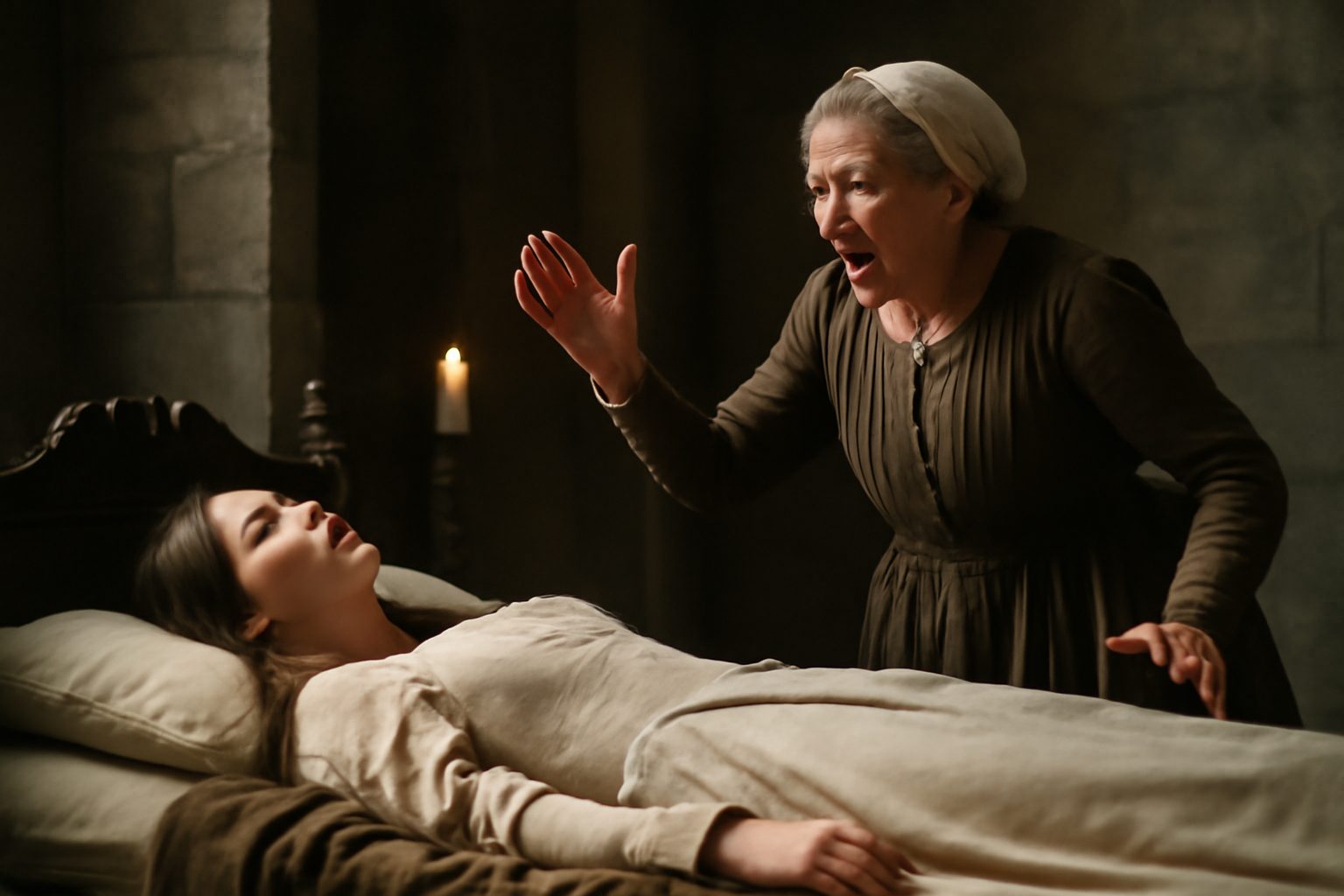
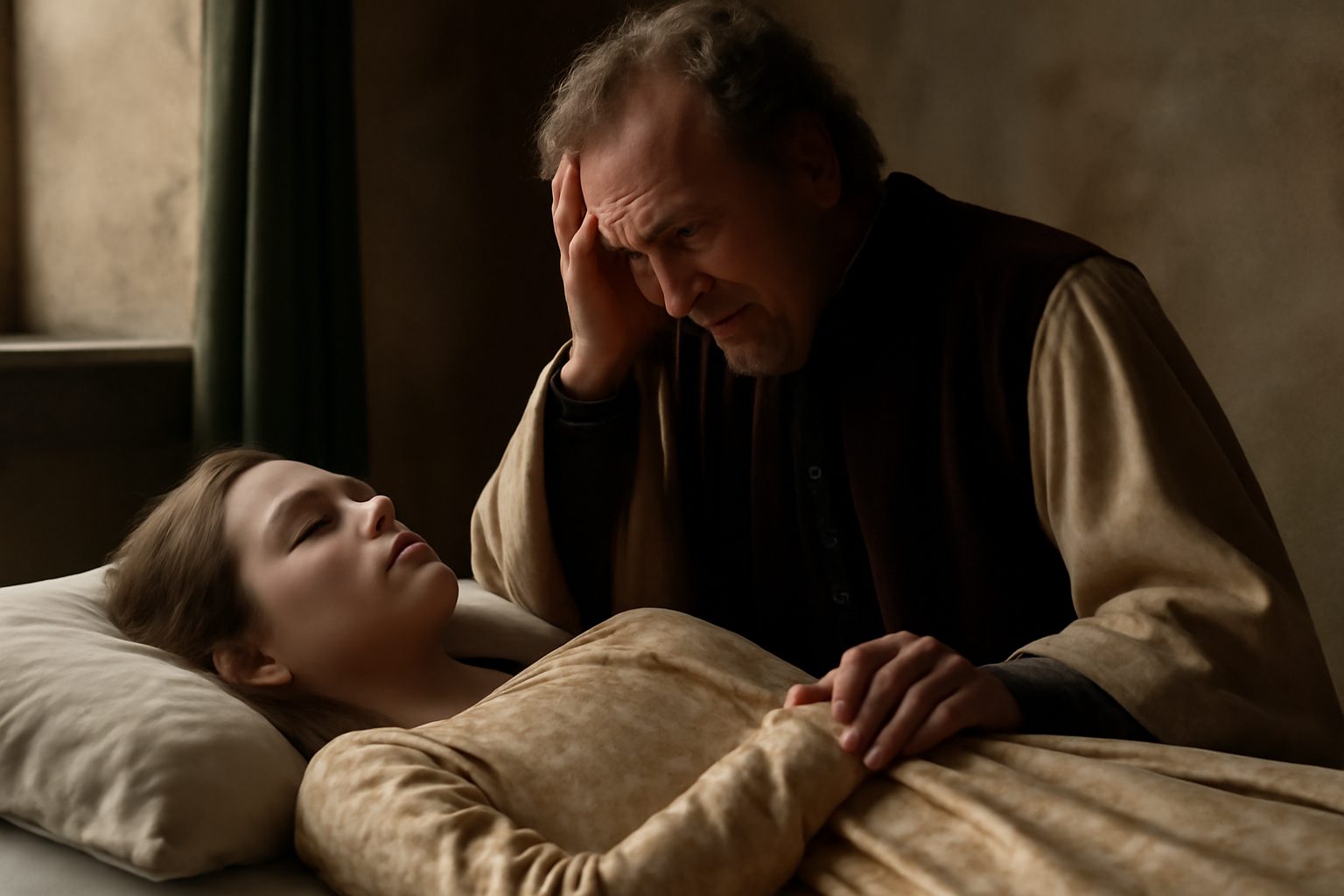
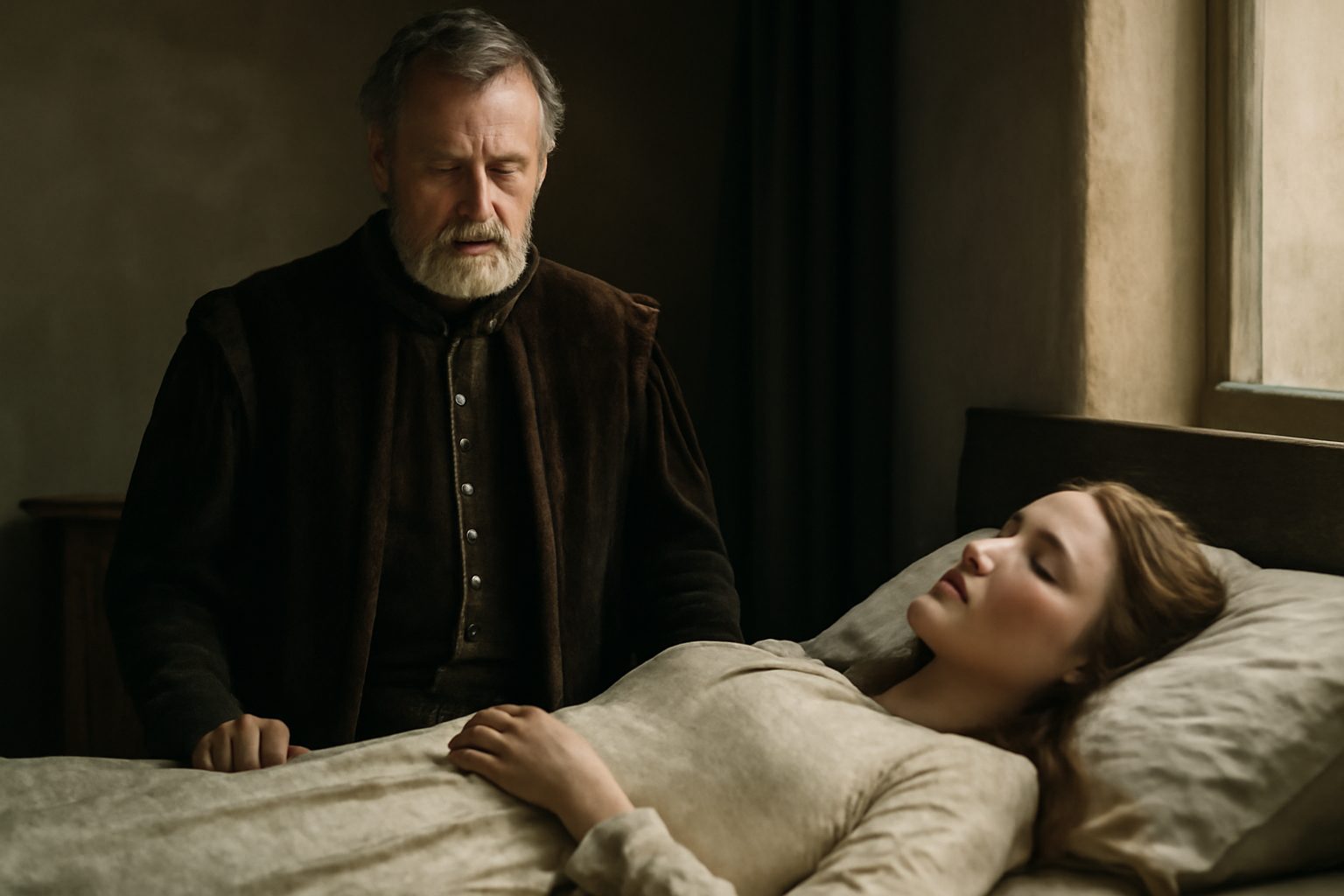
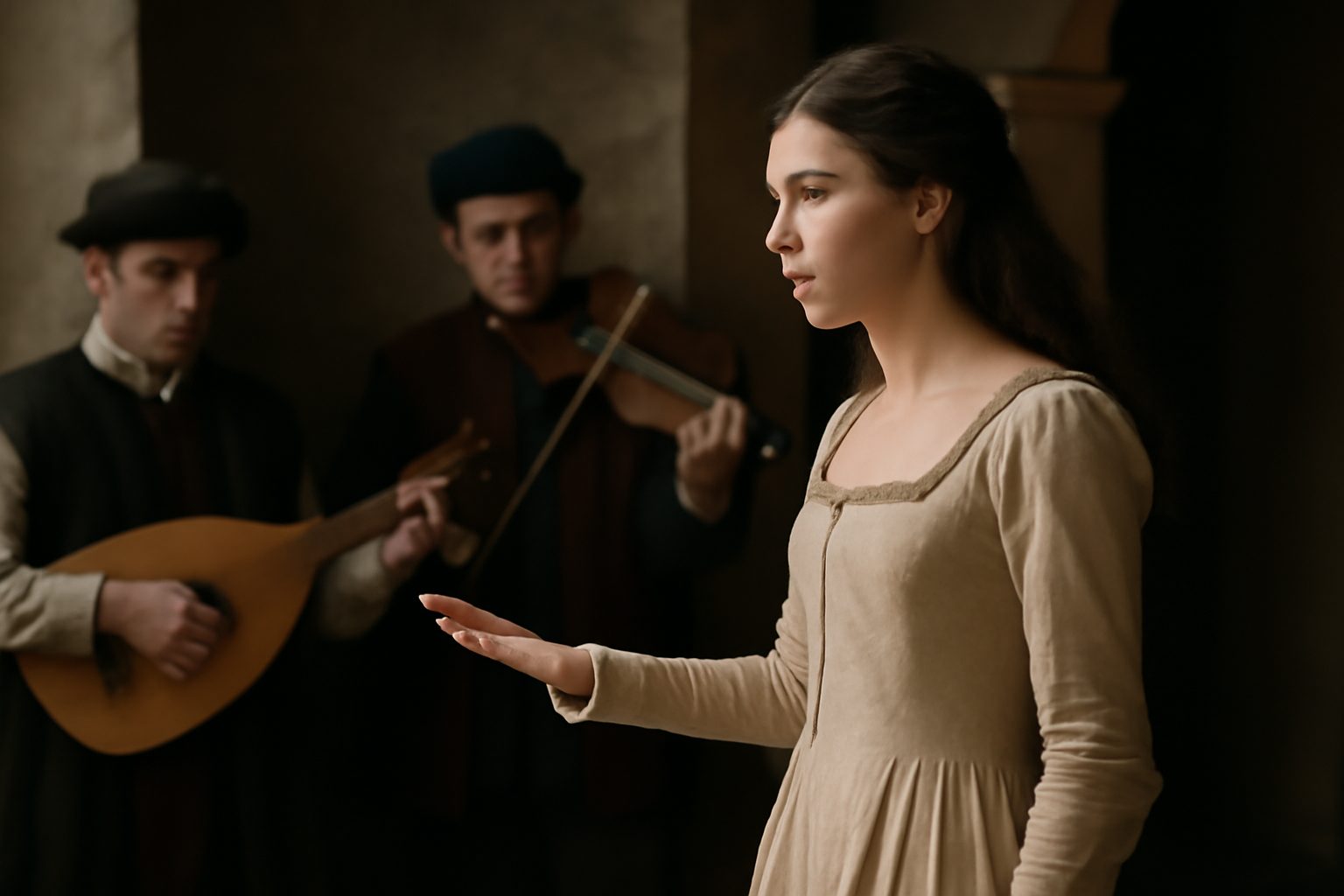
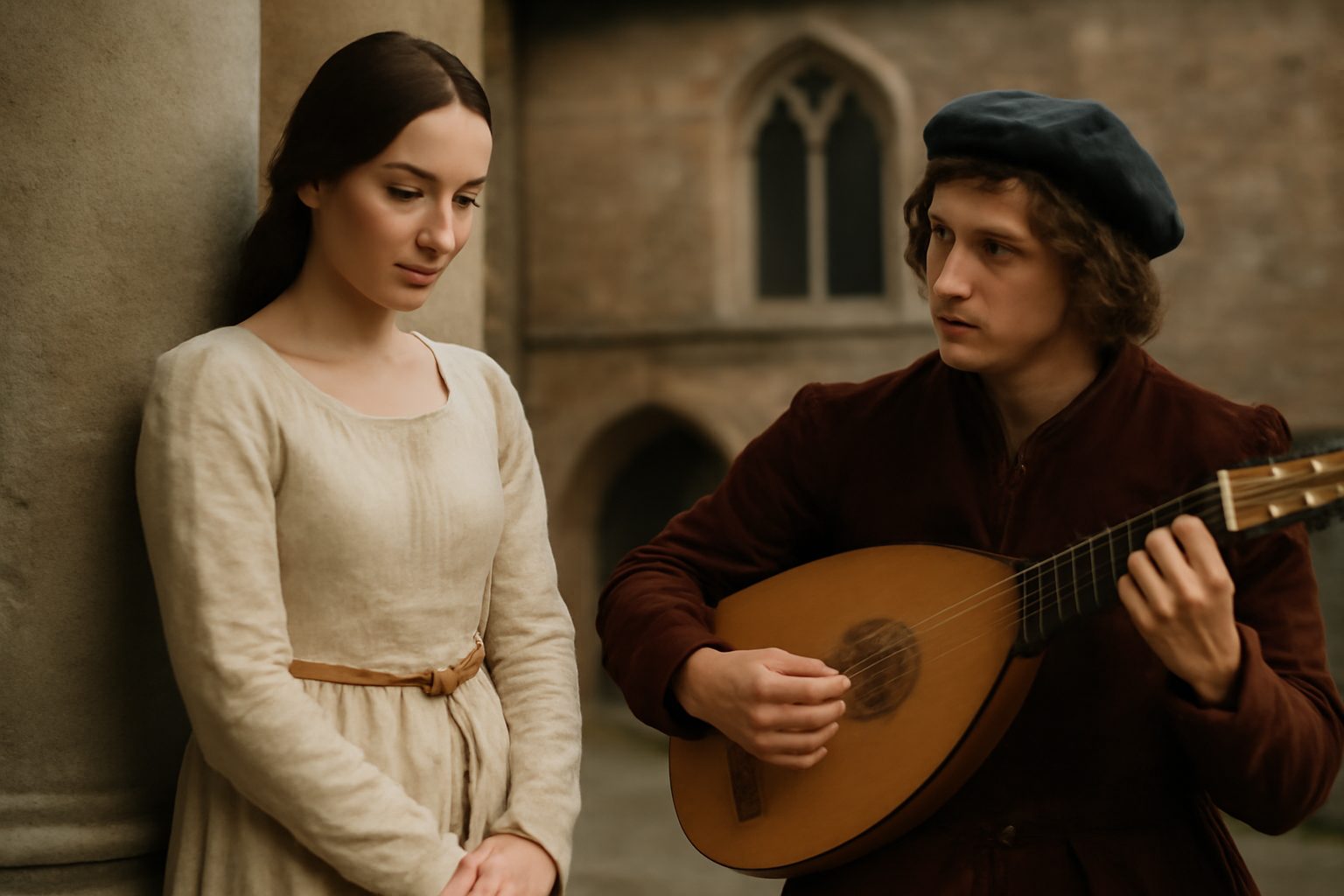
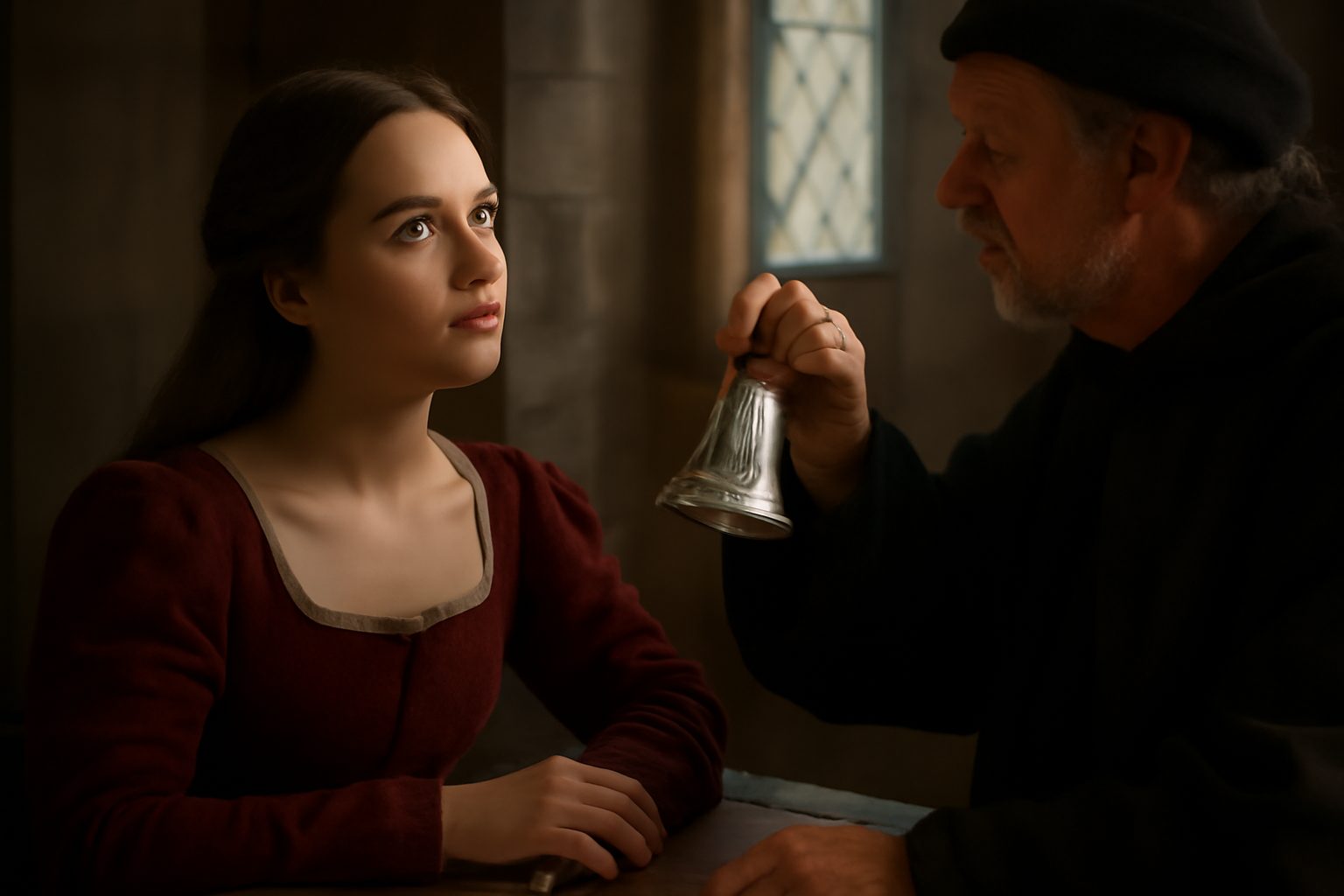
In Act 4, Scene 5 of Romeo and Juliet, the Capulet household is in chaos after Juliet is found seemingly dead. The Nurse, overwhelmed with grief, cries out in distress, prompting Peter, a servingman, to sarcastically offer his assistance in a moment of dark humor. This line reflects the tension between genuine sorrow and the absurdity of the situation as the household prepares for what they believe to be Juliet's funeral.
First Musician: "Then I will give you the serving-creature."
In modern day english, we would say:
I’ll get you the servant.
Frequently Asked Questions
What does the First Musician offer to give someone in Act 4 Scene 5?
The First Musician offers to give the serving-creature.
Connections to other verses:
Connections to Other Verses in Act 4 Scene 5
The verse "Then I will give you the serving-creature." is part of a humorous exchange between Peter and the musicians, contrasting sharply with the tragic tone of the scene. It follows "I will give you the minstrel.", continuing the wordplay and mock threats. This lighthearted banter provides comic relief amidst the grief expressed in verses like "Alack the day, she's dead, she's dead, she's dead!" and "Accursed, unhappy, wretched, hateful day!".
Contrast with Mourning
While characters like the Nurse and Capulet lament Juliet's apparent death in verses such as "O child! O child! my soul, and not my child!" and "And with my child my joys are buried.", Peter's interaction with the musicians introduces a jarring shift in tone. This underscores Shakespeare's use of juxtaposition to highlight the absurdity of life continuing amid tragedy.
Musical References
The serving-creature remark ties into the musicians' presence, referenced in "Faith, we may put up our pipes, and be gone." and "Musicians, O, musicians, 'Heart's ease, Heart's...". Peter's threat to give the "serving-creature" (likely a jest about a servant or tool) contrasts with the musicians' desire for payment, as seen in "because musicians have no gold for sounding:".
Structural Role
This verse contributes to the scene's structure, balancing the heavy emotions of "Death is my son-in-law, Death is my heir;" and "Death lies on her like an untimely frost" with levity, emphasizing the theme of contrast between celebration and mourning, life and death.