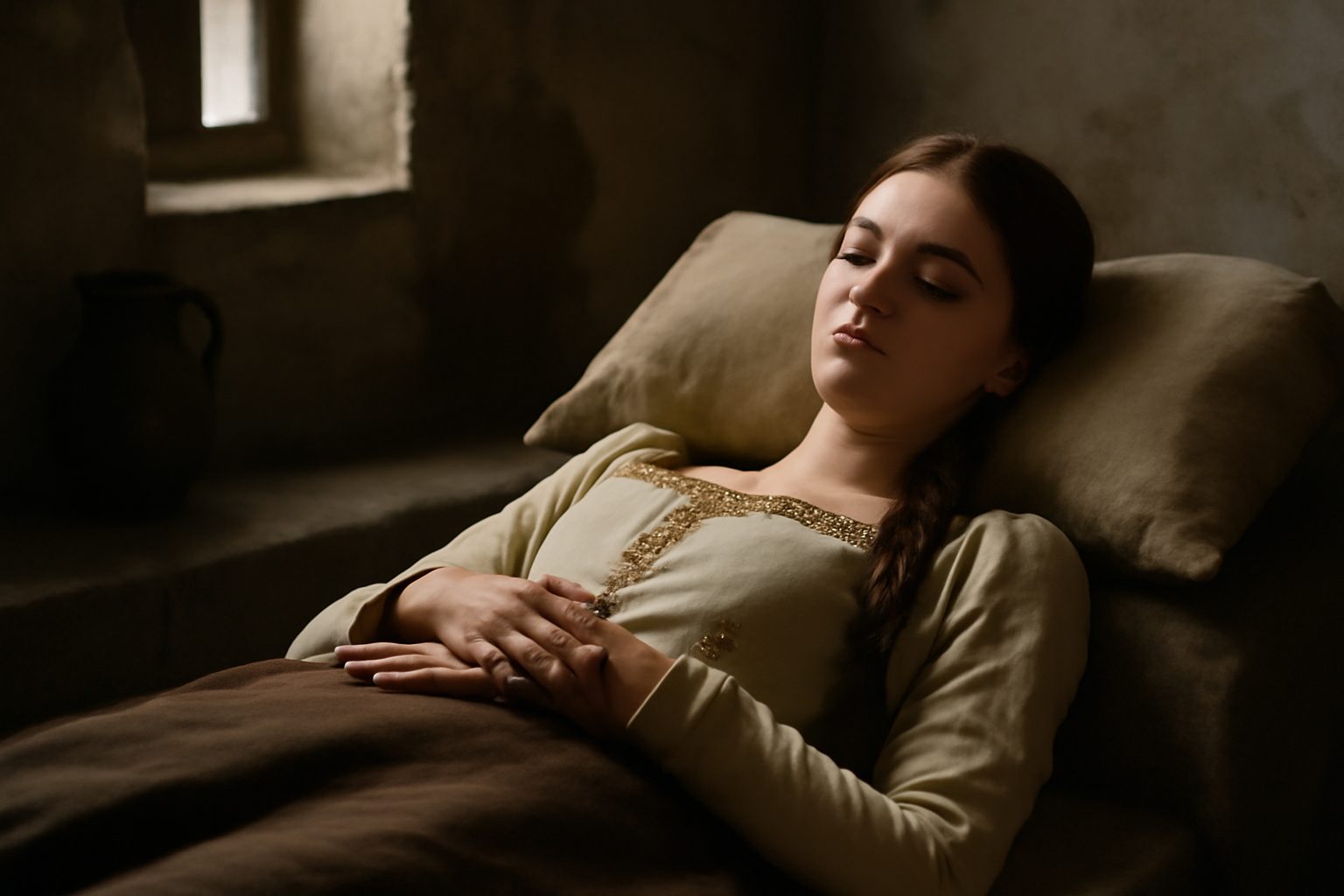
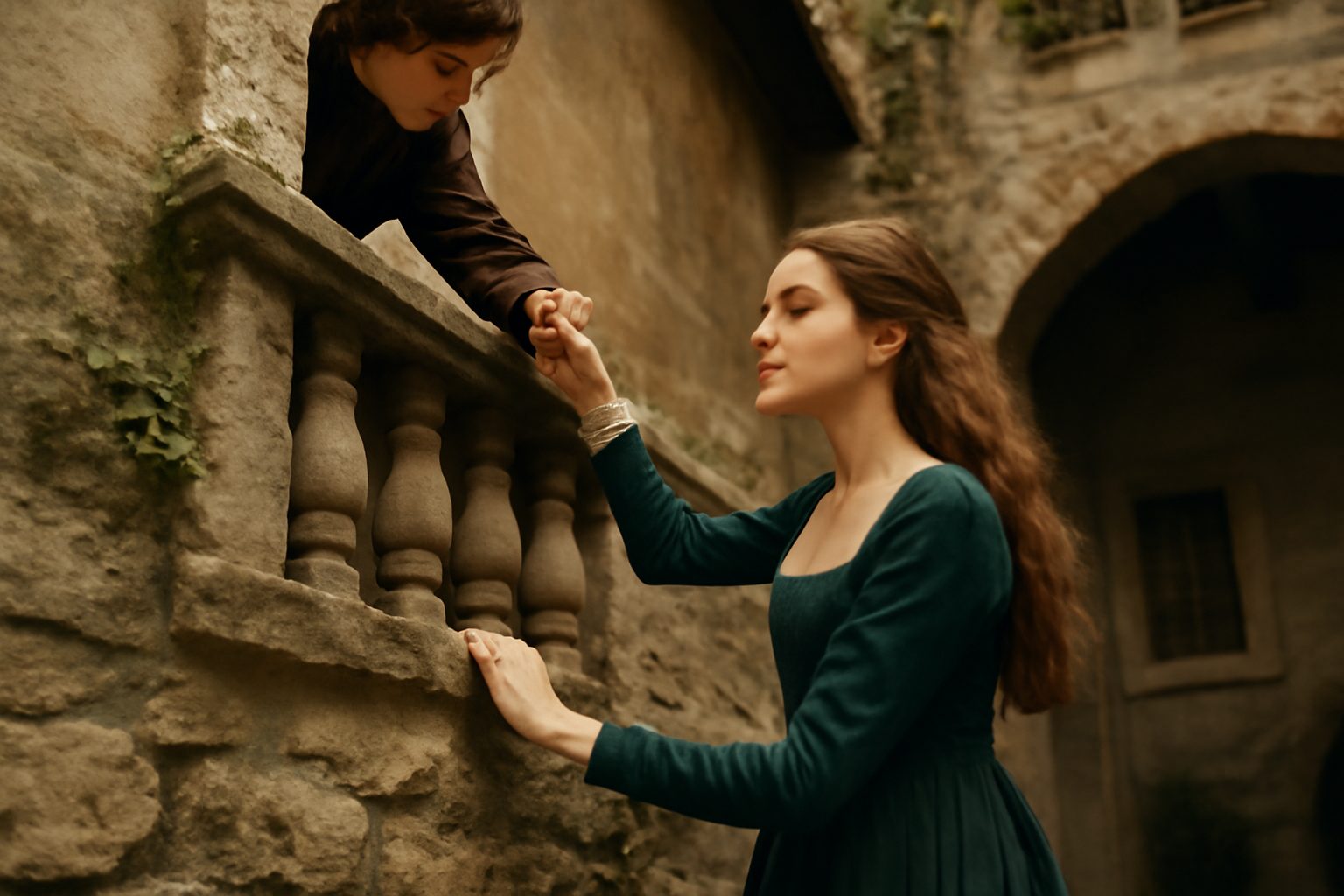
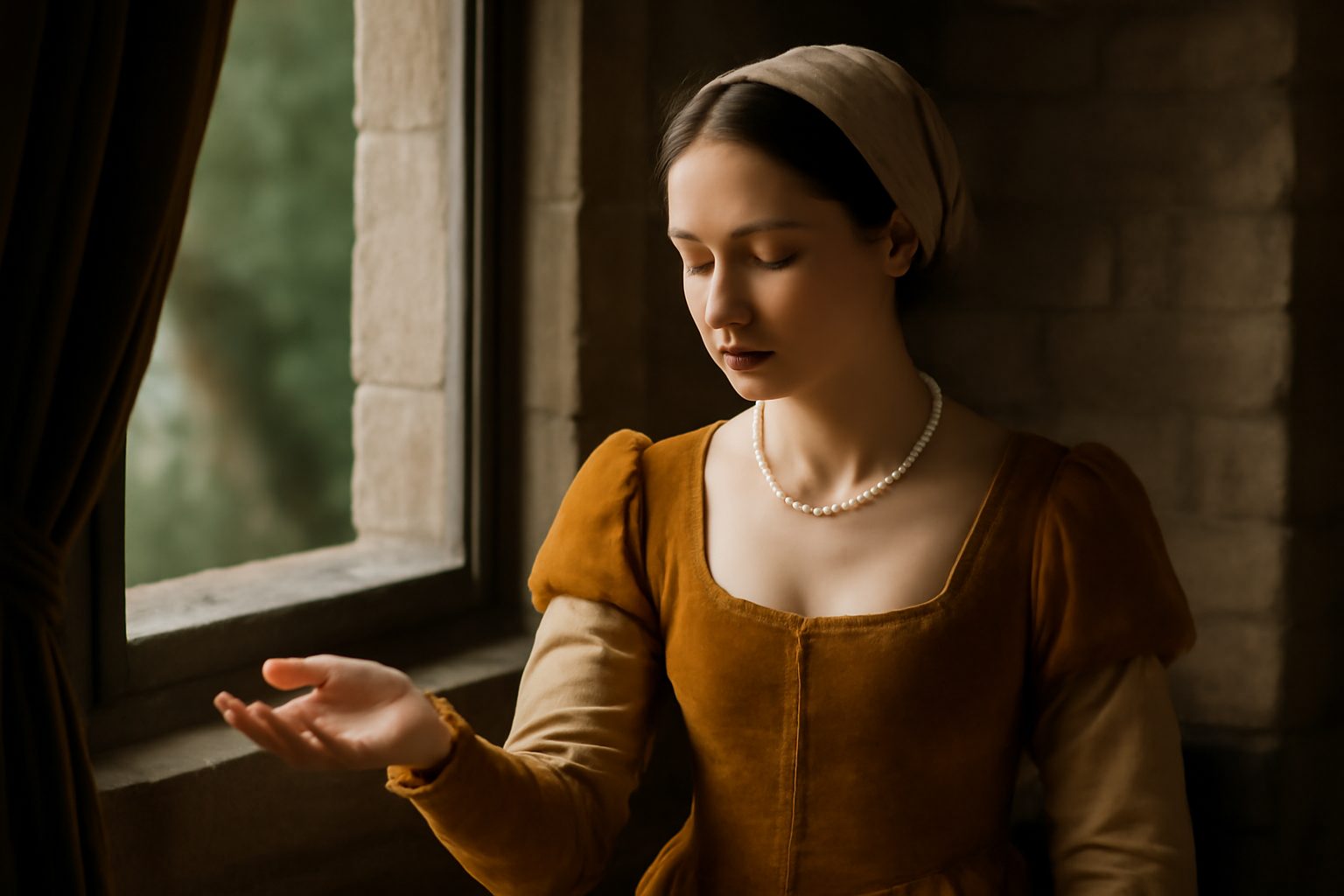
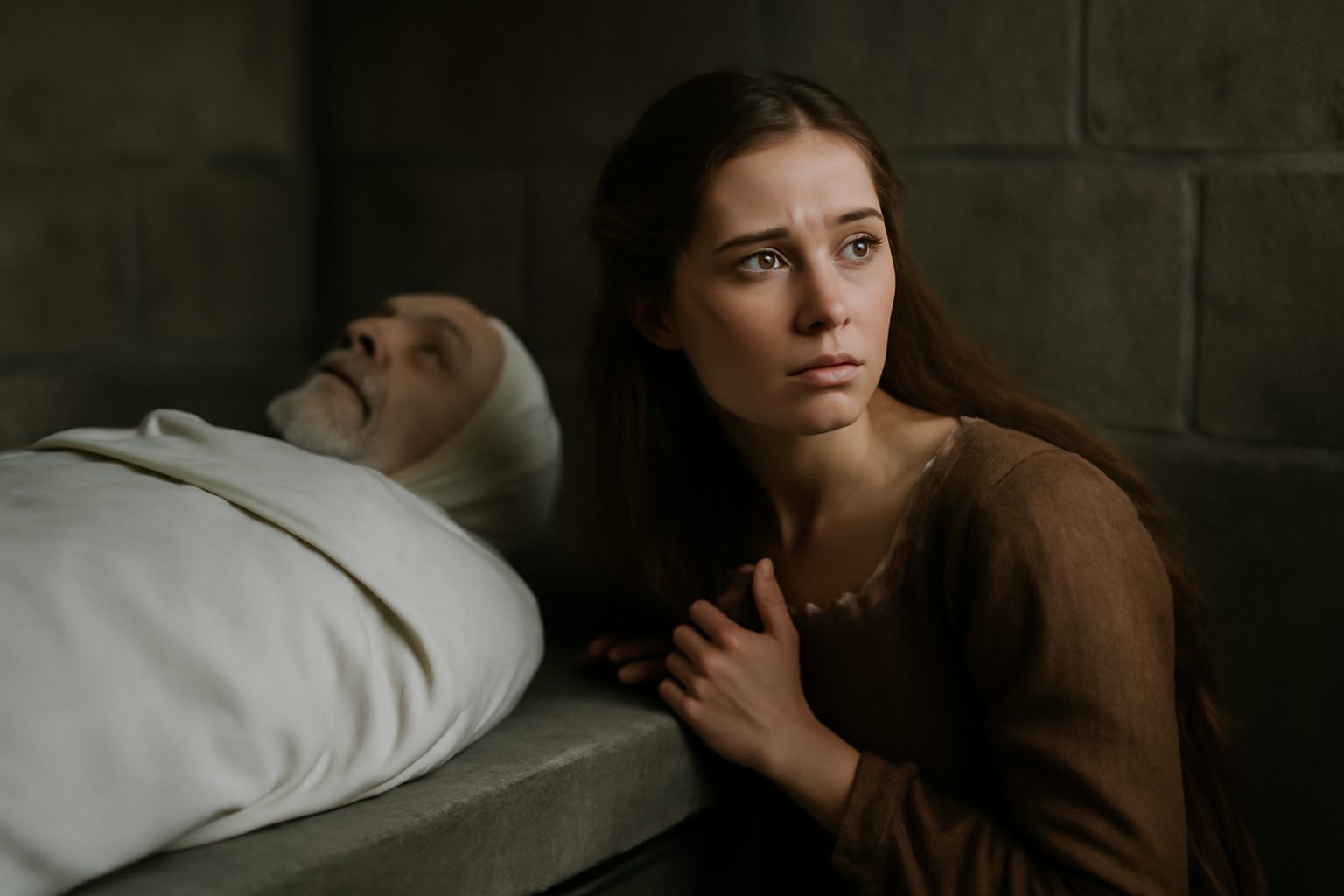
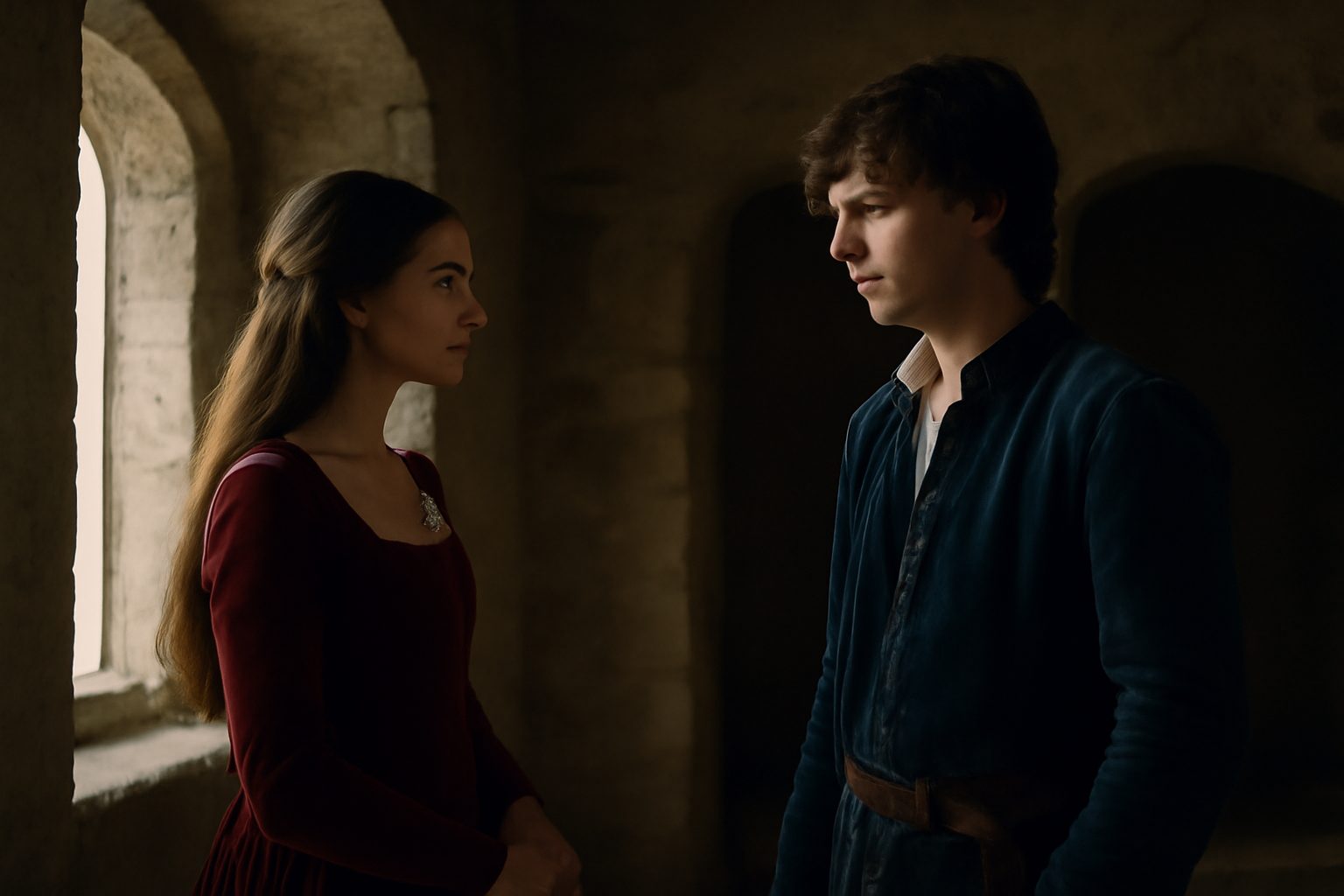
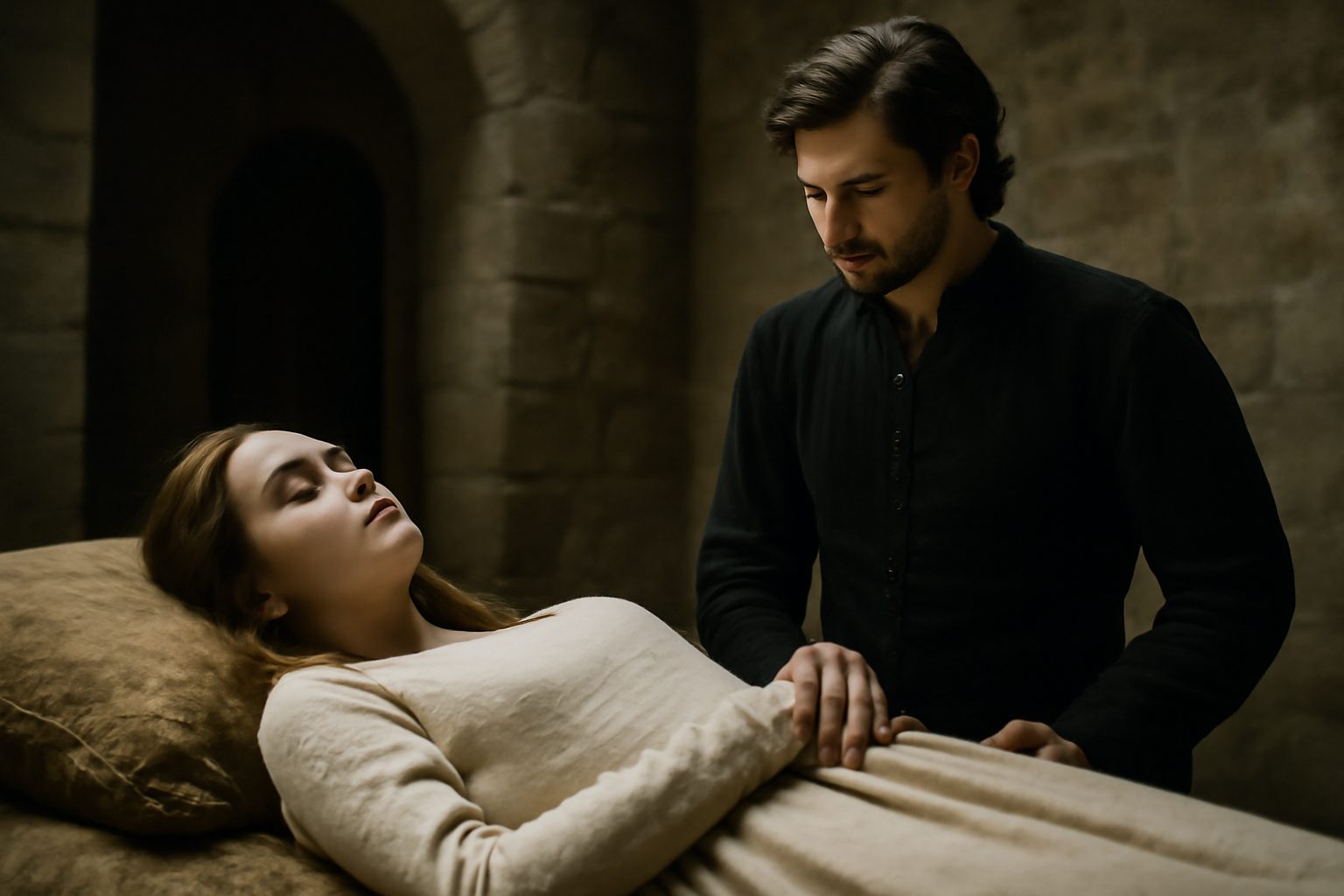
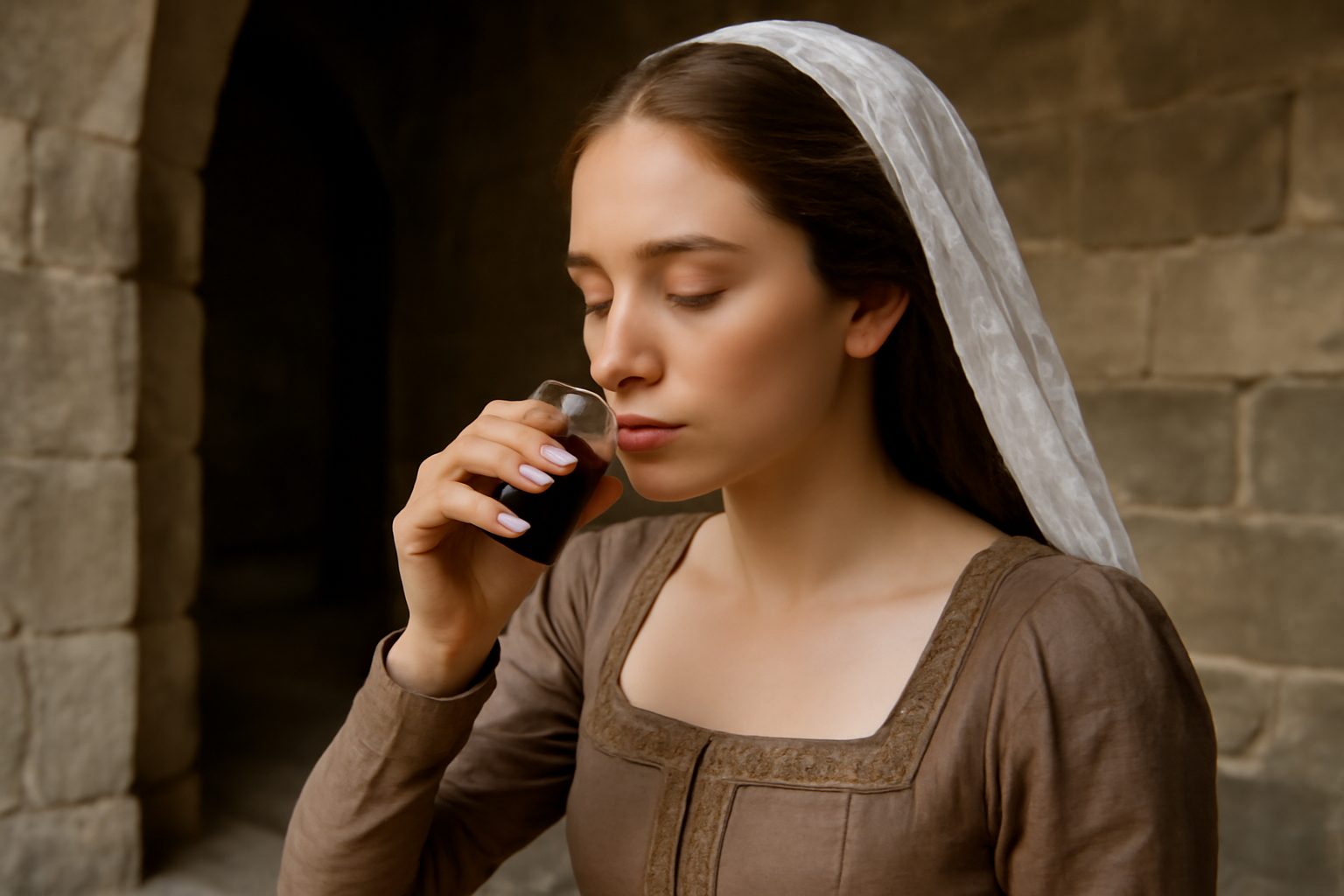
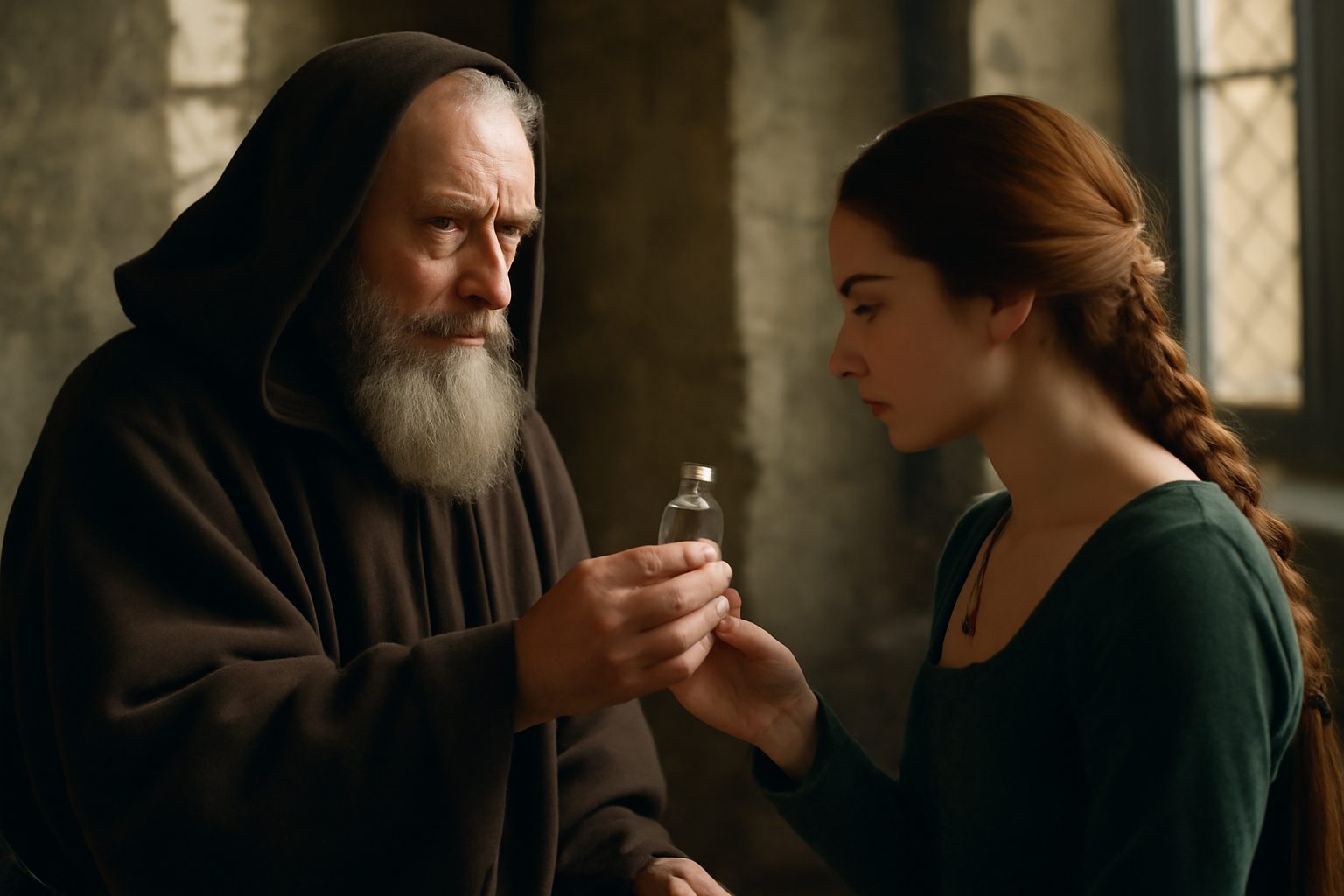
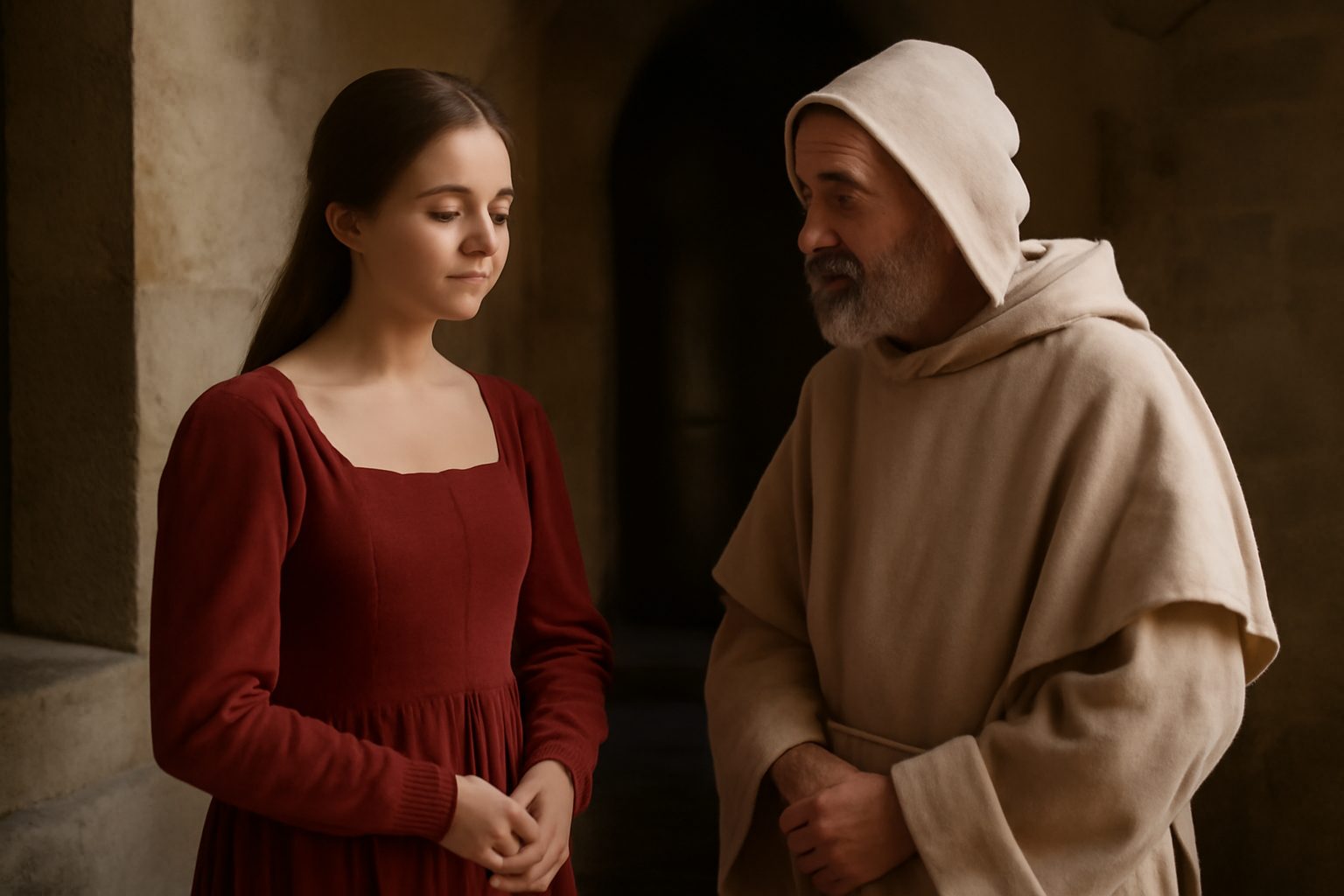
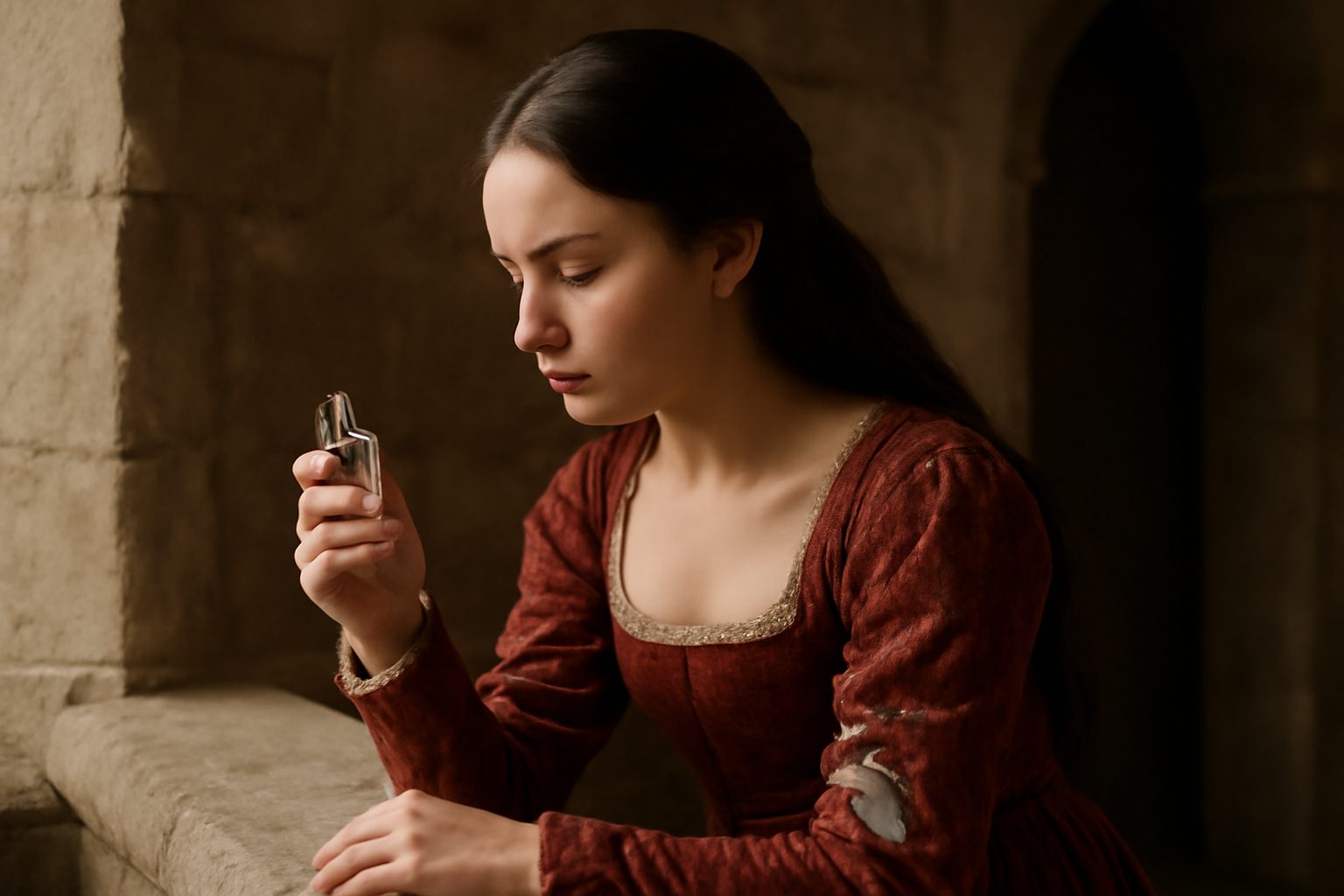
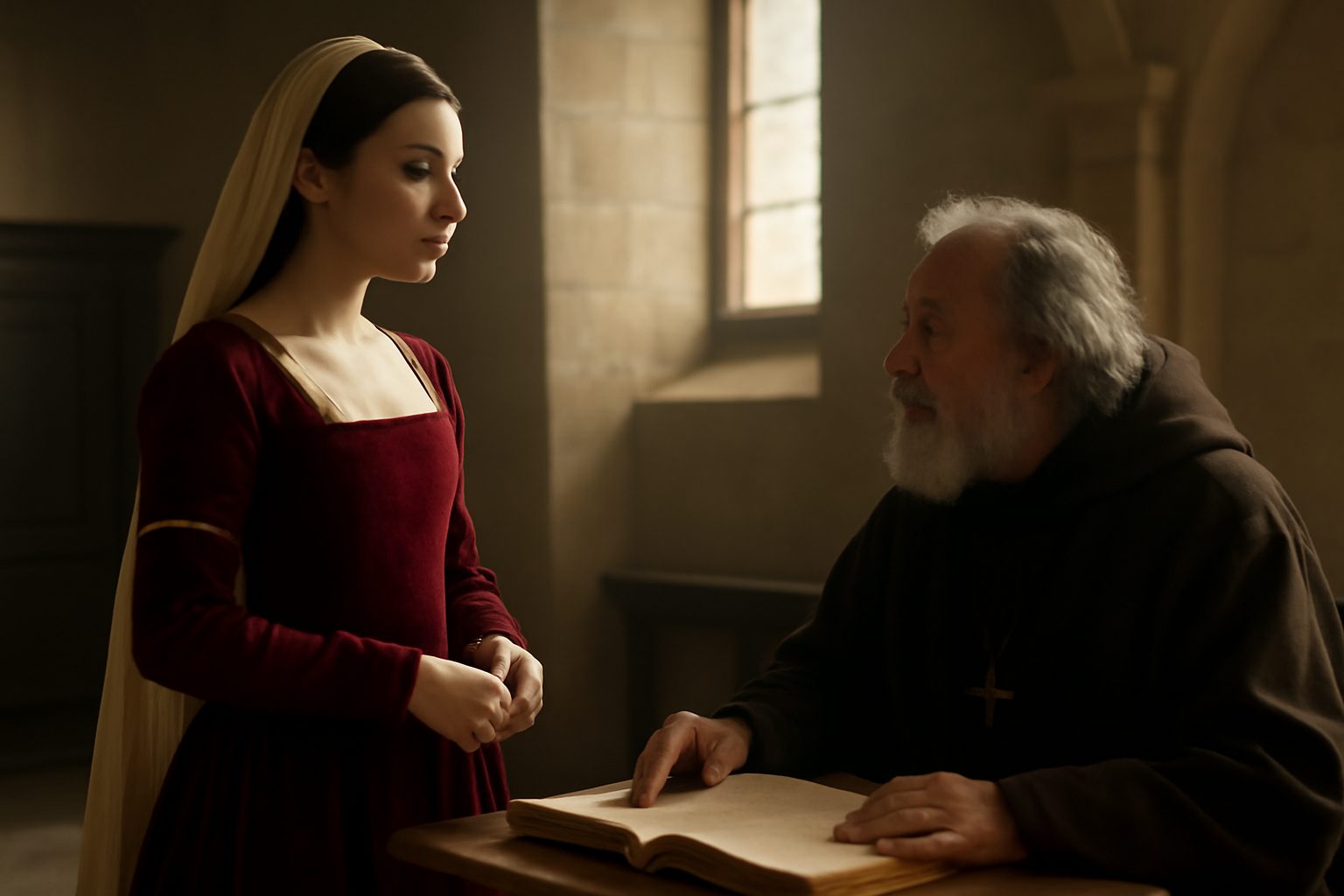
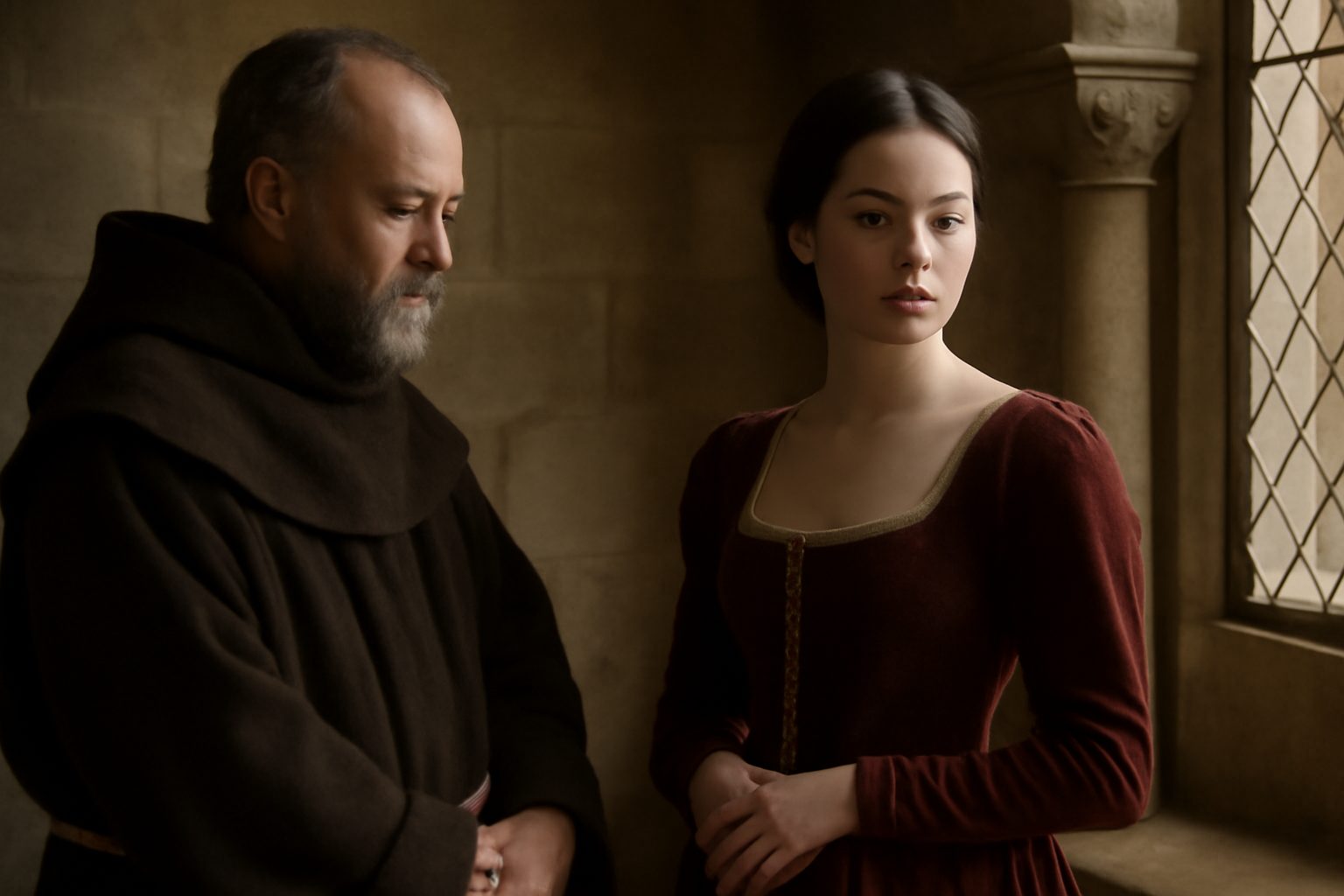
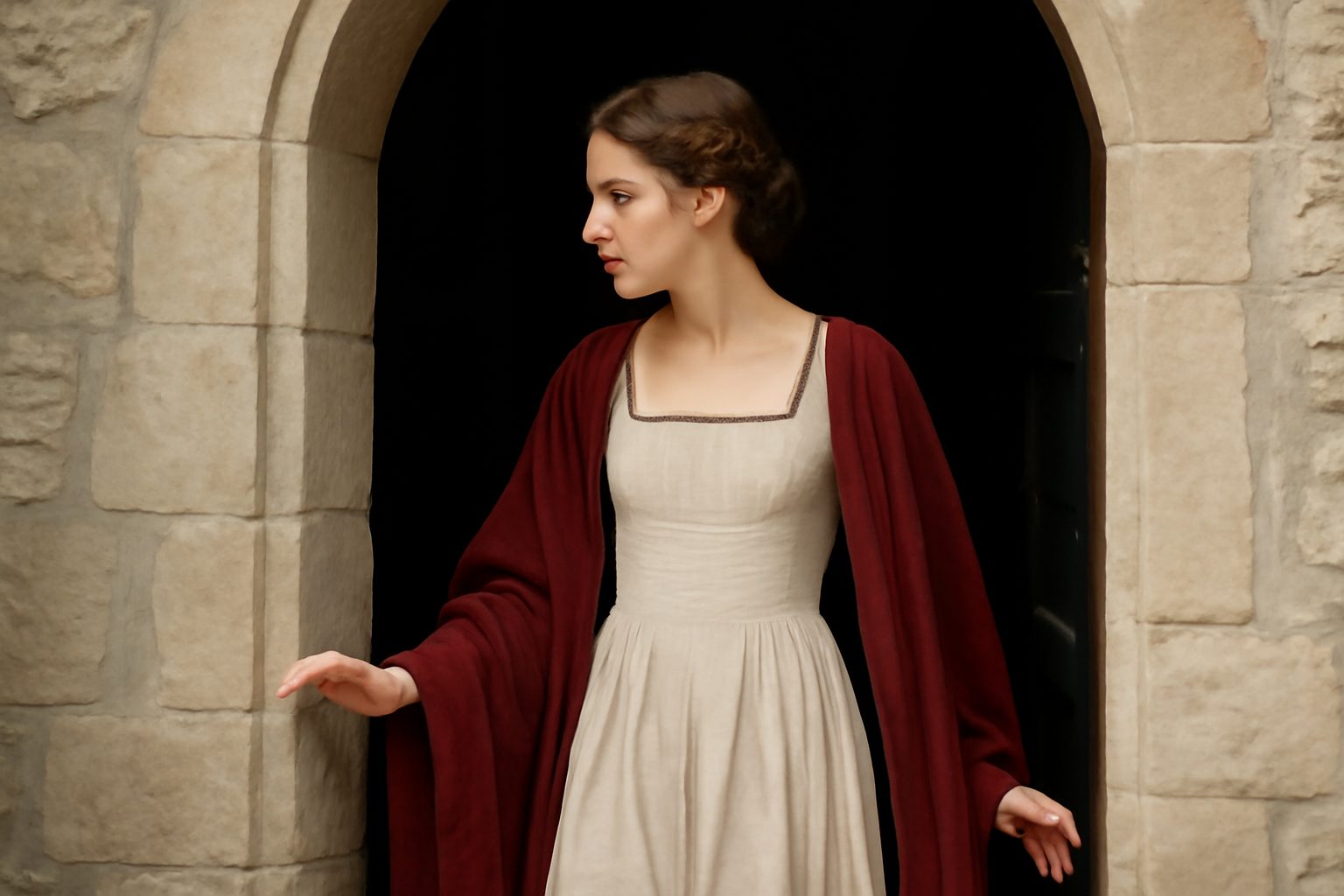
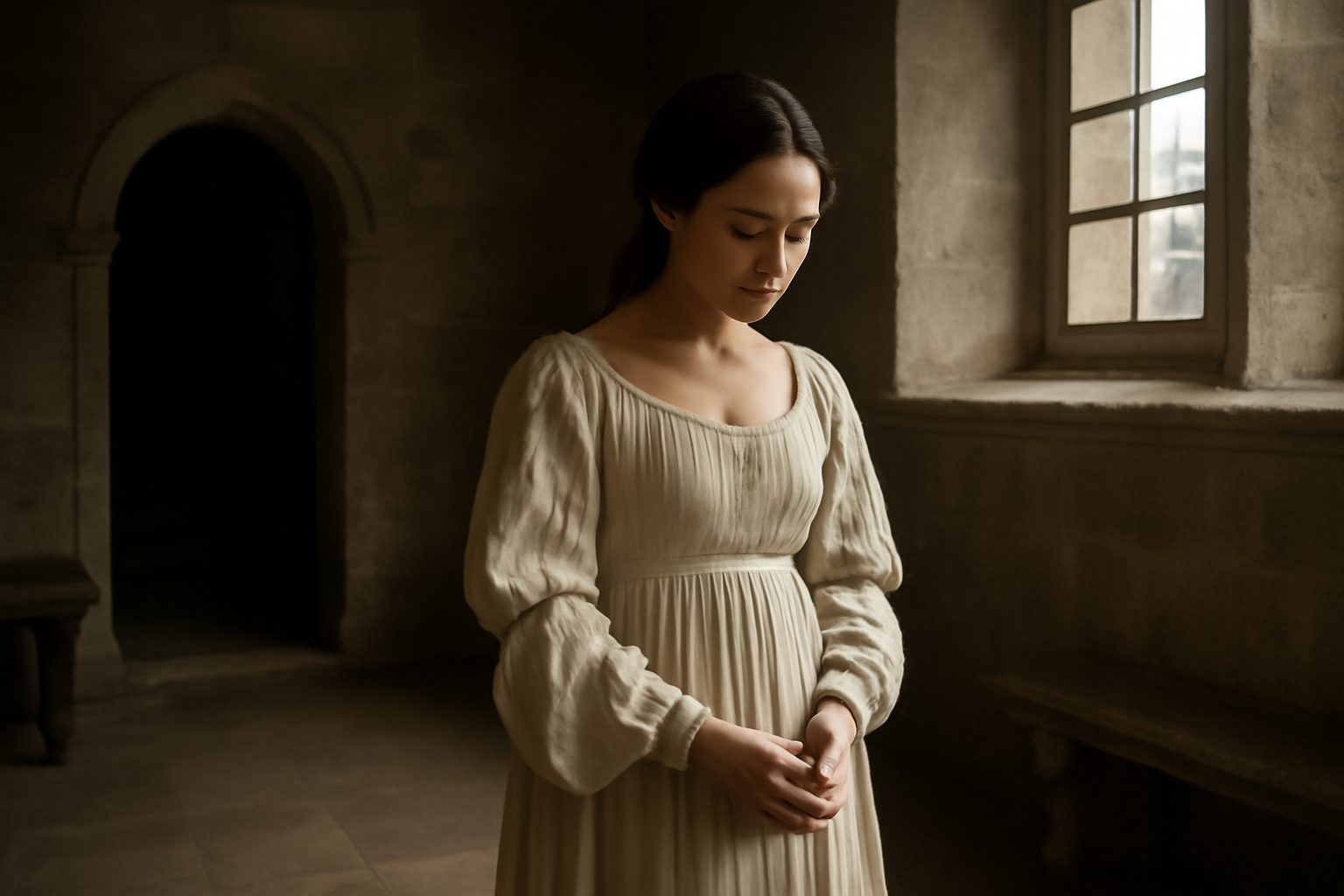
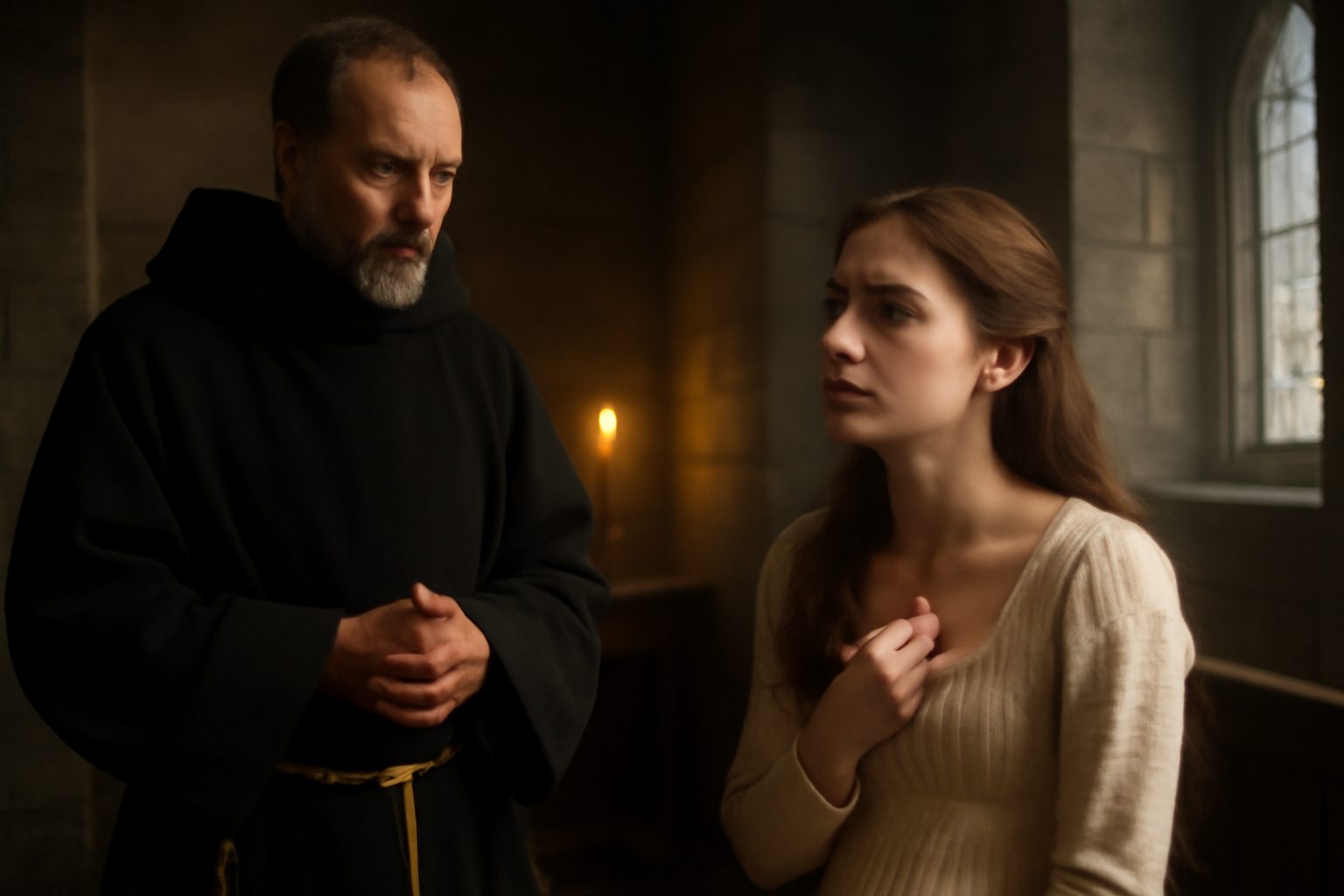
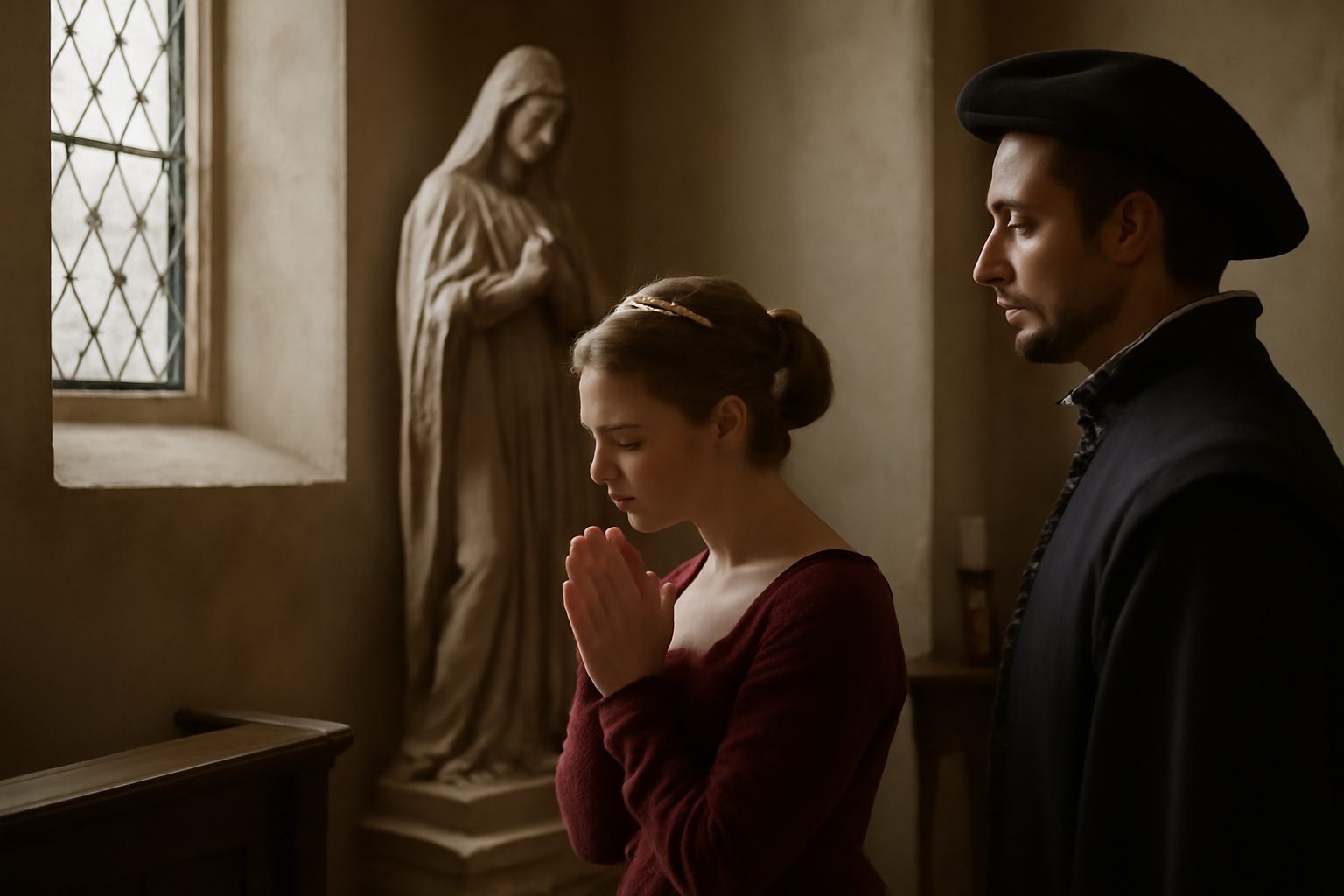
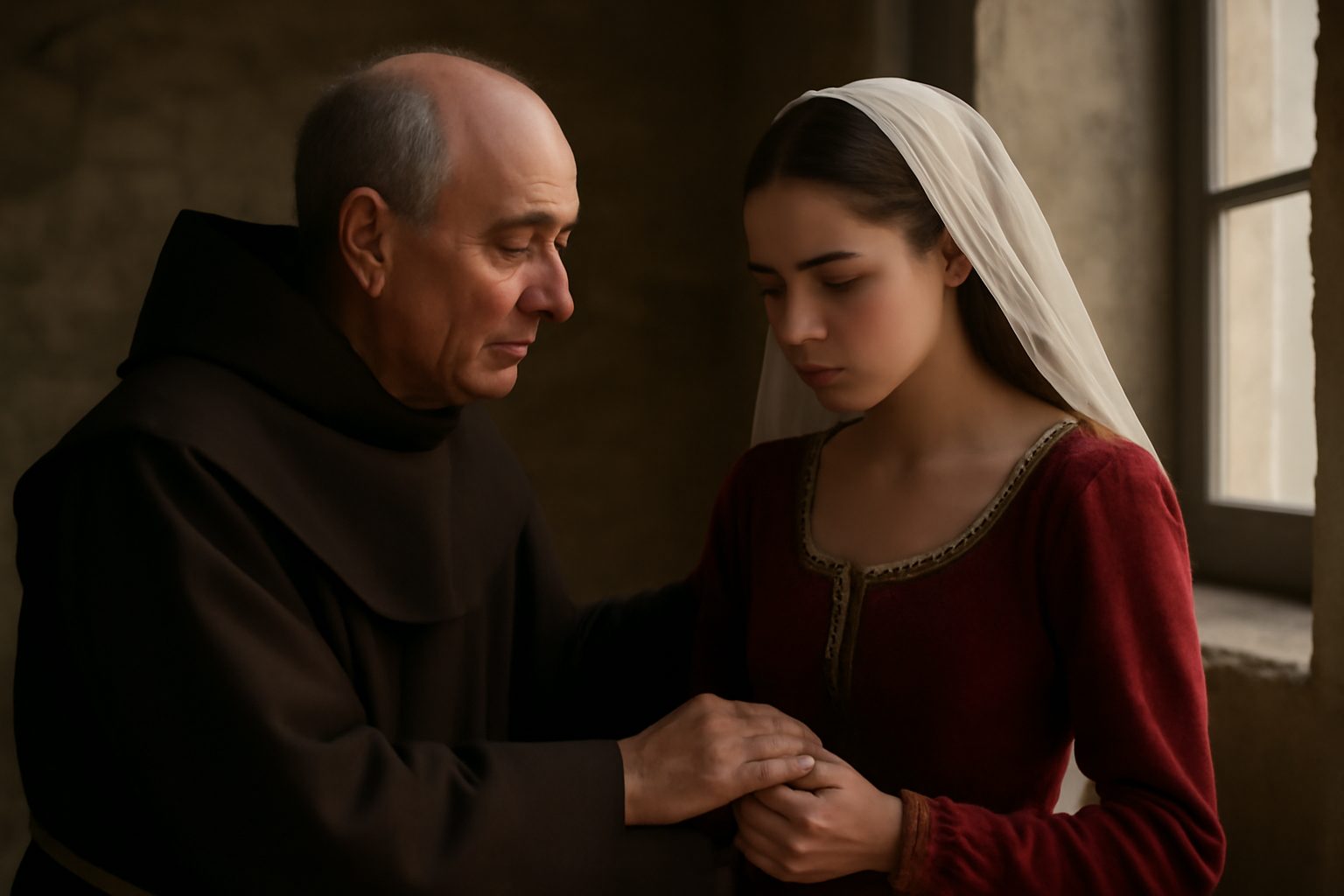
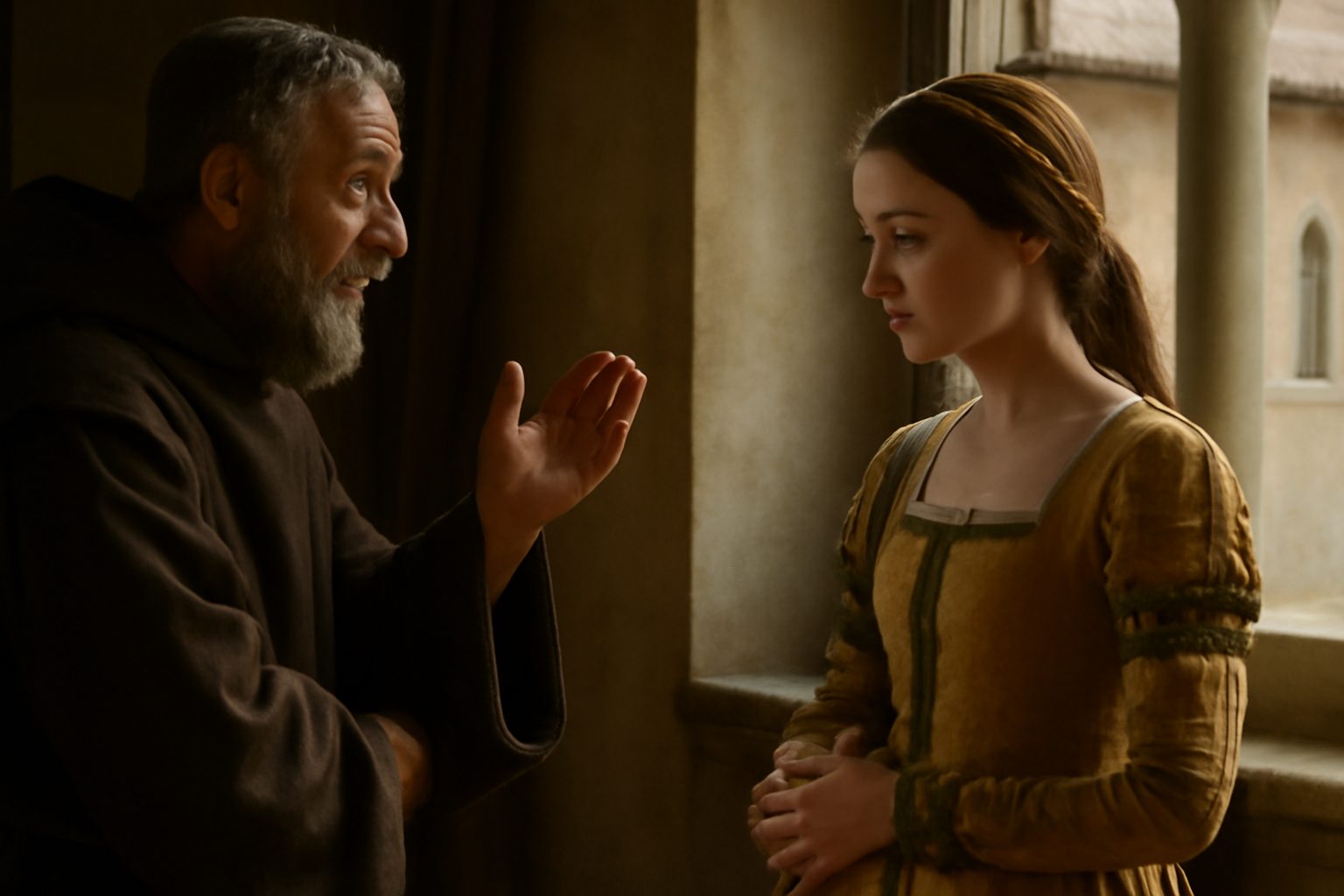
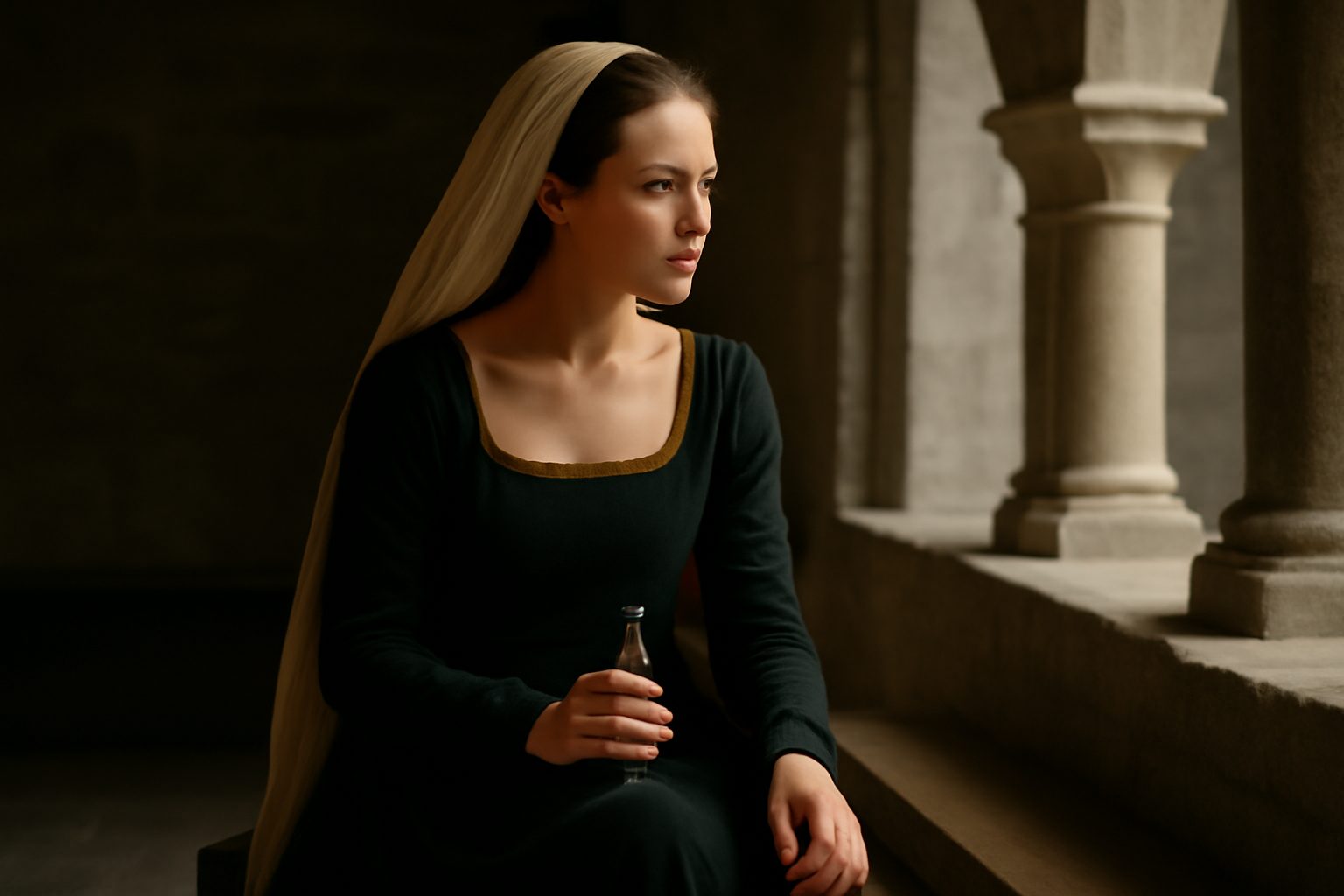
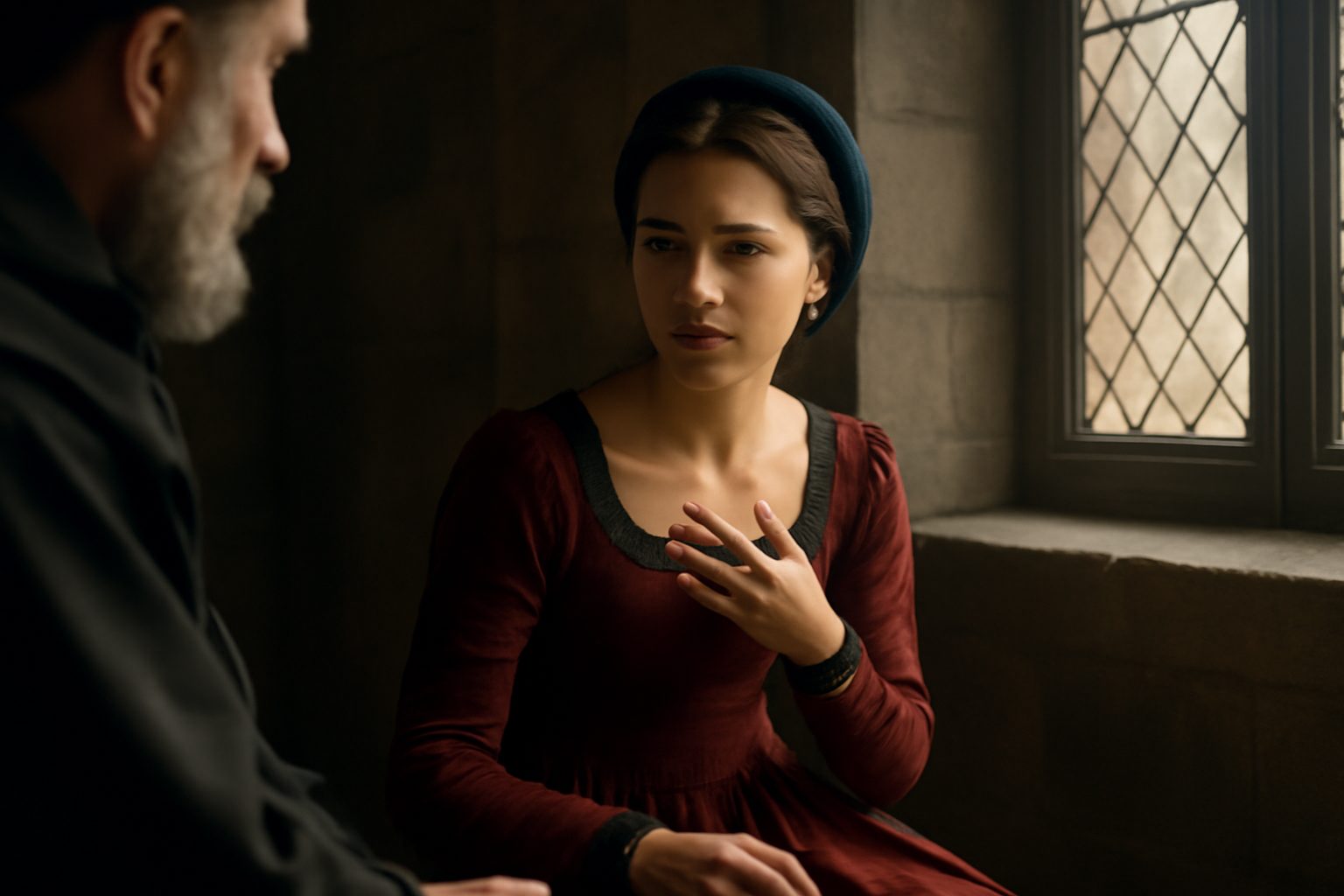
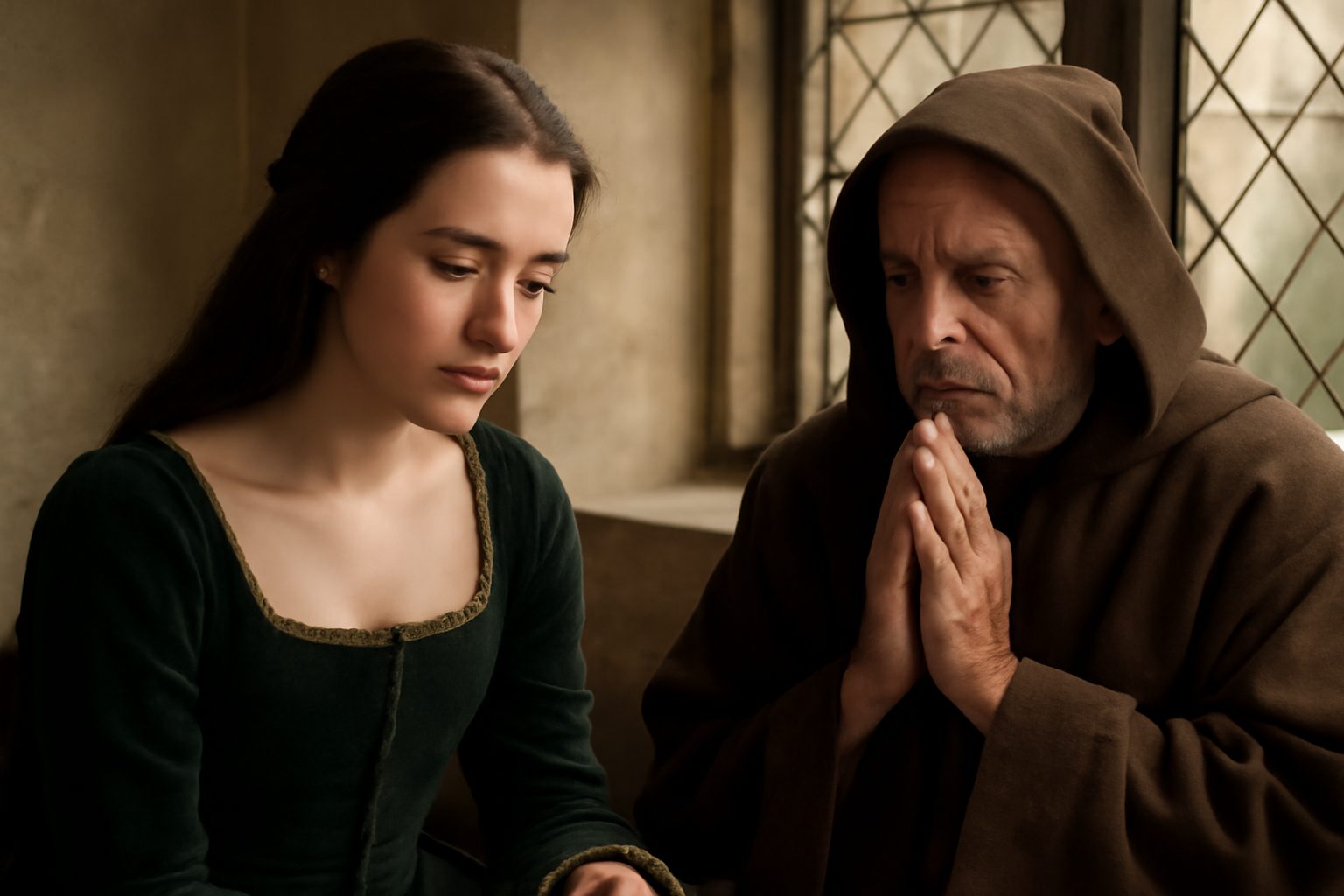
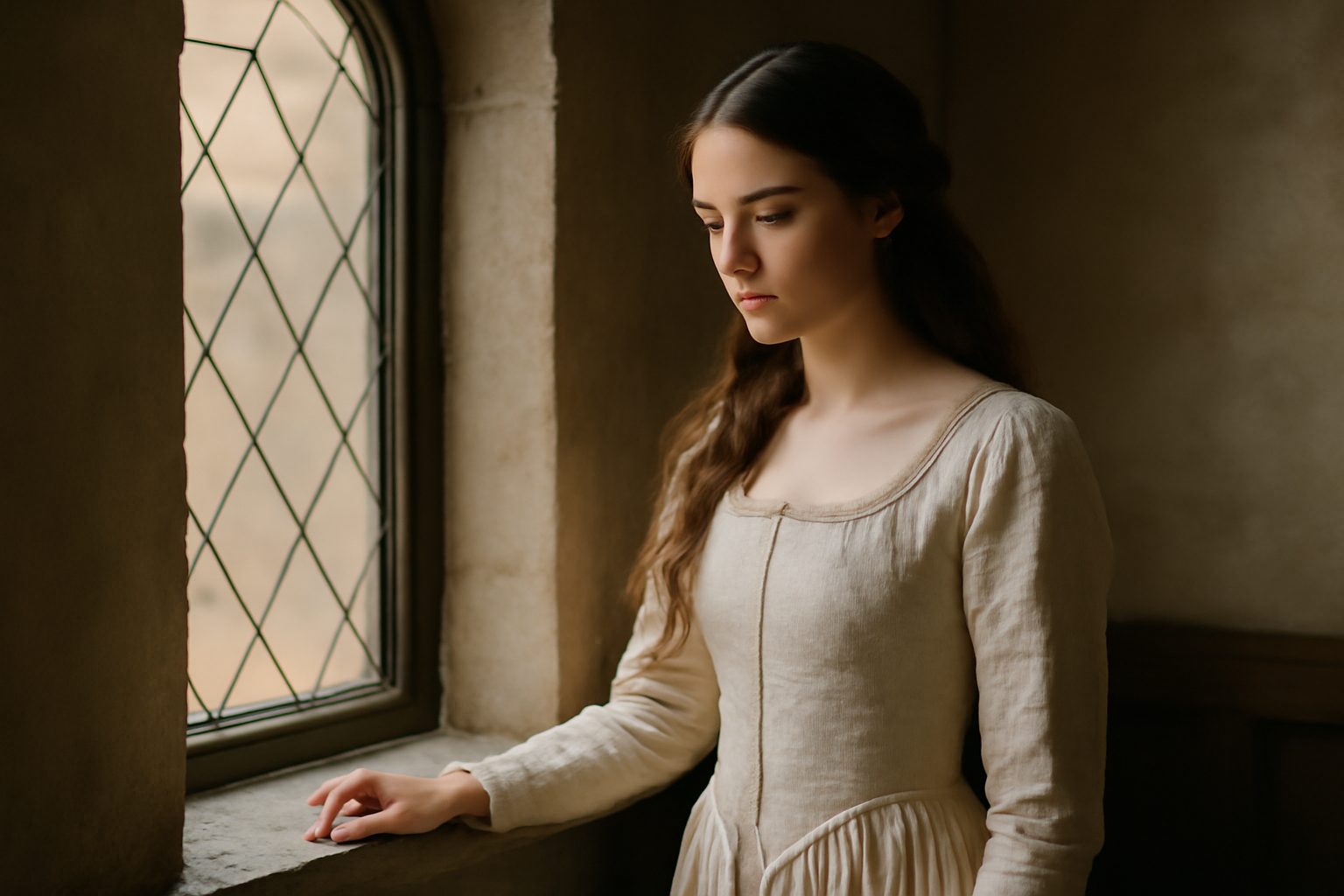
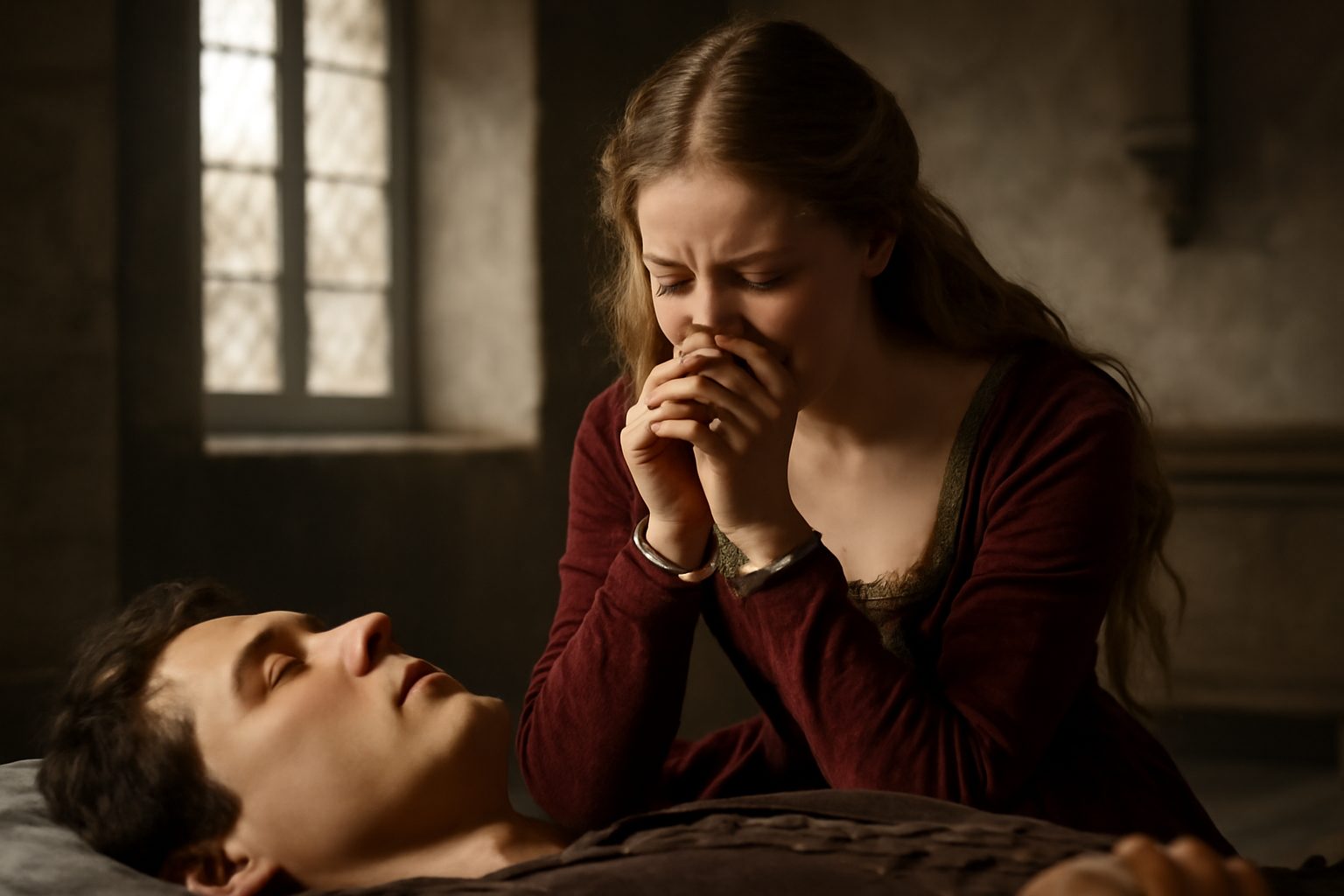
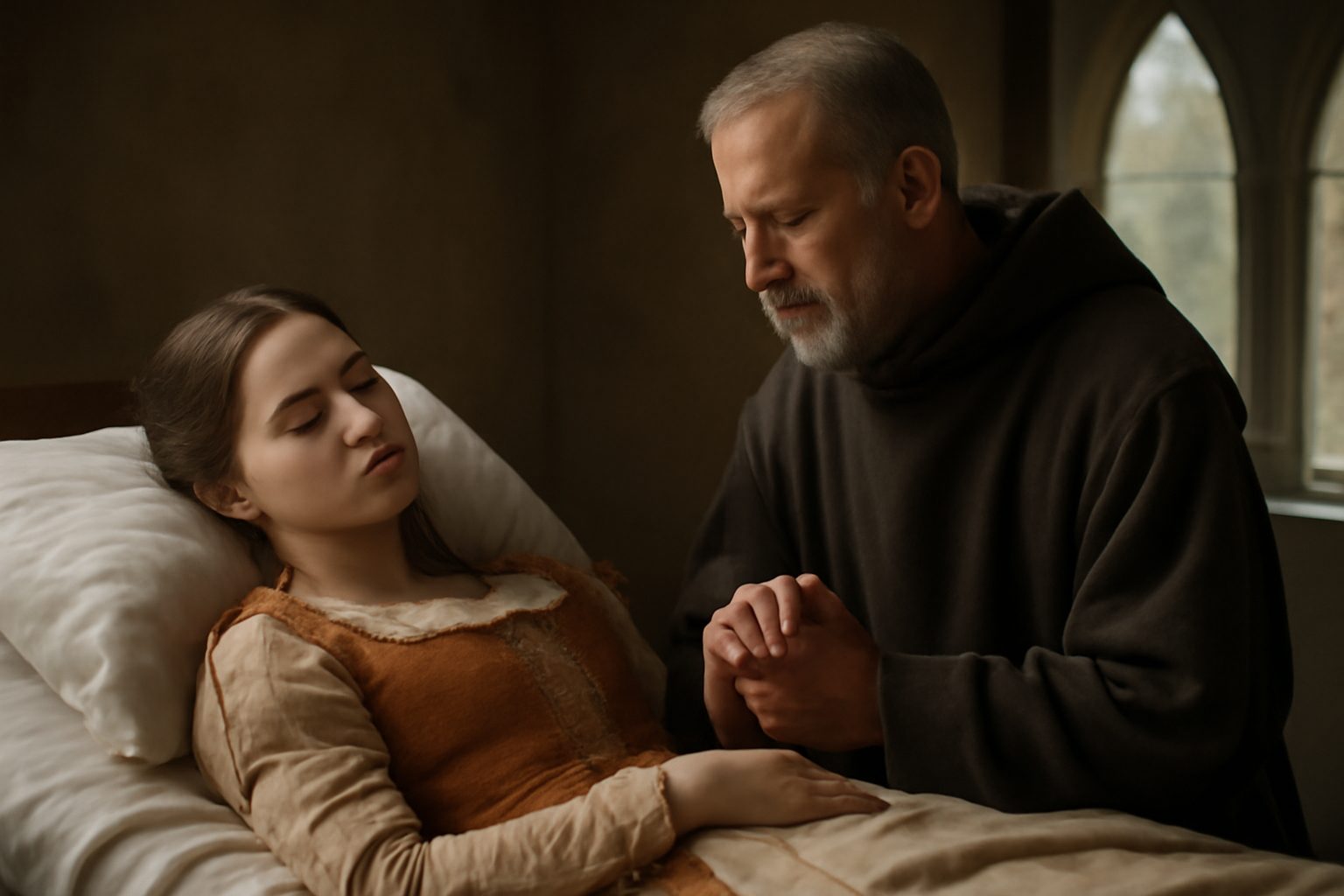
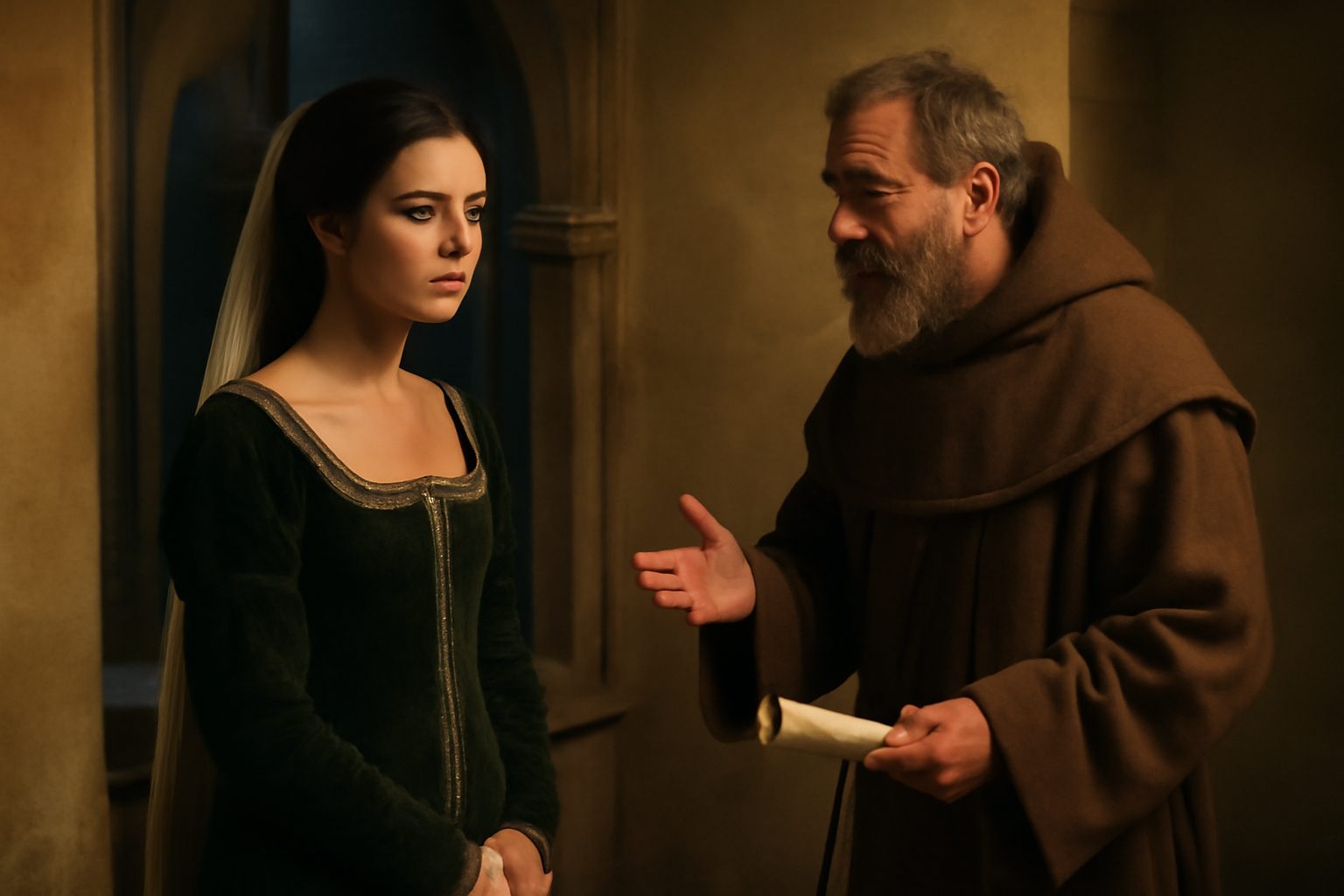
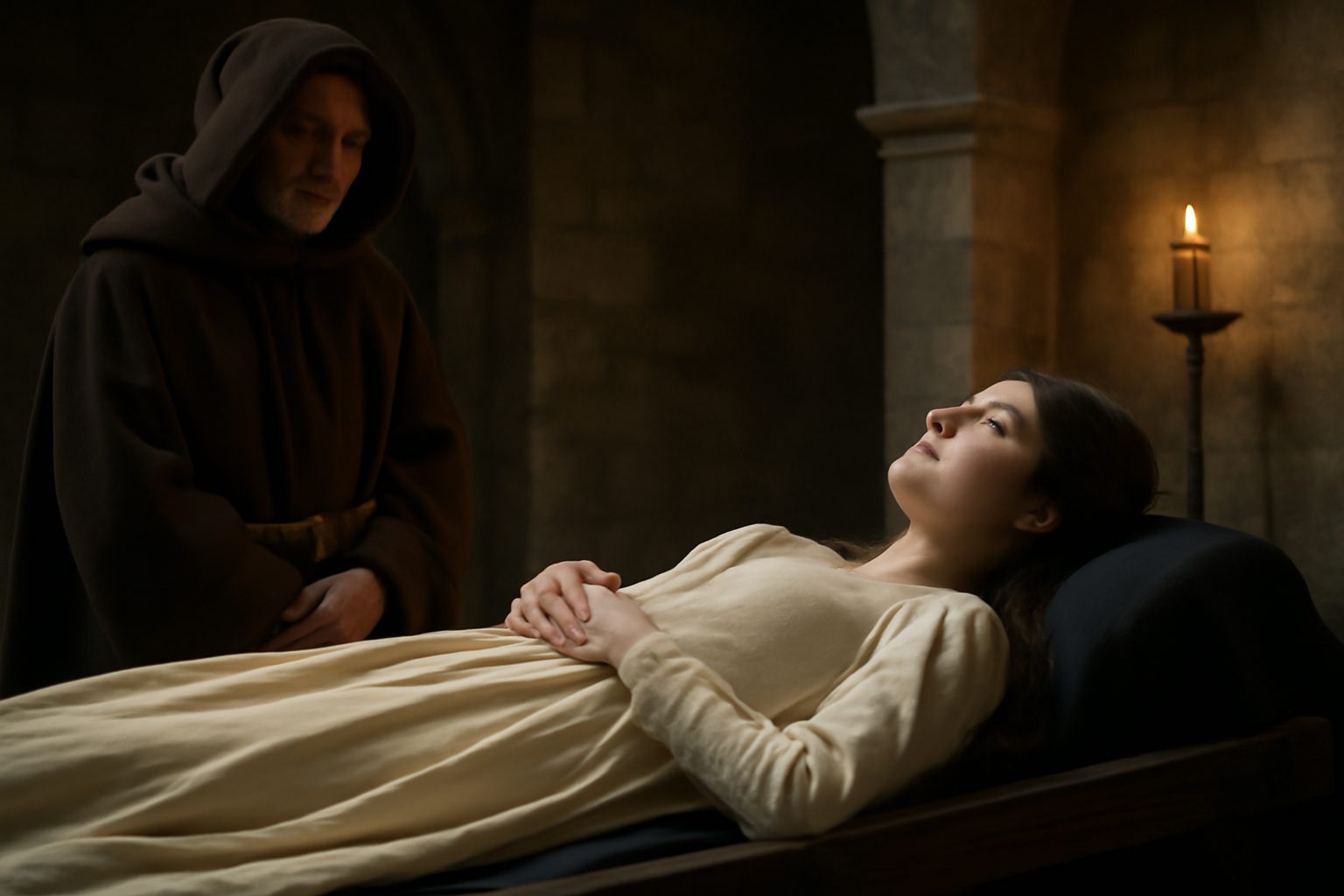
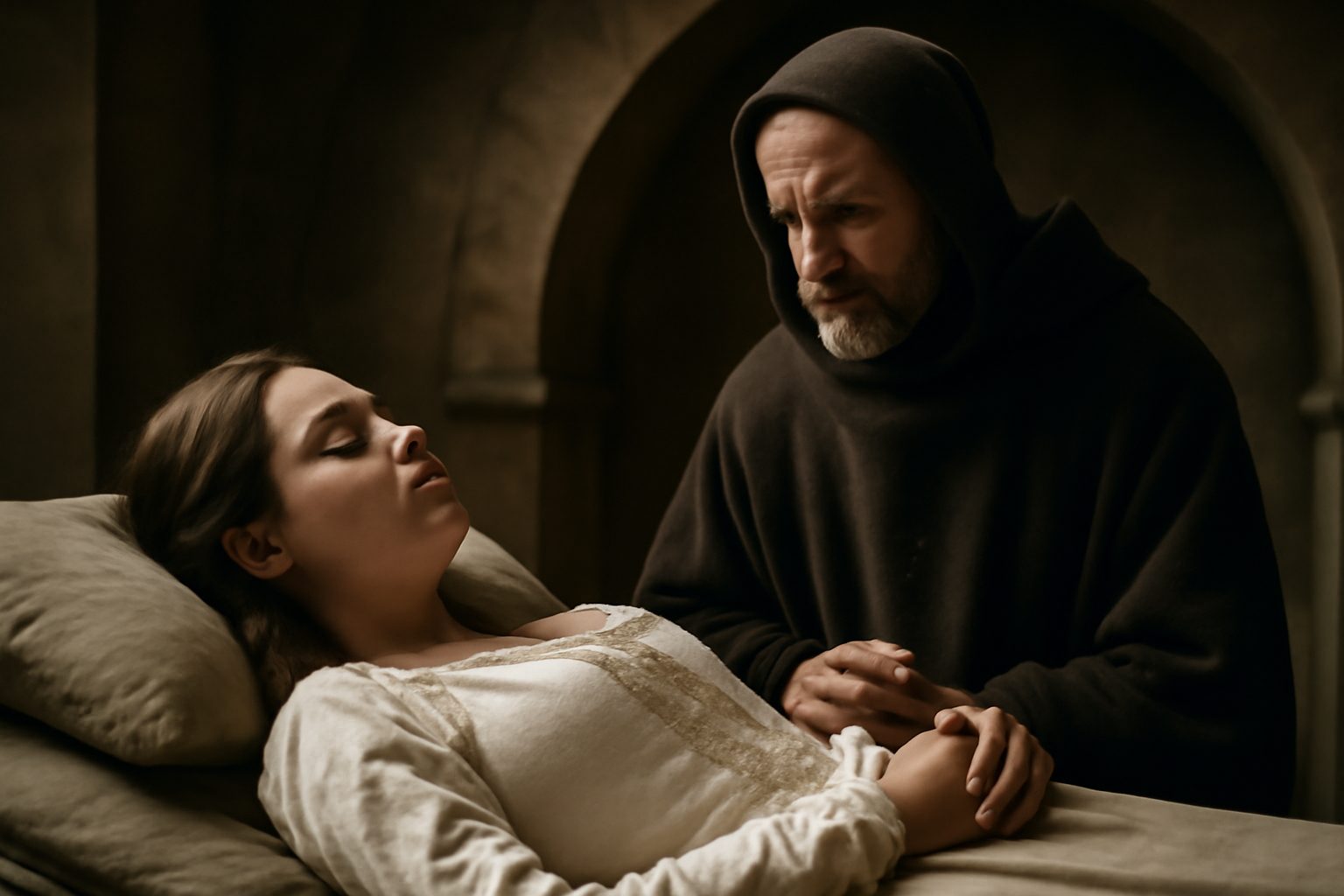
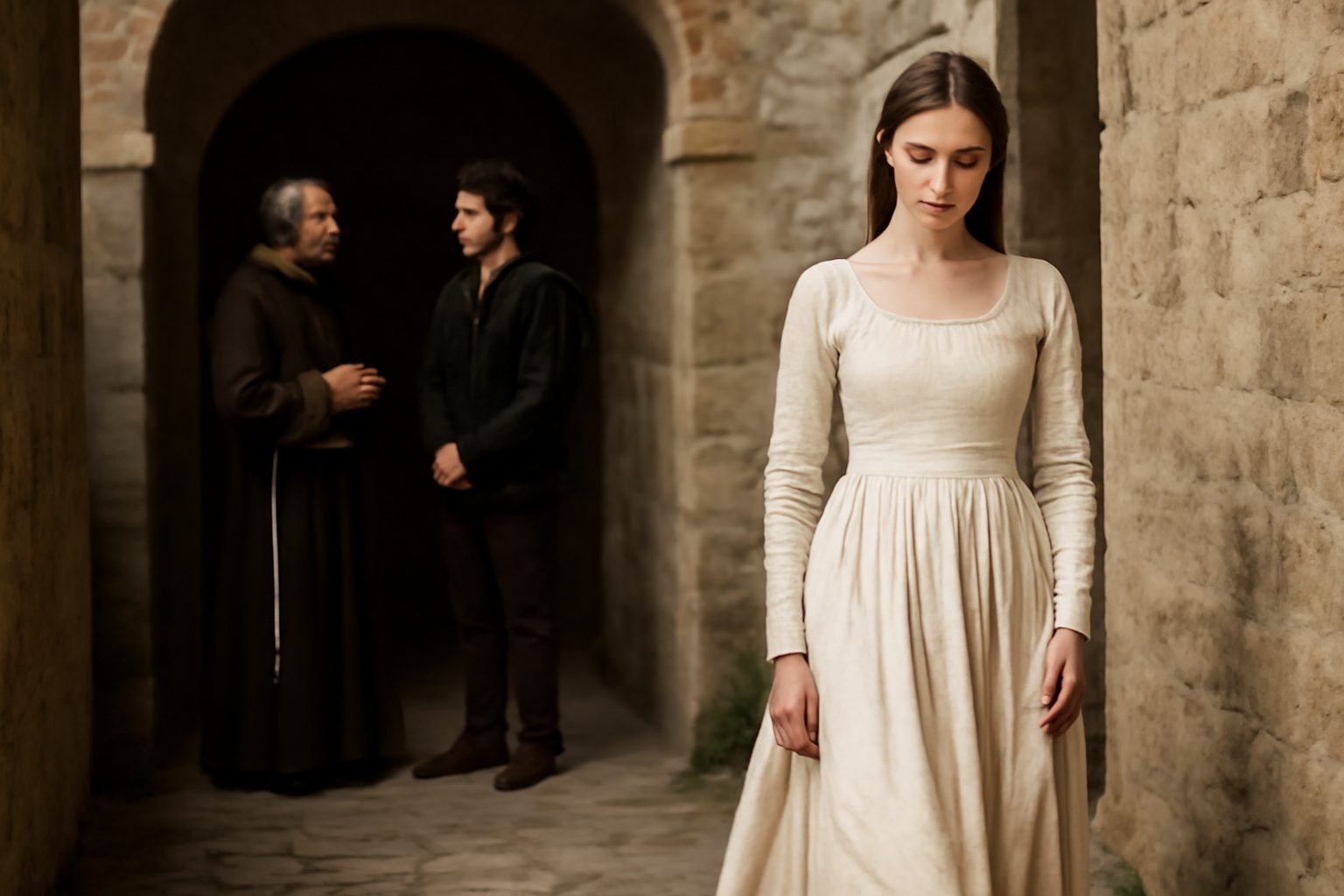
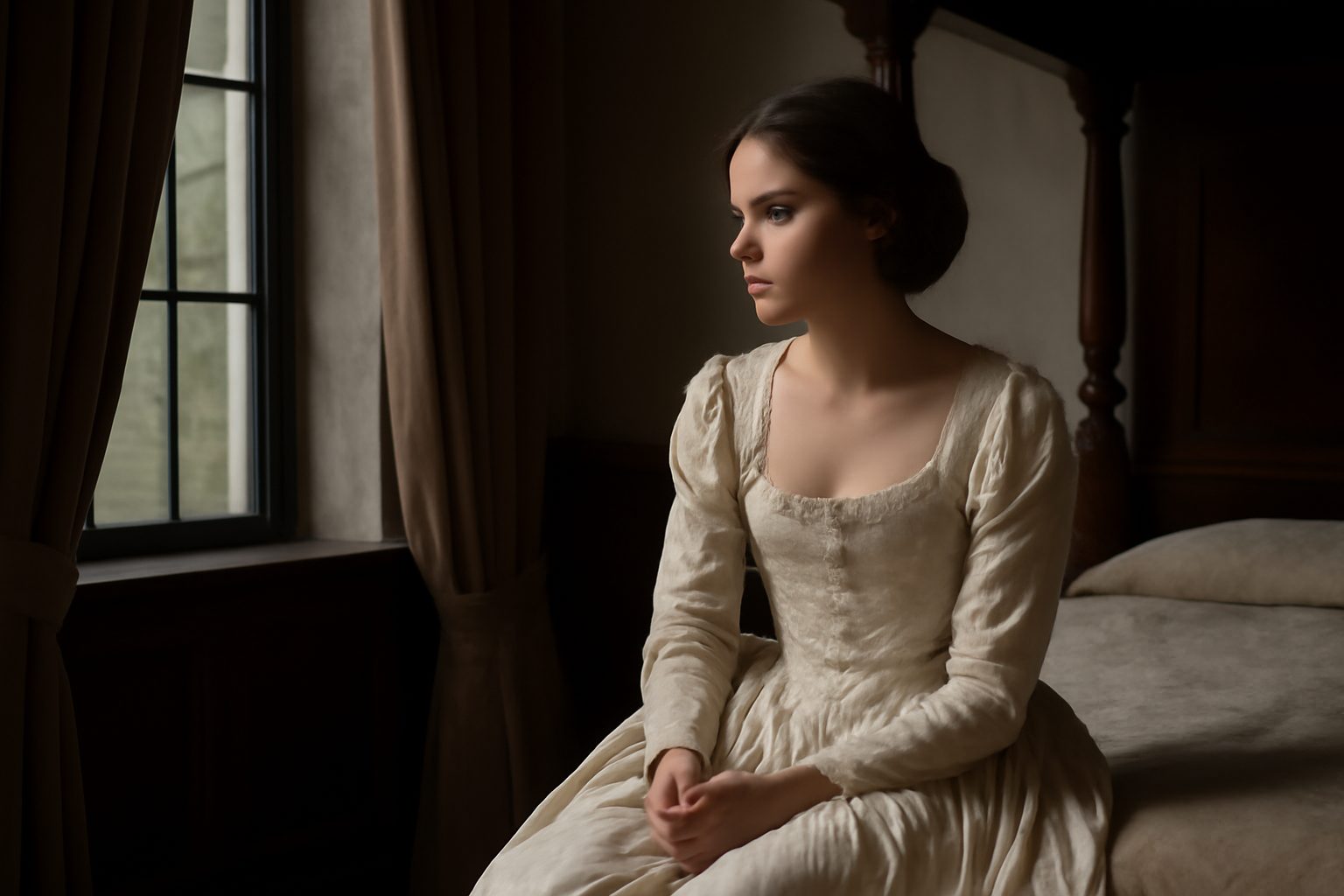
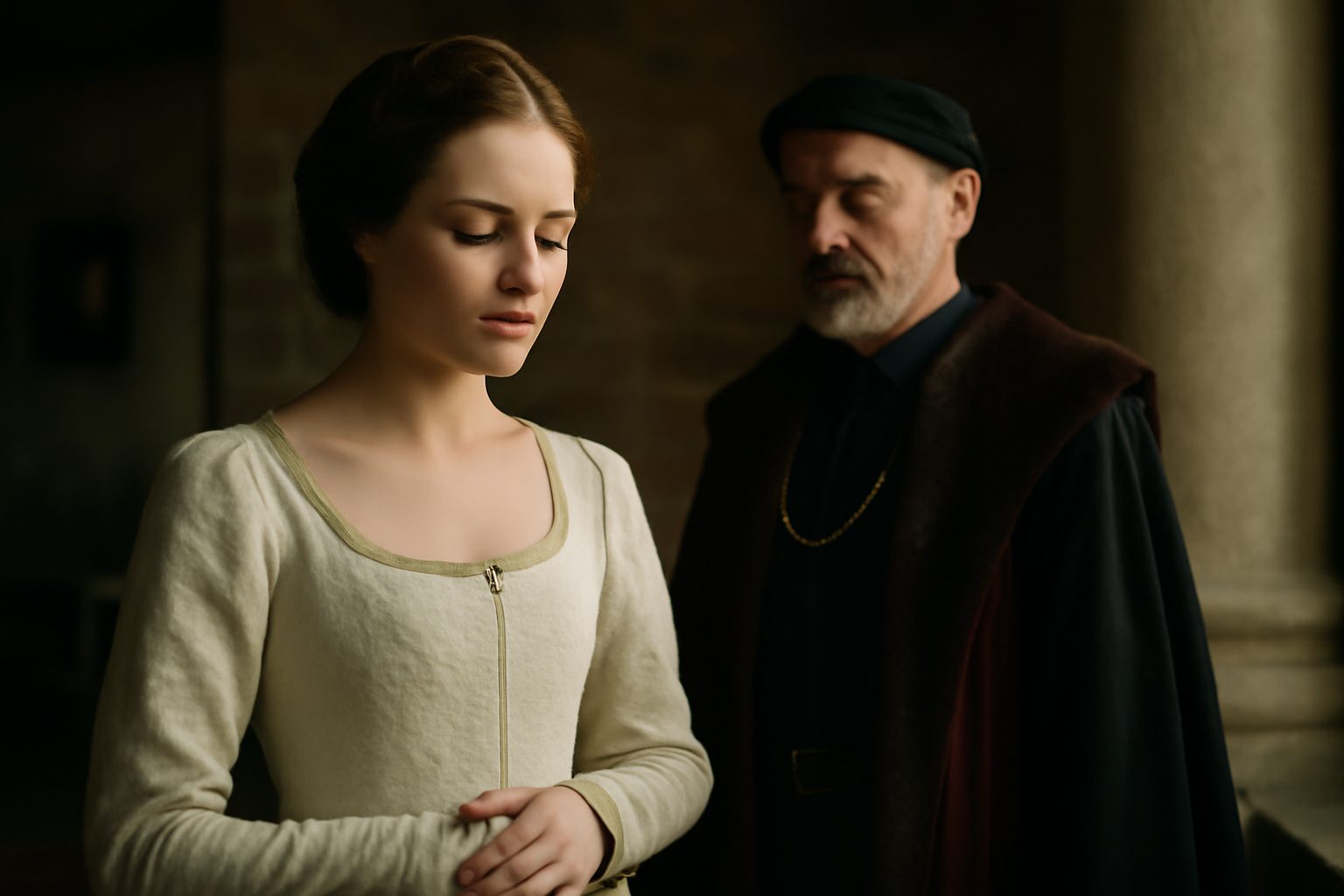
In Act 4, Scene 1 of Romeo and Juliet, Friar Laurence is confronted by a desperate Juliet after her parents demand she marry Paris. Overwhelmed by grief and defiance, she threatens to take her own life rather than betray Romeo. The line refers to the image of death closing her eyes, as if they were windows shuttering against the light of life.
Friar Laurence: "To paly ashes, thy eyes' windows fall,"
In modern day english, we would say:
Your eyelids are closing, like shutters covering the windows of your eyes, as you turn pale as ashes.
Frequently Asked Questions
What does Friar Laurence mean when he says that Juliet's eyes will close like windows?
He is describing how Juliet will appear to be dead, with her eyes shut tightly like windows closing.
Connections to other verses:
Connections to "To paly ashes, thy eyes' windows fall"
The verse "To paly ashes, thy eyes' windows fall" (/romeo-and-juliet/four/4-1/act-4-scene-1-101/) is part of Friar Laurence's description of the effects of the sleeping potion on Juliet. It connects thematically and descriptively to several other verses in the scene that elaborate on the potion's impact and the plan to feign death.
Physical Transformation and Death-like State
This line vividly depicts the pallor and lifelessness Juliet will exhibit, with "eyes' windows" (eyelids) falling shut and turning ashen. It relates directly to:
- The roses in thy lips and cheeks shall fade – Both describe the loss of natural color and vitality.
- Shall, stiff and stark and cold, appear like death – Emphasizes the corpse-like rigidity and coldness.
- No warmth, no breath, shall testify thou livest – Reinforces the absence of signs of life.
Potions and Induced Sleep
The verse is part of the Friar's instructions involving the potion. Key connected lines include:
- And this distilled liquor drink thou off – The administration of the potion itself.
- When presently through all thy veins shall run – Describes the potion's rapid effect.
- And then awake as from a pleasant sleep – Contrasts the death-like state with the anticipated awakening.
Symbolism and Imagery of Death
The ash imagery connects to other death-related descriptions in the scene:
- Like death, when he shuts up the day of life – Uses similar metaphorical language for the end of life.
- And in this borrow'd likeness of shrunk death – Refers to the feigned appearance of death.
Juliet's Resolve and Emotional State
Though focused on physical change, this verse ties to Juliet's determination to avoid marrying Paris, expressed in:
- O, bid me leap, rather than marry Paris – Highlights her desperation.
- Give me, give me! O, tell not me of fear! – Shows her eagerness to embrace the plan despite risks.