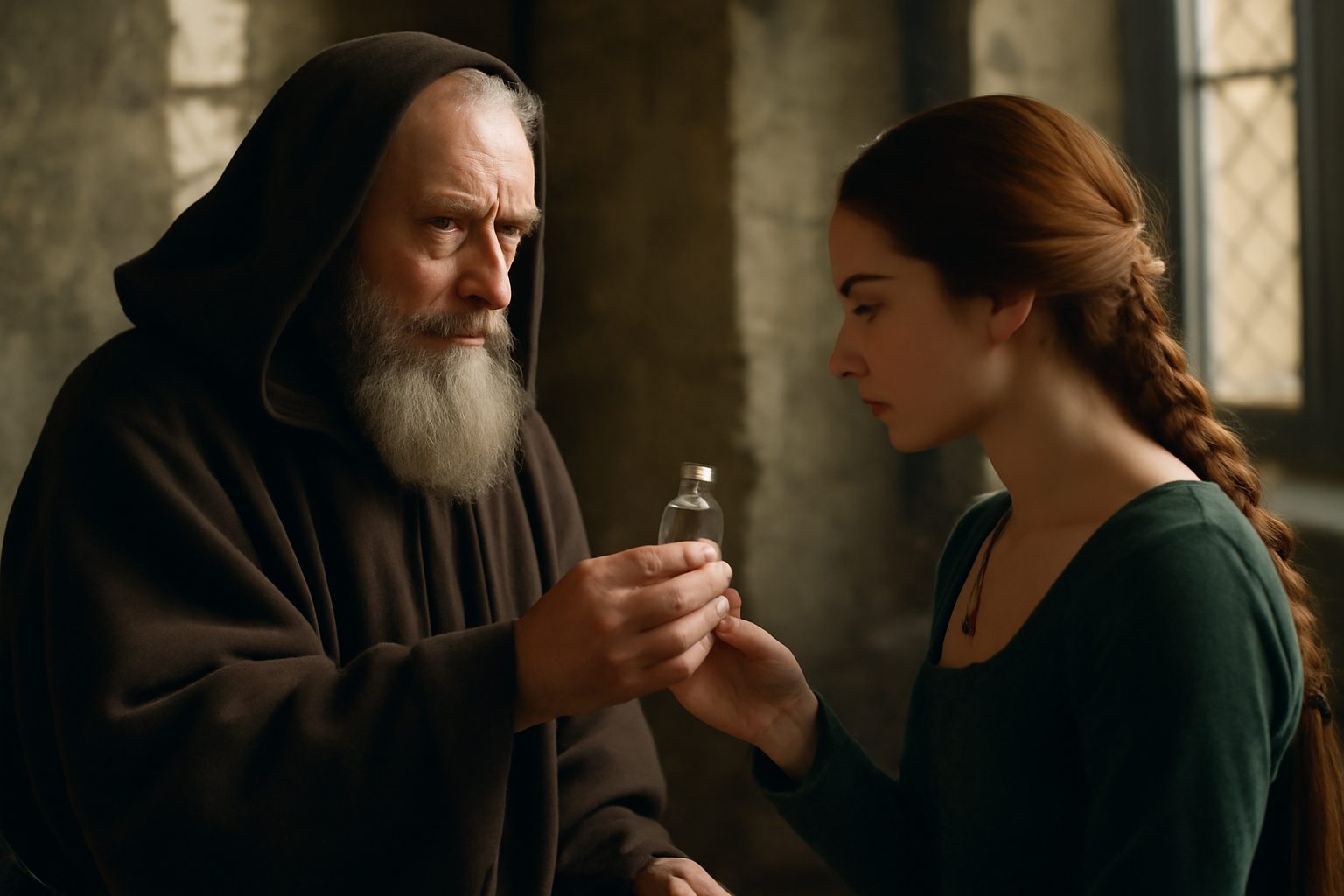
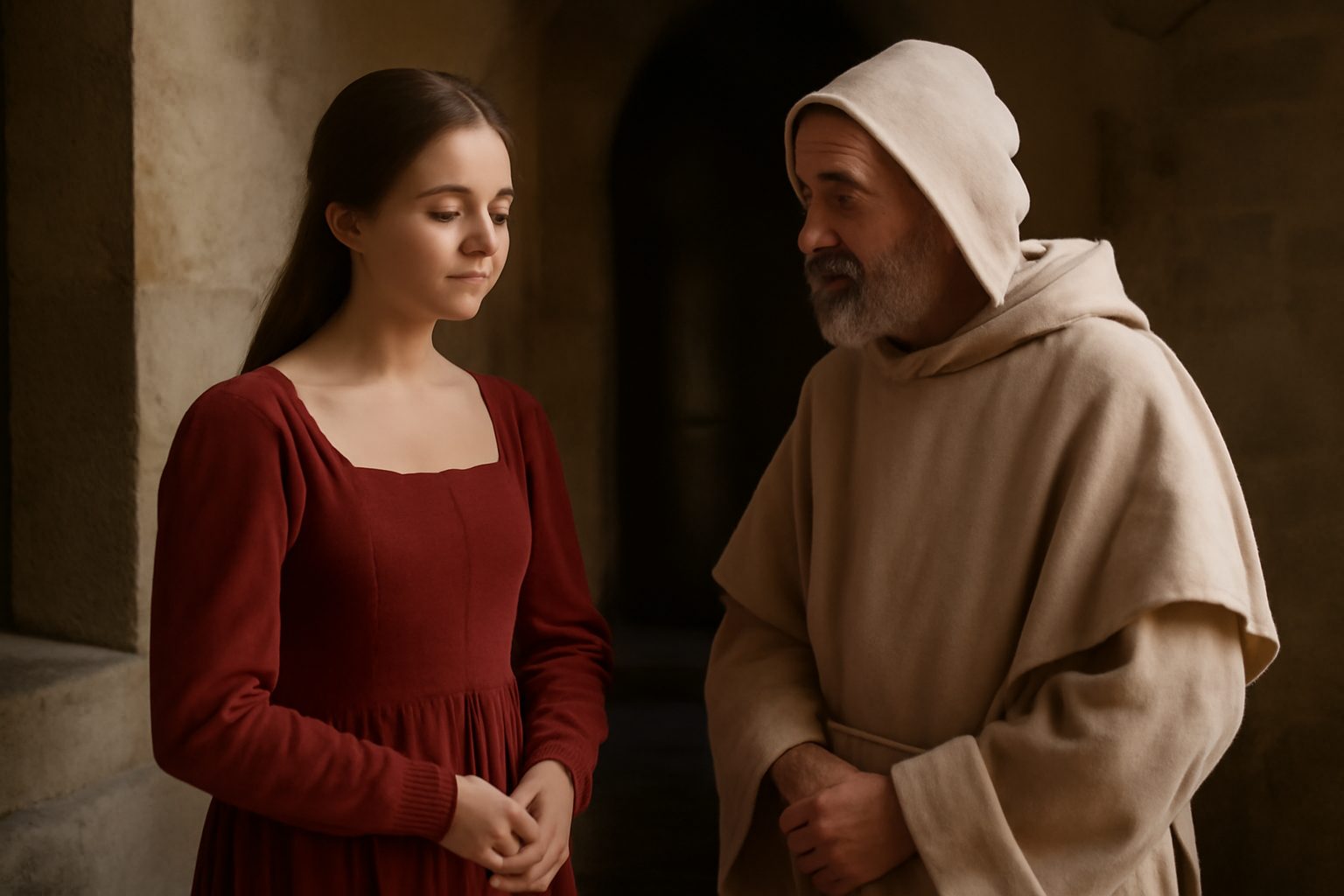
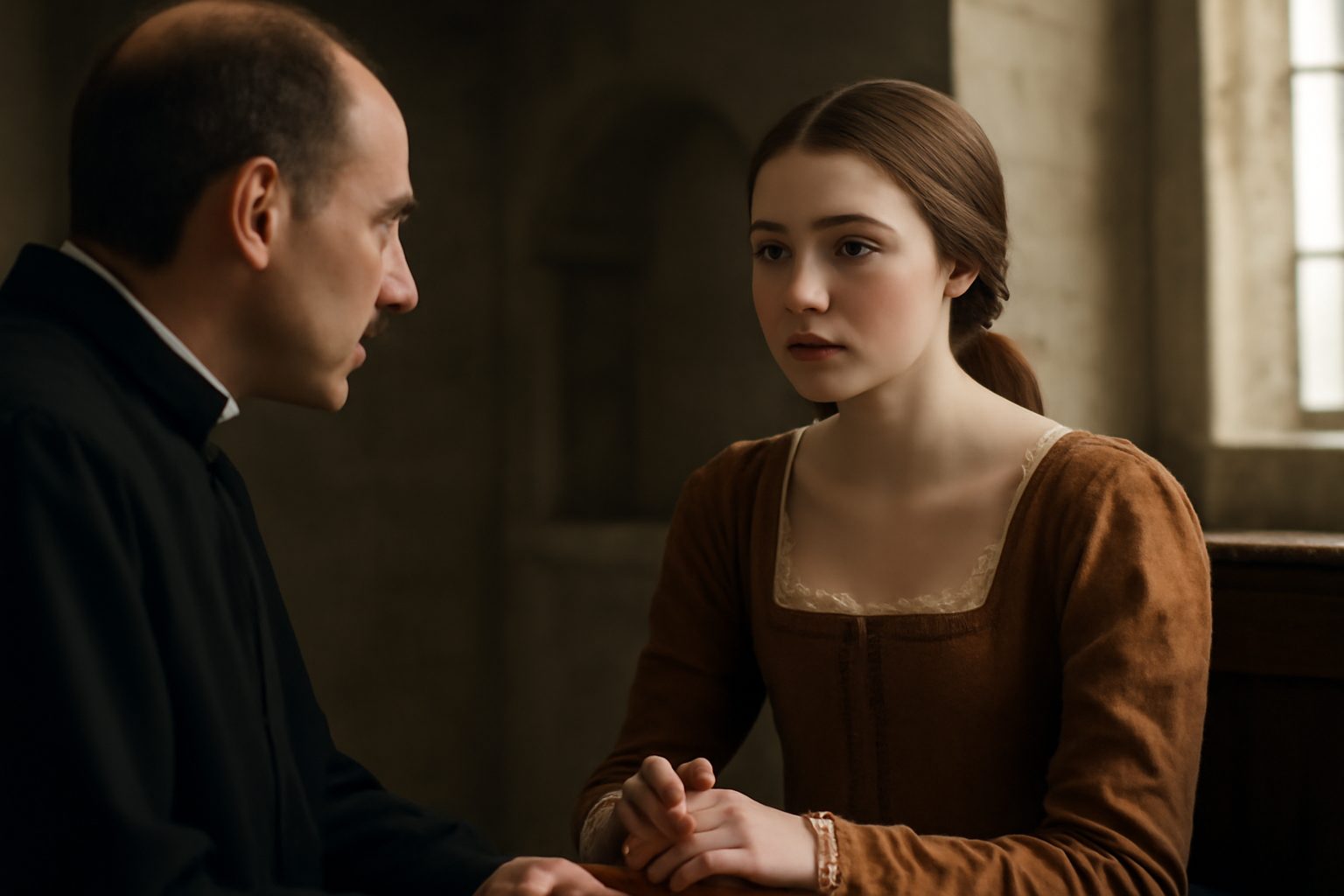
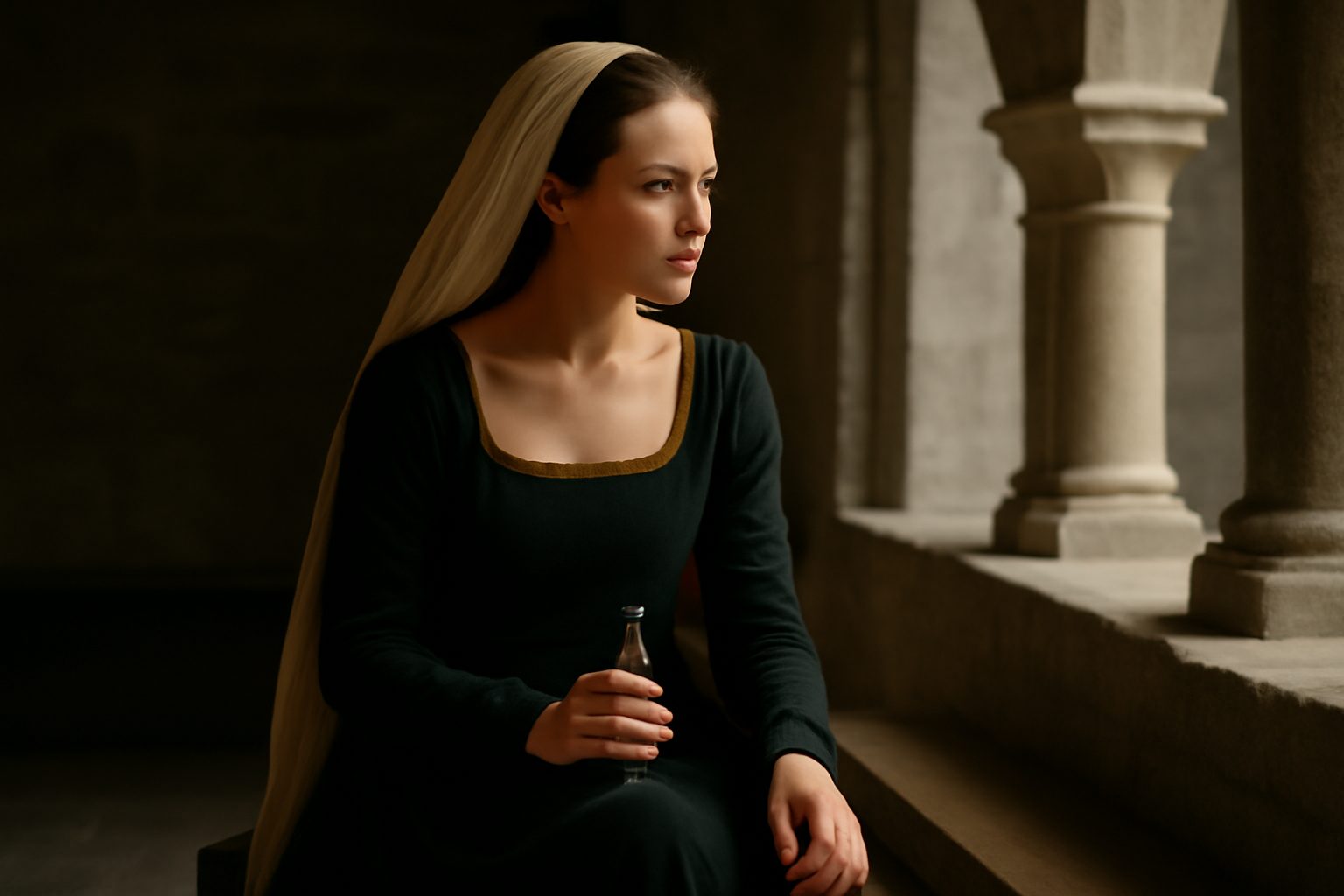
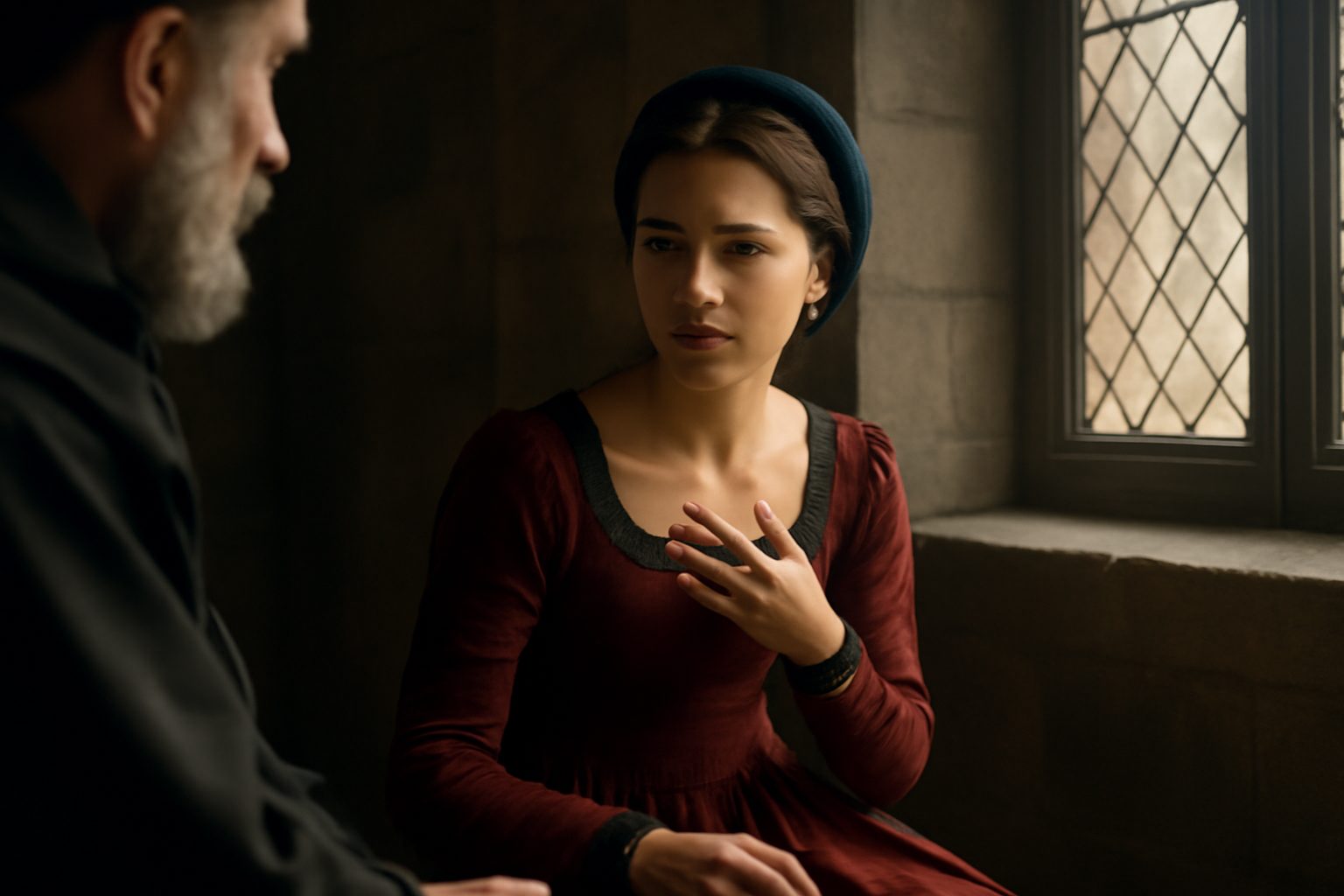
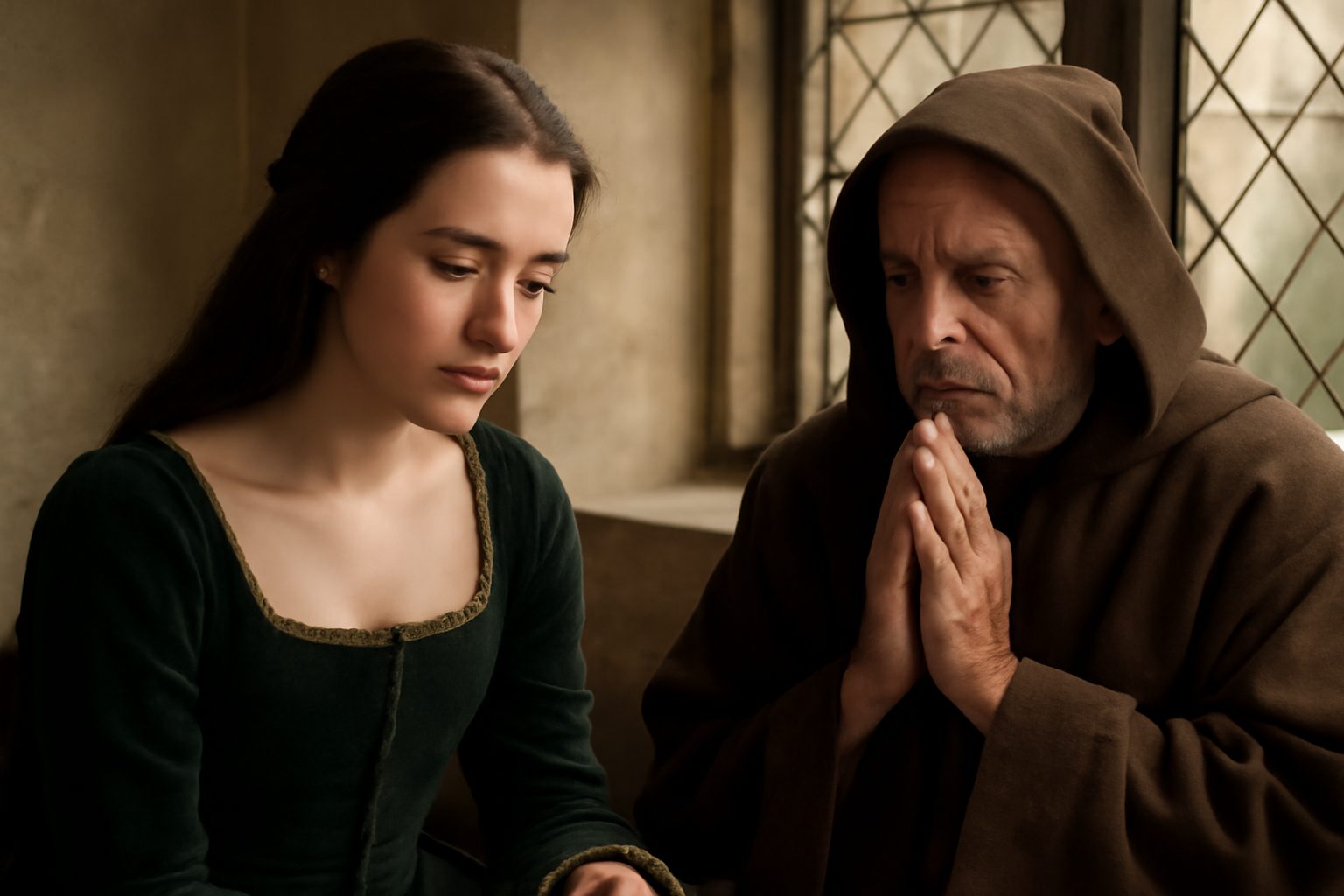
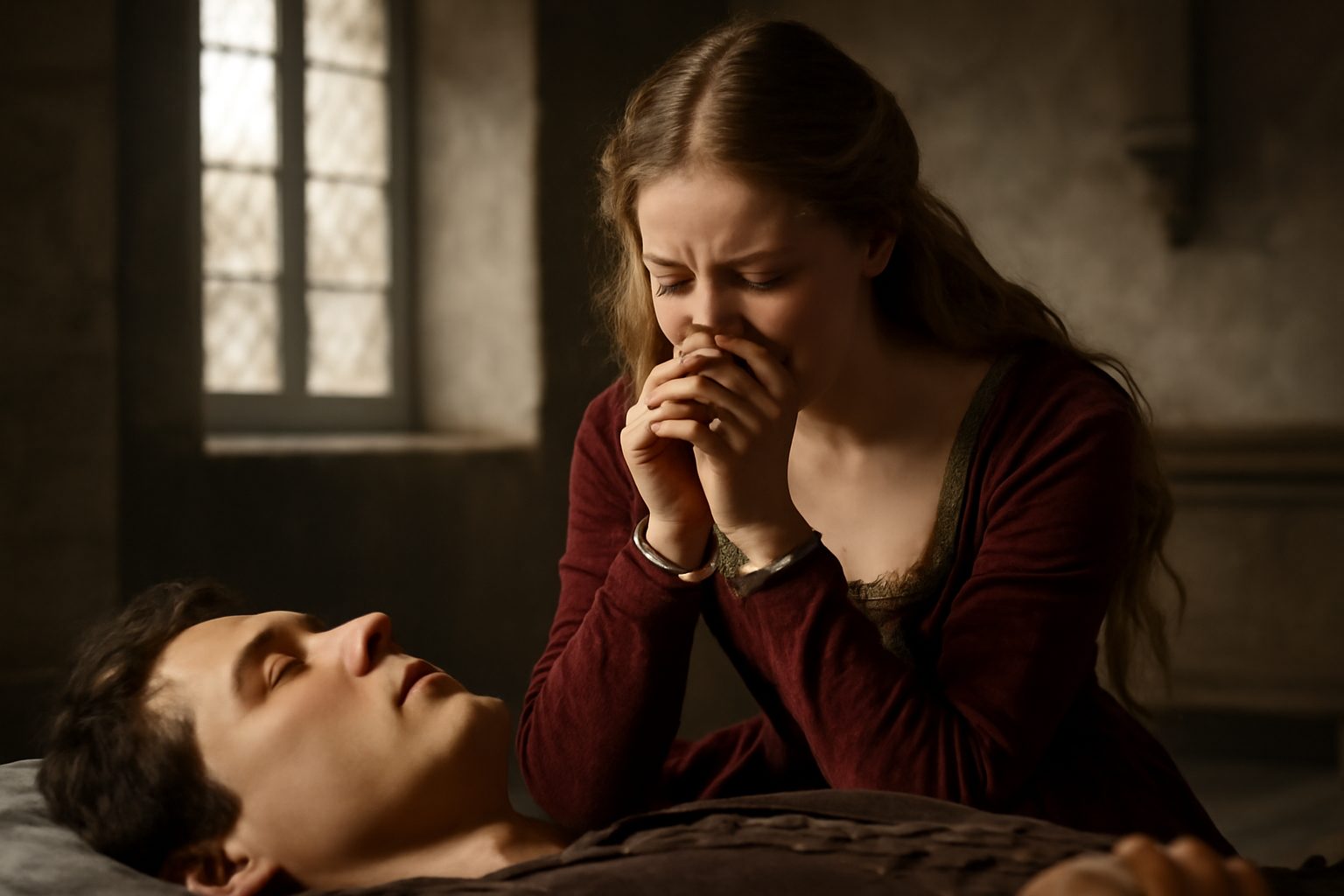
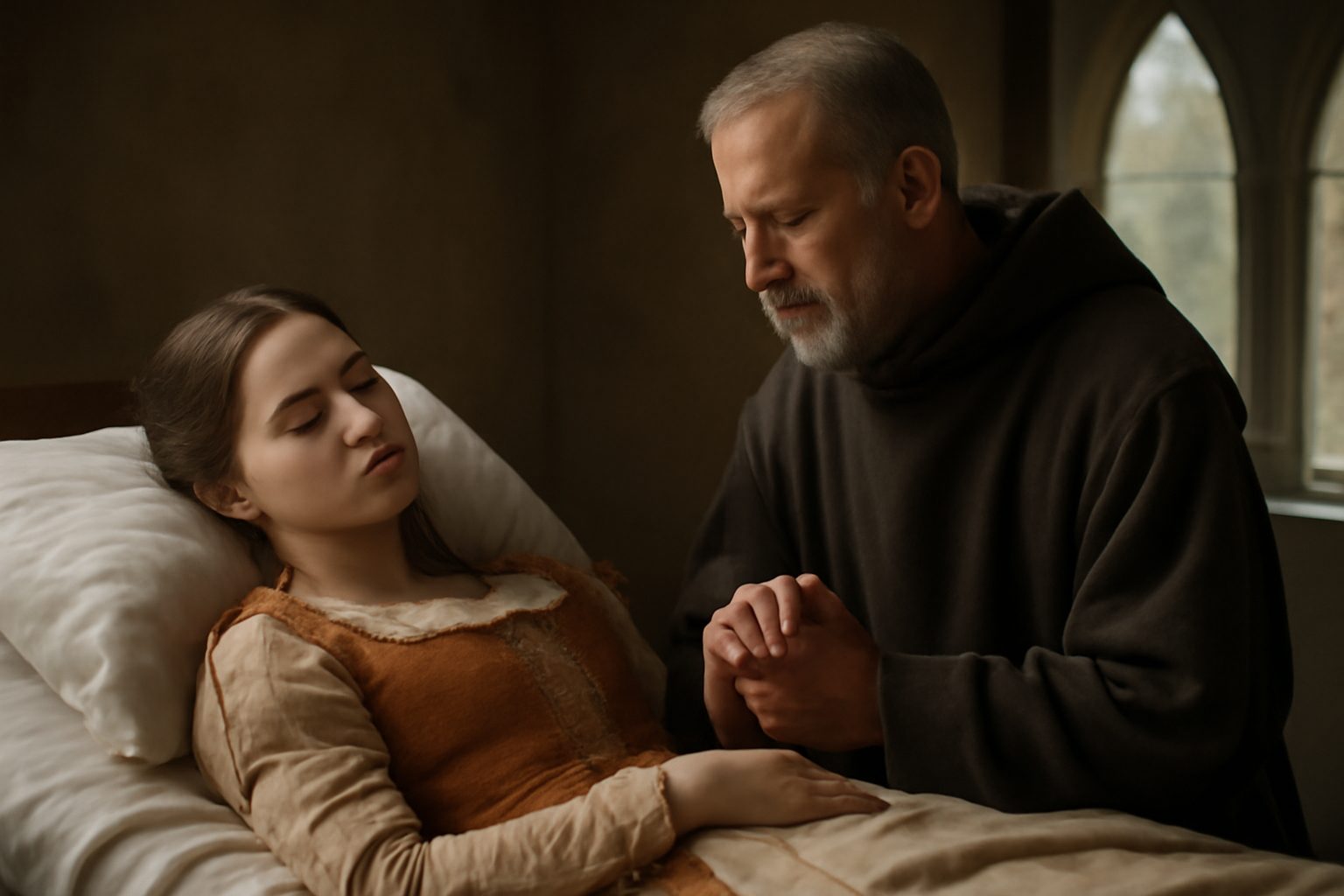
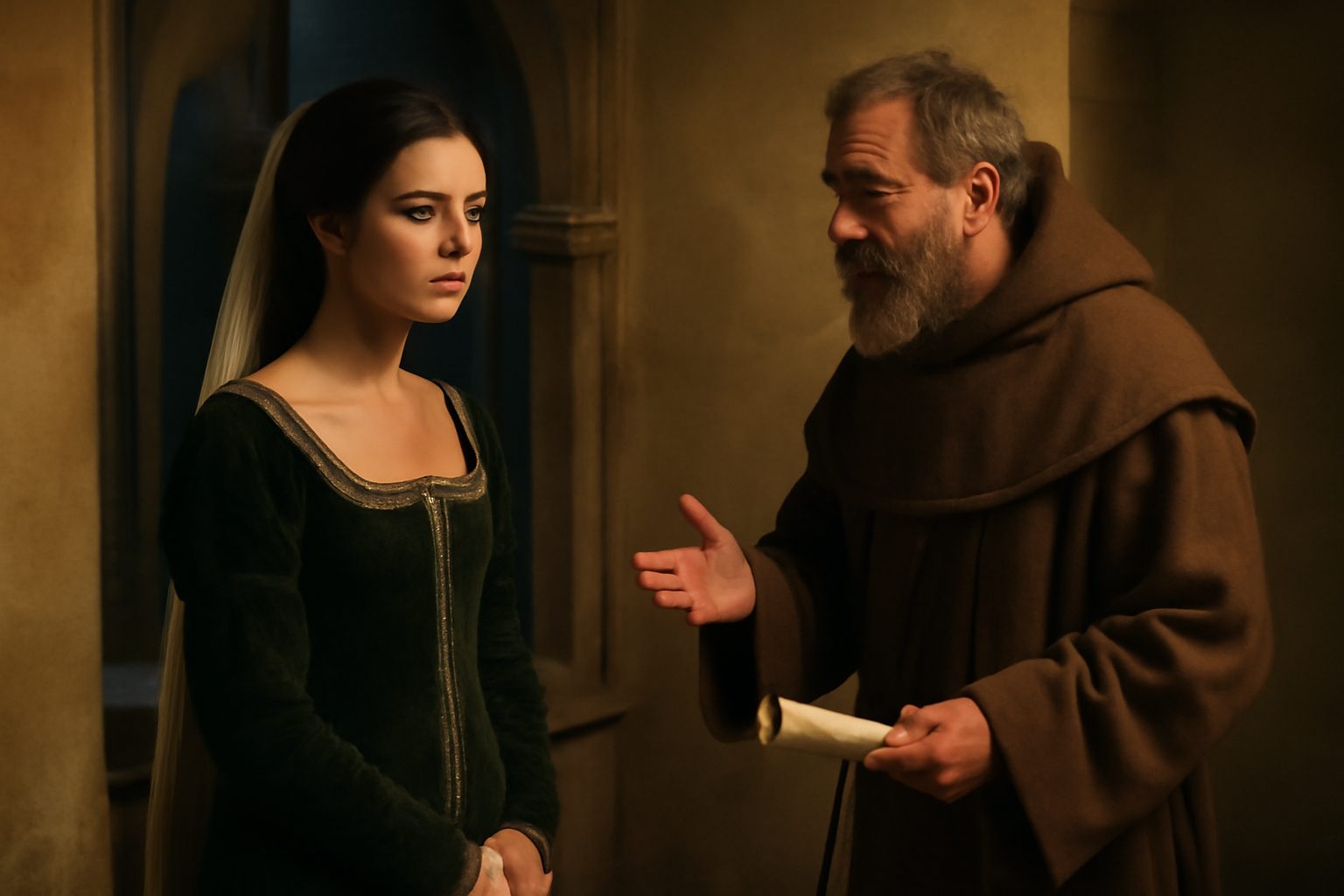
In Act 4, Scene 1 of Romeo and Juliet, Friar Laurence is speaking to Paris about Juliet's sudden agreement to marry him. The line refers to the customs and traditions of their society, hinting at the rushed and formal nature of the arranged marriage. This moment underscores the pressure Juliet faces as she secretly plans to avoid the wedding through Friar Laurence's risky scheme.
Friar Laurence: "Then, as the manner of our country is,"
In modern day english, we would say:
As is the custom in our country.
Frequently Asked Questions
What does Friar Laurence mean when he mentions the manner of our country?
He is referring to the customs or traditions commonly followed in their country.
Connections to other verses:
Connections to "Then, as the manner of our country is,"
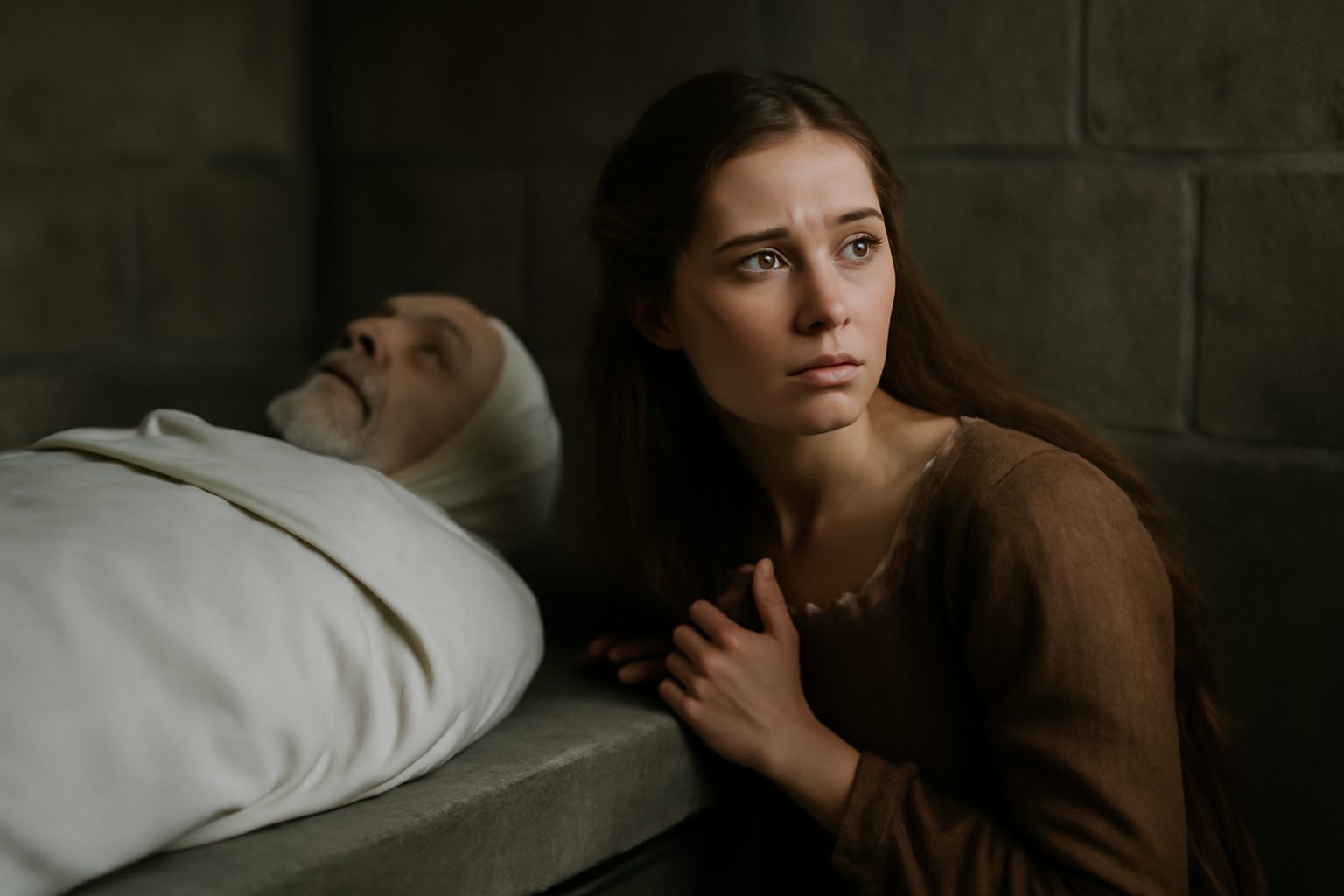
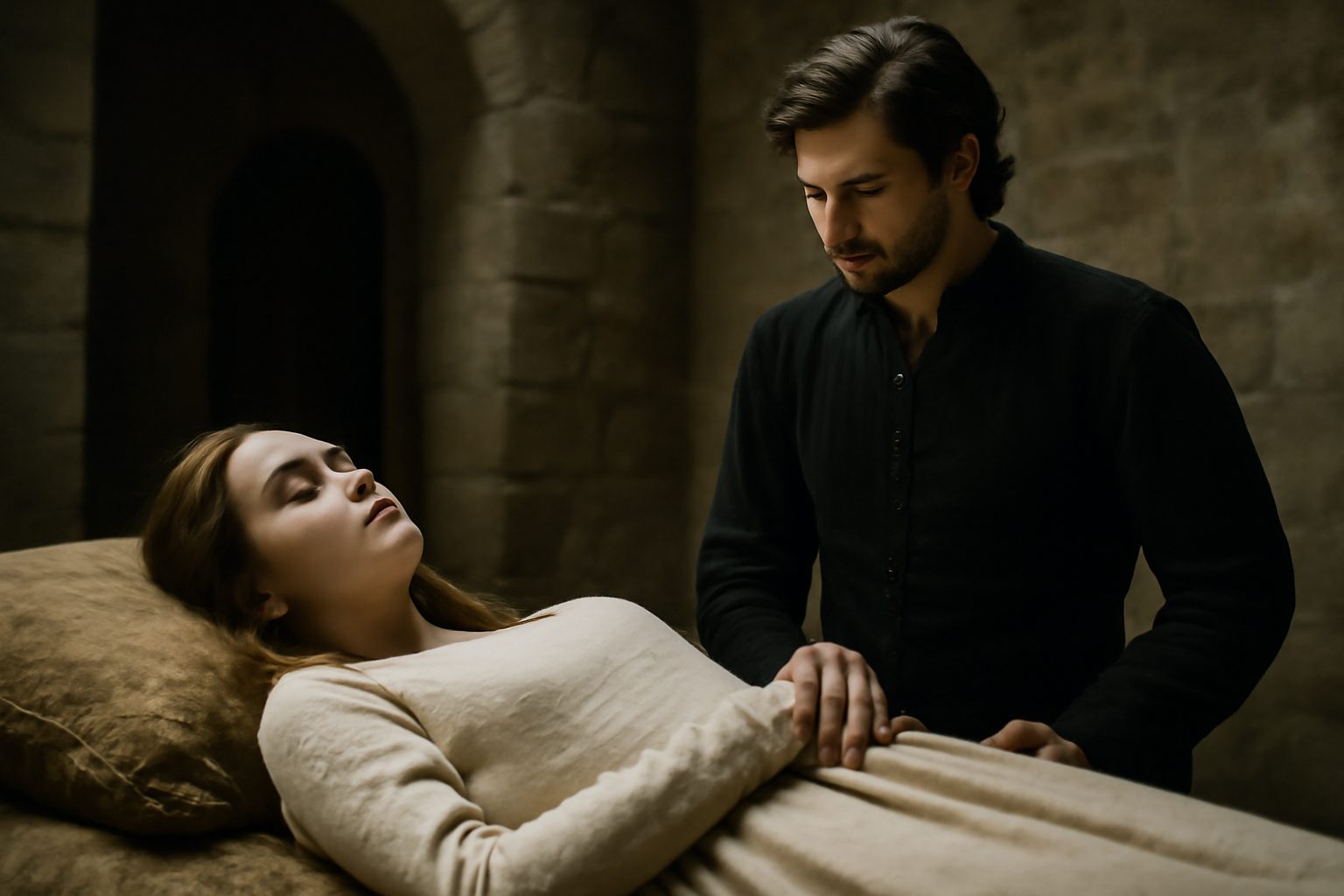
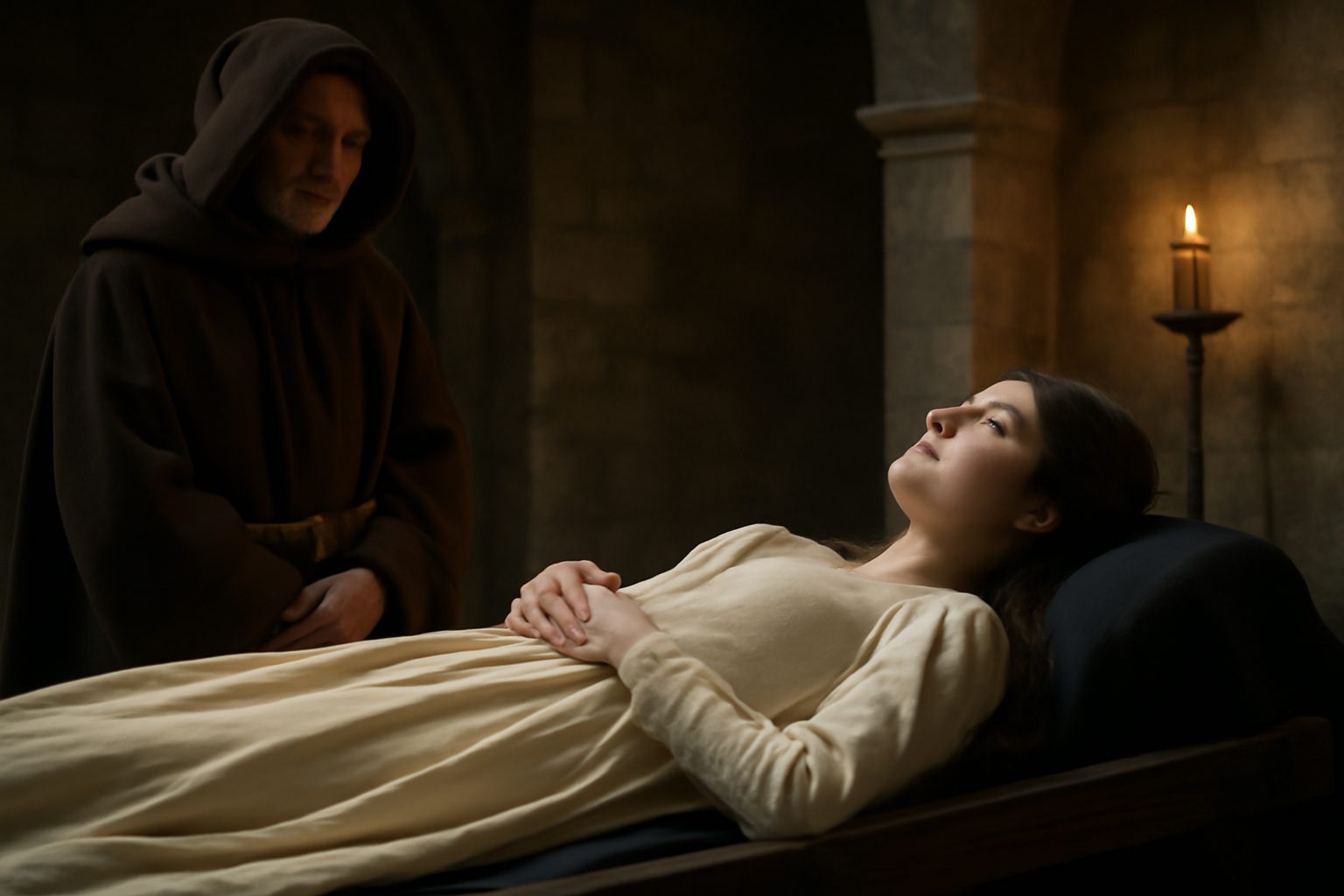
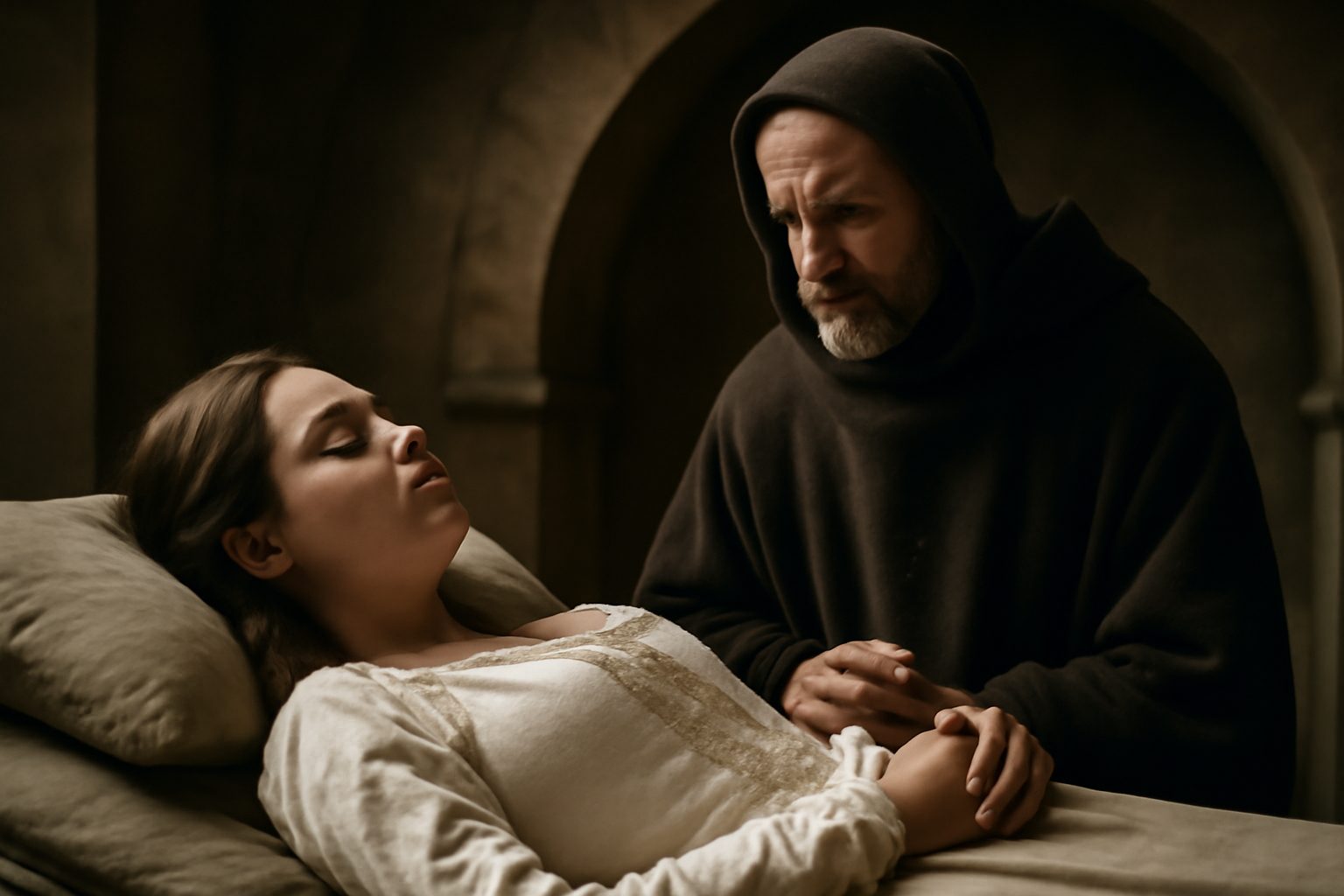
The verse "Then, as the manner of our country is," is spoken by Friar Laurence as he outlines the plan for Juliet's feigned death. It refers to the cultural practice of placing the deceased in an open casket for viewing, which is crucial to the deception.
Cultural and Funeral Customs
This line connects to "In thy best robes uncover'd on the bier", as both describe the traditional preparation of the body. The phrase also relates to "Thou shalt be borne to that same ancient vault", emphasizing the funeral procession and entombment customs of Verona.
Feigned Death and Deception
Friar Laurence's plan, introduced here, ties to his earlier assurance in "And this shall free thee from this present shame;", promising escape through the ruse. The physical effects of the potion, described in "Shall, stiff and stark and cold, appear like death", ensure the deception aligns with cultural expectations.
Juliet's Resolve and Trust
Juliet's determination, shown in "Give me, give me! O, tell not me of fear!", highlights her willingness to embrace this plan despite its risks, trusting the Friar's knowledge of local customs to make it convincing.