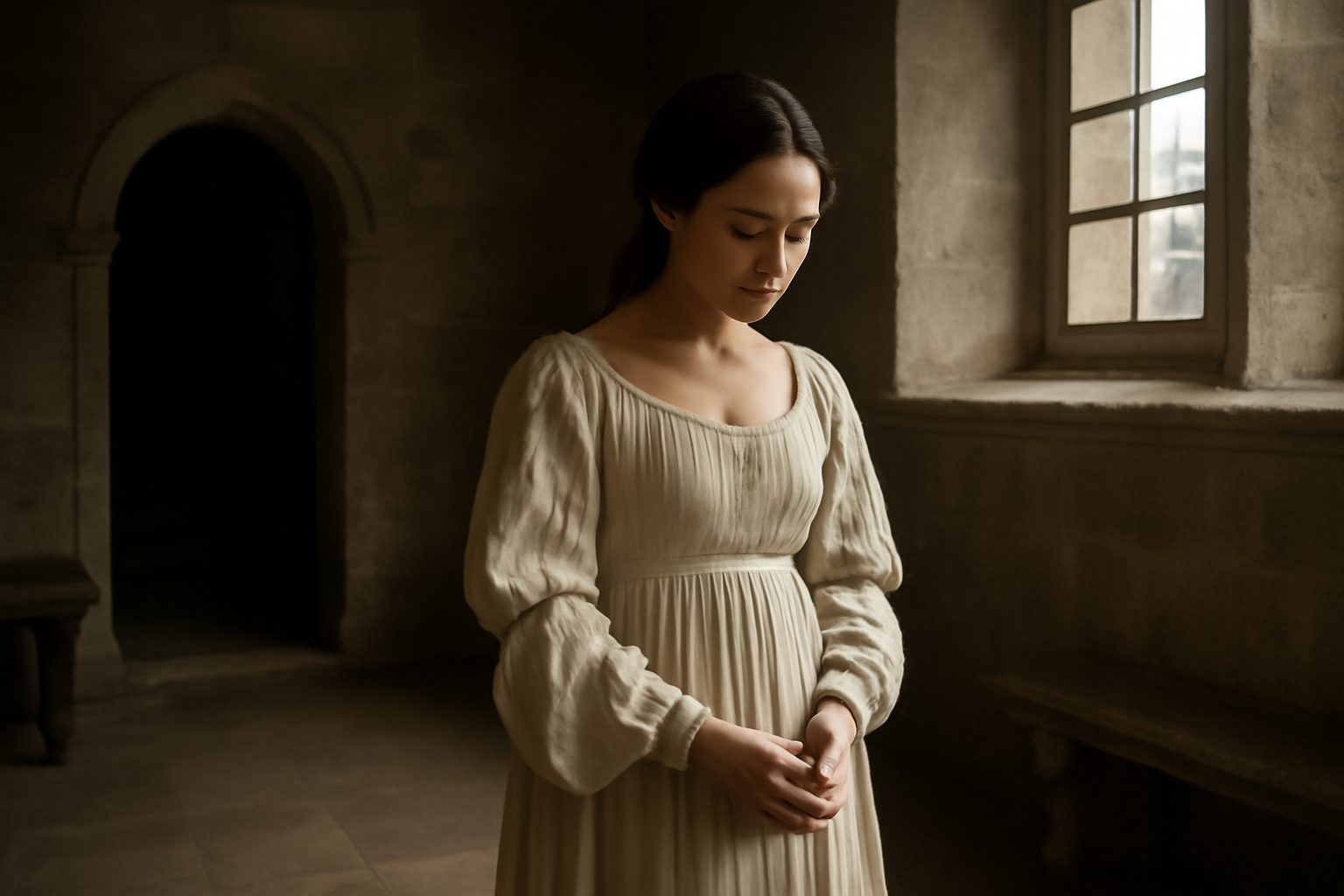
In Act 4, Scene 1 of Romeo and Juliet, Friar Laurence is devising a desperate plan to help Juliet avoid her forced marriage to Paris. When Juliet, overwhelmed by grief and fear, breaks down in tears, the Friar dismisses her weeping as ineffective in solving her dire situation. His remark underscores the urgency of their predicament and his growing frustration with mere emotional displays when action is needed.
Juliet: "The tears have got small victory by that;"
In modern day english, we would say:
Crying over this has done little good.
Frequently Asked Questions
What does Juliet mean when she says the tears have achieved little?
Juliet means that crying has not helped her situation or solved her problems.
Connections to other verses:
Connections to "The tears have got small victory by that"
The verse "The tears have got small victory by that" is spoken by Paris to Juliet, commenting on how her excessive weeping has marred her beauty. This connects thematically and emotionally to several other verses in the scene.
Related to Juliet's Grief and Appearance
Paris earlier observes "Poor soul, thy face is much abused with tears", directly linking to the idea that her tears have physically affected her. Similarly, Friar Laurence notes "Immoderately she weeps for Tybalt's death", emphasizing the depth and excess of her sorrow, which Paris sees as a "small victory" in expressing grief but at a cost to her well-being.
Connections to Desperation and Resolve
Juliet's despair is further highlighted when she declares "Be not so long to speak; I long to die", showing her readiness for extreme measures rather than submit to an unwanted marriage. This desperation echoes in "O, bid me leap, rather than marry Paris", where she prefers death over betrayal of her love for Romeo.
Friar Laurence's Observations and Plan
The Friar recognizes the severity of her state, advising "Hold, daughter: I do spy a kind of hope", introducing his potion plan as an alternative to despair. His description of the potion's effect—"No warmth, no breath, shall testify thou livest"—parallels the "victory" of tears by presenting a false victory of death to overcome her plight.
Juliet's Resolute Acceptance
Ultimately, Juliet's determination is captured in "Give me, give me! O, tell not me of fear!", as she embraces the Friar's risky remedy. This contrasts with Paris's superficial concern about her tears, showing her move from passive sorrow to active resolution.