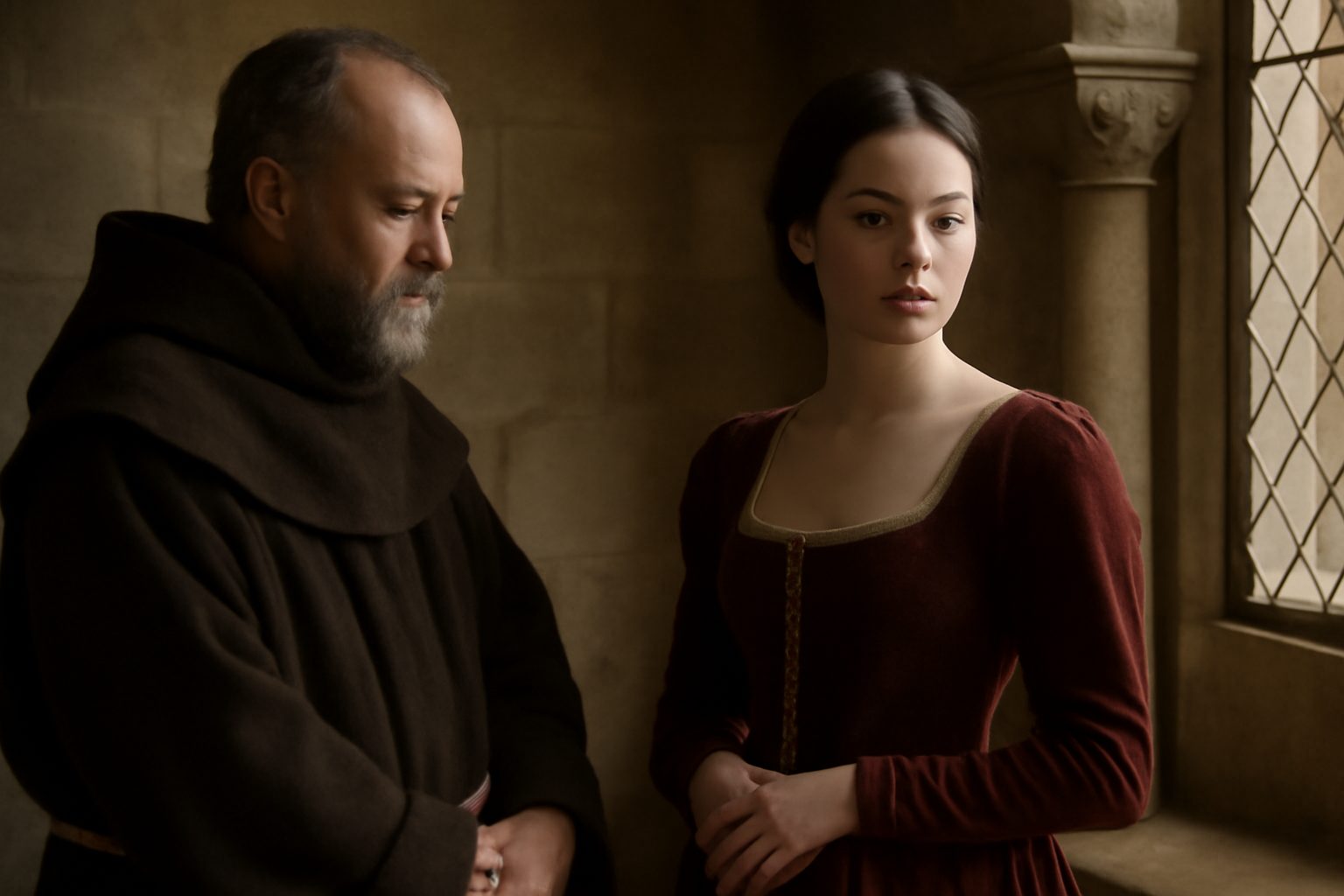
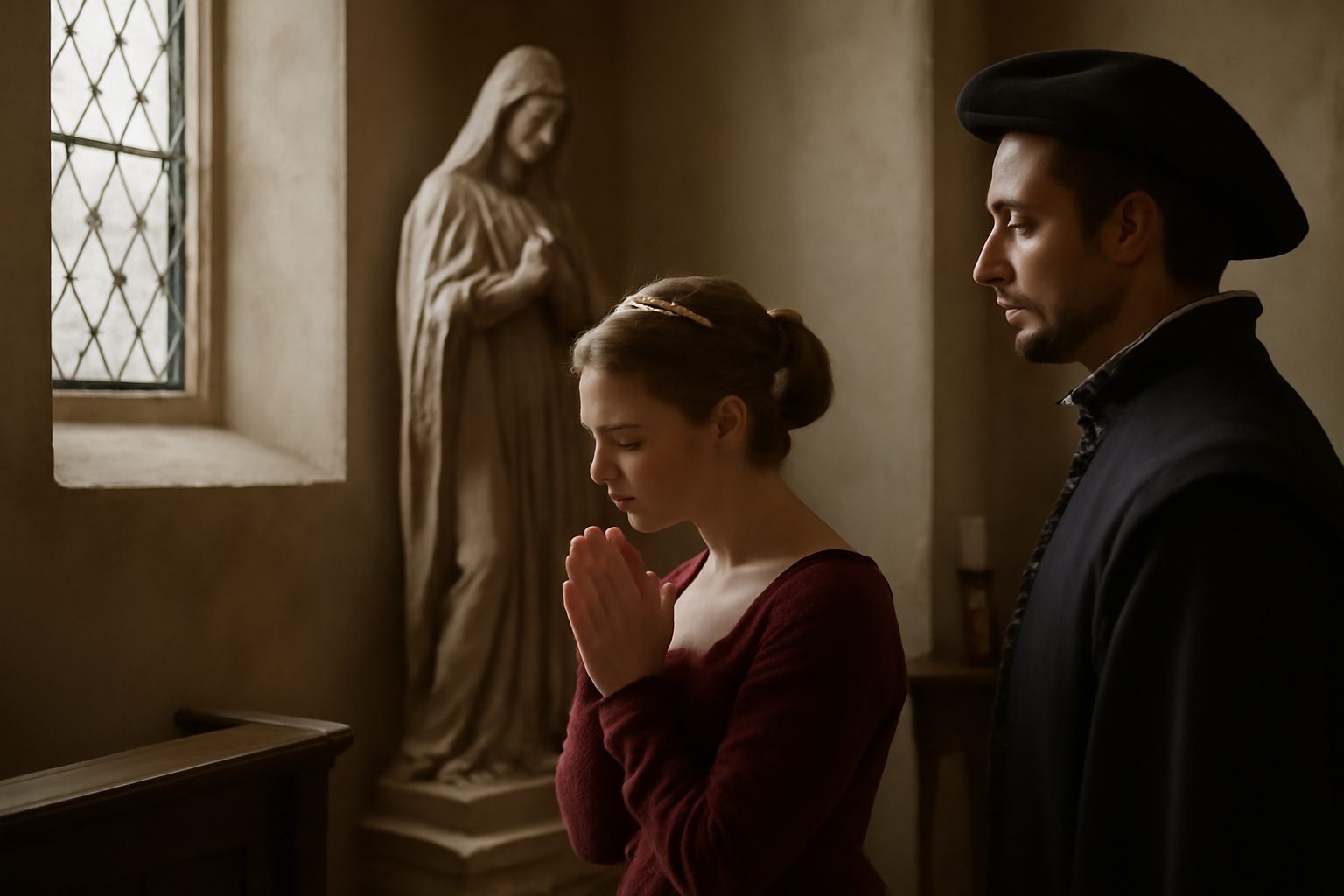
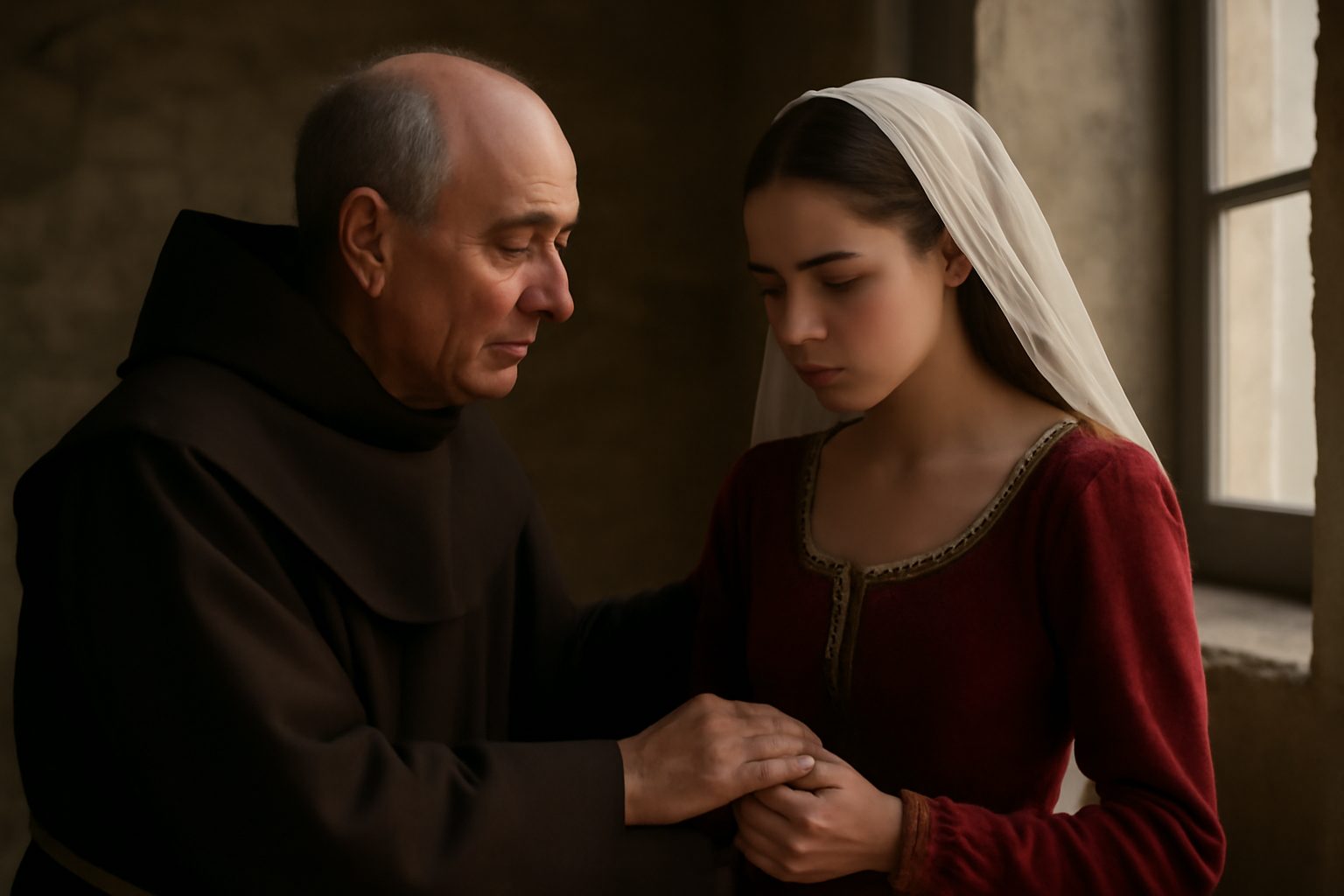
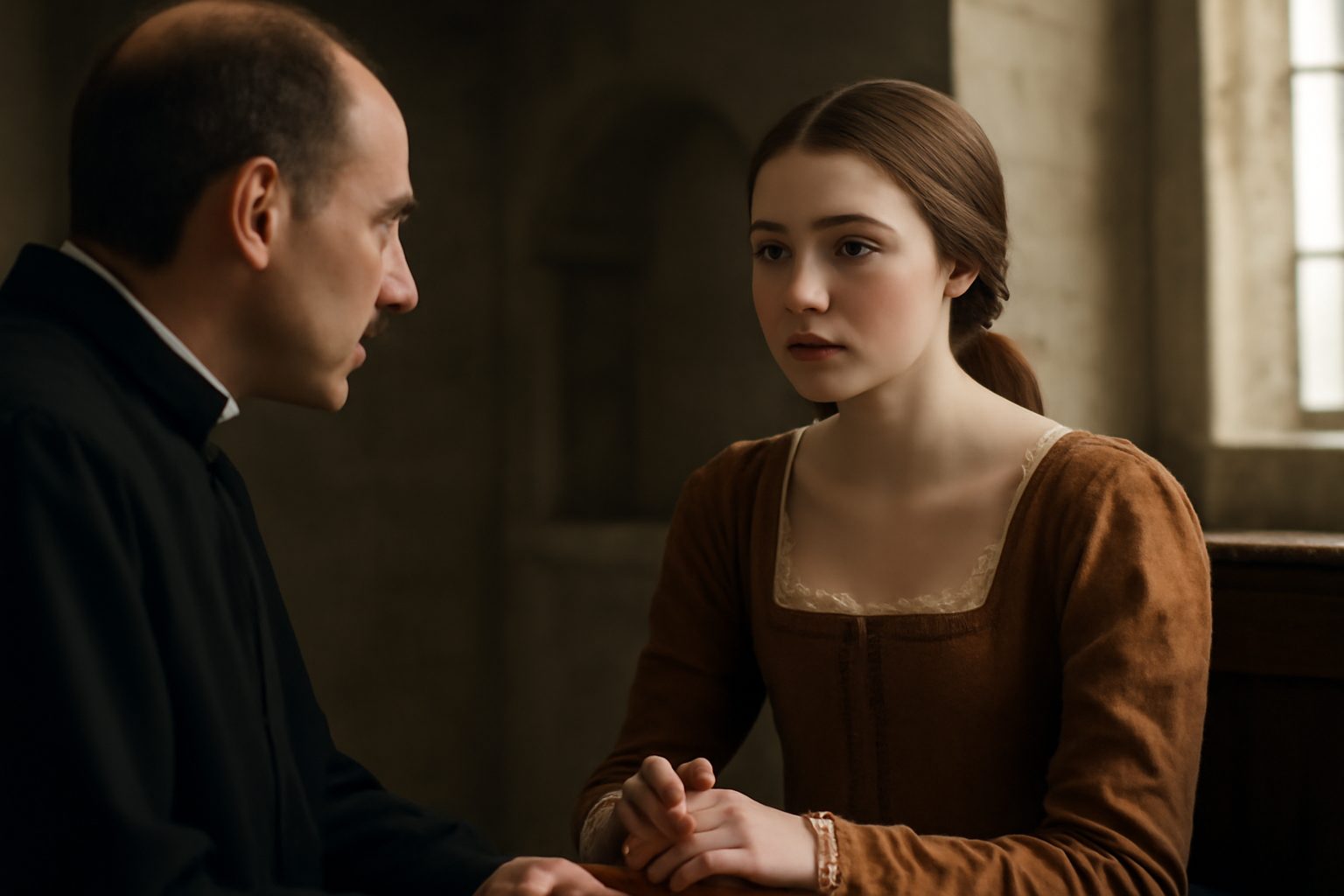
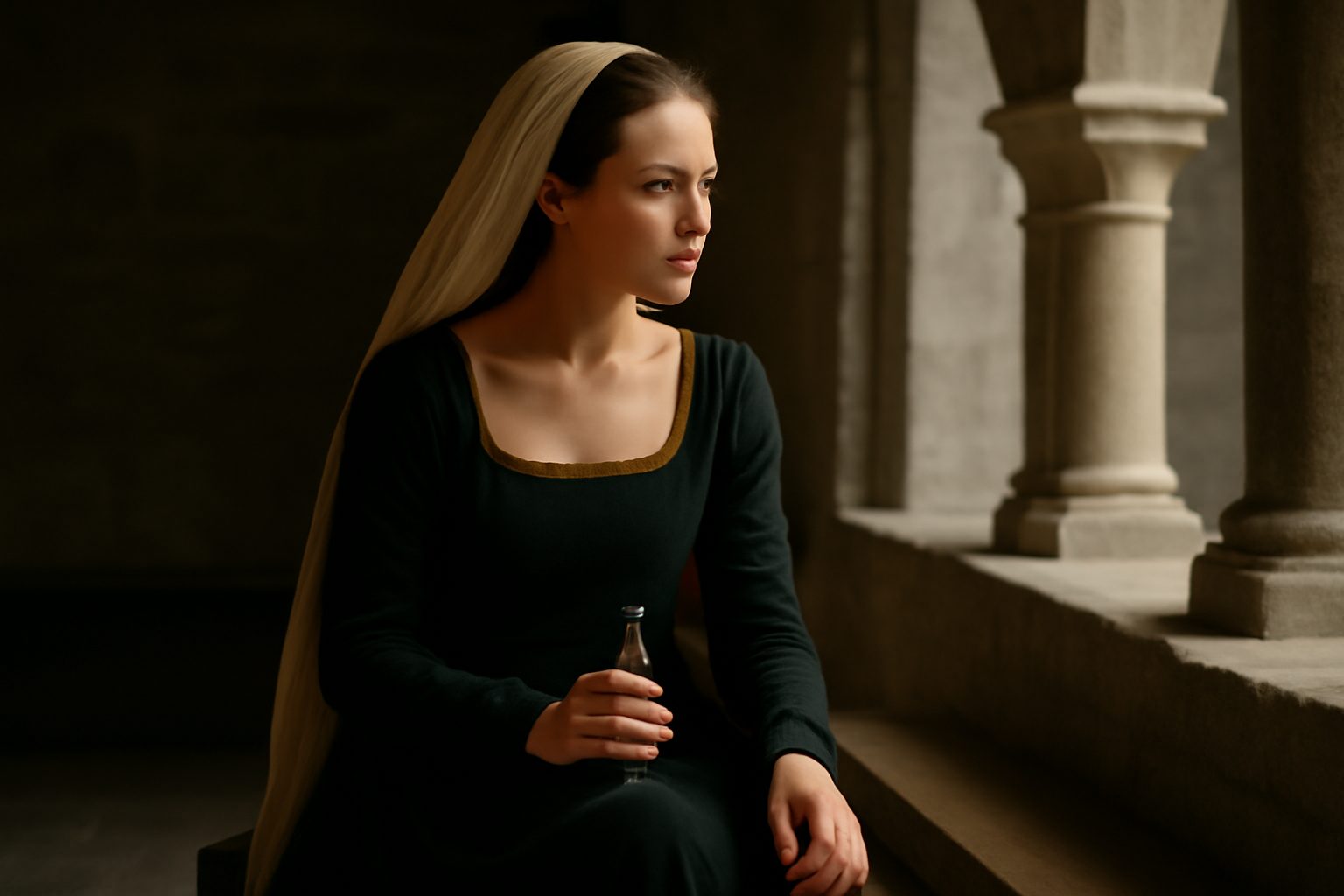
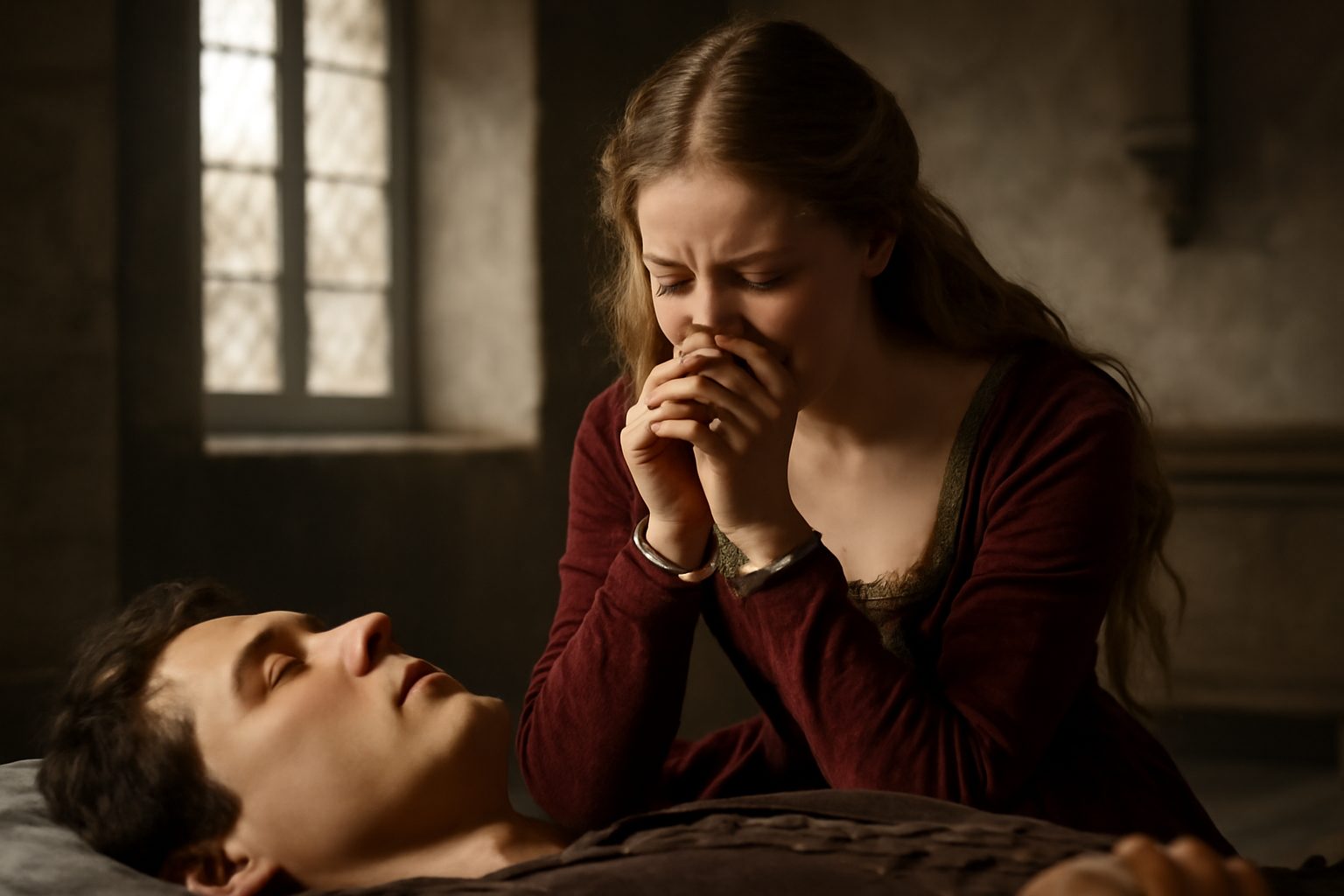
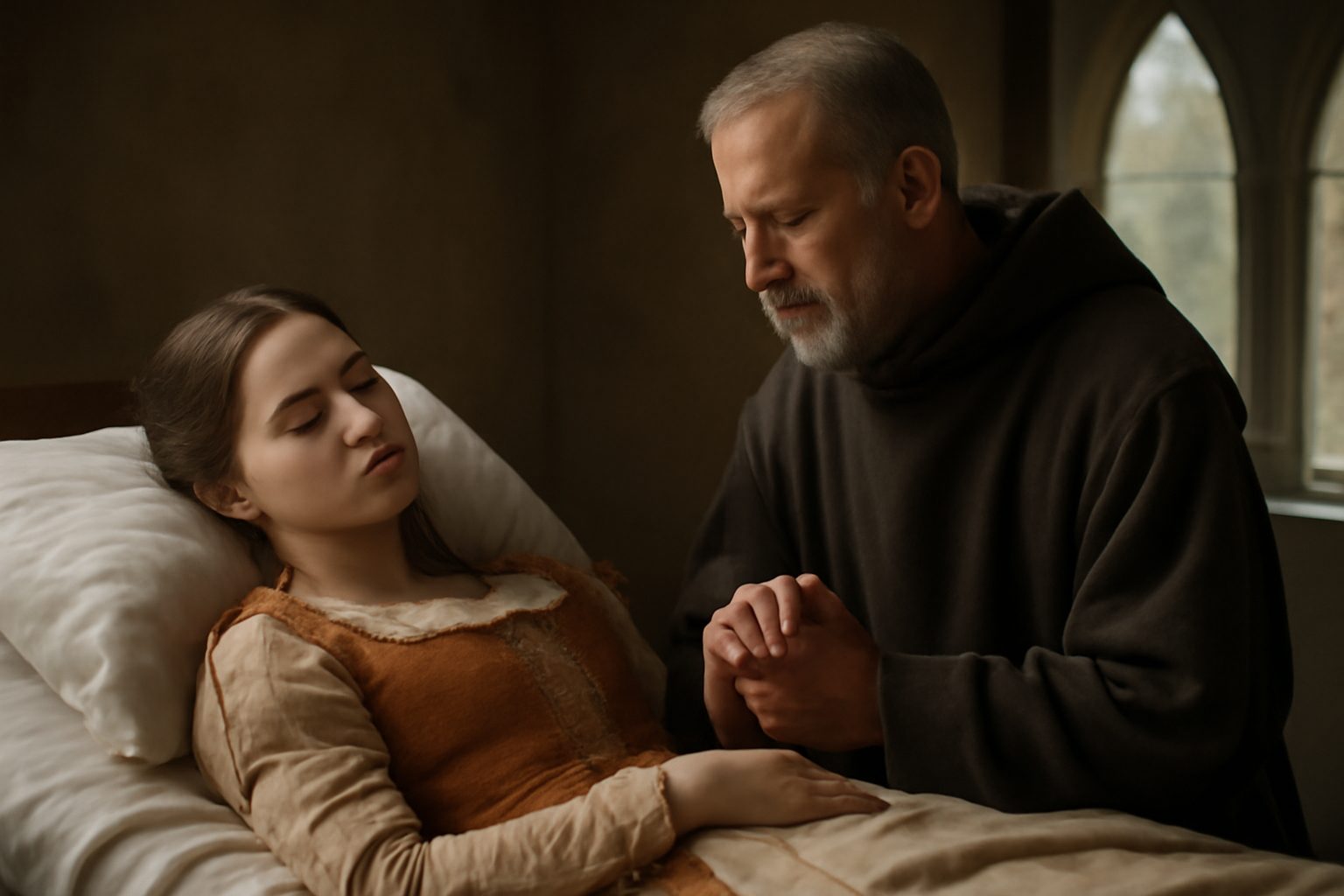
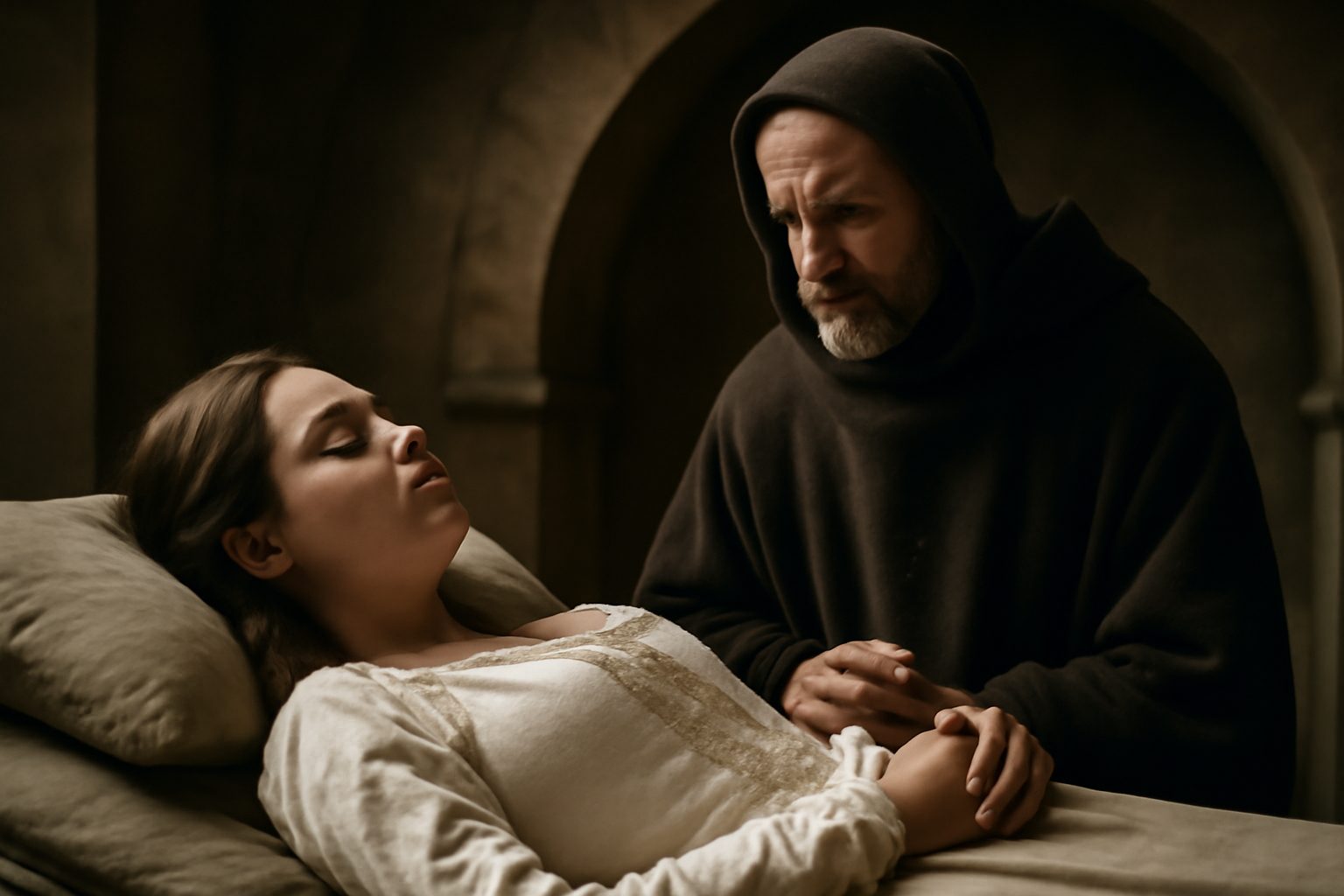
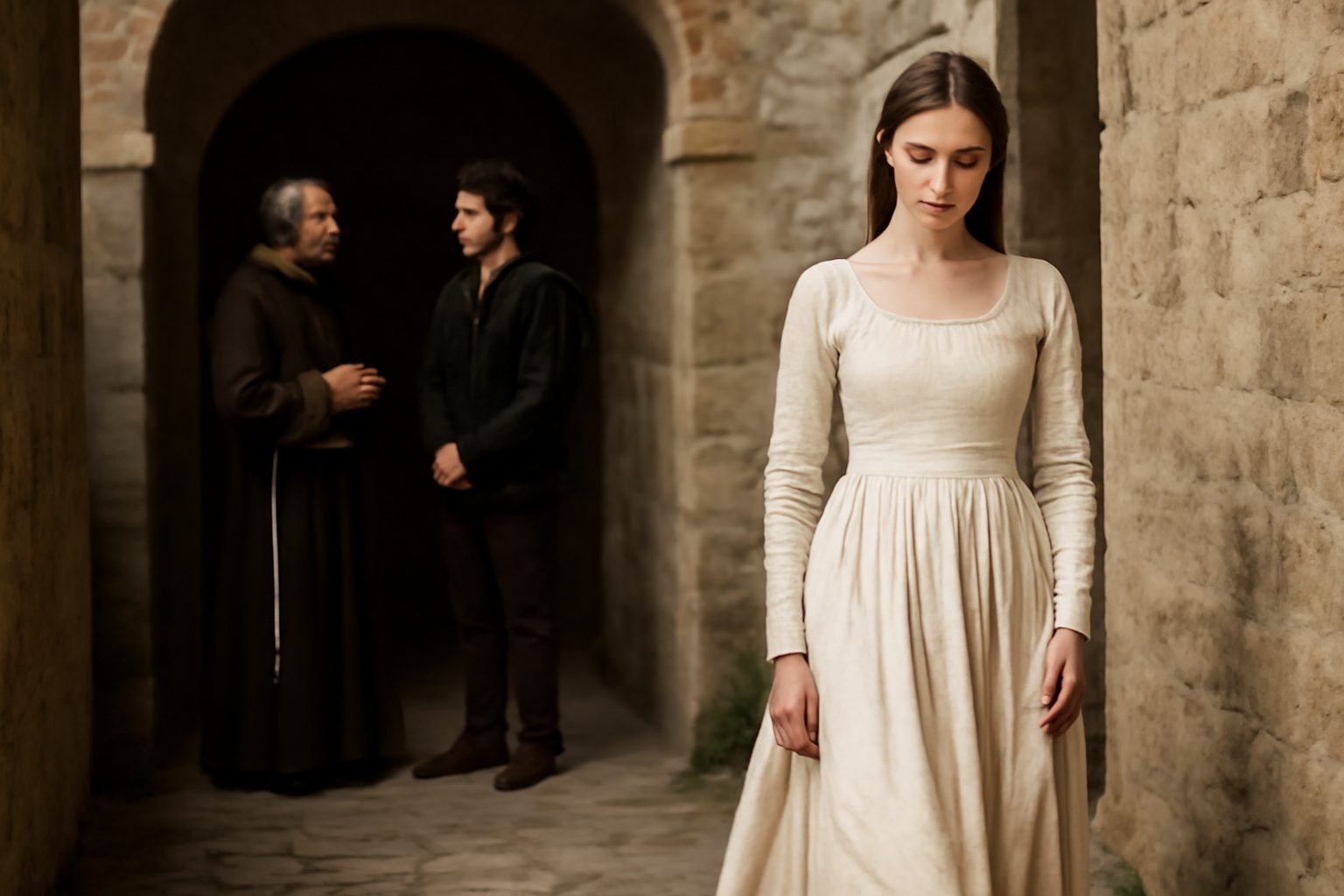
In Act 4, Scene 1 of Romeo and Juliet, Juliet arrives at Friar Laurence's cell in desperation after her parents demand she marry Paris. When the friar suggests he already knows of her plight, she cuts him off, refusing to hear empty sympathy. Her words reveal her urgency and determination to find a solution, no matter how extreme.
Juliet: "Tell me not, friar, that thou hear'st of this,"
In modern day english, we would say:
Don’t tell me, friar, that you already know about this.
Frequently Asked Questions
What is Juliet asking the friar not to do in this line?
She is asking the friar not to tell her that he has heard about her situation.
Connections to other verses:
Connections to "Tell me not, friar, that thou hear'st of this"
Juliet's plea in "Tell me not, friar, that thou hear'st of this" reflects her desperation and refusal to accept passive sympathy, a sentiment echoed throughout the scene. She demands actionable counsel, as seen in "Give me some present counsel, or, behold", where she threatens suicide if no solution is offered. This urgency connects to her declaration in "Be not so long to speak; I long to die", emphasizing her preference for death over betraying Romeo.
Friar Laurence's Response and the Plan
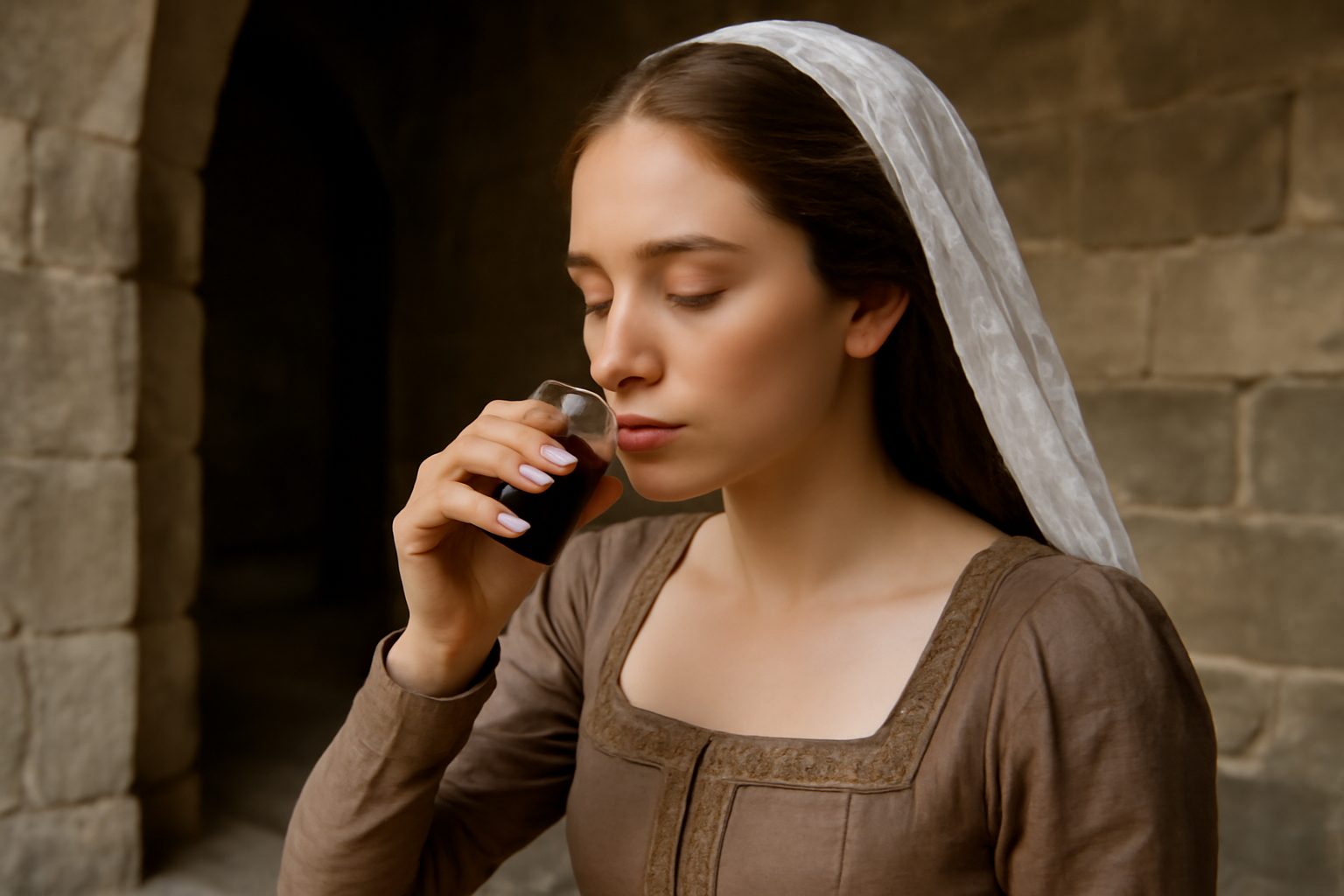
The friar's reaction to Juliet's despair is initially cautious, as he acknowledges the gravity of her situation in "Hold, daughter: I do spy a kind of hope", offering a glimmer of a remedy. This leads directly to his devised plan, detailed in verses like "And this distilled liquor drink thou off", which outlines the potion's role in feigning death. The plan's risks are underscored in "A thing like death to chide away this shame", highlighting the desperate measure to avoid dishonor.
Juliet's Resolve and Imagery of Death
Juliet's unwavering resolve, expressed in "And I will do it without fear or doubt", mirrors her earlier defiance and willingness to embrace extreme solutions. The imagery of death and decay, such as in "And hide me with a dead man in his shroud", reinforces her readiness to confront mortality, tying back to her initial refusal to accept empty comfort in the queried verse.