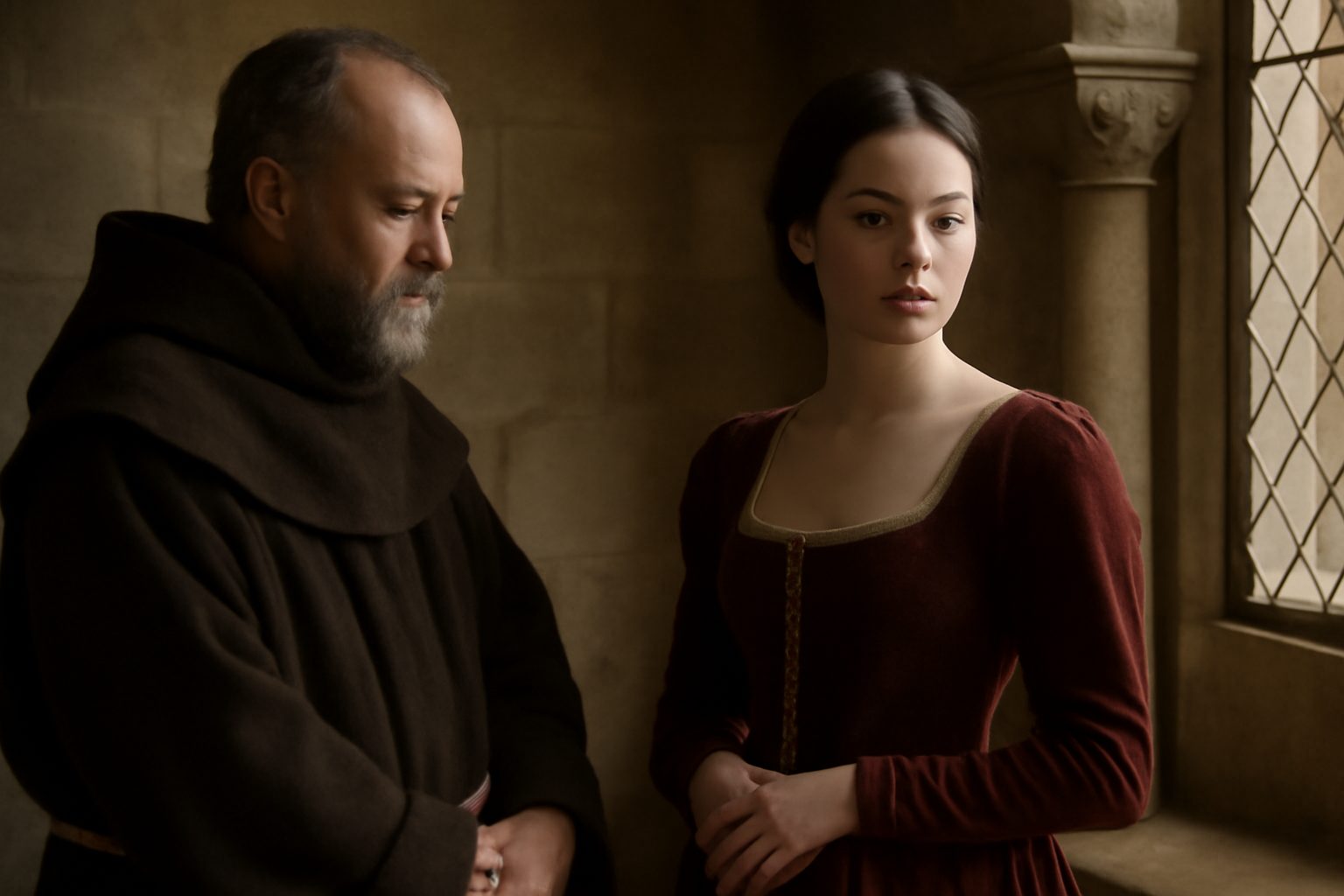
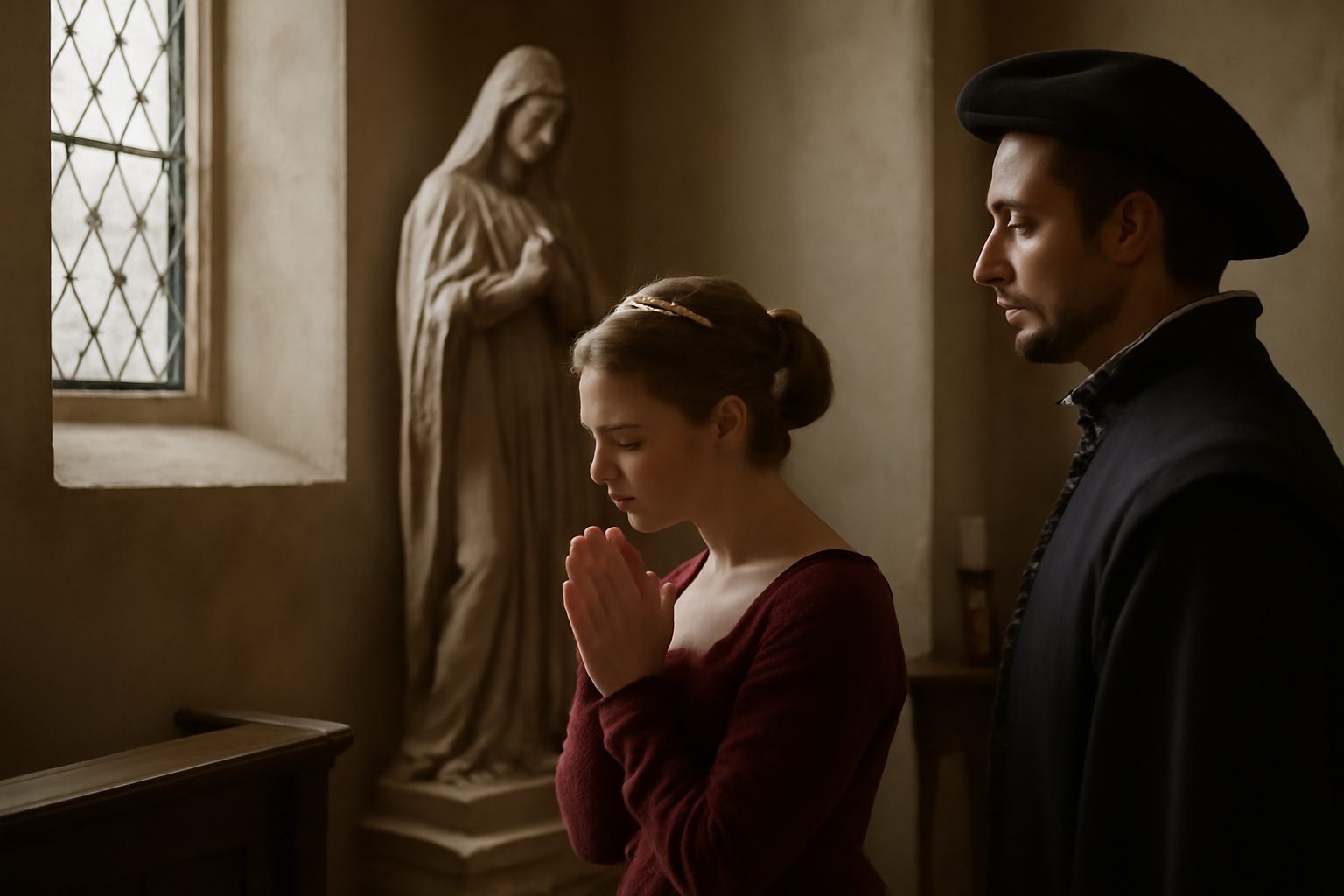
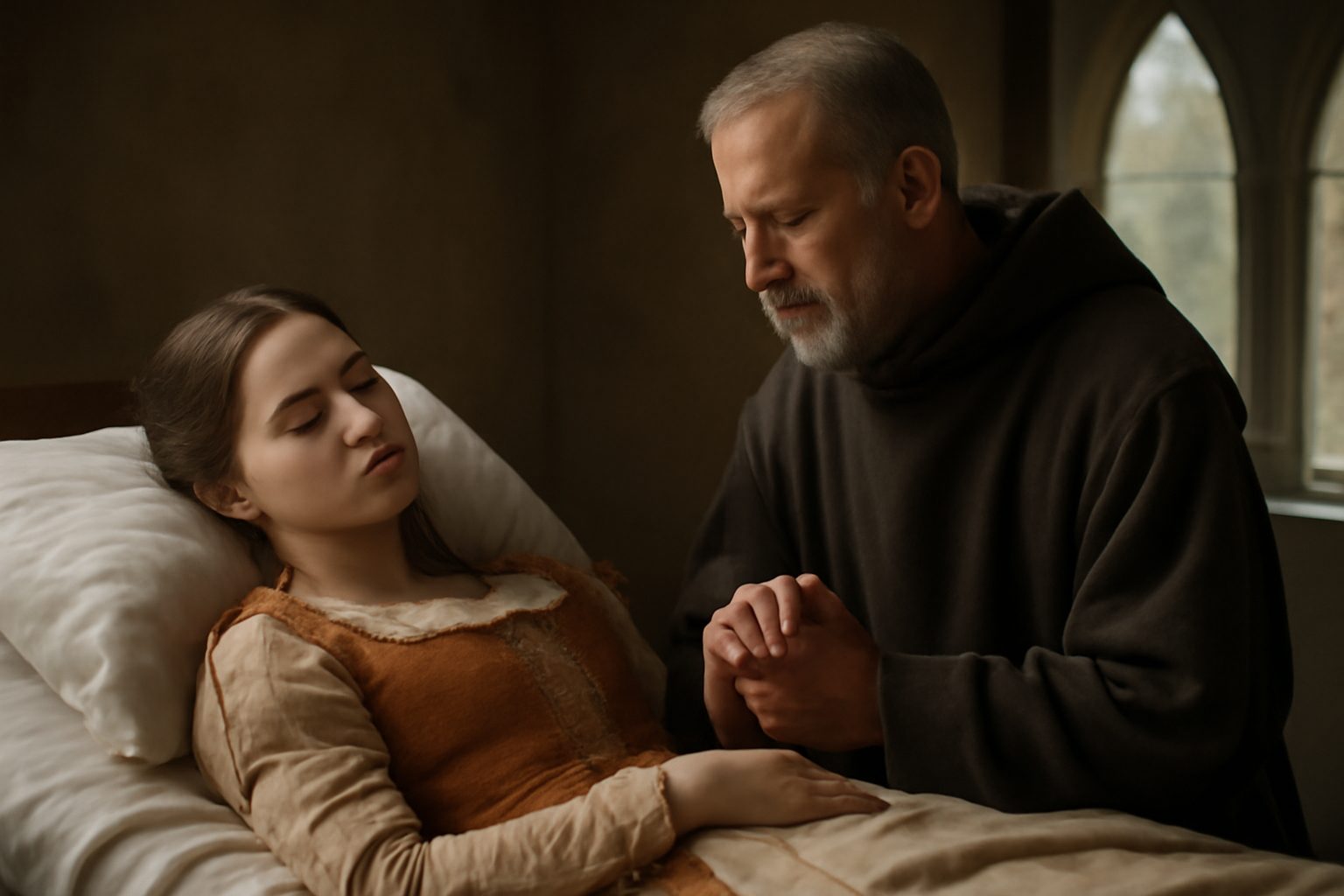
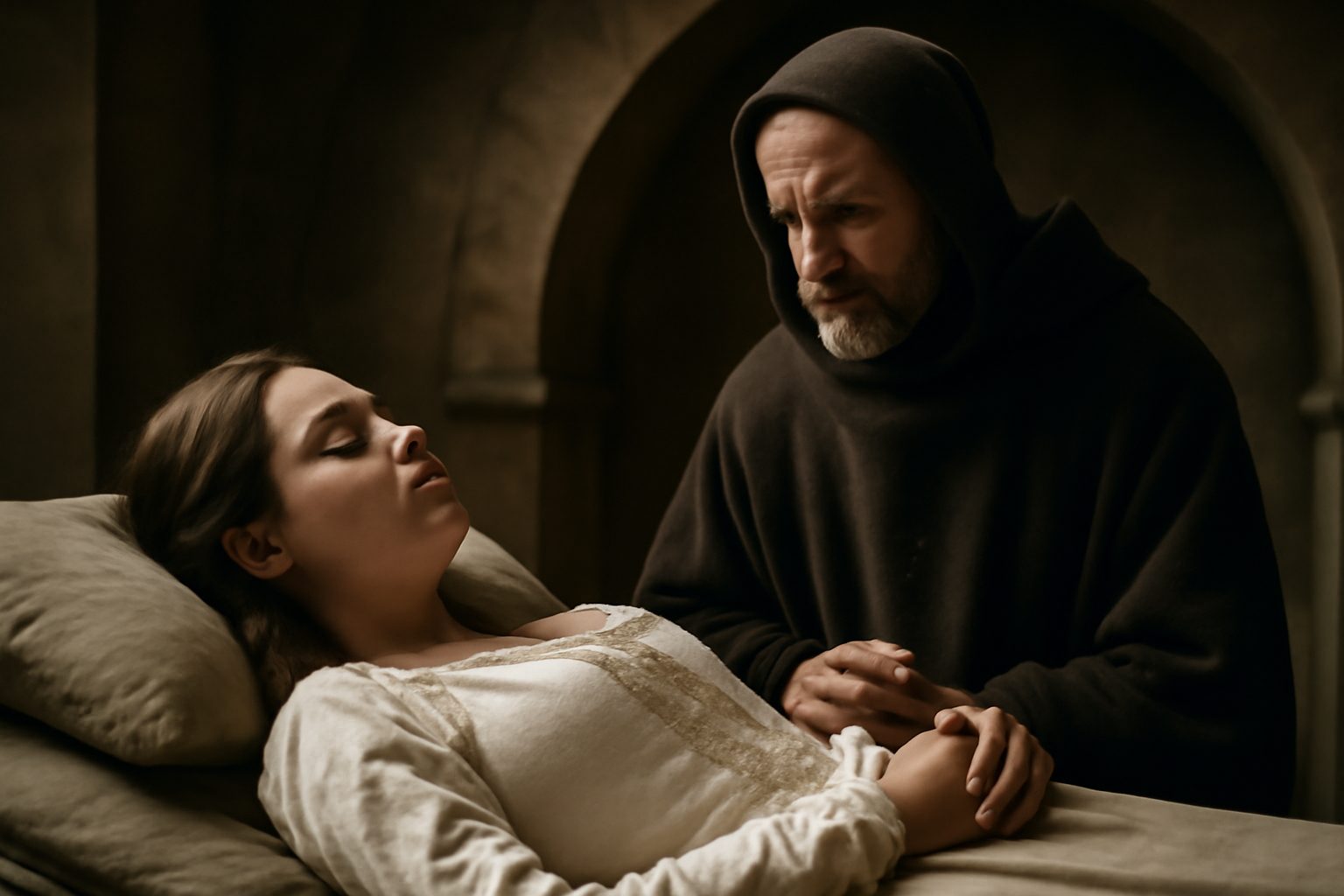
In Act 4, Scene 1 of Romeo and Juliet, Friar Laurence devises a desperate plan to help Juliet avoid her forced marriage to Paris. As he outlines his scheme, he describes a potion that will mimic death, with death itself acting as the decisive force to resolve her impossible situation. This line reflects the Friar's belief that only an extreme measure can settle the conflict between Juliet's loyalty to Romeo and her family's demands.
Juliet: "Shall play the umpire, arbitrating that"
In modern day english, we would say:
Friar Laurence suggests that he will act as a judge and decide what should be done.
Frequently Asked Questions
What does Juliet mean when she says that something will play the umpire and decide things?
Juliet is saying that a certain plan or action will act like a referee or judge to settle the situation she is in.
Connections to other verses:
Connections to "Shall play the umpire, arbitrating that"
The verse "Shall play the umpire, arbitrating that" refers to the role of the "bloody knife" as a decisive force between Juliet's conflicting loyalties. This imagery of mediation is echoed in "Twixt my extremes and me this bloody knife", where the knife symbolizes the stark choice between life with Paris or death for Romeo. It underscores Juliet's desperation and the knife's grim role as an arbiter of her fate.
Link to Friar Laurence's Counsel
Friar Laurence responds to Juliet's despair with a plan that serves as an alternative "umpire," offering a remedy instead of violence. In "And, if thou darest, I'll give thee remedy", he proposes the potion, which arbitrates by simulating death to resolve the conflict. This shifts the role of decision-maker from the knife to the Friar's wisdom.
Connection to Themes of Resolve and Action
Juliet's readiness to let the knife "play the umpire" highlights her resolve, which is further emphasized in "Thou hast the strength of will to slay thyself", where the Friar acknowledges her courage. This determination is mirrored in "And I will do it without fear or doubt", showing her commitment to the Friar's plan as a new form of arbitration.
Contrast with Passive Acceptance
The active arbitration of the knife contrasts with passive resignation seen in verses like "What must be shall be", where Juliet initially expresses fatalism. The umpire imagery thus marks a turning point from acceptance to proactive, though desperate, action.