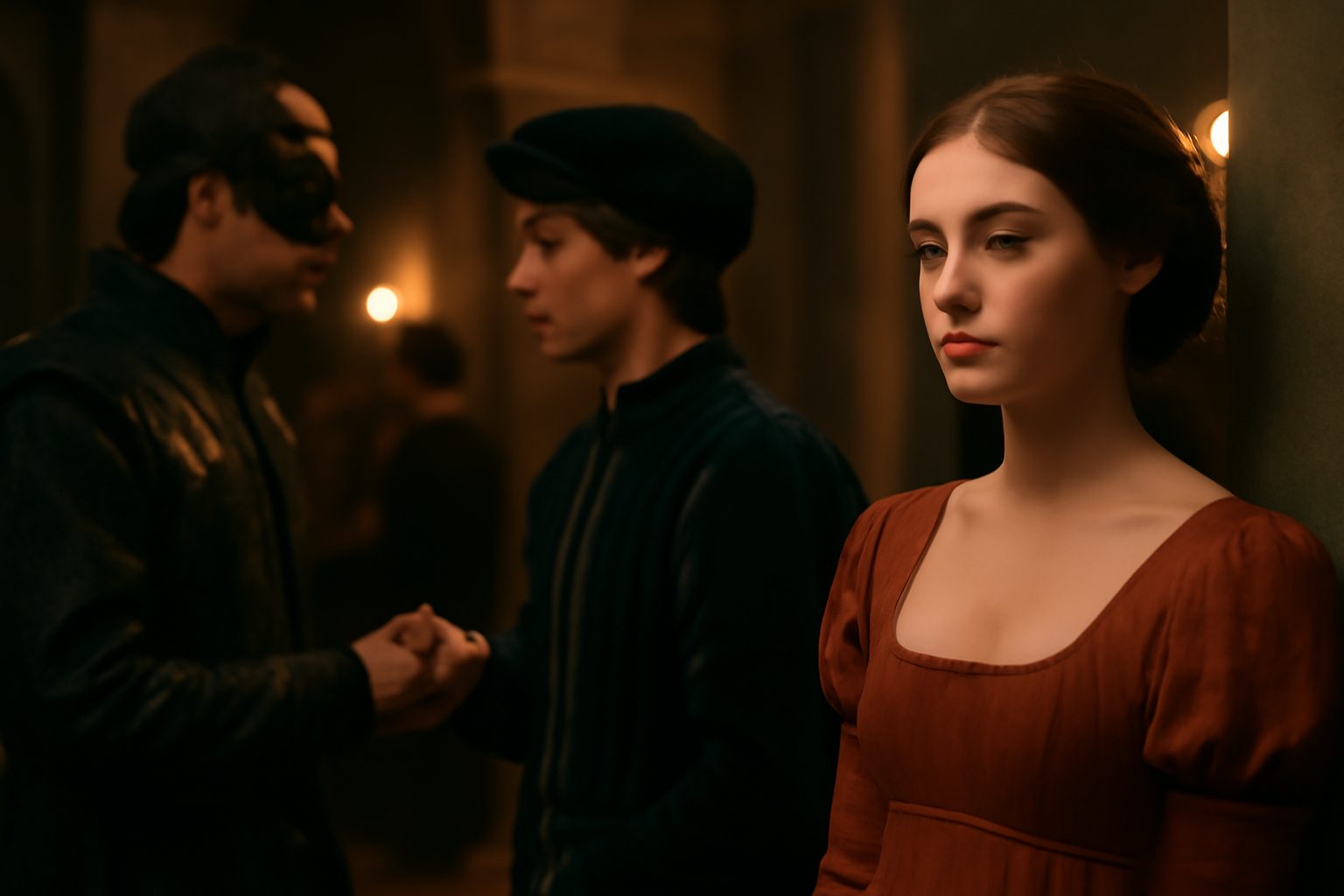
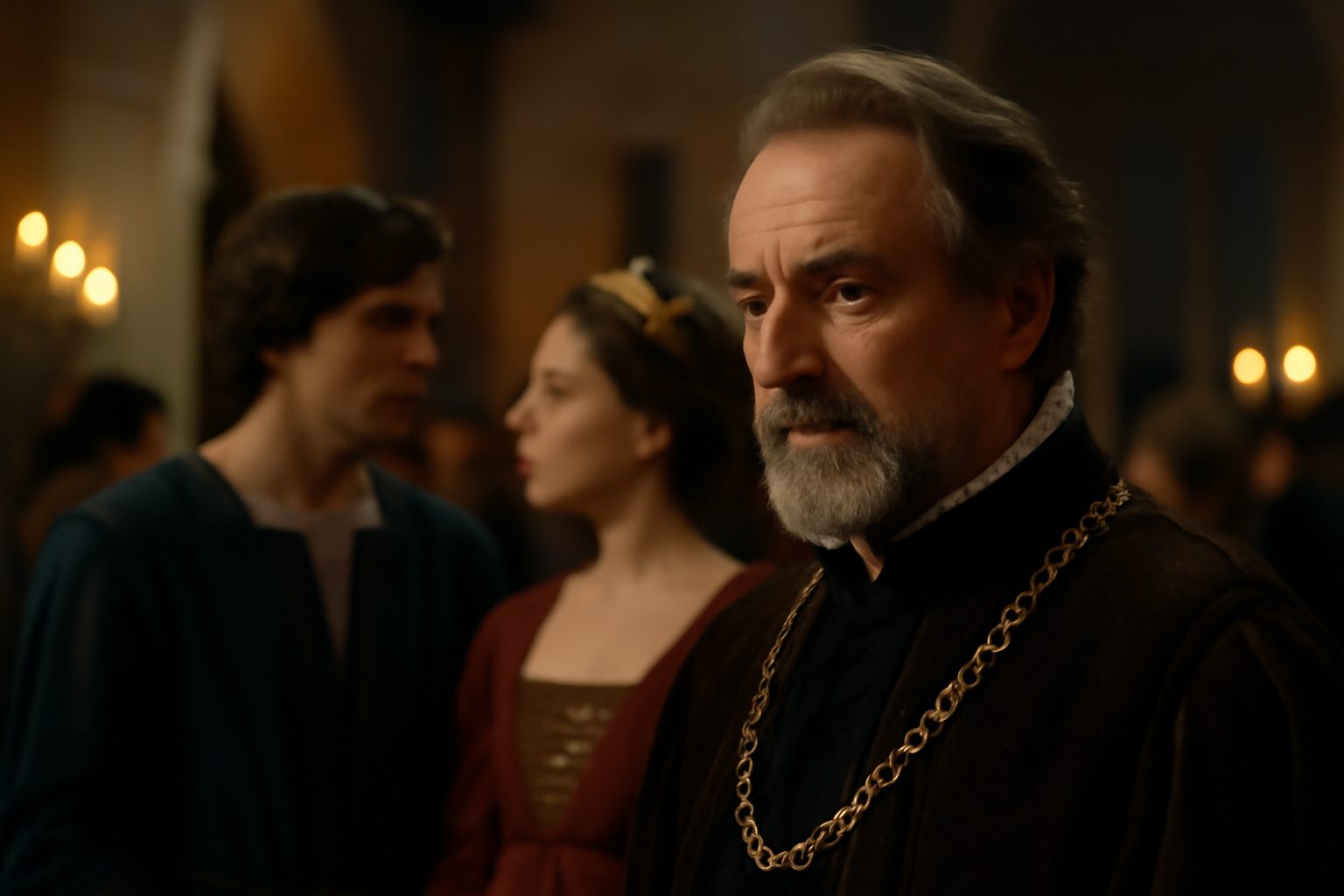
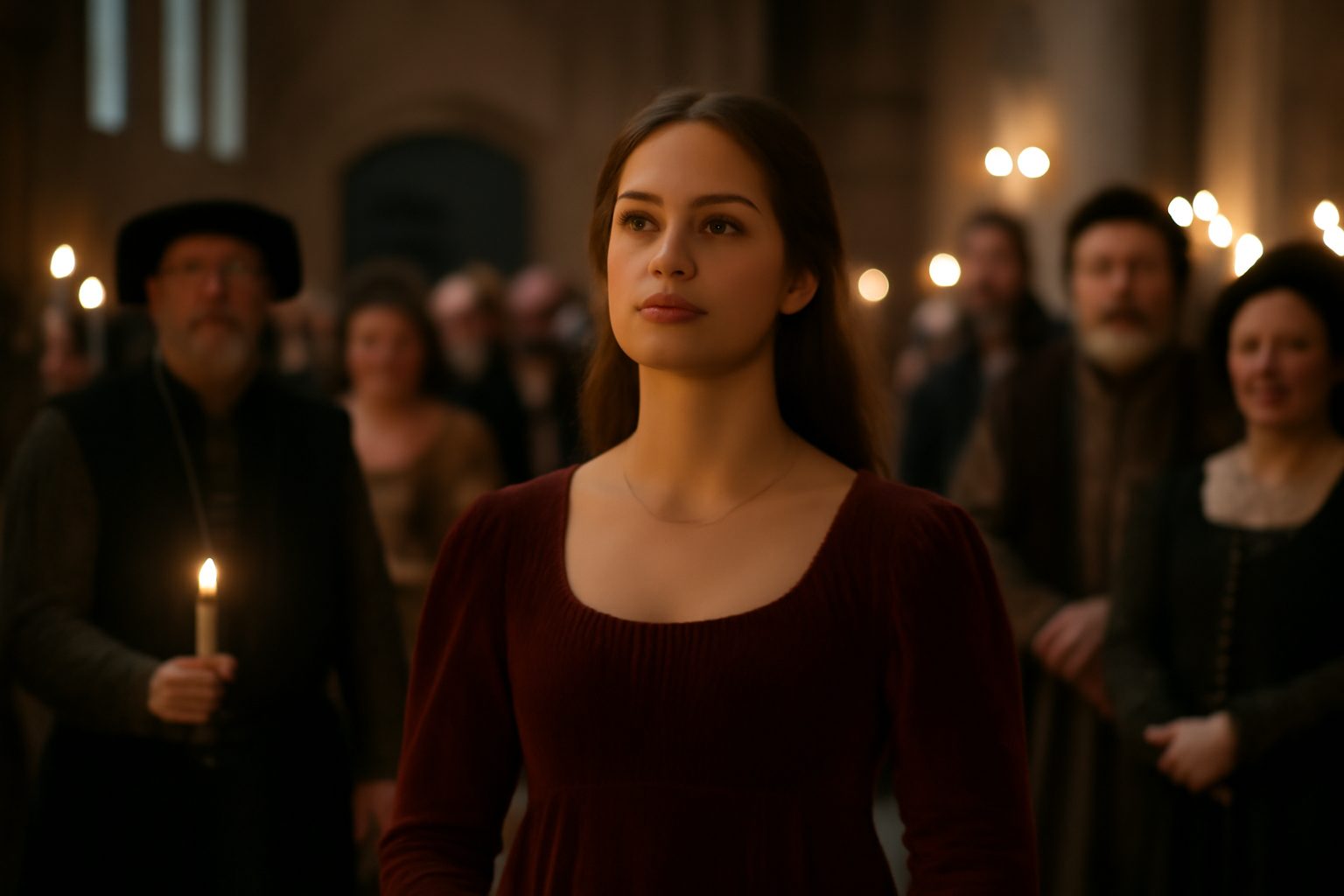
In Act 1, Scene 5 of Romeo and Juliet, the Capulets are hosting a lavish masquerade ball where Romeo has secretly entered in disguise. During the festivities, a playful exchange occurs between Juliet's Nurse and an unnamed man, possibly a servant or guest. The line is part of their lighthearted banter, reflecting the Nurse's bold and humorous personality.
Nurse: "Marry, bachelor,"
In modern day english, we would say:
Sure, here’s the modernized version:
Alright, single man.
(Note: In context, this is the Nurse teasingly addressing Romeo, calling him a bachelor in a playful or slightly mocking tone.)
Frequently Asked Questions
Who is speaking in this line from Romeo and Juliet?
The Nurse
What is the Nurse calling the person she is speaking to?
A bachelor
Connections to other verses:
Connections to "Marry, bachelor" in Romeo & Juliet Act 1 Scene 5
Character Identification and Social Context
The line Marry, bachelor is spoken by the Nurse in response to Juliet's inquiry about Romeo's identity. This connects directly to Come hither, nurse. What is yond gentleman? where Juliet first asks about Romeo, showing the Nurse's role as both confidante and source of information. The revelation continues in His name is Romeo, and a Montague; which delivers the crucial information about his identity, and The only son of your great enemy. which emphasizes the tragic conflict.
Contrast with Other Interactions
The Nurse's matter-of-fact response in Marry, bachelor contrasts with the poetic exchange between Romeo and Juliet in their first meeting, particularly [To JULIET] If I profane with my unworthiest hand through You kiss by the book. where they use religious metaphor to express their attraction. This difference highlights the contrast between the romantic idealism of the lovers and the practical, grounded perspective of the Nurse.
Foreshadowing and Dramatic Irony
The Nurse's identification of Romeo as a bachelor in Marry, bachelor creates dramatic irony when viewed alongside Juliet's subsequent lines. In My grave is like to be my wedding bed. Juliet unknowingly foreshadows her fate, while My only love sprung from my only hate! captures the central tragedy of their situation, which the Nurse's simple identification has set in motion.
Social Status and Marriage Implications
The term "bachelor" in Marry, bachelor also connects to the conversation between Capulet and his cousin about marriage and age at For you and I are past our dancing days: and By'r lady, thirty years., showing how marriageable status and age were topics of discussion in their society, making the Nurse's comment part of this larger social context.