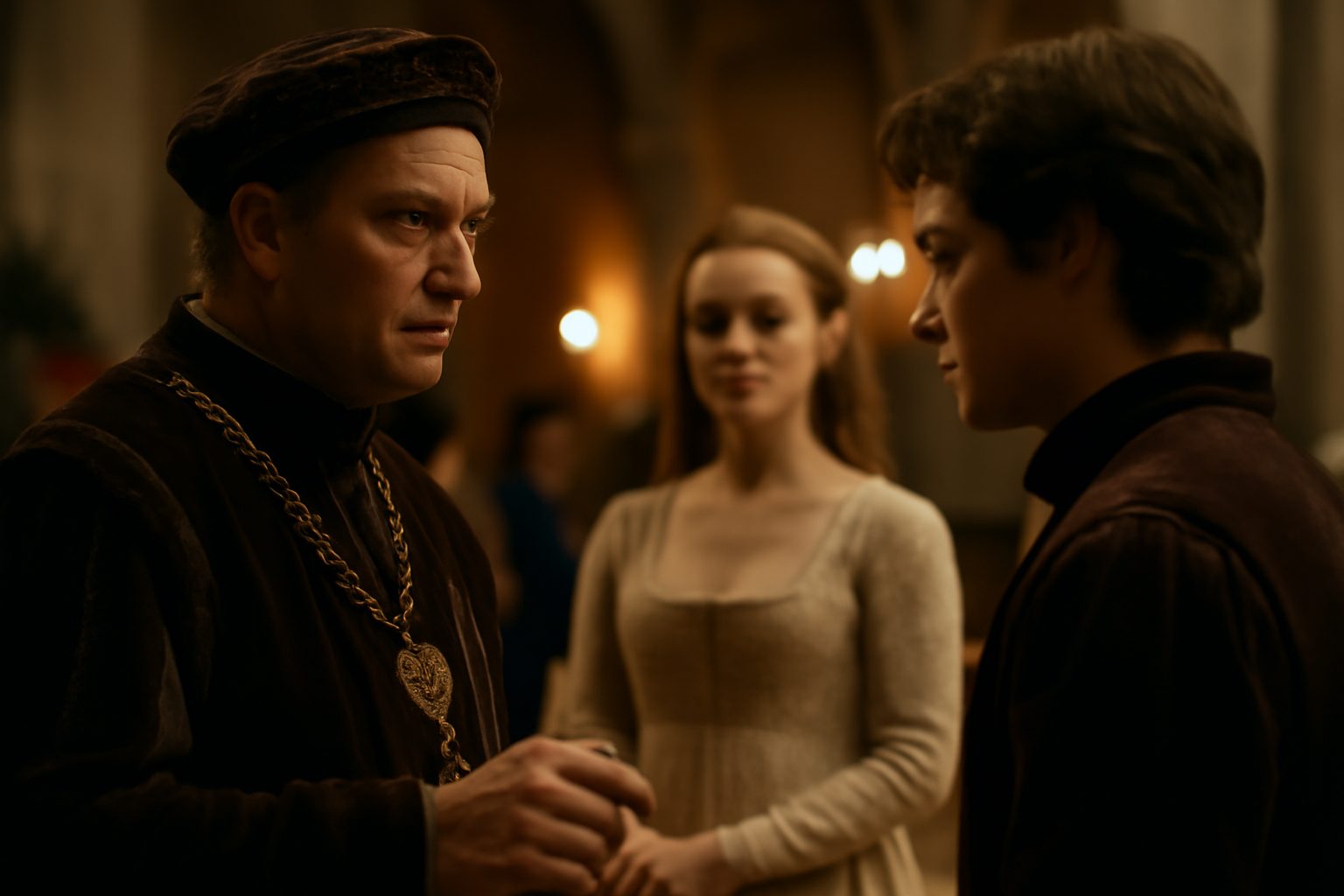
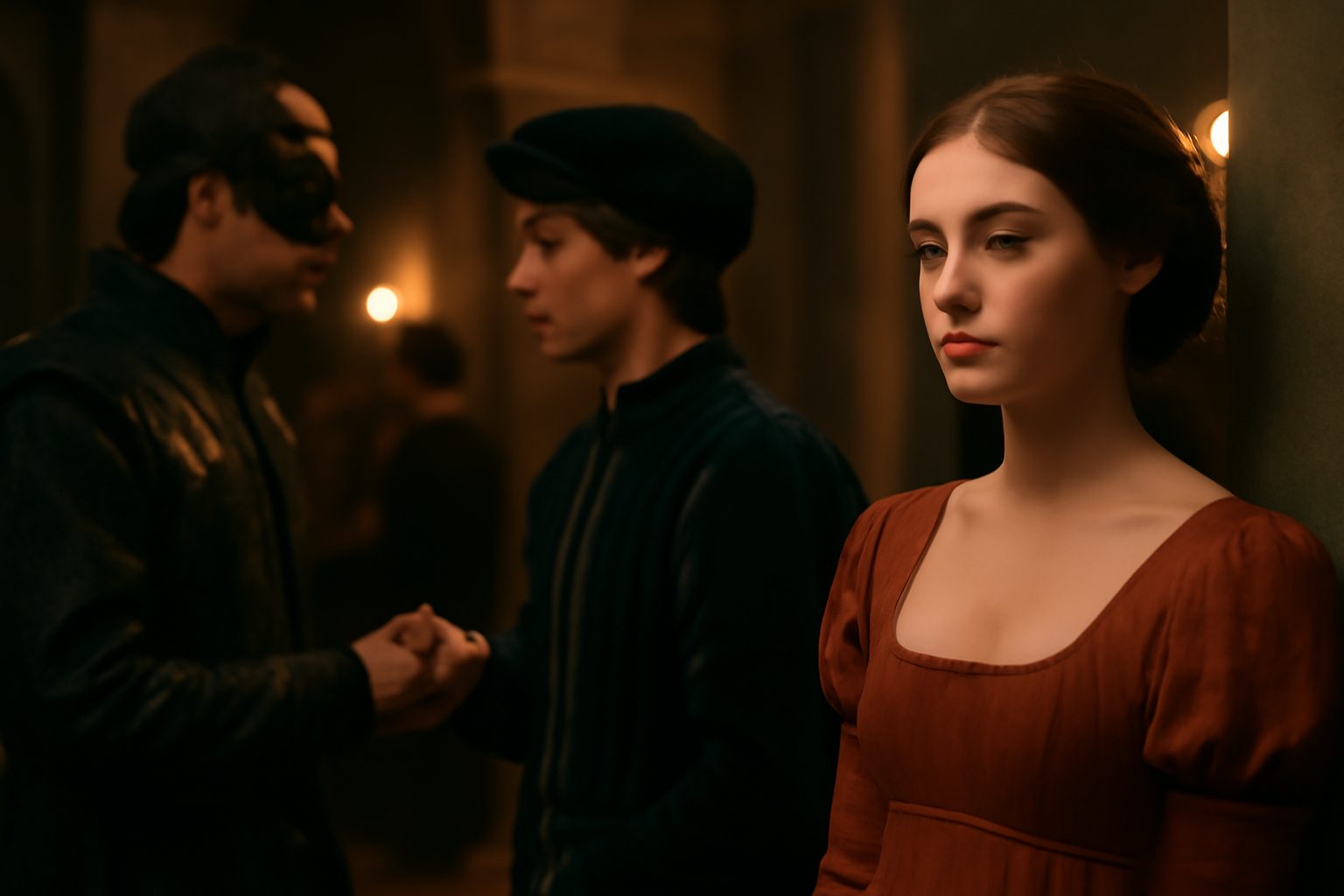
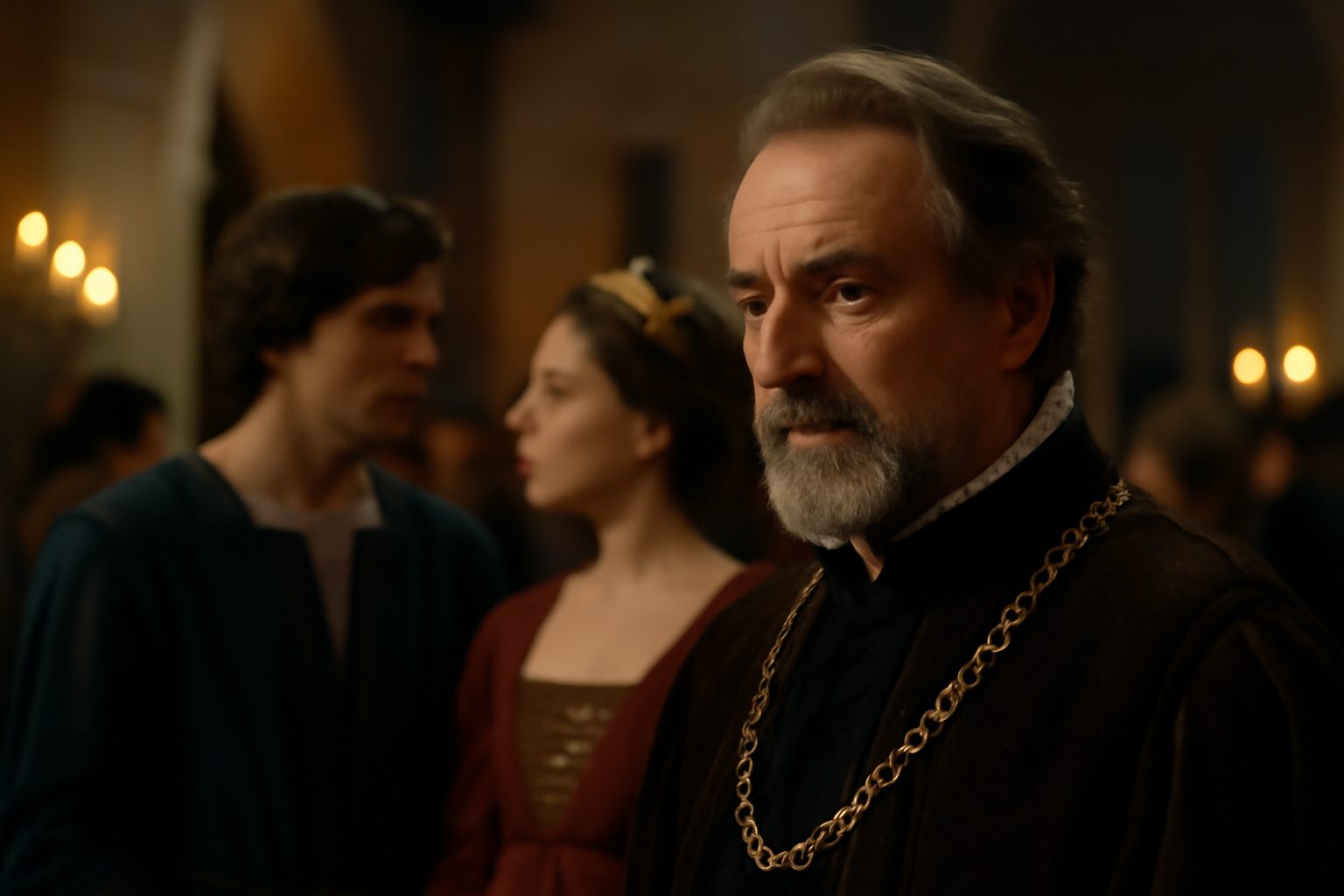
In Act 1, Scene 5 of Romeo and Juliet, the Capulets host a masquerade ball where Romeo, a Montague, has secretly attended. Tybalt, Juliet's fiery cousin, recognizes Romeo's voice and utters this line with disdain, realizing an enemy has infiltrated their celebration. This moment heightens the tension between the feuding families and sets the stage for Tybalt's later confrontations.
Capulet: "Young Romeo is it?"
In modern day english, we would say:
So, you're young Romeo, huh?
Frequently Asked Questions
Who is Capulet talking about when he says 'Young Romeo is it?'?
Capulet is talking about Romeo, the young man from the Montague family.
In which act and scene does Capulet say 'Young Romeo is it?'?
Capulet says this in Act 1, Scene 5 of Romeo and Juliet.
Connections to other verses:
Connections to "Young Romeo is it?"
Immediate Recognition and Conflict
The line Young Romeo is it? is spoken by Tybalt upon recognizing Romeo at the Capulet feast. This moment directly follows This, by his voice, should be a Montague, where Tybalt identifies Romeo by his voice, and leads to his declaration Tis he, that villain Romeo, showcasing Tybalt's immediate hostility.
Capulet's Intervention
Capulet's response to Tybalt's agitation is critical. He insists He shall be endured and warns Tybalt to Therefore be patient, take no note of him, emphasizing his authority and desire to avoid disruption. This contrasts with Tybalt's threat in To strike him dead, I hold it not a sin.
Romeo's Unawareness and Focus on Juliet
While Tybalt fumes, Romeo is captivated by Juliet, unaware of the danger. His earlier lines Did my heart love till now? forswear it, sight! and For I ne'er saw true beauty till this night highlight his instant infatuation, which culminates in their meeting and the shared sonnet beginning with [To JULIET] If I profane with my unworthiest hand.
Foreshadowing and Aftermath
Tybalt's anger here foreshadows future conflict, as seen in his vow I will withdraw: but this intrusion shall / Now seeming sweet convert to bitter gall. Meanwhile, Juliet's realization of Romeo's identity (His name is Romeo, and a Montague) leads to her despairing My only love sprung from my only hate!, underscoring the tragedy's central conflict.