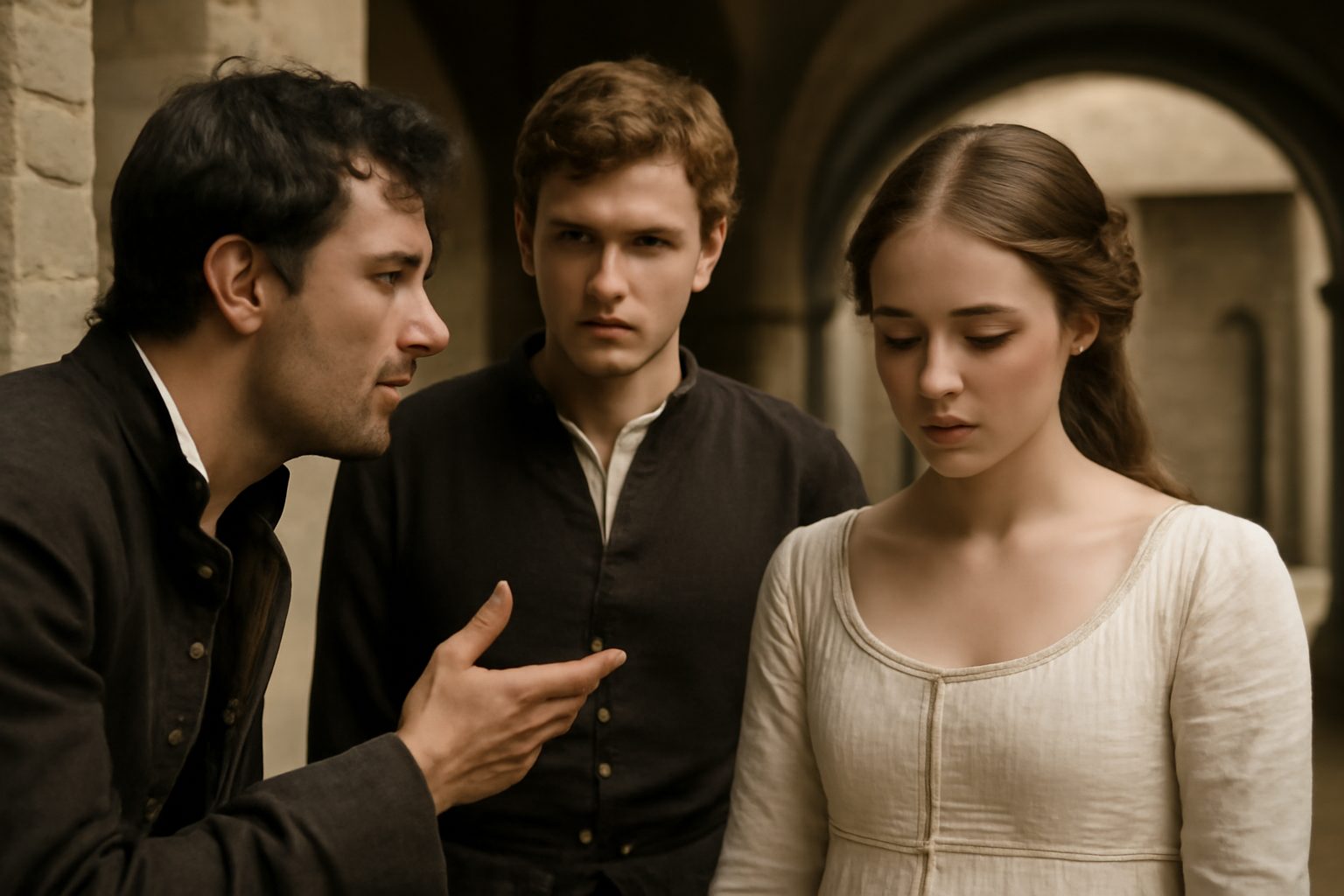
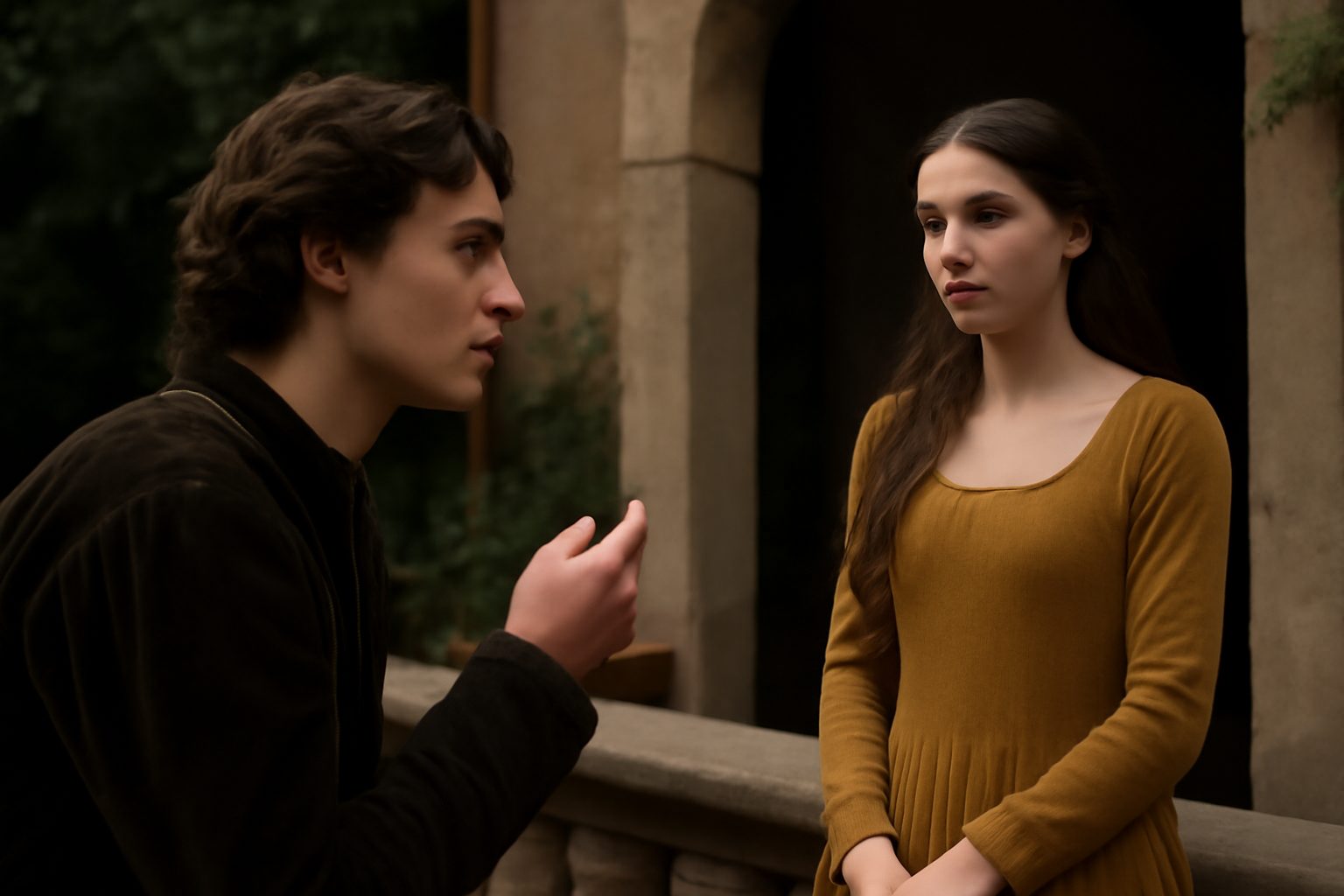
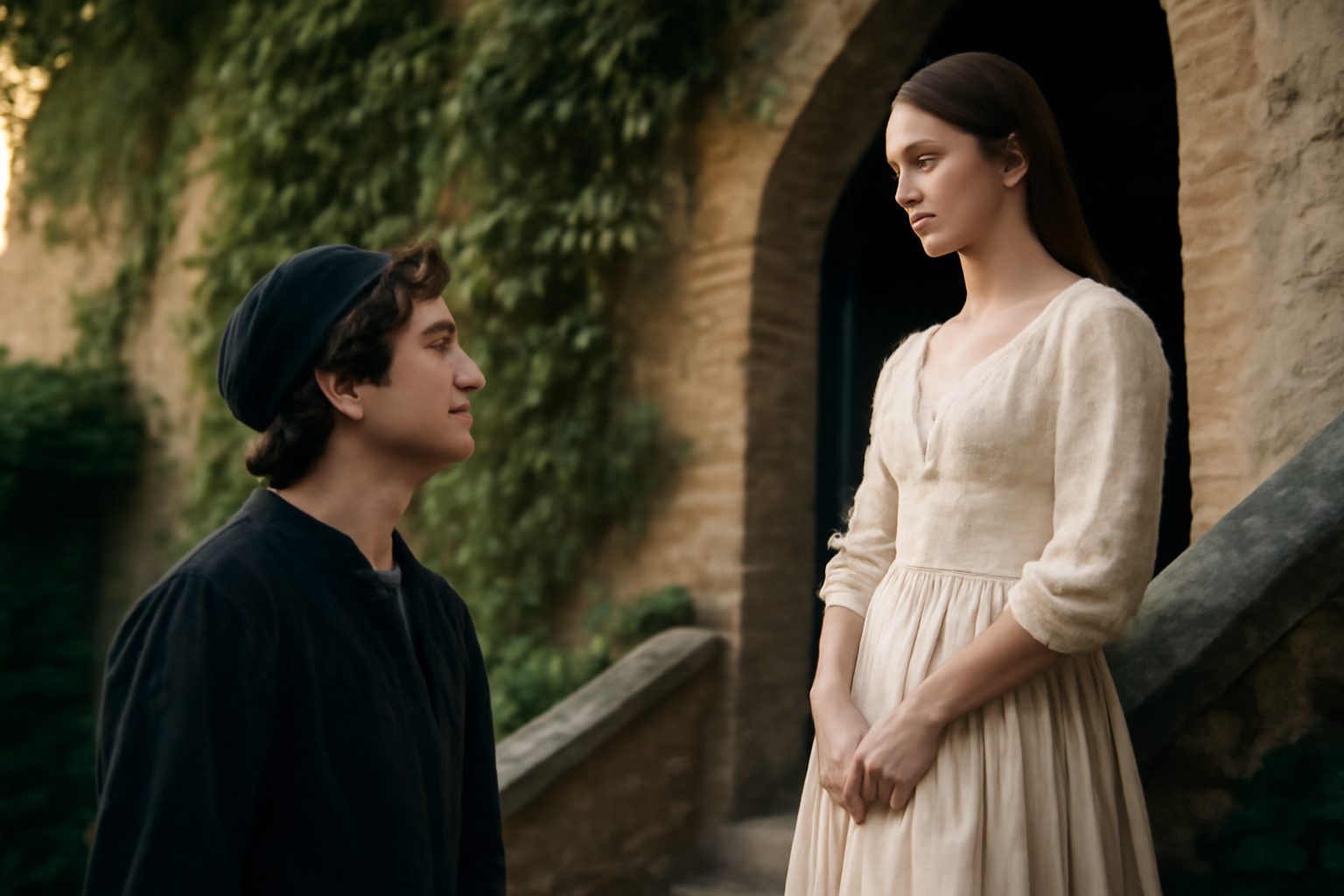
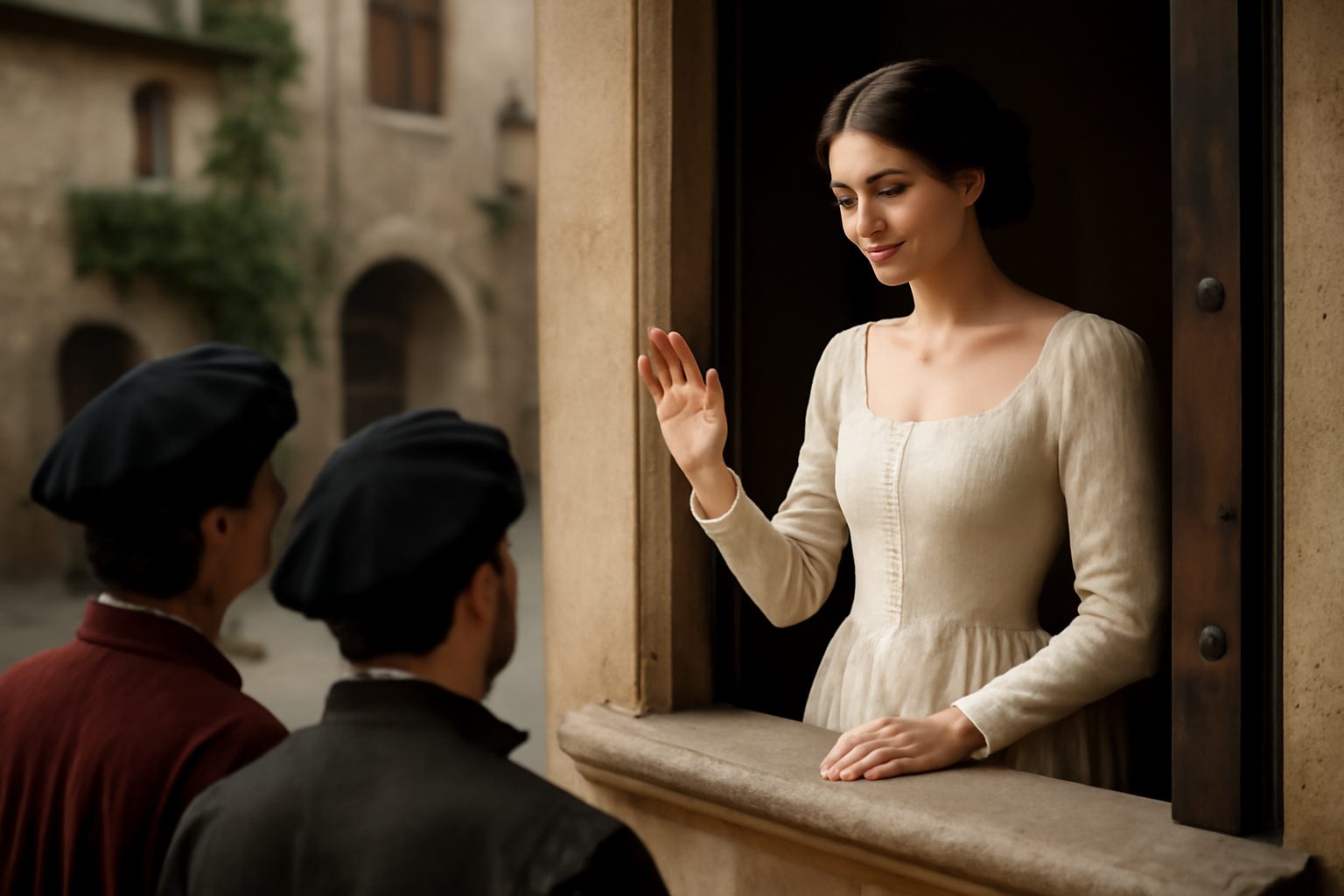
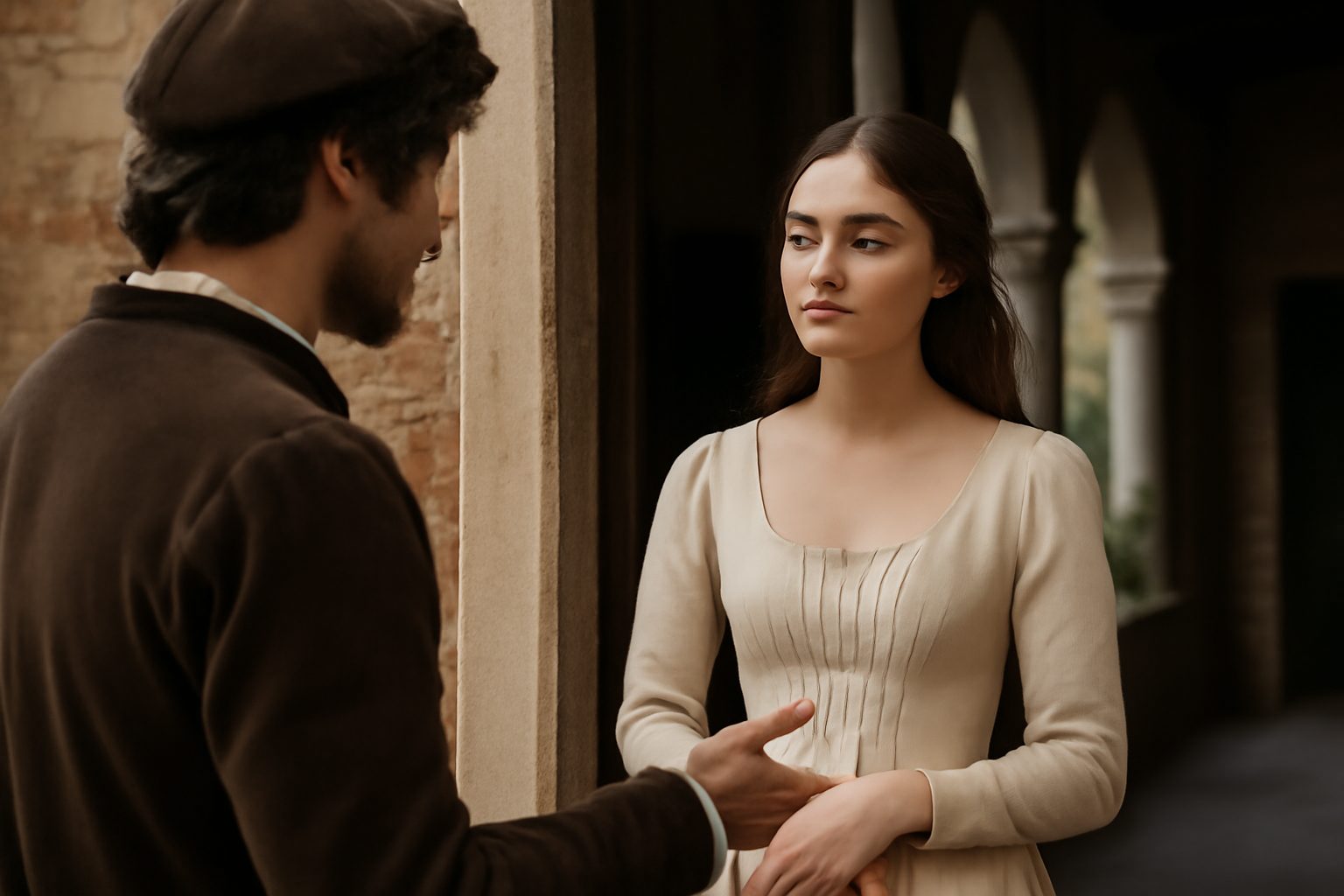
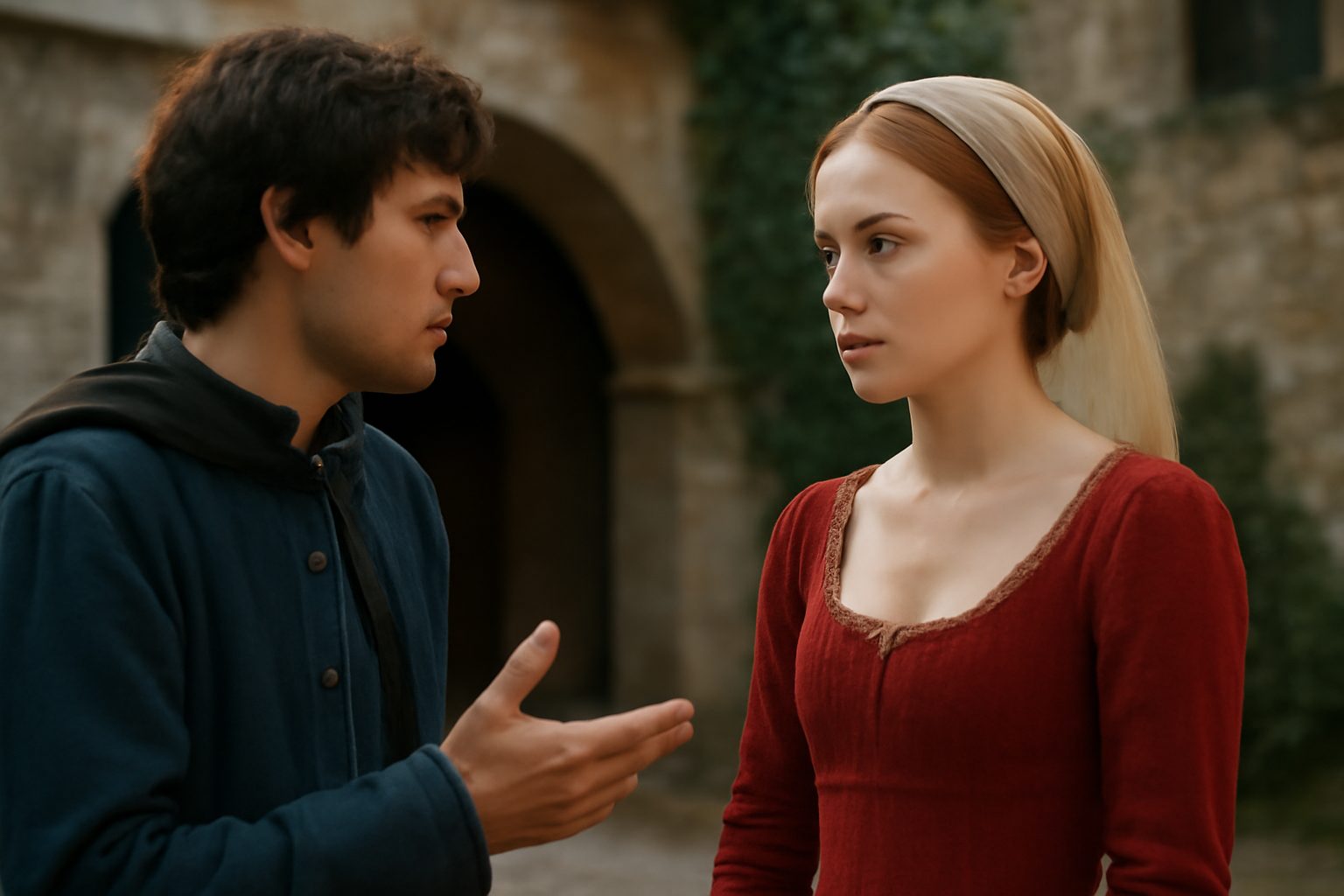
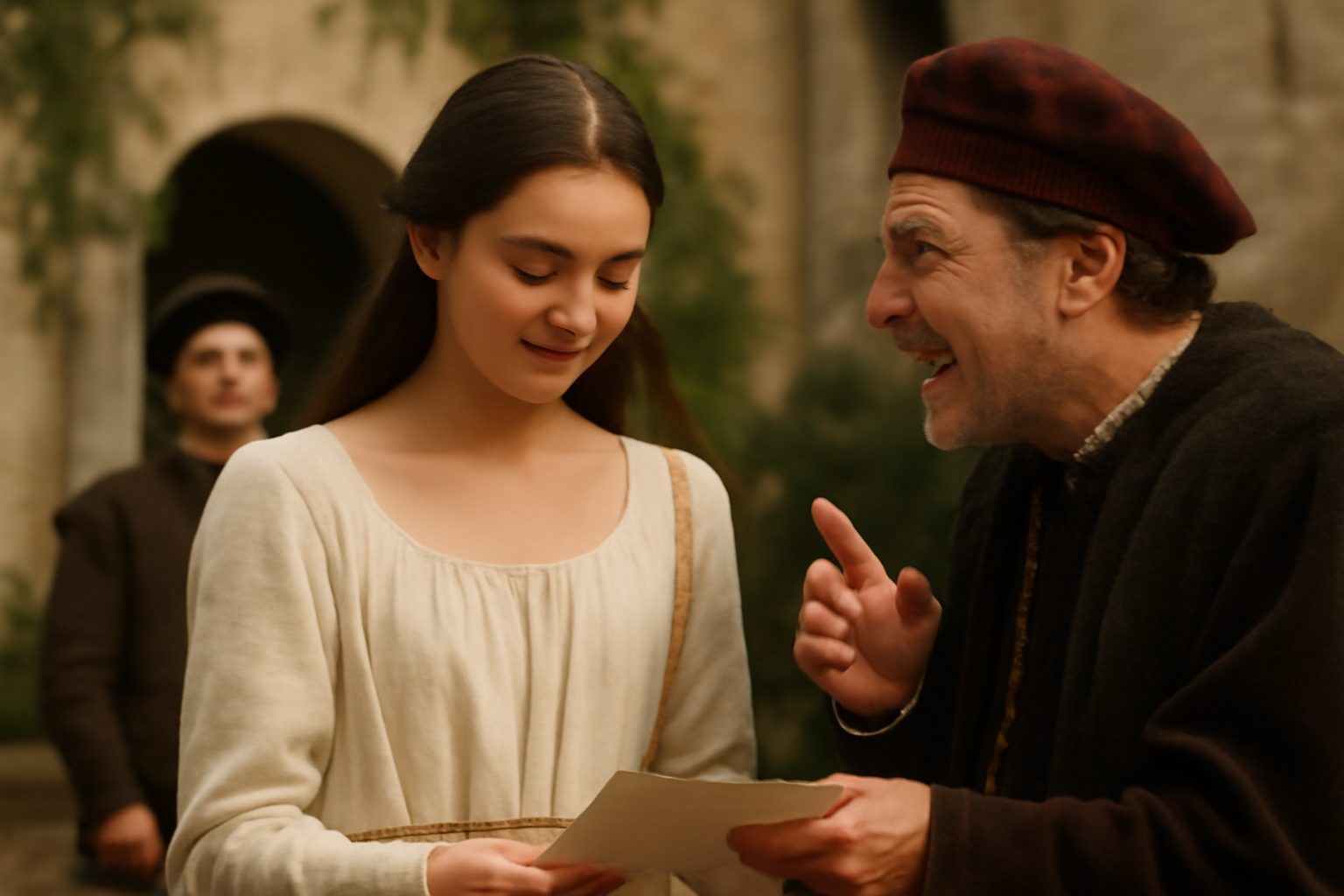
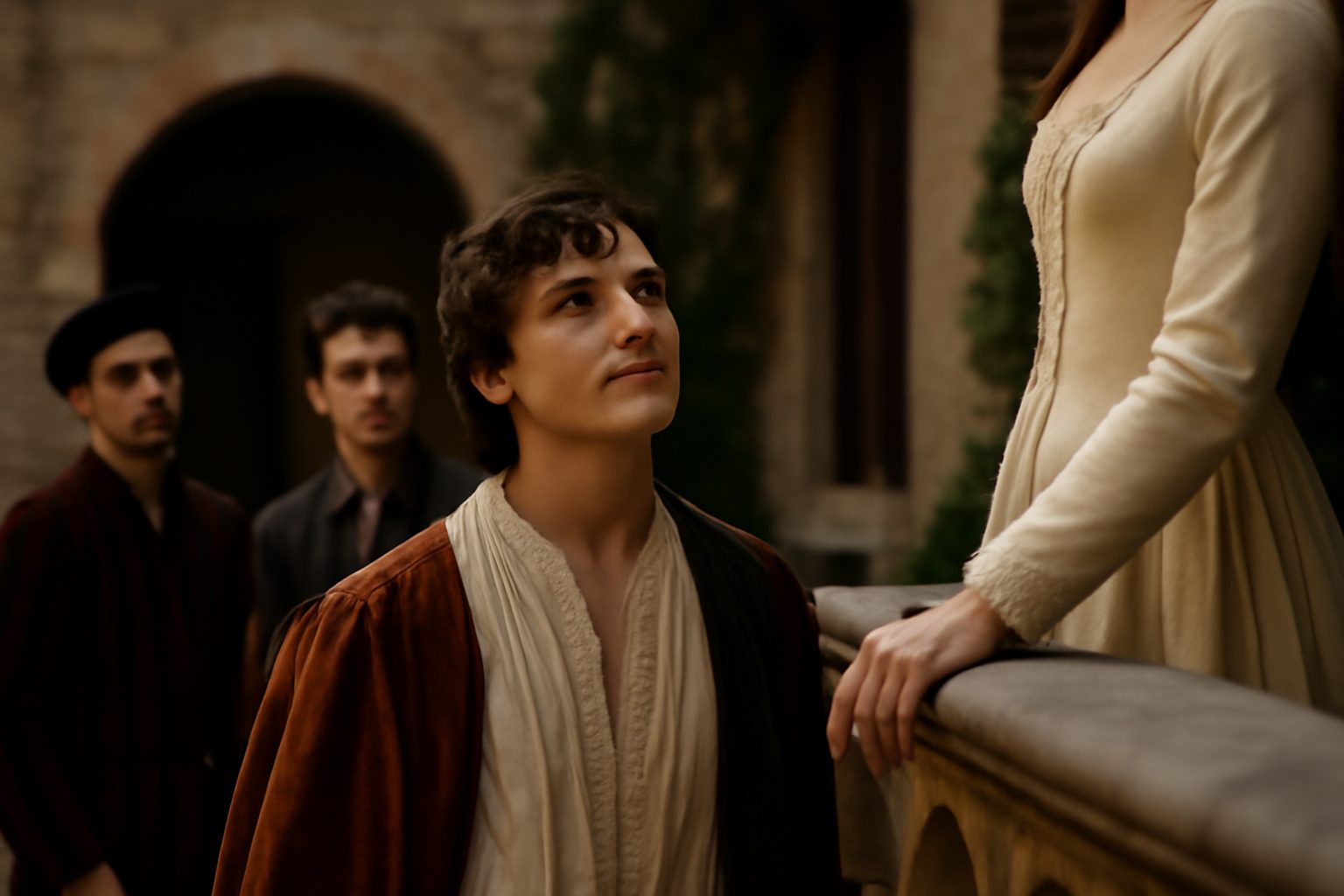
In Act 2, Scene 4 of Romeo and Juliet, Mercutio and Benvolio jest about Tybalt's recent letter challenging Romeo to a duel. Mercutio mocks Tybalt's formal, pretentious style of fencing and speech, suggesting he will respond to the letter with exaggerated precision. This line reflects Mercutio's playful disdain for Tybalt's arrogance and sets up the scene's lighthearted tone before Romeo's arrival.
Benvolio: "Nay, he will answer the letter's master, how he"
In modern day english, we would say:
He’ll respond to the man who sent the letter, no matter what.
Frequently Asked Questions
What does Benvolio mean when he says Romeo will answer the letter's master?
Benvolio is saying that Romeo will respond to the person who sent the letter, likely challenging or confronting them.
Connections to other verses:
Connections to Other Verses in Act 2 Scene 4
The verse "Nay, he will answer the letter's master, how he" is spoken by Mercutio in response to Benvolio's mention of a challenge from Tybalt. It reflects Mercutio's wit and the scene's focus on dueling, reputation, and verbal sparring.
Related to the Challenge and Tybalt
This line directly follows A challenge, on my life, where Benvolio reveals Tybalt has sent a letter challenging Romeo. It also connects to Hath sent a letter to his father's house, emphasizing the formal nature of the challenge. Mercutio's mocking response here contrasts with the serious tone of the threat, showcasing his character's levity.
Mercutio's Wit and Wordplay
Mercutio's jesting continues in verses like Any man that can write may answer a letter, where he downplays the challenge with sarcasm. His playful attitude is further evident in Romeo will answer it, reinforcing the idea that Romeo is capable but Mercutio enjoys provoking humor.
Connections to Tybalt's Character
The verse ties to descriptions of Tybalt, such as More than prince of cats, I can tell you, where Mercutio mocks Tybalt's skill and pride. It also relates to Tybalt, the kinsman of old Capulet, establishing the context of the feud and the stakes of the challenge.
Themes of Honor and Conflict
This line contributes to the scene's exploration of honor, as seen in dares, being dared, which discusses the culture of dueling. It contrasts with Romeo's later peaceful intentions, highlighting the tension between Mercutio's bravado and the play's tragic undertones.