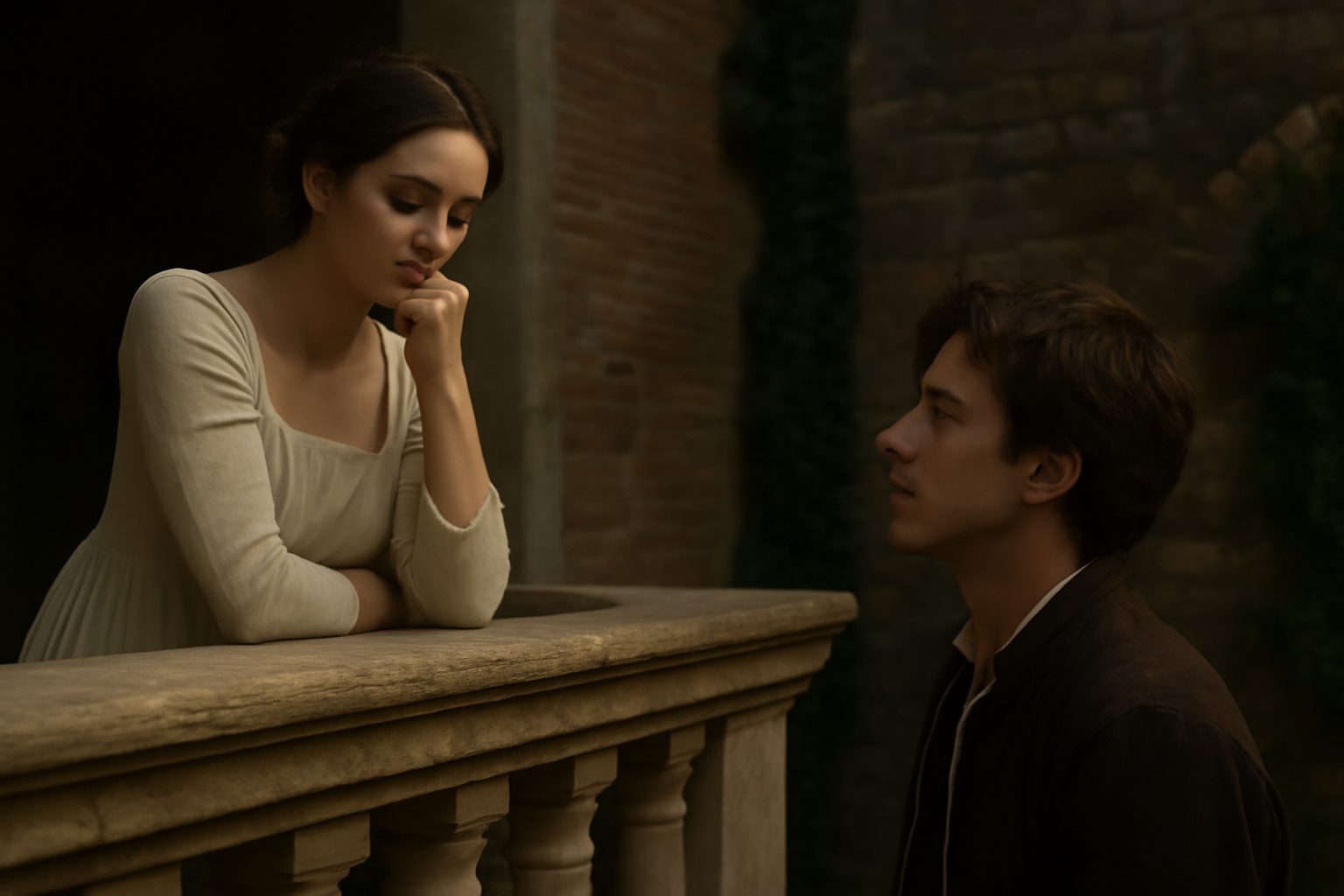
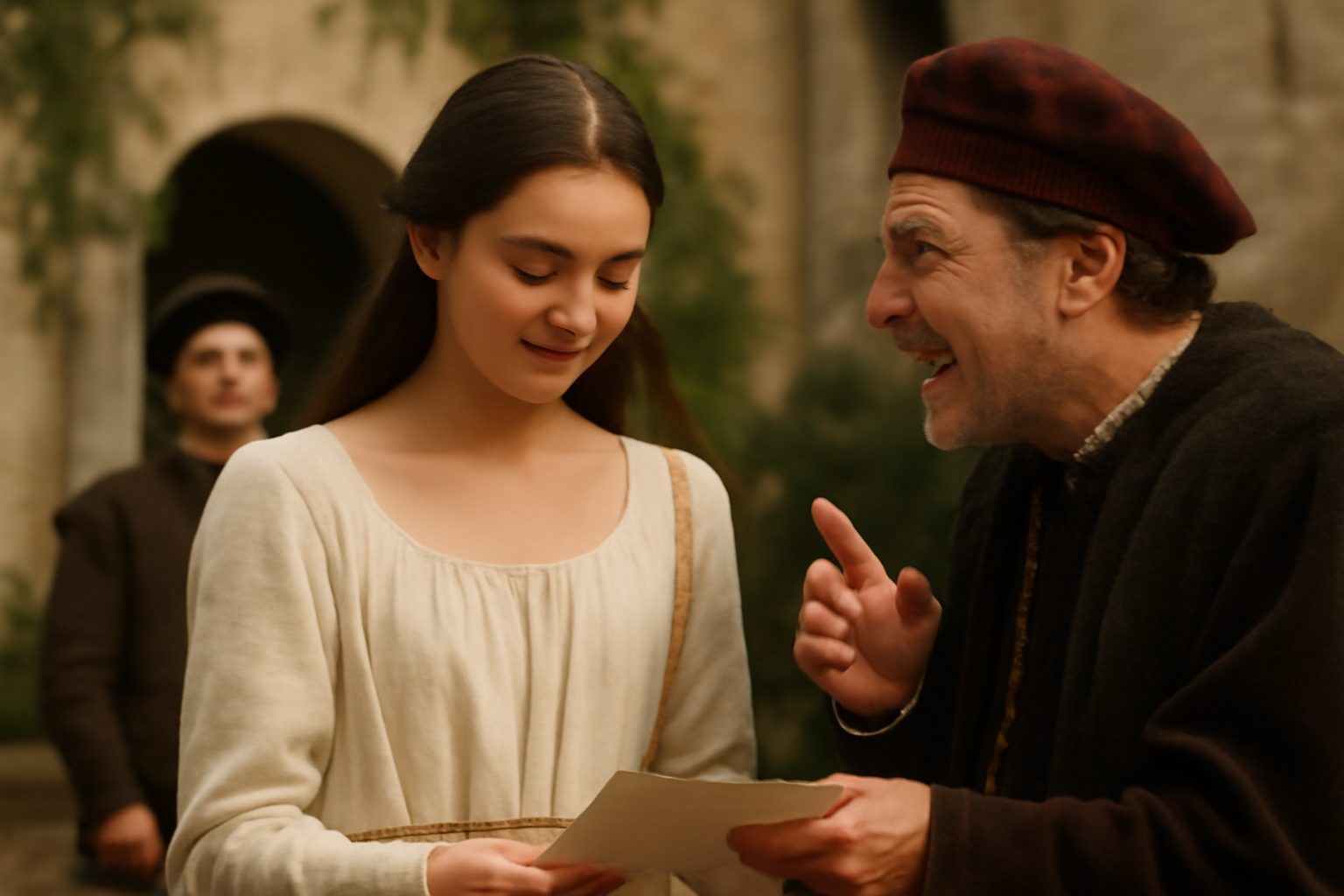
In Act 2, Scene 4 of Romeo and Juliet, Mercutio and Benvolio jest with Romeo after his secret meeting with Juliet. The line about good meat in Lent comes amid their playful banter, where Mercutio mocks Romeo's sudden transformation from lovesick melancholy to spirited joy. The remark, though seemingly lighthearted, reflects the scene's tone of teasing and wordplay among the young men.
Mercutio: "Is very good meat in lent"
In modern day english, we would say:
This line is part of Mercutio’s playful banter, suggesting that Romeo’s love is like good meat during Lent—something tempting but forbidden.
Frequently Asked Questions
What does Mercutio mean when he says that something is very good meat in Lent?
Mercutio is making a joke about how something that is normally forbidden (like meat during Lent) can still be very appealing or enjoyable.
Connections to other verses:
Connections of "Is very good meat in lent" to Other Verses in Act 2 Scene 4
The line "Is very good meat in lent" is part of a bawdy, pun-filled exchange between Mercutio and Romeo, reflecting the scene's themes of wit, wordplay, and double entendre. It connects to several other verses through its playful, irreverent tone and its focus on food and Lenten imagery.
Connection to Food and Lenten Imagery
This line ties directly to "No hare, sir; unless a hare, sir, in a lenten pie", as both references play on the idea of Lenten dietary restrictions and the humor of forbidden or scarce meats. The mention of "lent" and "hare" creates a shared jest about abstinence and indulgence.
Wit and Wordplay
The jest continues in "But a hare that is hoar" and "Is too much for a score", which extend the wordplay on "hare" and "hoar" (meaning old or moldy), emphasizing Mercutio's quick wit and the scene's focus on verbal sparring.
Broader Context of Bawdy Humor
The line also resonates with the scene's overall ribald tone, such as in "A bawd, a bawd, a bawd! so ho!", where Mercutio's exclamation underscores the playful, often risqué banter that defines his interactions with Romeo and Benvolio.
Contrast with Romantic Themes
While Mercutio mocks with food and Lent, Romeo's earnestness is highlighted in verses like "Nurse, commend me to thy lady and mistress", creating a contrast between Mercutio's jesting and Romeo's sincere, love-struck demeanor.