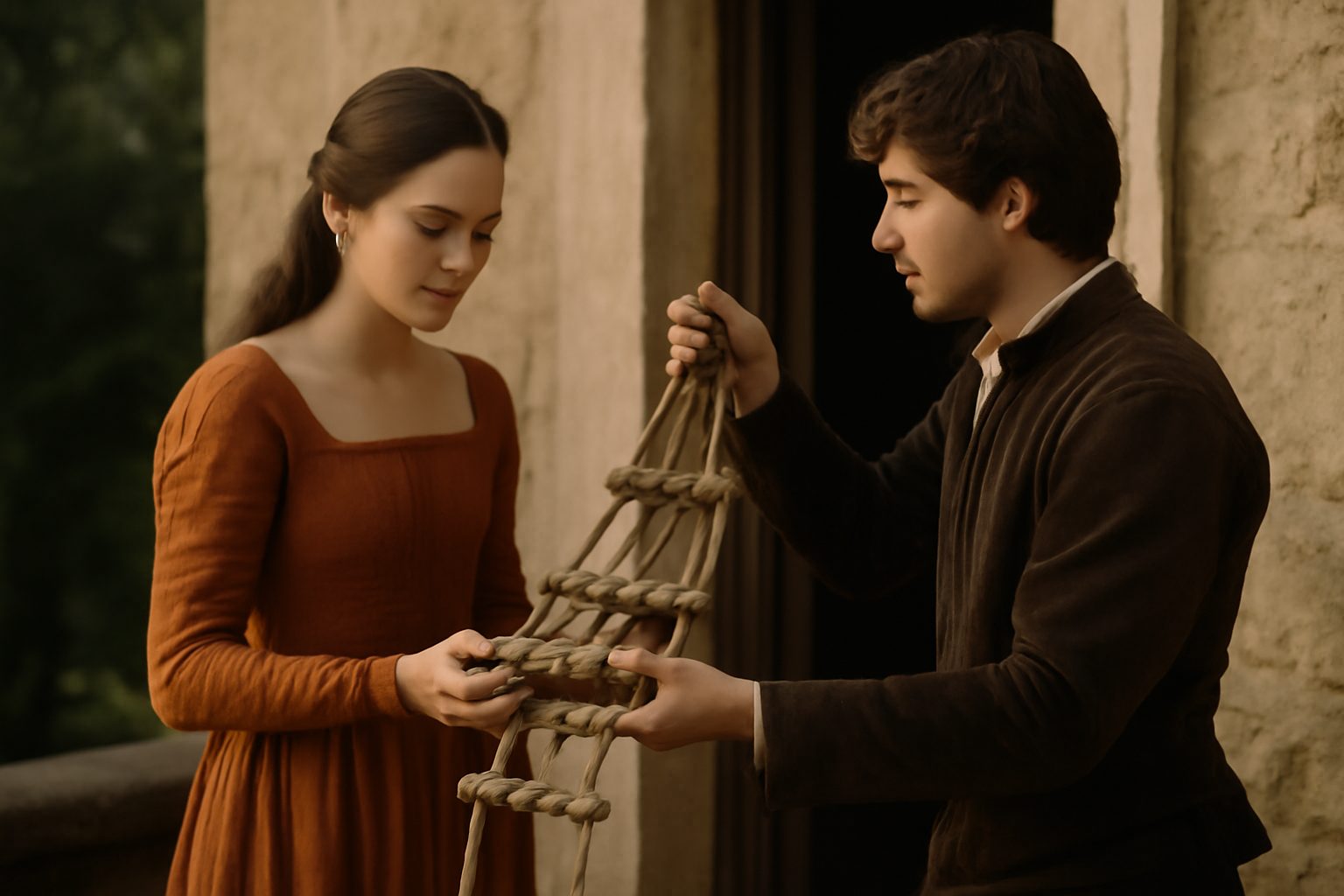
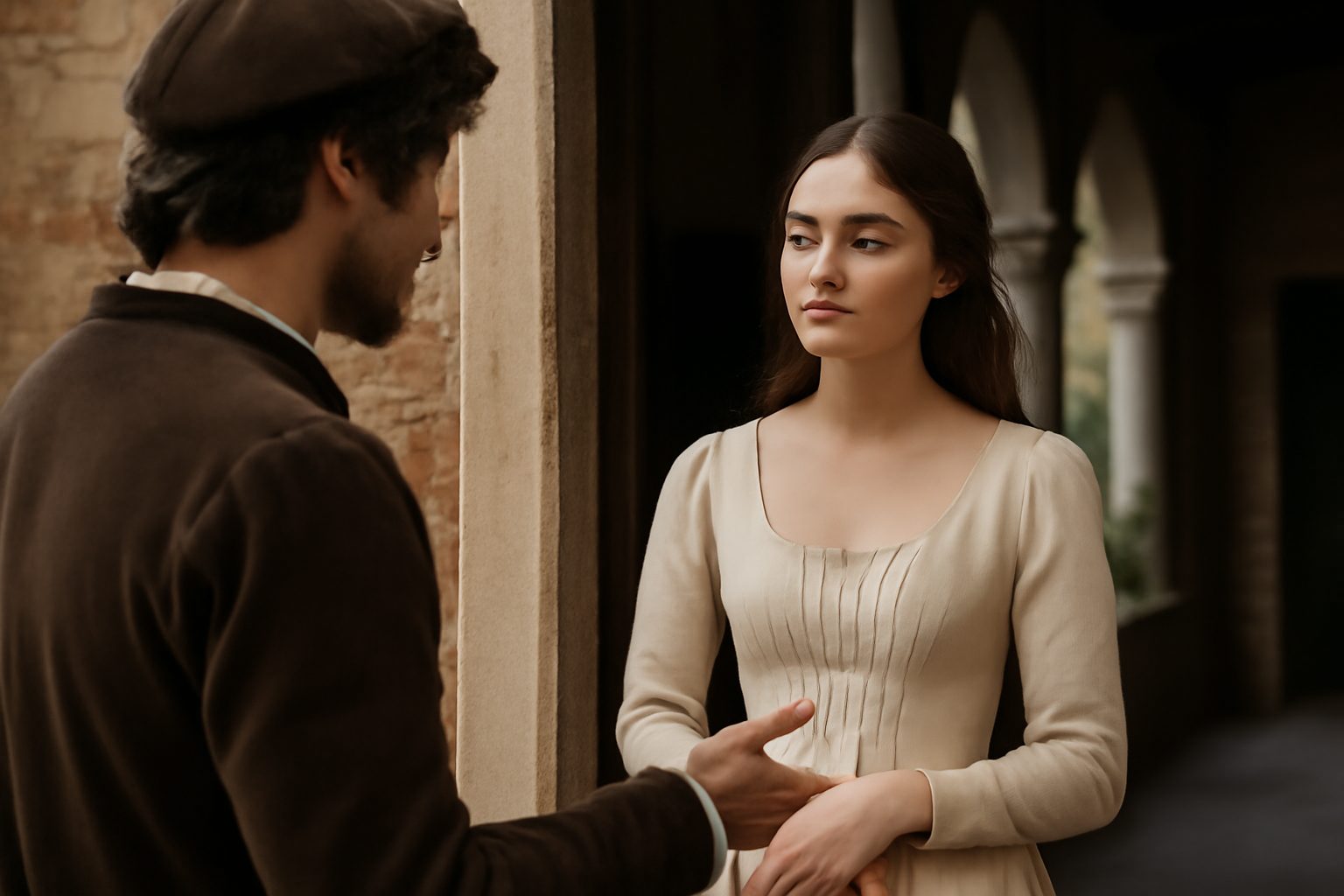
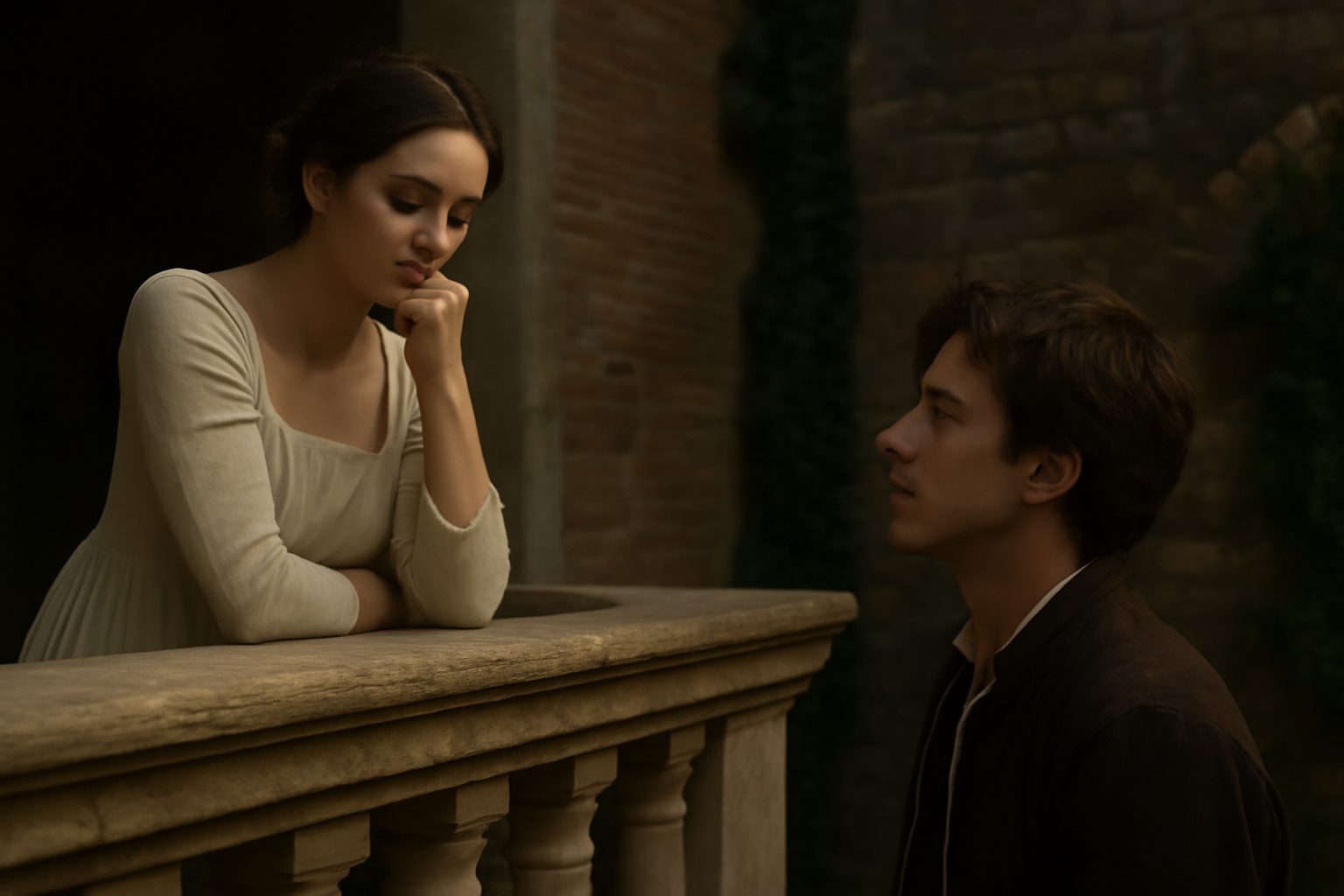
In Act 2, Scene 4 of Romeo and Juliet, Mercutio and Benvolio jest with Romeo after his secret meeting with Juliet. When the Nurse arrives to speak with Romeo, he asks her to pass along his regards to Juliet, showing his eagerness and respect. This moment highlights Romeo's devotion, even as his friends remain unaware of his newfound love.
Romeo: "Commend me to thy lady."
In modern day english, we would say:
Tell your lady I send my regards.
Frequently Asked Questions
What does Romeo ask the person he is speaking to do in this line?
Romeo asks the person to give his greetings to the woman he loves.
Connections to other verses:
Connections to "Commend me to thy lady"
The line "Commend me to thy lady" is spoken by Romeo to the Nurse as a formal and heartfelt request to convey his regards to Juliet. This moment is deeply connected to several other verses in the scene, reflecting themes of love, secrecy, and the urgency of Romeo and Juliet's relationship.
Direct Echoes and Parallels
Earlier in the scene, Romeo similarly says, "Nurse, commend me to thy lady and mistress", which establishes a pattern of Romeo using formal, respectful language to communicate through the Nurse. This repetition underscores his earnestness and the importance of his message reaching Juliet accurately.
Additionally, the Nurse later echoes this sentiment when she says, "Farewell; commend me to thy mistress", showing how the phrase becomes a shared code of courtesy and trust between Romeo and the Nurse as they facilitate the secret romance.
Context of Urgency and Secrecy
The request in "Commend me to thy lady" is part of a larger conversation where Romeo is arranging his secret marriage to Juliet. This is tied to verses like "Some means to come to shrift this afternoon", where Romeo plans to meet Juliet at Friar Laurence's cell, and "And there she shall at Friar Laurence' cell", which directly references the location of their intended union.
Romeo’s trust in the Nurse is further emphasized when he says, "I warrant thee, my man's as true as steel", highlighting the theme of reliance on intermediaries in their clandestine affair.
Contrast with Other Interactions
The polite and earnest tone of "Commend me to thy lady" contrasts sharply with the bawdy and mocking exchanges earlier in the scene, such as Mercutio’s exclamation, "A bawd, a bawd, a bawd! so ho!", which mocks the Nurse’s role. This contrast highlights Romeo’s sincere and respectful approach to love versus the Mercutio’s ribald humor.
Similarly, while Romeo is focused on commending himself to Juliet, the Nurse’s earlier statement, "my mistress is the sweetest lady", reinforces the admiration and loyalty that define these communications, setting them apart from the scene’s more frivolous dialogues.