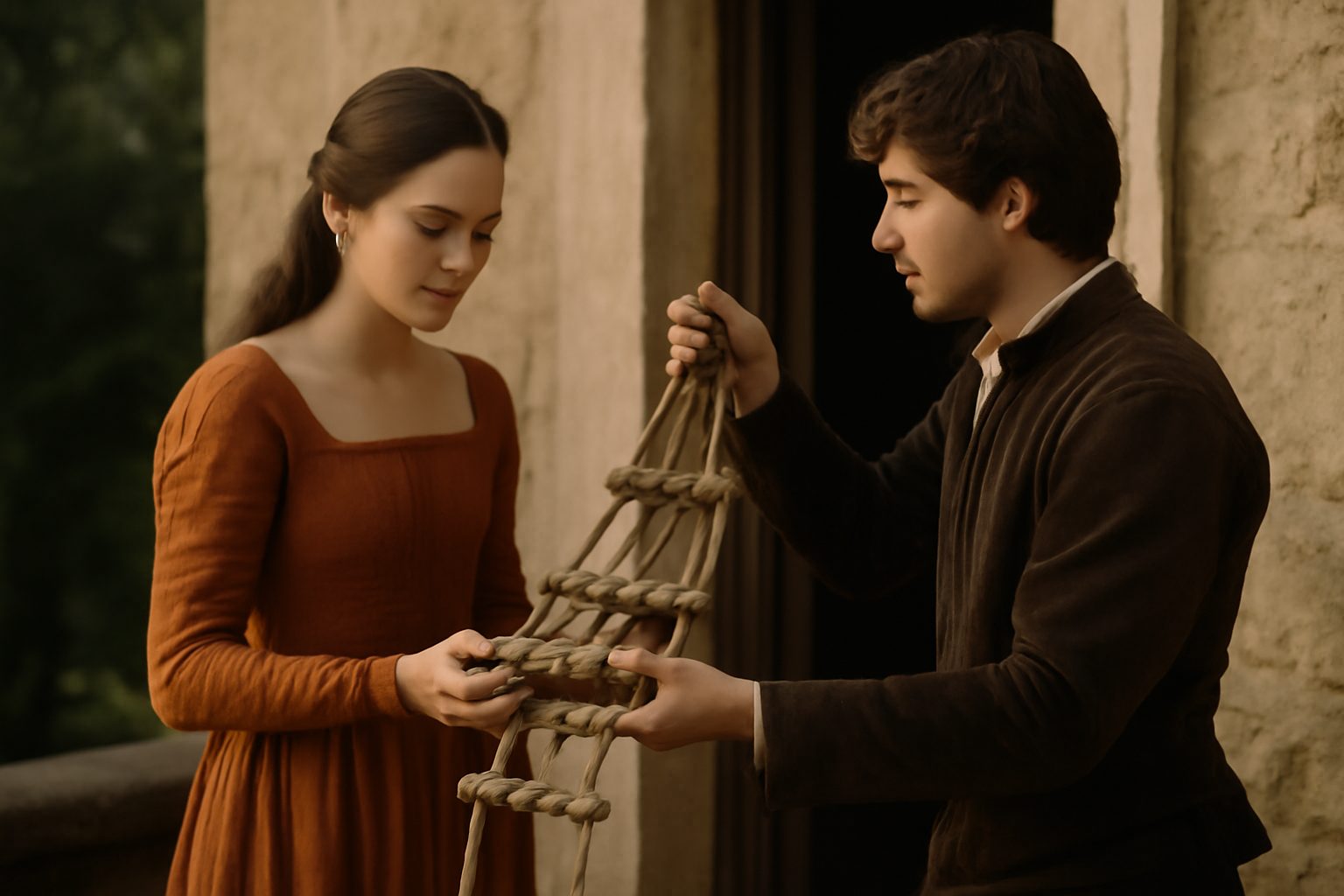
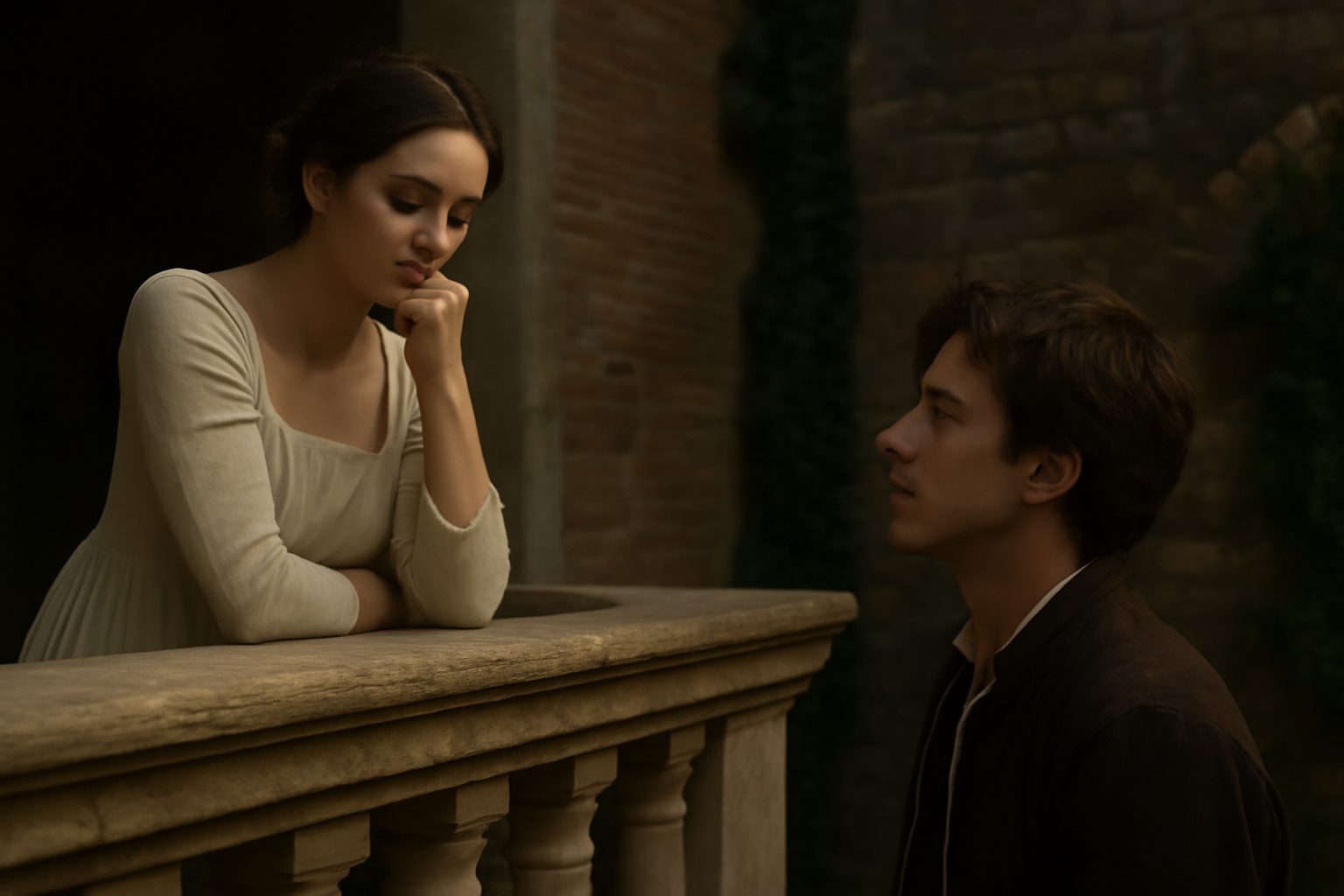
In Act 2, Scene 4 of Romeo and Juliet, Mercutio and Benvolio jest about Romeo's sudden disappearance the night before, unaware he has secretly met Juliet. The line refers to Romeo's need for discretion as he plans to return to Juliet under the cover of darkness, relying on the night to conceal his movements. This moment highlights the lovers' urgency and the risks they take to be together.
Romeo: "Must be my convoy in the secret night."
In modern day english, we would say:
You must guide me secretly through the night.
Frequently Asked Questions
What does Romeo mean when he says someone must be his guide in the dark night?
Romeo is asking for someone to help him travel secretly at night, likely to meet Juliet without being seen.
Connections to other verses:
Connections to "Must be my convoy in the secret night"
The line "Must be my convoy in the secret night" reflects Romeo's urgent need for secrecy and assistance in his clandestine plans with Juliet. This theme of covert action is echoed in "Some means to come to shrift this afternoon", where Romeo arranges for Juliet to meet him at Friar Laurence's cell under the guise of confession, reinforcing their reliance on deception.
Links to Secrecy and Trust
Romeo's trust in his confidants is highlighted in "I warrant thee, my man's as true as steel", emphasizing the importance of loyalty in executing their secret plans. Similarly, the Nurse's role as a go-between is underscored in "and as I told you, my young lady bade me inquire", showing her involvement in facilitating the hidden romance.
Symbolism and Foreshadowing
The phrase "secret night" alludes to the darkness that shrouds their love, a contrast to the public conflicts mentioned in "Tybalt, the kinsman of old Capulet", which hints at the familial strife that threatens their union. Additionally, the urgency in Romeo's words parallels the impatient tone in "dial is now upon the prick of noon", emphasizing the swift passage of time and the need for haste.
Emotional Undertones
Romeo's reliance on the "convoy" conveys his vulnerability, much like the despair noted in "Torments him so, that he will sure run mad", illustrating the emotional turmoil driving his actions. This desperation is tempered by hope, as seen in "Which to the high top-gallant of my joy", where Romeo expresses the heights of his happiness, tied to their secret plans.