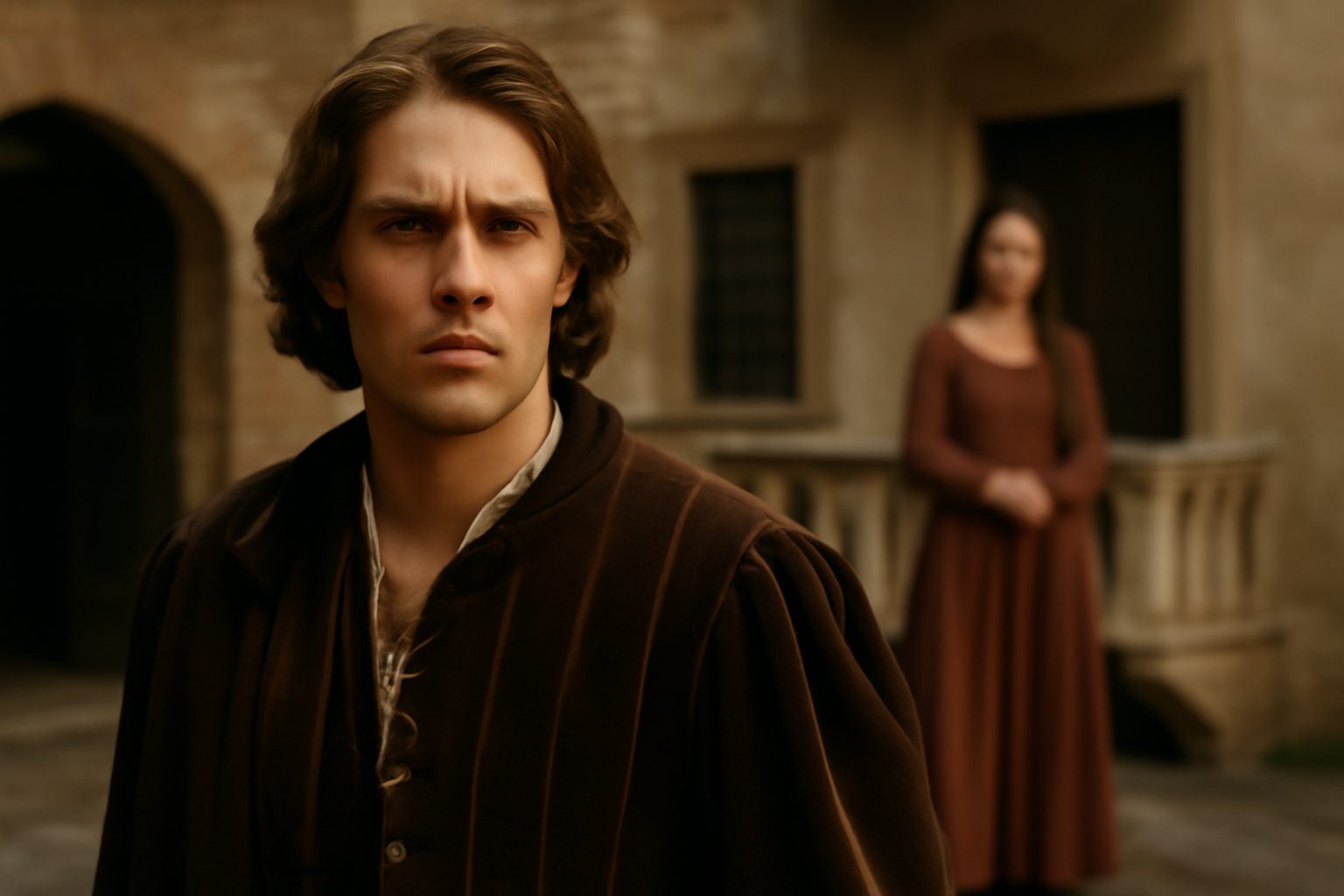
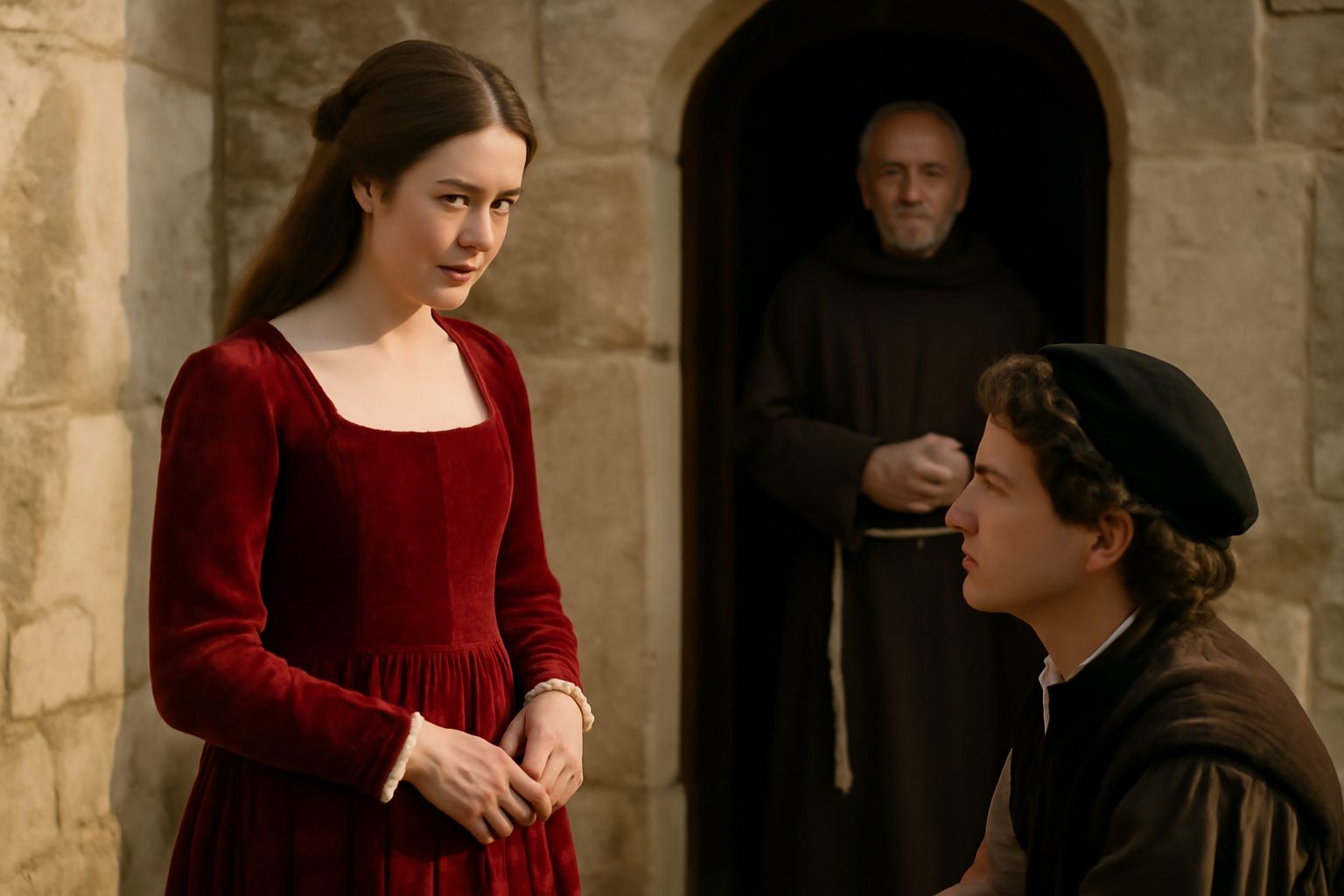
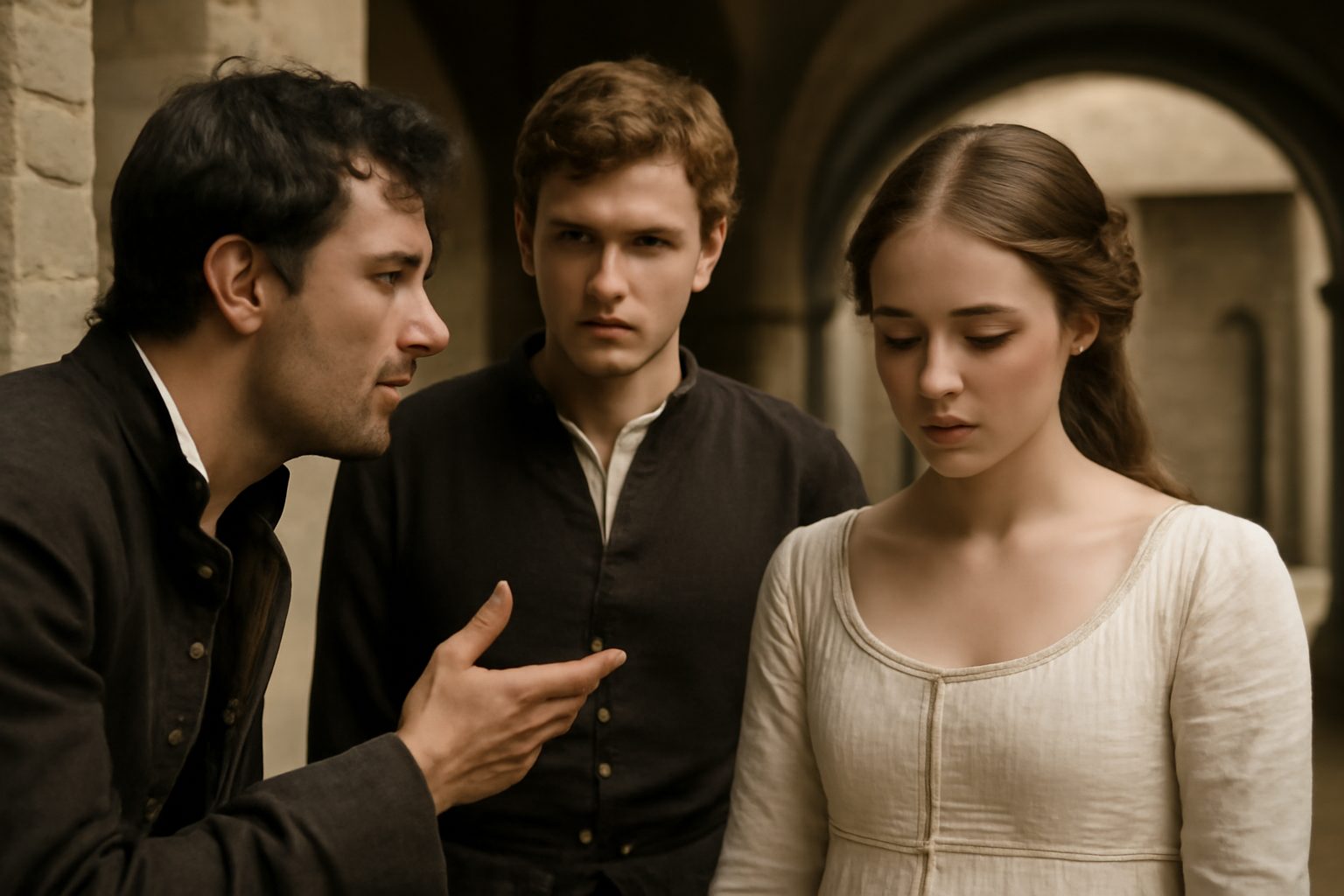
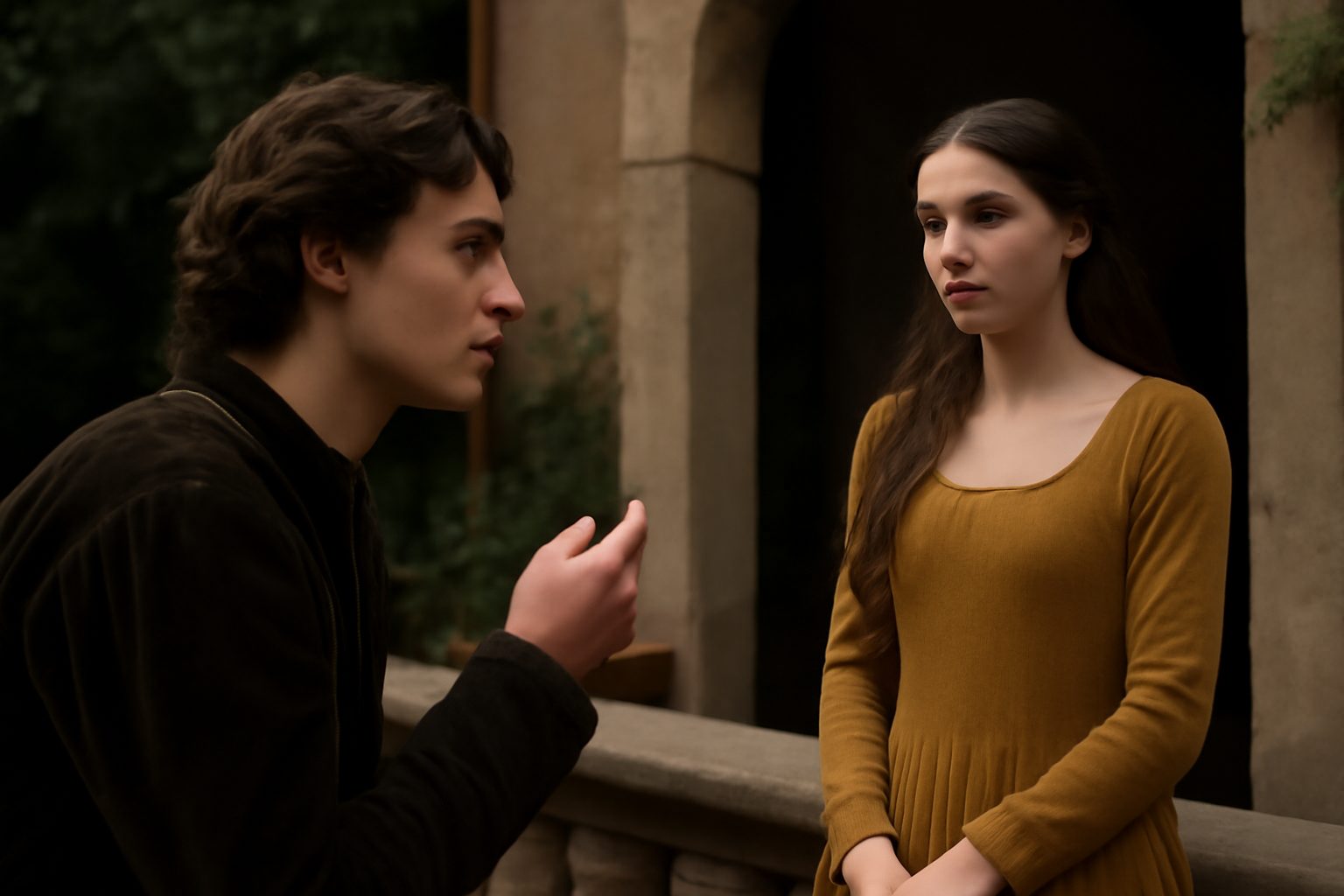
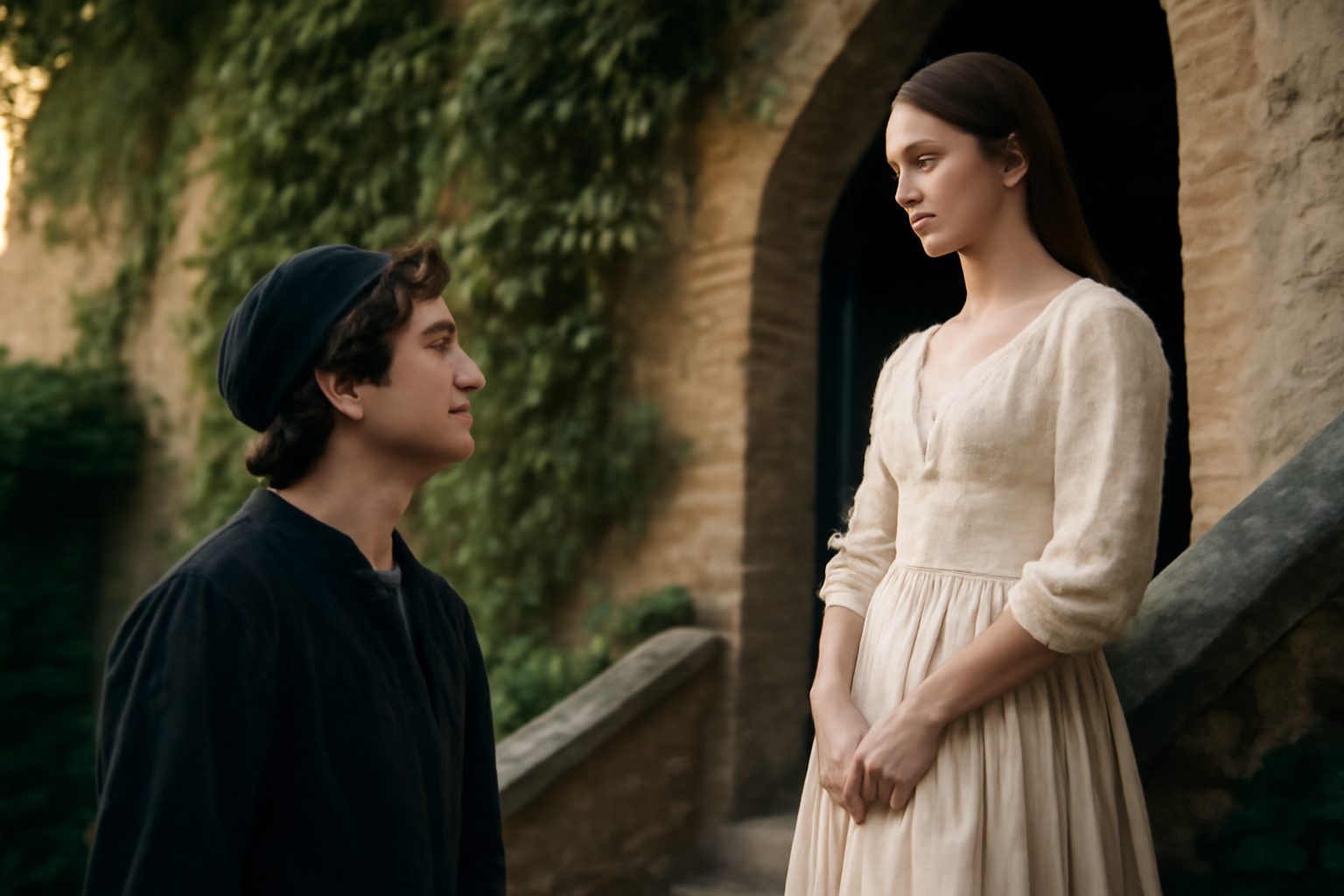
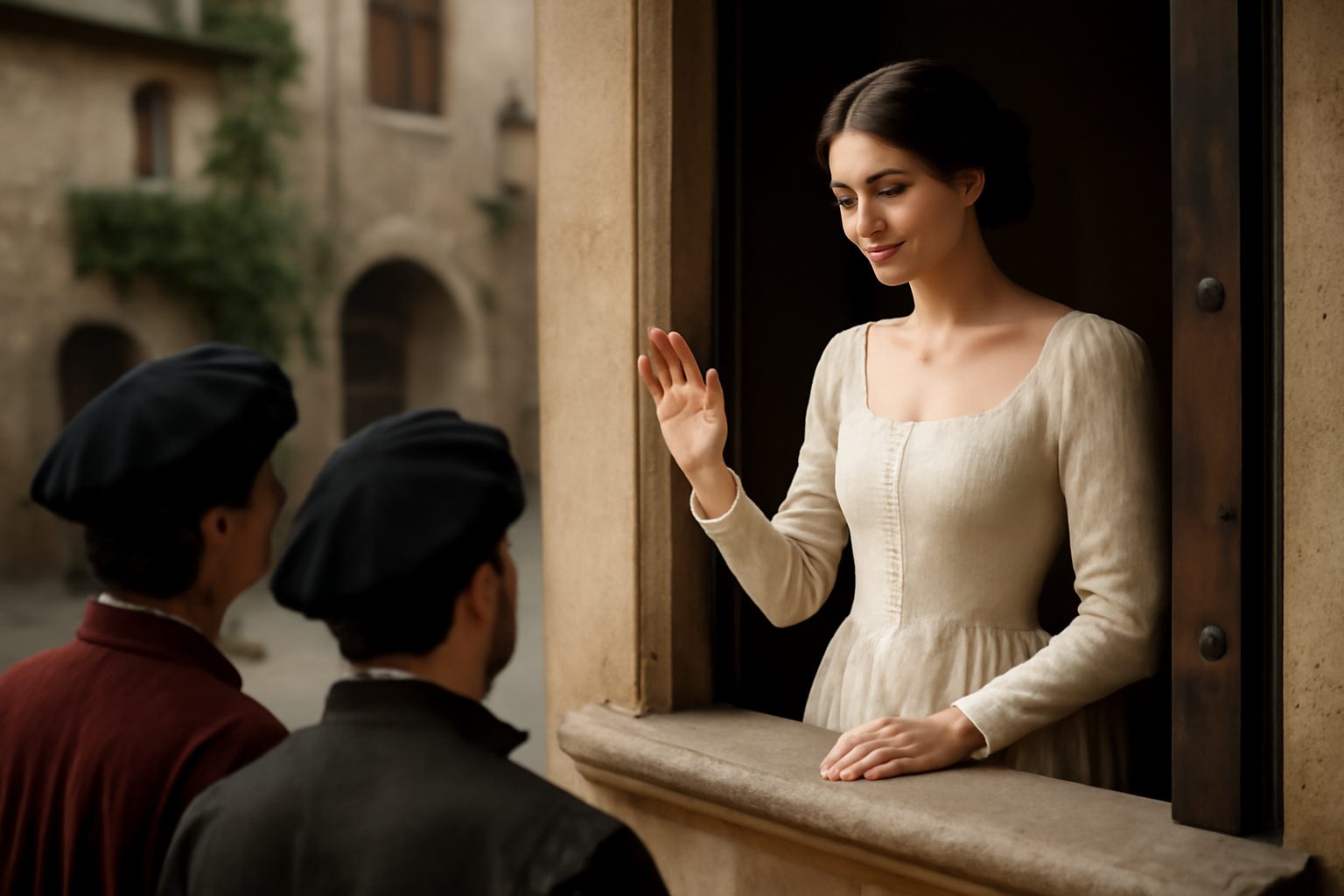
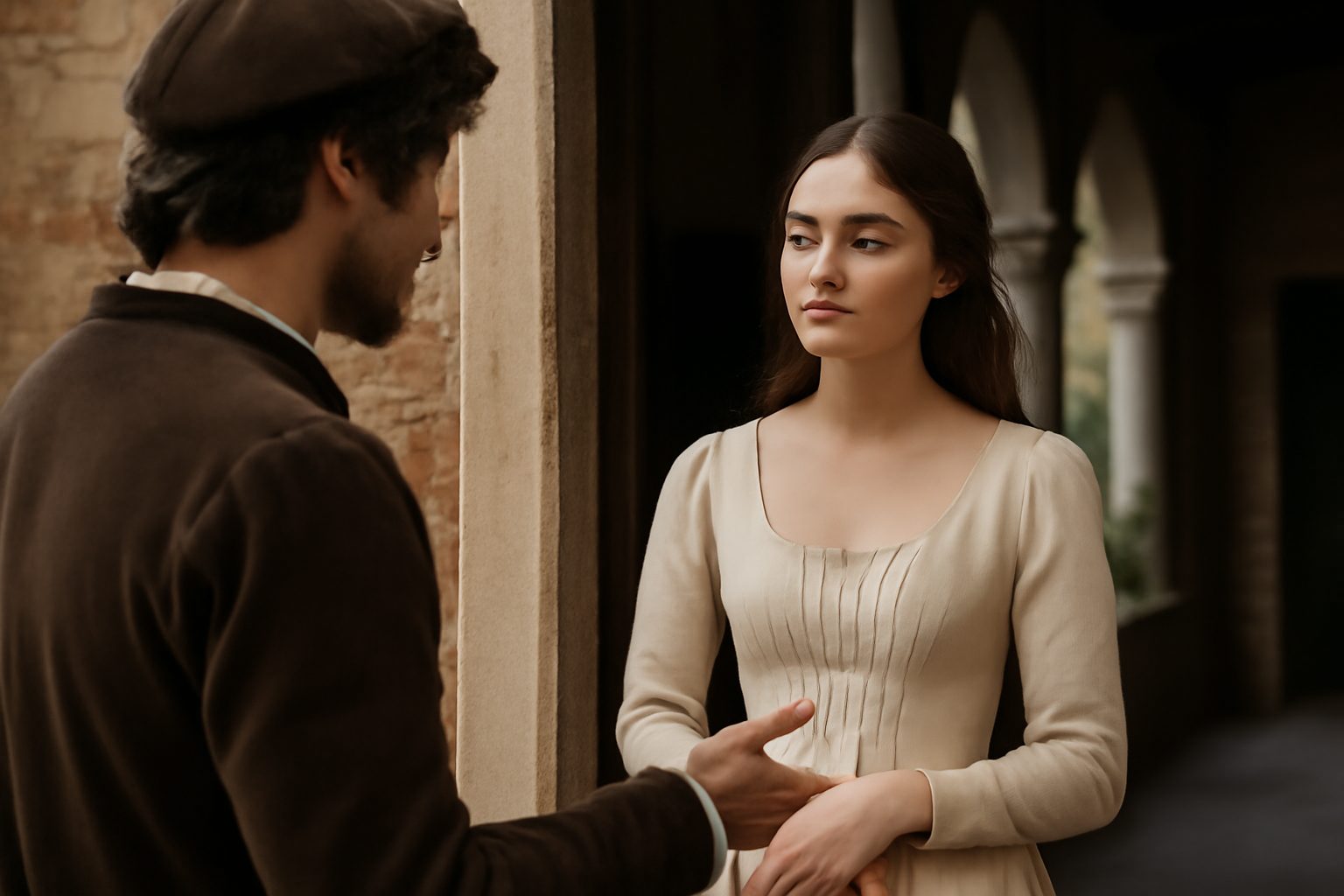
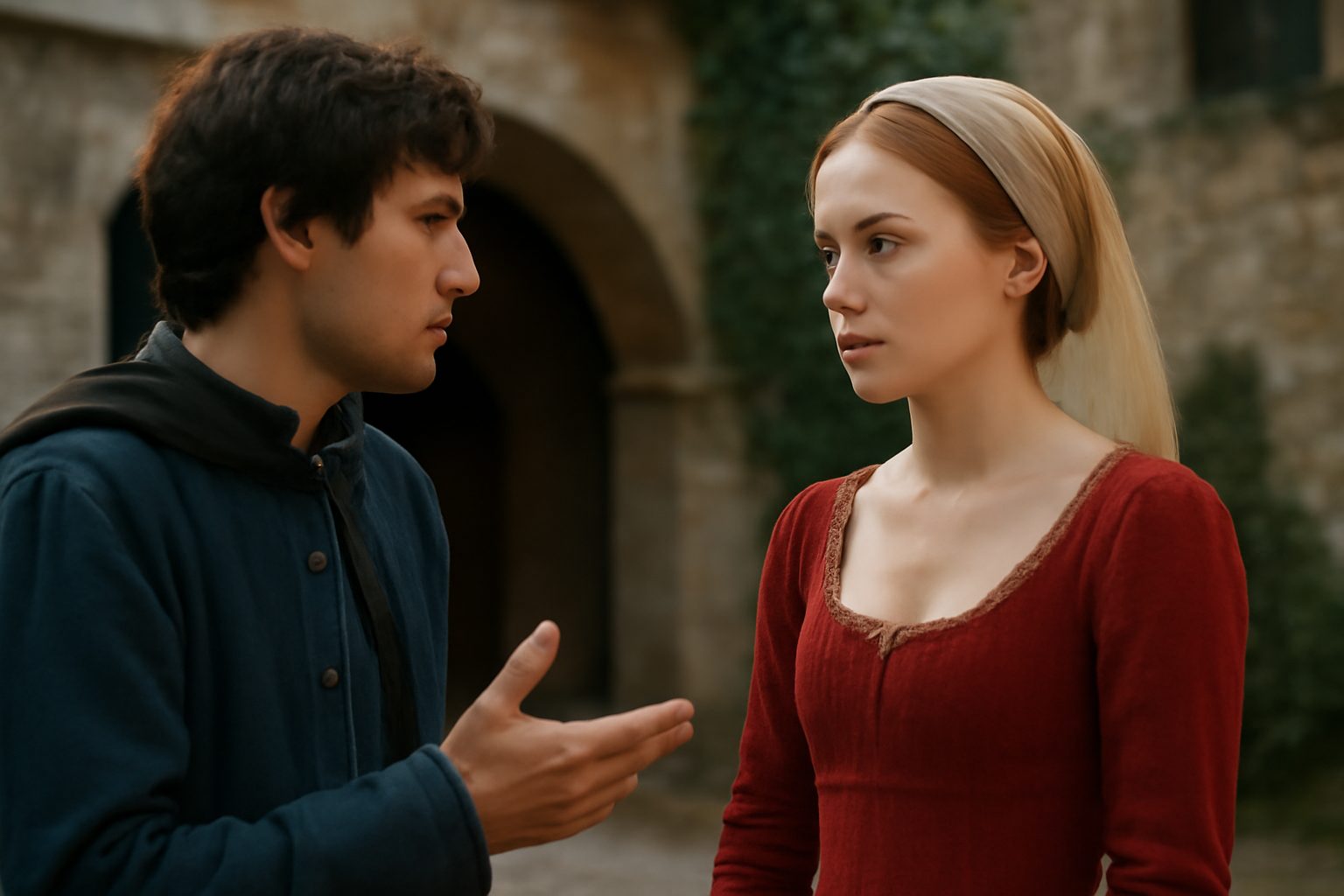
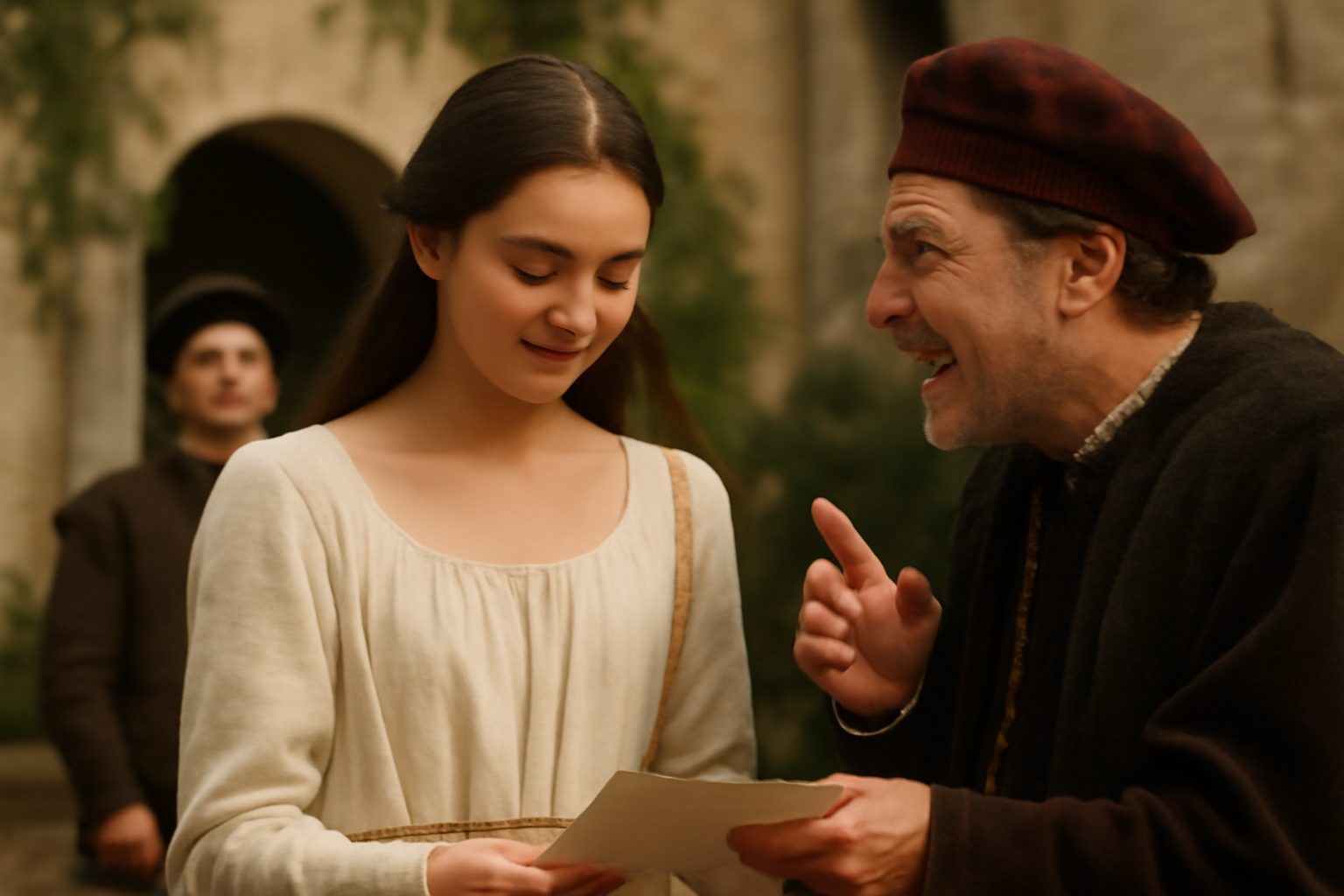
In Act 2, Scene 4 of Romeo and Juliet, Mercutio and Benvolio are discussing Tybalt's recent challenge to Romeo, unaware that Romeo has just secretly married Juliet. When Mercutio hears that Tybalt has sent a letter to Romeo's house, he dramatically declares it must be a challenge, emphasizing the tension between the Montagues and Capulets. This line reflects Mercutio's quick wit and the escalating conflict that will soon lead to tragedy.
Mercutio: "A challenge, on my life."
In modern day english, we would say:
I swear on my life, it’s a dare.
Frequently Asked Questions
Who says the line 'A challenge, on my life' in Romeo and Juliet?
Mercutio says this line.
In which act and scene does Mercutio say 'A challenge, on my life'?
He says it in Act 2, Scene 4.
What is Mercutio referring to when he says 'A challenge, on my life'?
He is talking about a challenge or duel, possibly related to Tybalt.
Connections to other verses:
Connections to "A challenge, on my life."
The line "A challenge, on my life." refers to Tybalt's challenge to Romeo, which is first mentioned in "Tybalt, the kinsman of old Capulet," where Benvolio informs Mercutio that Tybalt has sent a letter to Romeo's father. This is further elaborated in "Hath sent a letter to his father's house," confirming the challenge's delivery.
Mercutio's Mockery and Tybalt's Reputation
Mercutio responds to the challenge with his characteristic wit, mocking Tybalt's dueling style in "More than prince of cats, I can tell you." He continues to jest about Tybalt's precision in "you sing prick-song, keeps time, distance, and proportion," highlighting the absurdity of the formal challenge. Mercutio's description of Tybalt as "the courageous captain of compliments" further satirizes the duelist's affected manners.
Romeo's Transformation and the Challenge
Romeo's entrance shifts the tone, as noted in "Here comes Romeo, here comes Romeo." His newfound high spirits, described in "now art thou sociable, now art thou Romeo," contrast with the earlier somber mood, making the challenge seem almost trivial amid the merriment. The threat of the duel is downplayed by Mercutio's humor, as seen in "Alas poor Romeo! he is already dead; stabbed with a white wench's black eye," which jestingly suggests love has already defeated Romeo.
Foreshadowing and Tension
Despite the laughter, the challenge foreshadows future conflict. Benvolio's concern in "encounter Tybalt?" hints at the inevitable clash, while Mercutio's bravado in "dares, being dared" underscores the volatile nature of honor in Verona. This tension subtly underpins the scene's comedic exchanges.