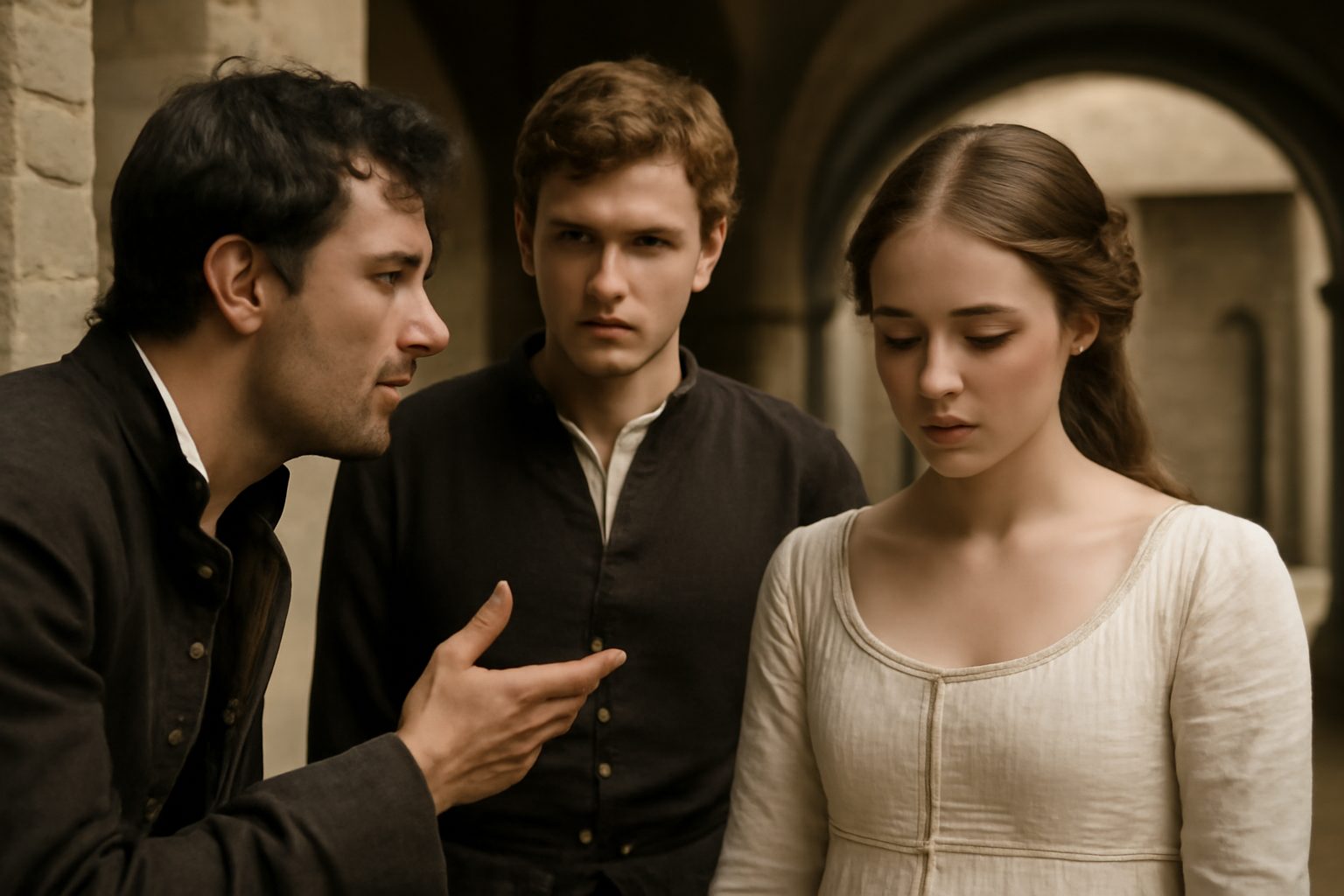
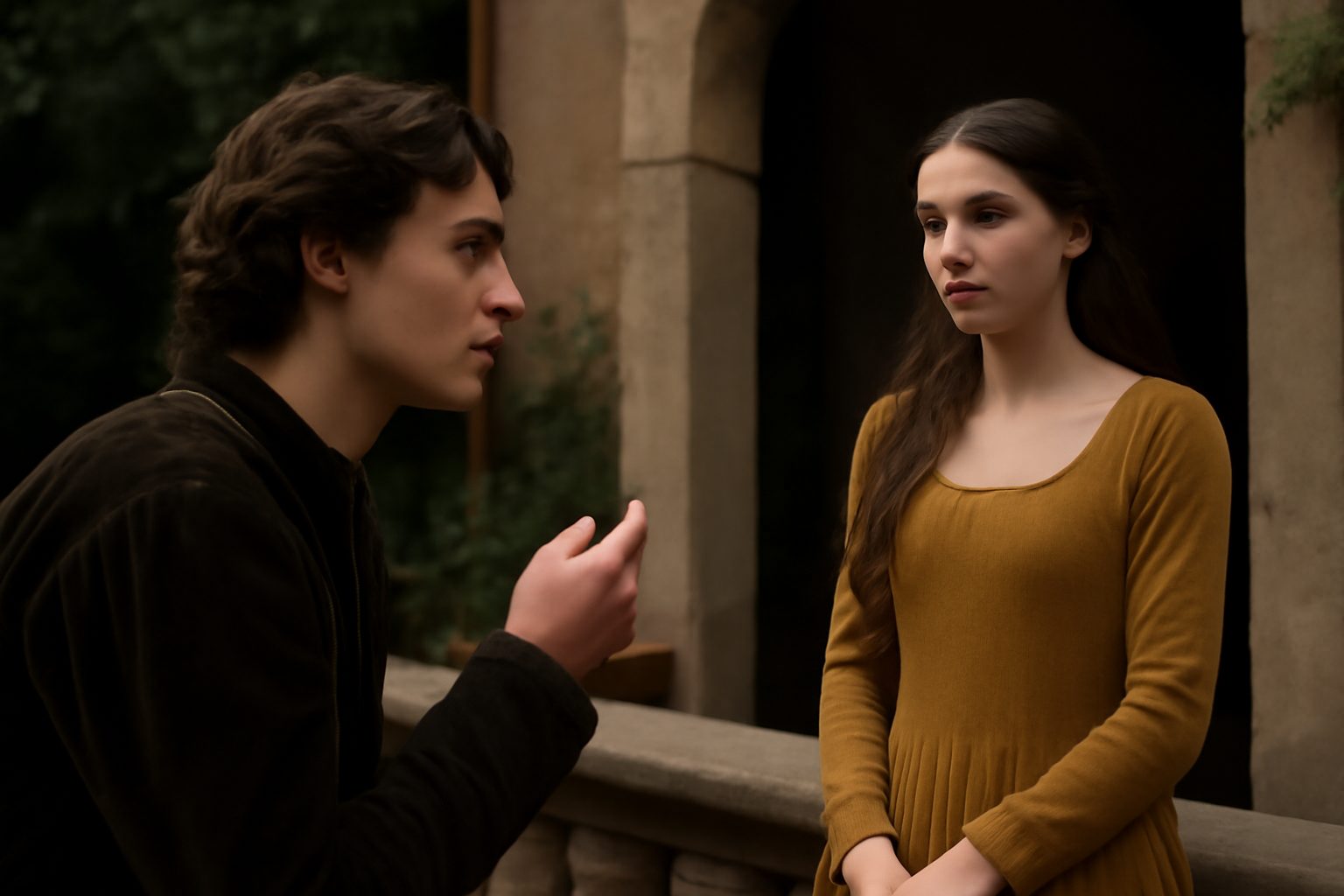
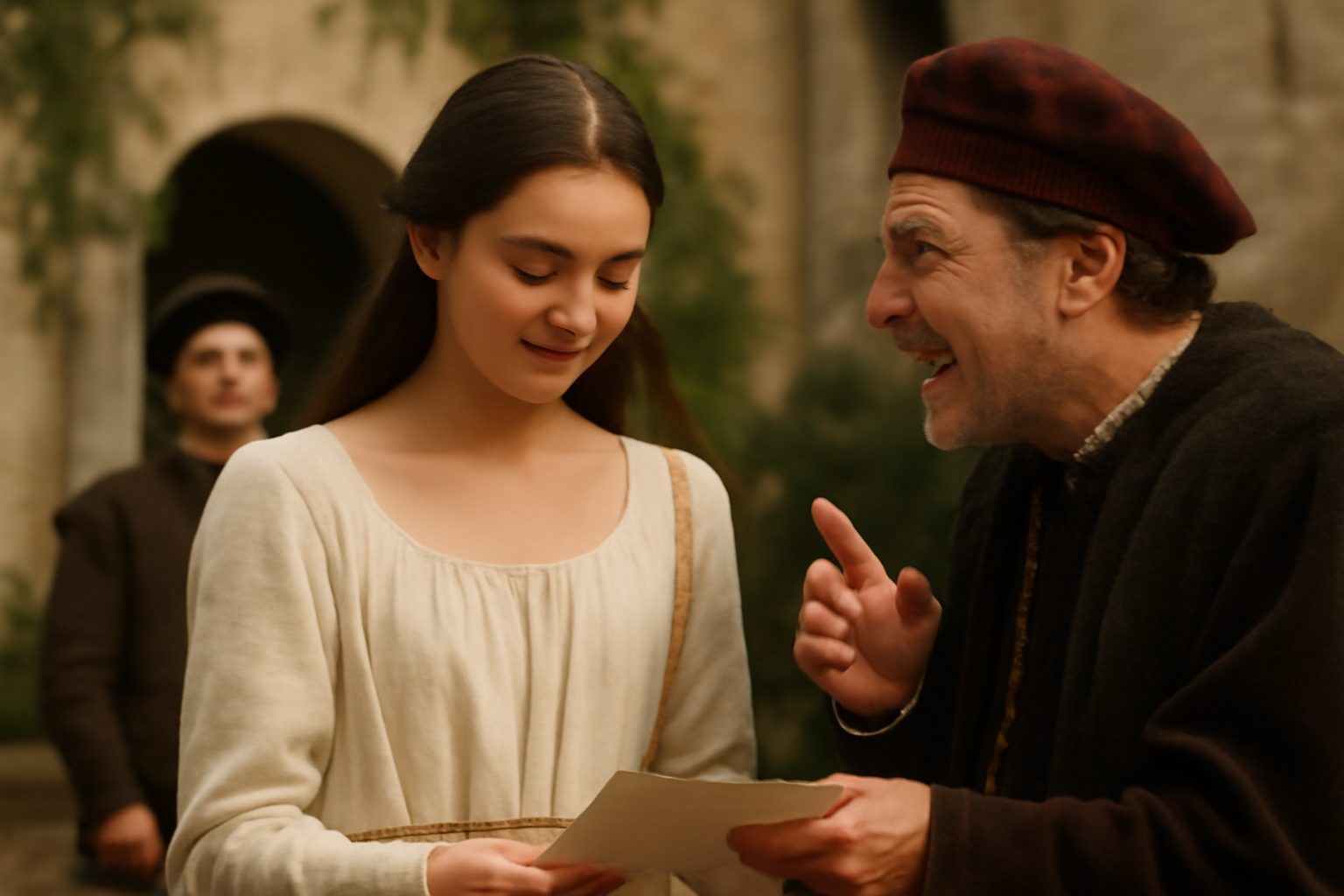
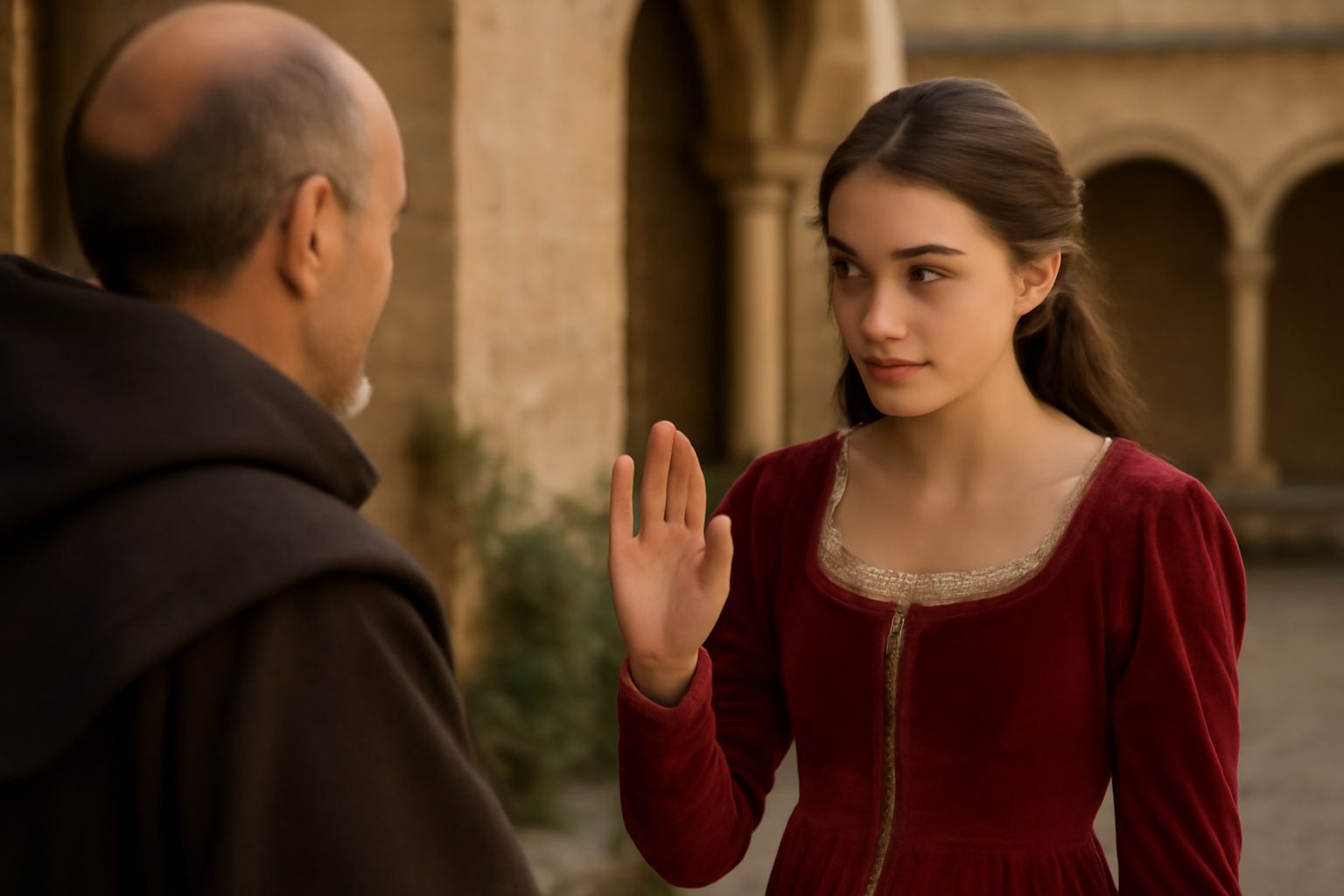
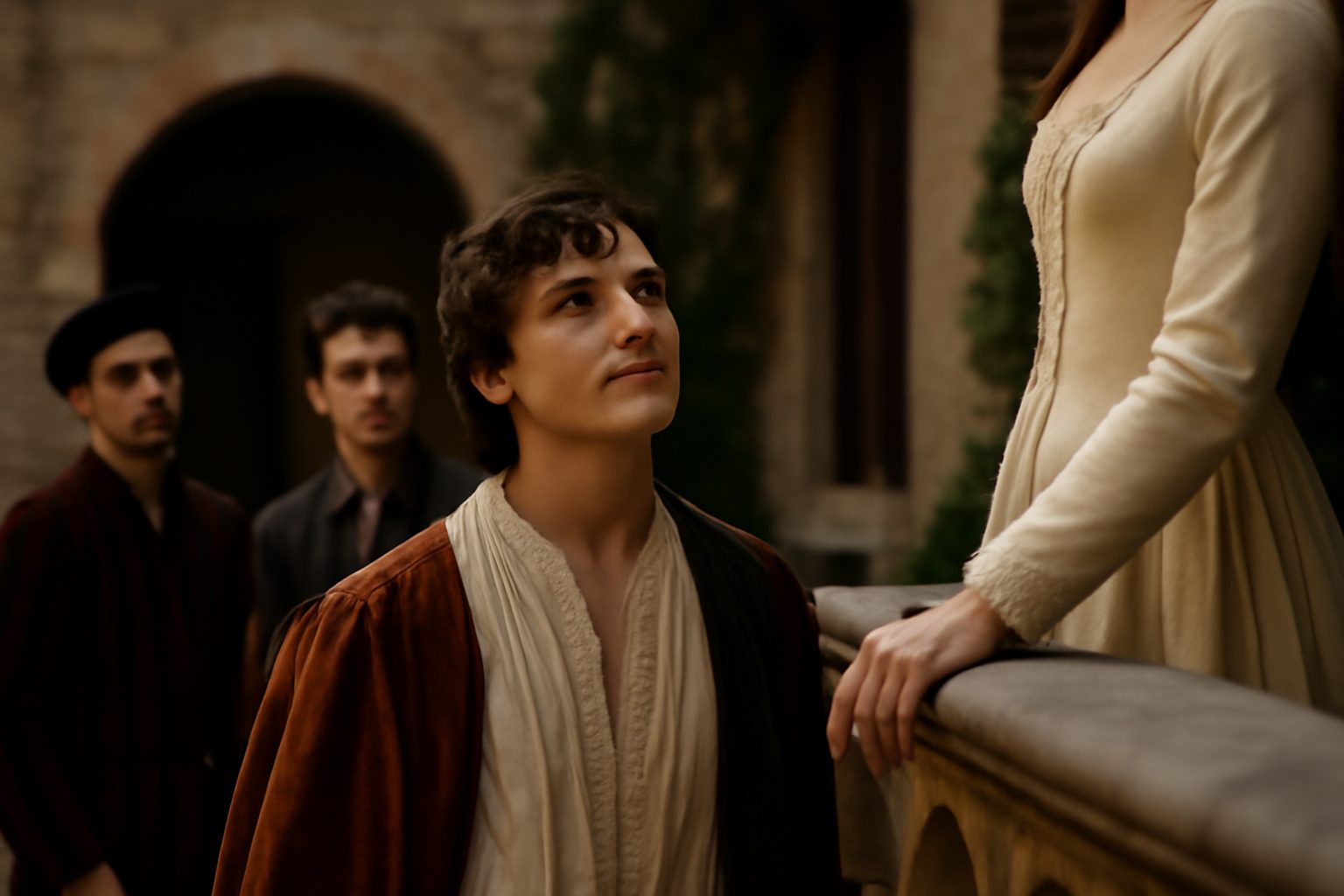
In Act 2, Scene 4 of Romeo and Juliet, Mercutio and Benvolio are discussing Romeo's whereabouts after he slipped away from them the previous night. They are unaware that he has secretly spent the evening with Juliet, and their playful banter reveals their concern and amusement at his sudden disappearance. The question about whether he returned home underscores their curiosity and sets up their teasing when Romeo finally rejoins them.
Mercutio: "Came he not home to-night?"
In modern day english, we would say:
Didn't he come home last night?
Frequently Asked Questions
Who is Mercutio asking about in this line?
Mercutio is asking about Romeo.
What time of day is Mercutio referring to?
Mercutio is referring to the night before.
Connections to other verses:
Connections to "Came he not home to-night?"
The verse Came he not home to-night? is spoken by Benvolio, expressing concern about Romeo's whereabouts. This inquiry sets the stage for the scene's exploration of Romeo's absence and his friends' speculation about his state.
Direct Response and Context
Mercutio immediately responds with Not to his father's; I spoke with his man, indicating that Romeo did not return home and hinting at his secretive activities related to Juliet. This exchange underscores the mystery surrounding Romeo's actions after the Capulet feast.
Speculation on Romeo's Condition
Mercutio and Benvolio's conversation soon turns to Romeo's emotional and physical state. Mercutio quips Alas poor Romeo! he is already dead; stabbed with a white wench's black eye, humorously attributing Romeo's absence to lovesickness, which ties back to the initial question about his whereabouts.
Contrast with Romeo's Arrival
When Romeo finally appears, his friends note the change in his demeanor. Benvolio exclaims now art thou sociable, now art thou Romeo; now art thou what thou art, highlighting the contrast between the worried inquiry about his absence and his present, revived spirit, which is due to his newfound love for Juliet.
Underlying Tension with Tybalt
The scene also weaves in the threat of conflict, as Mercutio mentions Tybalt, the kinsman of old Capulet and his challenge to Romeo. This adds urgency to the question of Romeo's whereabouts, as his absence could be related to avoiding or preparing for this duel.