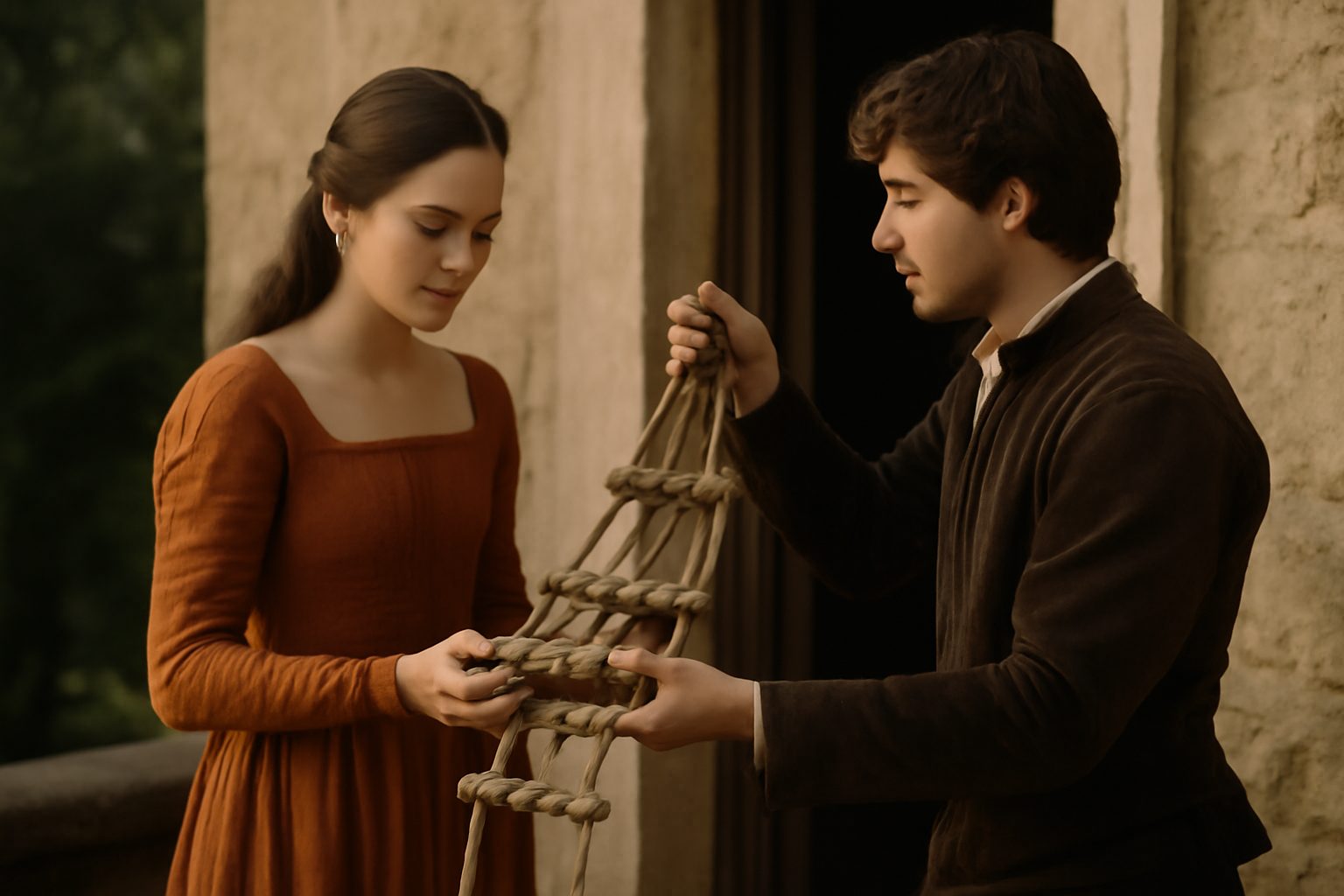
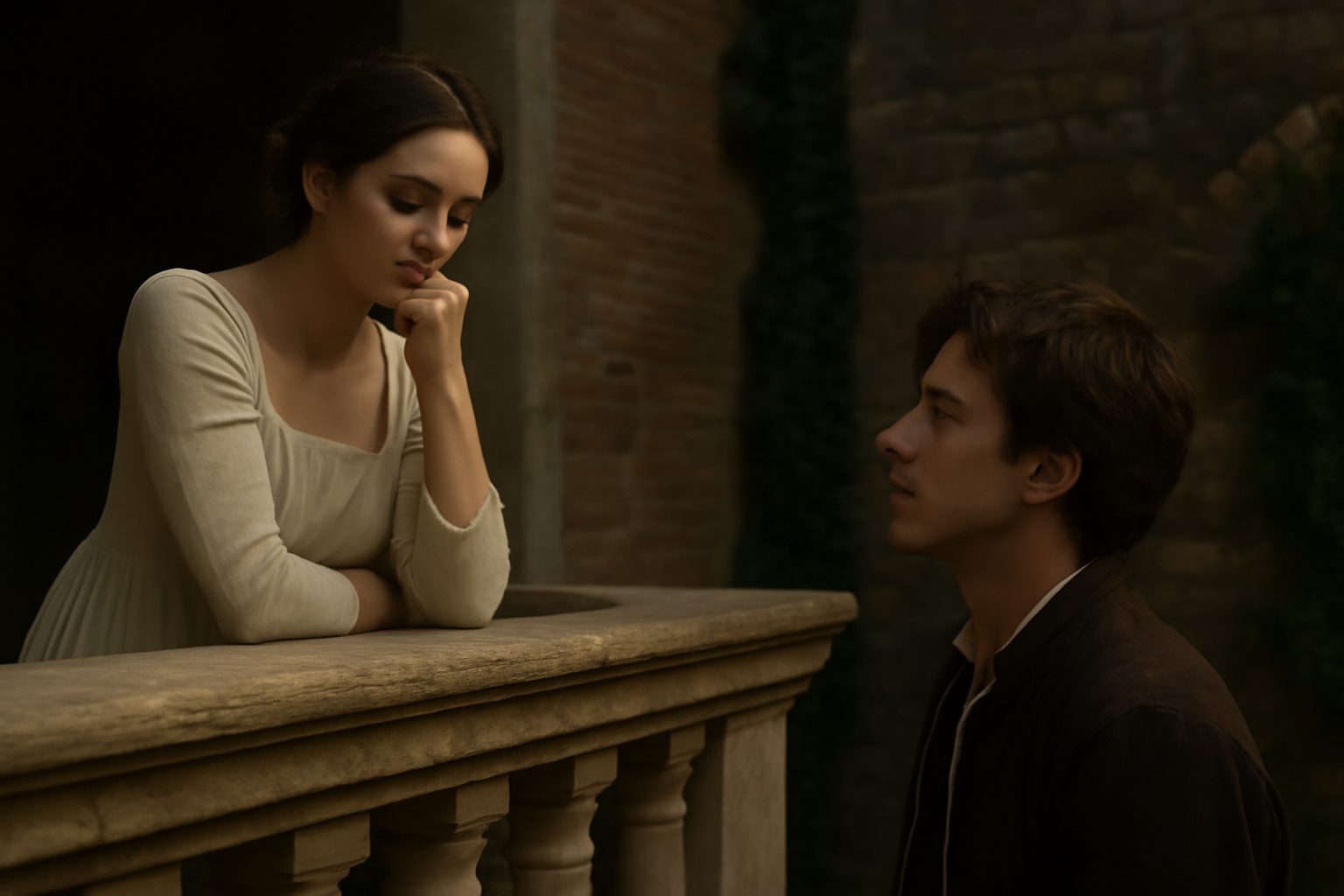
In Act 2, Scene 4 of Romeo and Juliet, Mercutio and Benvolio jest with Romeo about his newfound love for Juliet, unaware he has already married her. This line is spoken by the Nurse’s servant, Peter, who delivers a message to Romeo while being teased by the playful Mercutio. The moment highlights the lighthearted banter among the men, contrasting with the secrecy and urgency of Romeo’s romantic pursuit.
Nurse: "I will tell her, sir, that you do protest; which, as"
In modern day english, we would say:
I’ll let her know you insist, sir, which—honestly—is a bit much.
Frequently Asked Questions
What is the Nurse promising to do in this line from Romeo and Juliet?
The Nurse is promising to tell Juliet that Romeo is declaring his love for her.
Connections to other verses:
Connections to Other Verses in Act 2 Scene 4
The verse "I will tell her, sir, that you do protest; which,…" is spoken by the Nurse to Romeo, indicating her role as a messenger between the lovers. This directly relates to her earlier lines, such as when she says, "and as I told you, my young lady bade me inquire…," which underscores her function as an intermediary.
Romeo's response to the Nurse, "Nurse, commend me to thy lady and mistress. I," further emphasizes the communication chain, while his promise, "Within this hour my man shall be with thee," shows his commitment to sending a trusted servant with details, linking to the theme of secrecy and trust.
The Nurse's concern about Romeo's intentions is echoed in her question, "What wilt thou tell her, nurse? thou dost not…," highlighting her cautious nature. Romeo's reassurance, "I warrant thee, my man's as true as steel," reinforces the reliability of their plans.
Additionally, the Nurse's later exclamation, "Lord, Lord, she will be a joyful woman," ties back to the hopeful message she carries from Romeo, illustrating the emotional stakes of their clandestine communication.