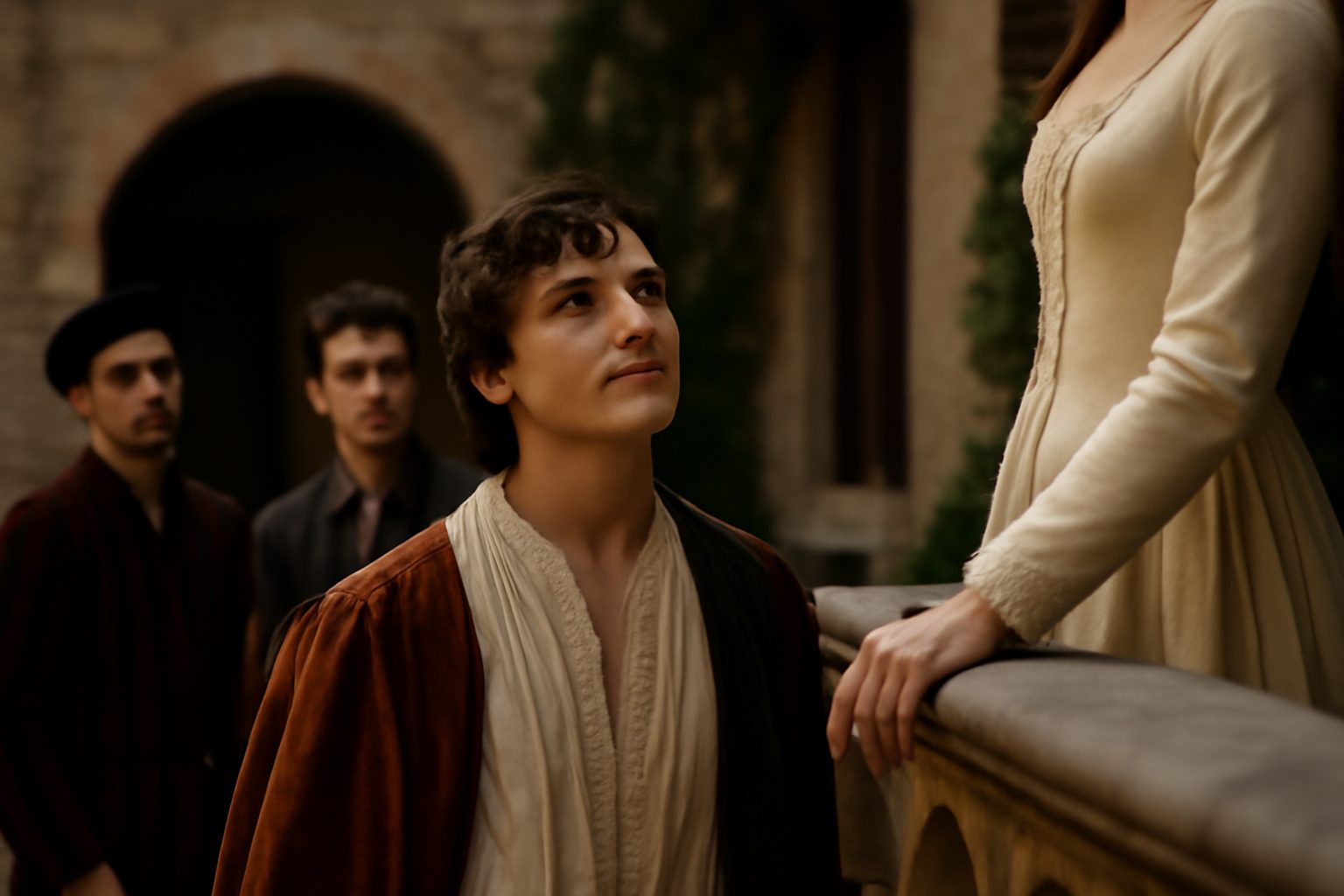
In Act 2, Scene 4 of Romeo and Juliet, Mercutio mocks Romeo's lovesick behavior with bawdy wordplay. This line, comparing Romeo to a dried herring, continues Mercutio's teasing as he suggests Romeo has been drained of vitality by love. The jest comes just before Romeo arrives, shifting the tone from humor to the play's central romantic tension.
Mercutio: "Without his roe, like a dried herring: flesh, flesh,"
In modern day english, we would say:
He looks weak and lifeless, like a dried-up fish—just skin and bones.
Frequently Asked Questions
What does Mercutio compare Romeo to in this line?
Mercutio compares Romeo to a dried herring, saying he is empty and lifeless without his love.
Connections to other verses:
Connections to "Without his roe, like a dried herring: flesh,…"
This verse, spoken by Mercutio, humorously describes Romeo's lovesick state by comparing him to a "dried herring"—a fish that has lost its vitality and substance. This imagery connects to several other lines in the scene that similarly mock Romeo's transformation or employ witty, food-related metaphors.
Related Verses on Romeo's Transformation
- "now art thou sociable, now art thou Romeo; now art" highlights the contrast between Romeo's former self and his current lovesick demeanor, much like the "dried herring" comment emphasizes his depletion.
- "how art thou fishified! Now is he for the numbers" directly echoes the fish metaphor, reinforcing Mercutio's jest about Romeo's changed nature.
- "Alas poor Romeo! he is already dead; stabbed with…" extends the theme of Romeo's "dried" state by hyperbolically declaring him "dead" from love, aligning with the idea of loss and emptiness.
Food and Animal Metaphors
- "No hare, sir; unless a hare, sir, in a lenten pie," continues the theme of depleted or meager sustenance, similar to the "dried herring" imagery.
- "And is it not well served in to a sweet goose?" employs food-related humor, though in a different context, showing the scene's consistent use of culinary metaphors for jest.
- "done, for thou hast more of the wild-goose in one…" uses animal imagery to mock wit or behavior, paralleling the playful degradation in the "dried herring" line.
Wit and Wordplay
- "O here's a wit of cheveril, that stretches from an" comments on elastic wit, contrasting with Romeo's depleted state but showing the scene's focus on clever language.
- "O single-soled jest, solely singular for the" highlights the scene's wordplay and jesting tone, which frames the "dried herring" remark as part of Mercutio's verbal antics.