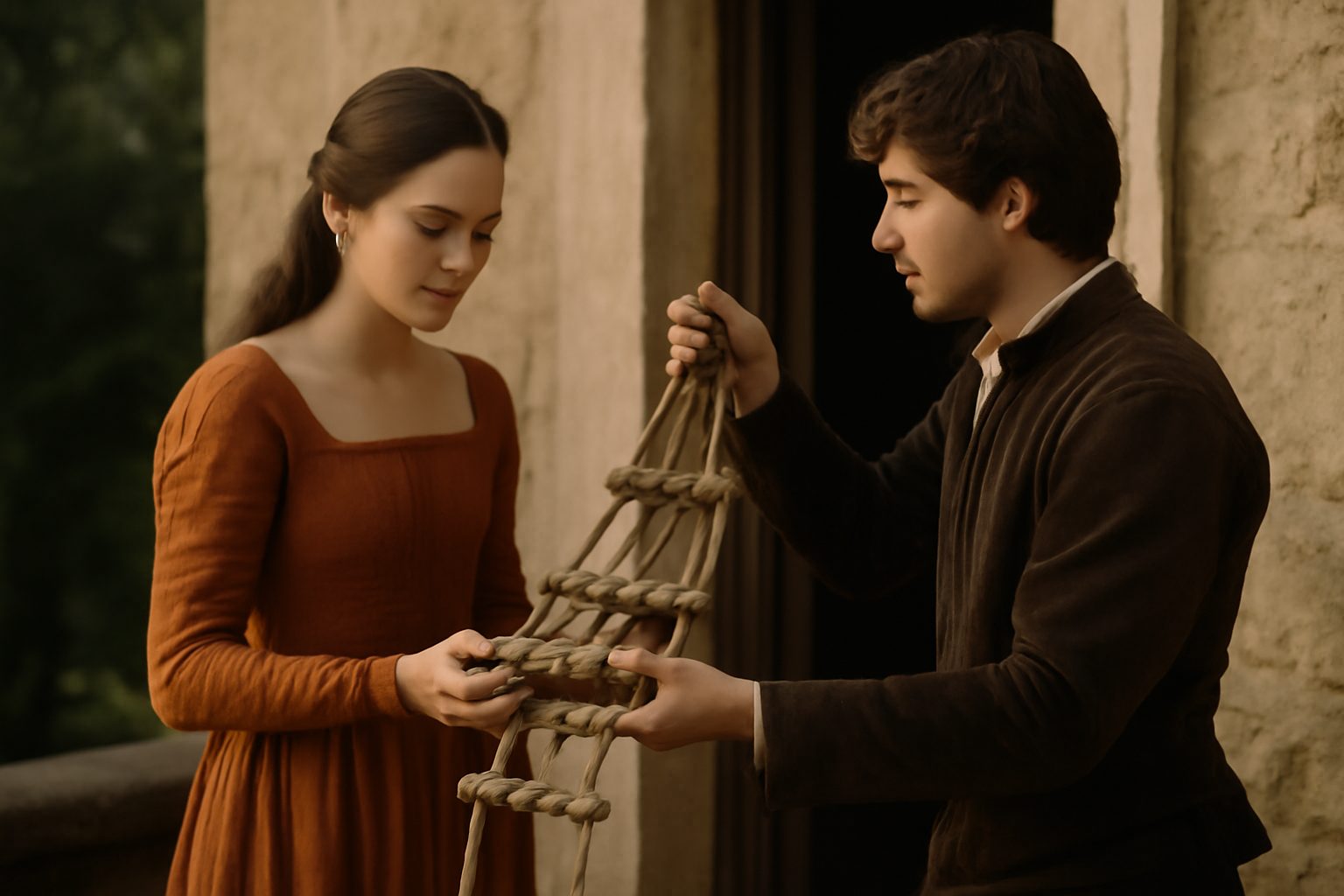
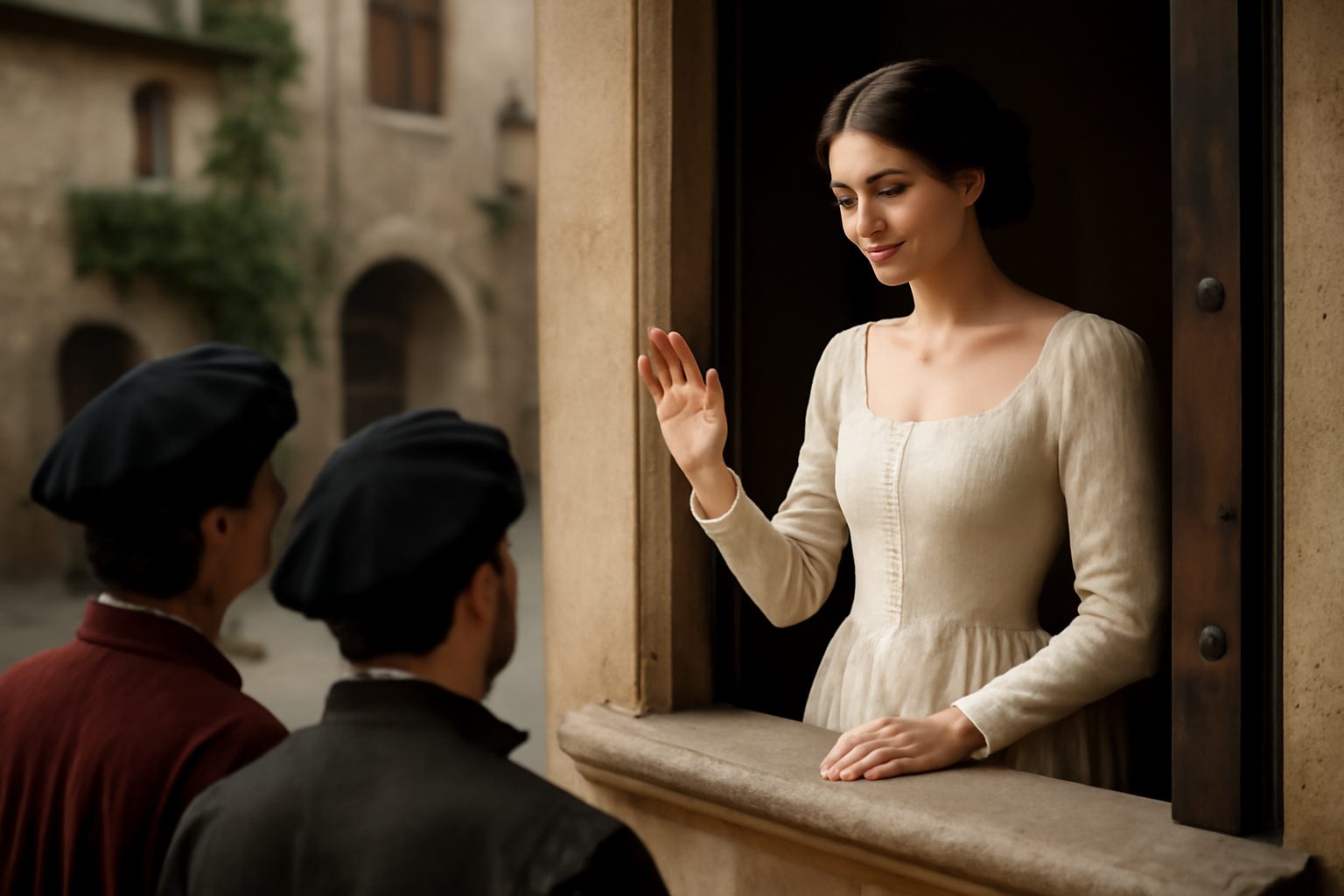
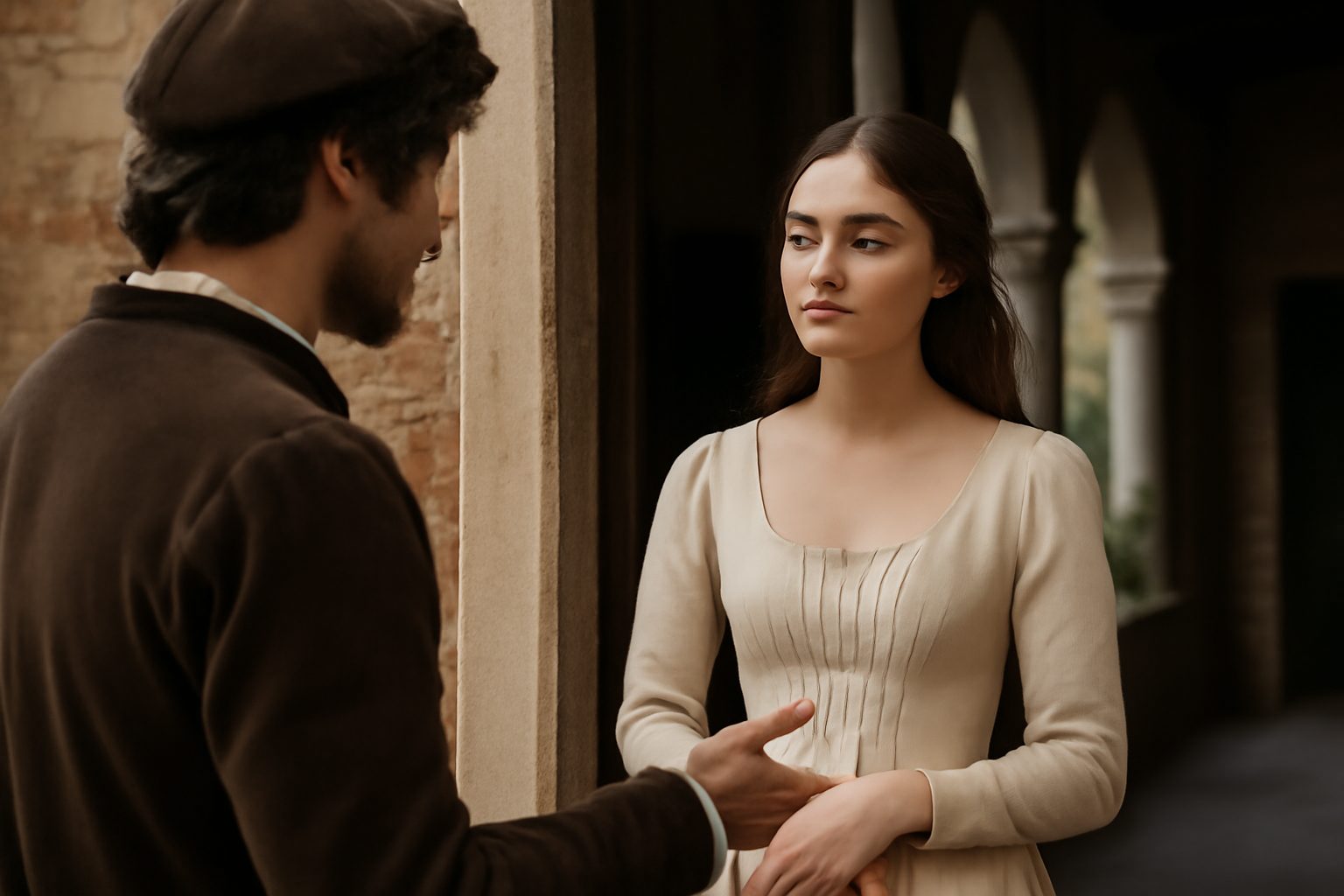
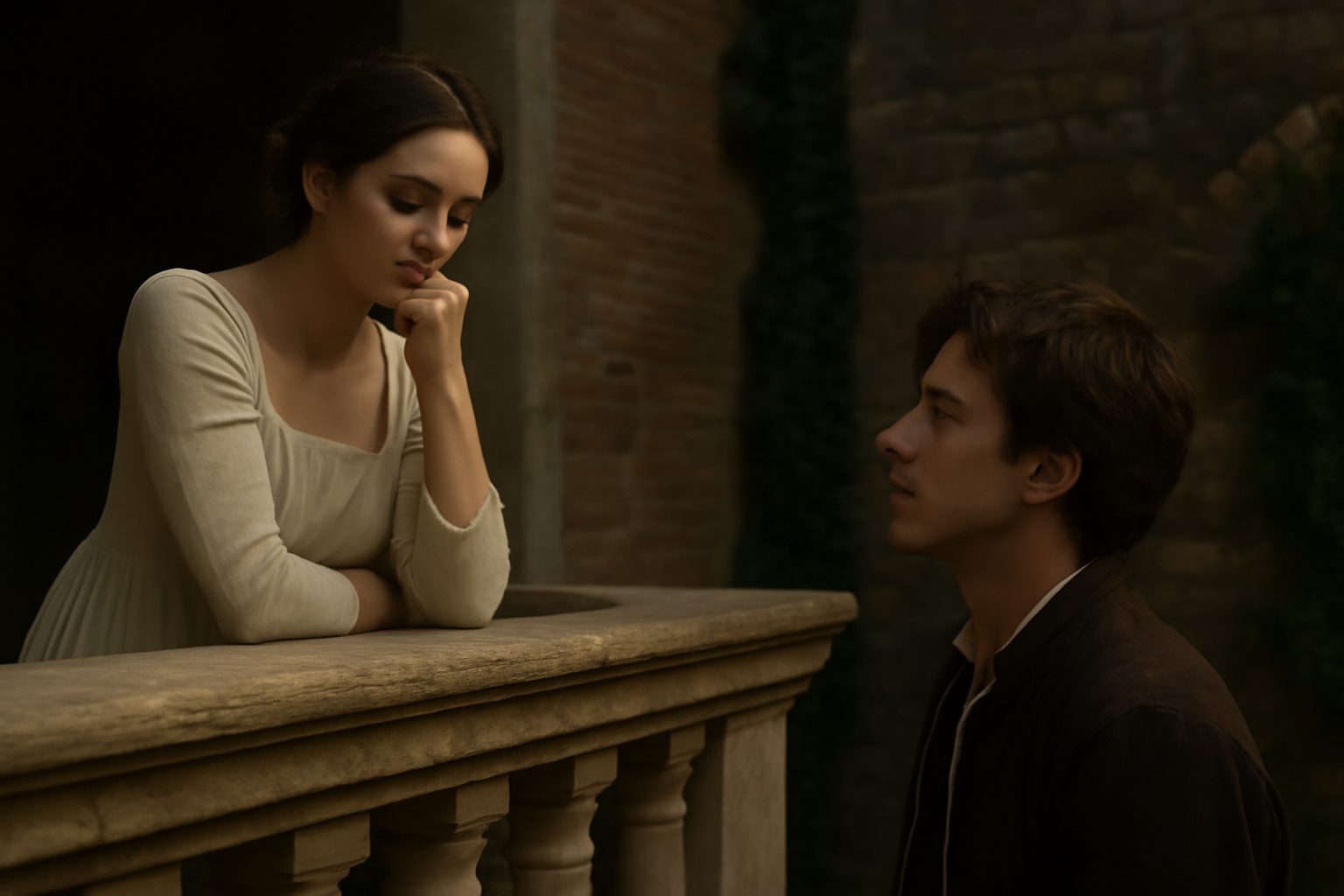
In Act 2, Scene 4 of Romeo and Juliet, Mercutio and Benvolio jest with Romeo about his sudden disappearance the night before. Mercutio, ever the wit, mocks Romeo's romantic tendencies by sarcastically comparing his love to that of a lowly kitchen servant, suggesting even she had more dignity in her affections. This playful jab highlights Mercutio's skepticism toward love and sets up Romeo's defensive response about his newfound passion for Juliet.
Mercutio: "kitchen-wench; marry, she had a better love to"
In modern day english, we would say:
That kitchen maid—come on, she had a better lover to warm her bed.
Frequently Asked Questions
What is Mercutio teasing Romeo about in this line?
Mercutio is teasing Romeo about his past love for Rosaline, suggesting she was not serious about him.
Connections to other verses:
Connections to "kitchen-wench; marry, she had a better love to"
The verse "kitchen-wench; marry, she had a better love to" is part of Mercutio's mocking commentary on Romeo's infatuation with Rosaline, whom he dismisses as unworthy. This line connects thematically and contextually to several other verses in the scene:
Mockery of Rosaline and Petrarchan Love
Mercutio's derisive tone continues in "that Petrarch flowed in: Laura to his lady was...", where he compares Romeo's lovelorn state to Petrarch's idealized, unattainable love for Laura, further emphasizing the absurdity of Romeo's earlier affections.
Similarly, "be-rhyme her; Dido a dowdy; Cleopatra a gipsy;" extends the mockery by listing historical and mythological figures reduced to unflattering comparisons, aligning with the kitchen-wench insult in degrading Rosaline's status.
Contrast with Juliet
The dismissive attitude toward Rosaline starkly contrasts with the Nurse's praise of Juliet in "Well, sir; my mistress is the sweetest lady--Lord,", highlighting the shift in Romeo's devotion from a "kitchen-wench" to a revered figure.
Wordplay and Insults
Mercutio's wit and playful insults are echoed in "whore!' Why, is not this a lamentable thing,", where the bawdy humor and irreverent tone mirror the kitchen-wench jest, contributing to the scene's lively, teasing atmosphere.
Transformation of Romeo
The mockery of Rosaline underscores Romeo's transformation, as noted in "now art thou sociable, now art thou Romeo; now art", where Mercutio celebrates Romeo's return to his former, witty self, free from lovesick melancholy over a "kitchen-wench."