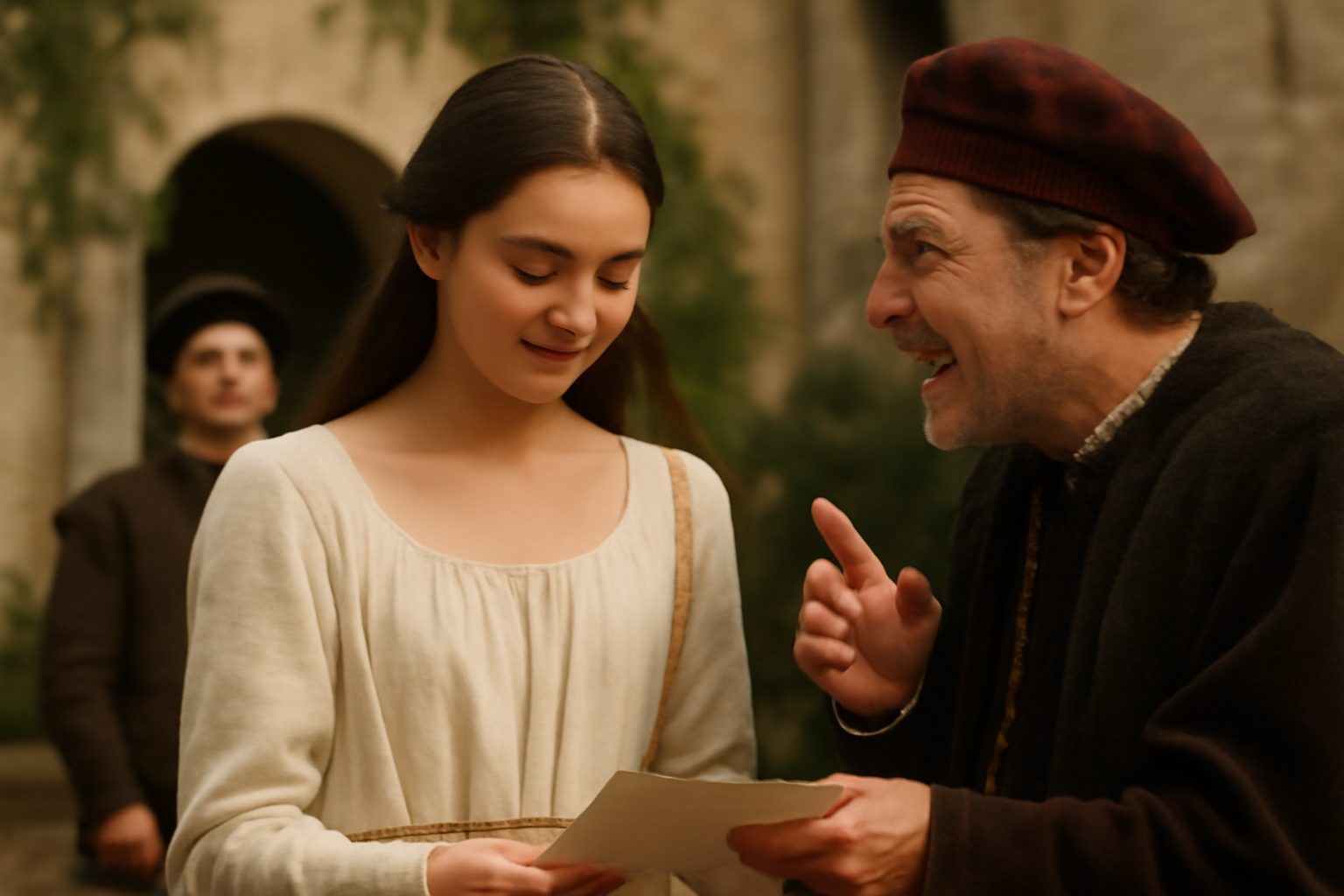
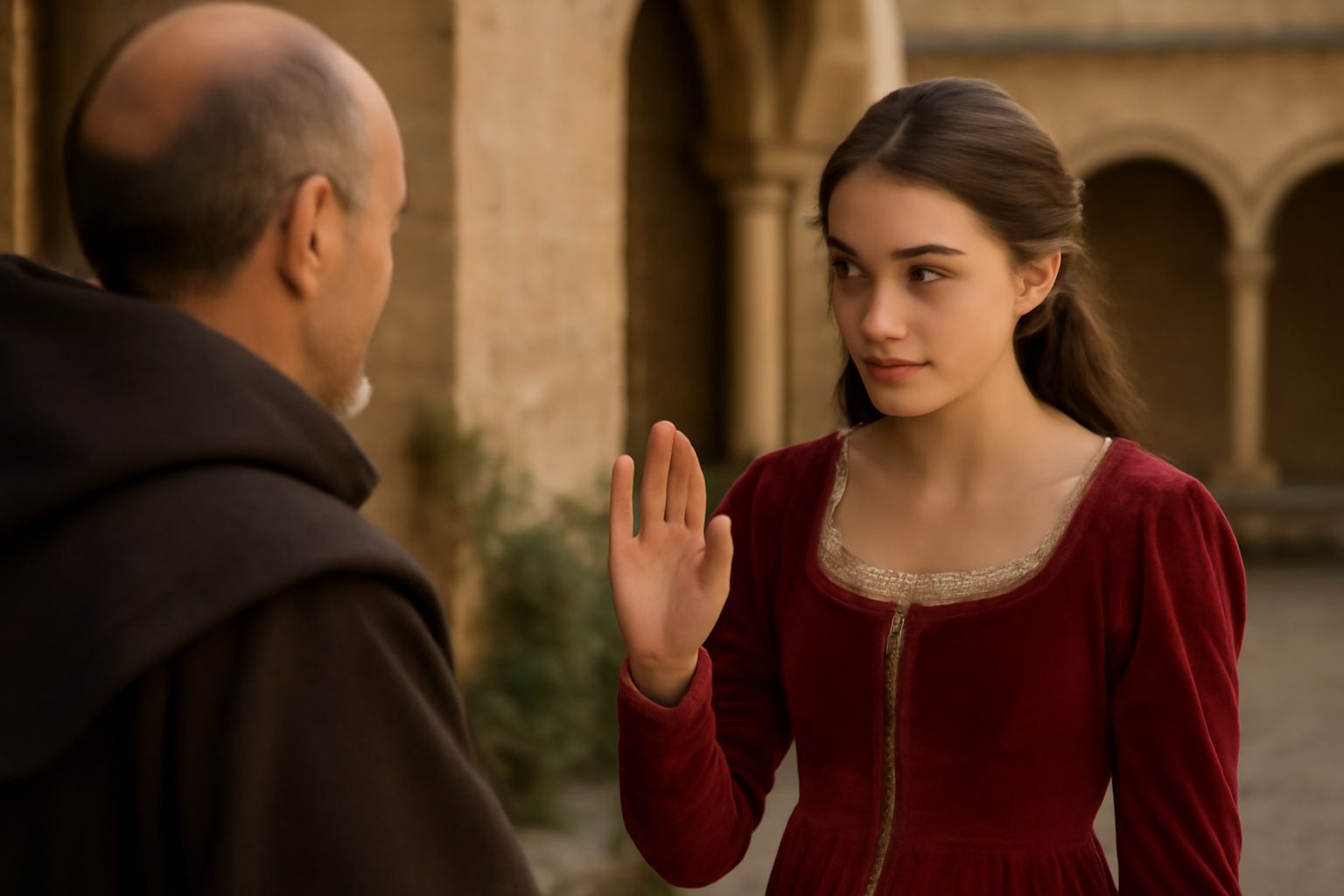
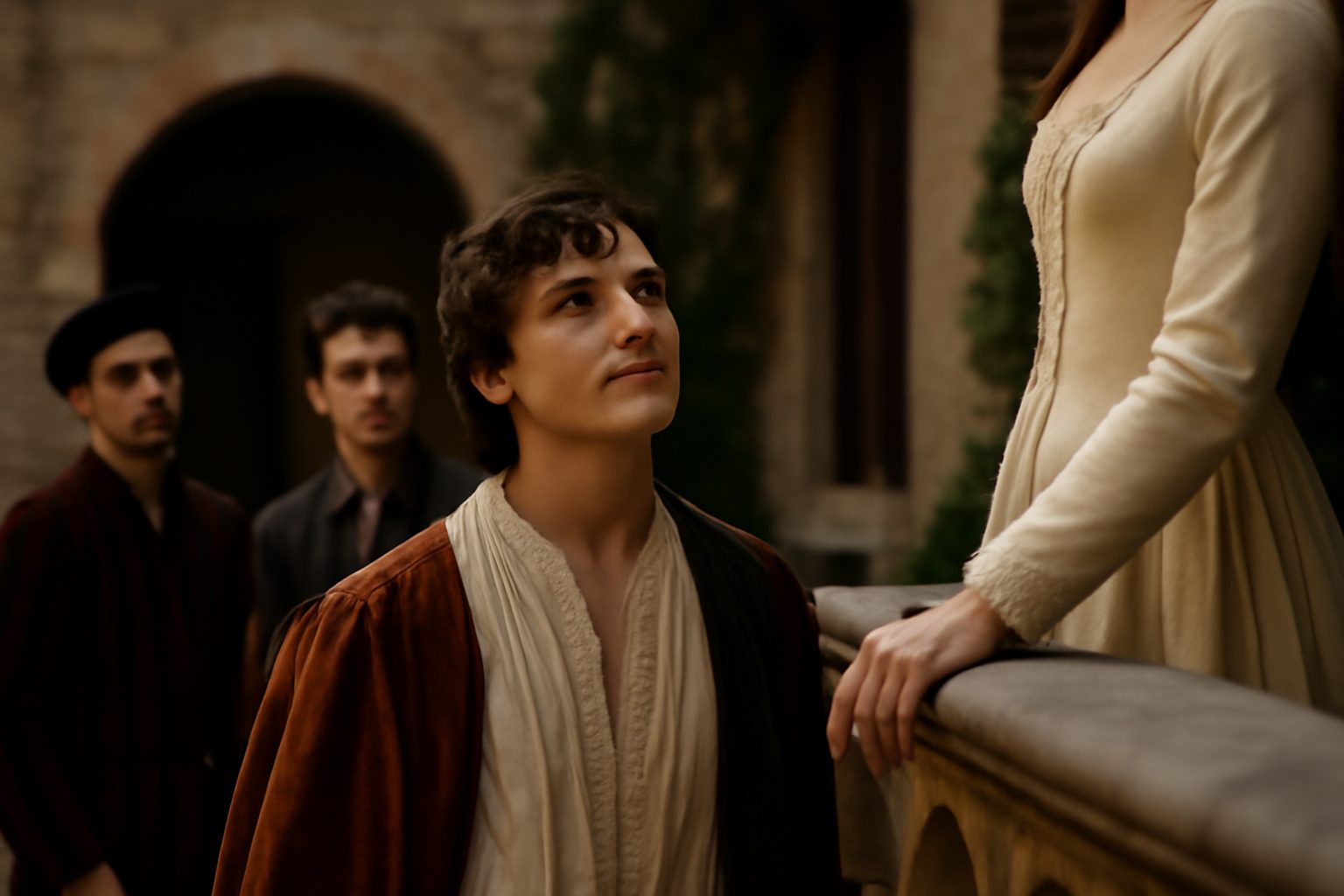
In Act 2, Scene 4 of Romeo and Juliet, Mercutio and Benvolio jest about Romeo's absence after his secret meeting with Juliet. Mercutio, ever the quick-witted jester, mocks Romeo's infatuation with a playful remark about how time will age him. This line reflects Mercutio's teasing nature and the lighthearted banter among friends before the play's darker turns unfold.
Romeo: "I can tell you; but young Romeo will be older when"
In modern day english, we would say:
I can explain, but Romeo won’t be young by the time I finish.
Frequently Asked Questions
What does Romeo mean when he says he will be older when he tells something?
Romeo is joking that by the time he explains, he will have grown older, meaning it will take a long time to tell.
Connections to other verses:
Connections to "I can tell you; but young Romeo will be older when"
This line, spoken by Mercutio, is part of a witty exchange about Romeo's whereabouts and his transformation due to love. It connects thematically and contextually with several other verses in the scene.
Related to Romeo's Transformation and Wit
The verse now art thou sociable, now art thou Romeo; now art highlights Romeo's changed demeanor, echoing the idea of growth or change mentioned in your verse. Similarly, you have found him than he was when you sought… reinforces the notion of Romeo's evolution, tying back to Mercutio's jest about Romeo maturing.
Links to Mercutio's Teasing and Wordplay
Mercutio's playful tone is consistent in how art thou fishified! Now is he for the numbers, where he mocks Romeo's lovesick state. The banter continues in I will bite thee by the ear for that jest, showcasing the light-hearted, jesting atmosphere of their conversation.
Connection to the Nurse's Inquiry
The Nurse's search for Romeo, as seen in may find the young Romeo?, directly prompts Mercutio's response in your verse, creating a narrative link. Additionally, quoth a'? Gentlemen, can any of you tell me where… sets up the context for Mercutio's reply, emphasizing the playful evasion of giving a straight answer.
Reflection on Romeo's Age and State
The idea of Romeo's youth and potential growth is subtly contrasted with Alas poor Romeo! he is already dead; stabbed with…, where Mercutio hyperbolically claims Romeo is "dead" from love, adding layers to the jest about his maturity.