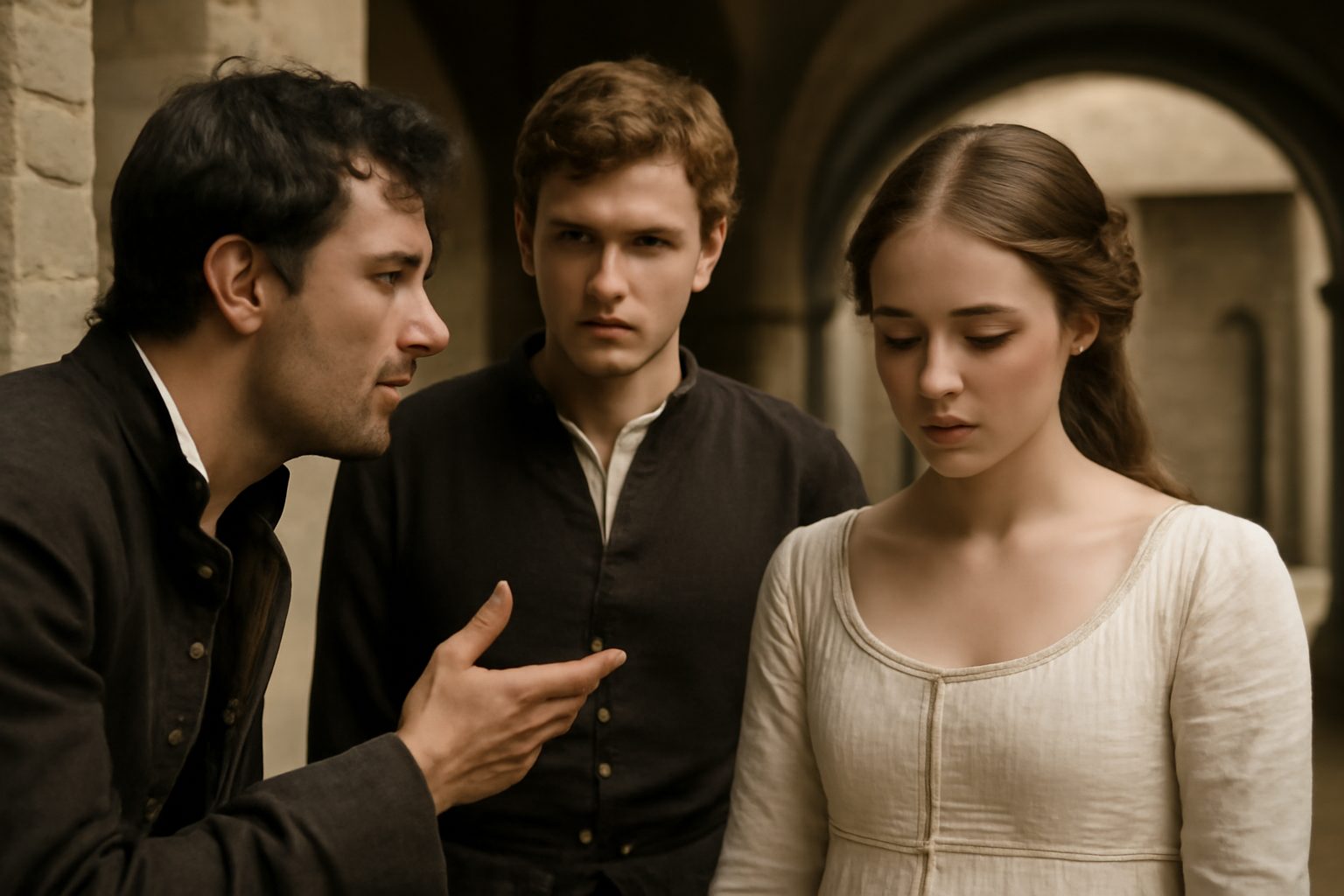
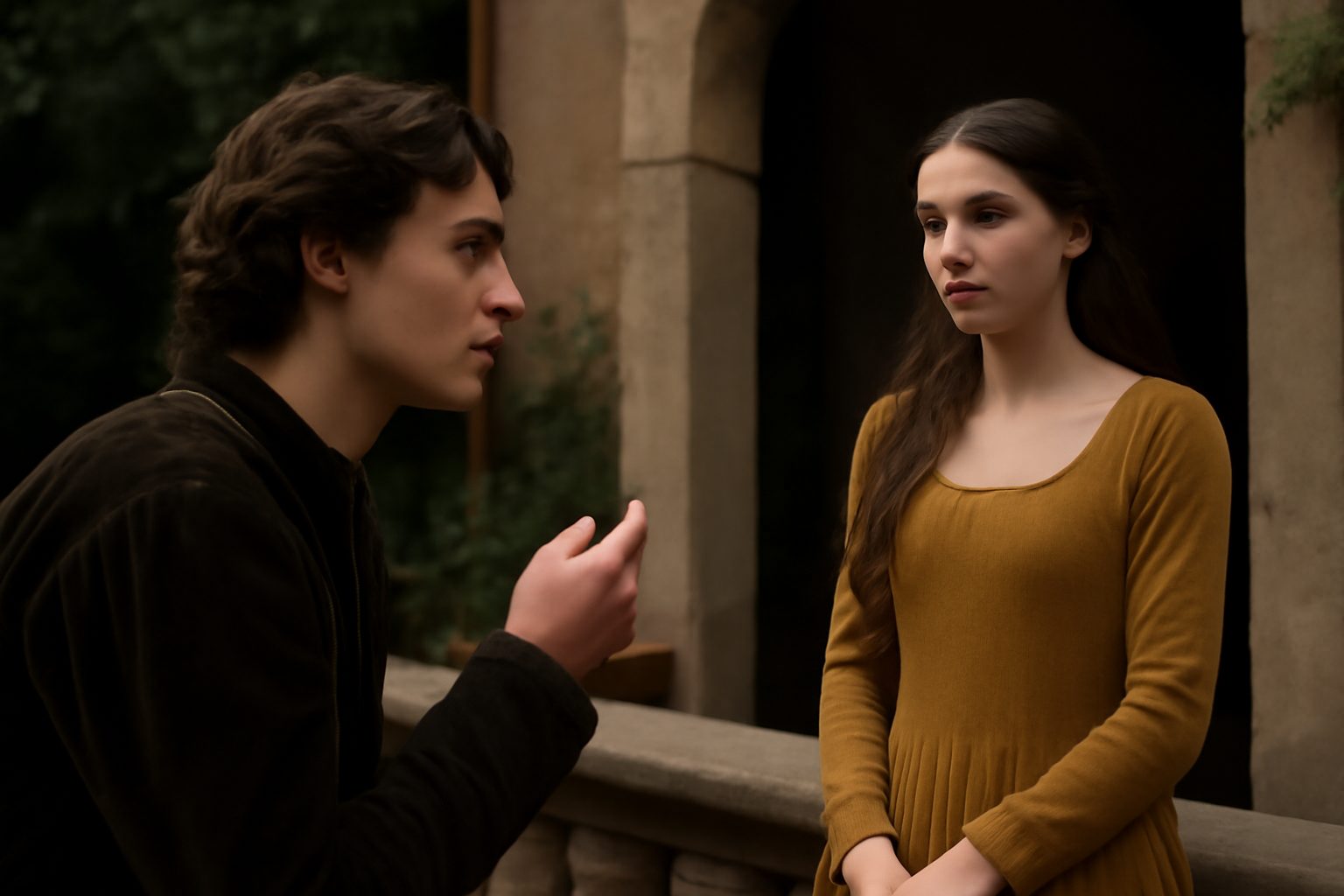
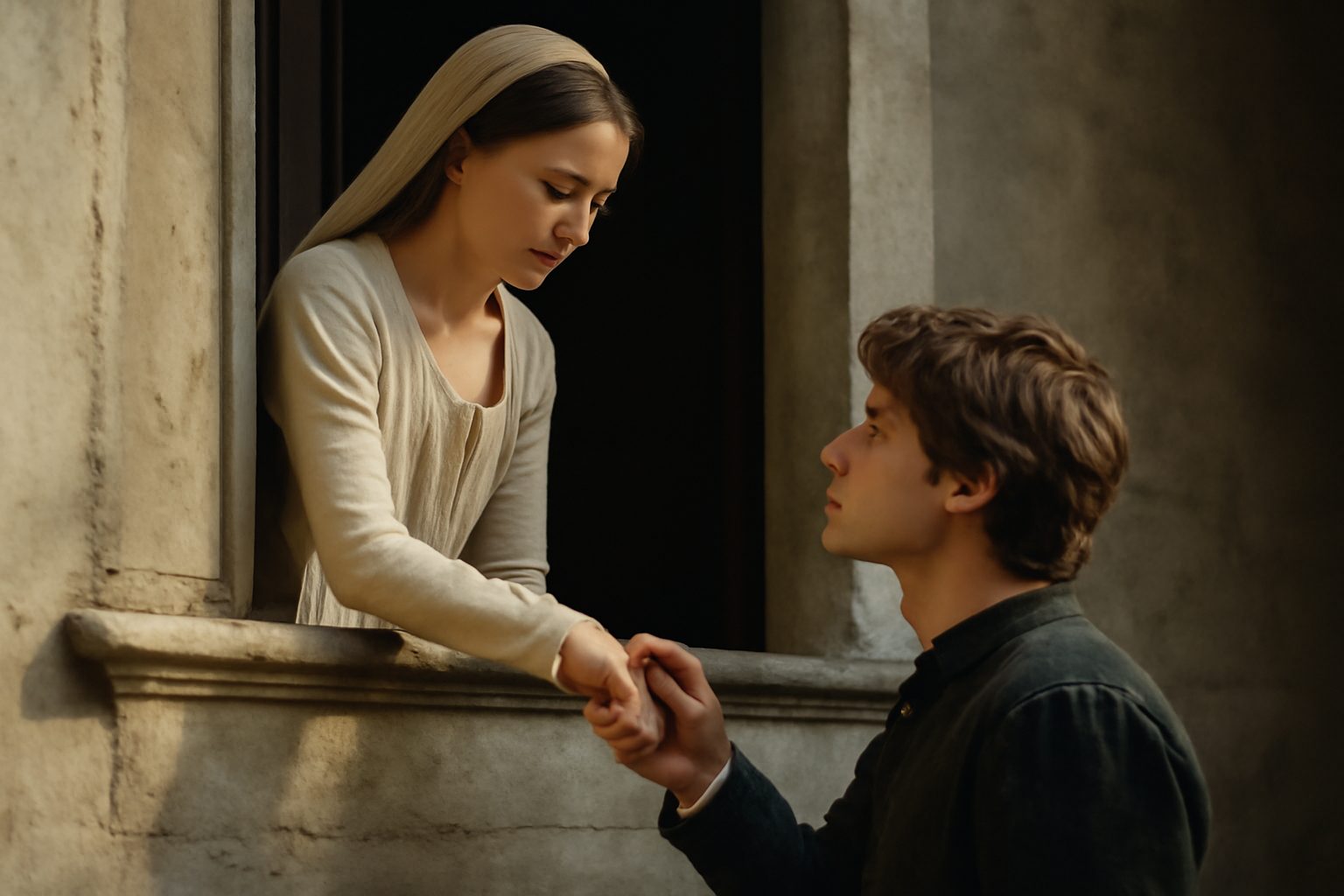
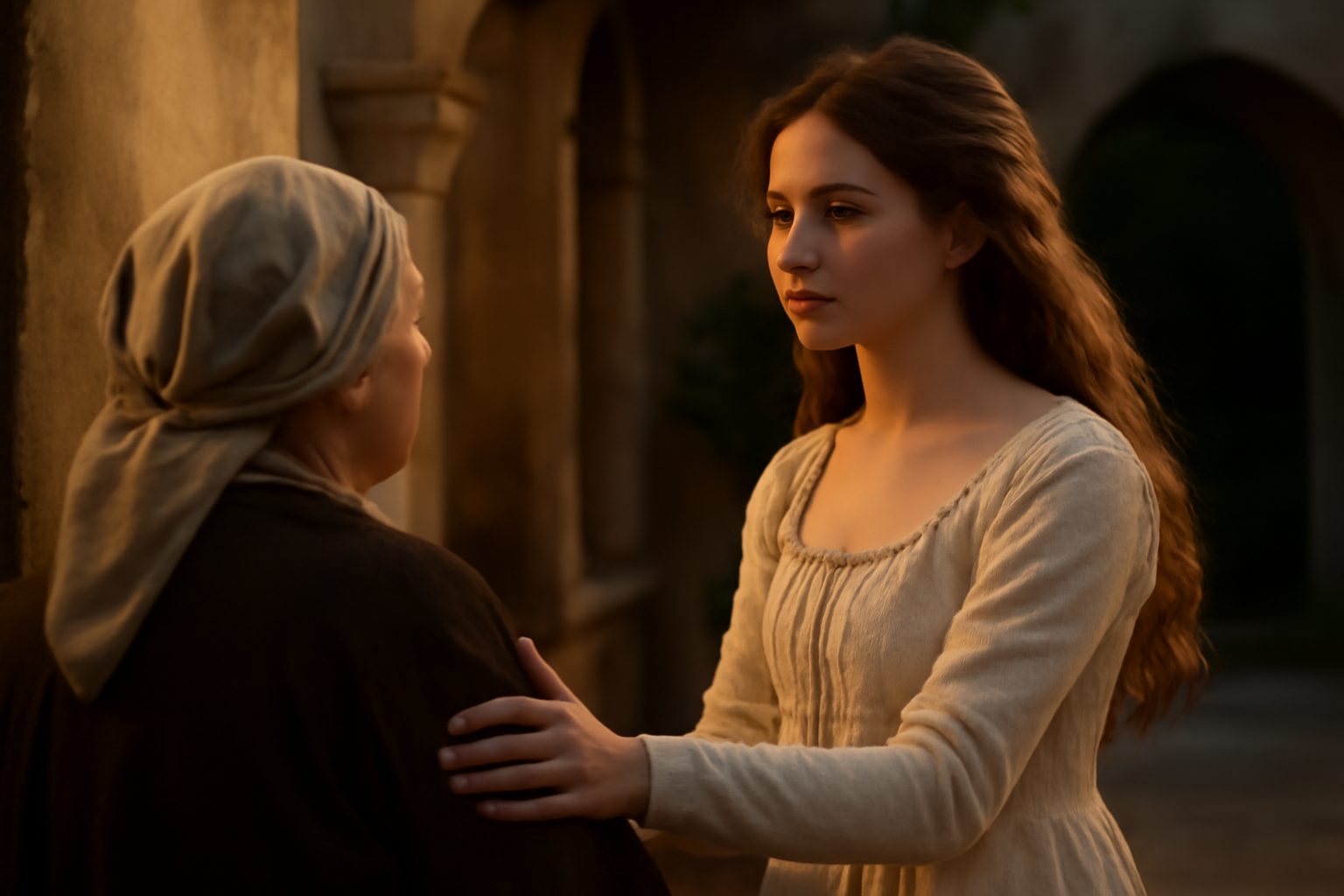
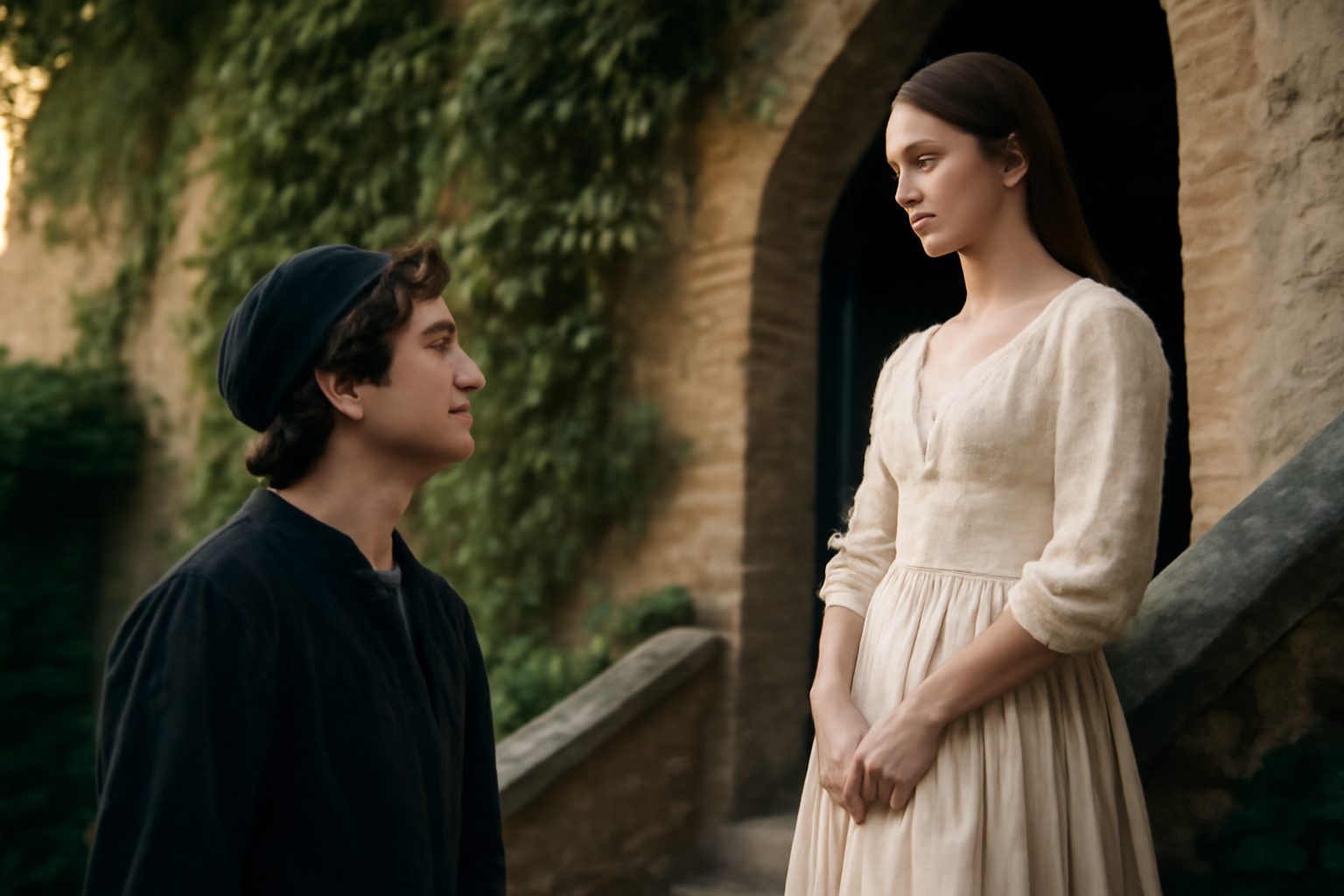
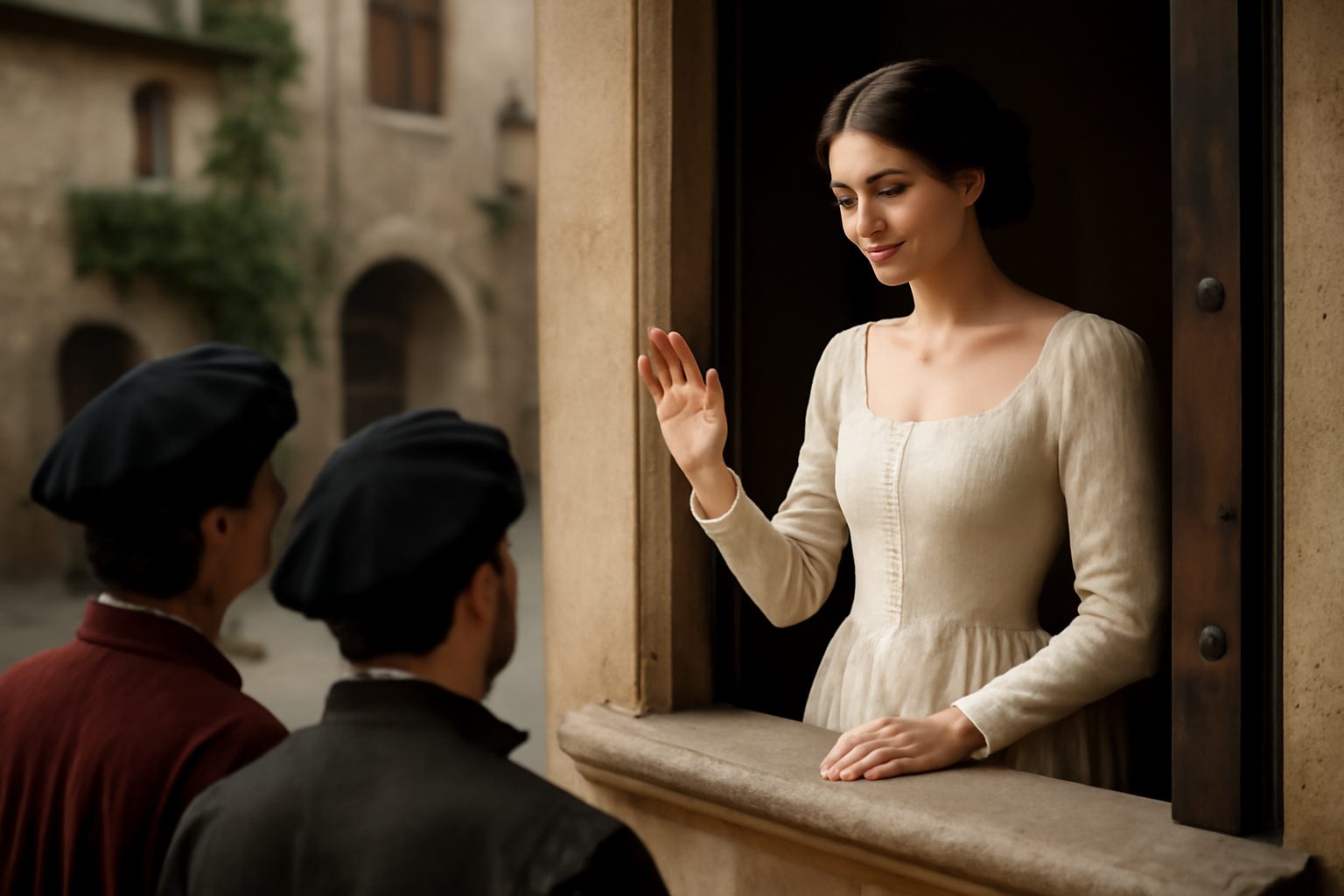
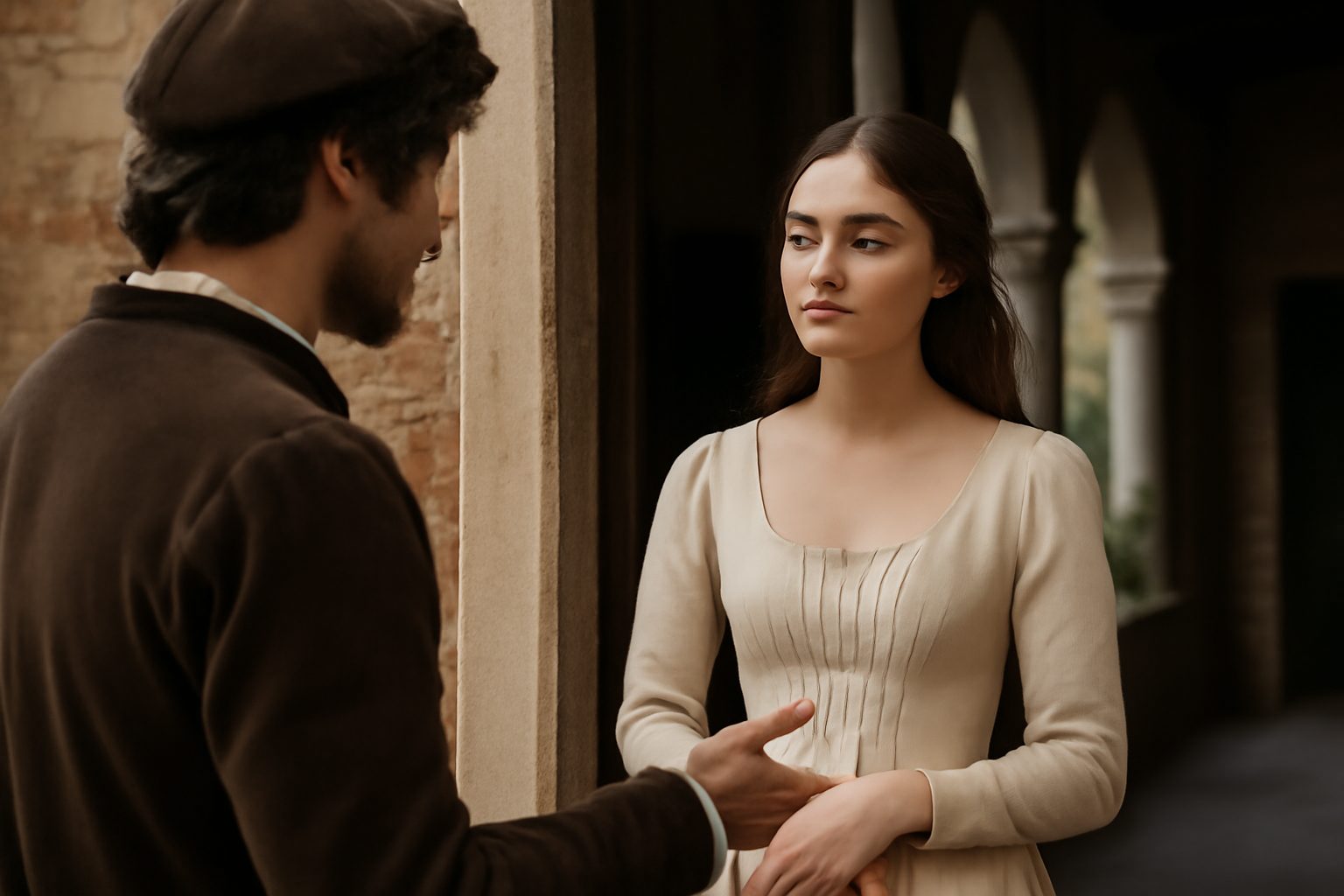
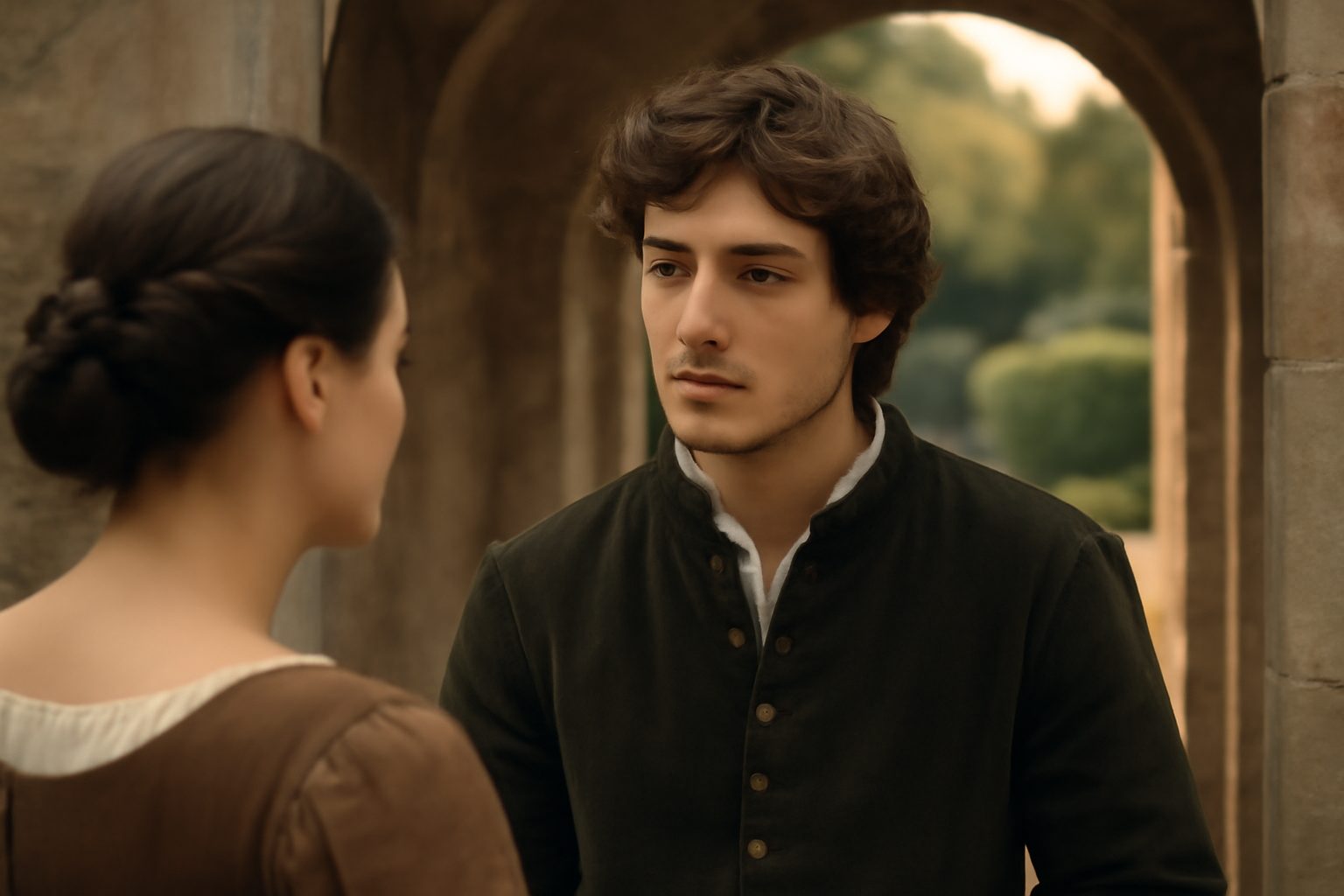
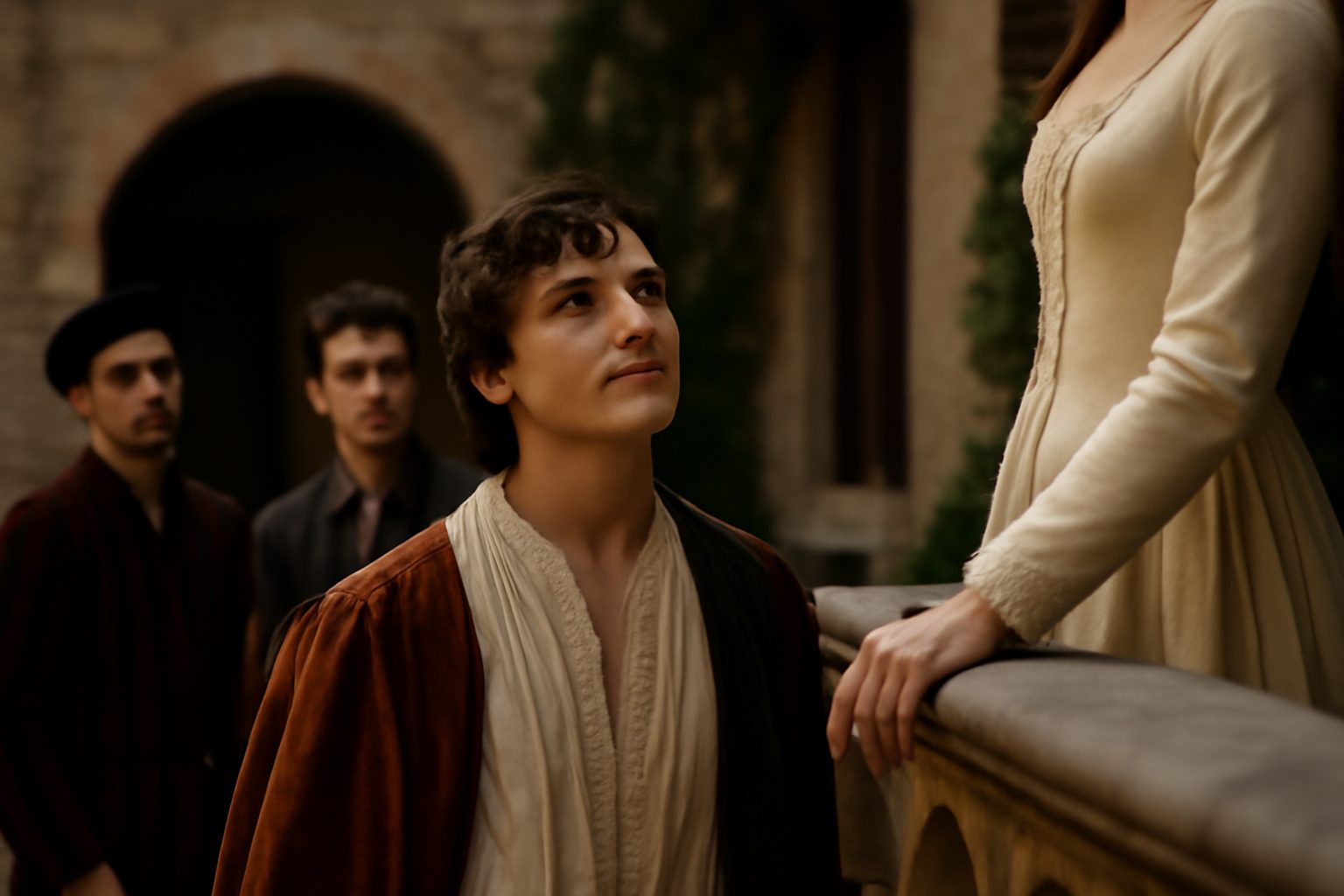
In Act 2, Scene 4 of Romeo and Juliet, Mercutio and Benvolio are relieved to see Romeo in high spirits after his melancholy over Rosaline. Romeo, now secretly in love with Juliet, uses nautical imagery to describe the soaring heights of his newfound happiness. This line captures his exuberance as he playfully engages with his friends, though he keeps the true reason for his joy hidden.
Romeo: "Which to the high top-gallant of my joy"
In modern day english, we would say:
This line expresses Romeo saying that his happiness has reached its highest peak, like a ship’s topmost sail filled with wind.
Frequently Asked Questions
What does Romeo compare his joy to in this line?
Romeo compares his joy to the highest part of a ship's mast, called the top-gallant.
Connections to other verses:
Connections to "Which to the high top-gallant of my joy"
The verse "Which to the high top-gallant of my joy" from Romeo & Juliet Act 2 Scene 4 reflects Romeo's soaring happiness after his secret meeting with Juliet. It connects thematically and structurally to several other verses in the same scene:
Connection to Joy and Fulfillment
Romeo's expression of joy is echoed in Lord, Lord, she will be a joyful woman, where the Nurse anticipates Juliet's happiness upon hearing Romeo's plans. Both verses highlight the emotional high point of the scene.
Connection to Secrecy and Plans
The line is part of Romeo's instructions to the Nurse about the marriage arrangements, linking it to Some means to come to shrift this afternoon and And there she shall at Friar Laurence' cell, which detail the practical steps toward their union.
Connection to Imagery and Metaphor
The nautical metaphor "top-gallant" (the highest sail on a ship) is unique in this scene but fits with the playful, exaggerated language used by characters like Mercutio, such as in A sail, a sail!, which also employs maritime imagery in a jesting context.
Connection to Resolution and Commitment
Romeo's unwavering commitment in this verse contrasts with earlier doubts and wordplay in the scene, such as a fool's paradise, where Mercutio mocks idealistic love, underscoring Romeo's transition from melancholy to purposeful action.