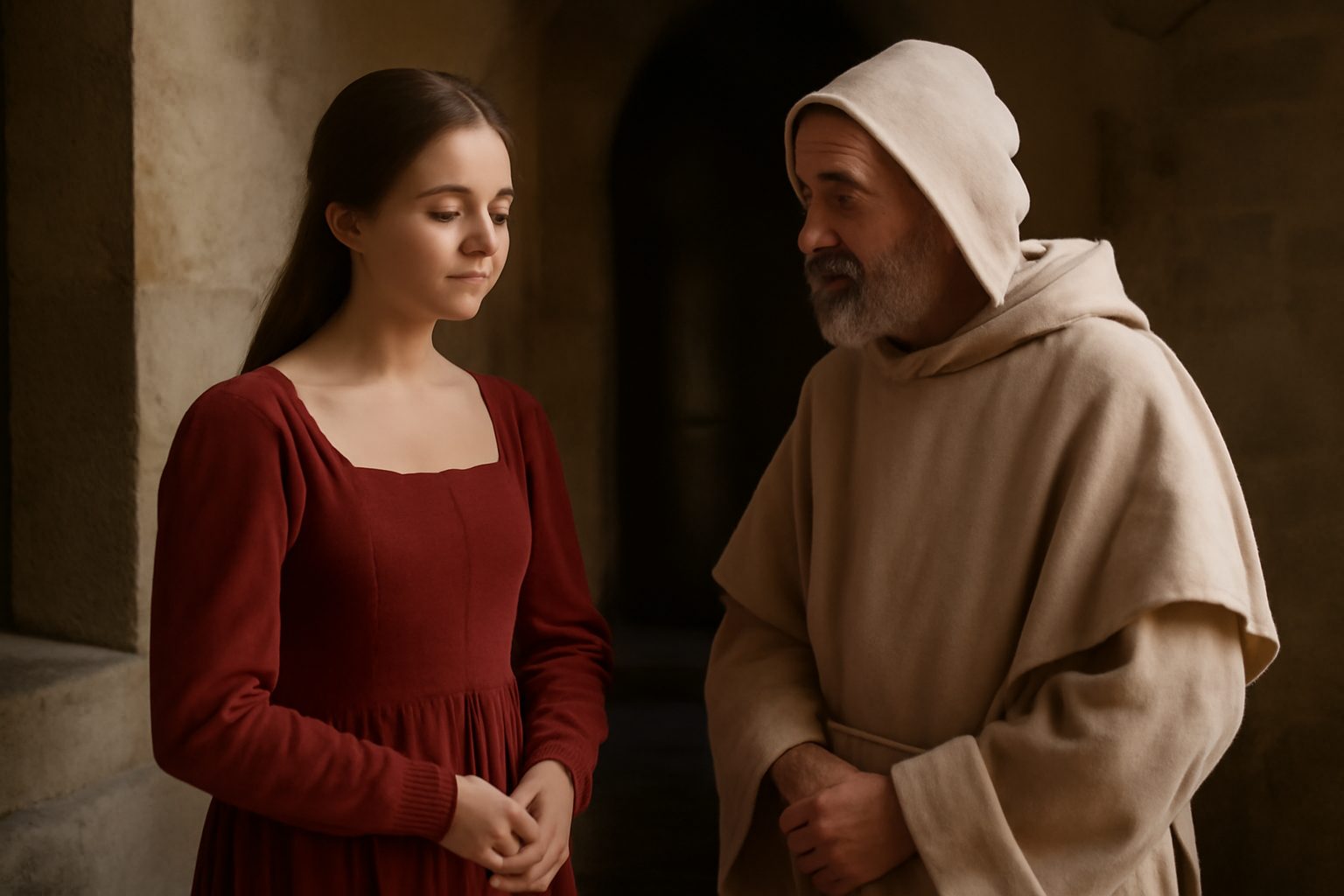
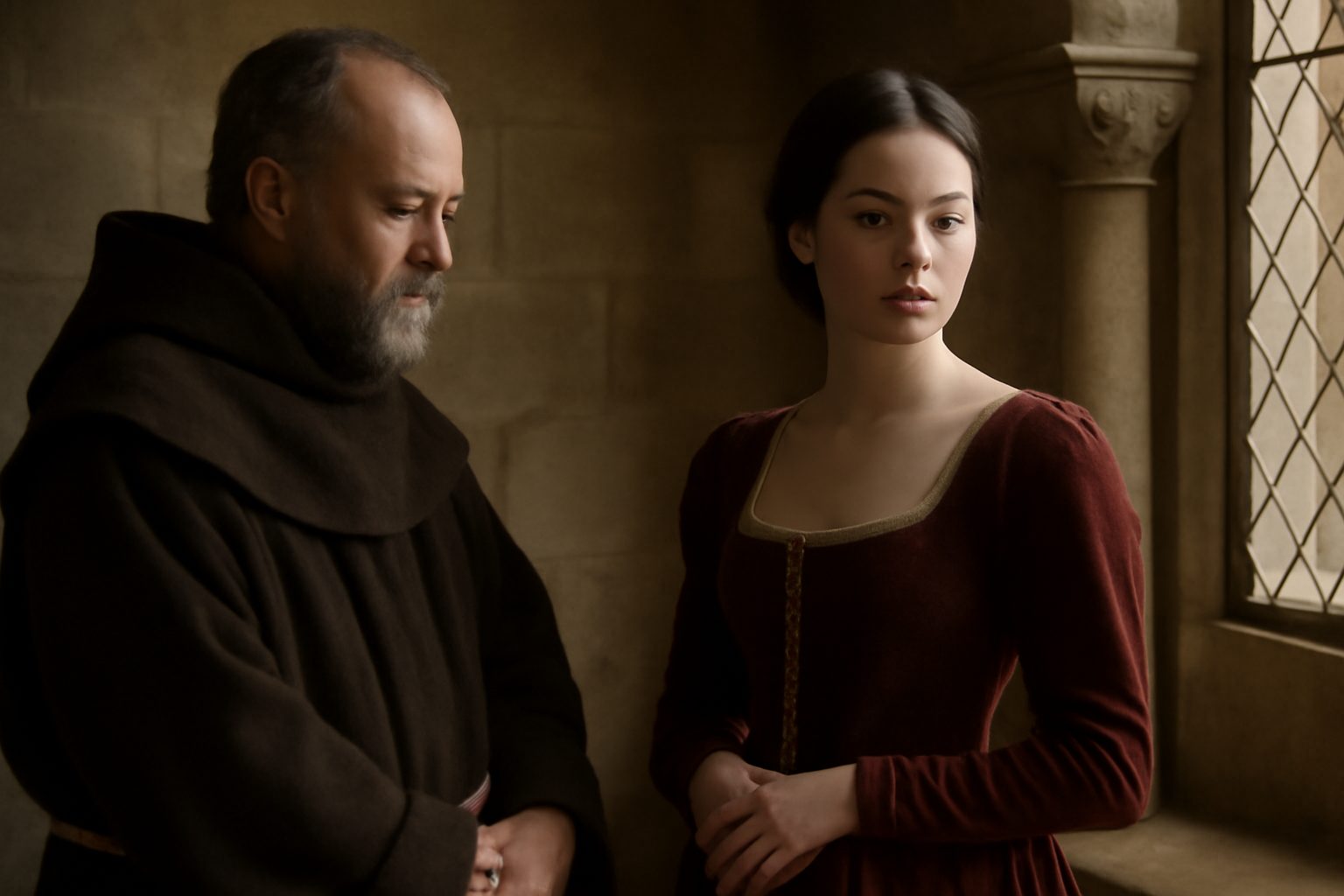
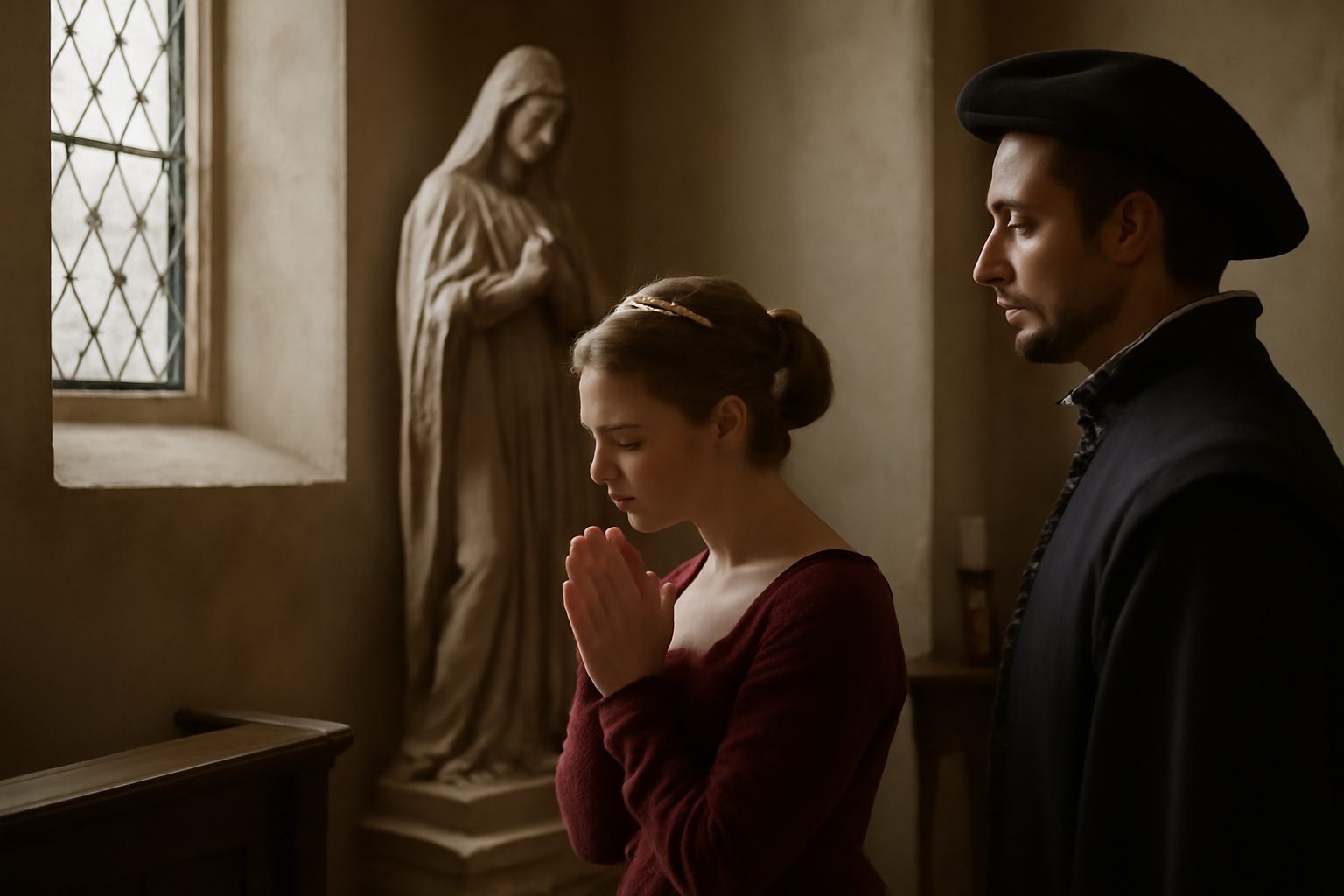
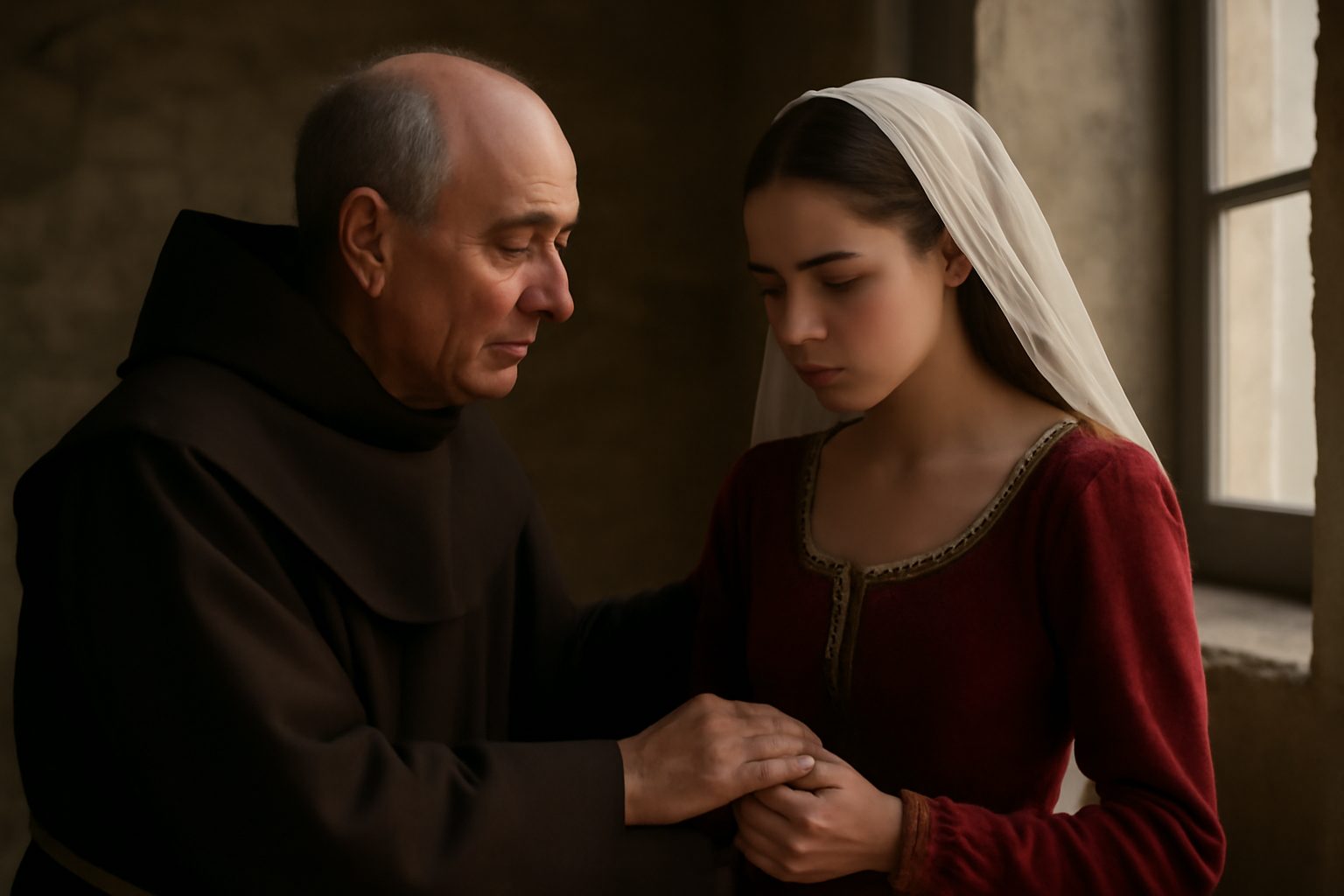
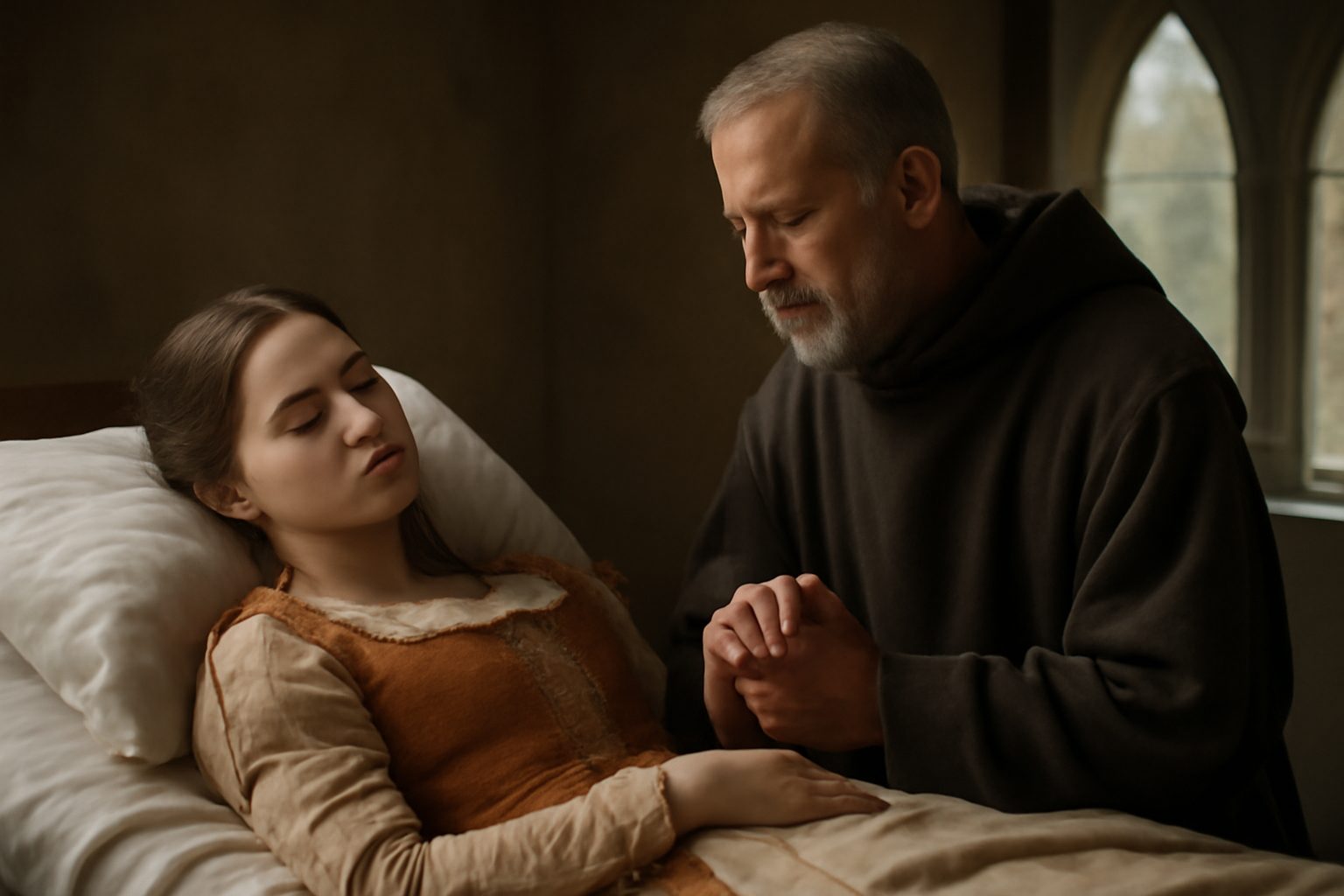
In Act 4, Scene 1 of Romeo and Juliet, Juliet speaks these words to Friar Laurence in desperation after learning she must marry Paris. She expresses her unwavering loyalty to Romeo, declaring that her heart would never betray him, even if forced into another union. This moment highlights her resolve and the extreme measures she is willing to take to avoid breaking her vows.
Juliet: "Or my true heart with treacherous revolt"
In modern day english, we would say:
Or my loyal heart betrays me by turning against what I truly believe.
Frequently Asked Questions
What does Juliet mean when she says her heart might revolt?
Juliet is worried that her heart might betray her by turning against her true feelings.
Connections to other verses:
Connections to "Or my true heart with treacherous revolt"
The verse Or my true heart with treacherous revolt reflects Juliet's internal conflict and unwavering loyalty to Romeo. It connects thematically and emotionally to several other lines in this scene.
Loyalty and Commitment
Juliet's declaration of fidelity is echoed in God join'd my heart and Romeo's, thou our hands, where she emphasizes the sacred nature of their union. Similarly, her resolve to remain true is starkly contrasted with her desperation in And with this knife I'll help it presently, showing she would rather die than betray Romeo.
Desperation and Extreme Measures
The fear of her heart "revolting" ties into her willingness to embrace death-like states, as seen in O, bid me leap, rather than marry Paris and Or bid me go into a new-made grave. These lines collectively illustrate her preference for any horror over disloyalty.
Foreshadowing and Irony
Friar Laurence's plan, detailed in verses like And this distilled liquor drink thou off and And in this borrow'd likeness of shrunk death, creates a tragic irony: Juliet's heart does not revolt, but the scheme leads to misunderstandings that doom both lovers.
Resolution and Courage
Her steadfastness is reinforced by And I will do it without fear or doubt, showcasing her courage. The friar's acknowledgment of her resolve in Thou hast the strength of will to slay thyself further highlights that her heart's loyalty is unshakeable, even in the face of death.