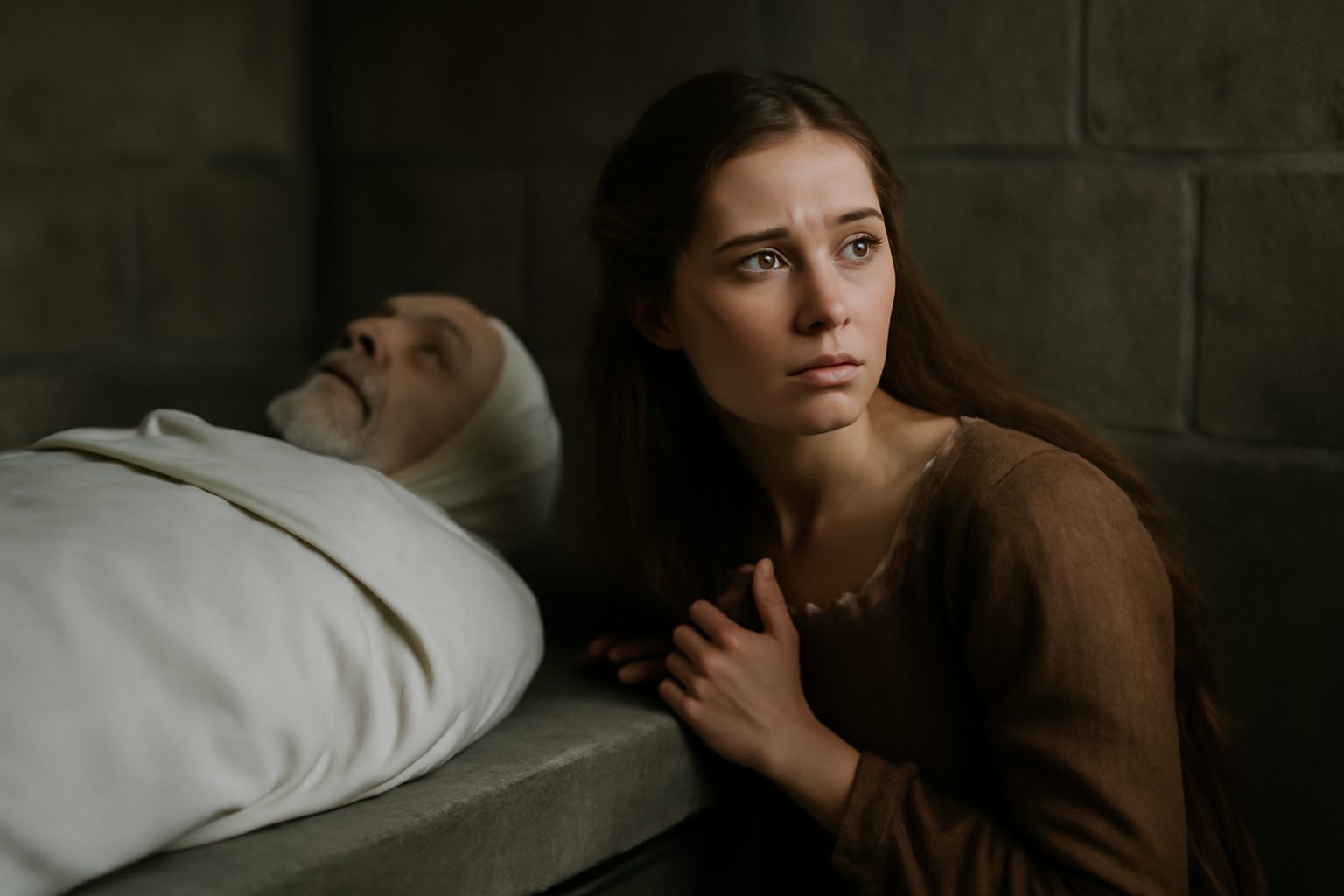
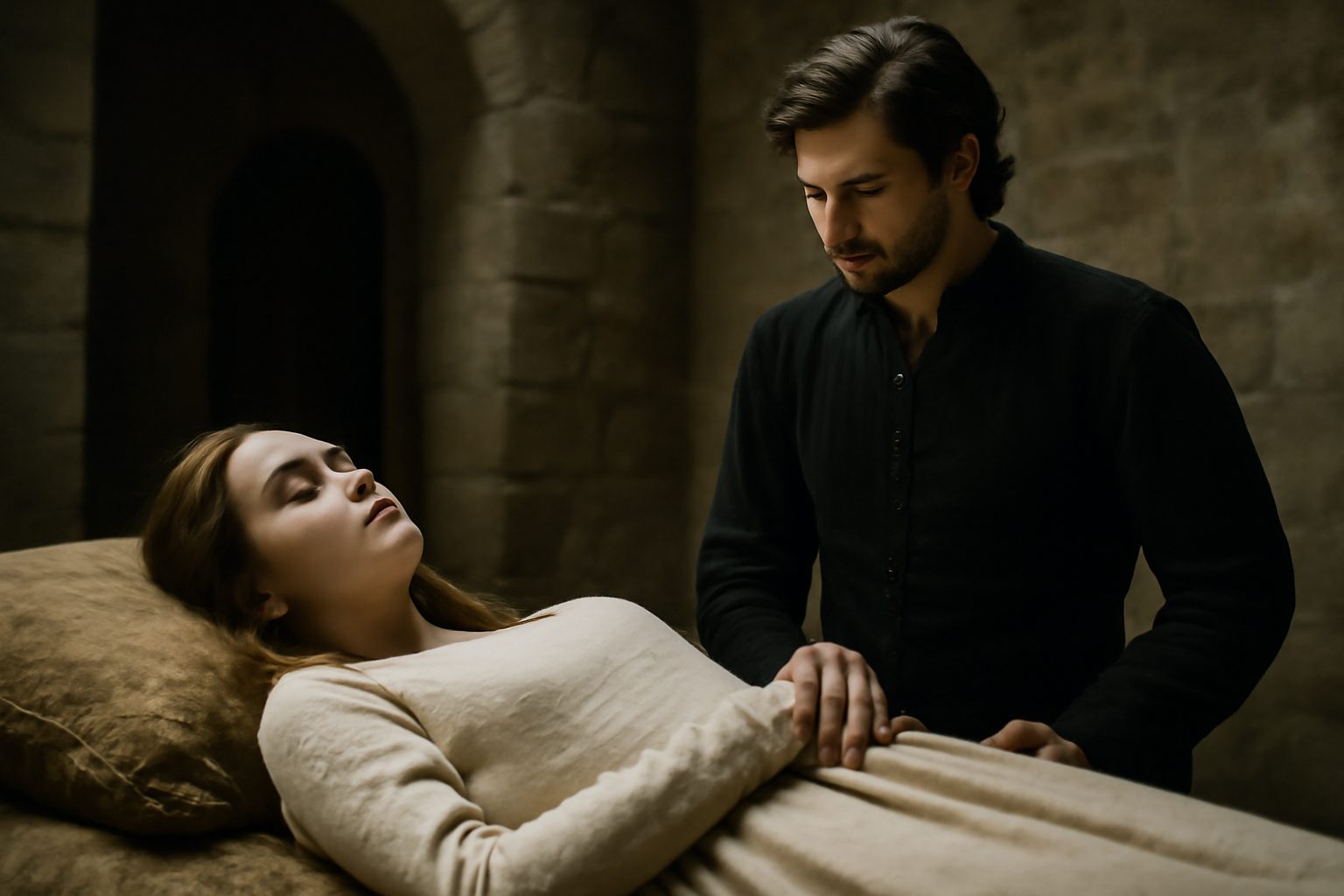
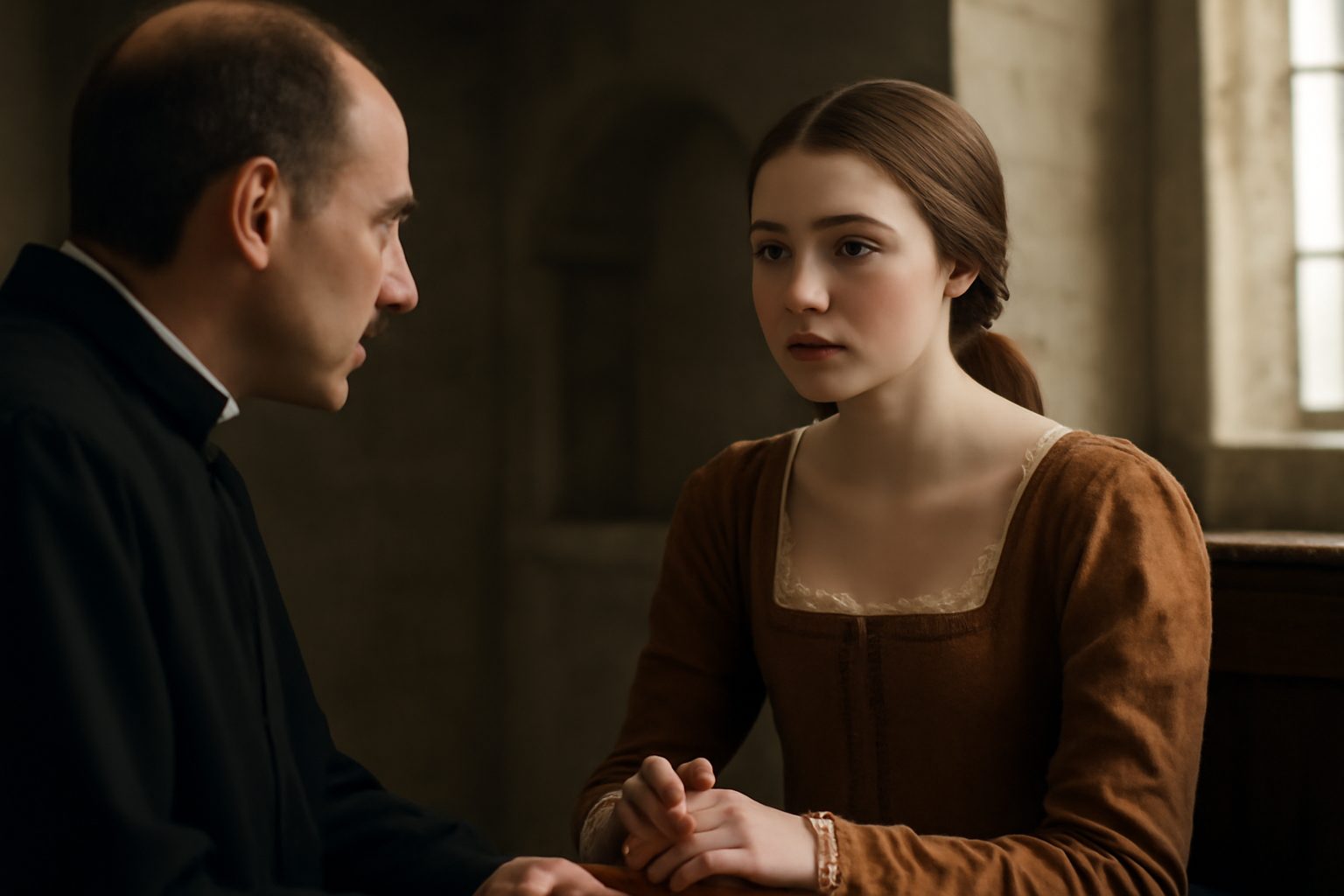
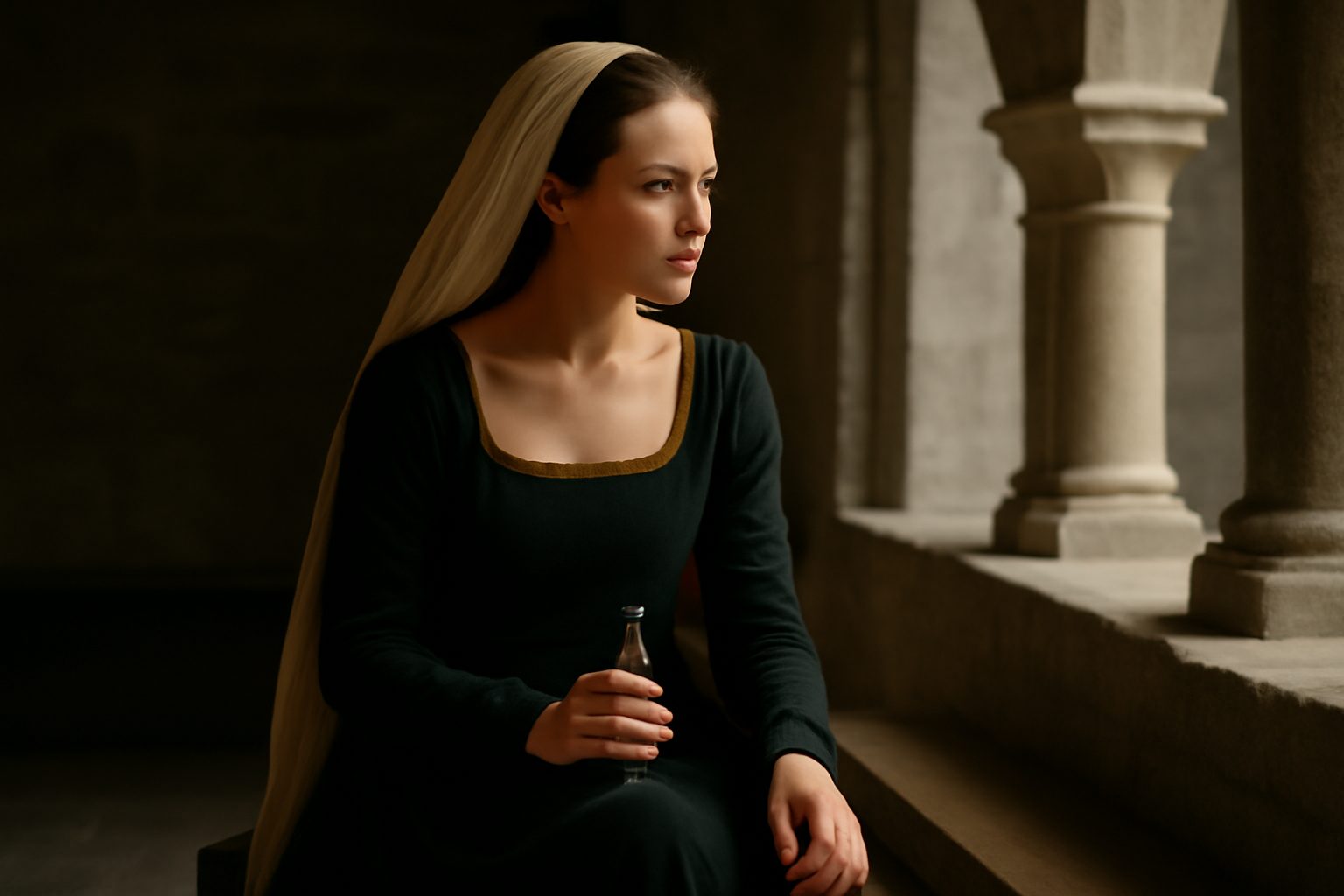
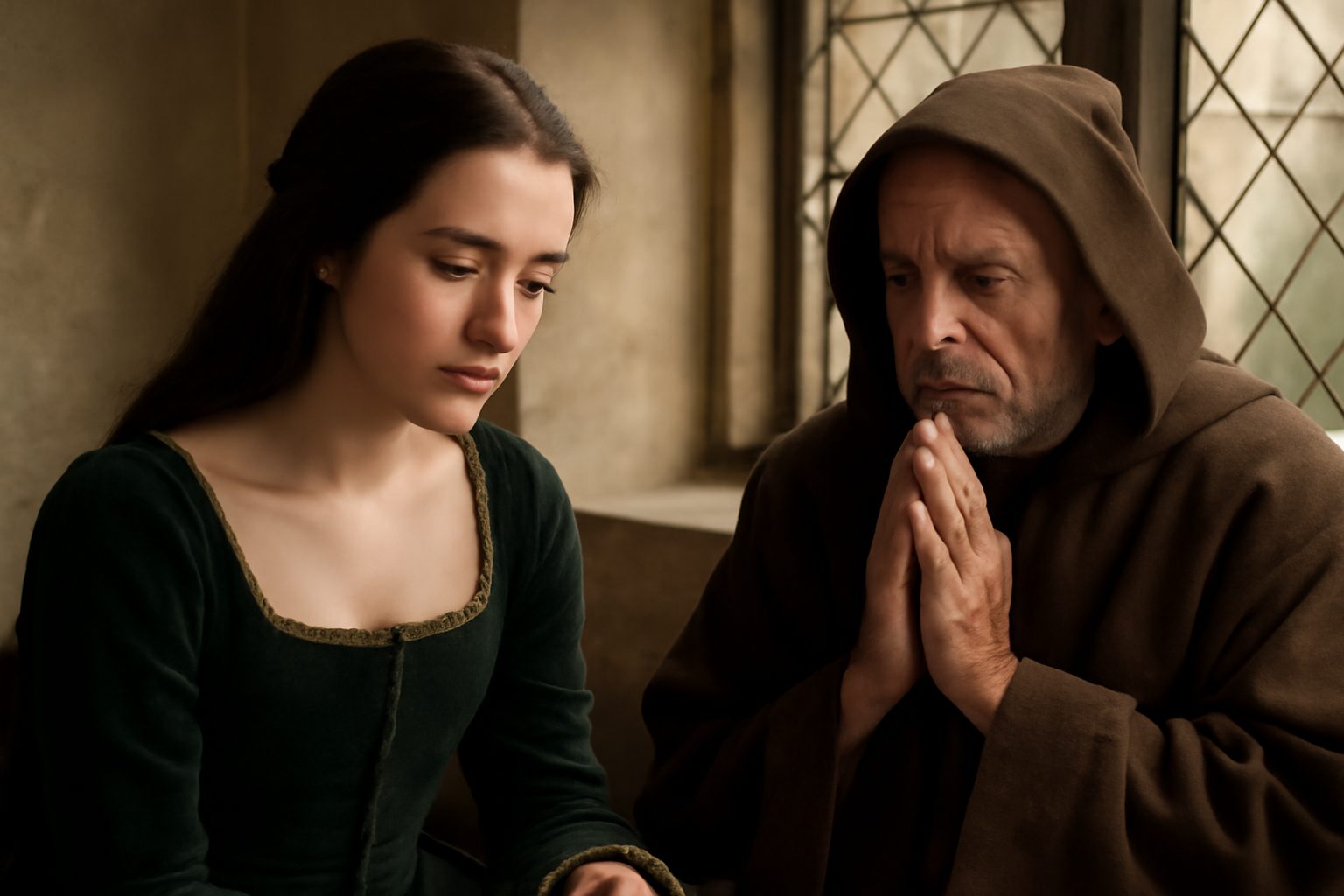
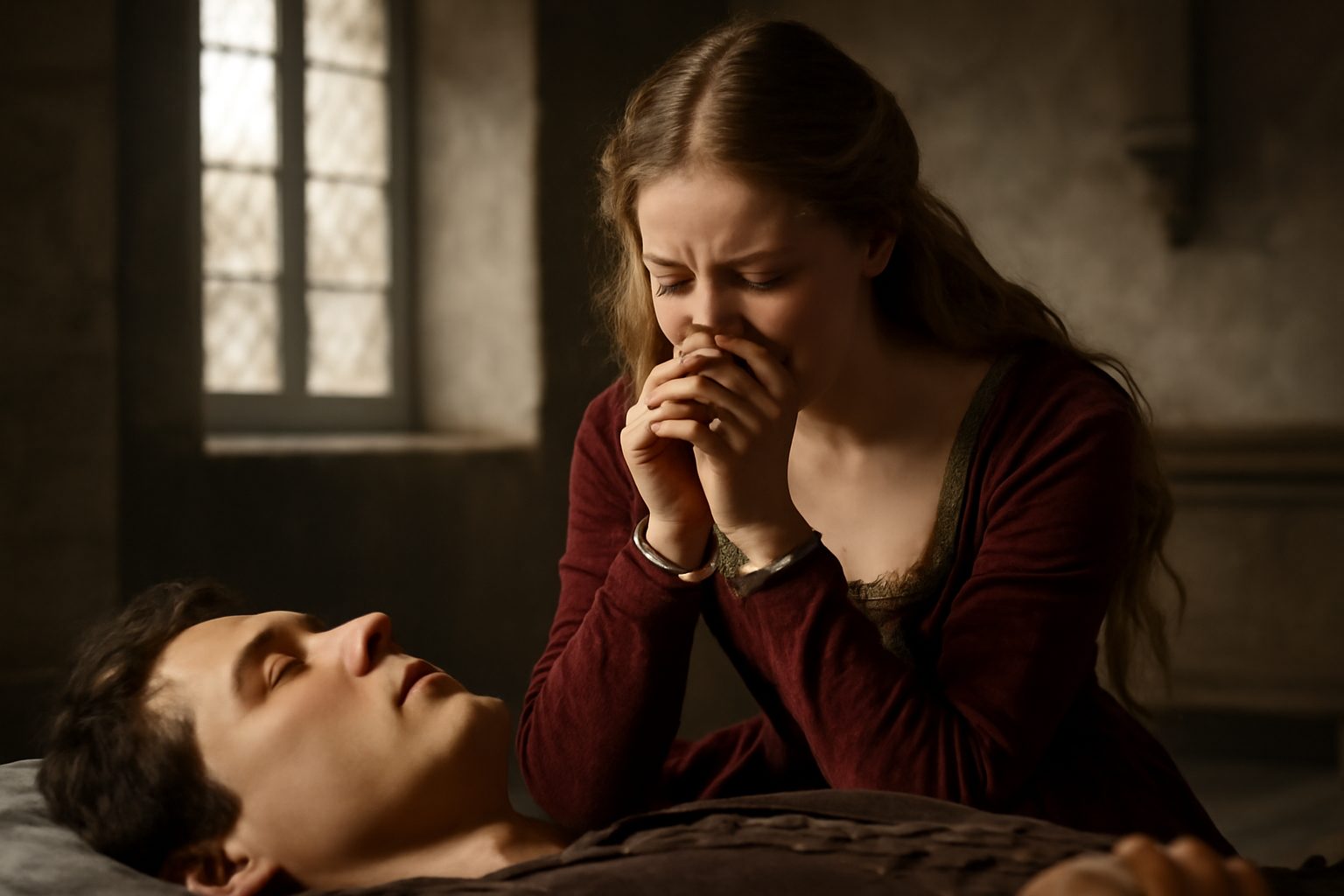
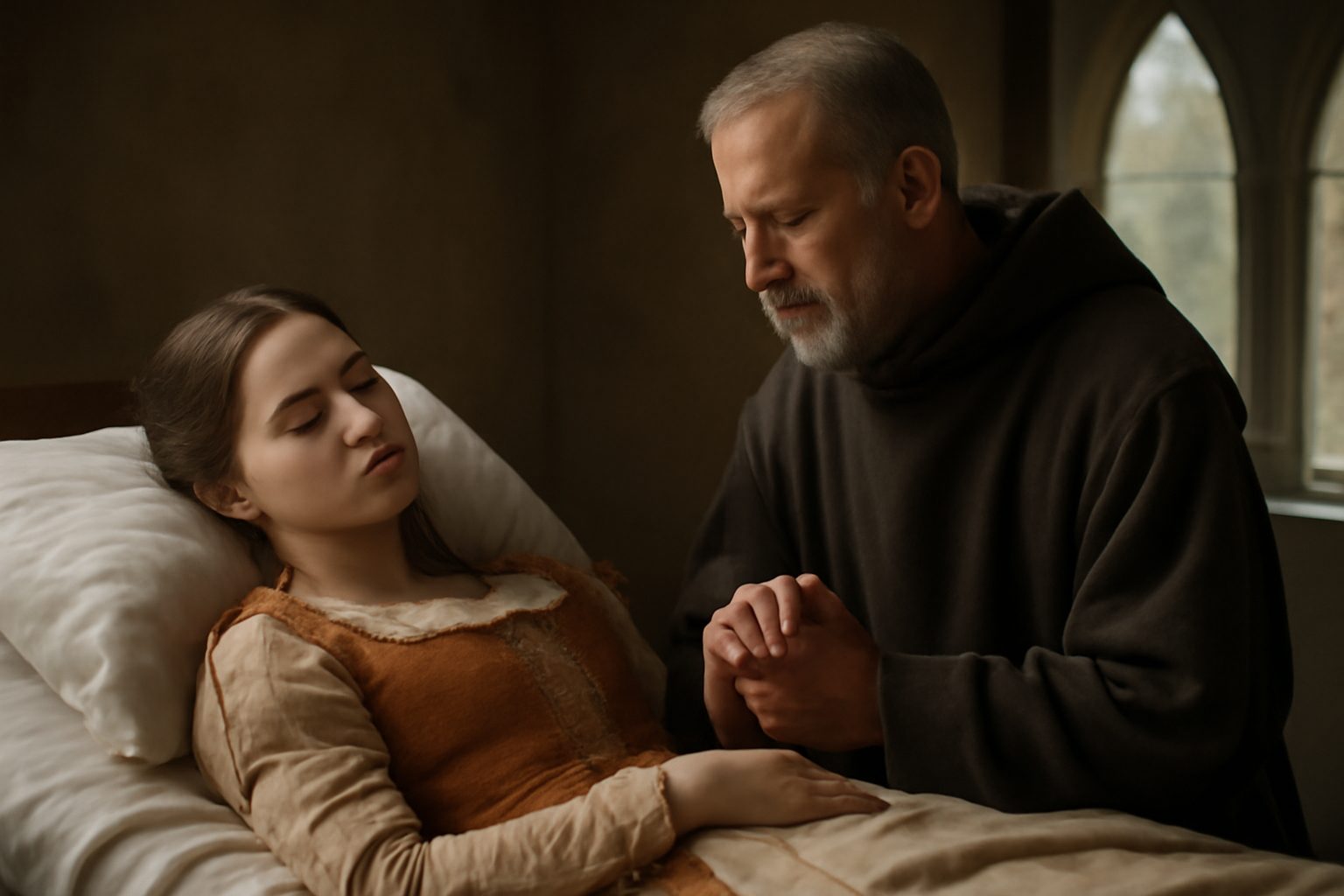
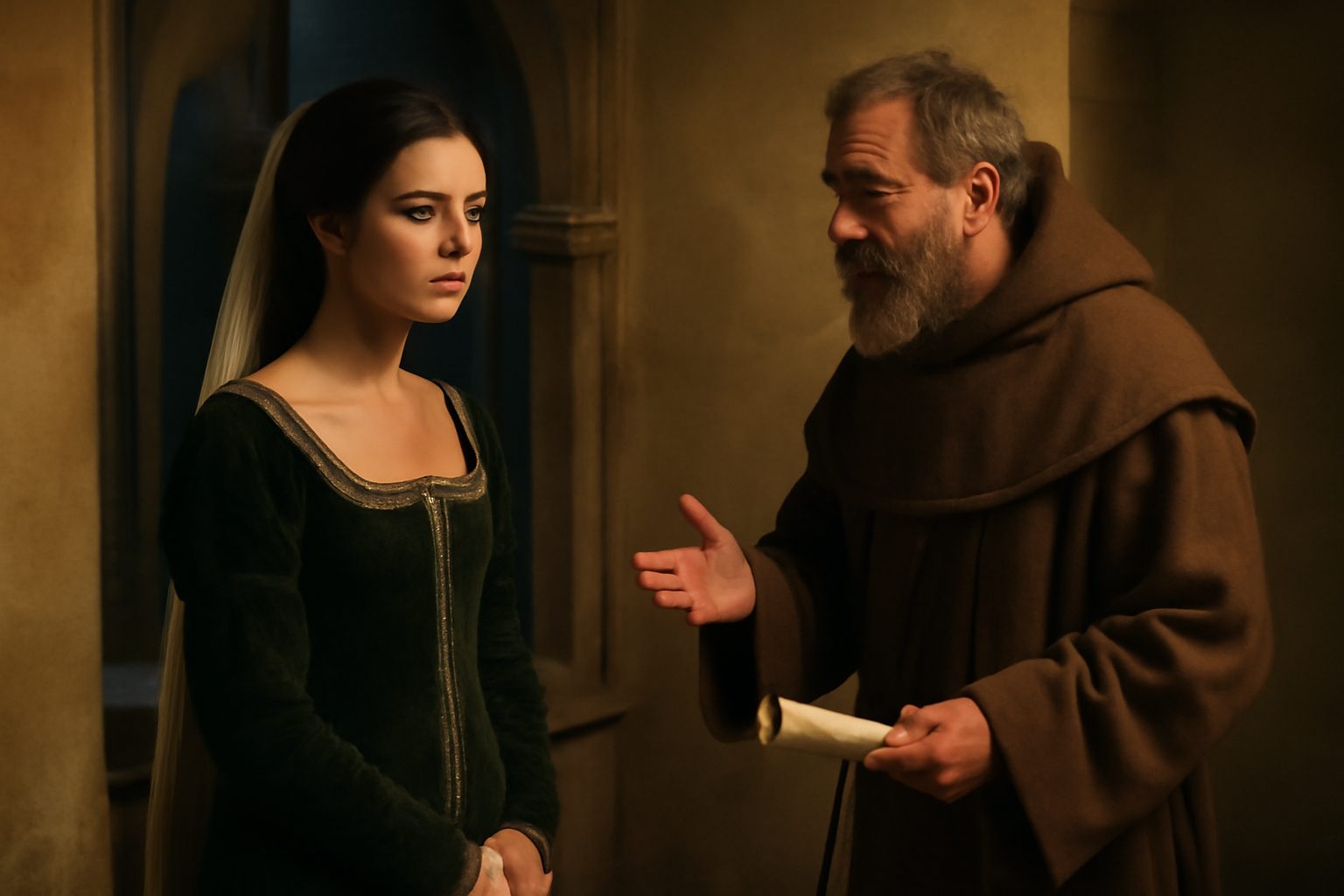
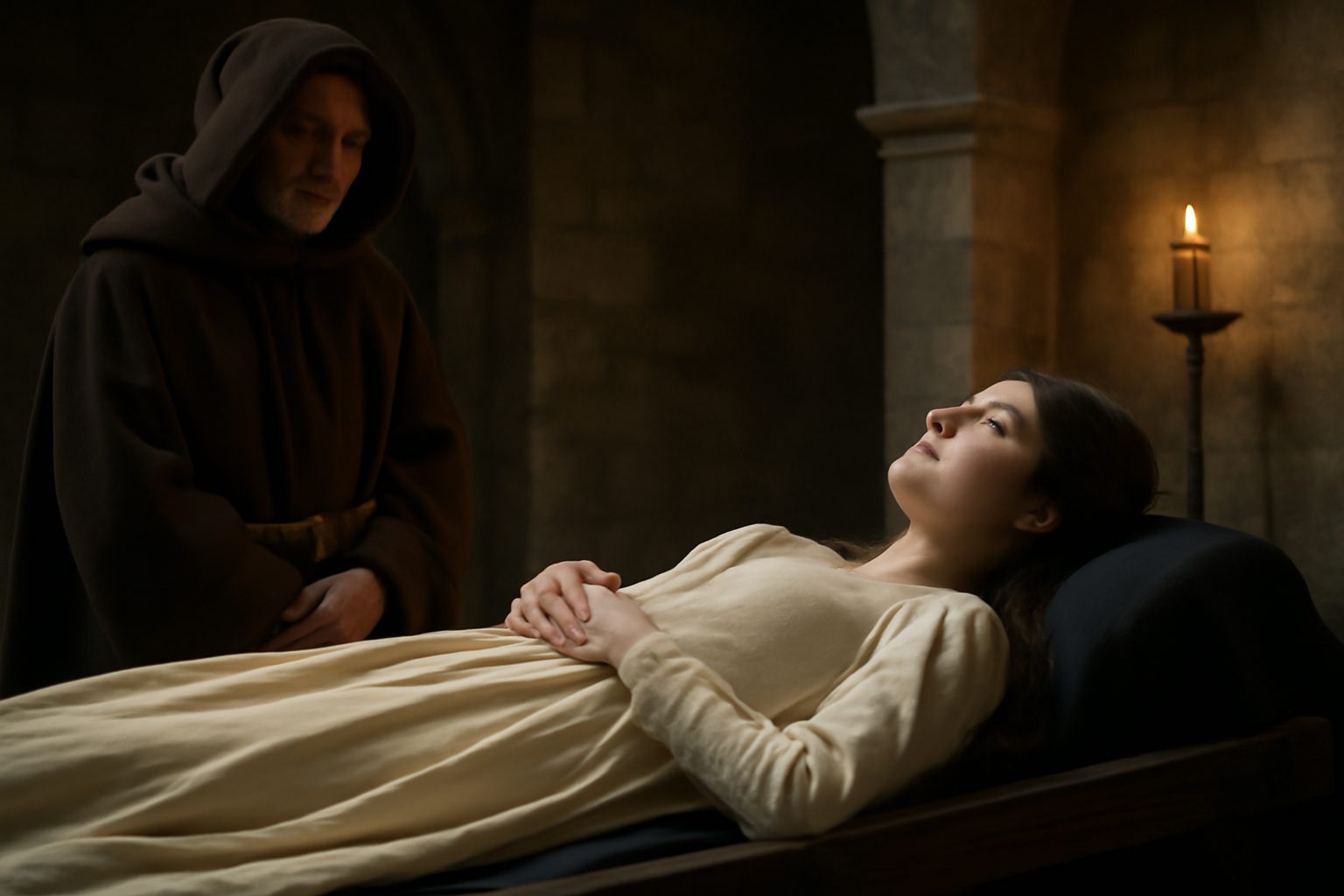
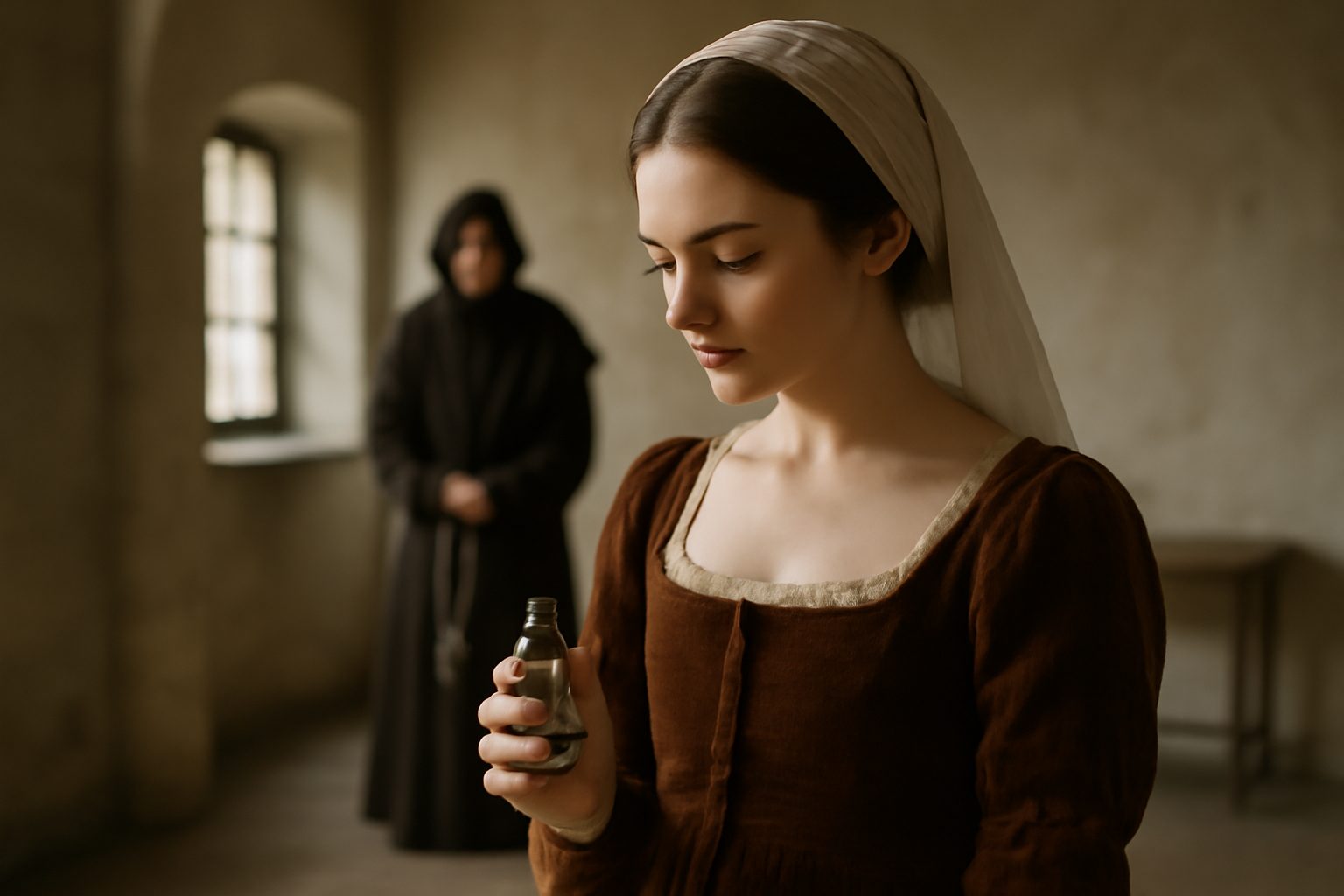
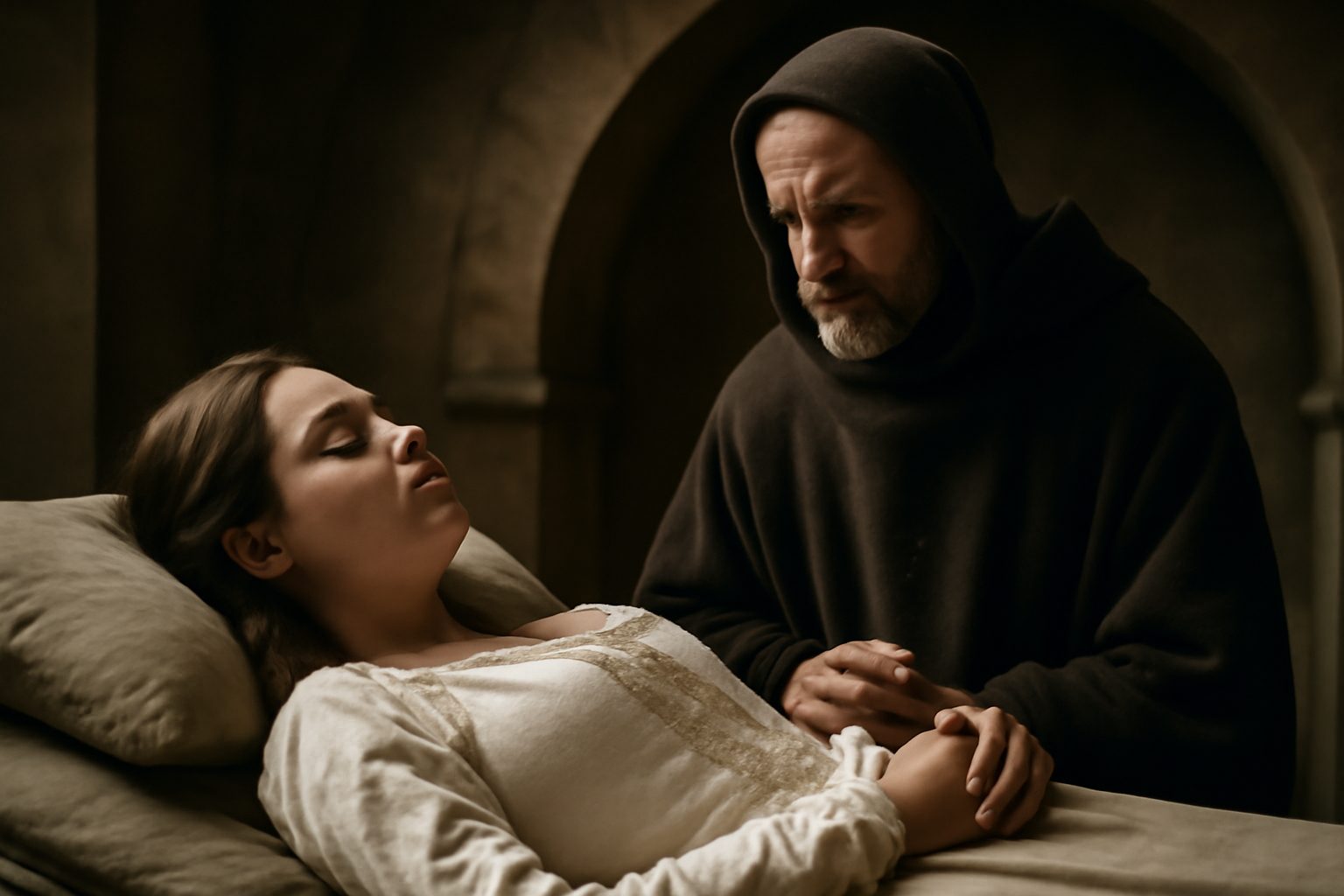
In Act 4 Scene 1 of Romeo and Juliet, Friar Laurence is devising a desperate plan to help Juliet escape her arranged marriage to Paris. As he describes the grim contents of his cell, including bones and decaying remains, the imagery underscores the darkness and urgency of their situation. This moment highlights the extreme measures Juliet must consider to avoid a fate worse than death.
Juliet: "With reeky shanks and yellow chapless skulls;"
In modern day english, we would say:
With stinking legs and pale, fleshless skulls.
Frequently Asked Questions
What does Juliet describe in this line from Act 4 Scene 1?
Juliet describes old, decaying bones with foul-smelling legs and toothless skulls.
Connections to other verses:
Connections to "With reeky shanks and yellow chapless skulls"
Imagery of Death and Decay
The verse "With reeky shanks and yellow chapless skulls" vividly describes the gruesome contents of the Capulet tomb, emphasizing decay and mortality. This imagery is echoed in "O'er-cover'd quite with dead men's rattling bones", which similarly portrays the tomb as a place filled with skeletal remains. Both lines contribute to the macabre atmosphere surrounding Juliet's impending fake death.
Juliet's Desperation and Willingness to Face Death
Juliet's resolve to avoid marrying Paris is starkly illustrated through her willingness to embrace death-like scenarios. In "Or bid me go into a new-made grave" and "And hide me with a dead man in his shroud", she expresses a preference for literal burial over betrayal of Romeo. These verses parallel the horror of "With reeky shanks and yellow chapless skulls", highlighting her courage in the face of gruesome death.
Friar Laurence's Plan and Its Consequences
The friar's potion is designed to mimic death, as described in "Shall, stiff and stark and cold, appear like death" and "No warmth, no breath, shall testify thou livest". These lines connect to the tomb's imagery in "With reeky shanks and yellow chapless skulls" by foreshadowing the environment Juliet will temporarily inhabit, underscoring the peril of the plan.
The Tomb as a Setting
"Thou shalt be borne to that same ancient vault" and "Where all the kindred of the Capulets lie" directly reference the tomb, providing context for "With reeky shanks and yellow chapless skulls". These verses establish the tomb as a familial burial site, intensifying the stakes of Juliet's simulated death.
Juliet's Resolve and Friar's Warning
Juliet's fearless determination, seen in "Give me, give me! O, tell not me of fear!", contrasts with the friar's caution in "Abate thy valour in the acting it". This dynamic underscores the gravity of facing the tomb's horrors described in "With reeky shanks and yellow chapless skulls", blending her bravery with the friar's apprehension.