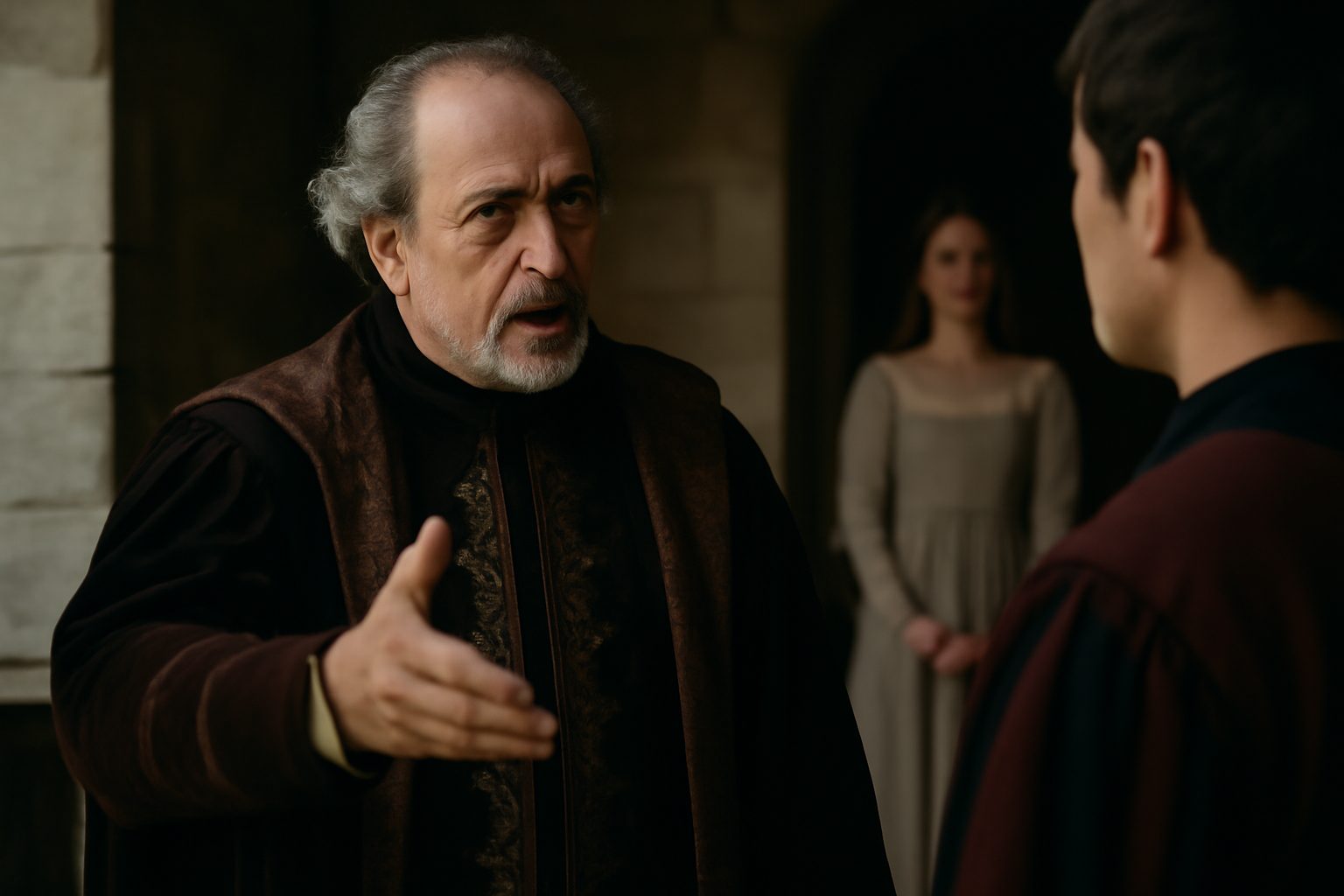
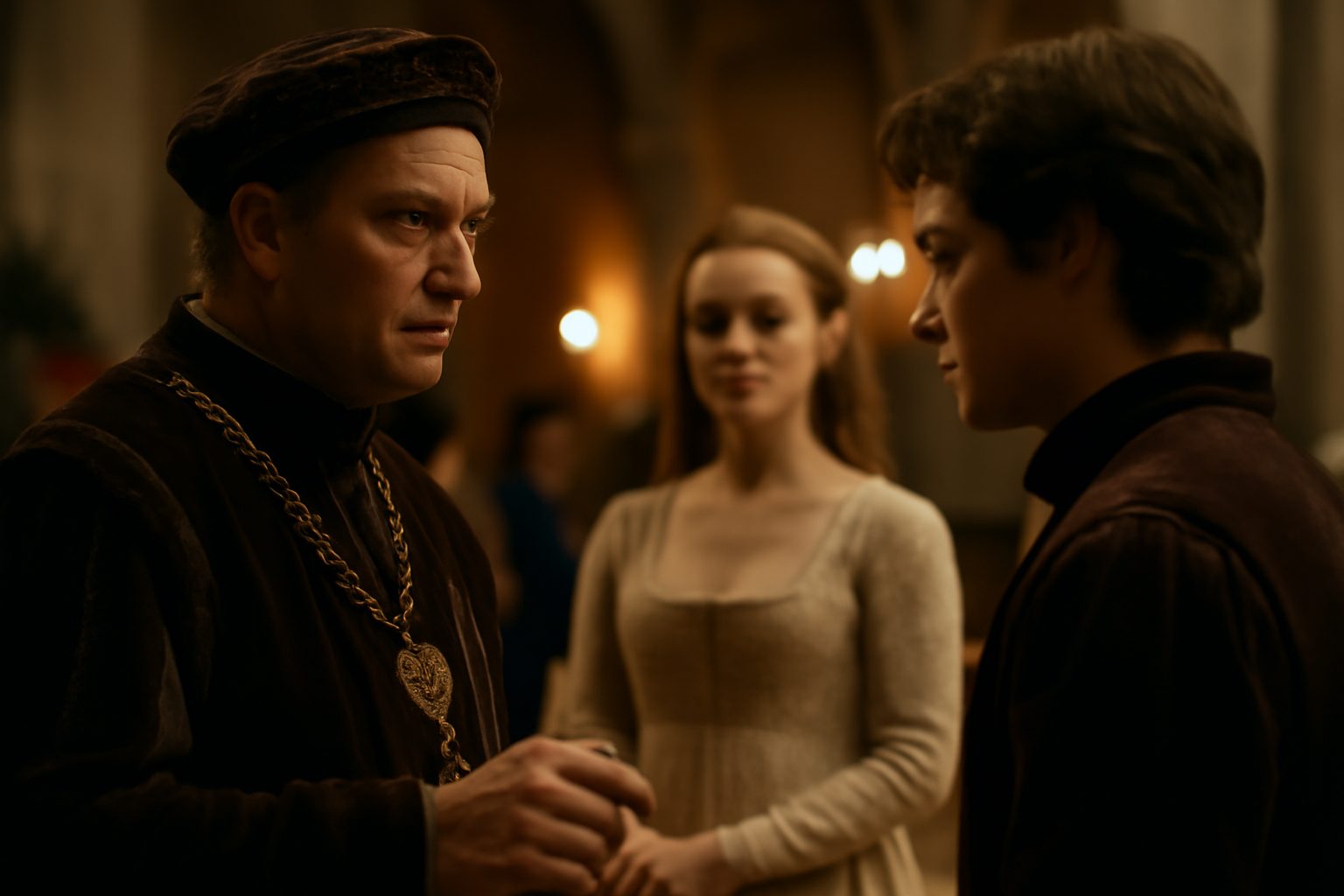
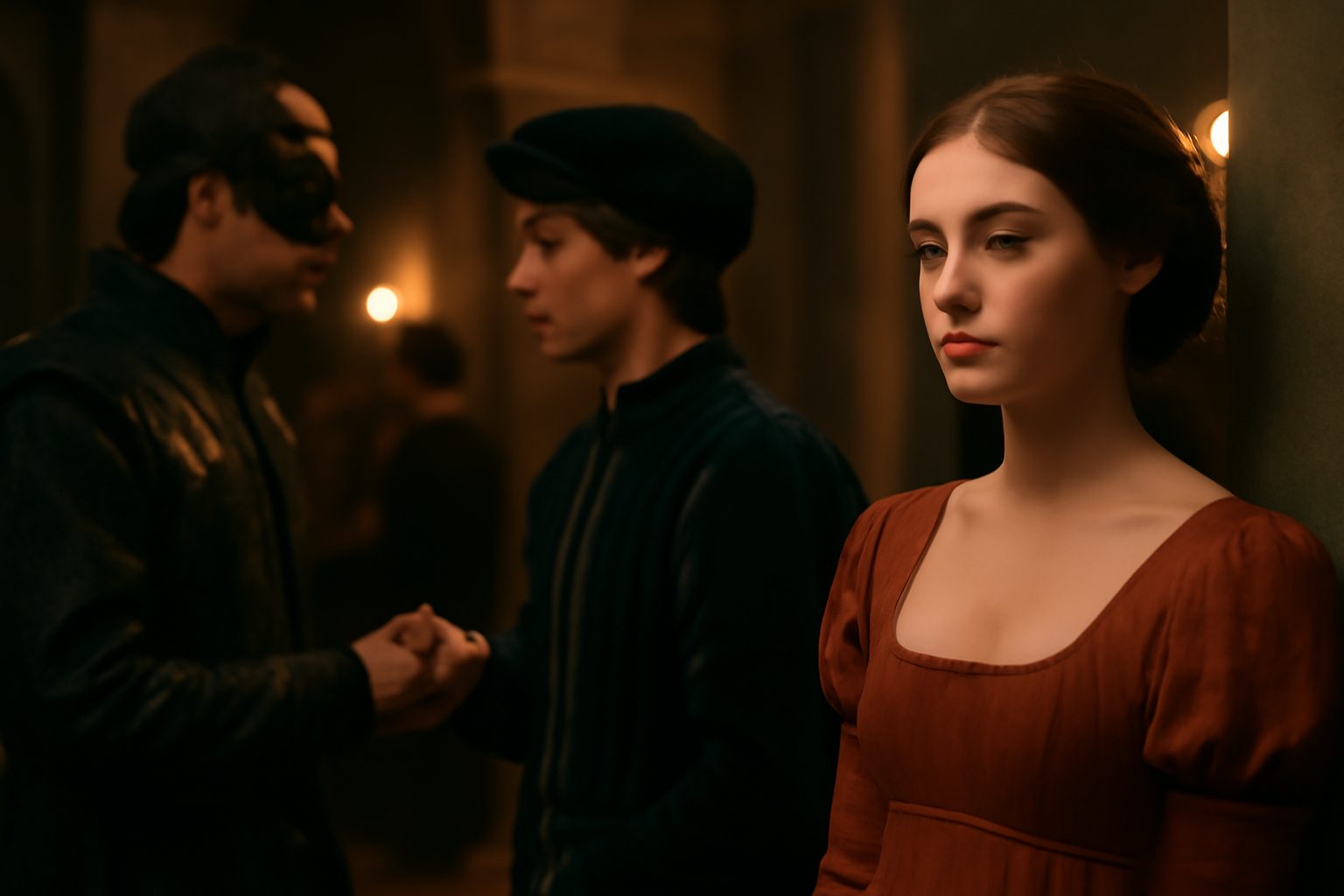
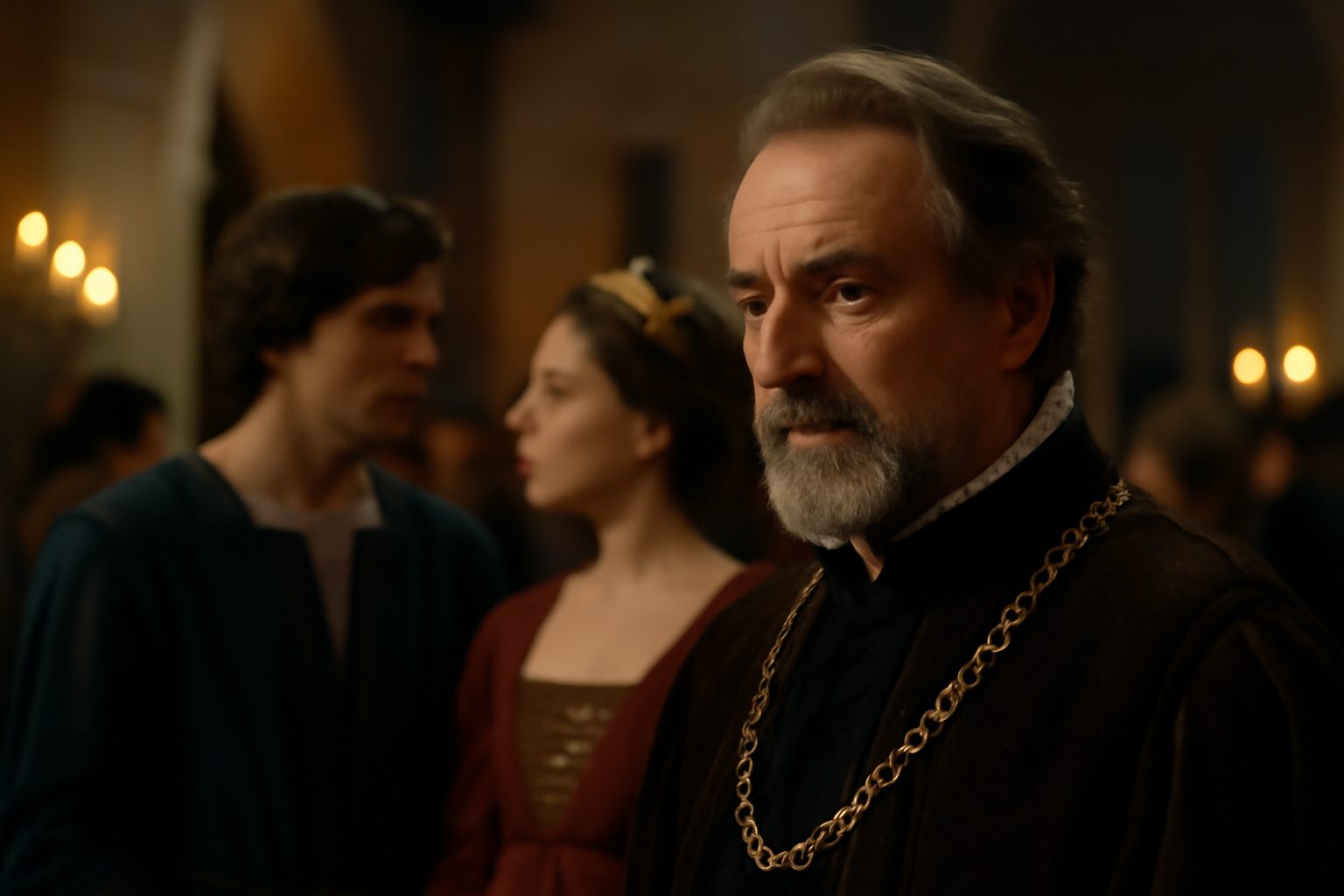
In Act 1, Scene 5 of Romeo and Juliet, the two lovers meet for the first time at the Capulet's masquerade ball. Romeo, disguised by a mask, approaches Juliet and they share a flirtatious exchange filled with religious imagery. This line follows their first kiss, as Romeo playfully suggests that if their lips have sinned by touching, his can absolve the transgression with another.
Juliet: "Then have my lips the sin that they have took."
In modern day english, we would say:
Then my lips have taken the sin from yours by touching them.
Frequently Asked Questions
What does Juliet mean when she says her lips have taken a sin?
Juliet is playfully suggesting that by kissing Romeo, her lips have taken on the sin of his kiss, implying they shared a kiss that was bold or forbidden.
Connections to other verses:
Connections to Romeo's Pilgrimage Metaphor
Romeo's line "Then have my lips the sin that they have took" is the culmination of his extended religious metaphor with Juliet. This imagery begins when he approaches her with "If I profane with my unworthiest hand", framing their meeting as a pilgrimage. He continues this metaphor by describing "My lips, two blushing pilgrims, ready stand", establishing the religious context that makes their kiss both sacrilegious and sanctified.
Juliet's Playful Response
Juliet actively participates in this metaphor, first questioning "Have not saints lips, and holy palmers too?" and then cleverly responding to Romeo's request with "Ay, pilgrim, lips that they must use in prayer". Their verbal dance culminates in Romeo's request to "let lips do what hands do", which leads directly to the reciprocal nature of their first kiss expressed in your quoted line.
The Kiss Exchange
The immediate context shows this is part of a back-and-forth exchange. Juliet responds to Romeo's statement with "Sin from thy lips? O trespass sweetly urged!", then asks him to "Give me my sin again". This creates a complete cycle where the "sin" of their kiss becomes something to be shared and returned, rather than merely taken.
Contrast with Hostile Interactions
This tender moment starkly contrasts with Tybalt's hostile recognition of Romeo. When Tybalt declares "Tis he, that villain Romeo" and wants to "strike him dead", it shows how the same event contains both the birth of love and the seeds of conflict. The peaceful resolution of Capulet's "Therefore be patient, take no note of him" allows Romeo and Juliet's meeting to occur, making their connection possible amid the surrounding tension.
Aftermath and Foreshadowing
Following their exchange, Juliet's final comment "You kiss by the book" suggests both admiration and a hint of worldly wisdom. This moment gains tragic irony when she later discovers "His name is Romeo, and a Montague" and realizes "My only love sprung from my only hate!", making their seemingly innocent wordplay about "sin" prophetically accurate.