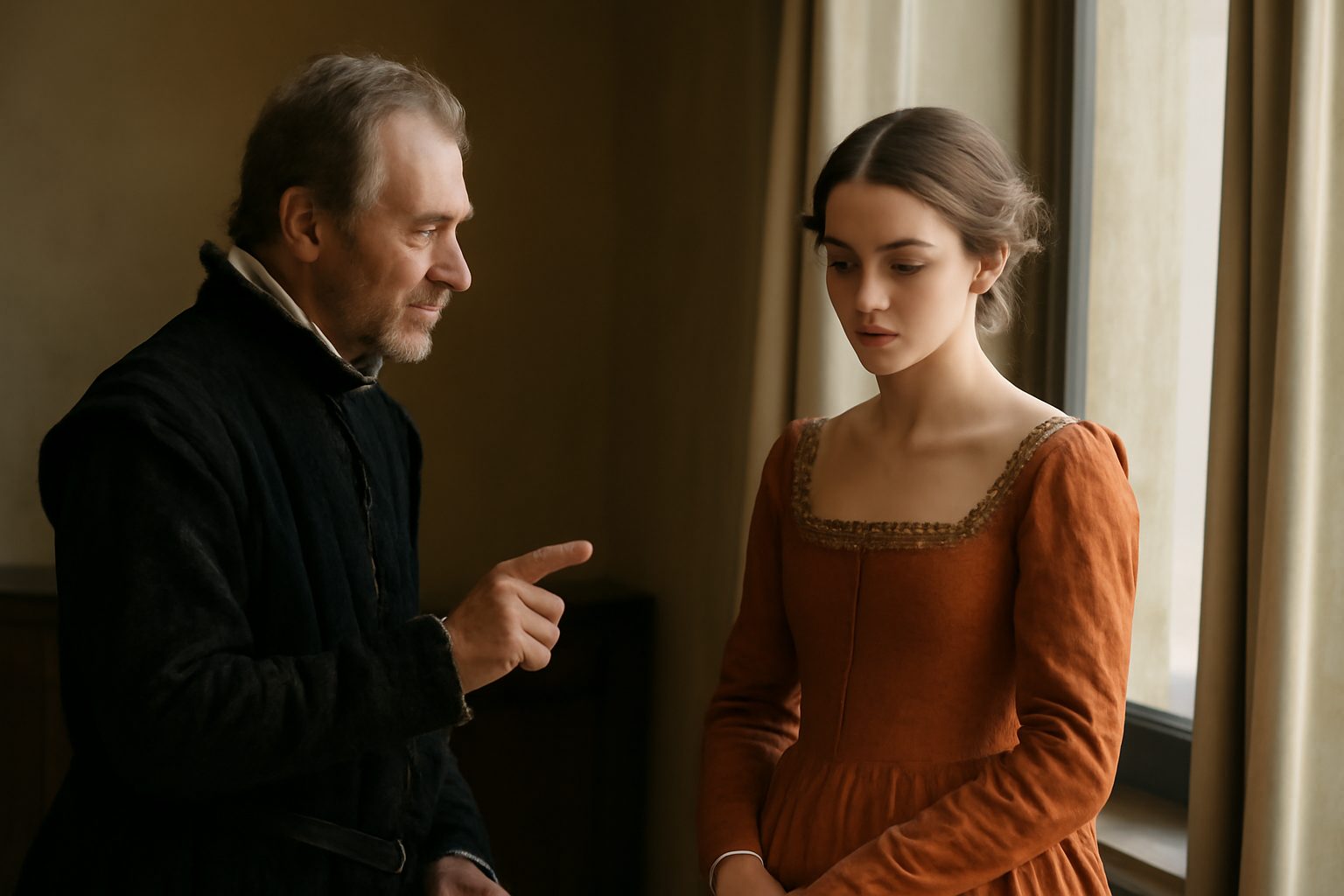
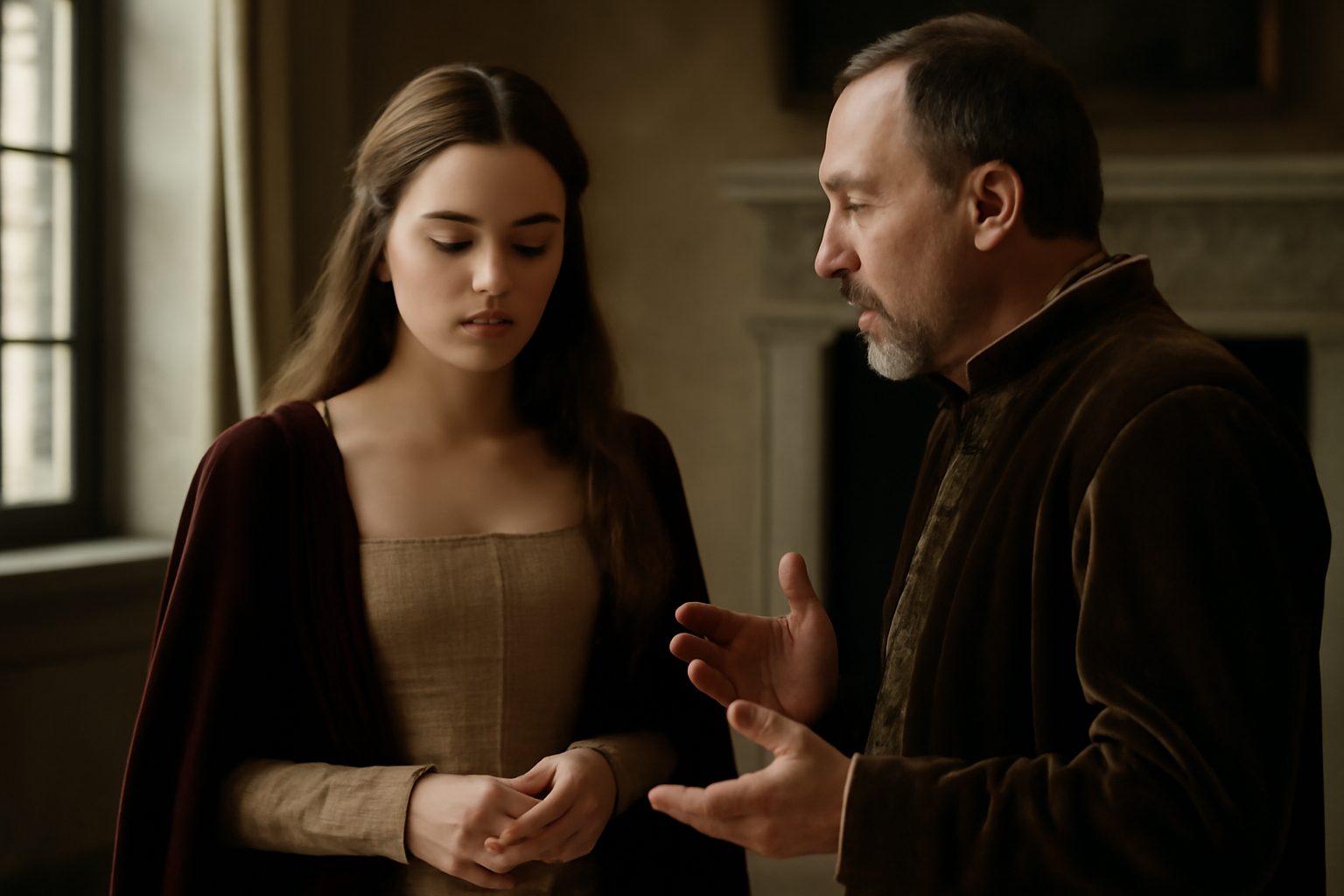
In Act 3, Scene 4 of Romeo and Juliet, Lord Capulet speaks these words to Paris, the nobleman seeking Juliet's hand in marriage. After Tybalt's death, Capulet abruptly decides to hasten Juliet's wedding to Paris, assuming she will obediently accept his choice. His confidence in her compliance reflects the patriarchal expectations of the time, unaware of her secret marriage to Romeo and the turmoil it will soon bring.
Capulet: "Of my child's love: I think she will be ruled"
In modern day english, we would say:
I believe my daughter will listen to me and follow my wishes about who she should love.
Frequently Asked Questions
What does Capulet believe about his daughter's feelings in this scene?
Capulet believes that his daughter will follow his decisions regarding her love and marriage.
Connections to other verses:
Connections to "Of my child's love: I think she will be ruled"
This line reflects Lord Capulet's confidence in Juliet's obedience, a theme echoed throughout the scene. It directly follows his assurance to Paris in Sir Paris, I will make a desperate tender, where he promises to offer Juliet's hand in marriage. His certainty is further emphasized in In all respects by me; nay, more, I doubt it not, underscoring his belief in his authority over her.
Parental Authority and Assumptions
Capulet's assumption contrasts sharply with Juliet's actual state, as noted in To-night she is mew'd up to her heaviness, where her grief is acknowledged but misunderstood. His plans for her marriage, detailed in She shall be married to this noble earl, rely entirely on this misplaced confidence in her compliance.
Contrast with Urgency and Grief
The line also intersects with the scene's urgency, such as the discussion of timing in These times of woe afford no time to woo, highlighting the tragic irony of Capulet's haste amid sorrow. His dismissal of Juliet's feelings, implied in Look you, she loved her kinsman Tybalt dearly, shows how he underestimates her emotional turmoil.
Structural and Thematic Links
Capulet's assertion leads directly to action, as seen in Wife, go you to her ere you go to bed, where he instructs Lady Capulet to inform Juliet of the plans. This sets the stage for the conflict in later acts, rooted in his flawed belief in her submission.