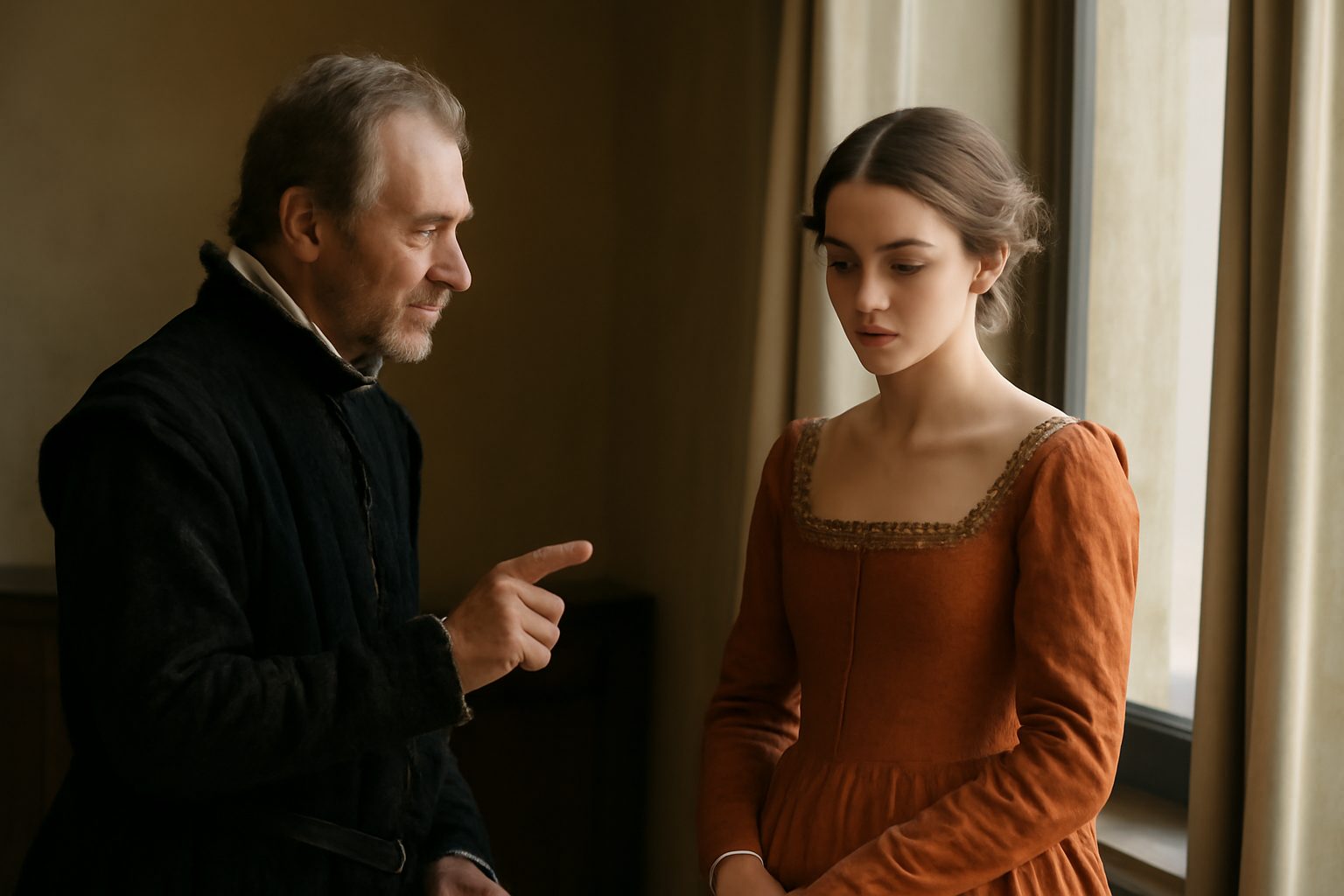
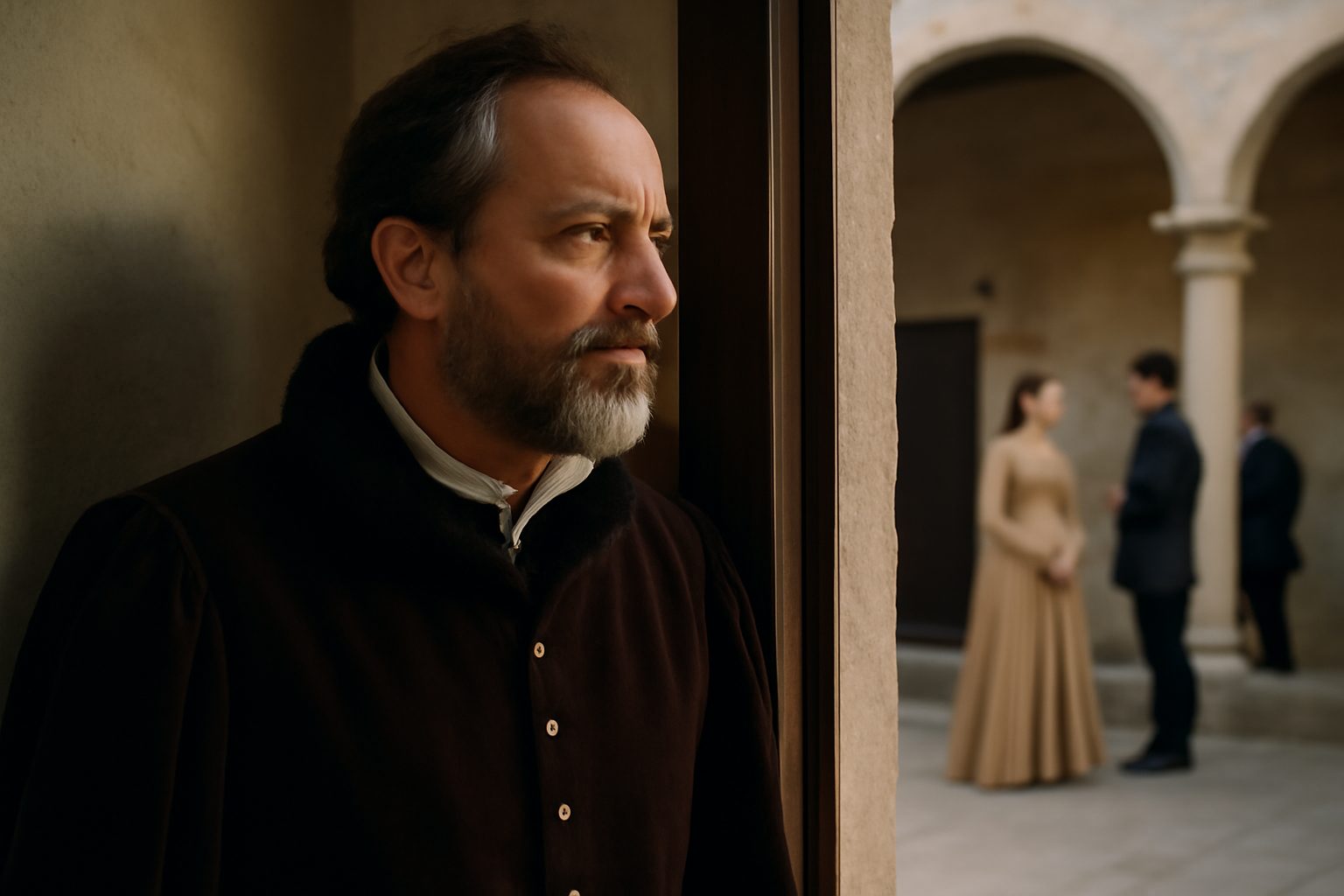
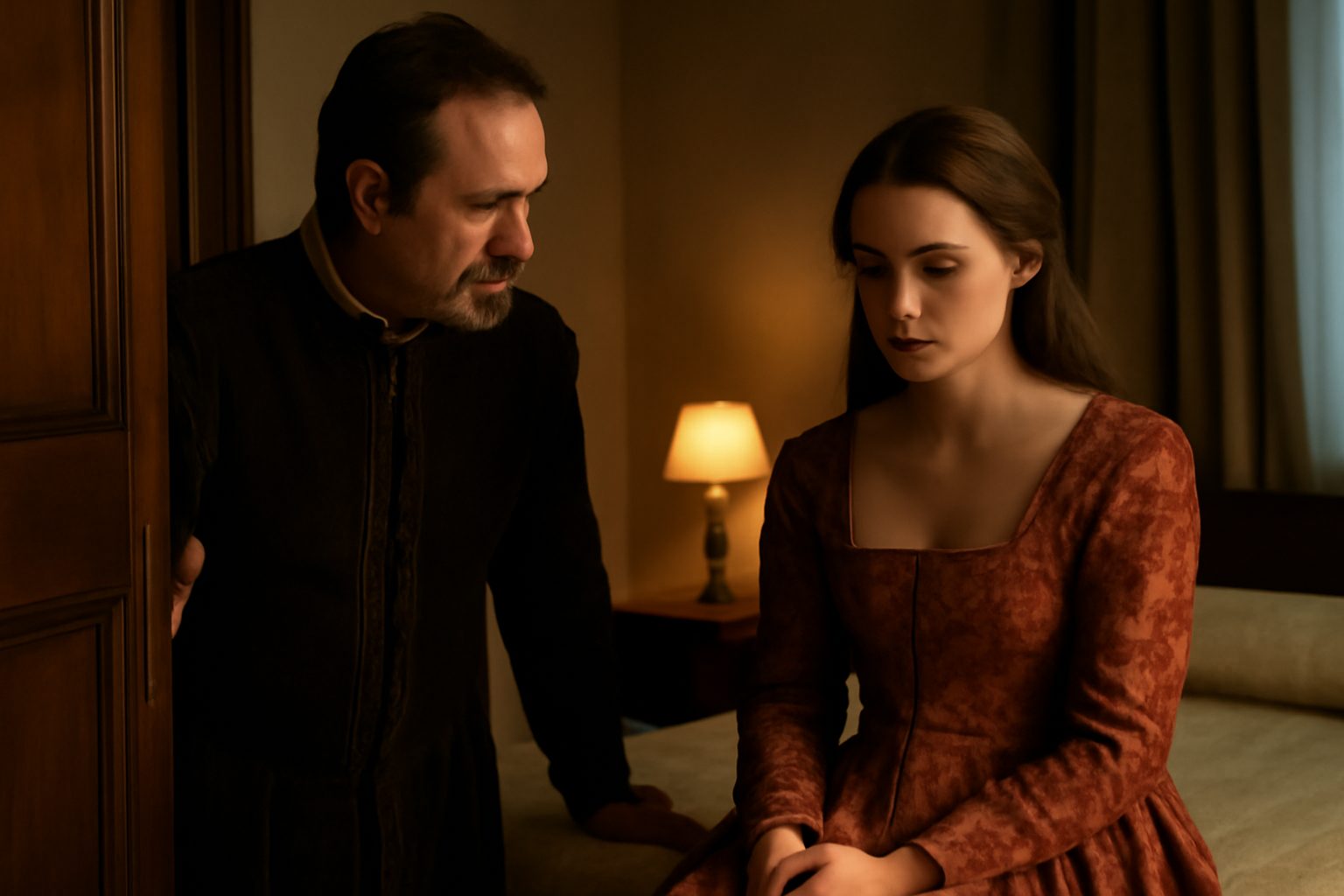
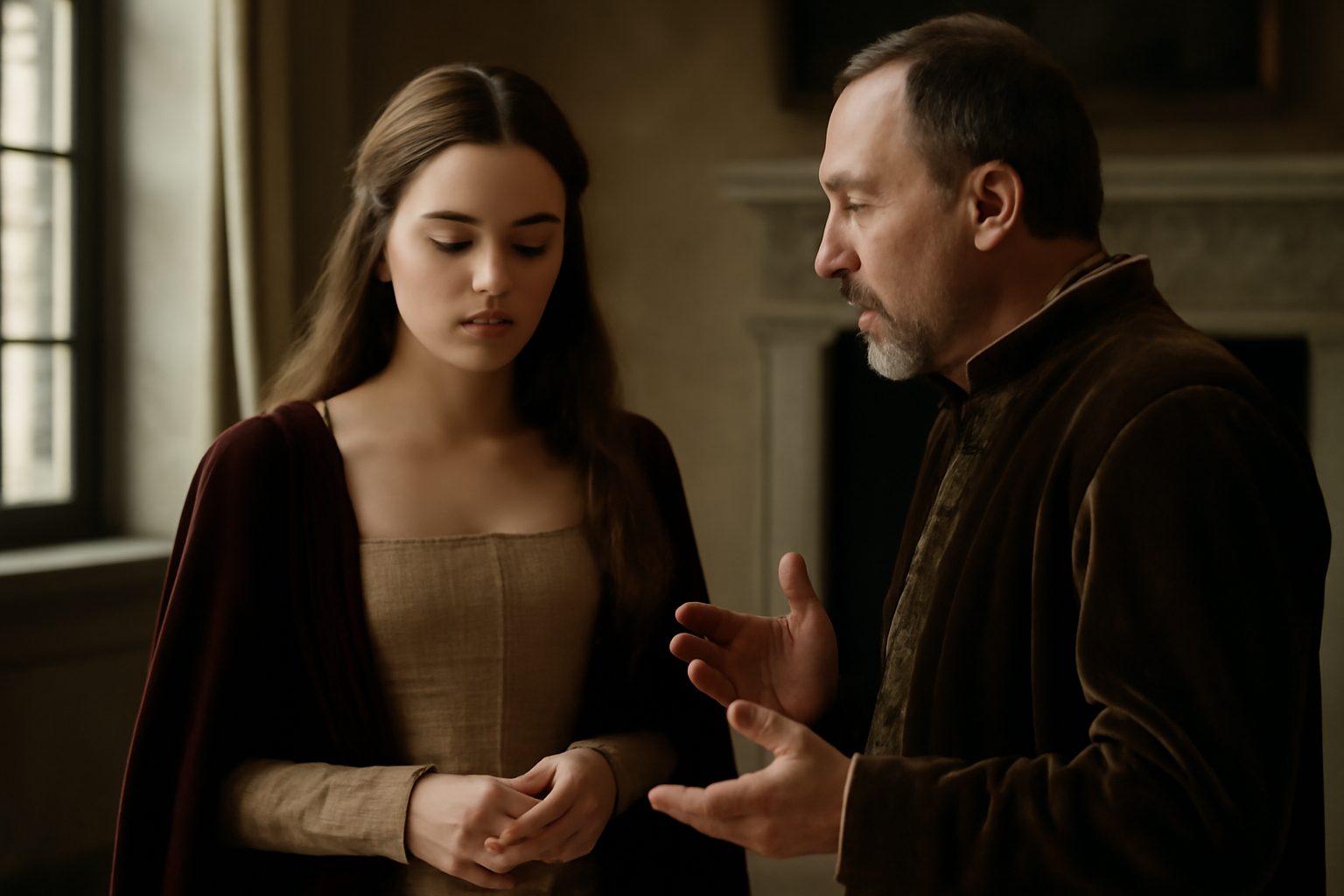
In Act 3, Scene 4 of Romeo and Juliet, Lord Capulet makes a decisive and abrupt arrangement for his daughter’s future. Still reeling from Tybalt’s death and unaware of Juliet’s secret marriage to Romeo, he promises Paris that she will wed him in just a few days. This line reflects Capulet’s authority and the societal pressures that ultimately drive the tragedy forward.
Capulet: "She shall be married to this noble earl."
In modern day english, we would say:
She will marry this noble count.
Frequently Asked Questions
Who does Capulet want his daughter Juliet to marry?
Capulet wants Juliet to marry a noble earl.
Connections to other verses:
Connections to "She shall be married to this noble earl."
This line, spoken by Lord Capulet, is the culmination of the scene's central discussion: arranging Juliet's marriage to Paris. It reflects his authoritative decision and contrasts sharply with the reality of Juliet's secret marriage to Romeo.
Direct Preceding Context
The declaration follows O' Thursday let it be: o' Thursday, tell her, where Capulet confirms the wedding date, emphasizing his haste and control.
Parental Assumptions and Authority
Capulet's confidence stems from his belief in Juliet's obedience, as seen in Of my child's love: I think she will be ruled. He assumes she will comply, unaware of her defiance.
Contrast with Grief and Timing
The line ignores Juliet's mourning for Tybalt, highlighted in Look you, she loved her kinsman Tybalt dearly. Capulet prioritizes social alliances over her emotional state.
Urgency and Irony
The rushed timeline ("Thursday") echoes Will you be ready? do you like this haste?, underscoring the dramatic irony: the audience knows Juliet cannot marry Paris, making Capulet's certainty tragically misplaced.
Fatal Consequences
This decision directly leads to Capulet's command in Prepare her, wife, against this wedding-day, setting in motion the events that drive Juliet to desperate measures.