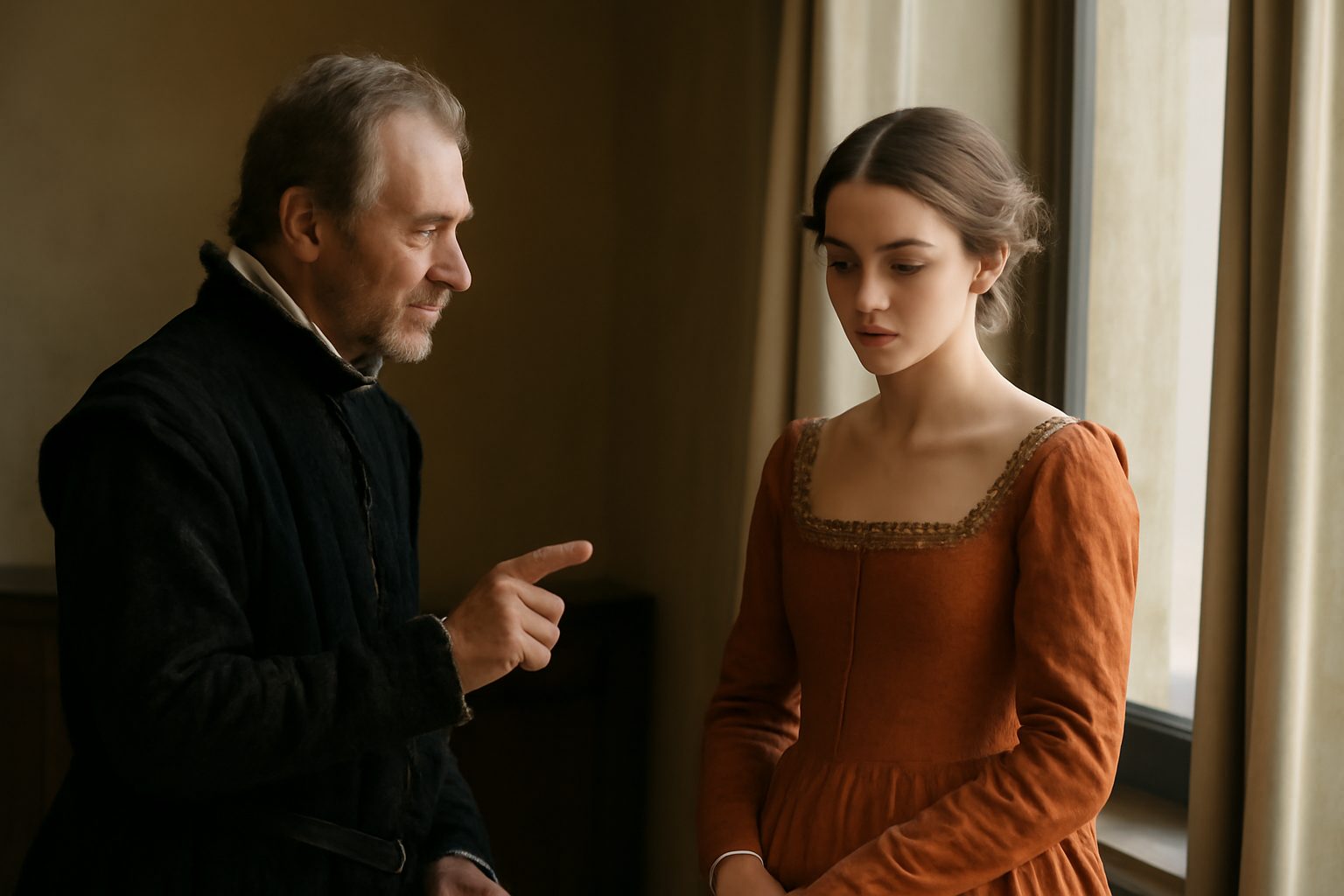
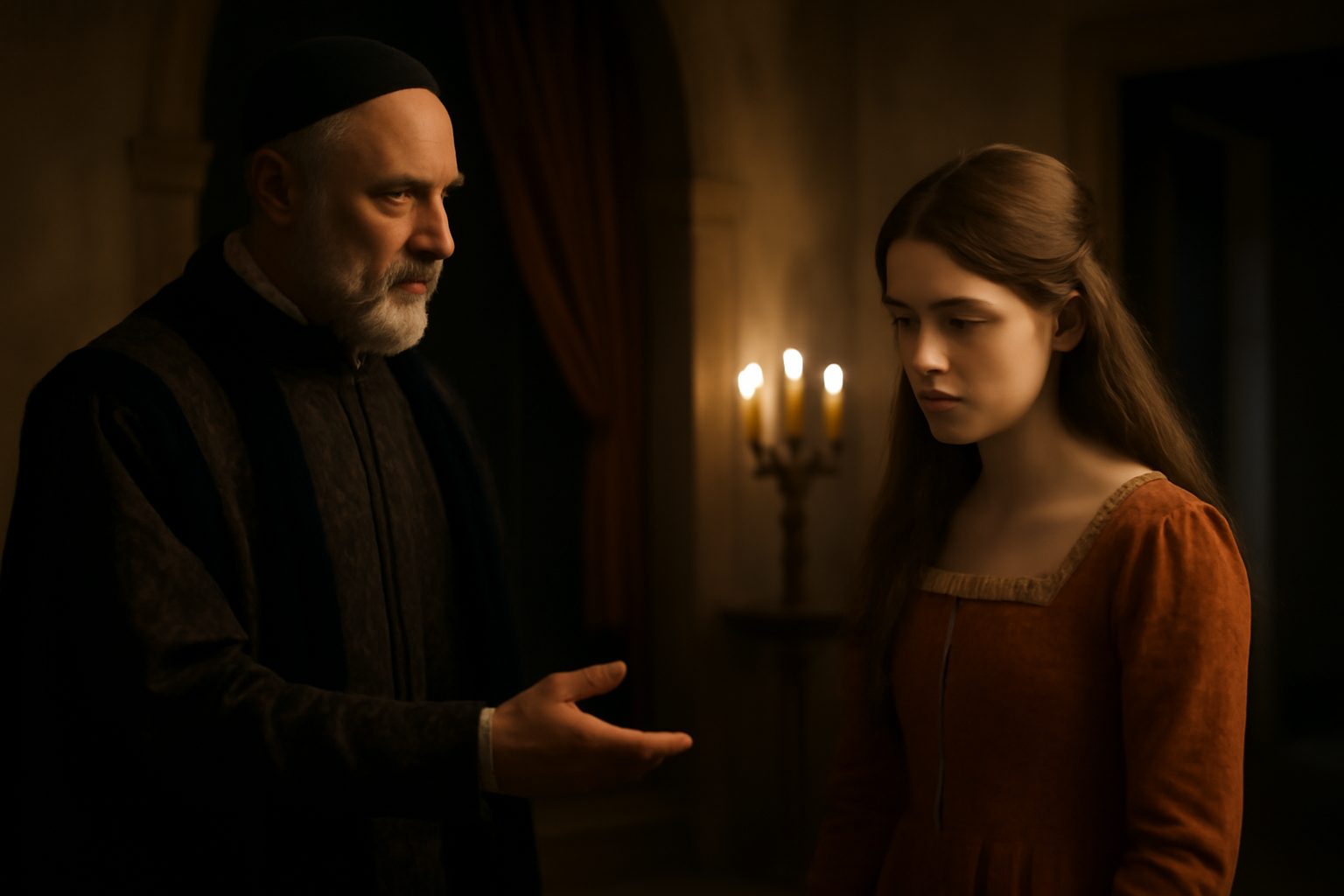
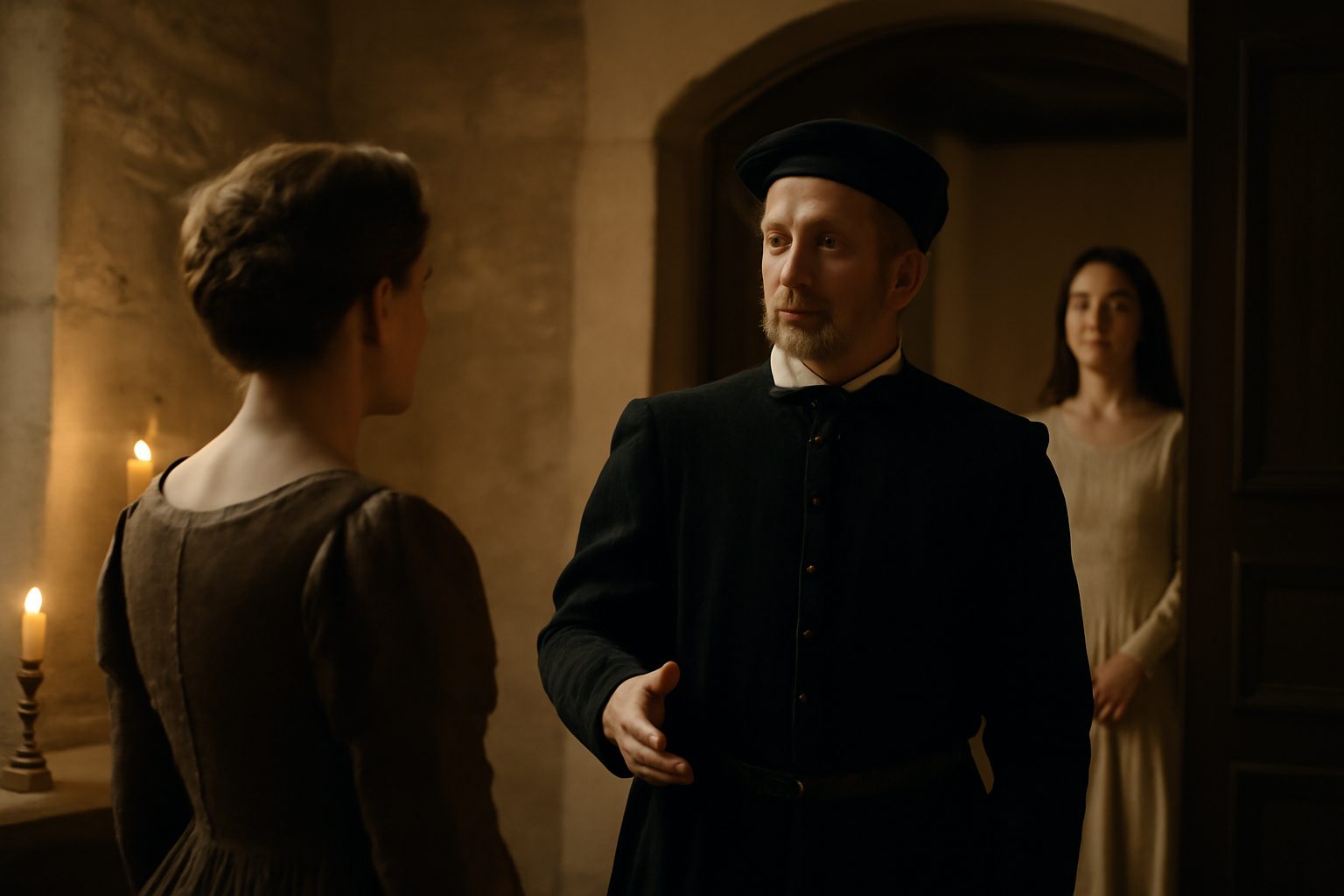
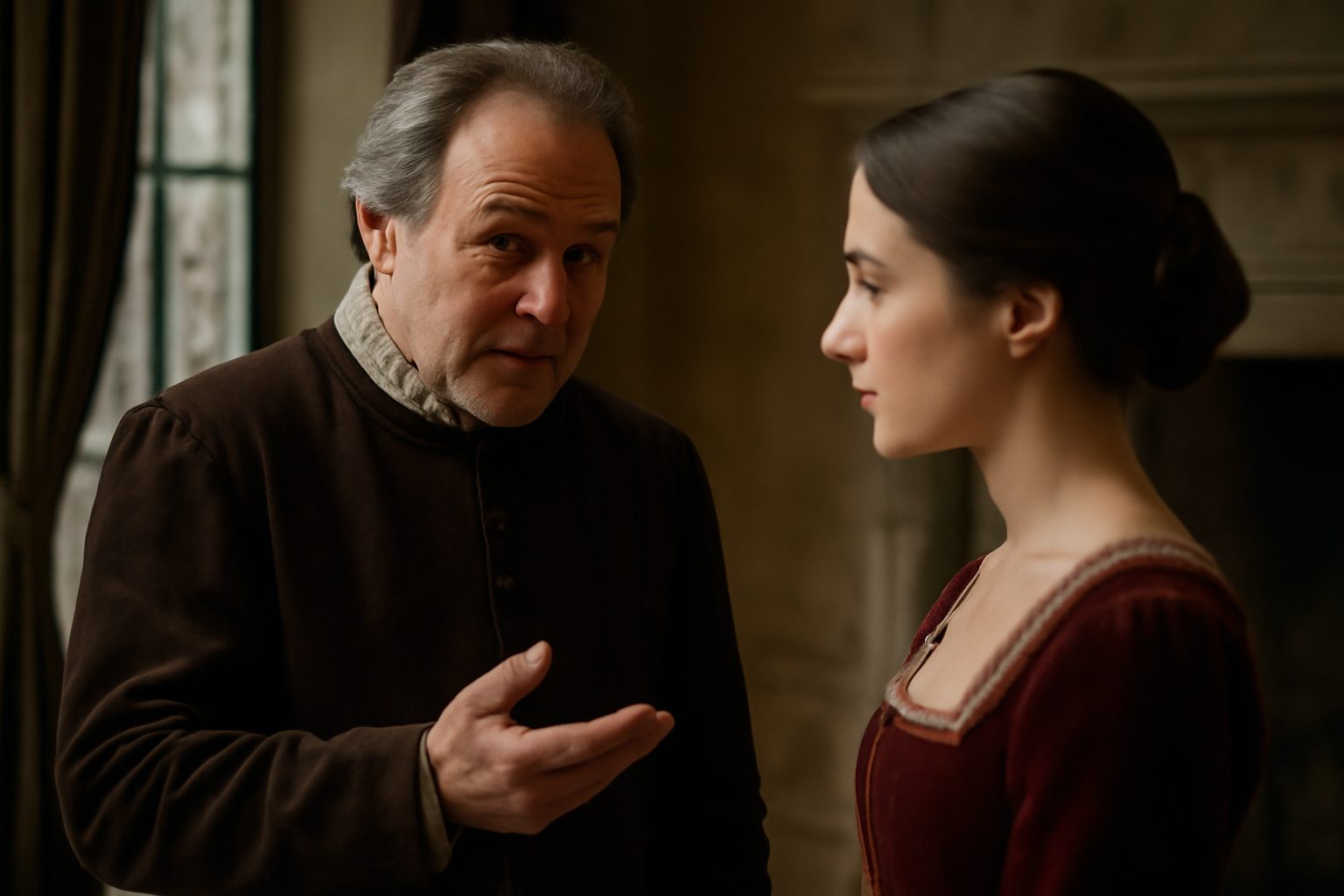
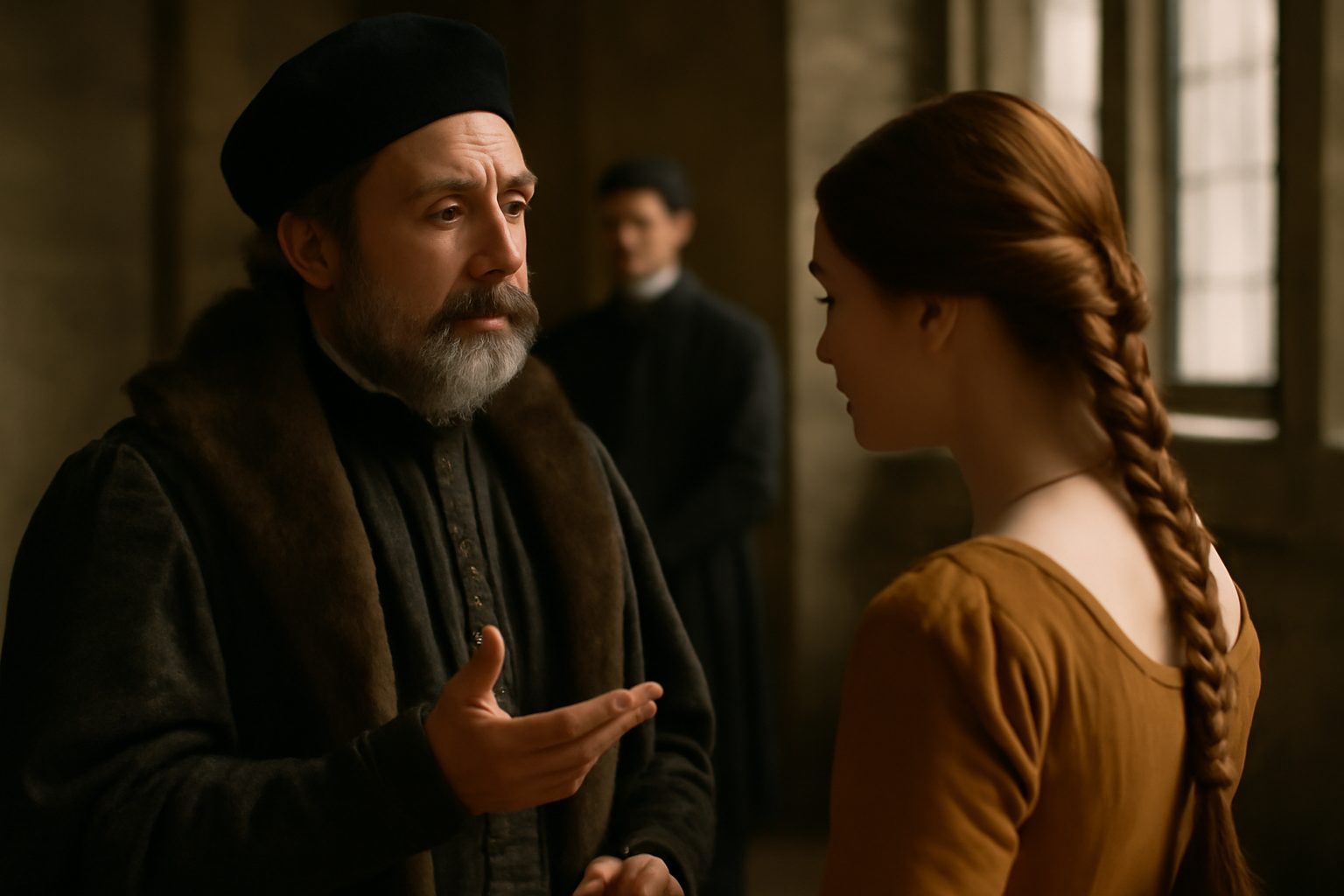
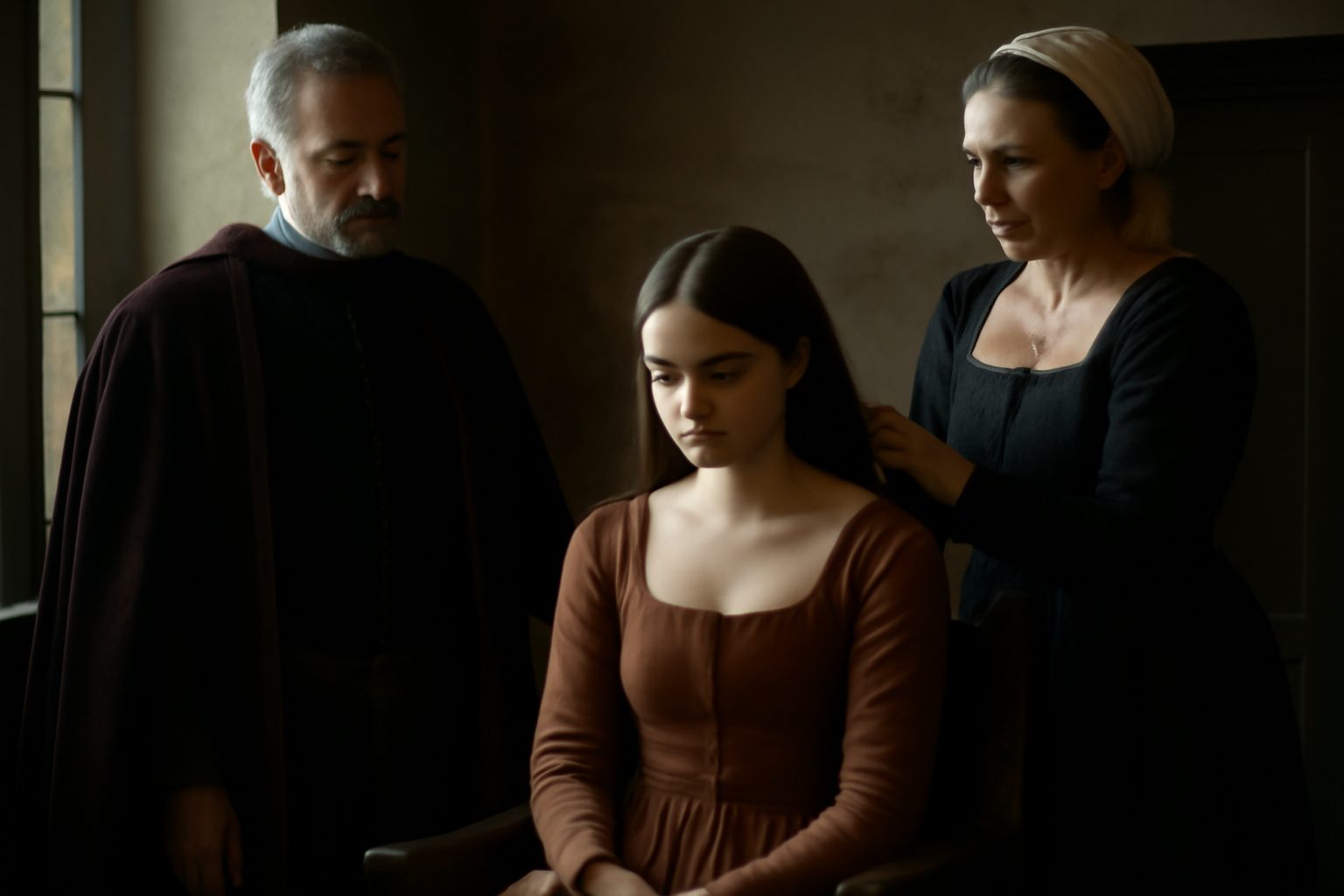
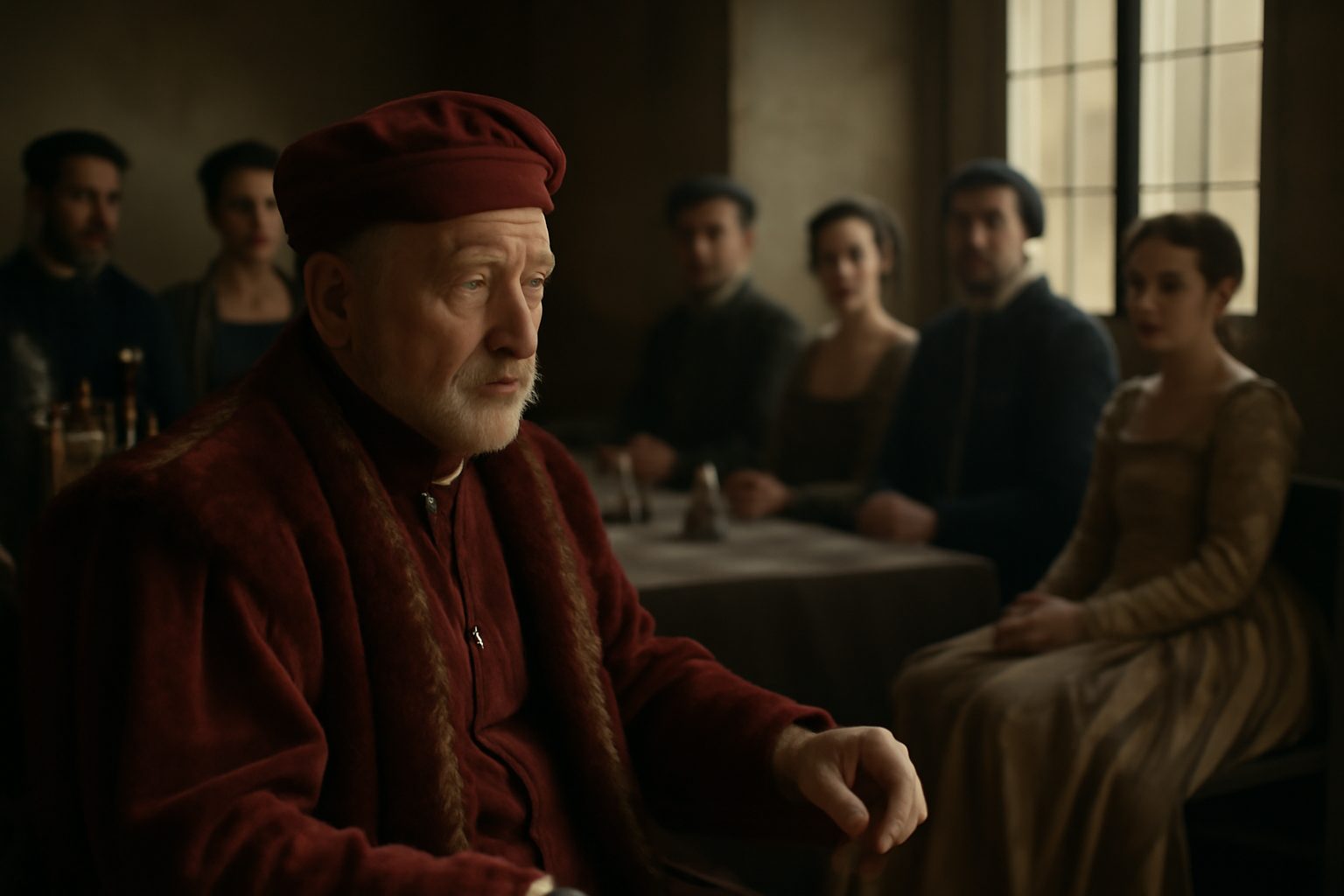
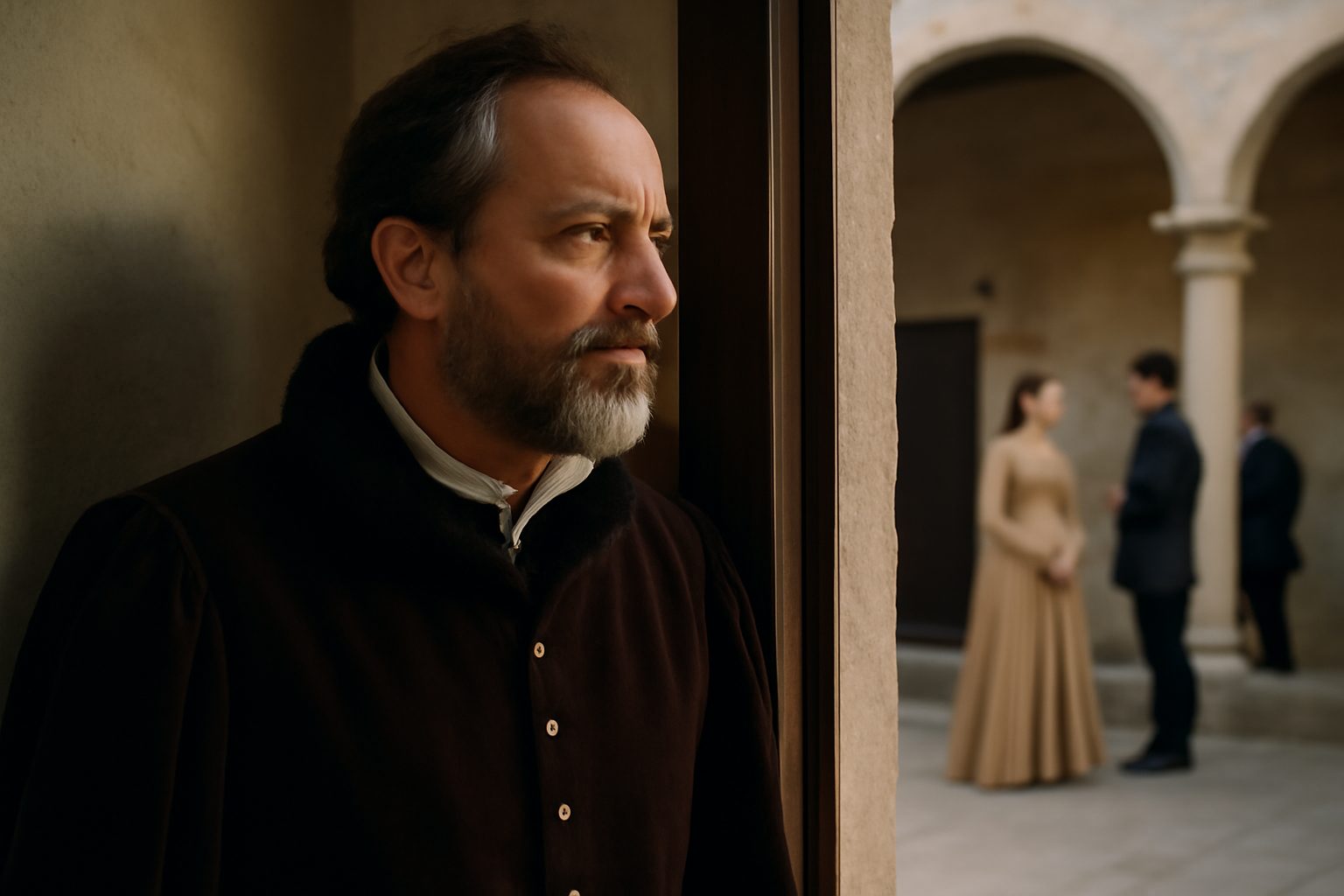
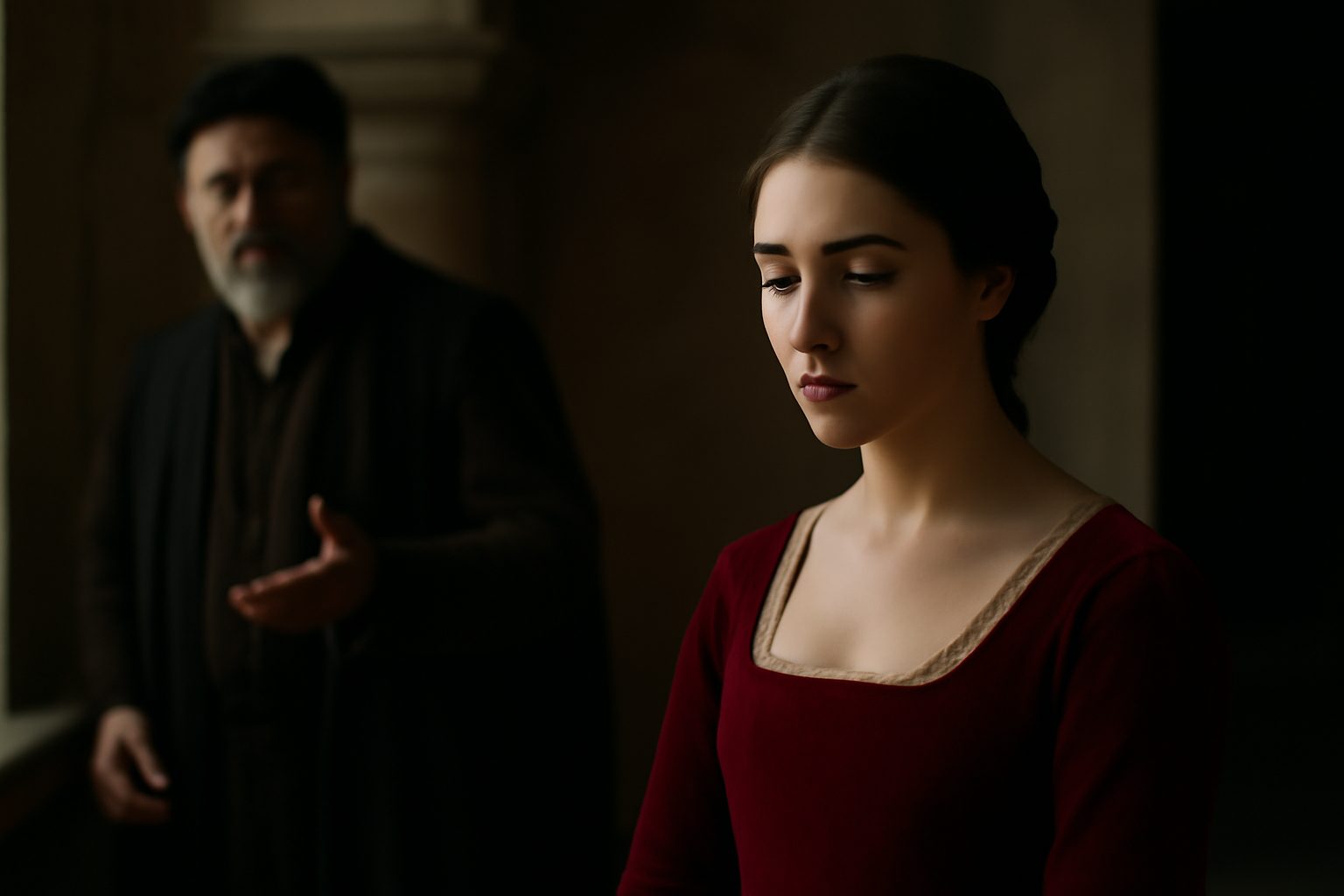
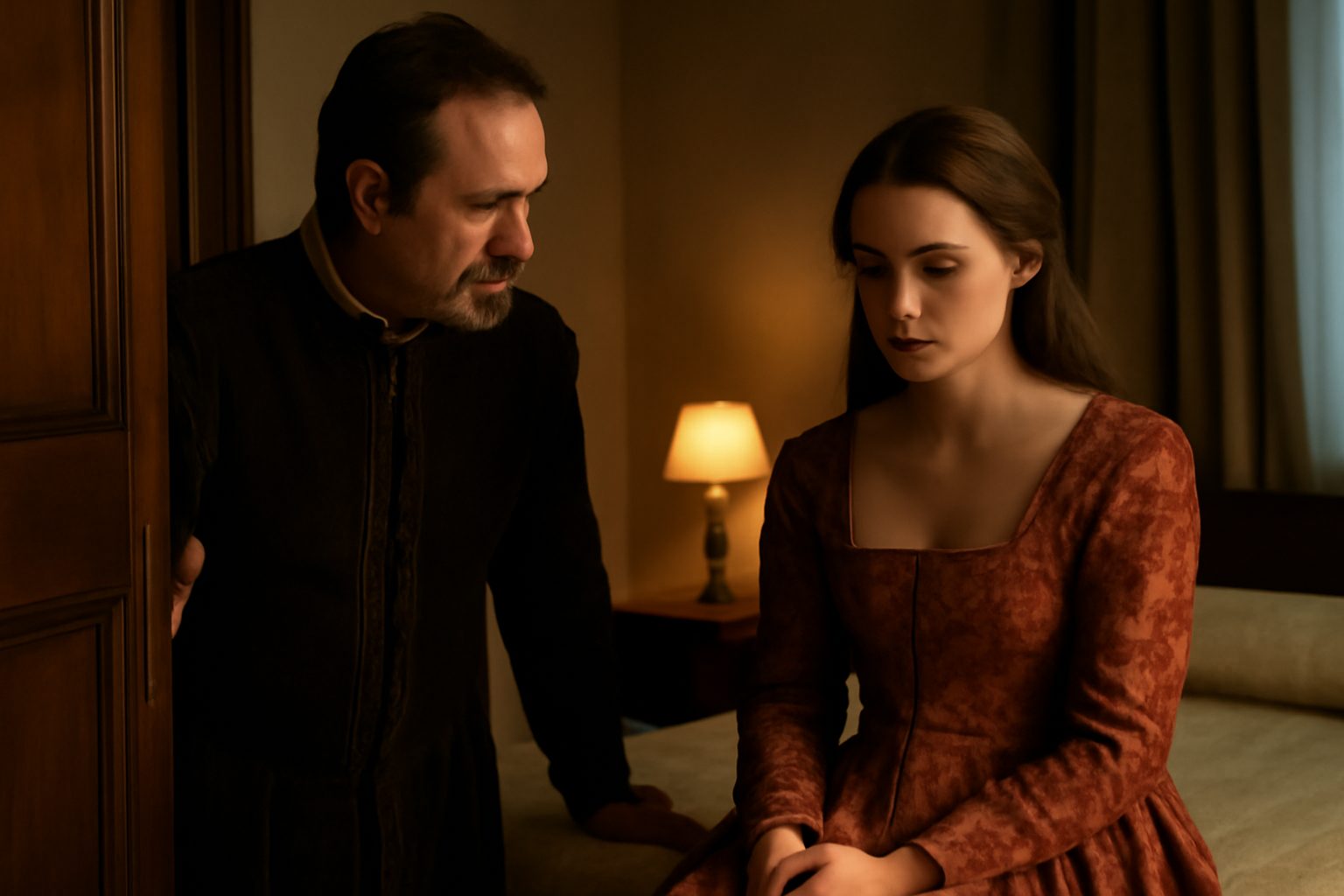
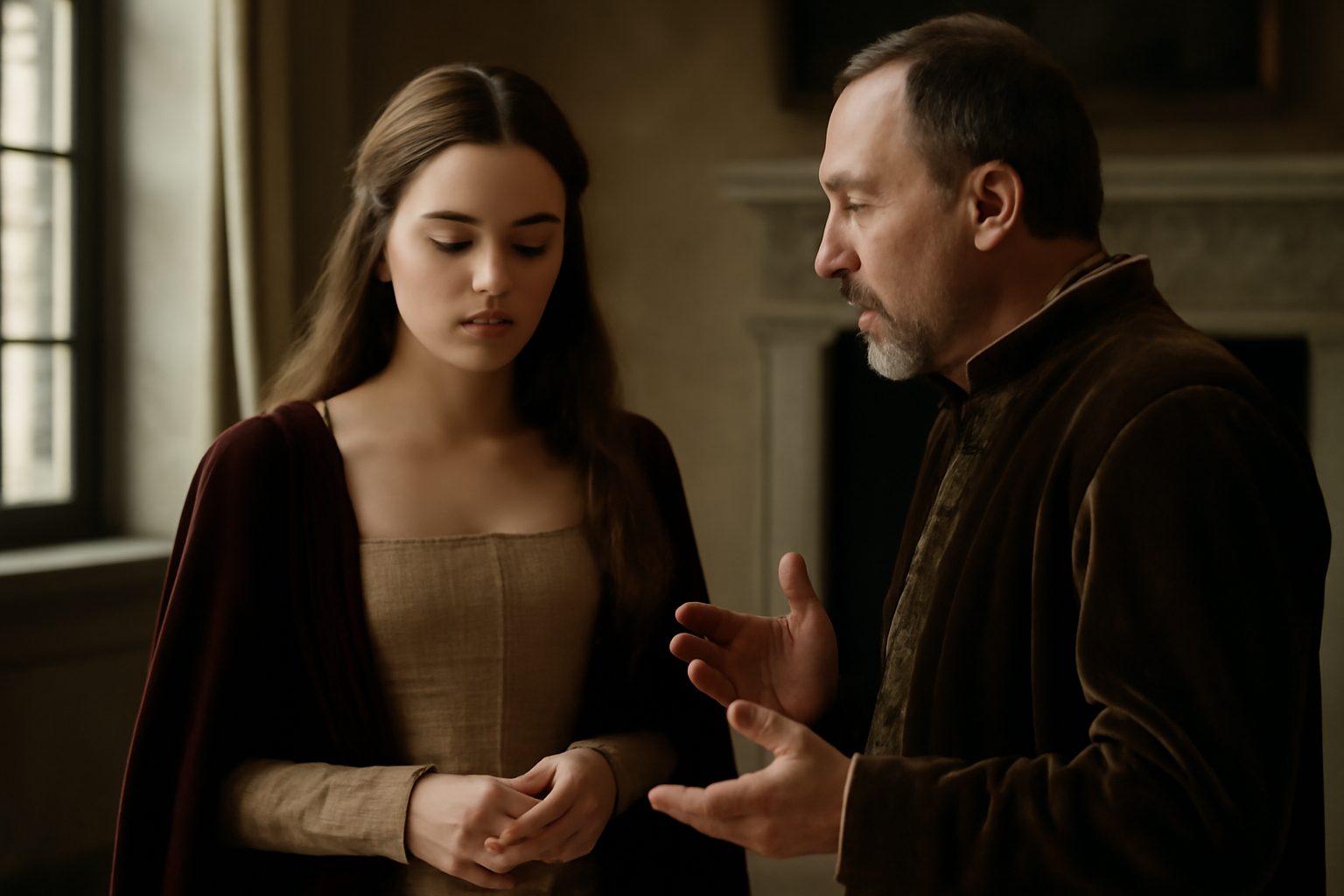
In Act 3, Scene 4 of Romeo and Juliet, Lord Capulet speaks to Paris about Juliet's hand in marriage, unaware of her secret union with Romeo. Still grieving Tybalt's death, Capulet initially hesitates but then abruptly changes his mind, offering a rushed and impulsive proposal. His words reflect a sudden, almost reckless decision to secure Paris as Juliet's husband, setting the stage for further conflict.
Capulet: "Sir Paris, I will make a desperate tender"
In modern day english, we would say:
Lord Capulet is telling Paris that he will confidently offer Juliet’s hand in marriage to him.
Frequently Asked Questions
What does Capulet offer to Paris in this scene?
Capulet offers his daughter Juliet's hand in marriage to Paris.
Connections to other verses:
Connections to "Sir Paris, I will make a desperate tender"
In this verse, Capulet refers to his intention to offer Juliet's hand in marriage to Paris as a "desperate tender," indicating the urgency and gravity of the situation. This connects directly to the earlier line where he acknowledges that recent tragic events have left no time to properly discuss the matter with Juliet, emphasizing the haste and pressure behind his decision.
Links to Juliet's Emotional State
Capulet's desperation is partly driven by Juliet's grief, as noted in this verse, which highlights her deep sorrow over Tybalt's death. Her emotional state is further emphasized in another line, where Capulet describes her as secluded in her sadness, making the "desperate tender" an attempt to pull her out of mourning.
Connection to Wedding Plans
The urgency in Capulet's offer aligns with the hasty wedding arrangements discussed later in the scene. For instance, this verse solidifies Thursday as the wedding day, a decision prompted by the same sense of desperation. Paris echoes this urgency in his wish for Thursday to arrive sooner, reinforcing the rashness of the plans.
Contrast with Earlier Hesitation
Capulet's "desperate tender" contrasts with his earlier, more measured approach to the marriage. In another verse, he admits that these "times of woe afford no time to woo," yet he proceeds with the offer anyway, highlighting the shift in his demeanor due to circumstance.