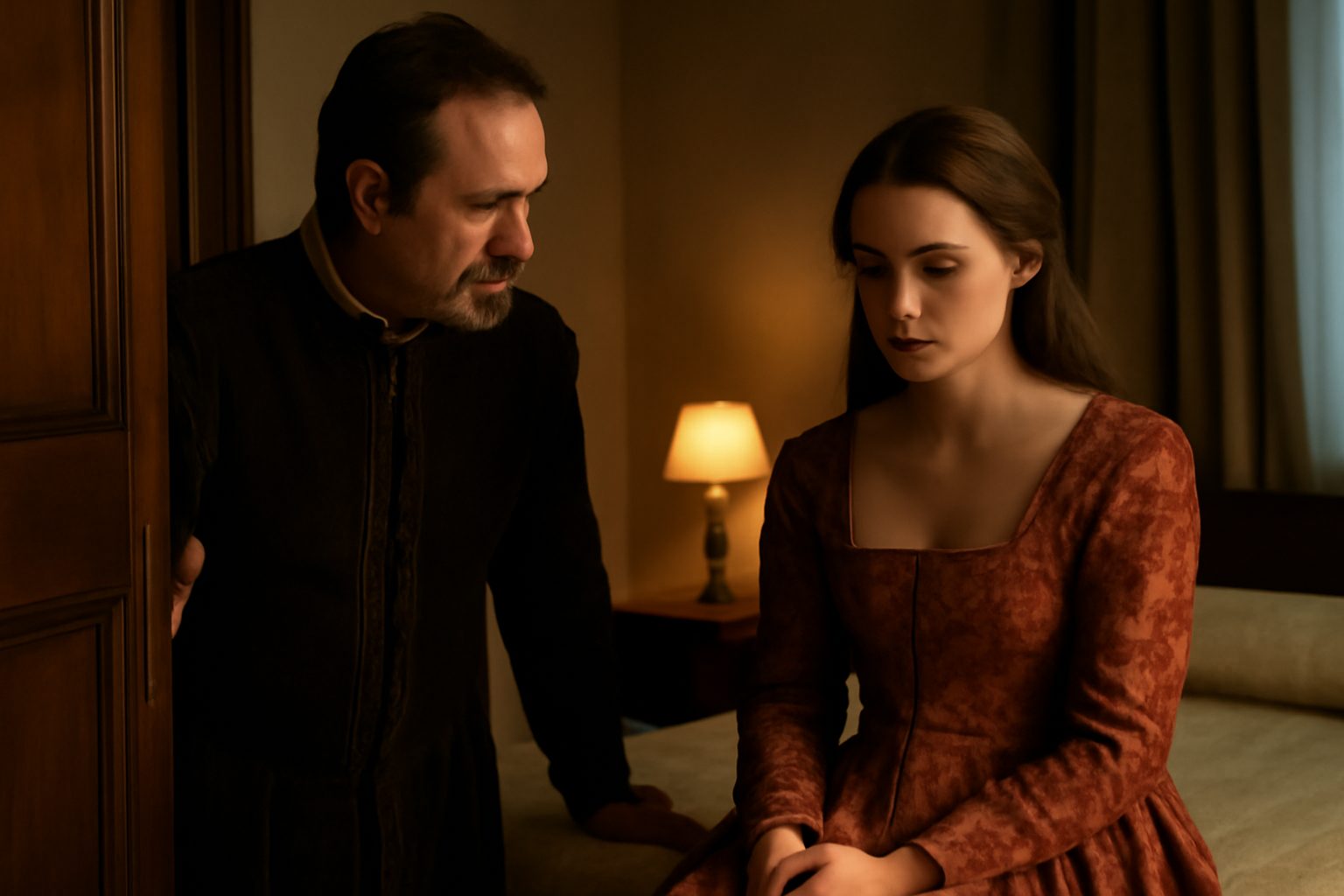
In Act 3, Scene 4 of Romeo and Juliet, Lord Capulet speaks these words as he hastily arranges Juliet's marriage to Paris. Still unaware of her secret union with Romeo, he promises to consult her the next morning, assuming her obedience. This moment highlights the disconnect between Juliet's desires and her family's expectations, setting the stage for the coming conflict.
Lady Capulet: "I will, and know her mind early to-morrow;"
In modern day english, we would say:
I will find out what she thinks first thing tomorrow.
Frequently Asked Questions
What does Lady Capulet plan to do the next morning?
Lady Capulet plans to find out Juliet's thoughts or feelings the next morning.
Connections to other verses:
Connections to "I will, and know her mind early to-morrow;"
This line, spoken by Lord Capulet, is a direct response to Paris's request to marry Juliet. It reflects his confidence in his authority over his daughter and his intention to quickly resolve the matter.
Immediate Context and Planning
Capulet's promise to ascertain Juliet's feelings "early to-morrow" is part of a broader discussion about the wedding timeline. Earlier, he had instructed Lady Capulet to "go you to her ere you go to bed" to prepare Juliet, and he later confirms the urgency with "Prepare her, wife, against this wedding-day." This underscores the Capulets' haste, driven by their desire to cheer Juliet after Tybalt's death.
Assumptions About Juliet's Compliance
Capulet's assurance that he will "know her mind" is rooted in his belief that Juliet will obey him, as seen when he tells Paris, "I think she will be ruled / In all respects by me." This assumption of her compliance contrasts sharply with Juliet's secret marriage to Romeo, highlighting the generational and emotional divide.
Contrast with Juliet's True State
Unbeknownst to Capulet, Juliet is grieving not only for Tybalt but for Romeo's banishment. Her mother notes "To-night she is mew'd up to her heaviness," and Capulet himself acknowledges "Tis very late, she'll not come down to-night," showing her isolation. His plan to "know her mind early to-morrow" is ironic, as her true feelings are already committed to Romeo.
Accelerated Timeline and Dramatic Irony
The urgency in Capulet's line connects to the rushed wedding plans discussed throughout the scene. Paris initially suggests "Wednesday next," but Capulet worries it is too soon, proposing "Thursday" instead, which is eagerly accepted. This haste, meant to alleviate grief, instead propels the tragedy forward, as Juliet's forced engagement to Paris leads to her desperate actions.