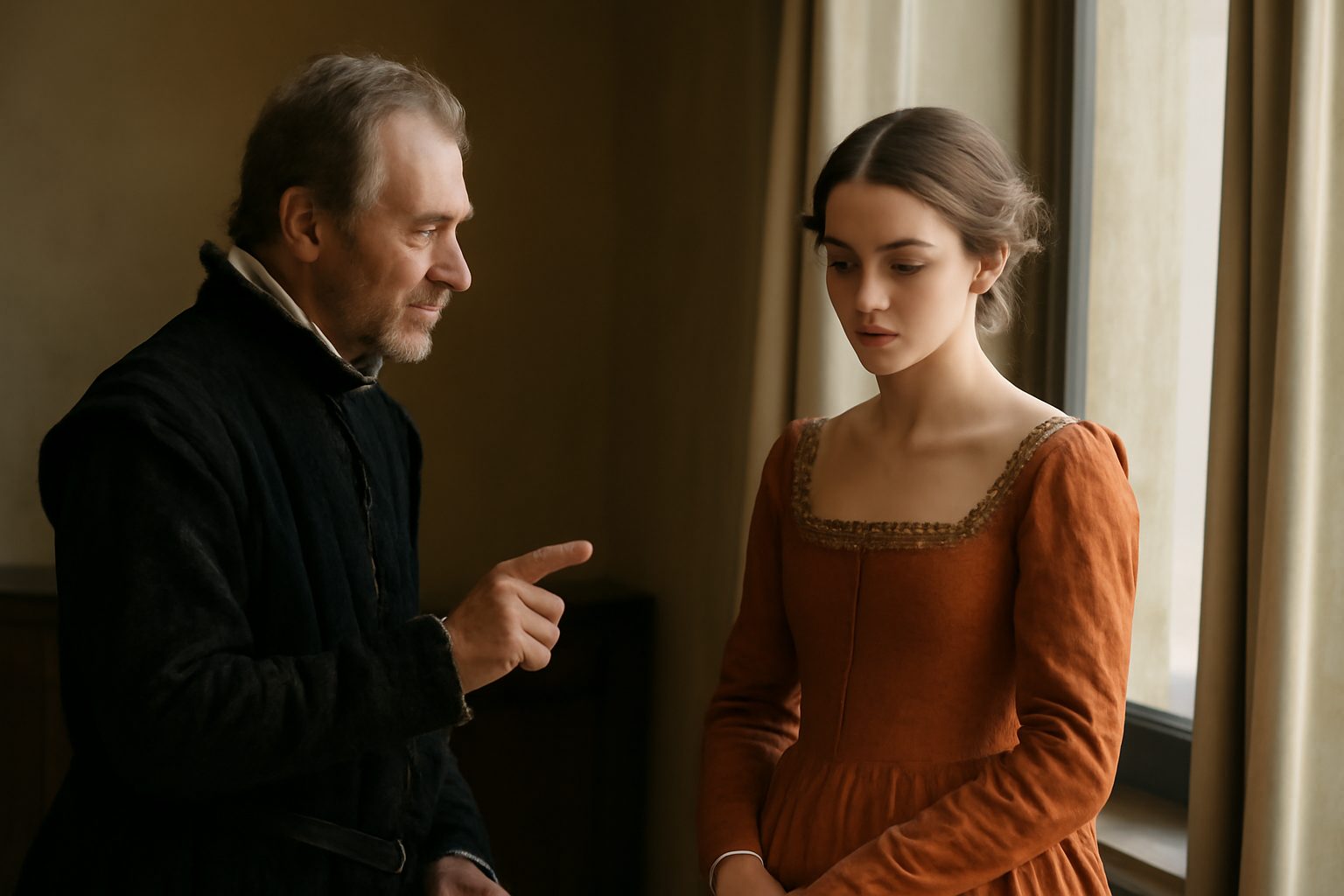
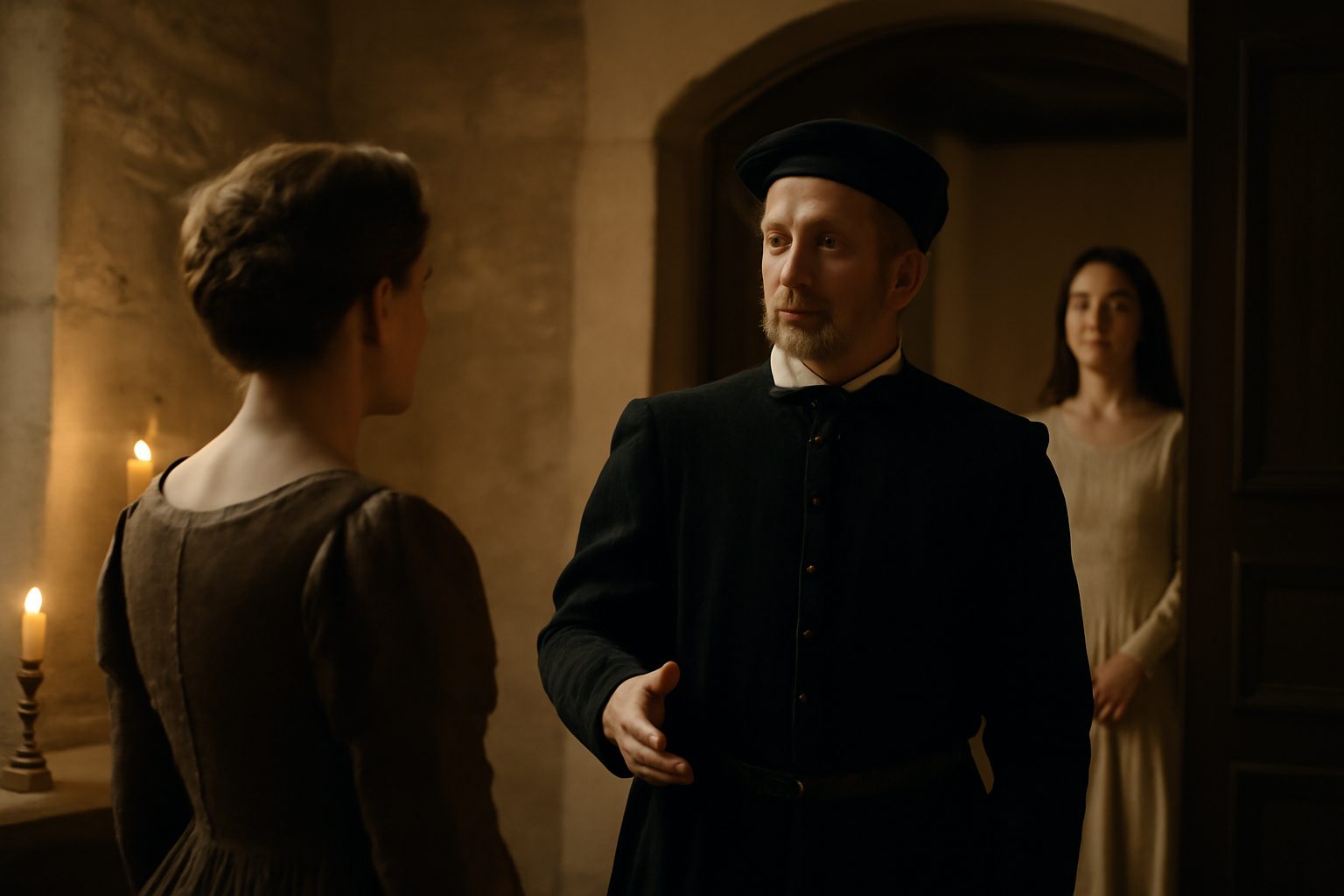
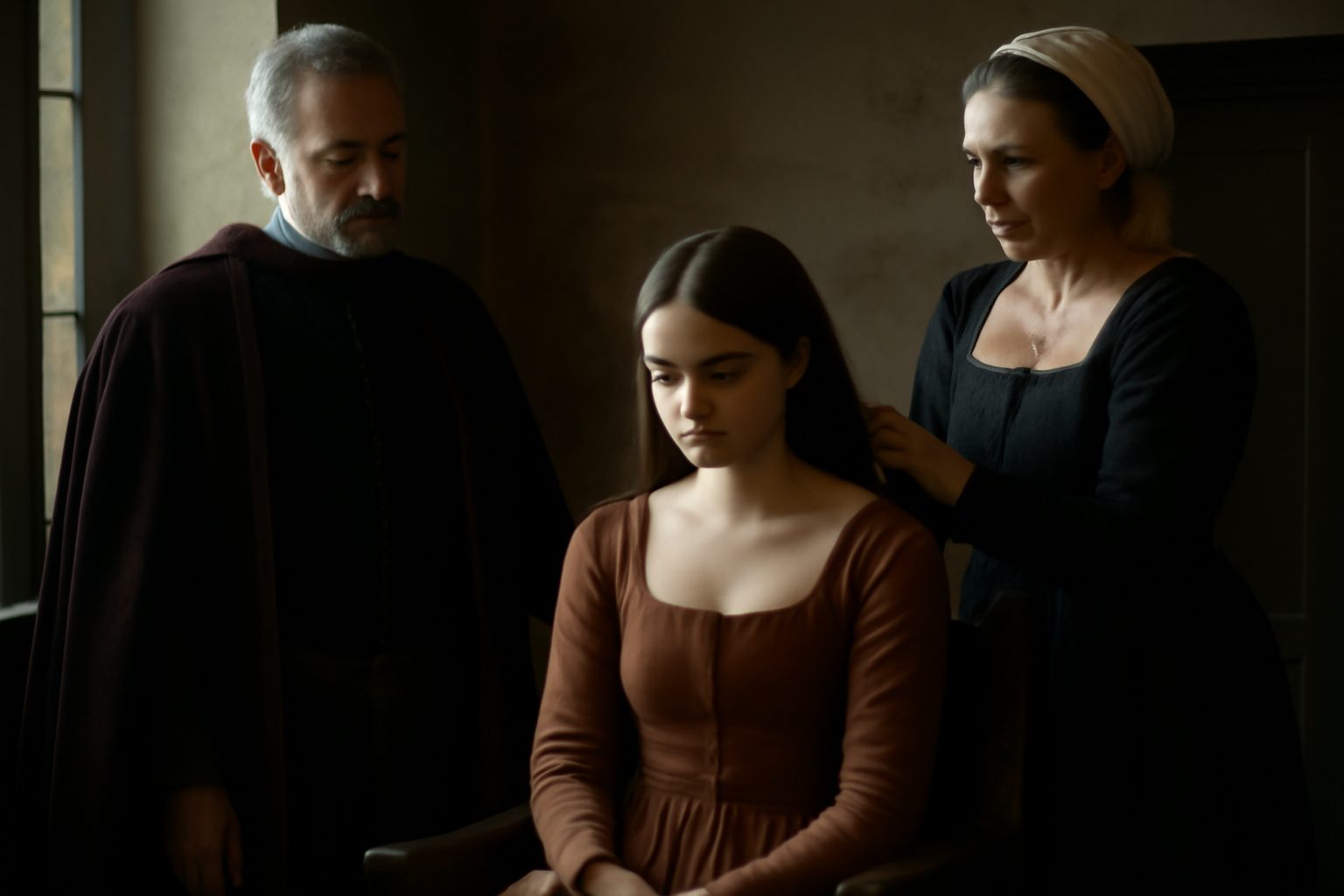
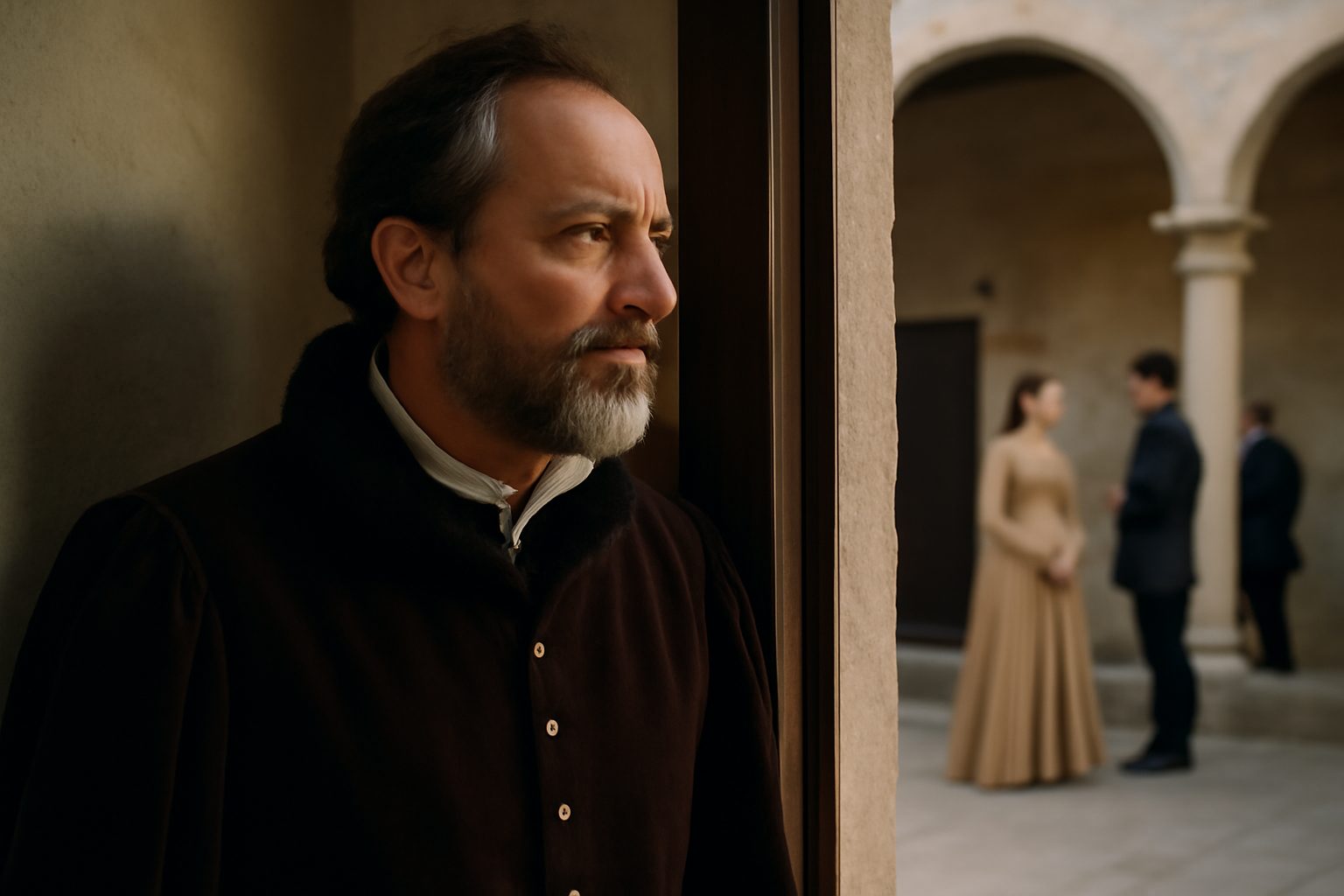
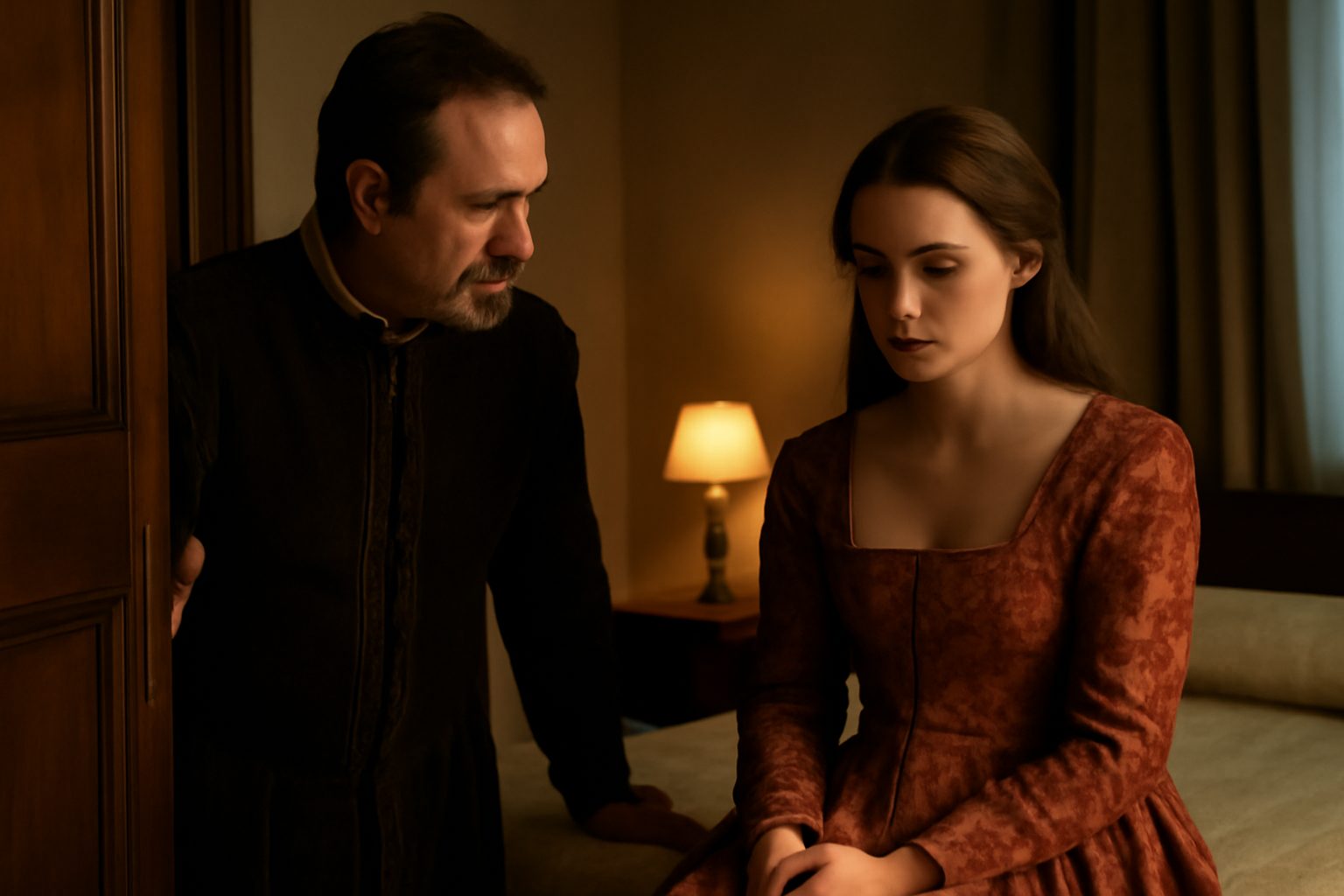
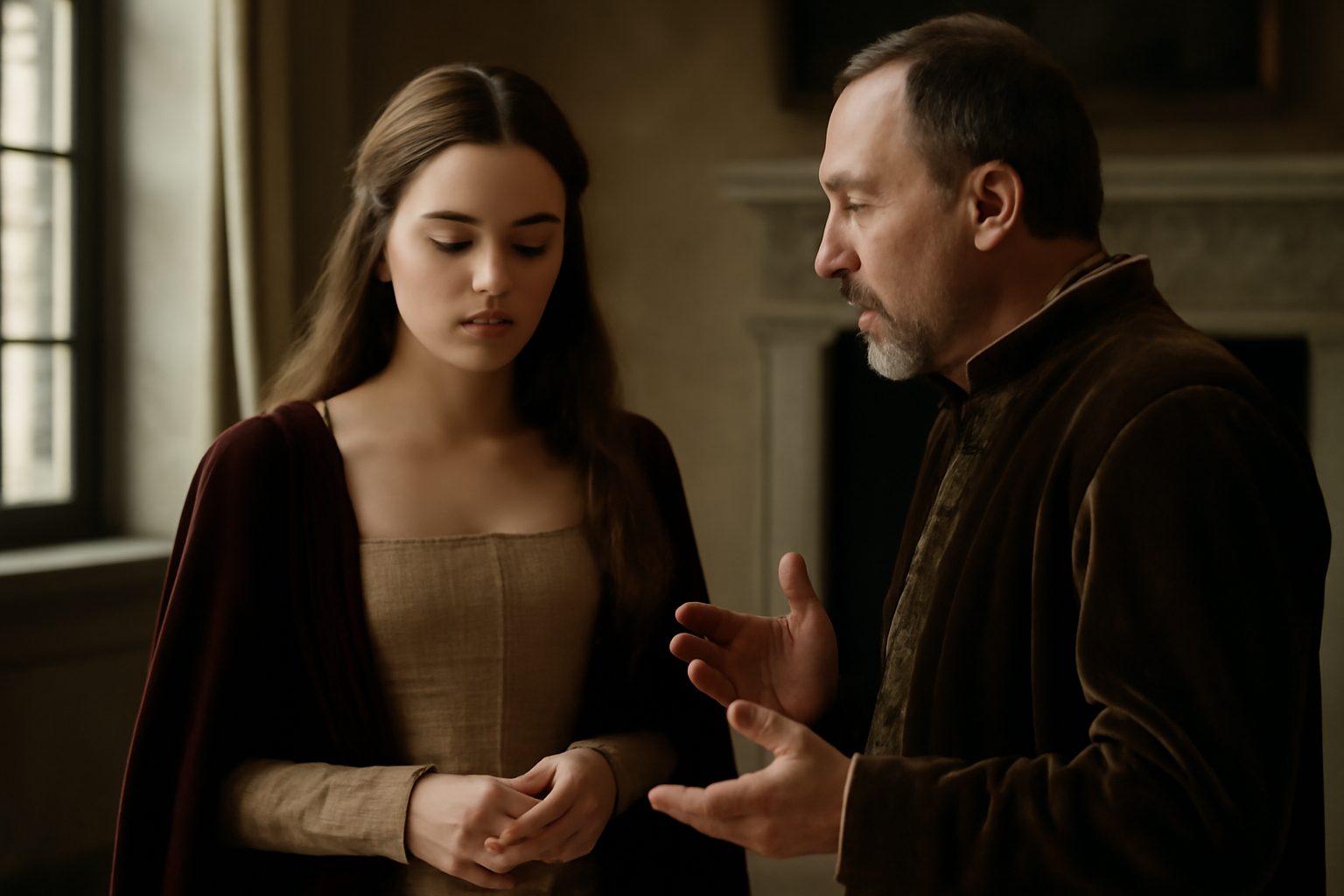
In Act 3, Scene 4 of Romeo and Juliet, Lord Capulet speaks this line as he hastily arranges Juliet's marriage to Paris. Still unaware of her secret union with Romeo, he sets the date for Thursday, believing it will comfort her after Tybalt's death. This moment highlights the mounting pressure on Juliet, as her family's plans clash with her own desperate circumstances.
Capulet: "Well get you gone: o' Thursday be it, then."
In modern day english, we would say:
Alright, then leave now—let’s make it Thursday.
Frequently Asked Questions
What day does Capulet choose for the wedding in this scene?
Thursday
Connections to other verses:
Connections to "Well get you gone: o' Thursday be it, then."
This line, spoken by Lord Capulet, serves as the decisive conclusion to the discussion about Juliet's marriage to Paris. It connects thematically and sequentially to several other verses in the scene:
Decision-Making and Timing
The verse directly follows "And there an end. But what say you to Thursday?", where Paris suggests Thursday as the wedding date. Capulet's response confirms this choice, showing agreement after earlier hesitation about the timing.
This decision contrasts with earlier uncertainty about dates, such as when Capulet asks "But, soft! what day is this?" and receives the answer "Monday, my lord". The progression from confusion to certainty highlights the rushed nature of the arrangement.
Parental Authority and Assumptions
Capulet's confidence in this decision stems from his belief in Juliet's obedience, expressed in "Of my child's love: I think she will be ruled / In all respects by me; nay, more, I doubt it not." This assumption tragically contrasts with Juliet's actual feelings and situation.
The verse also relates to Capulet's earlier promise to Paris in "Sir Paris, I will make a desperate tender / Of my child's love", showing him following through on his commitment despite the circumstances.
Context of Grief and Haste
The decision occurs amidst acknowledgments of Tybalt's recent death, such as "For, hark you, Tybalt being slain so late" and "Look you, she loved her kinsman Tybalt dearly". The contrast between mourning and marriage plans underscores the scene's dramatic irony.
Capulet's recognition that "These times of woe afford no time to woo" makes the hasty Thursday wedding particularly poignant, as it ignores both proper courtship and grief periods.
Practical Arrangements
The confirmed date leads directly to practical instructions, including "Go you to Juliet ere you go to bed" and "Prepare her, wife, against this wedding-day", showing how Capulet's decision sets immediate actions in motion.
The verse also connects to the modest wedding plans mentioned in "We'll keep no great ado,--a friend or two" and "Therefore we'll have some half a dozen friends", reflecting the subdued atmosphere due to Tybalt's death.
Scene Conclusion
This decisive line effectively concludes the wedding arrangements, leading to the scene's closing exchanges: "Farewell, my lord. Light to my chamber, ho!" and "Good night.", as the characters depart to implement the plans.