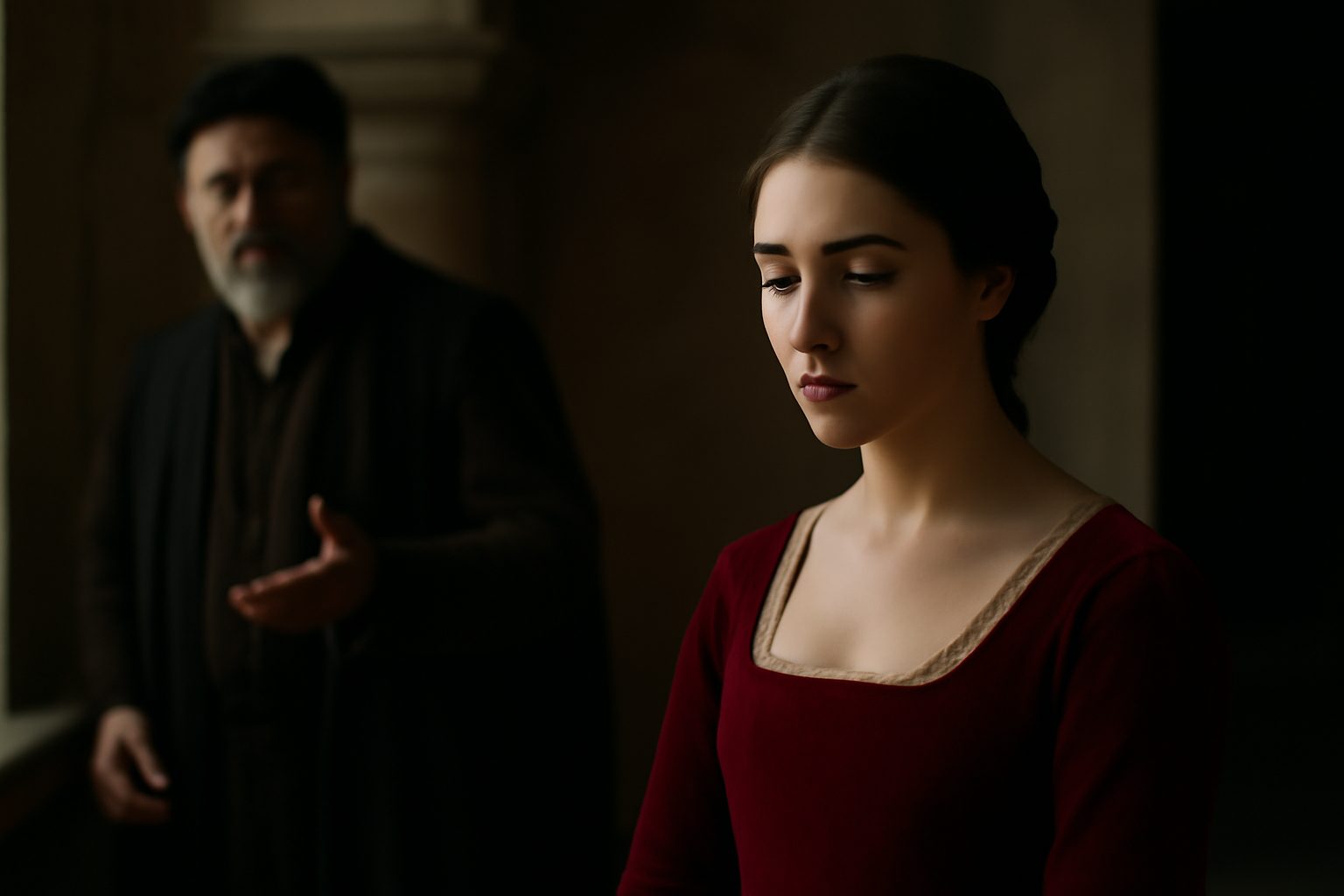
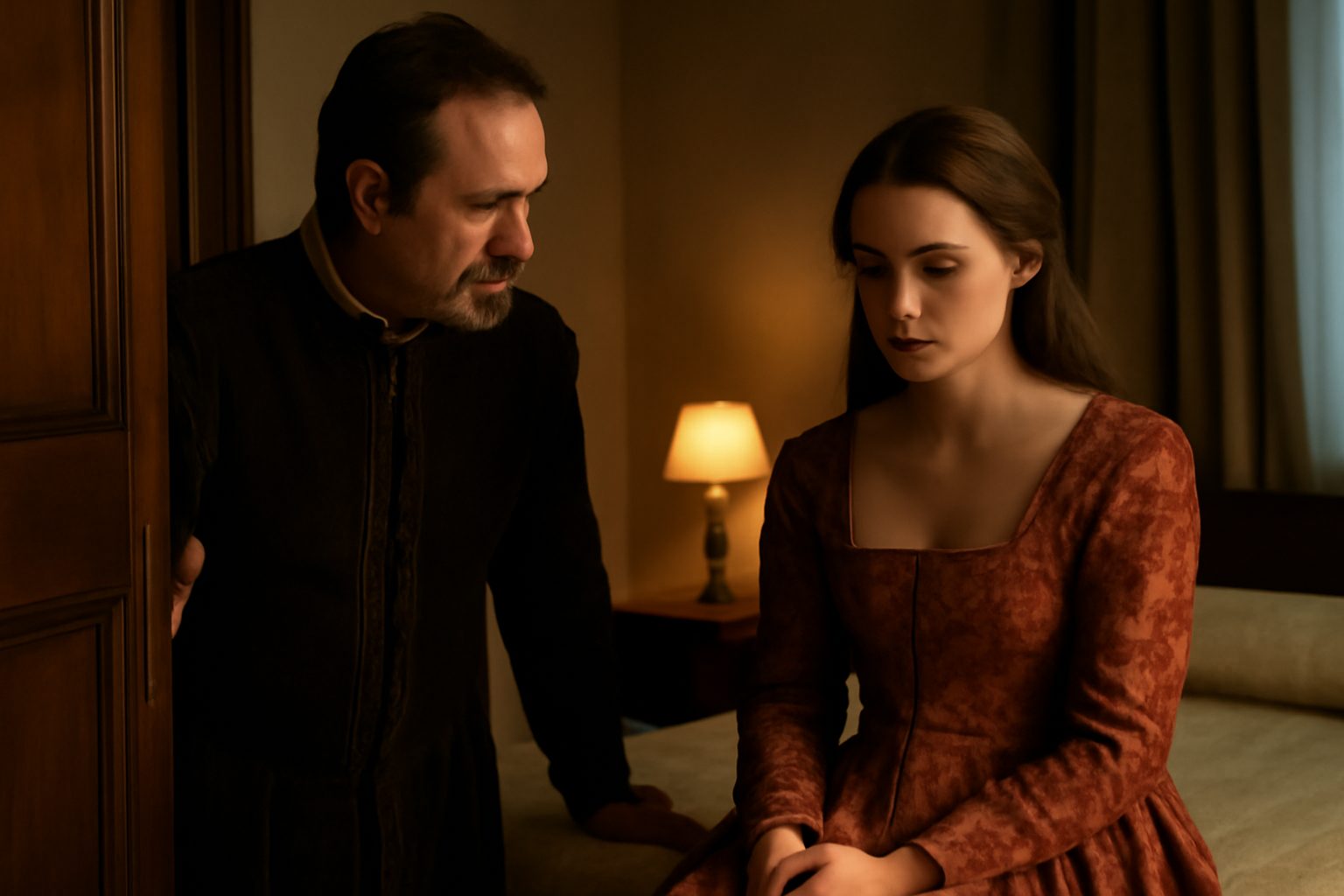
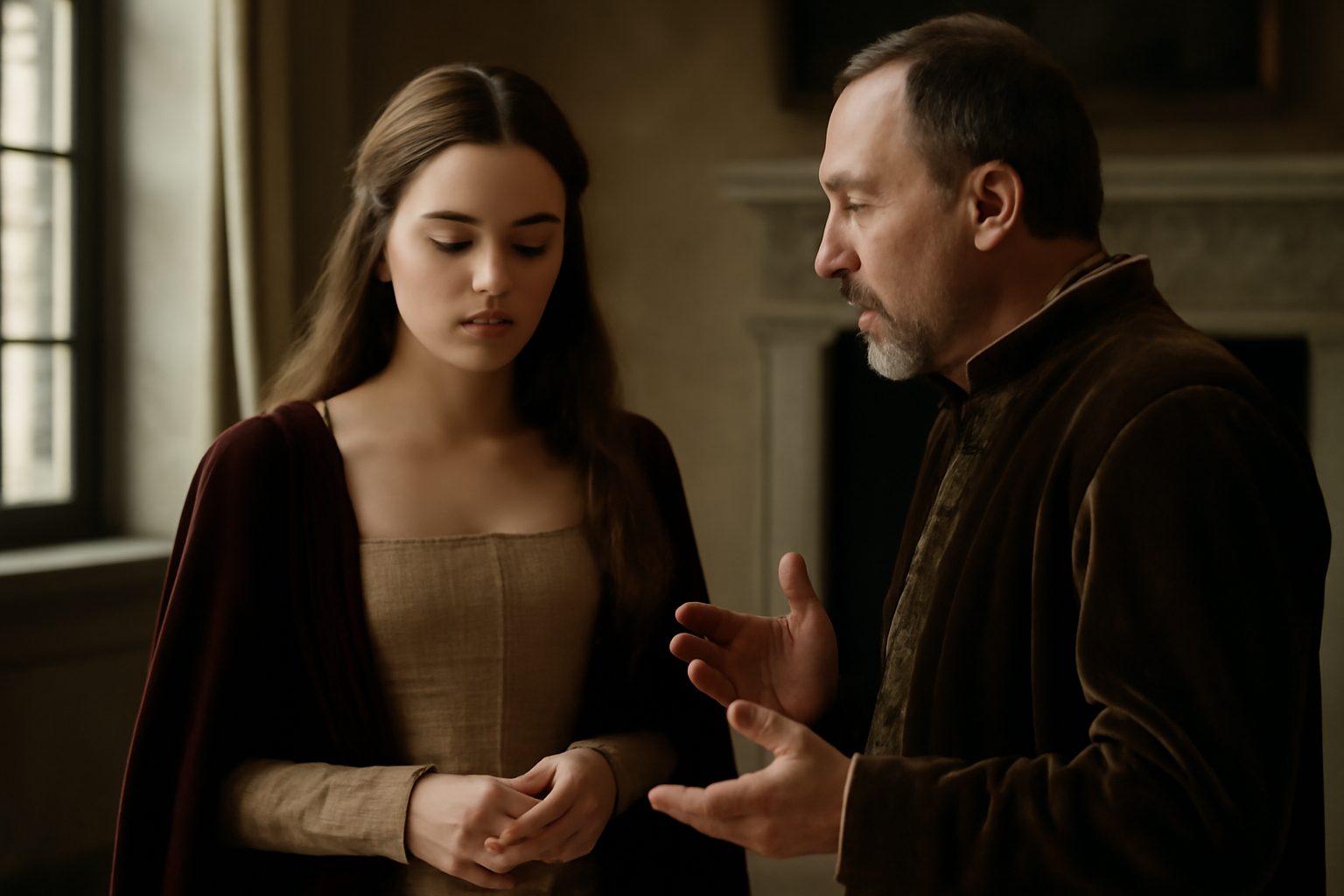
In Act 3, Scene 4 of Romeo and Juliet, Lord Capulet speaks to Paris about Juliet's sudden marriage arrangements following Tybalt's death. He justifies the quick decision by suggesting that celebrating too much would be inappropriate given their recent loss, as Tybalt was their kinsman. This line reflects Capulet's attempt to balance social expectations with the family's grief.
Capulet: "Being our kinsman, if we revel much:"
In modern day english, we would say:
Since he is our relative, we should not party too much.
Frequently Asked Questions
Who is Capulet referring to when he says 'our kinsman' in this line?
Capulet is referring to Paris, who is a relative (kinsman) of Prince Escalus.
Connections to other verses:
Connections to "Being our kinsman, if we revel much:"
This line is part of Lord Capulet's justification for planning a modest wedding celebration for Juliet and Paris, given the recent death of Tybalt. It connects thematically and contextually to several other verses in the scene.
Connection to Mourning and Restraint
The sentiment of restraint due to Tybalt's death is echoed in "It may be thought we held him carelessly," where Capulet worries about public perception if they celebrate too soon. Similarly, "For, hark you, Tybalt being slain so late," directly references the recency of the tragedy as a reason for subdued festivities.
Connection to Wedding Planning
This verse is part of a larger discussion about the wedding arrangements. It follows "Therefore we'll have some half a dozen friends," which continues the idea of a small gathering. The planning culminates in "Well get you gone: o' Thursday be it, then," solidifying the date and scale of the event.
Connection to Familial and Social Obligations
Capulet's mention of "kinsman" ties to "Look you, she loved her kinsman Tybalt dearly," emphasizing family bonds and the need to respect Juliet's grief. The urgency to proceed despite mourning is also seen in "These times of woe afford no time to woo," highlighting the tension between social expectations and emotional reality.