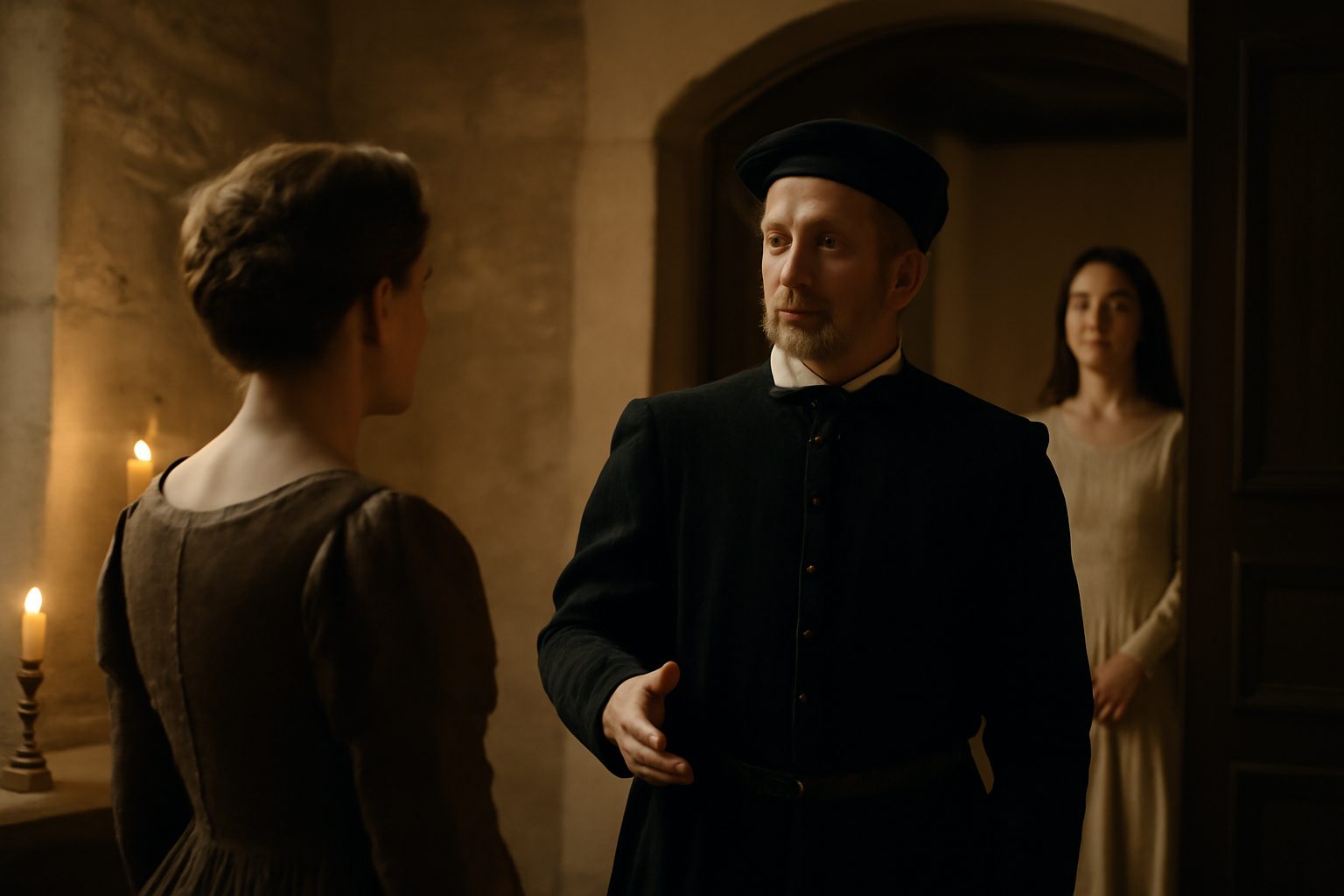
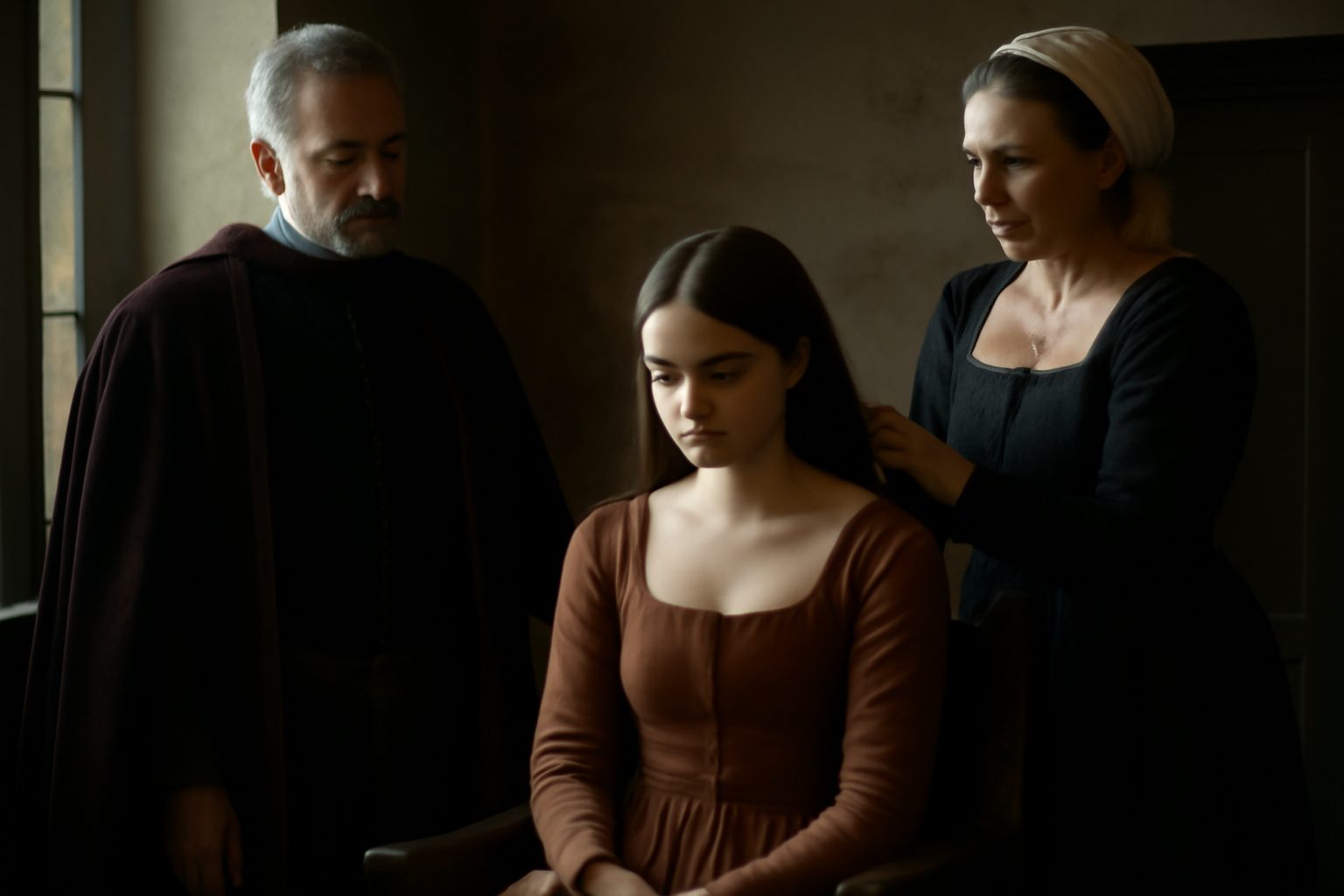
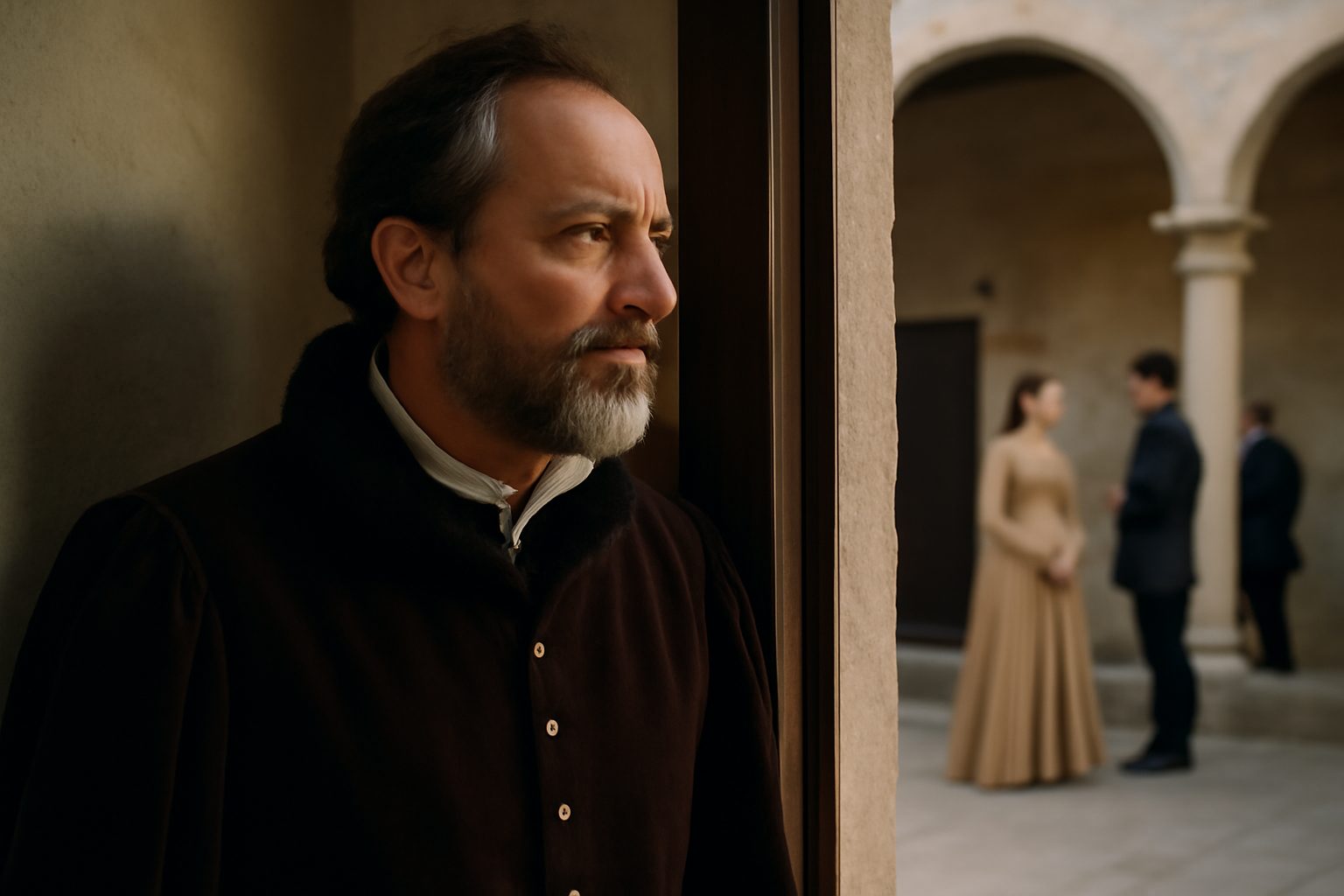
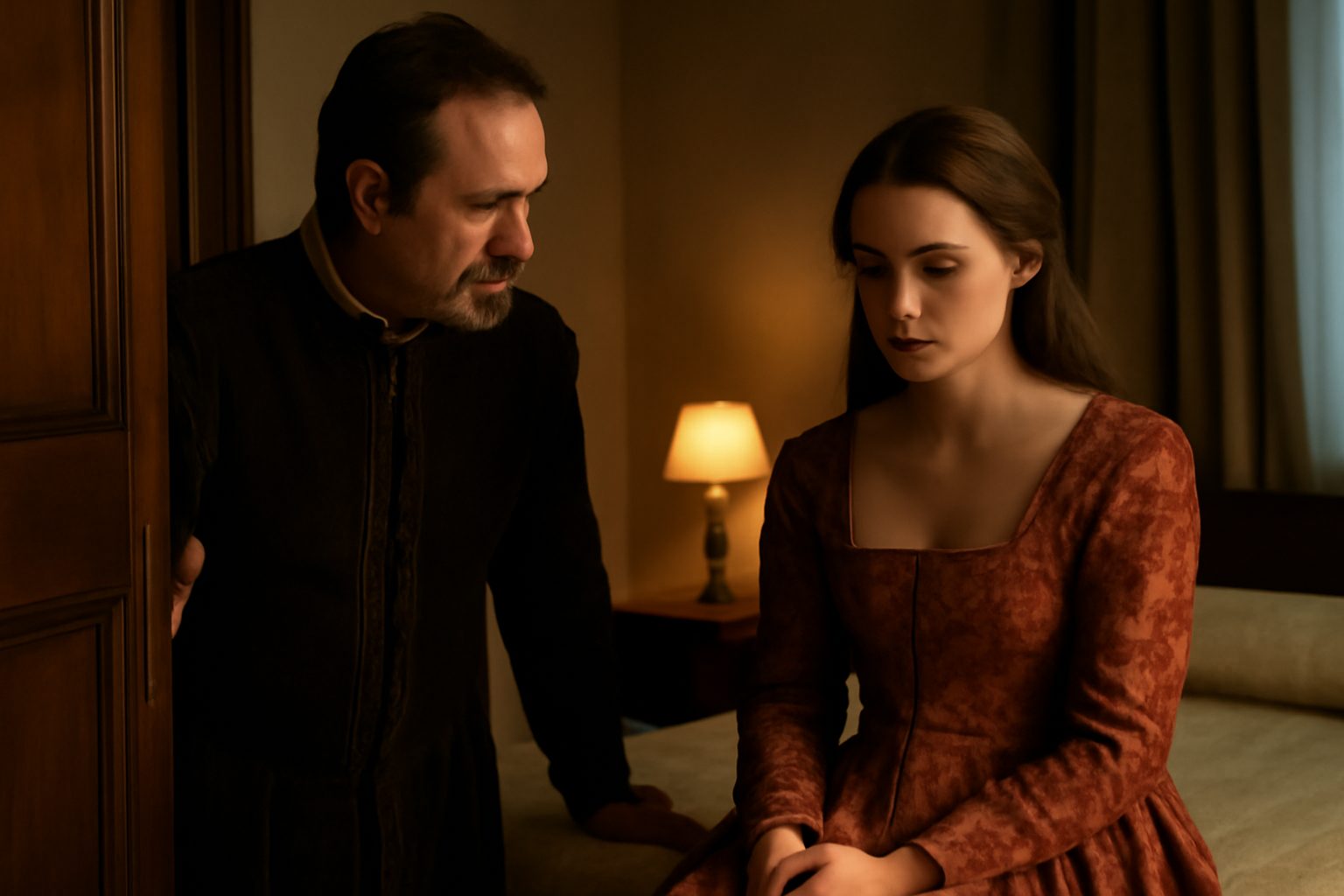
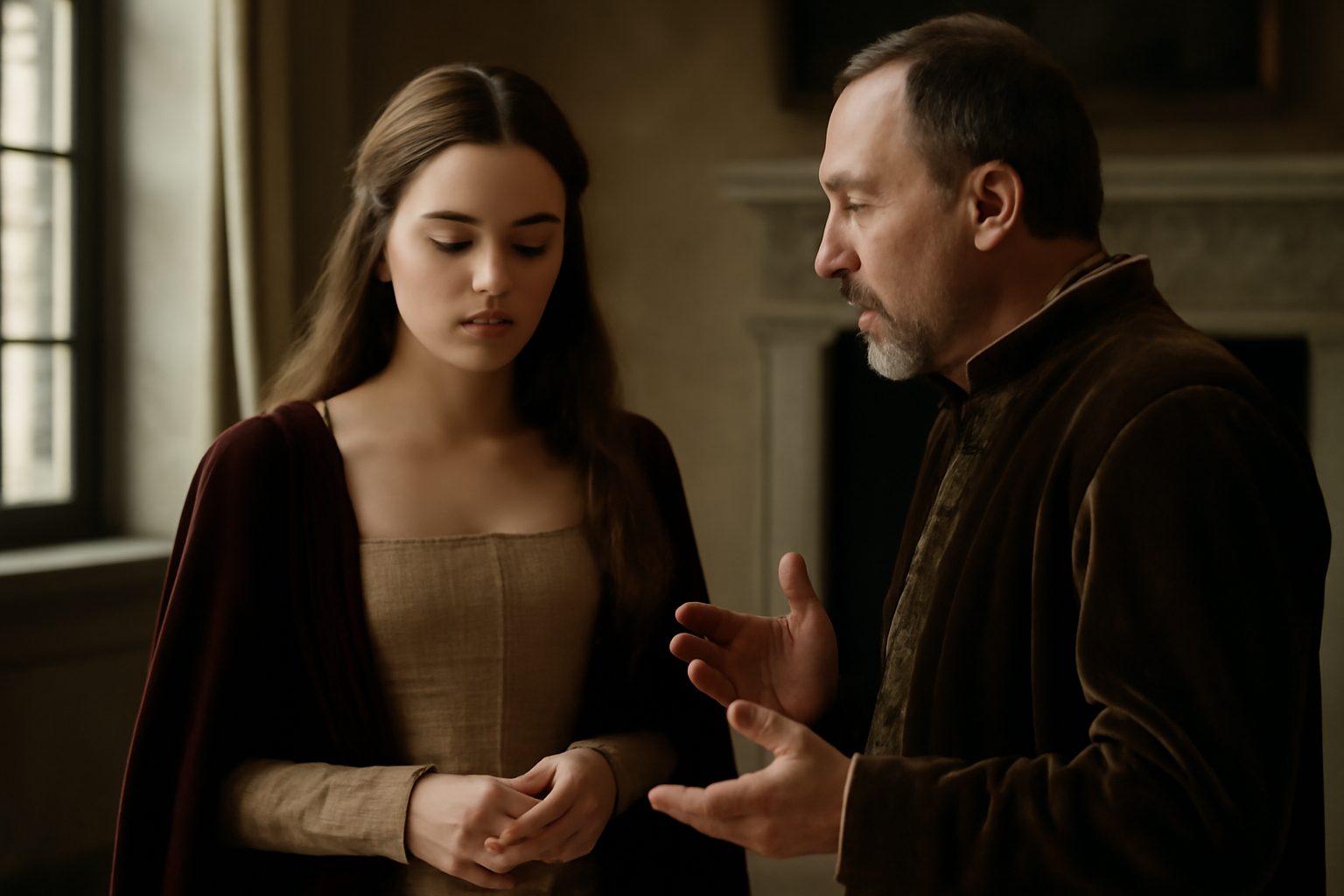
In Act 3, Scene 4 of Romeo and Juliet, Lord Capulet speaks these words as he suddenly decides to arrange Juliet's marriage to Paris. This impulsive decision comes shortly after Tybalt's death, as Capulet seeks to lift the family's spirits. The line reflects his haste and the mounting pressures that will soon clash with Juliet's secret loyalty to Romeo.
Capulet: "But, soft! what day is this?"
In modern day english, we would say:
Wait, what day is it today?
Frequently Asked Questions
What does Capulet ask in Act 3 Scene 4 of Romeo and Juliet?
He asks what day it is.
Connections to other verses:
Connections to "But, soft! what day is this?"
The verse "But, soft! what day is this?" serves as a pivotal moment in Act 3, Scene 4, where Lord Capulet seeks clarity on the current day to plan Juliet's wedding to Paris. This inquiry directly initiates the scheduling discussion that dominates the latter part of the scene.
Immediate Response and Day Identification
Capulet's question is promptly answered by Paris in "Monday, my lord," establishing the timeline from which all subsequent wedding plans are derived.
Transition to Wedding Planning
This leads to Capulet's deliberation in "Monday! ha, ha! Well, Wednesday is too soon," where he dismisses an early date, showing his initial caution despite his later haste. The discussion culminates in the decision for a Thursday wedding, emphasized in "O' Thursday let it be: o' Thursday, tell her," and confirmed in "Well get you gone: o' Thursday be it, then."
Context of Haste and Grief
The urgency underlying this scheduling is rooted in the scene's earlier context. Capulet references the recent turmoil and Tybalt's death in "For, hark you, Tybalt being slain so late," which justifies the rushed plans as an attempt to uplift Juliet's spirits. This aligns with Lady Capulet's assurance in "Of my child's love: I think she will be ruled," highlighting their belief that the marriage will mitigate her grief.
Contrast with Prior Statements
Capulet's sudden focus on the date contrasts with his earlier acknowledgment in "That we have had no time to move our daughter," where he admits to not consulting Juliet, underscoring the patriarchal haste and lack of communication that fuels the tragedy.