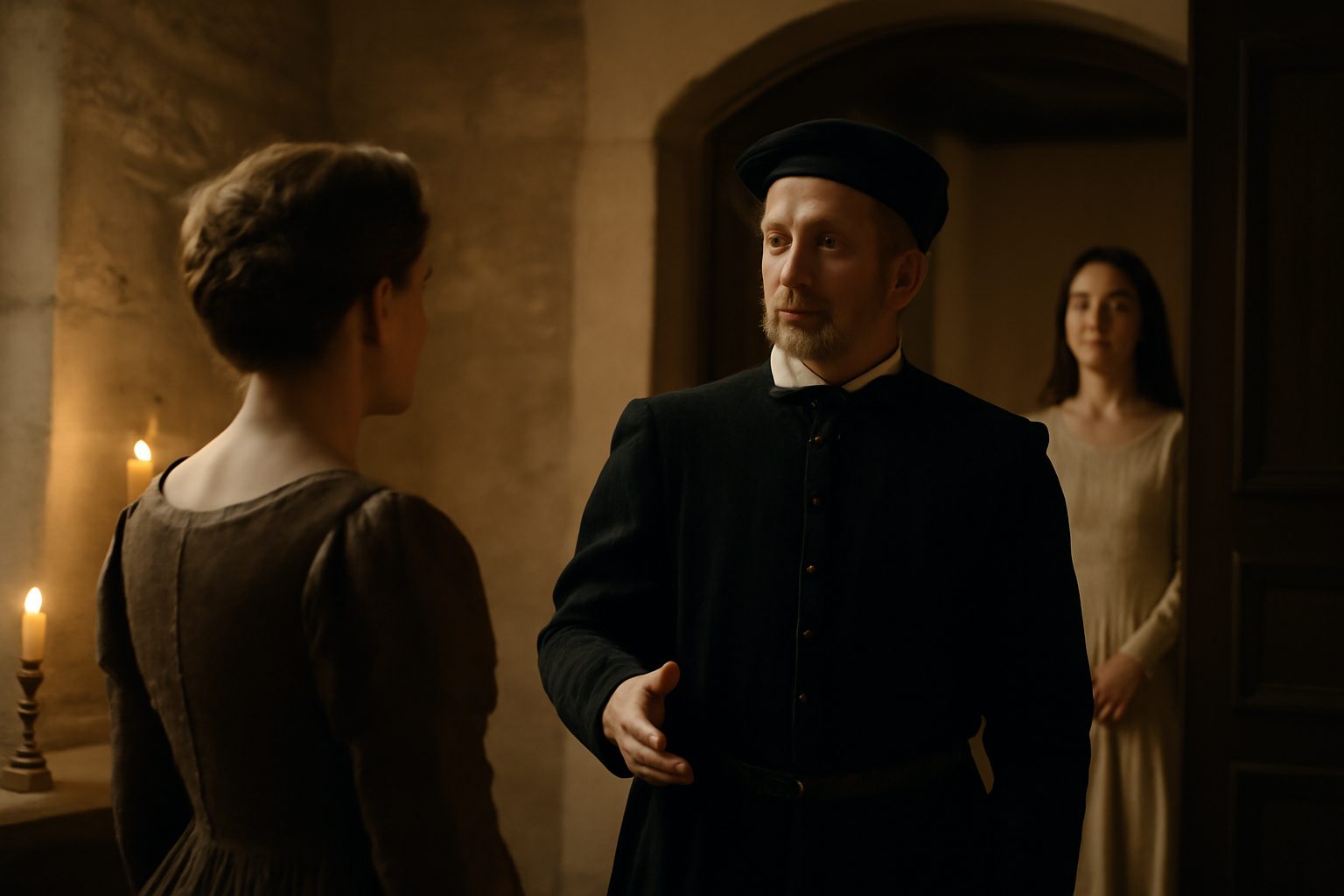
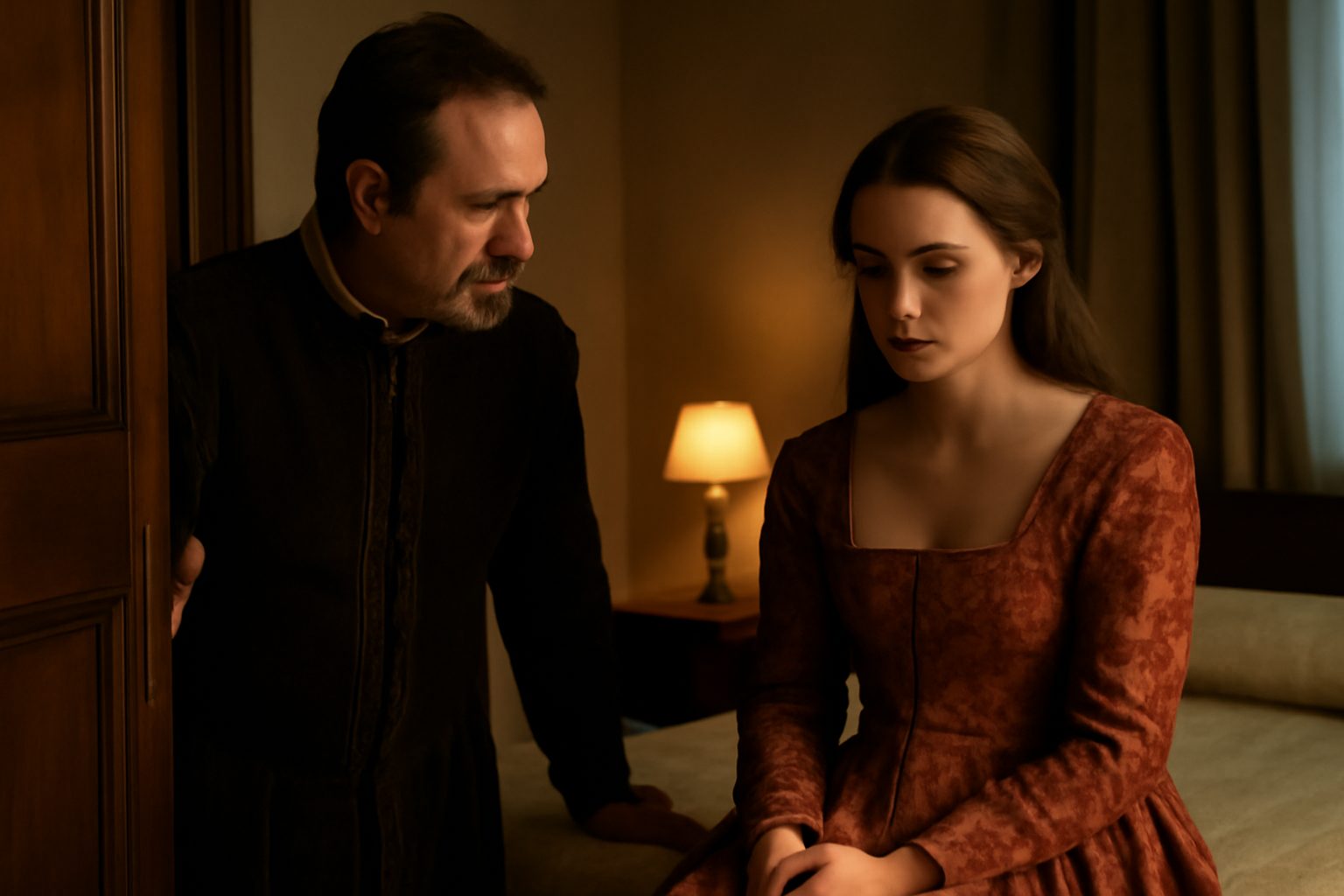
In Act 3, Scene 4 of Romeo and Juliet, Lord Capulet speaks this line while discussing Juliet's proposed marriage to Paris. He worries that refusing Paris might give the impression they did not value his offer, especially after Tybalt's recent death has left the family in mourning. The line reveals Capulet's concern for appearances and his eagerness to secure a advantageous match for his daughter amid the turmoil.
Capulet: "It may be thought we held him carelessly,"
In modern day english, we would say:
People might think we didn’t value him enough.
Frequently Asked Questions
Why does Capulet worry that people might think they treated someone without care?
Capulet is concerned that others might believe his family did not take proper care of Tybalt after his death, since they are arranging Juliet's marriage to Paris so soon after the tragedy.
Connections to other verses:
Connections to "It may be thought we held him carelessly"
This line, spoken by Lord Capulet, reflects his concern about public perception following Tybalt's death. It connects thematically and contextually with several other verses in the scene.
Concern for Reputation and Proper Conduct
Capulet's worry about appearing negligent ties directly to "Being our kinsman, if we revel much", where he expresses caution about excessive celebration after a family member's death. Both lines reveal his anxiety about maintaining social propriety.
Timing and Haste
The urgency implied in his concern connects to the discussion of wedding dates. His remark "And there an end. But what say you to Thursday?" shows how quickly he wants to resolve matters, possibly to offset any negative perceptions.
Context of Tybalt's Death
The line directly follows "For, hark you, Tybalt being slain so late", which establishes the recent nature of the tragedy that fuels Capulet's concern about appearances.
Contrast with Earlier Statements
This cautious attitude contrasts with his earlier dismissal in "And so did I:--Well, we were born to die", showing how his perspective shifts from philosophical acceptance to social anxiety as the conversation progresses.