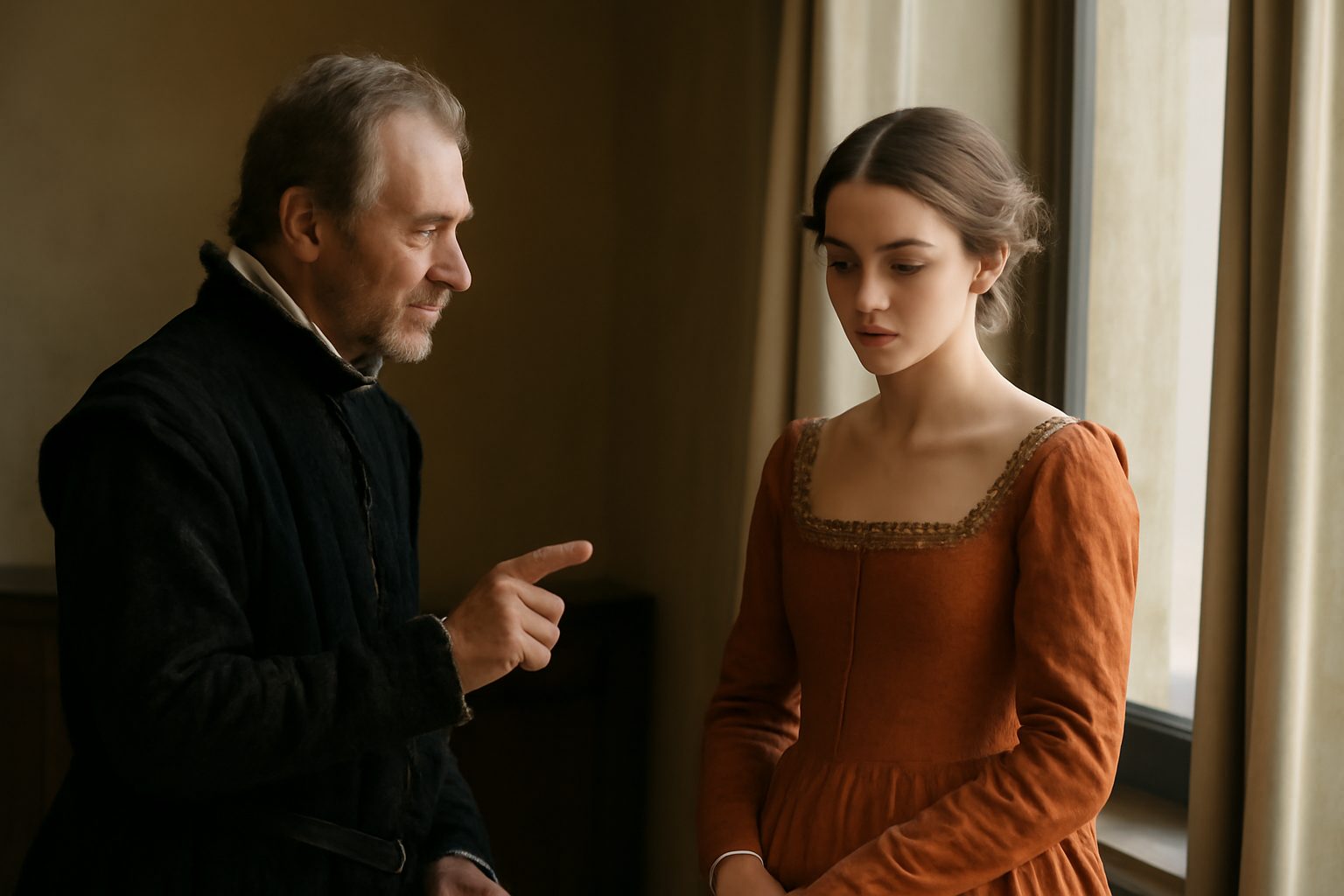
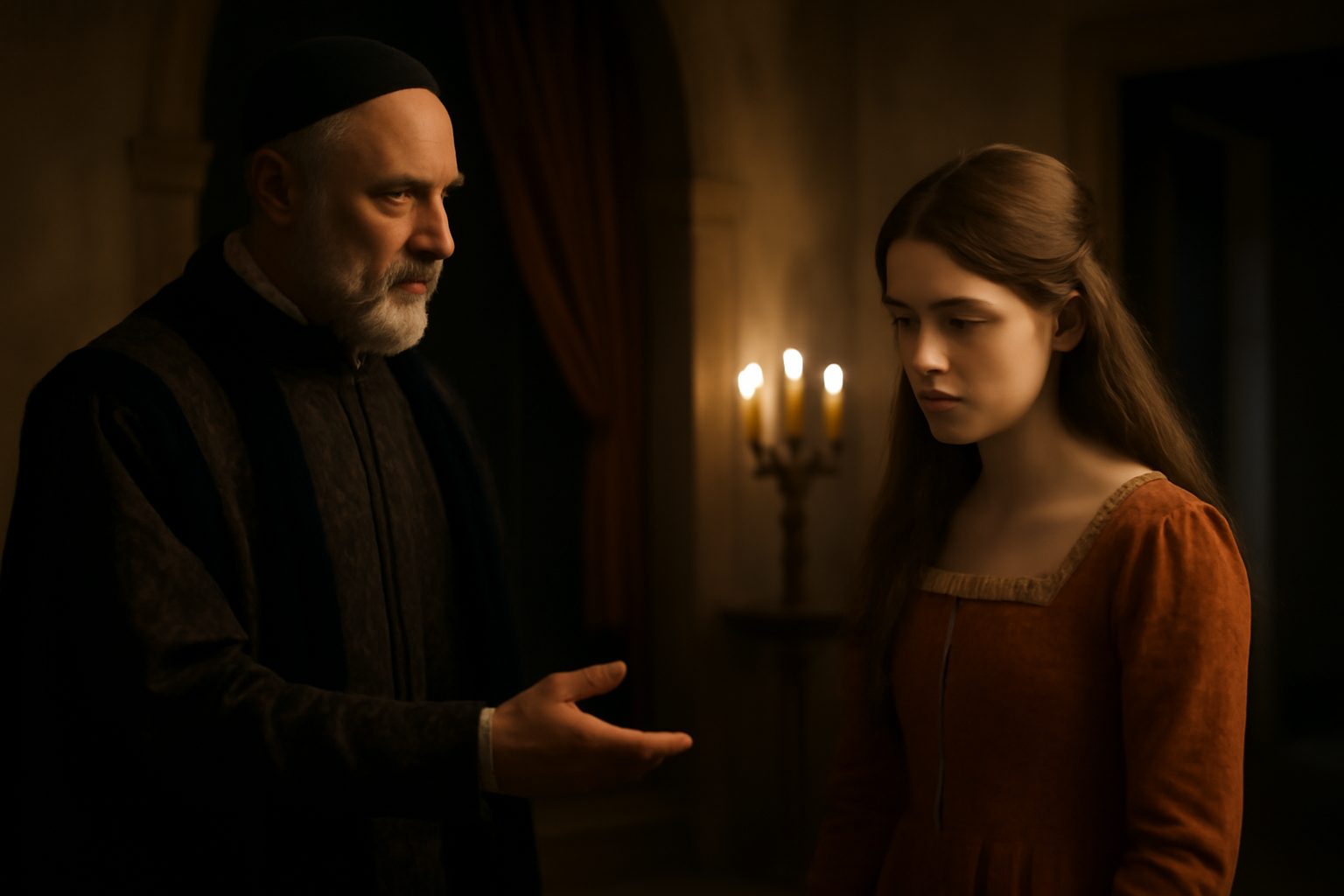
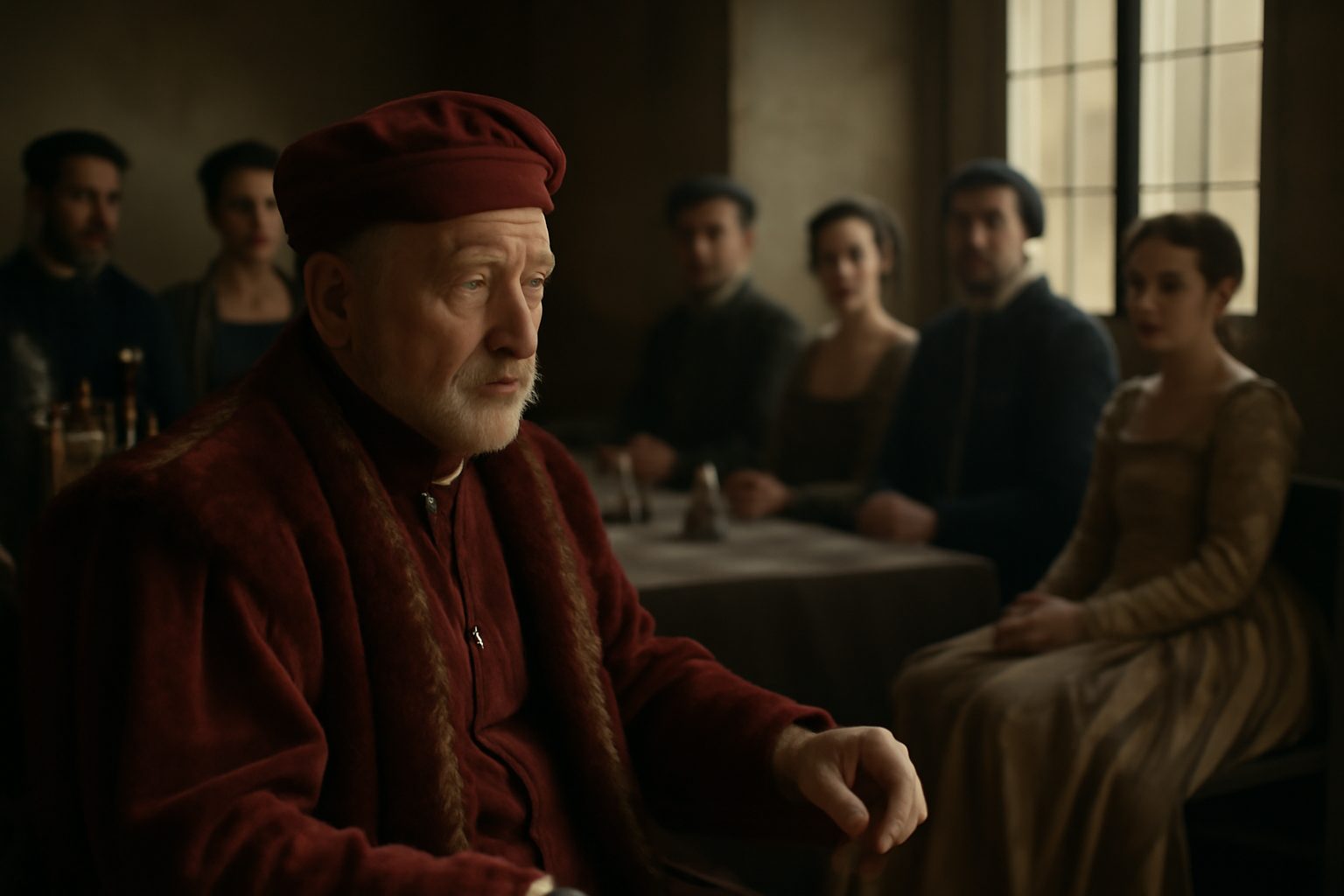
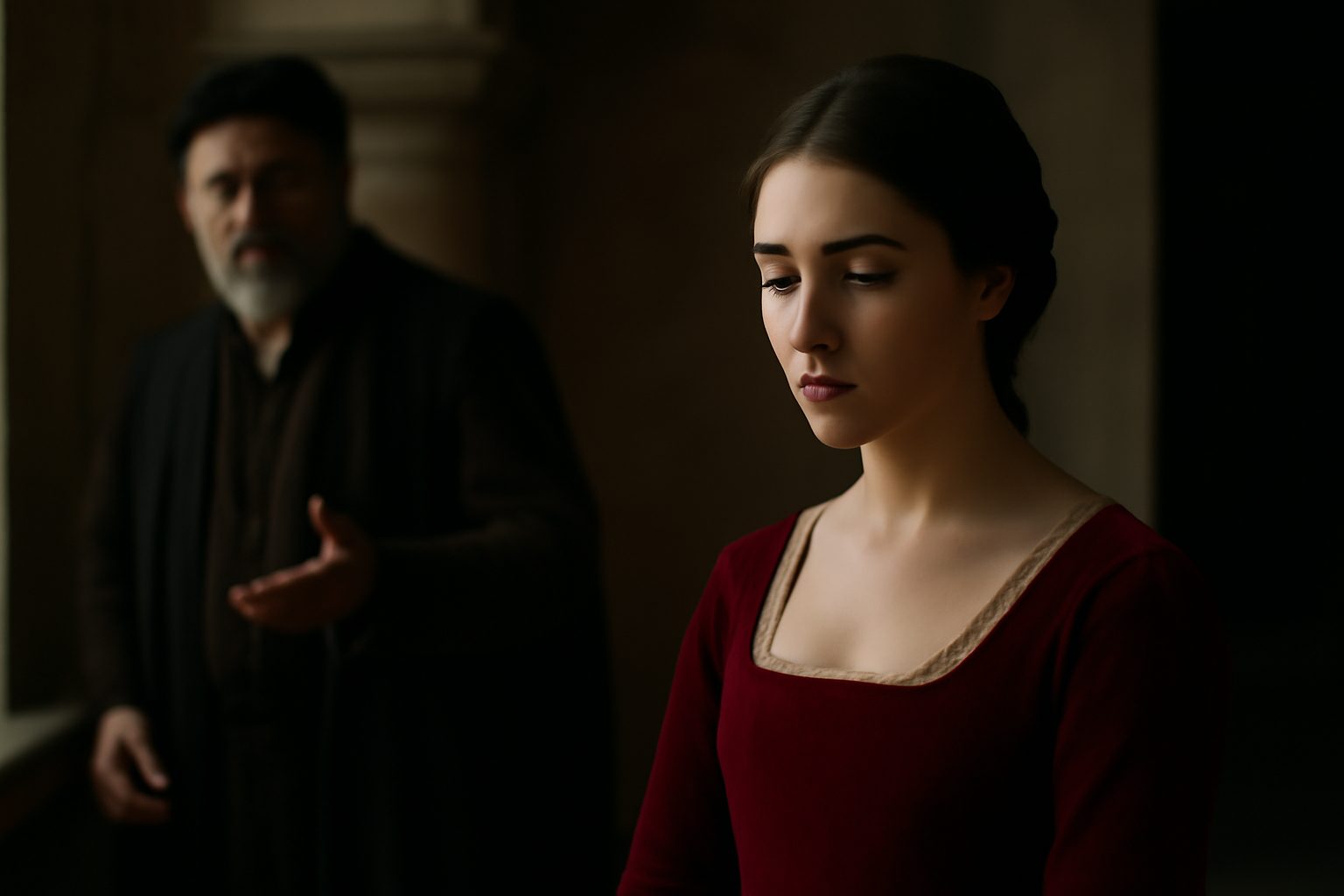
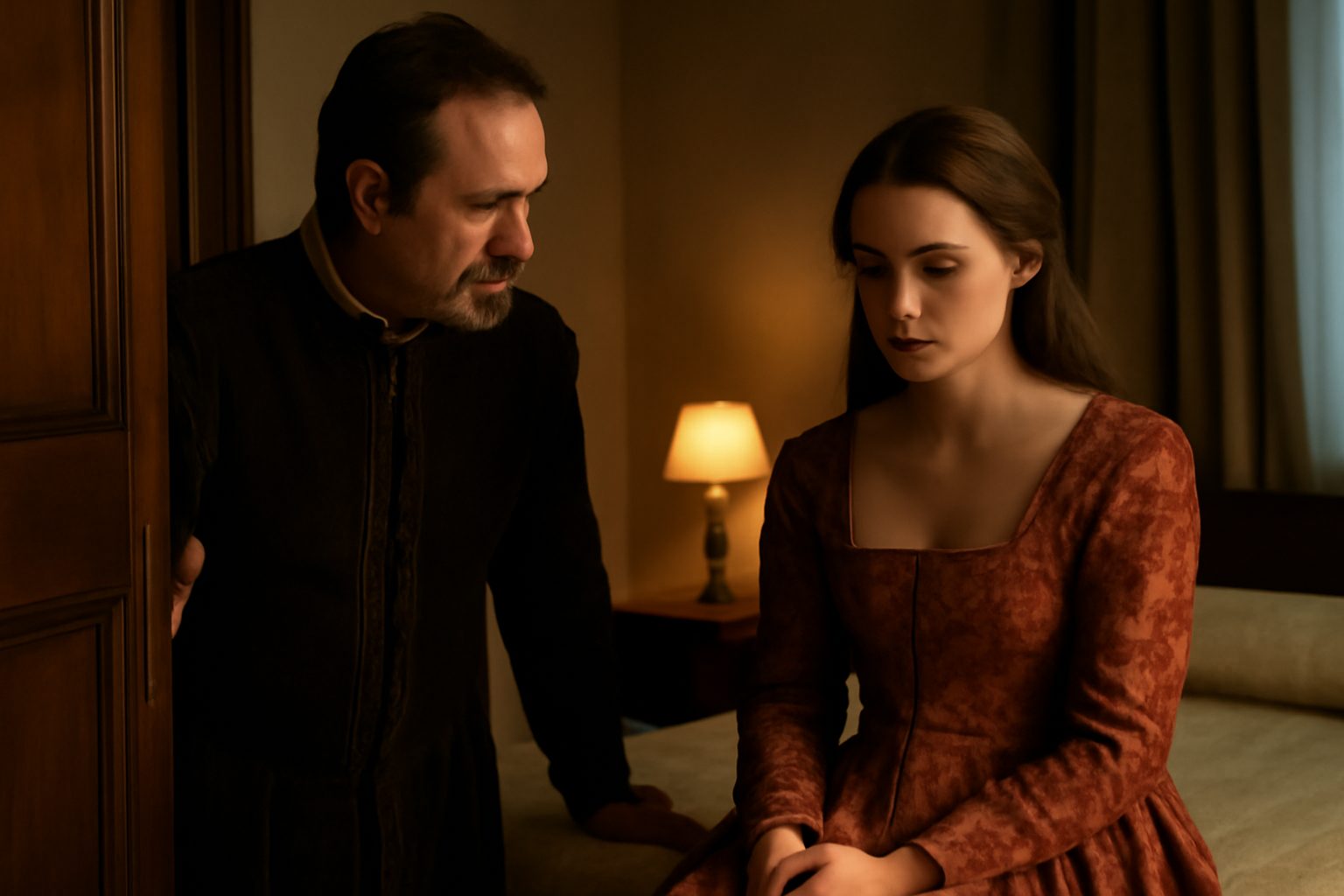
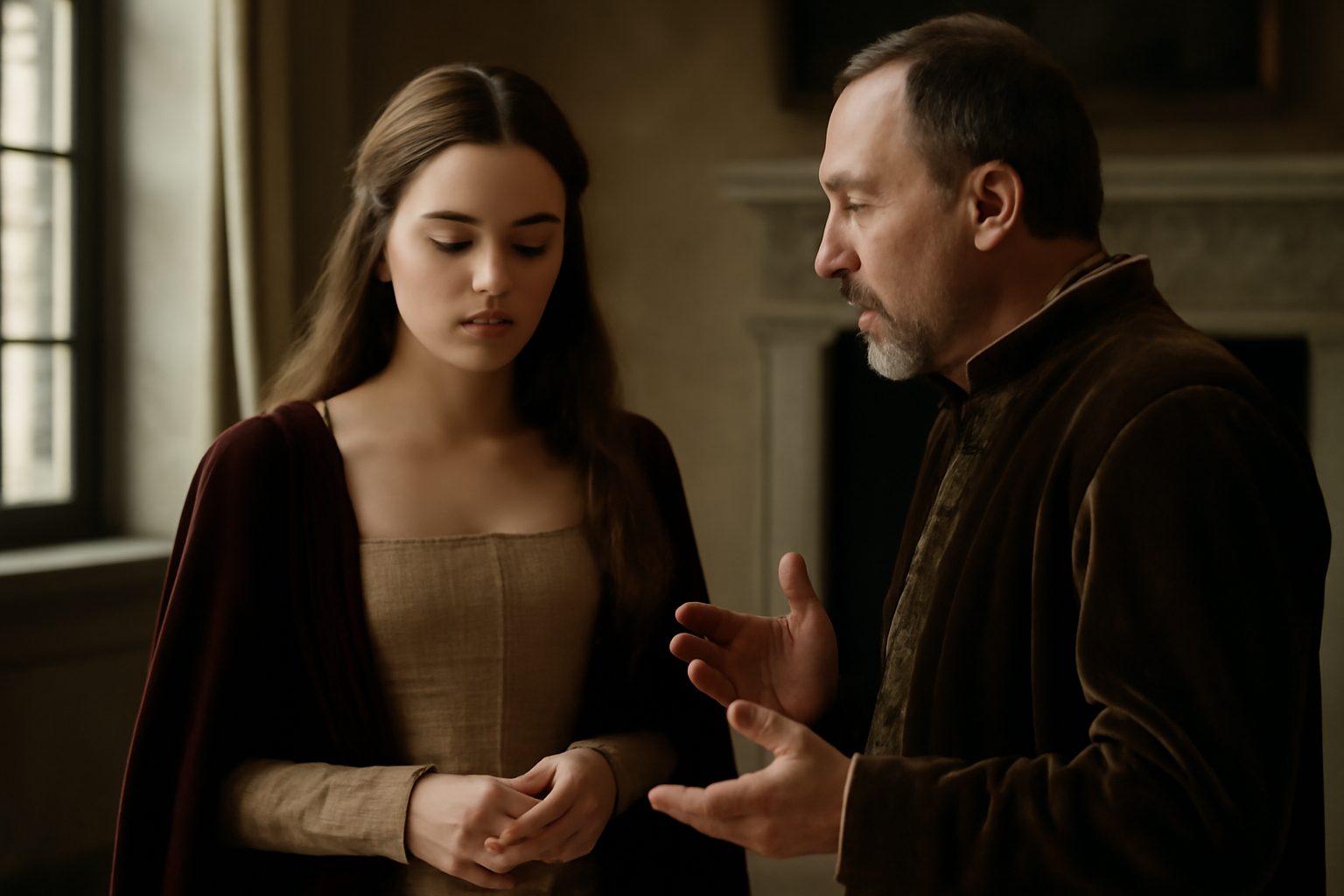
In Act 3, Scene 4 of Romeo and Juliet, Lord Capulet speaks these words while hastily arranging Juliet's marriage to Paris. Still unaware of her secret union to Romeo, he insists that Wednesday is too soon for the wedding, settling instead on Thursday. This moment highlights Capulet's abrupt change of heart, as he earlier insisted Paris wait longer to marry Juliet.
Capulet: "Monday! ha, ha! Well, Wednesday is too soon,"
In modern day english, we would say:
Monday? No way—Wednesday is way too early for that.
Frequently Asked Questions
What day does Capulet think is too soon for the wedding?
Wednesday
Connections to other verses:
Connections to "Monday! ha, ha! Well, Wednesday is too soon,"
This line, spoken by Capulet, is a direct response to the preceding verse where he asks, "But, soft! what day is this?", and Lady Capulet replies, "Monday, my lord,". His laughter and dismissal of Wednesday as "too soon" reflects his earlier acknowledgment of the recent tragedy, as he states in "That we have had no time to move our daughter:" and "These times of woe afford no time to woo.".
Shift in Tone and Decision-Making
Despite his initial hesitation, Capulet quickly pivots to proposing Thursday as the wedding day in "O' Thursday let it be: o' Thursday, tell her,", showing his eagerness to secure the marriage. This connects to his earlier instruction to "Acquaint her here of my son Paris' love;" and his confidence in Juliet's compliance in "Of my child's love: I think she will be ruled".
Context of Grief and Haste
Capulet's remark about Wednesday being "too soon" is influenced by Tybalt's recent death, referenced in "For, hark you, Tybalt being slain so late," and the concern that haste might appear disrespectful, as noted in "It may be thought we held him carelessly,". This contrasts with Paris's eagerness in "My lord, I would that Thursday were to-morrow."
Resolution and Instructions
The discussion culminates in the final decision for Thursday, as Capulet declares in "Well get you gone: o' Thursday be it, then.", and he instructs Lady Capulet to inform Juliet in "Wife, go you to her ere you go to bed;". The scene concludes with acknowledgments of the late hour, such as "Afore me! it is so very very late,", reinforcing the urgency and tension underlying the planning.