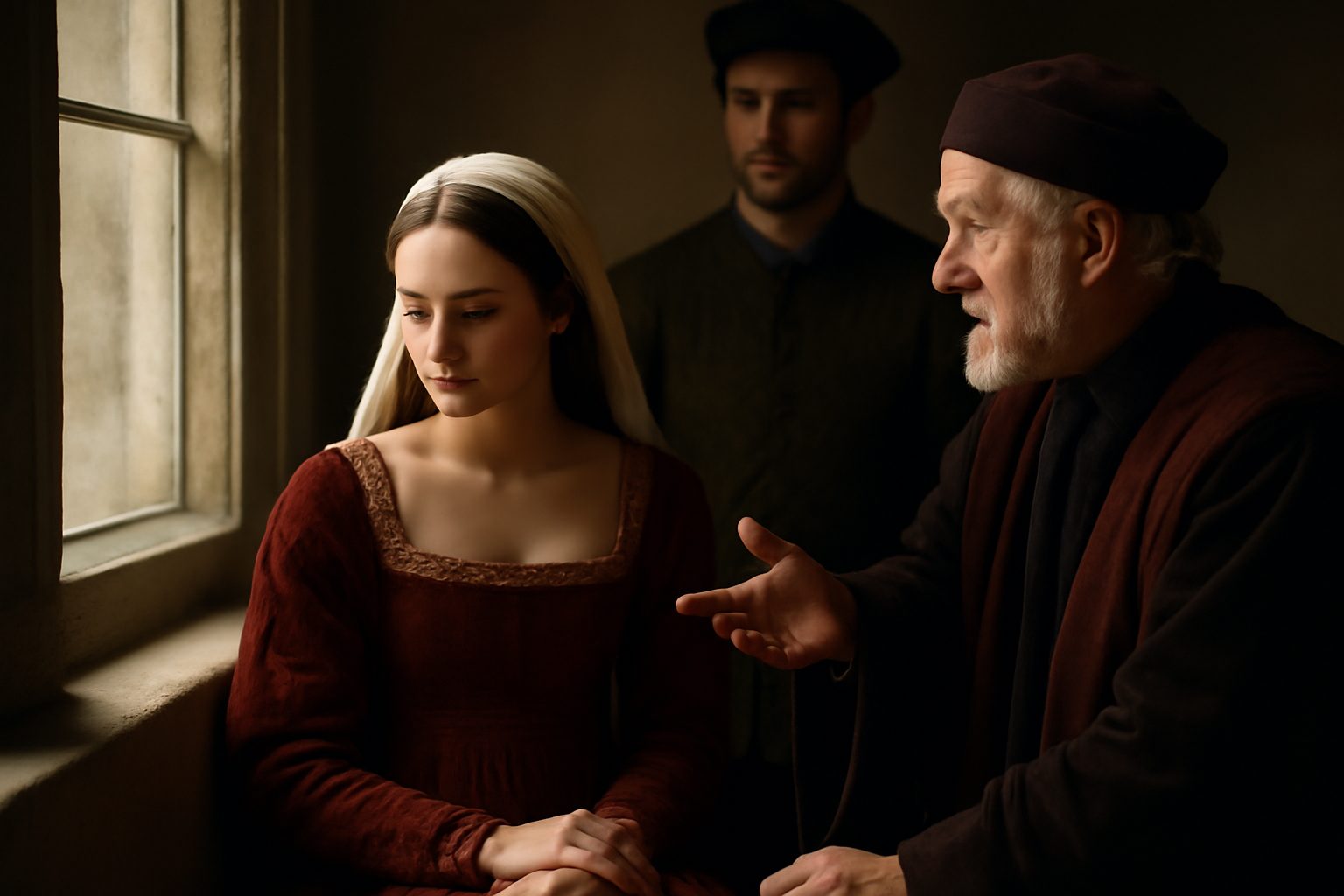
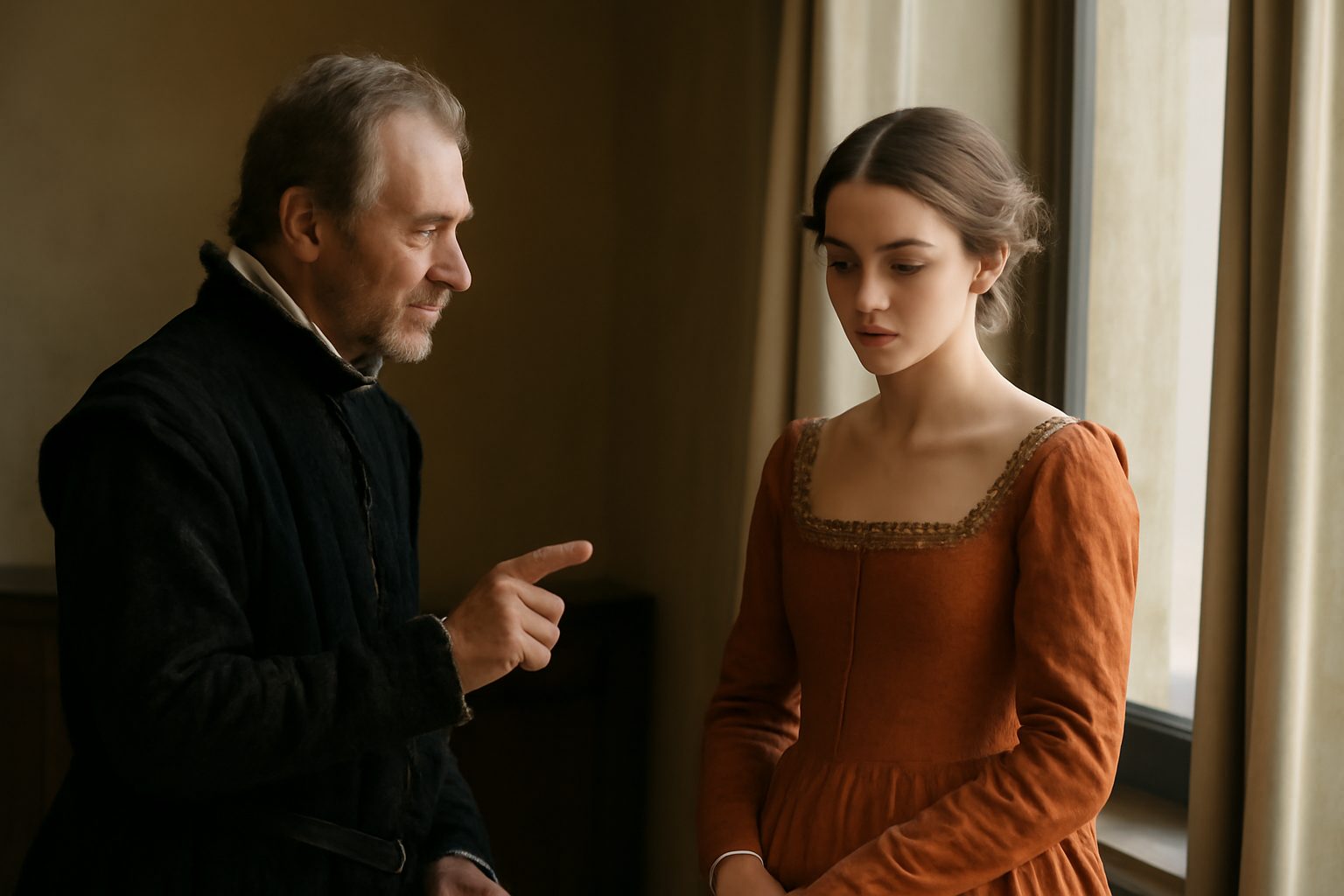
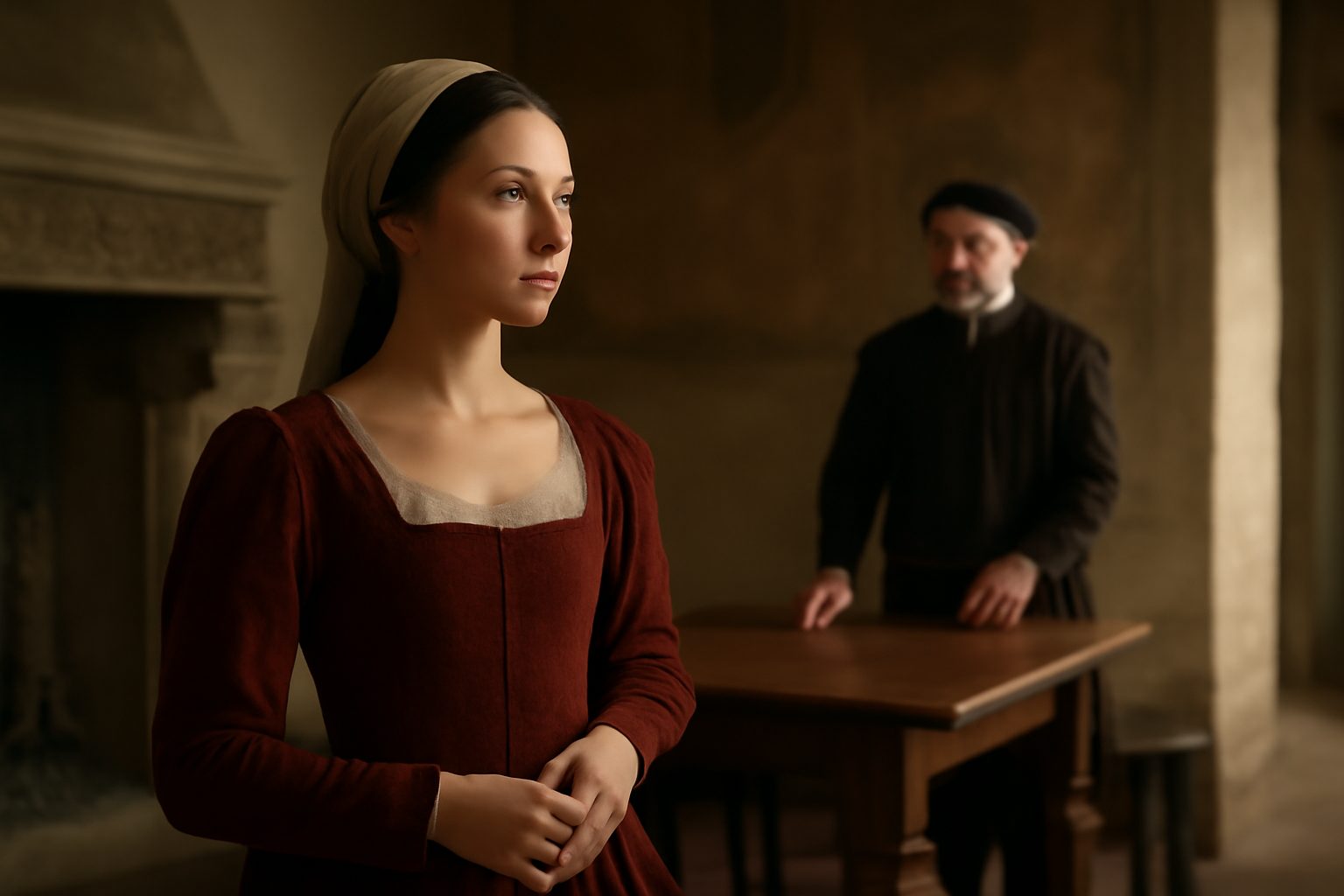
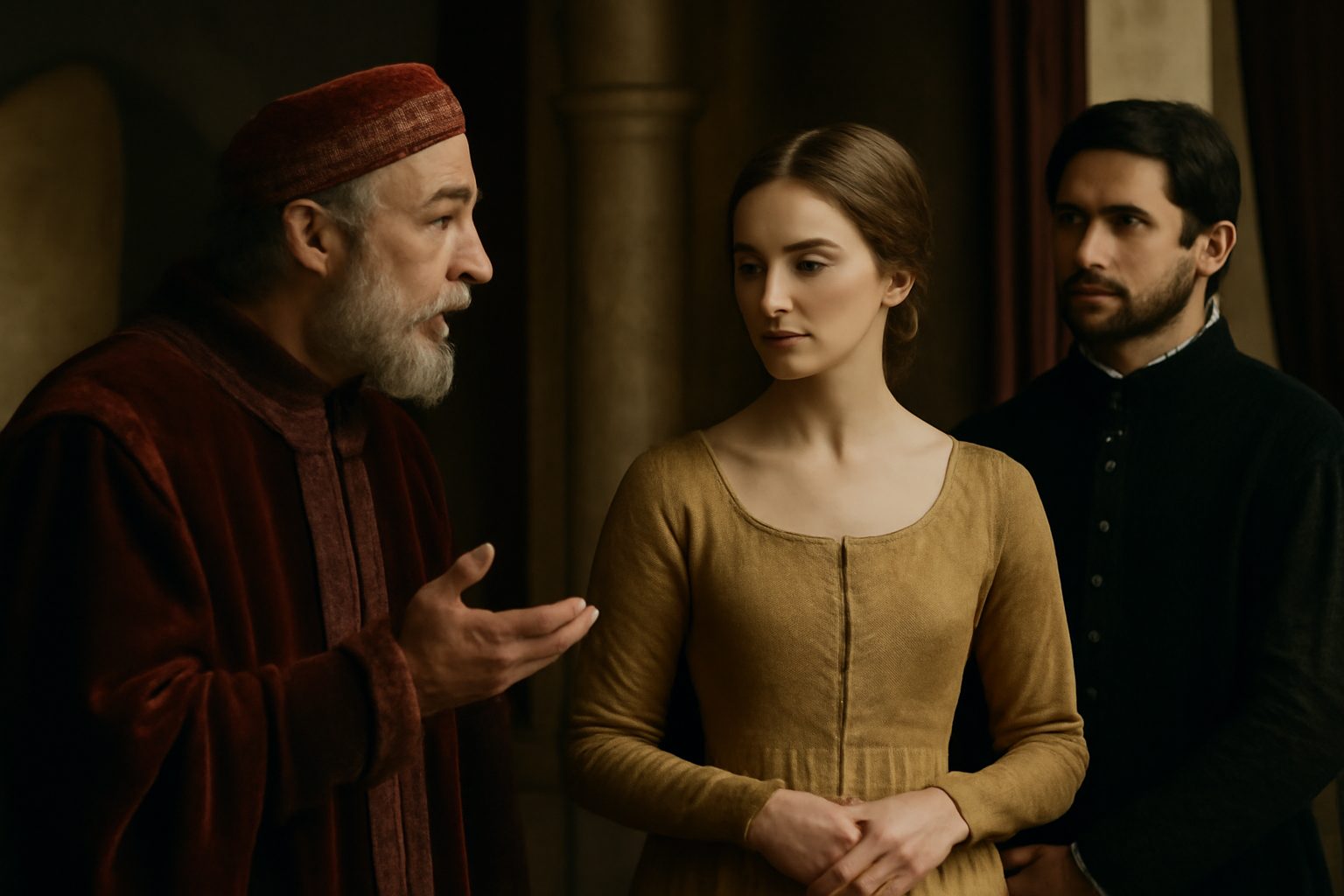
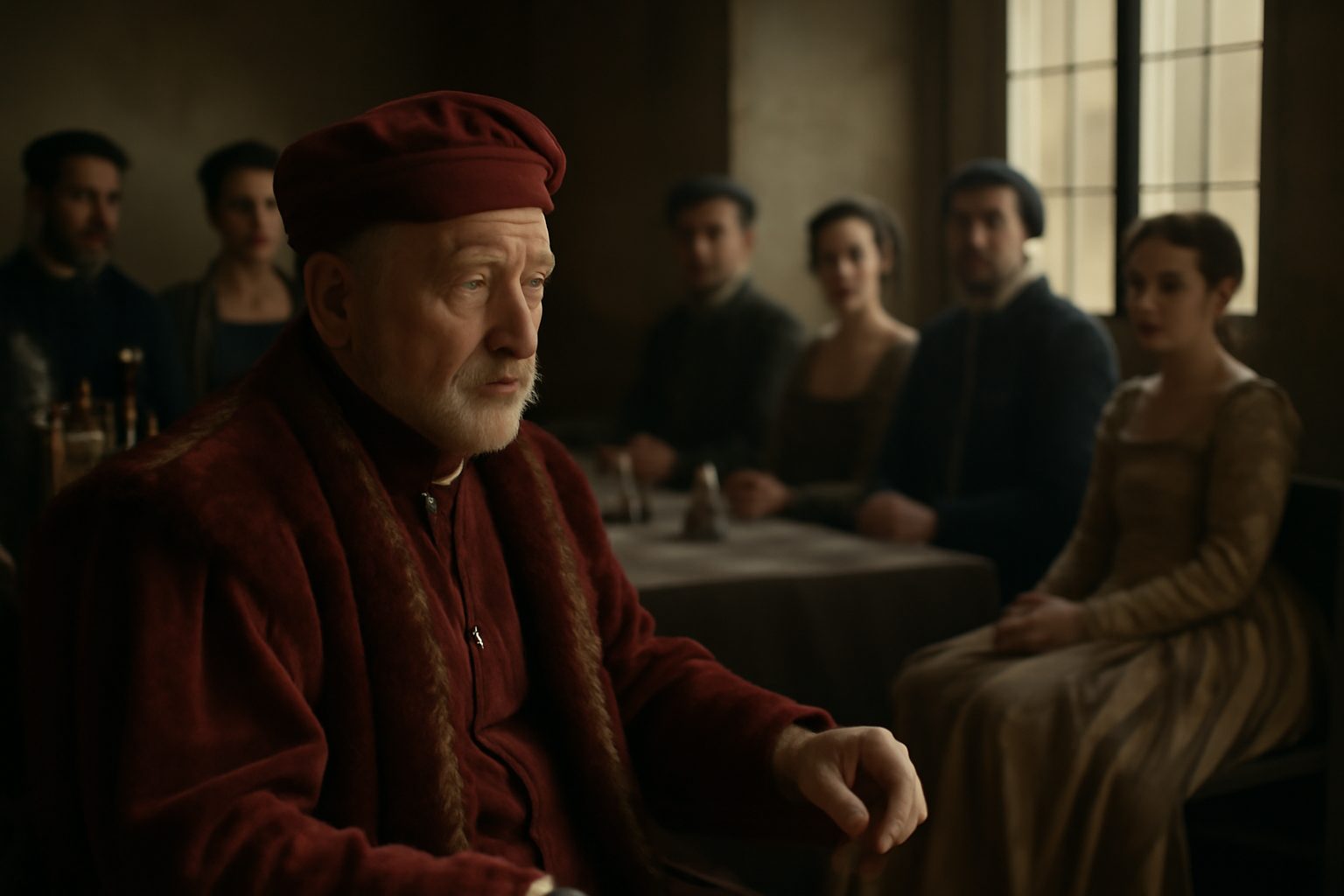
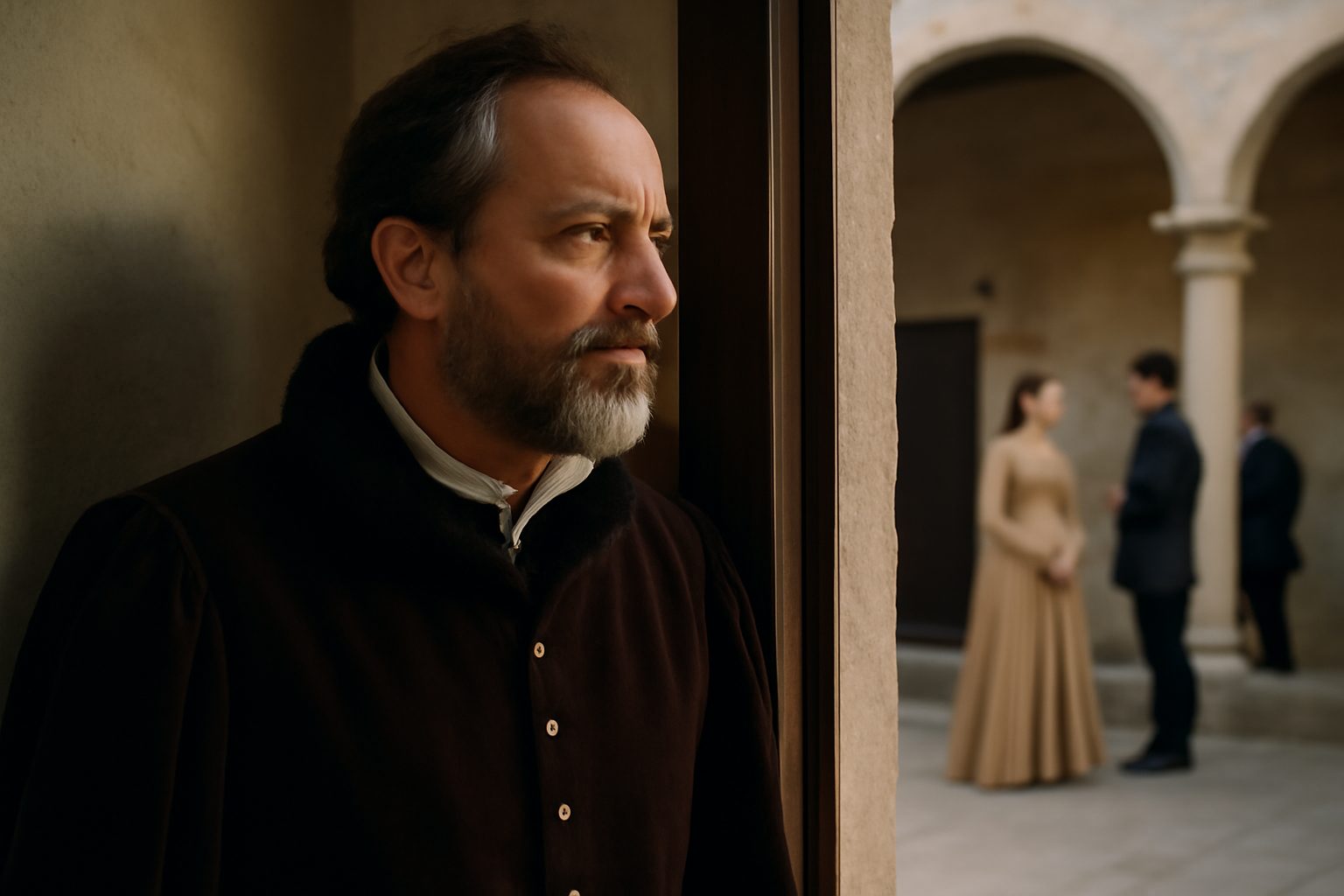
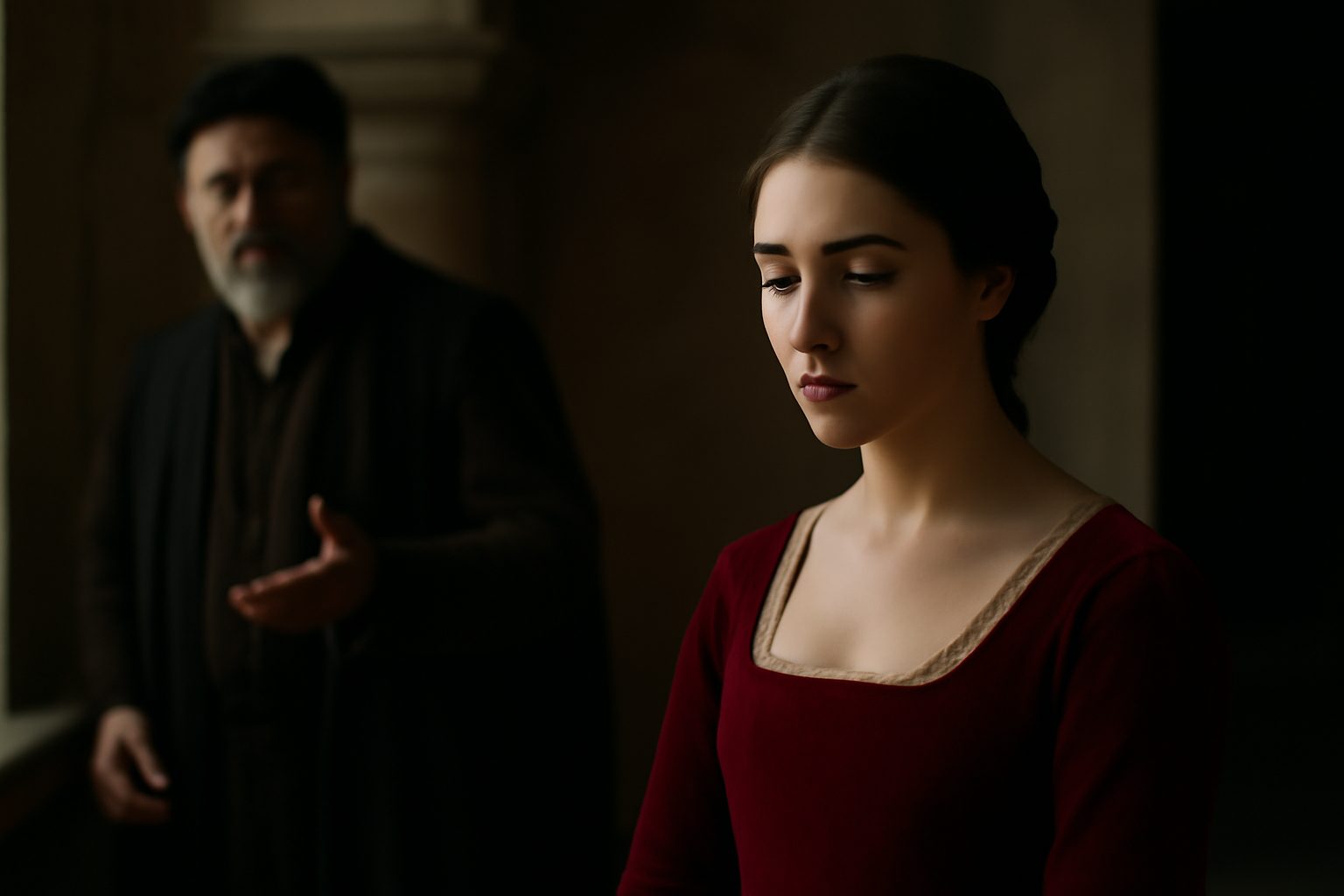
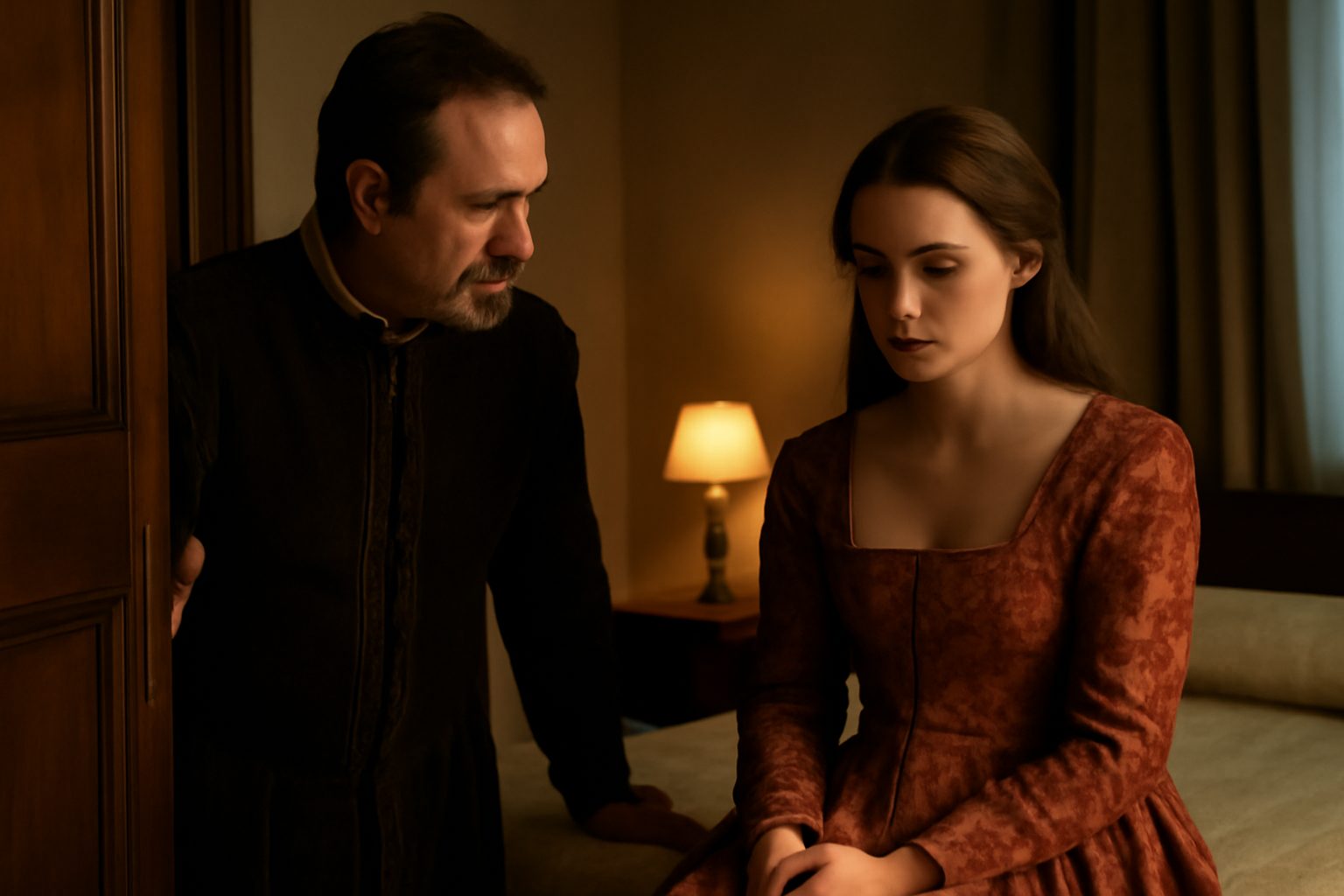
In Act 3, Scene 4 of Romeo and Juliet, Lord Capulet speaks these words to Paris as they hastily arrange Juliet's marriage. Despite Tybalt's recent death and the family's grief, Capulet pushes forward with the wedding plans, assuming Juliet will comply. The line reflects the urgency and lack of consideration for Juliet's feelings, setting the stage for the coming conflict.
Capulet: "Will you be ready? do you like this haste?"
In modern day english, we would say:
Are you going to be ready? Do you really want to rush into this?
Frequently Asked Questions
Who is speaking in this line from Romeo and Juliet?
Capulet
What is Capulet asking in this line?
He is asking if the person is ready and if they approve of moving quickly
In which act and scene does this line appear?
Act 3, Scene 4
Connections to other verses:
Connections to "Will you be ready? do you like this haste?"
This line, spoken by Lord Capulet to Paris, reflects the urgency and suddenness with which the wedding plans are being made. It connects thematically and contextually to several other verses in the scene.
Connection to Planning and Haste
The question about readiness and haste is directly tied to the earlier discussion of the wedding date. In And bid her, mark you me, on Wednesday next--, Capulet initially suggests Wednesday, showing his impulsive nature. This is further debated in And there an end. But what say you to Thursday?, where Paris agrees to Thursday, emphasizing the compressed timeline. The final decision is echoed in Well get you gone: o' Thursday be it, then., solidifying the rushed arrangements.
Connection to Juliet's State and Parental Assumptions
Capulet's confidence in Juliet's compliance, despite her grief, is evident in Of my child's love: I think she will be ruled and In all respects by me; nay, more, I doubt it not.. This assumption underpins the haste, as he believes she will readily agree. The urgency is also rationalized by the recent events, as noted in That we have had no time to move our daughter: and These times of woe afford no time to woo., suggesting that mourning leaves little room for traditional courtship.
Connection to Time and Late Hour
The scene's pervasive awareness of the late hour, such as in Afore me! it is so very very late, and I would have been a-bed an hour ago., contrasts with the rushed planning, highlighting the unnatural speed of events. The characters' desire to end the night, as in Farewell, my lord. Light to my chamber, ho!, underscores how the haste disrupts normal rhythms.
Connection to Social and Familial Pressures
The need to maintain appearances after Tybalt's death is mentioned in It may be thought we held him carelessly,, justifying the quick marriage to Paris as a way to offset grief and suspicion. The modest wedding plans in We'll keep no great ado,--a friend or two; align with the theme of haste, as Capulet seeks to avoid delay while respecting mourning.
Connection to Instructions and Preparation
Capulet's urgency is actionable in lines like Go you to Juliet ere you go to bed, and Prepare her, wife, against this wedding-day., where immediate steps are ordered to facilitate the quick wedding, directly responding to the "haste" questioned earlier.