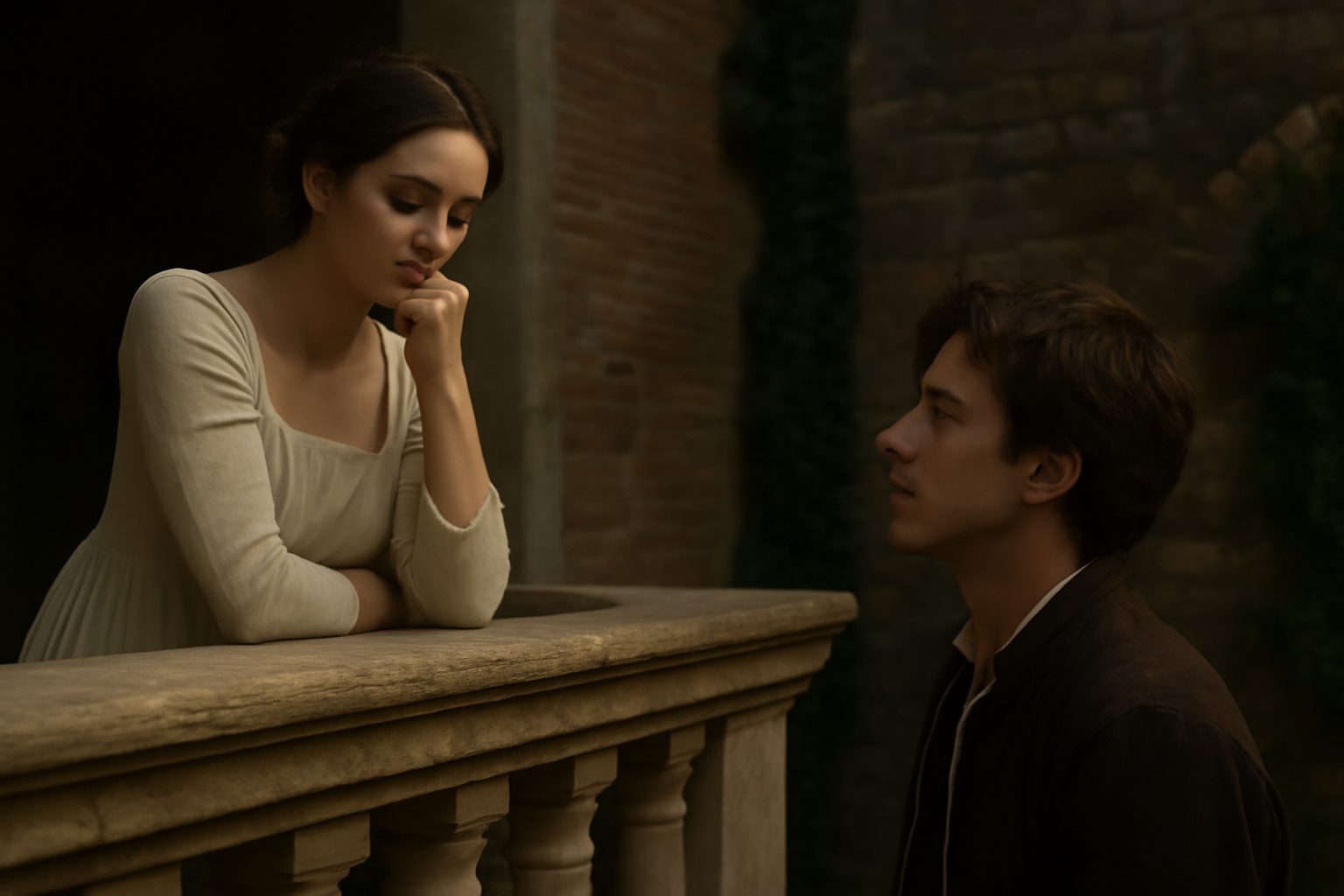
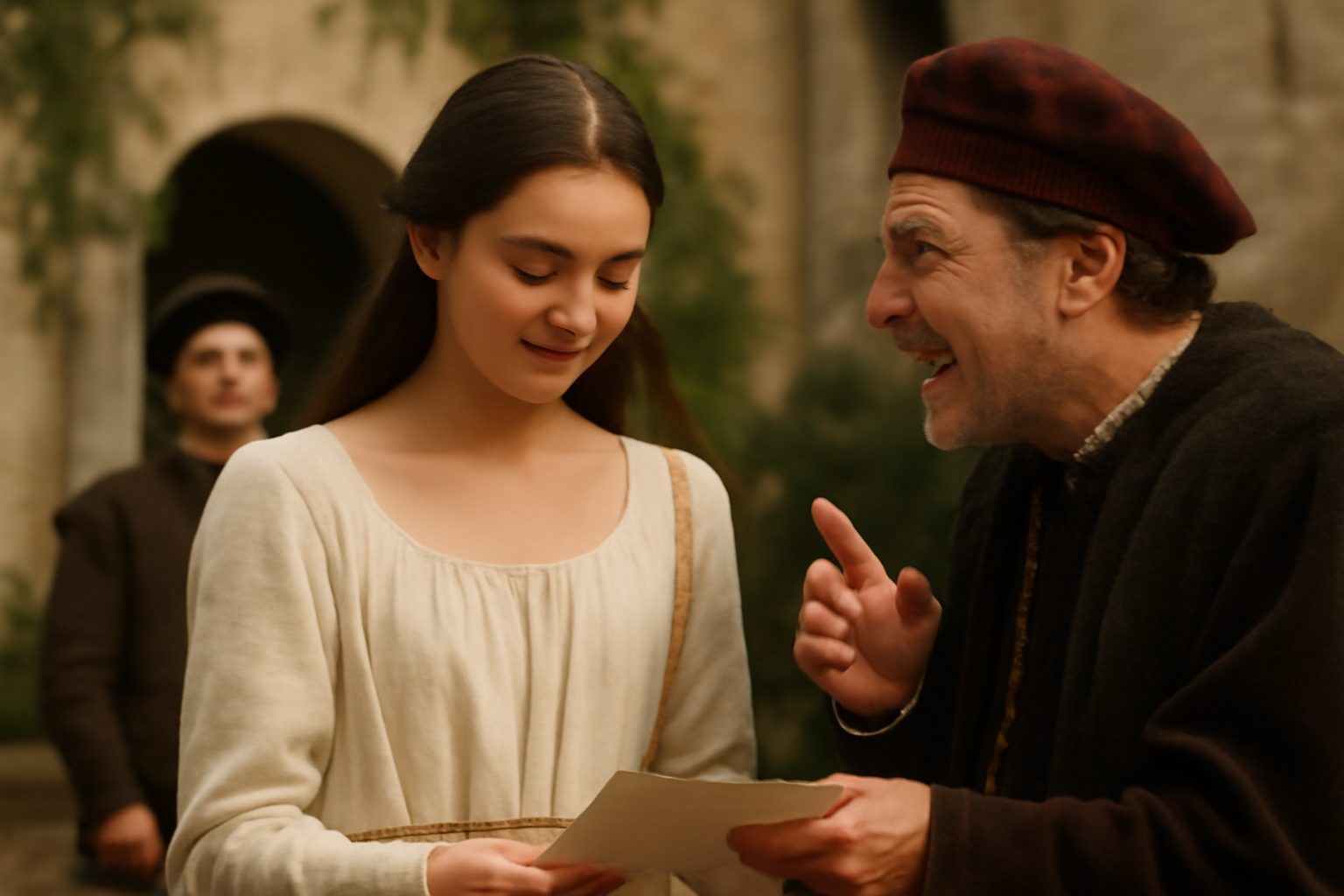
In Act 2, Scene 4 of Romeo and Juliet, Mercutio and Benvolio are teasing Romeo about his sudden change in behavior after falling for Juliet. Mercutio, known for his sharp wit and wordplay, mocks Romeo by suggesting his own cleverness far outweighs Romeo's. This line highlights Mercutio's playful arrogance and the lighthearted banter among friends before the story takes a darker turn.
Mercutio: "thy wits than, I am sure, I have in my whole five:"
In modern day english, we would say:
You must have more wit in that one head of yours than I have in my entire five senses.
Frequently Asked Questions
What is Mercutio saying about his own intelligence in this line?
Mercutio is joking that he has very little intelligence, saying he has less wit than the other person has in just one of their five senses.
Connections to other verses:
Connections to "thy wits than, I am sure, I have in my whole five:"
This line from Romeo & Juliet Act 2 Scene 4 – thy wits than, I am sure, I have in my whole five: is part of a witty exchange between Mercutio and Romeo, showcasing their playful banter and intellectual rivalry. It connects thematically and contextually to several other verses in the same scene.
Connection to Wit and Banter
The verse is directly linked to Nay, if thy wits run the wild-goose chase, I have, where Mercutio continues the metaphor of wit as a pursuit, emphasizing the competitive and fast-paced nature of their conversation. This builds on the idea of intellectual one-upmanship.
Expansion on the "Wild-Goose" Theme
Mercutio elaborates on this theme in done, for thou hast more of the wild-goose in one…, teasing Romeo about his foolishness in love, which contrasts with the sharp wit displayed earlier.
Reflection on Romeo's Transformation
The playful critique of Romeo's wit ties into now art thou sociable, now art thou Romeo; now art, where Mercutio acknowledges Romeo's return to his former, more engaging self after being lovesick.
Contrast with Earlier Melancholy
This revival of wit is a stark contrast to verses like Torments him so, that he will sure run mad., which describe Romeo's earlier despair, highlighting how his mood has shifted due to his newfound love for Juliet.
Link to Broader Mockery
The jesting tone is consistent with other mocking lines, such as Without his roe, like a dried herring: flesh,…, where Mercutio humorously belittles Romeo's lovesick state, further emphasizing the scene's focus on ridicule and repartee.