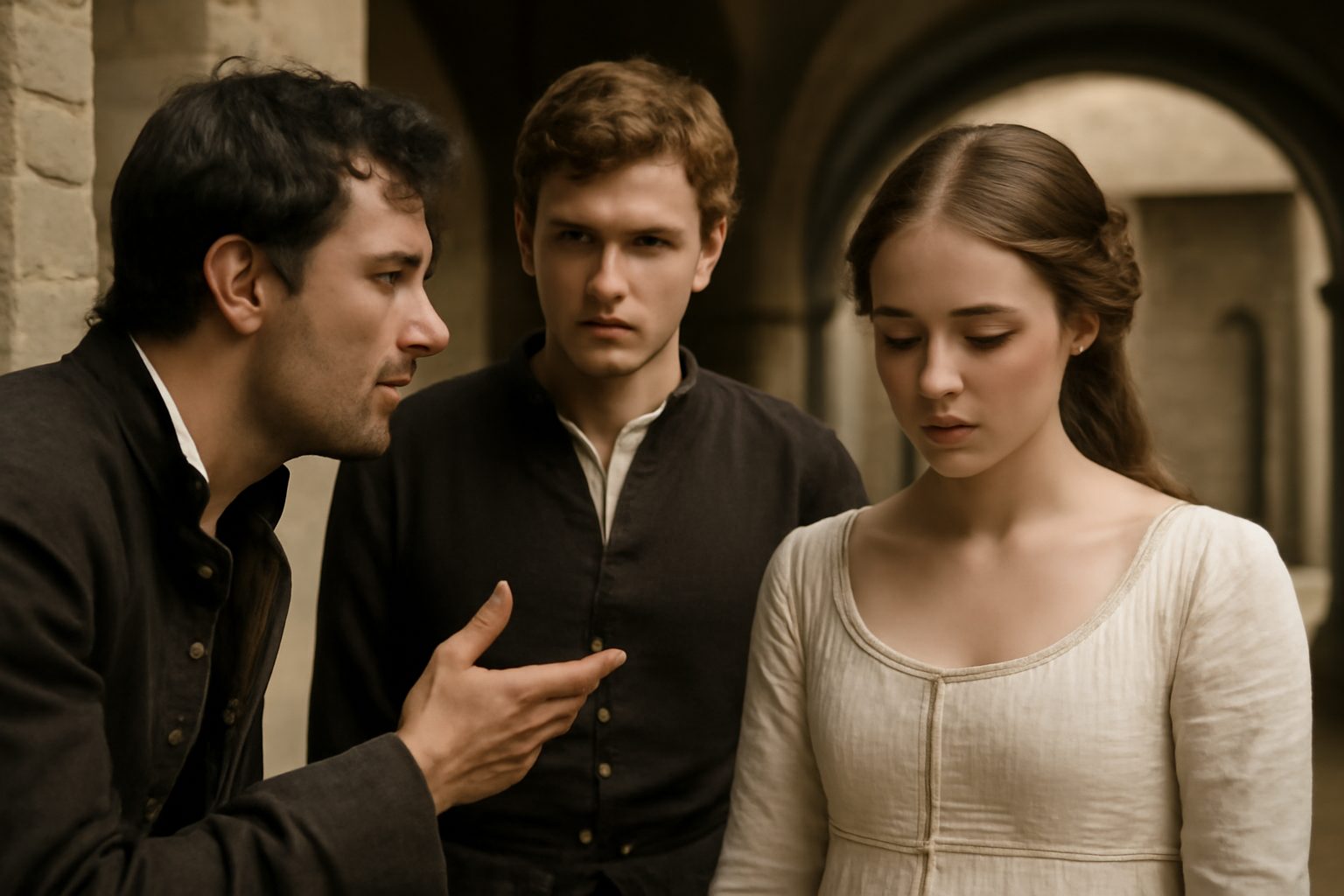
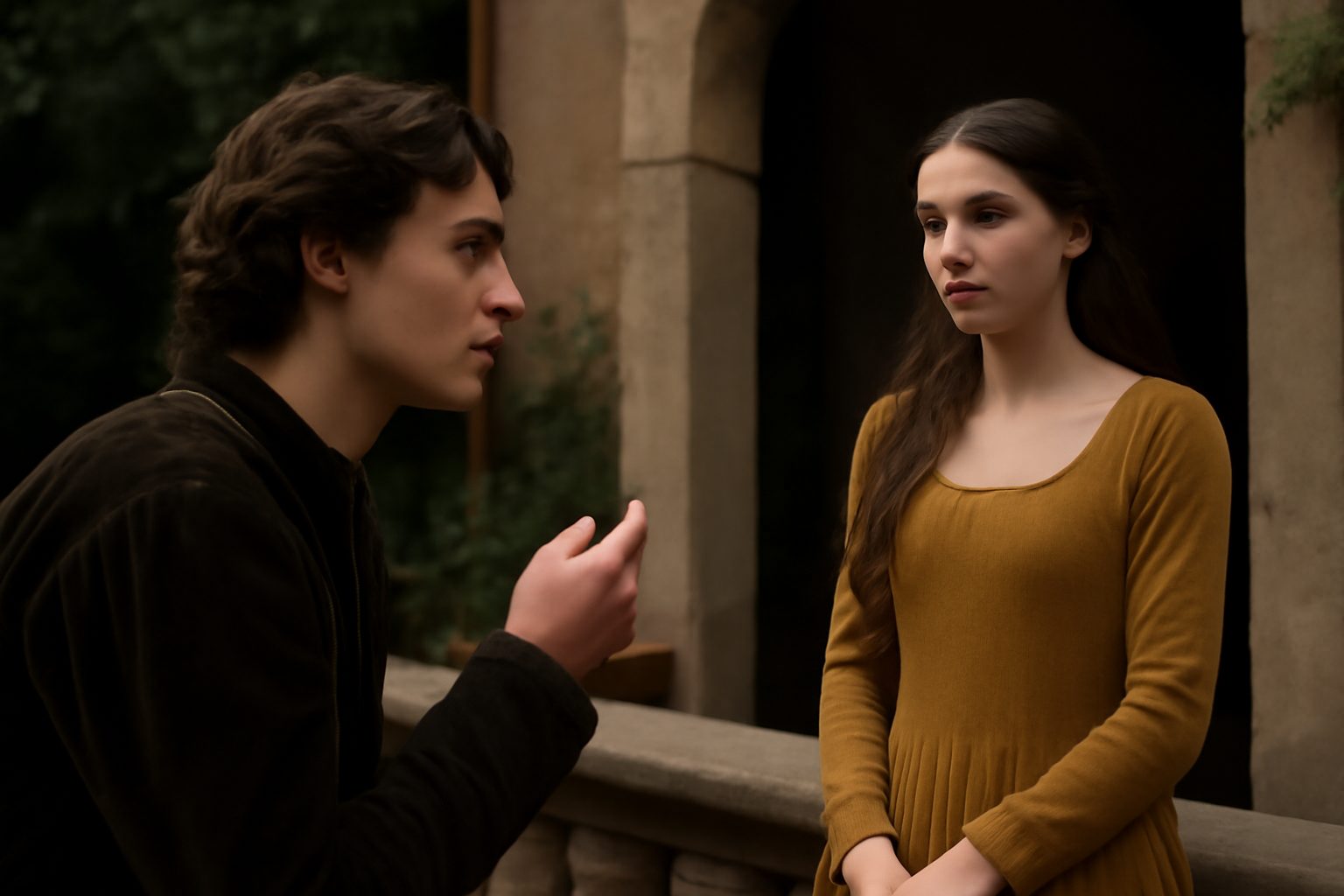
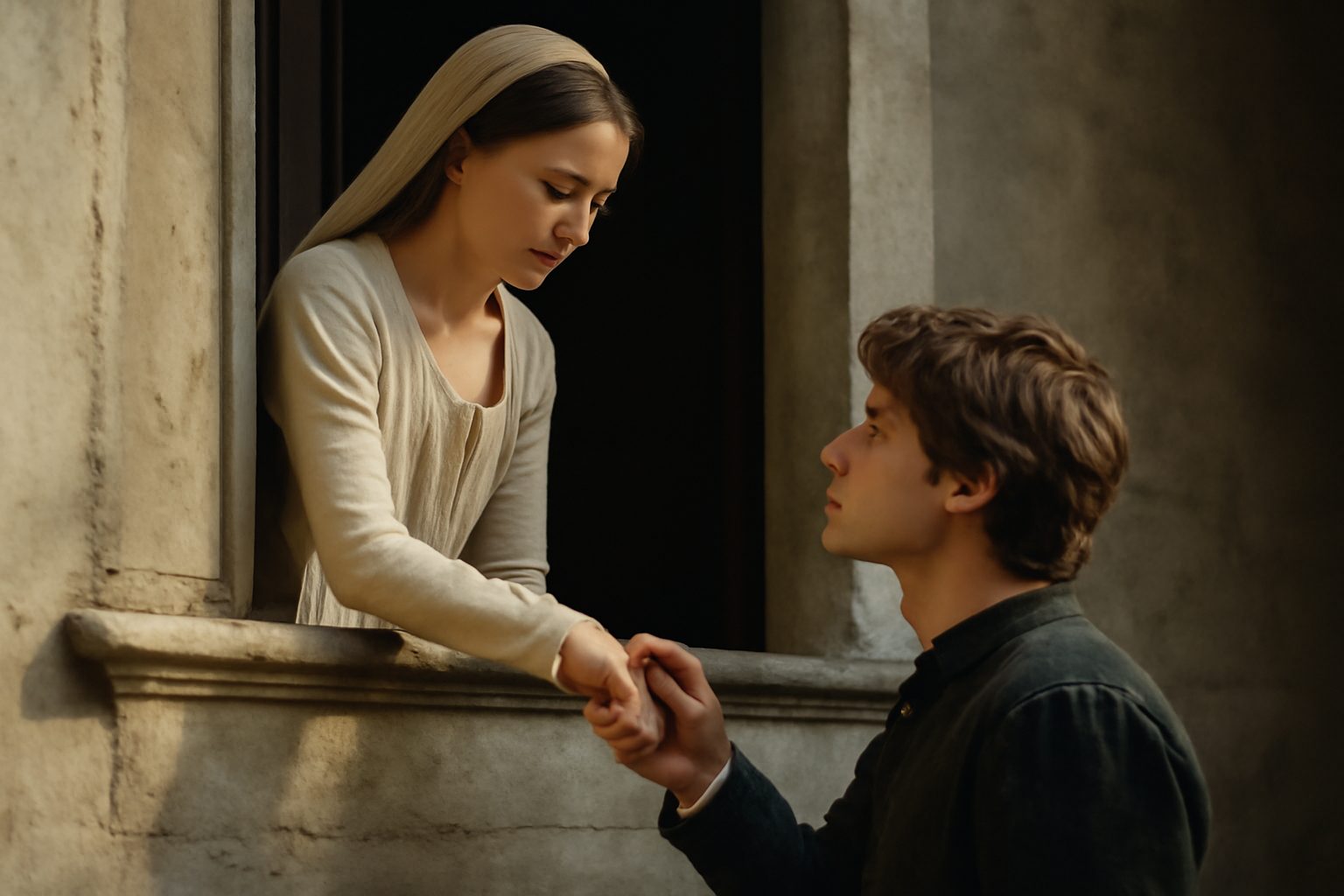
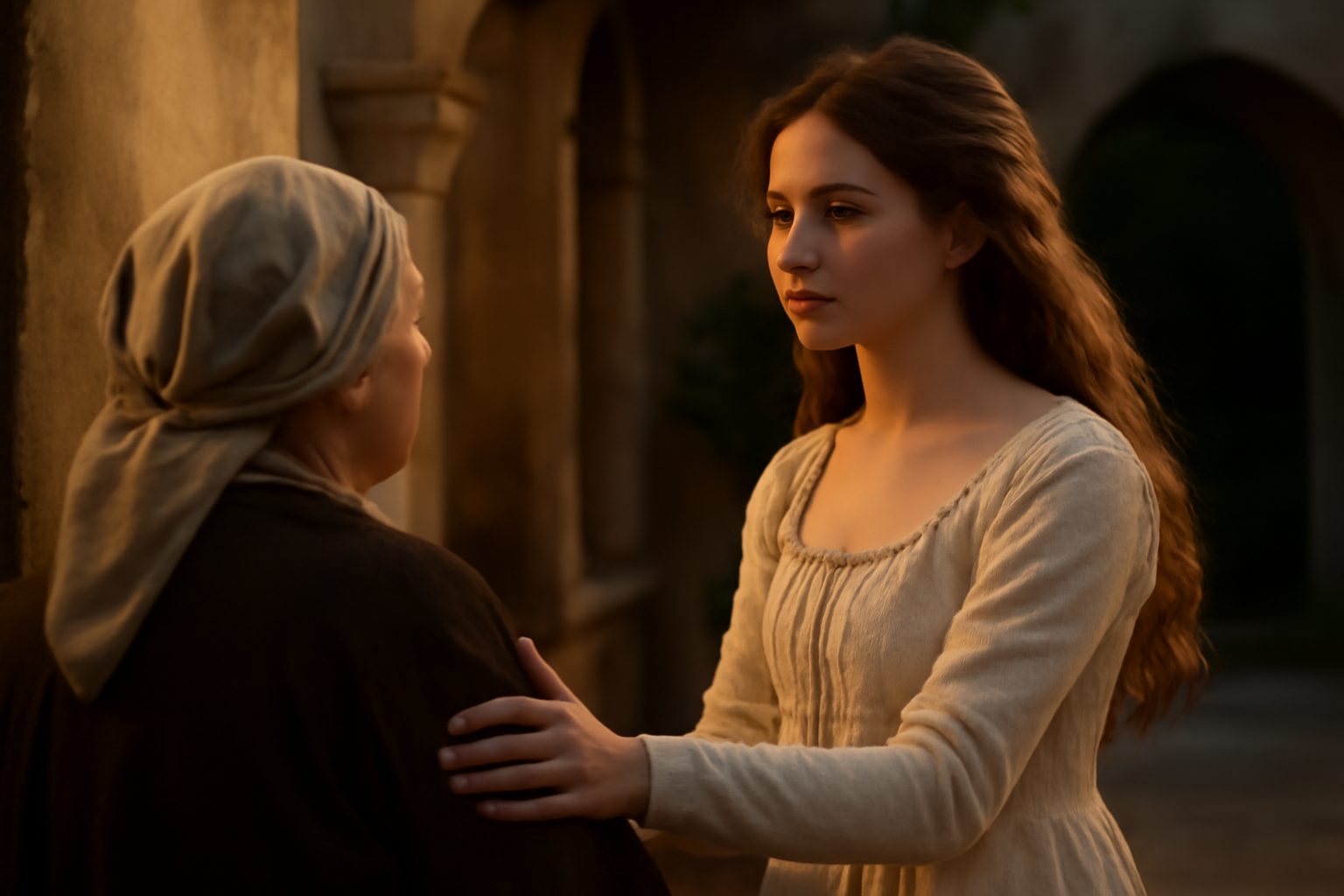
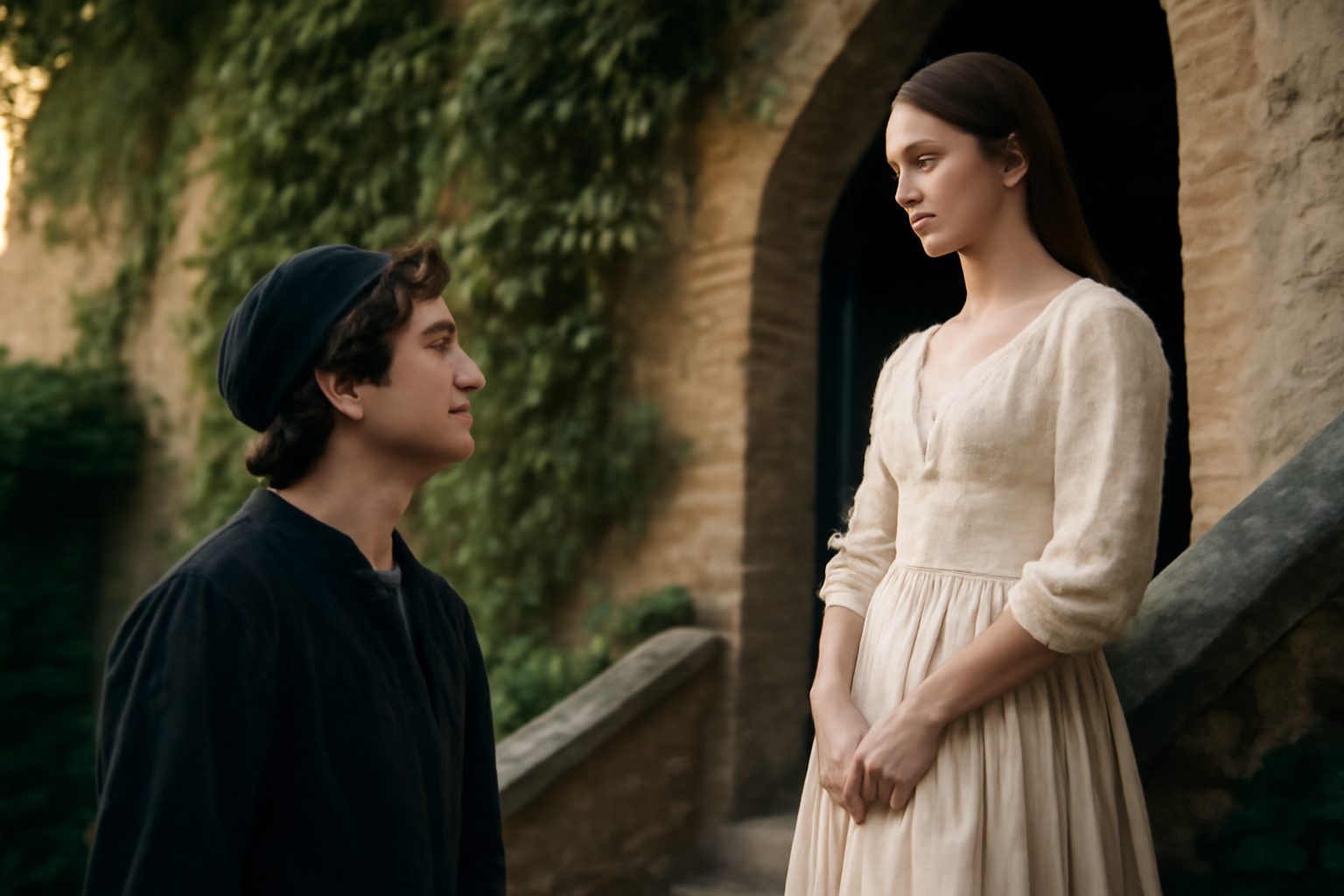
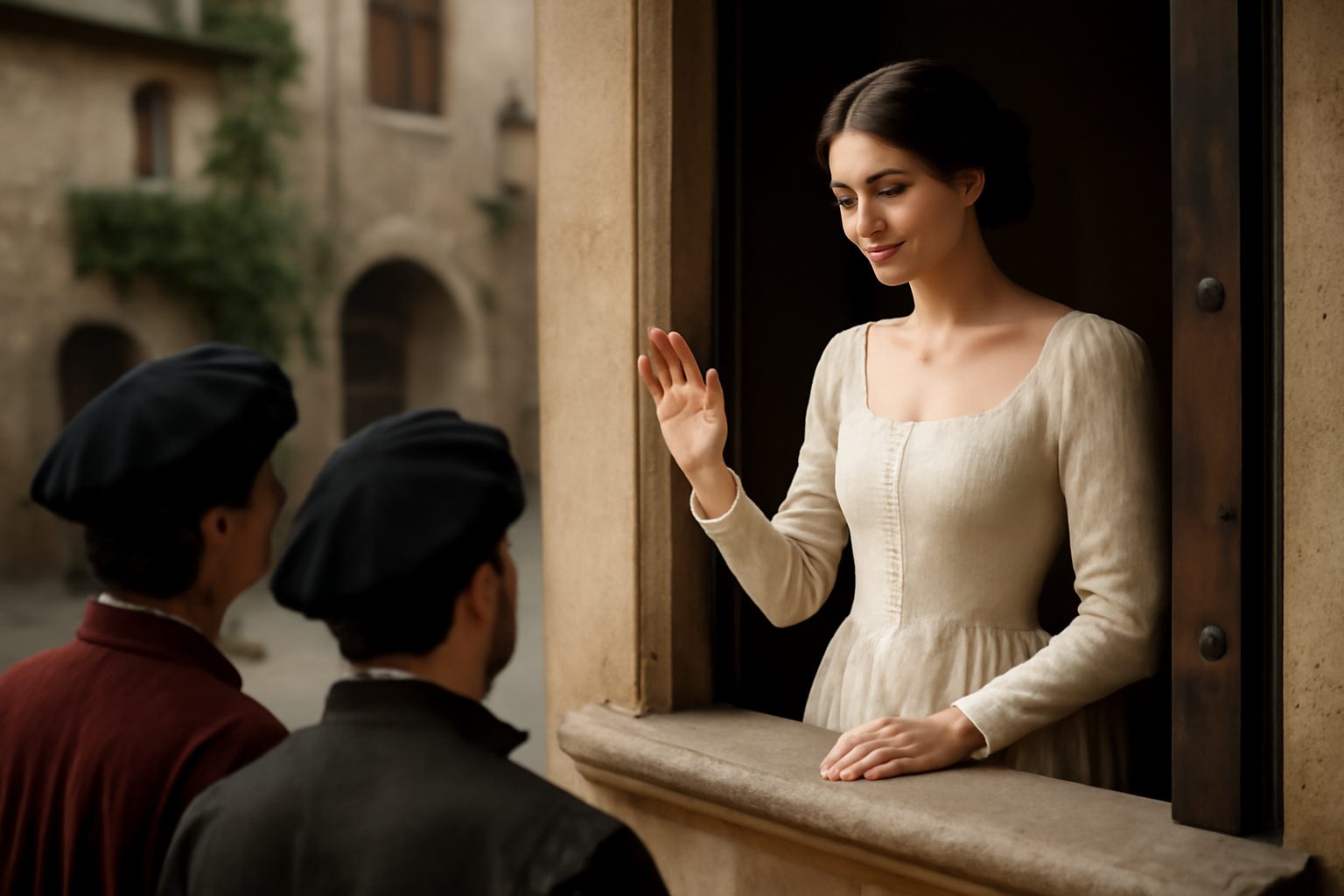
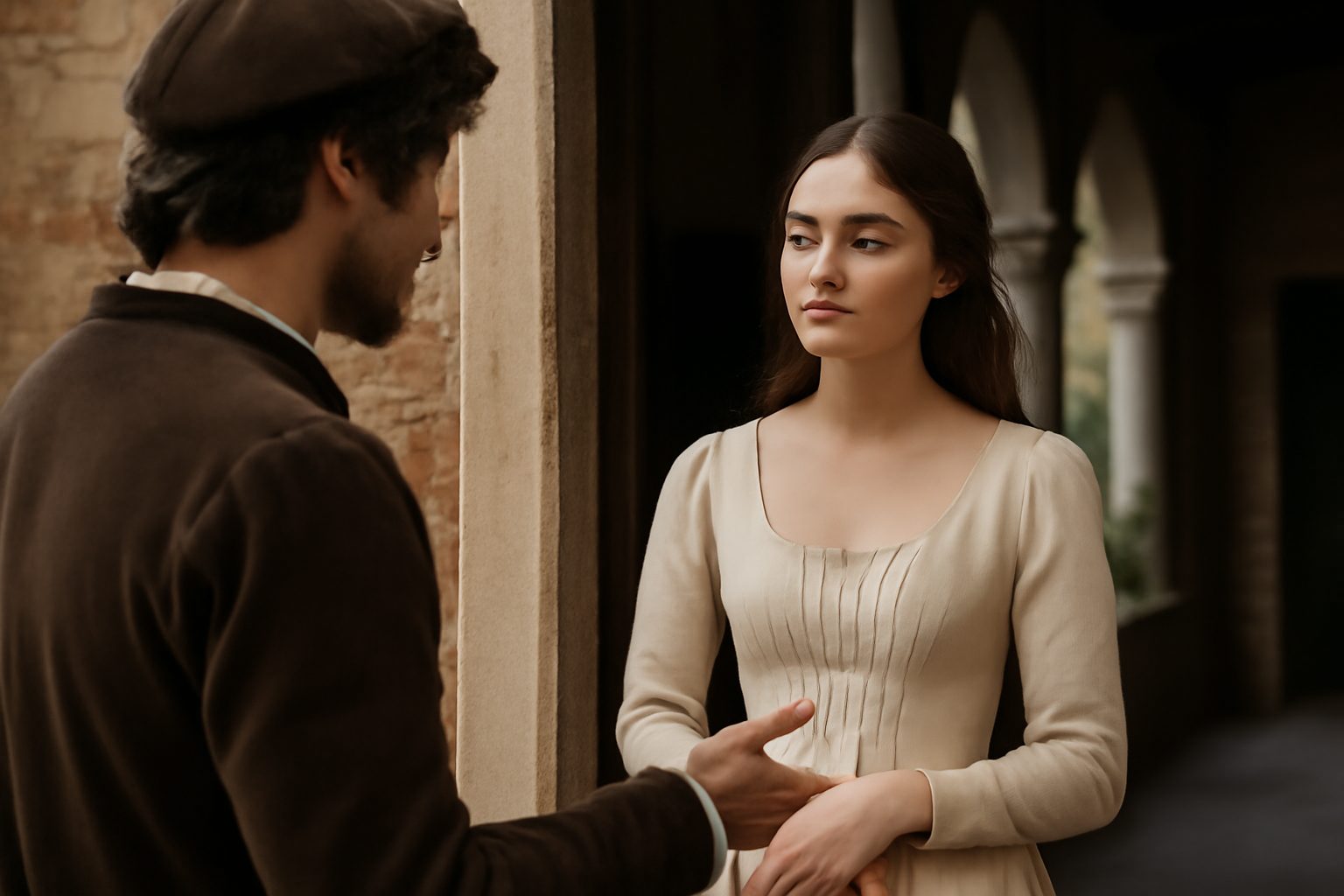
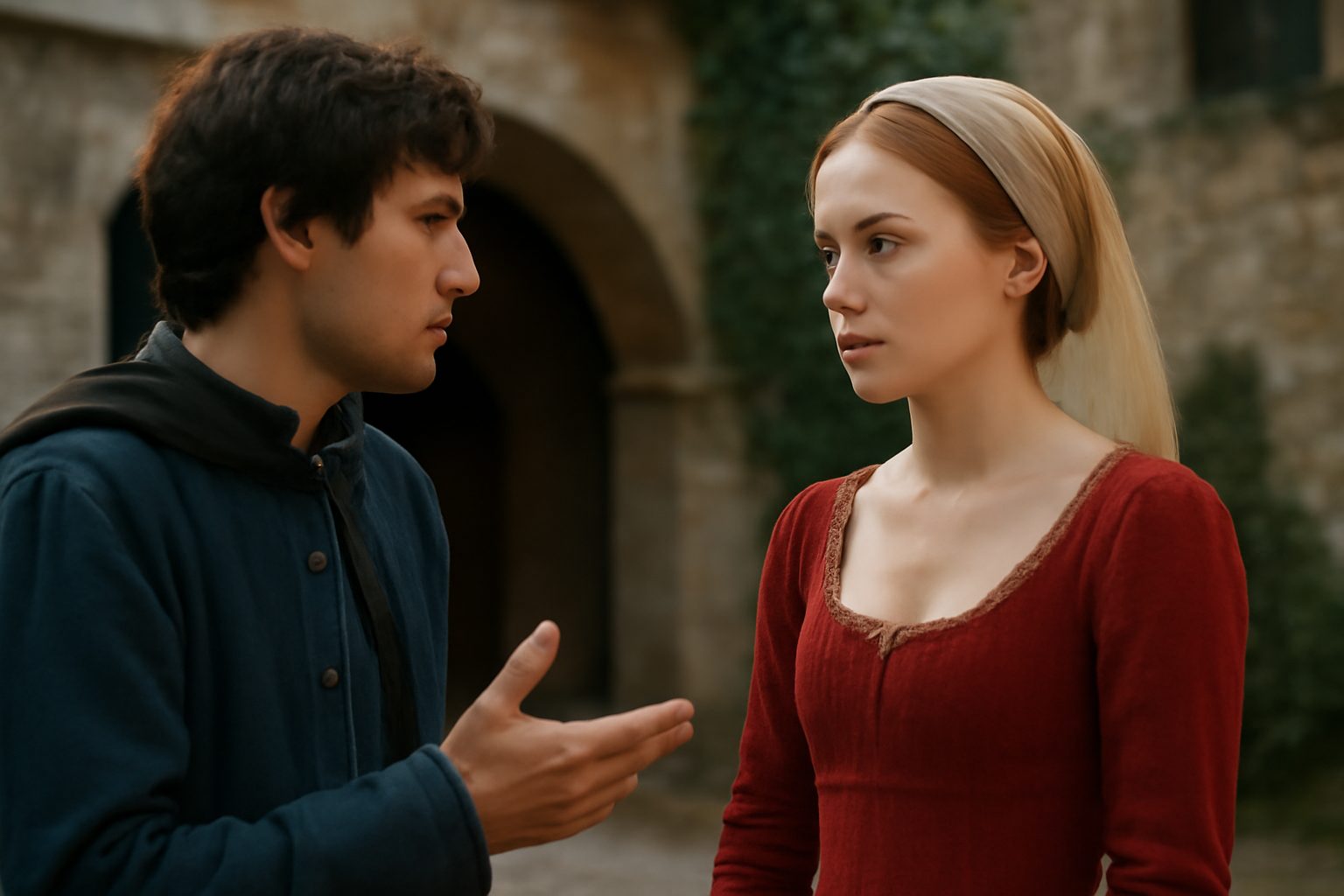
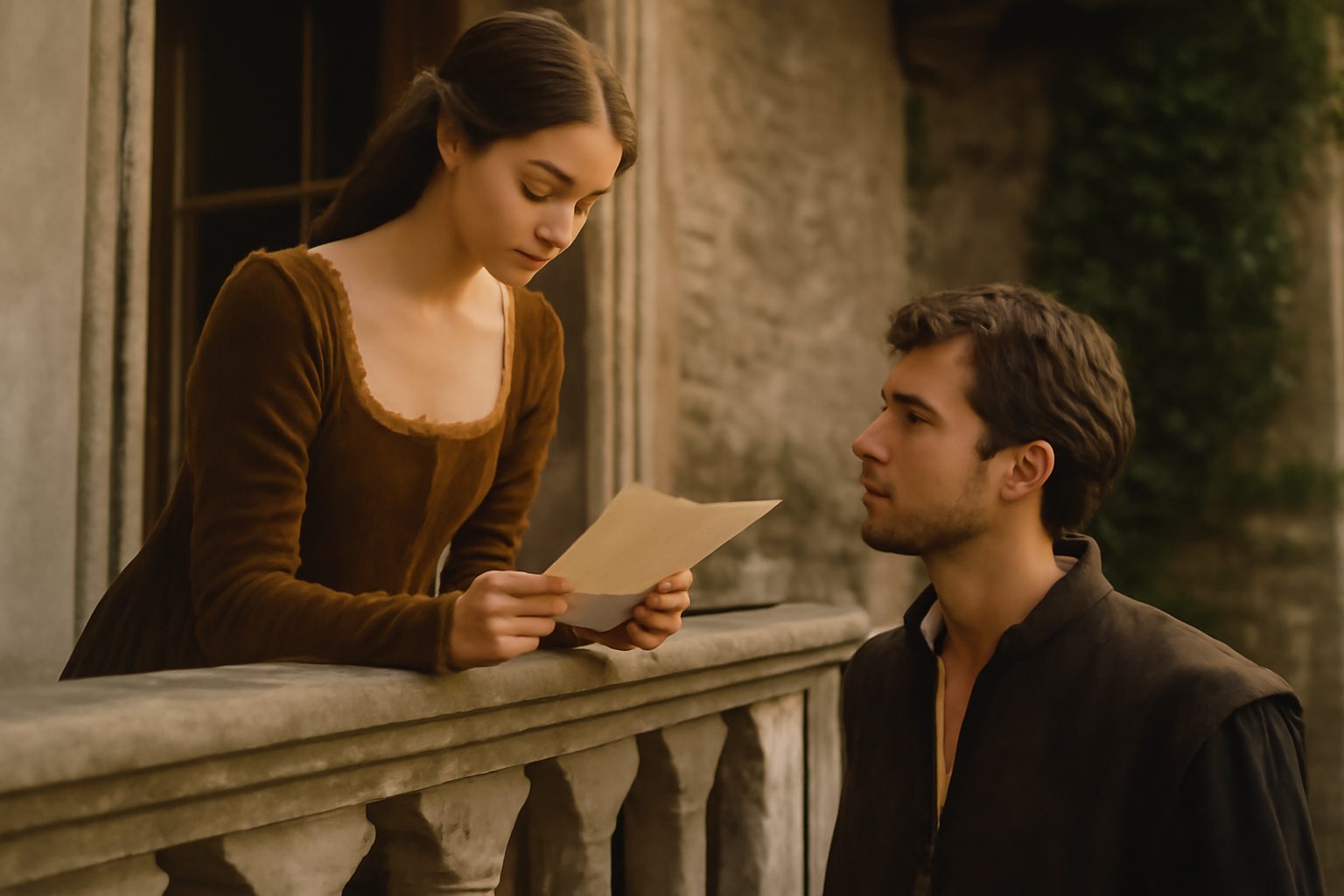
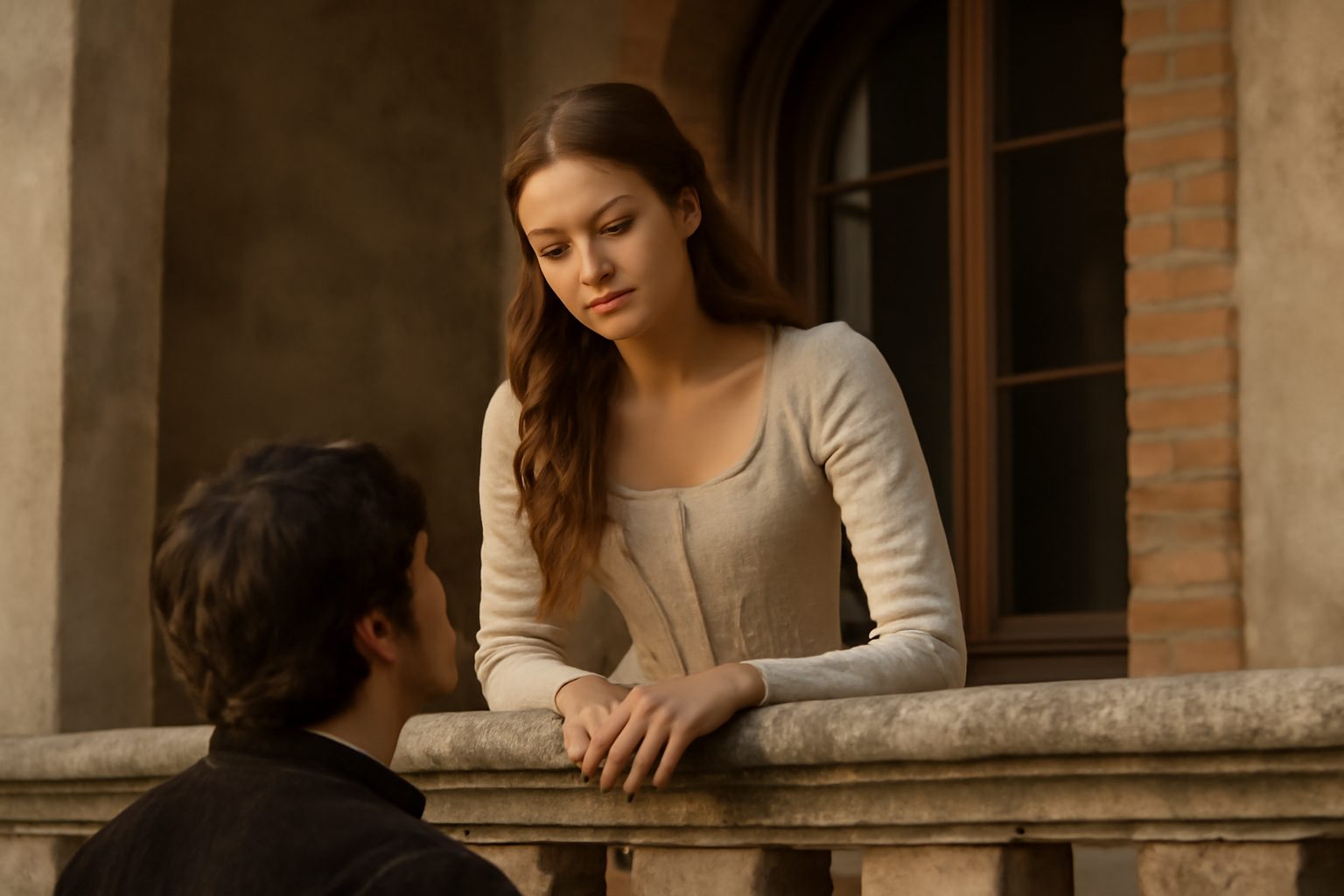
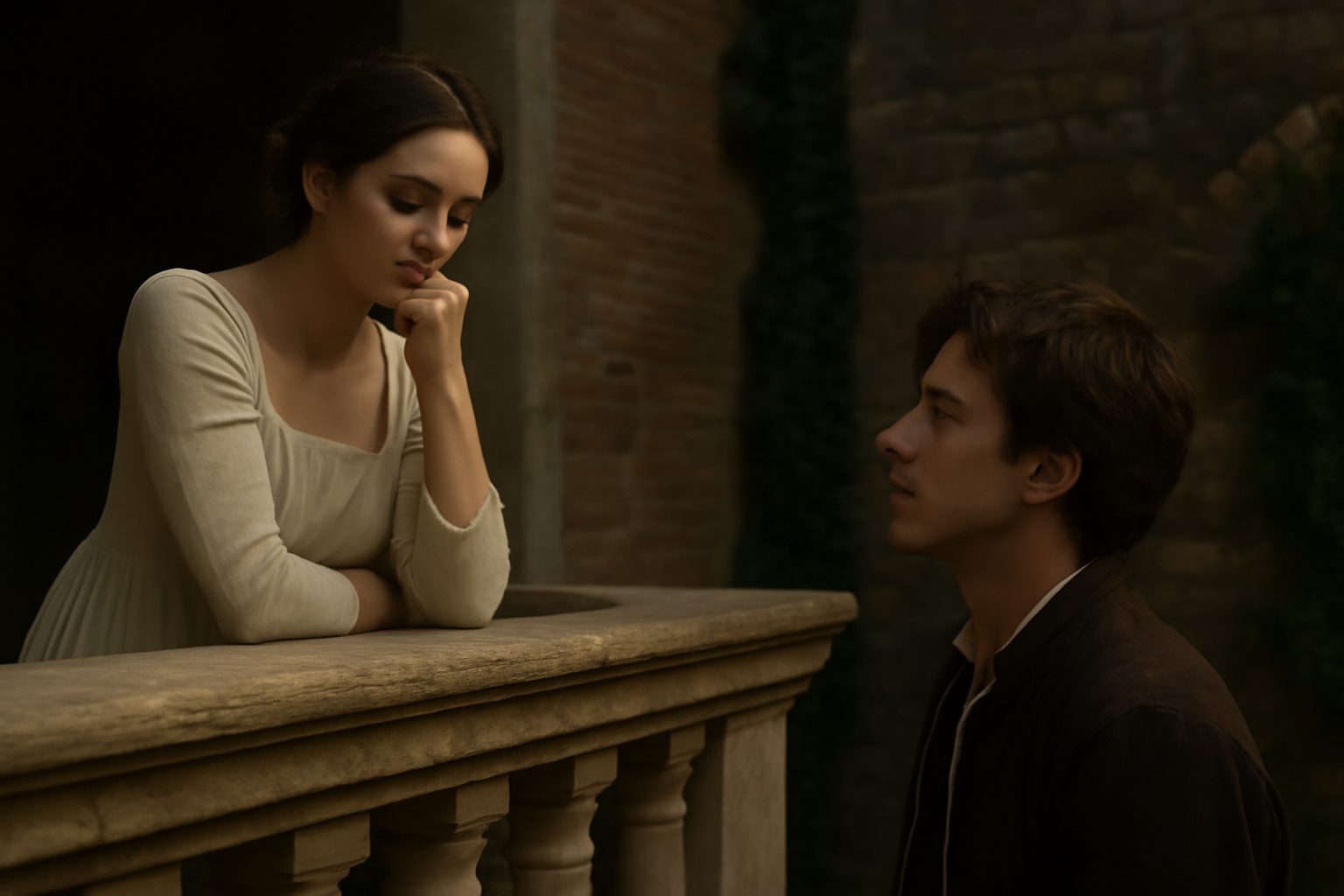
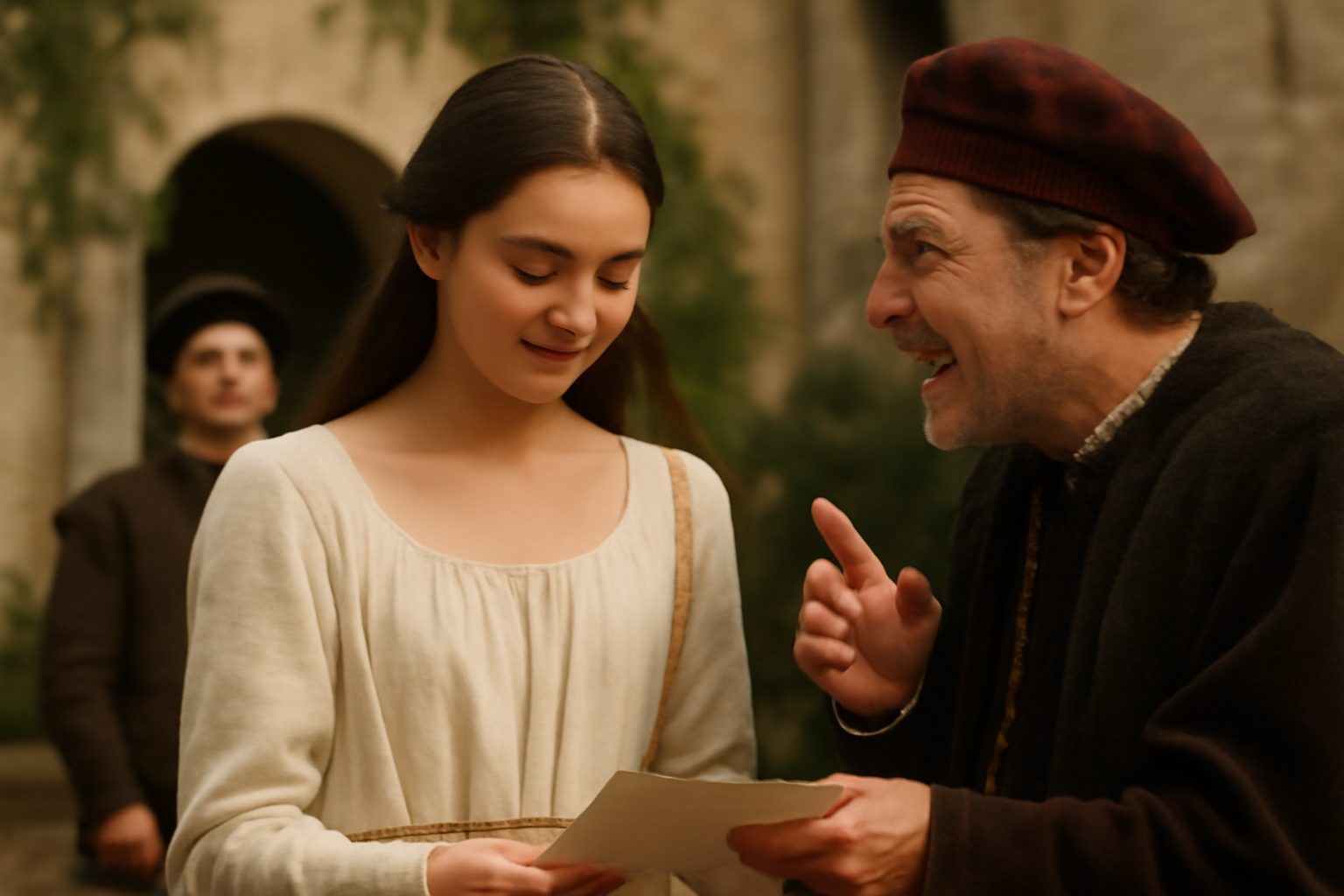
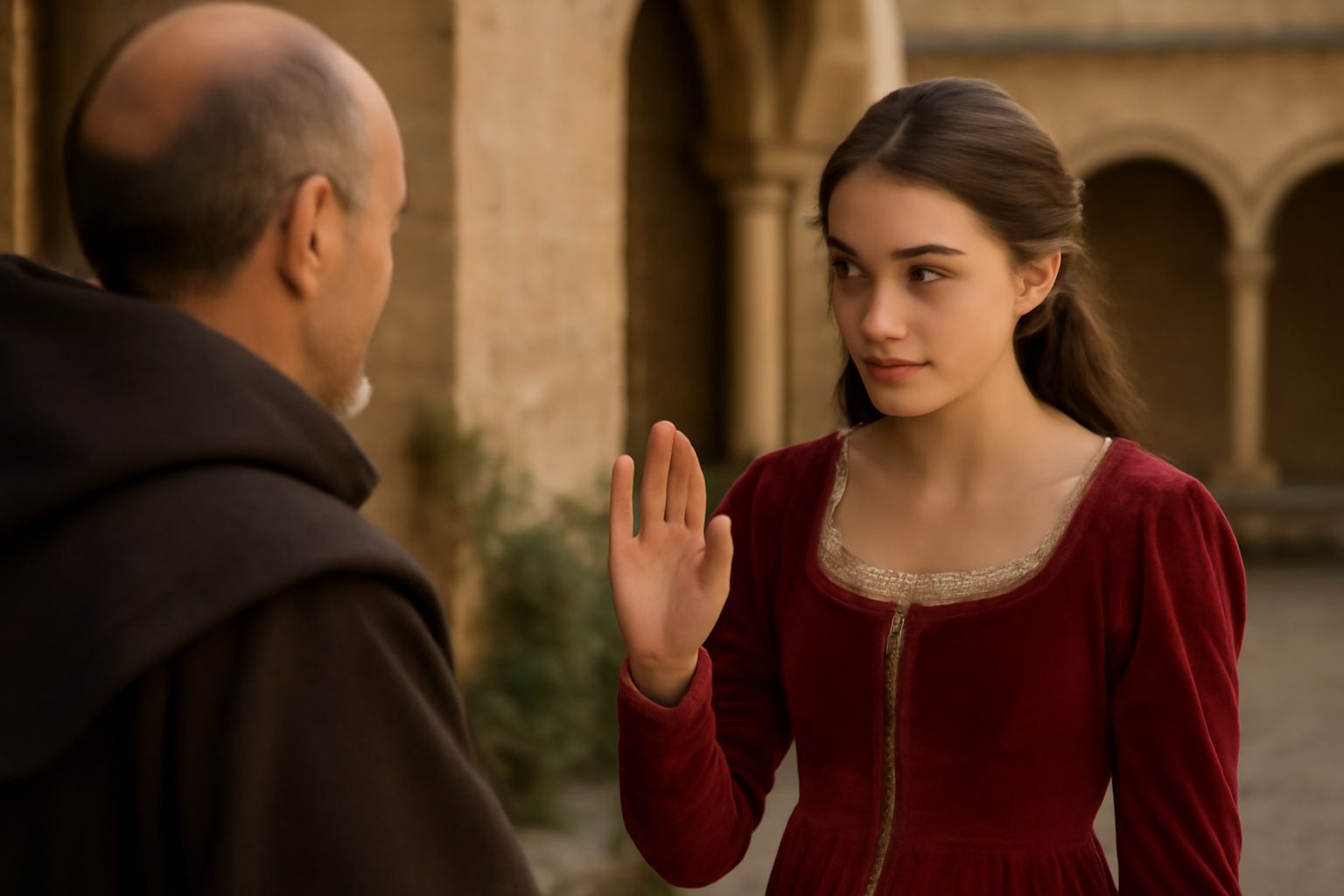
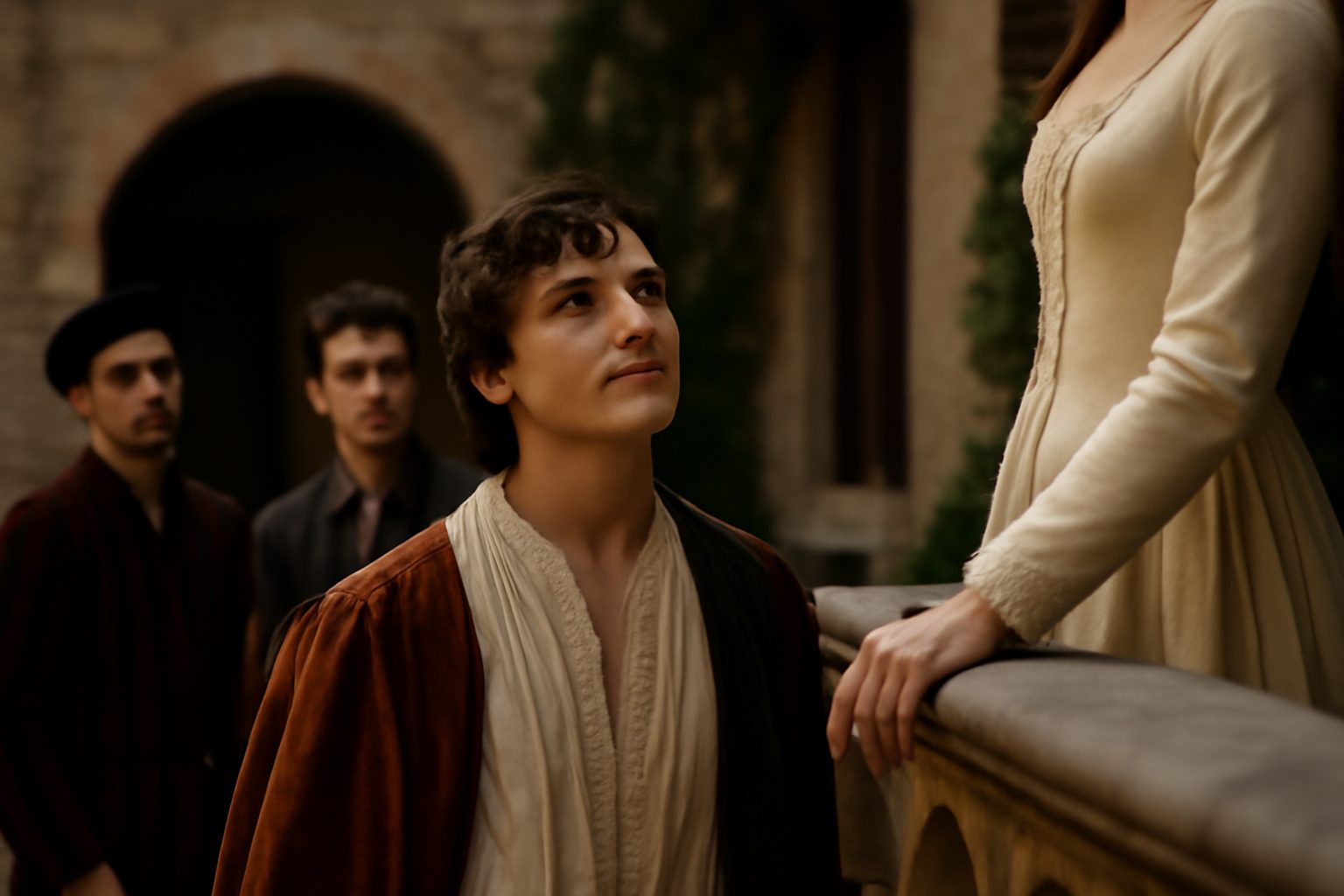
In Act 2, Scene 4 of Romeo and Juliet, Mercutio and Benvolio are teasing Romeo about his sudden disappearance the night before, unaware he has secretly met Juliet. The line is spoken by Mercutio, interrupting Romeo's playful banter as he tries to deflect their questions about where he was. This moment highlights Mercutio's quick wit and the lighthearted tone before the scene shifts to Romeo's plans to marry Juliet.
Benvolio: "Stop there, stop there."
In modern day english, we would say:
Hold on, that’s enough.
Frequently Asked Questions
Who says Stop there, stop there in Act 2 Scene 4 of Romeo and Juliet?
Benvolio says Stop there, stop there.
What is Benvolio trying to do when he says Stop there, stop there?
Benvolio is trying to interrupt or prevent something from happening.
Connections to other verses:
Connections to "Stop there, stop there."
The line Stop there, stop there is spoken by Mercutio as he interrupts Romeo's exuberant, love-struck speech. This moment serves as a pivot from Romeo's poetic declarations back to the scene's prevailing tone of wit and jest.
Connection to Wit and Wordplay
Mercutio’s interjection contrasts with Romeo’s earlier romantic effusions, such as when he describes Juliet’s beauty in that Petrarch flowed in, highlighting the tension between earnest love and Mercutio’s mocking humor. The phrase also echoes the playful, rapid-fire exchanges found in lines like O here's a wit of cheveril, where wit is stretched to its limits.
Narrative Pacing and Interruption
This interruption mirrors other moments where characters cut each other off for comedic or dramatic effect, such as the Nurse’s exclamation in She will indite him to some supper, which shifts the focus to practical matters. Similarly, Mercutio’s "Stop there" serves to rein in Romeo’s lengthy speeches, much like Benvolio’s plea in Come between us, good Benvolio; my wits faint, acknowledging the exhaustion from relentless jesting.
Foreshadowing and Deeper Meaning
While seemingly lighthearted, Mercutio’s command to stop also subtly foreshadows the impending tragedies. It contrasts with Romeo’s later earnest plans with the Nurse in Some means to come to shrift this afternoon, where the tone shifts to secrecy and urgency, underscoring how the scene’s humor is punctuated by moments of seriousness.