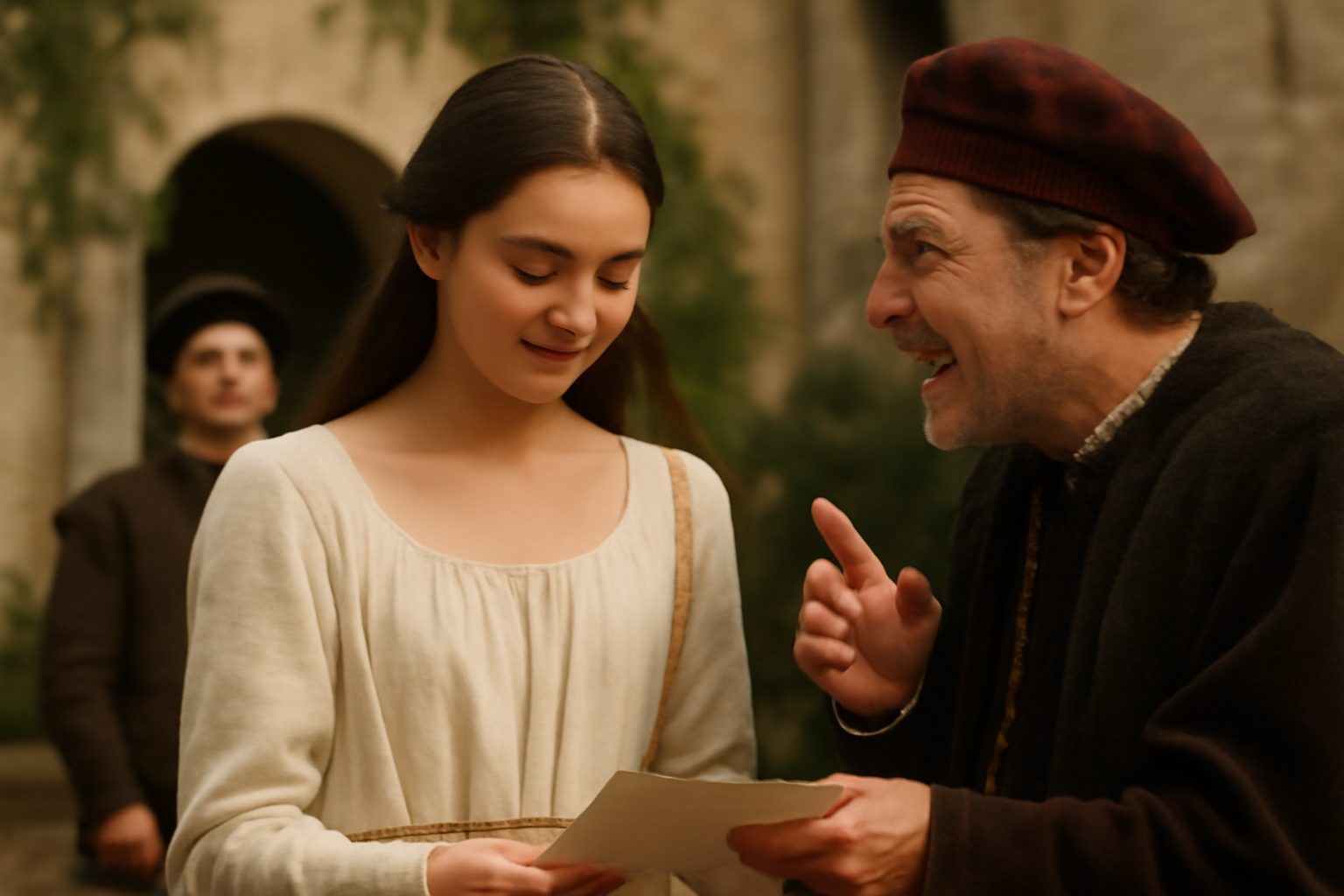
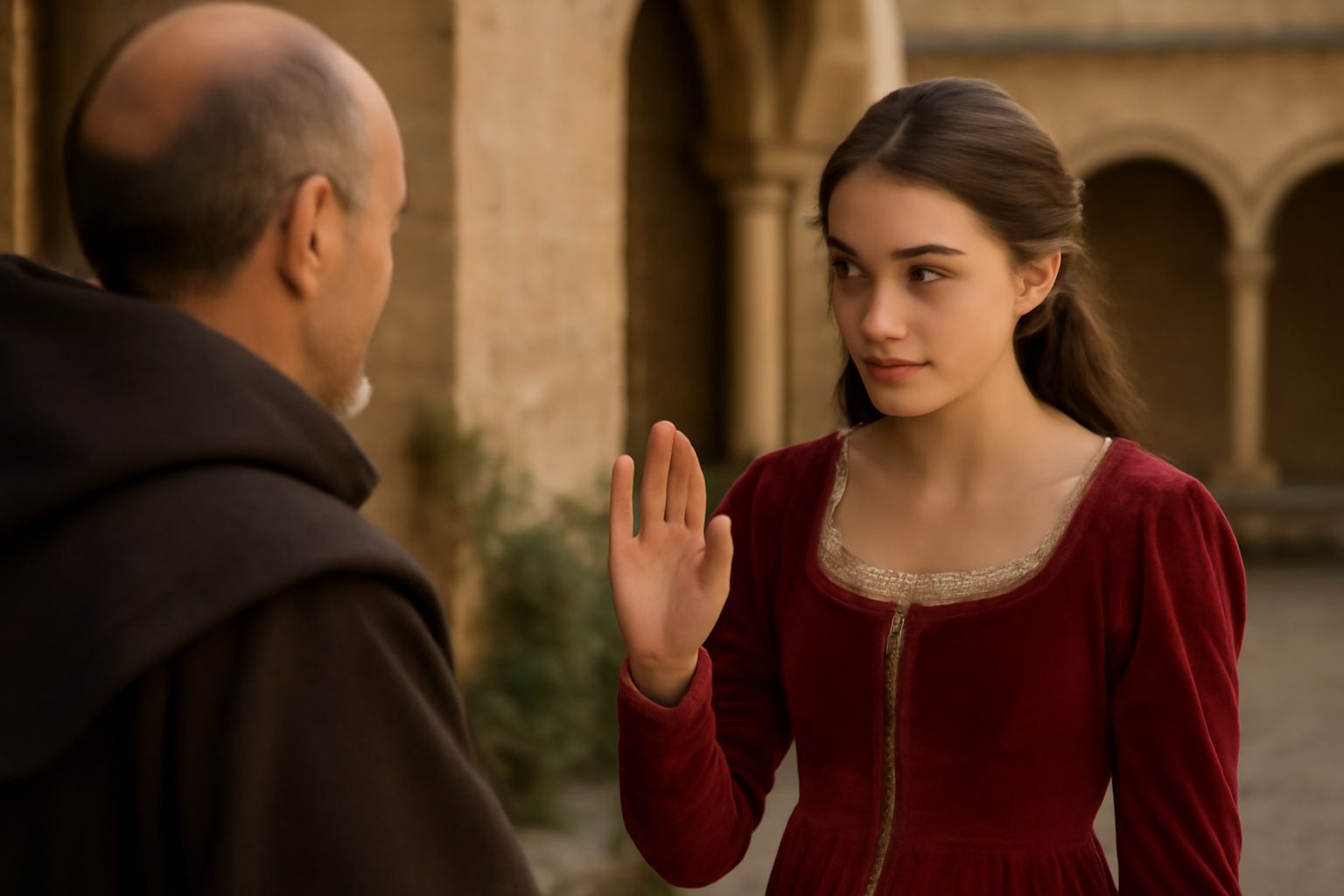
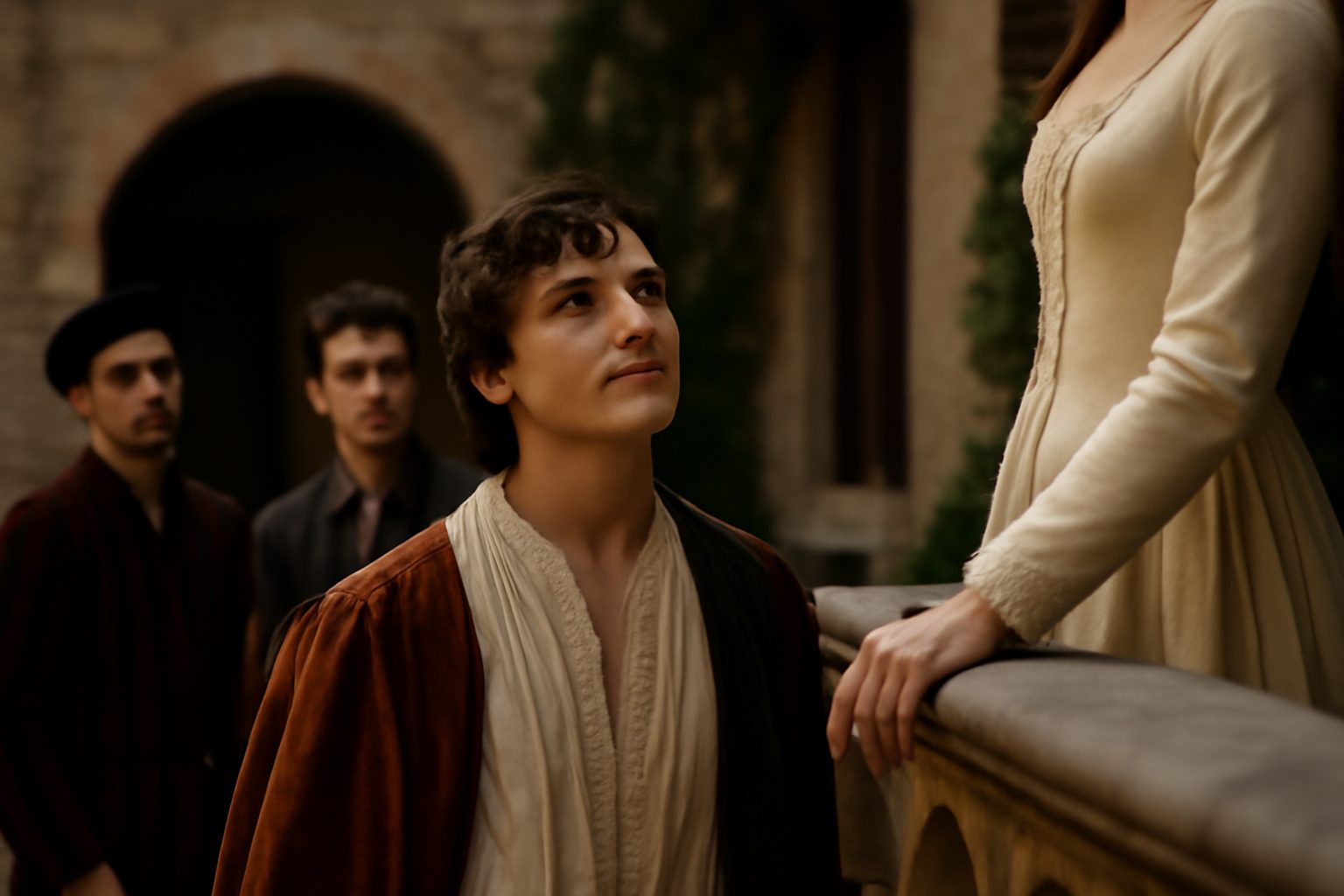
In Act 2, Scene 4 of Romeo and Juliet, Mercutio and Benvolio jest with Romeo about his sudden disappearance the night before. When Romeo deflects their teasing with vague excuses, Mercutio mockingly suggests he would have exaggerated his story if not for their interruption. This line reflects Mercutio's playful skepticism and the lighthearted banter among friends before the drama escalates.
Benvolio: "Thou wouldst else have made thy tale large."
In modern day english, we would say:
Otherwise you would have exaggerated your story.
Frequently Asked Questions
What does Benvolio mean when he says Romeo would have made his story bigger?
Benvolio is teasing Romeo, suggesting that if he hadn't interrupted, Romeo would have exaggerated his story to make it more impressive.
Connections to other verses:
Connections to "Thou wouldst else have made thy tale large"
The line "Thou wouldst else have made thy tale large" is spoken by Mercutio to Romeo, suggesting that if not interrupted, Romeo would have exaggerated or extended his story. This connects thematically and contextually to several other verses in the scene, particularly those involving wit, jest, and the playful banter between the characters.
Connection to Wit and Jest
Mercutio's remark about Romeo making his tale "large" ties into the broader theme of exaggerated storytelling and wit in the scene. For example, in "O here's a wit of cheveril, that stretches from an inch narrow to an ell broad!", Mercutio comments on the elasticity of wit, which parallels the idea of stretching a tale. Similarly, "I stretch it out for that word 'broad;'" reinforces this notion of extending language for humorous effect.
Interruption and Brevity
The idea of interruption preventing a lengthy tale is echoed in "Thou desirest me to stop in my tale against the hair", where Mercutio feels urged to cut his story short. Romeo himself acknowledges this in "O, thou art deceived; I would have made it short", claiming he intended brevity, contradicting Mercutio's accusation. Additionally, "meant, indeed, to occupy the argument no longer" supports Romeo's assertion that he did not plan to drag out his explanation.
Playful Banter and Character Dynamics
The exchange highlights the lively dynamic between Romeo and Mercutio, seen elsewhere in the scene, such as in "now art thou sociable, now art thou Romeo", where Mercutio notes Romeo's return to his usual witty self. The jesting tone is also present in "I will bite thee by the ear for that jest" and "Nay, good goose, bite not", showing how the characters playfully provoke each other, much like the accusation of tale-making.
Exaggeration and Hyperbole
Mercutio's comment about a "large" tale aligns with his tendency toward hyperbole, exemplified in "how art thou fishified!" and "for this drivelling love is like a great natural", where he mocks Romeo's lovelorn state with exaggerated comparisons. This reinforces the scene's focus on expansive, humorous language.