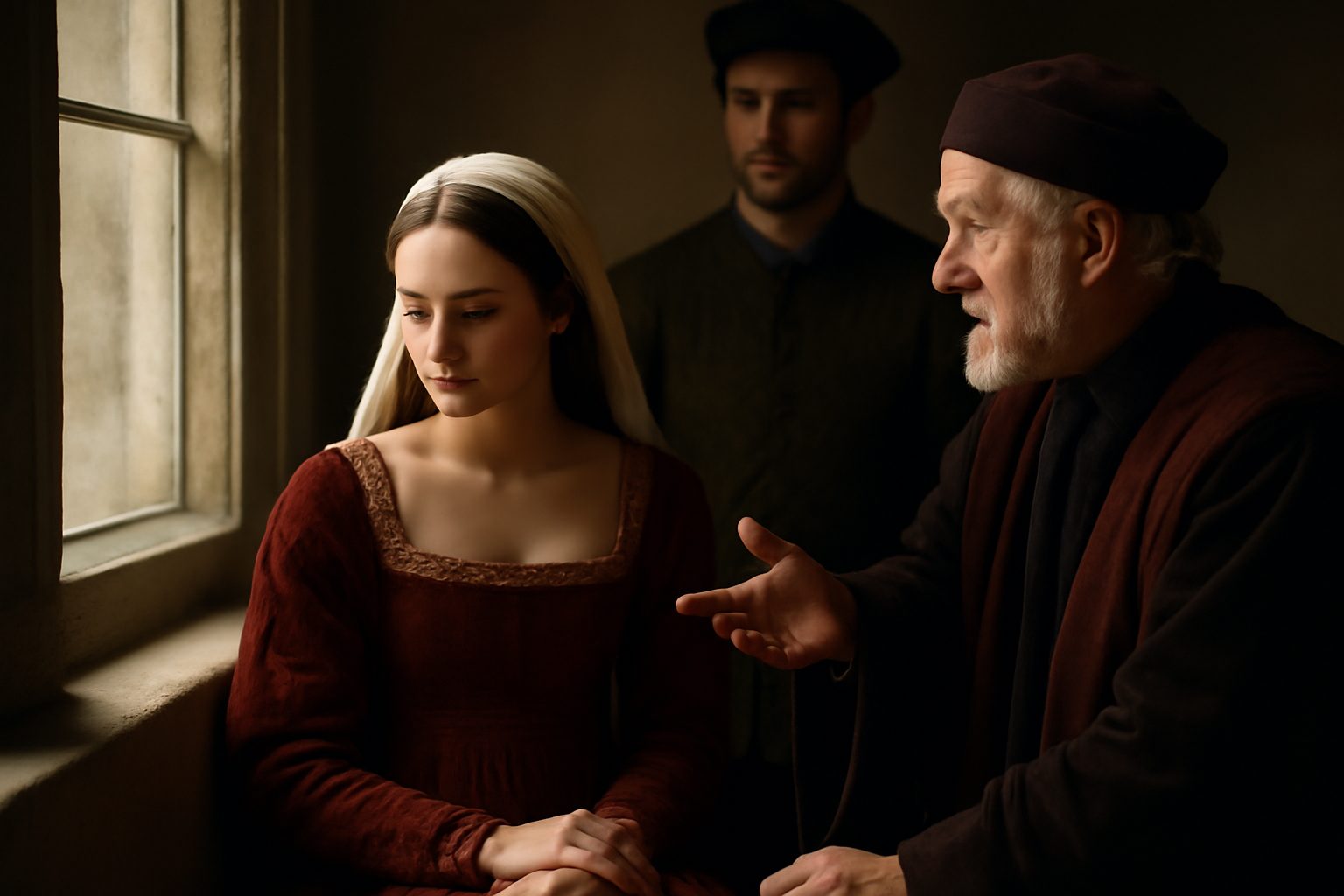
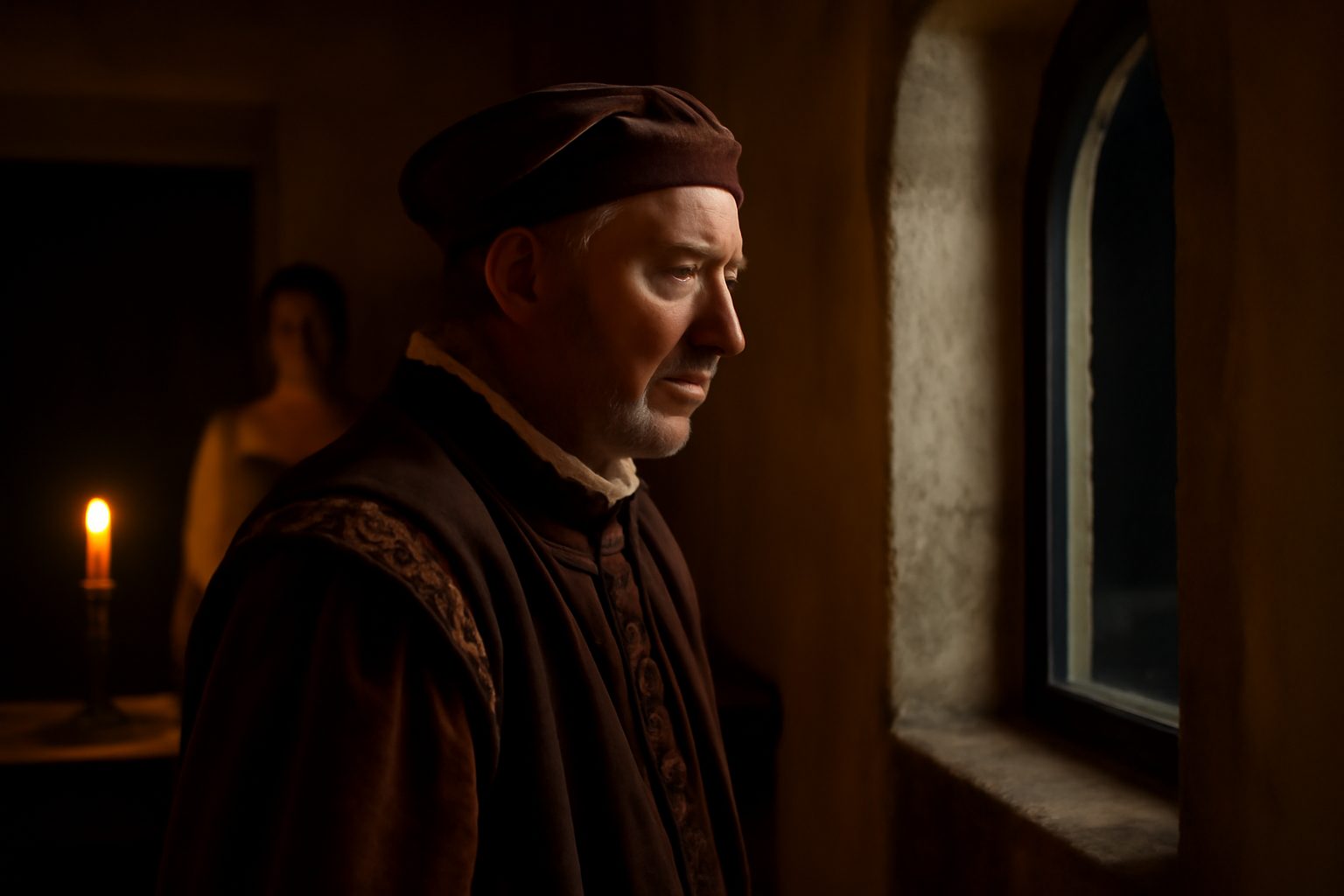
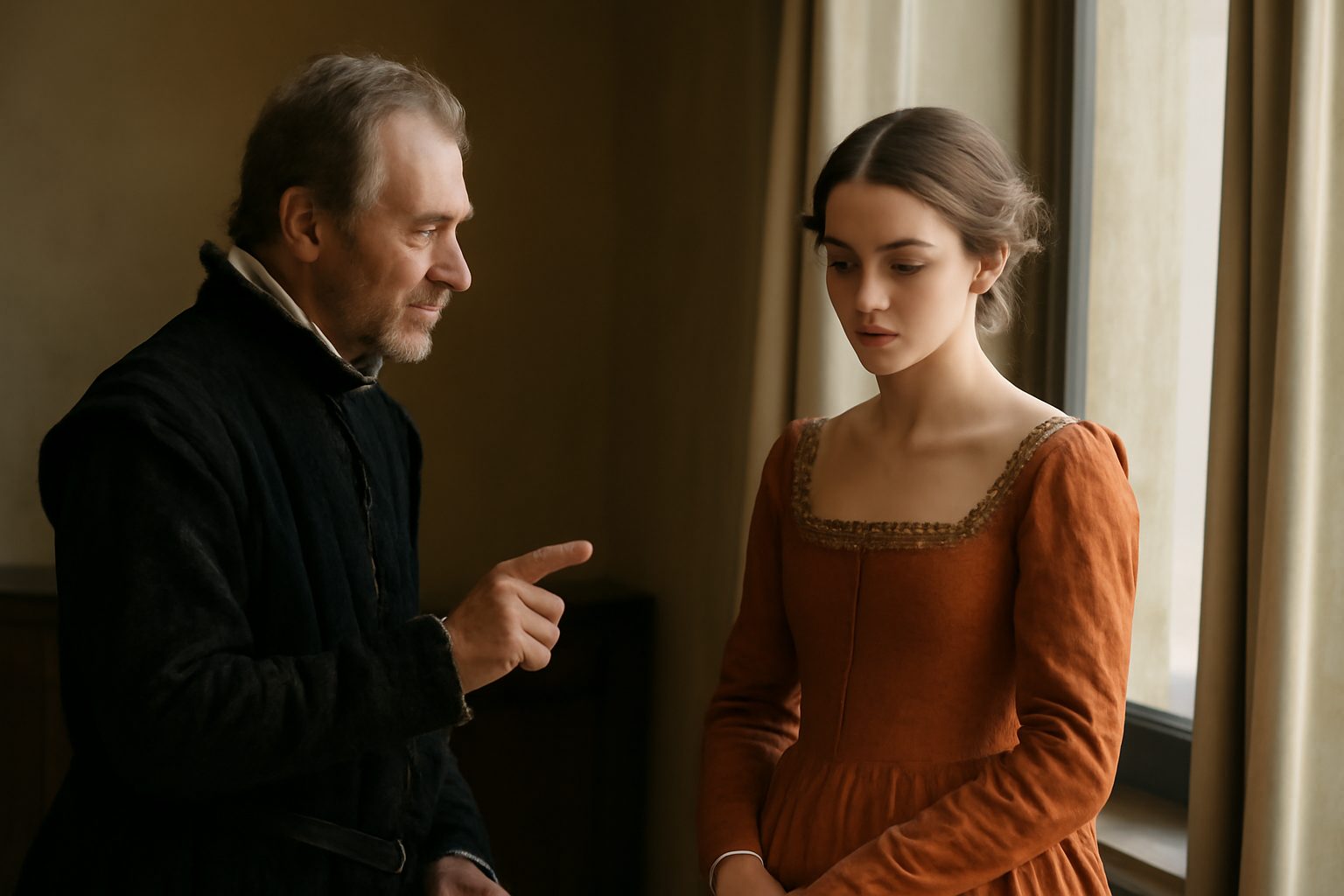
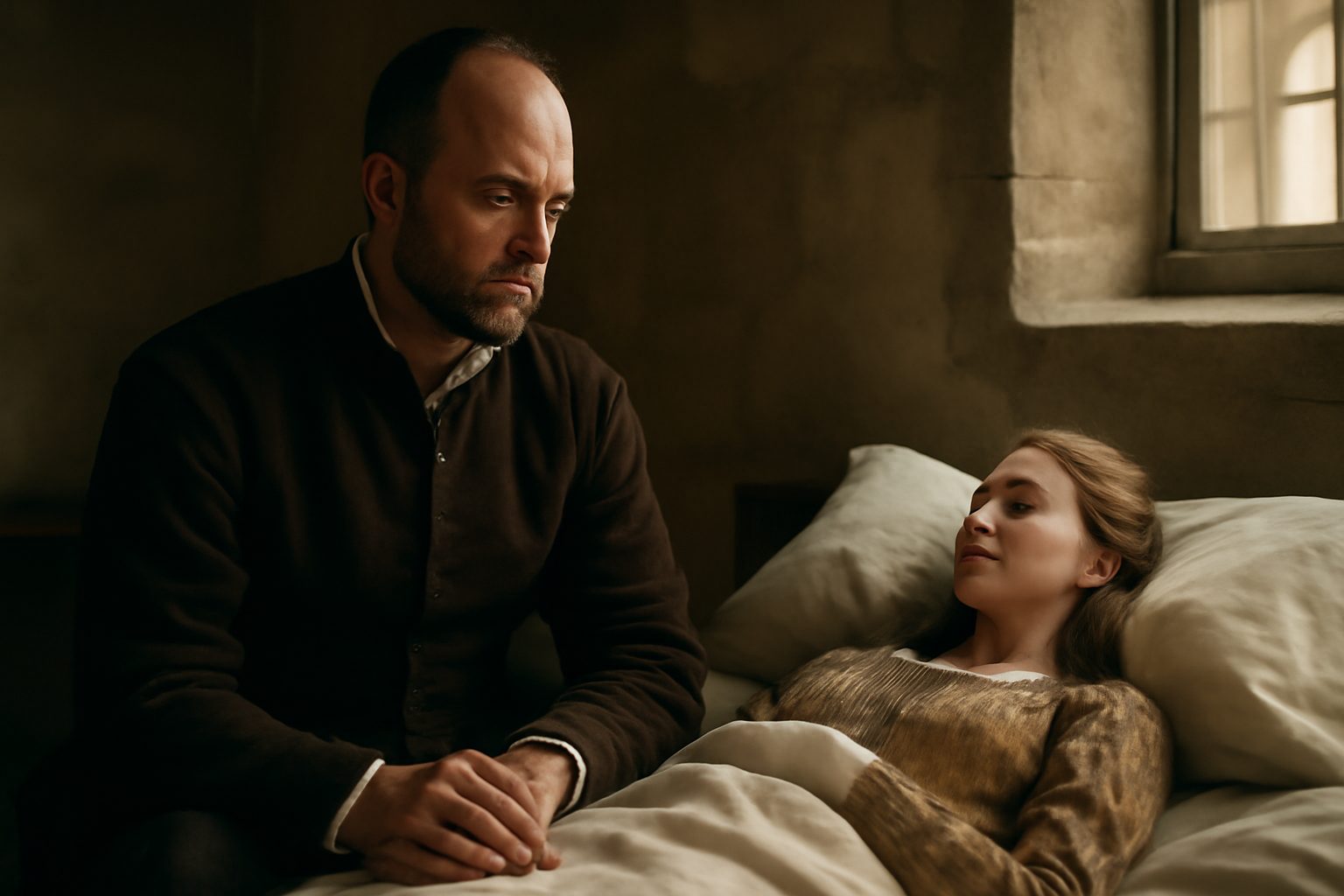
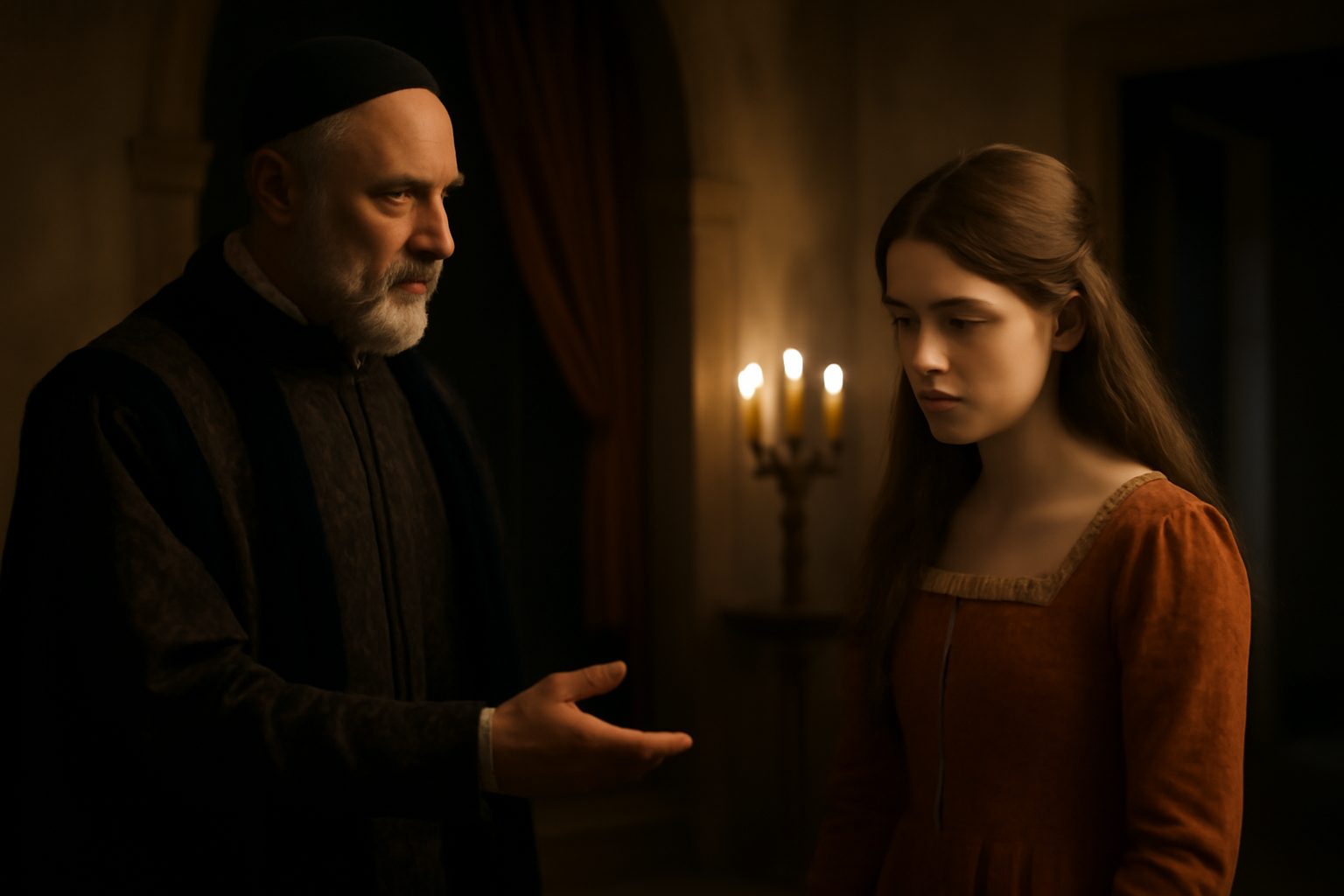
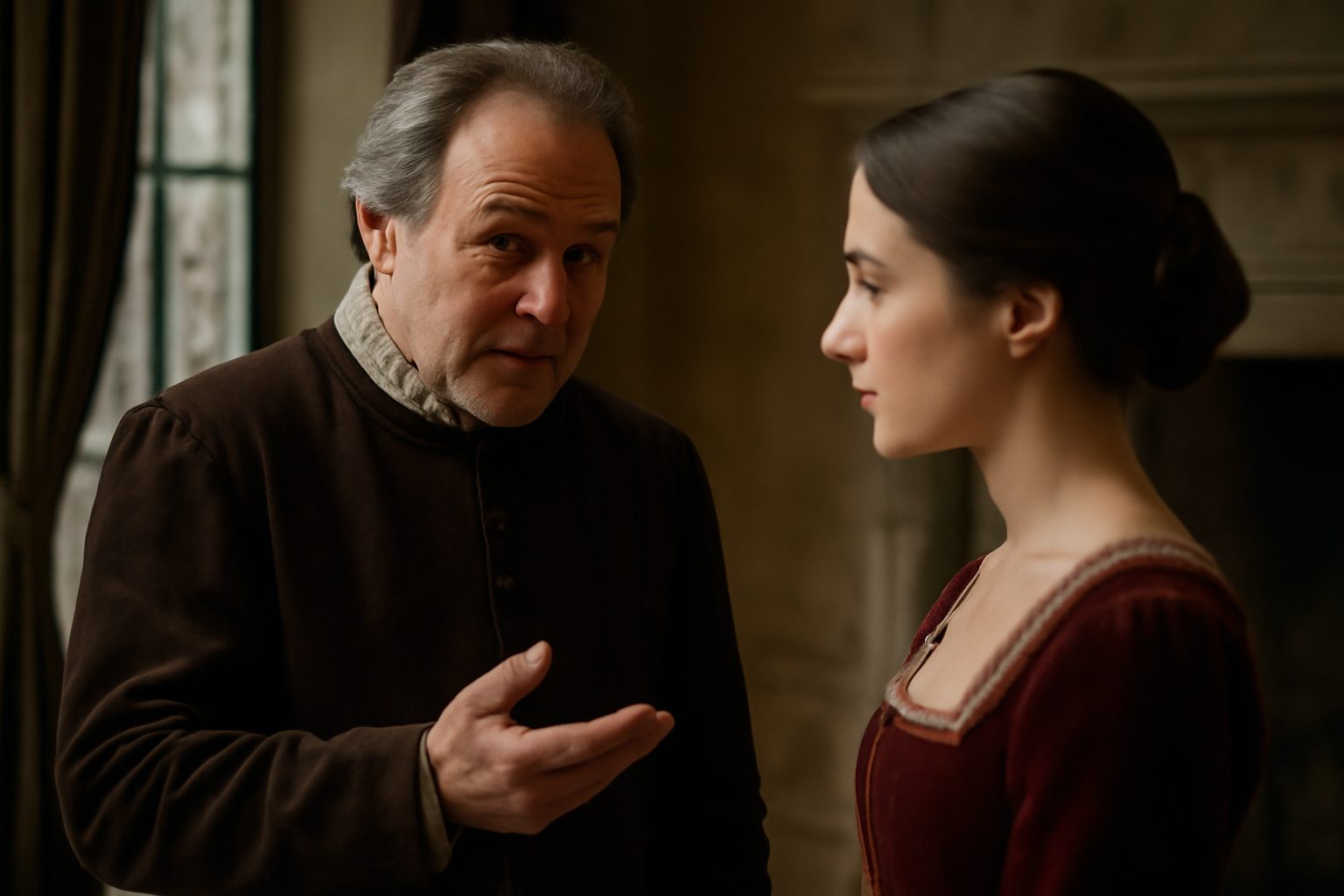
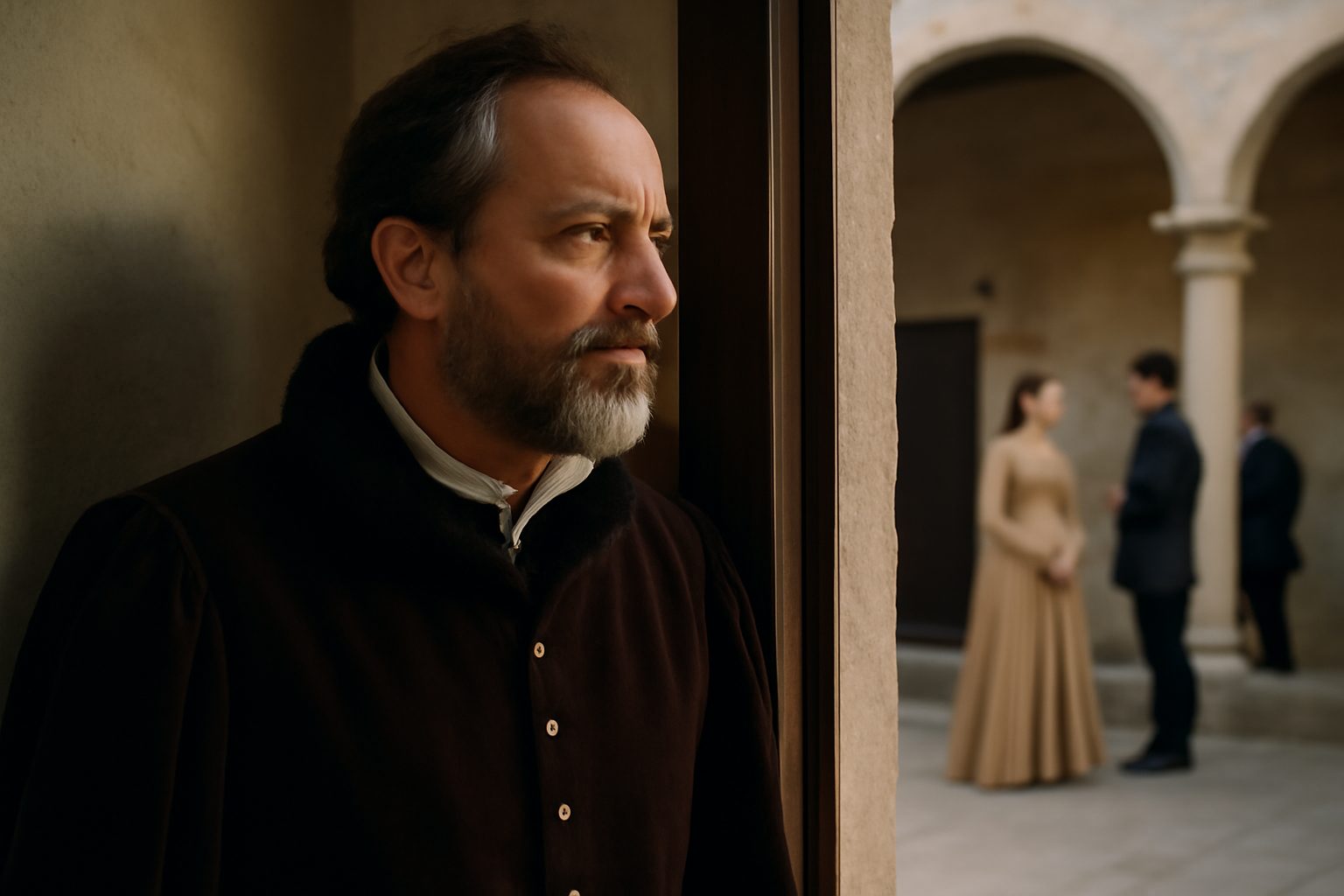
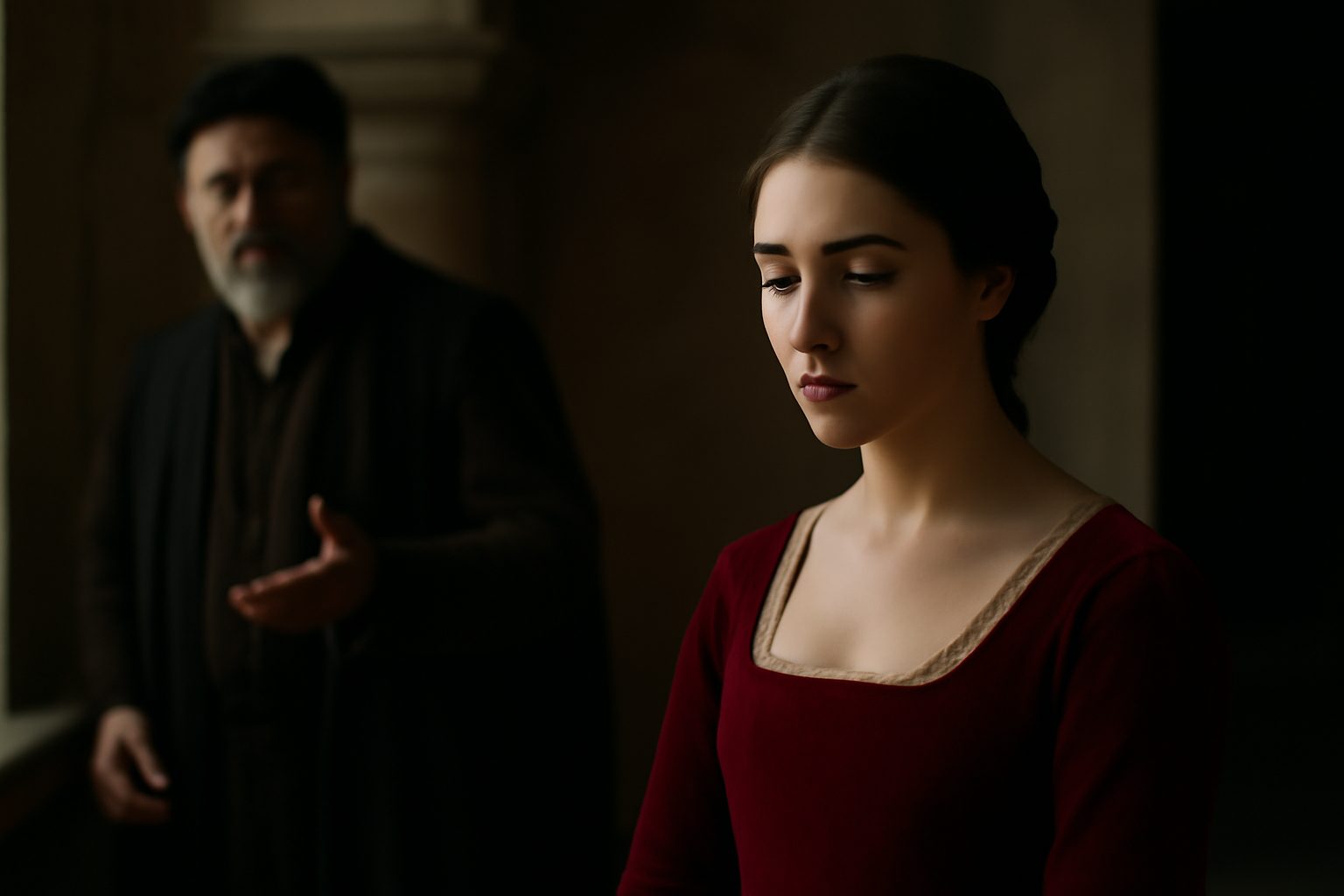
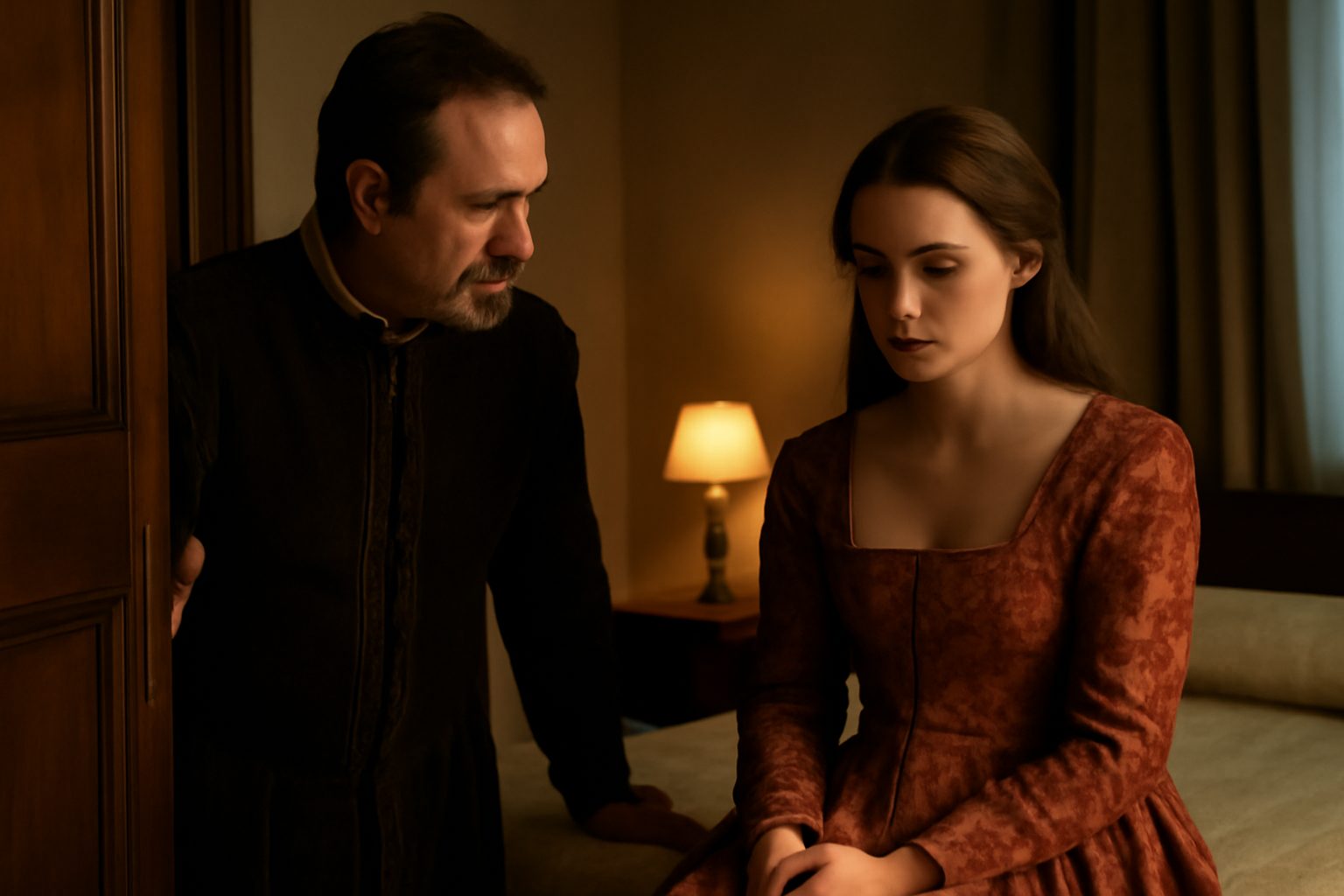
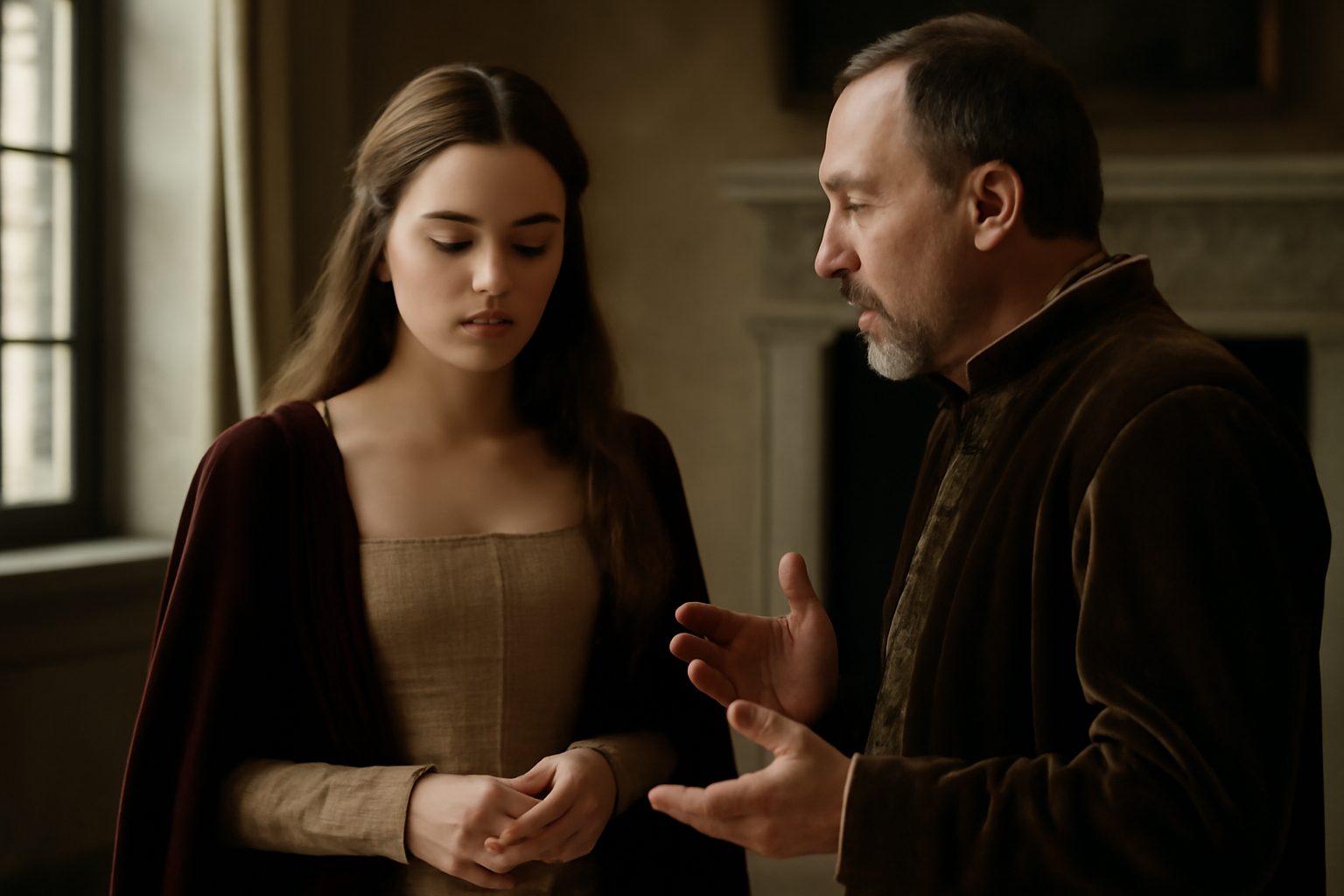
In Act 3, Scene 4 of Romeo and Juliet, Lord Capulet speaks these words to Paris, explaining that recent events have unfolded with unfortunate timing. Earlier that day, Tybalt's death and Romeo's banishment have left the household in turmoil, disrupting Capulet's plans for Juliet's marriage. His tone reflects resignation as he acknowledges how circumstances have spiraled beyond his control.
Capulet: "Things have fall'n out, sir, so unluckily,"
In modern day english, we would say:
Things have turned out so badly, sir.
Frequently Asked Questions
What does Capulet mean when he says that things have happened unluckily?
Capulet is expressing that unfortunate events have occurred, which are causing problems or difficulties in the situation.
Connections to other verses:
Connections to "Things have fall'n out, sir, so unluckily"
This line, spoken by Lord Capulet to Paris, serves as the scene's central explanation for the rushed wedding plans. It directly connects to "That we have had no time to move our daughter" as both acknowledge the unfortunate timing following Tybalt's death. The unlucky circumstances referenced include "For, hark you, Tybalt being slain so late", which specifically names the tragedy that has disrupted normal courtship rituals.
Emotional Context and Juliet's State
The unlucky events directly affect Juliet's condition, as Capulet notes "Look you, she loved her kinsman Tybalt dearly", explaining her grief. This leads to his observation that "To-night she is mew'd up to her heaviness", showing how the unlucky events have isolated her. The late hour mentioned in "Afore me! it is so very very late" further emphasizes the strained, unusual circumstances.
Wedding Planning Amidst Tragedy
Despite the unlucky situation, Capulet uses this as justification for hasty arrangements, telling Paris "Sir Paris, I will make a desperate tender" of Juliet's love. The phrase "These times of woe afford no time to woo" directly echoes the "unluckily" sentiment while justifying the accelerated timeline. This urgency appears in the repeated scheduling discussions, particularly the shift from "on Wednesday next" to "what say you to Thursday?".
Contrasting Perspectives
While Capulet views events as "unluckily," Paris demonstrates eagerness in "My lord, I would that Thursday were to-morrow". Lady Capulet's practical response in "And so did I:--Well, we were born to die" shows how the family accepts misfortune as part of life while moving forward with their plans.