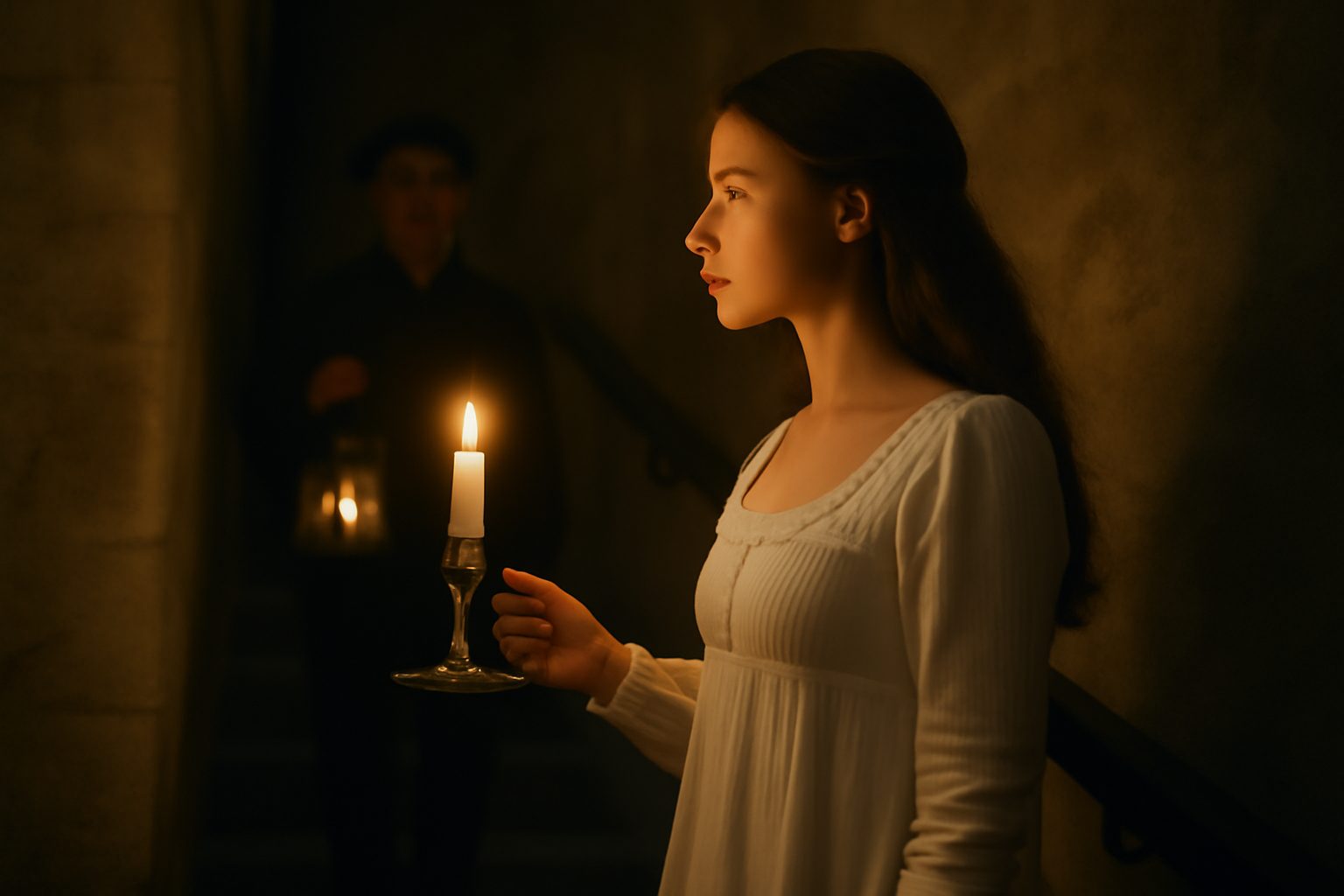
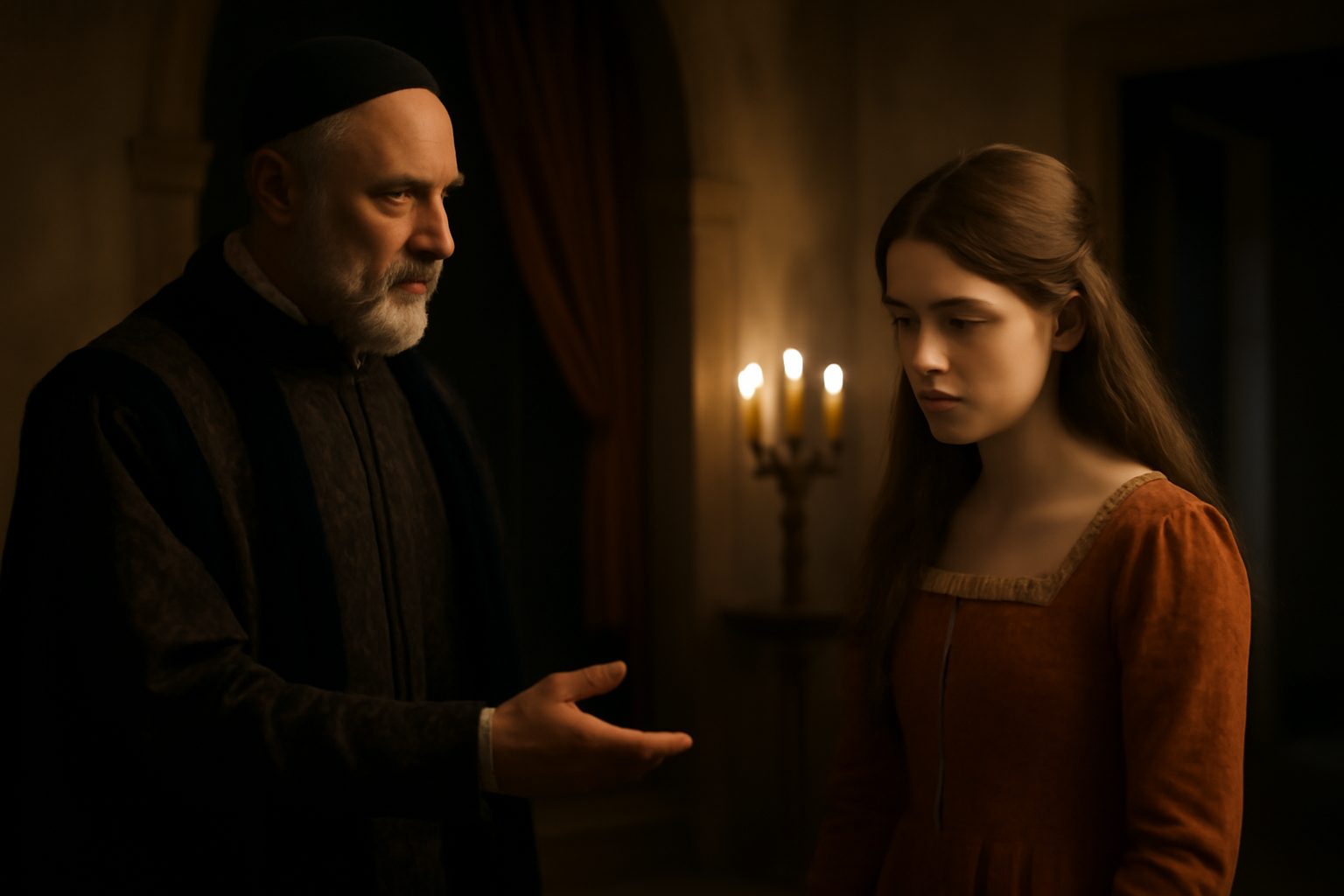
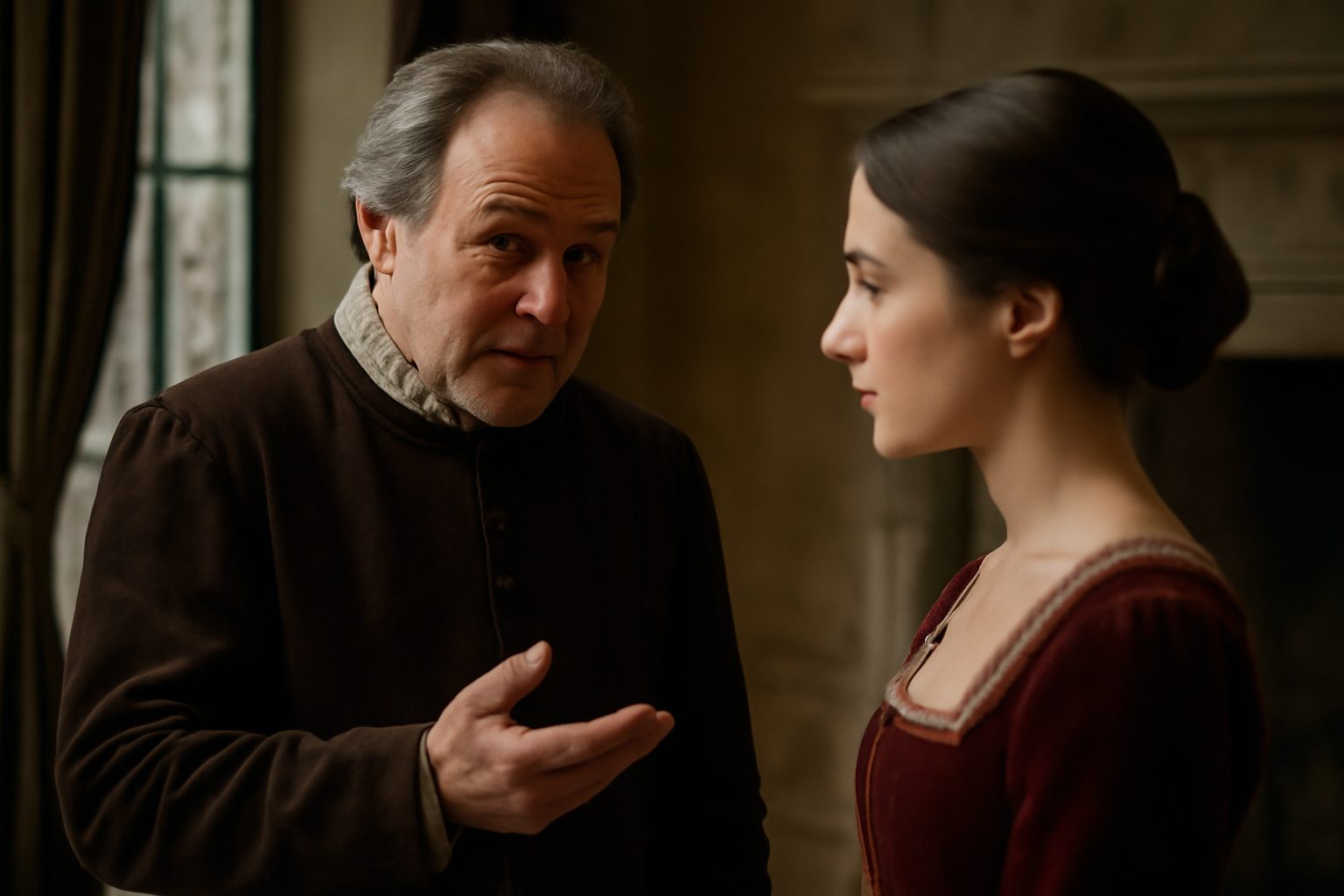
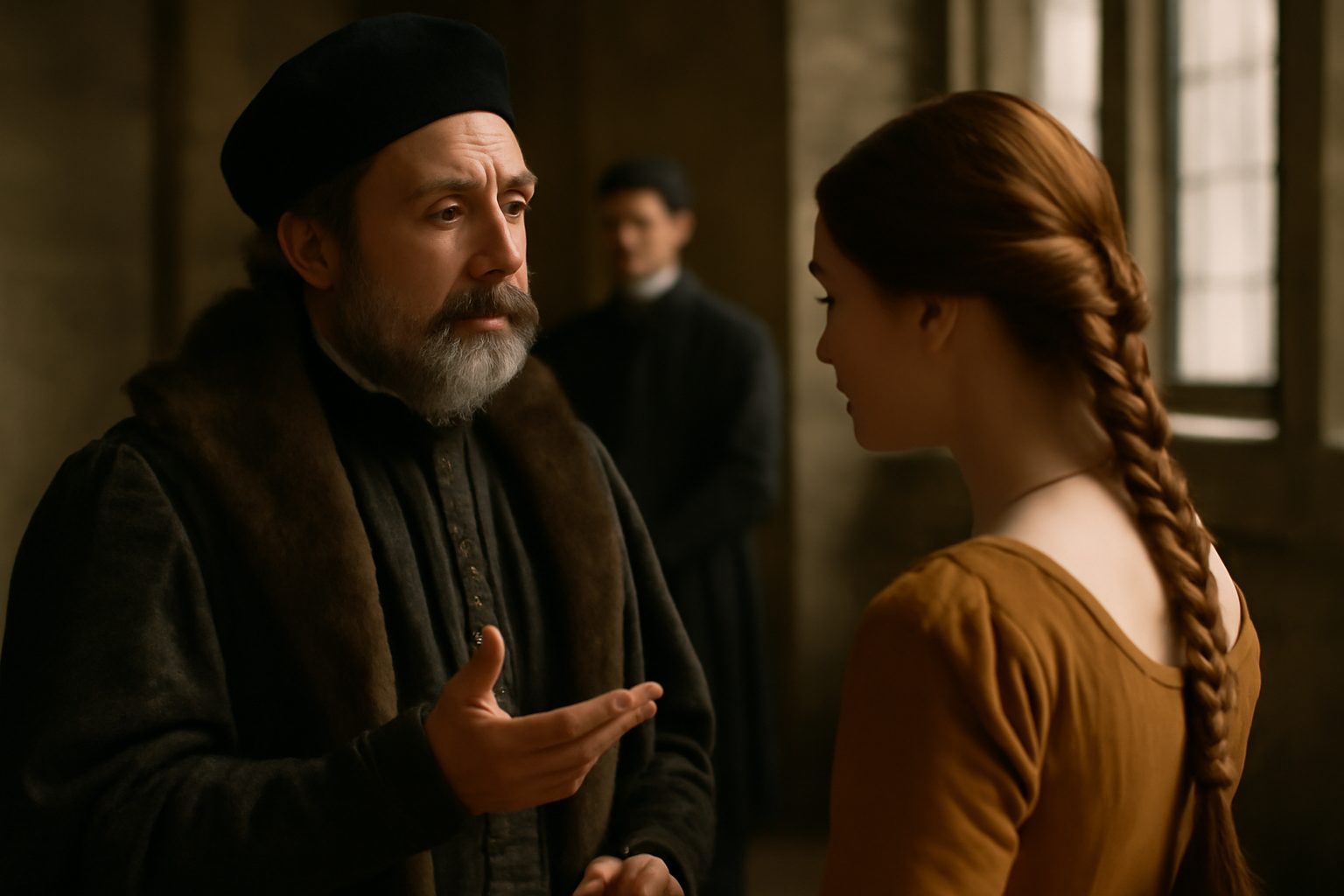
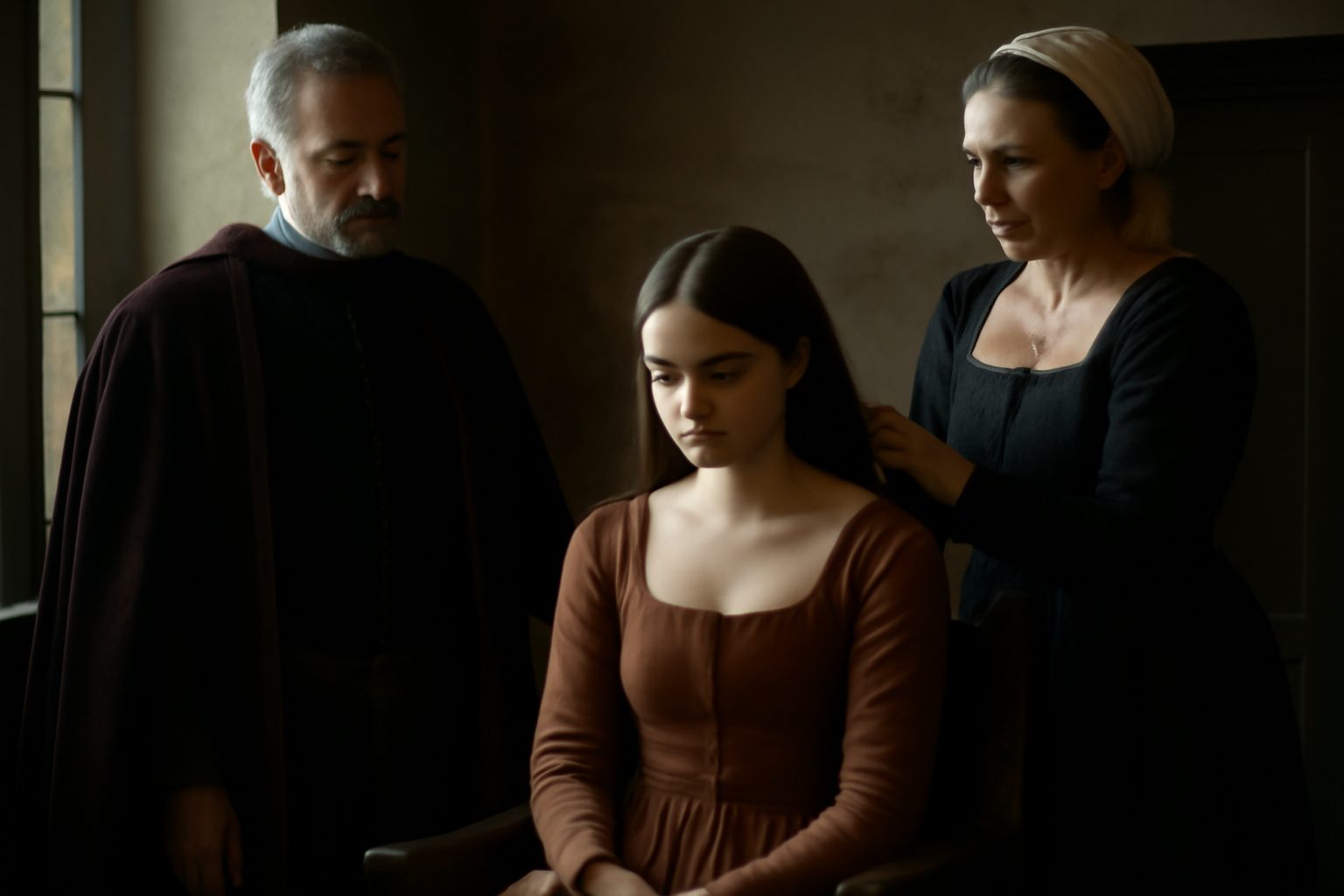
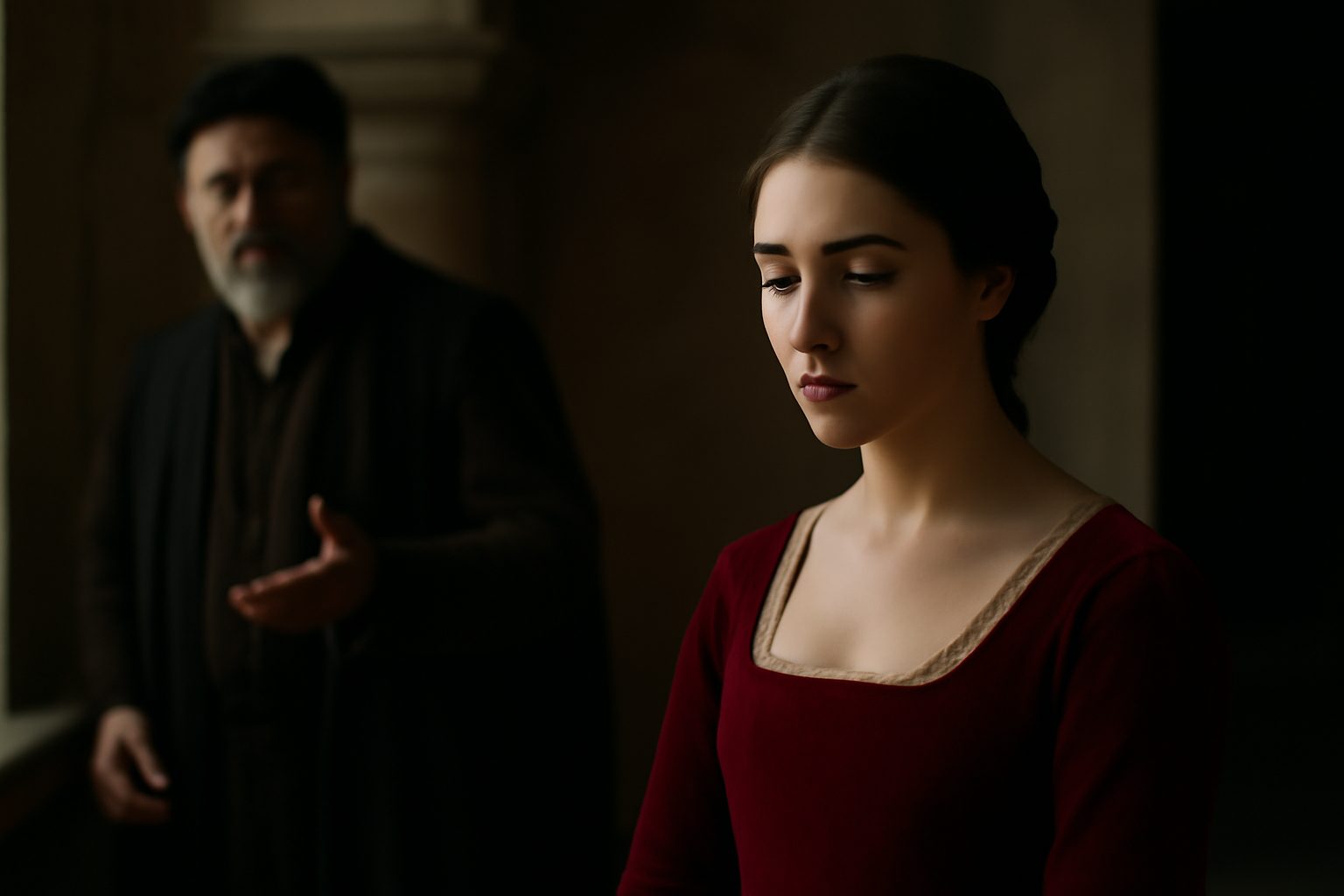
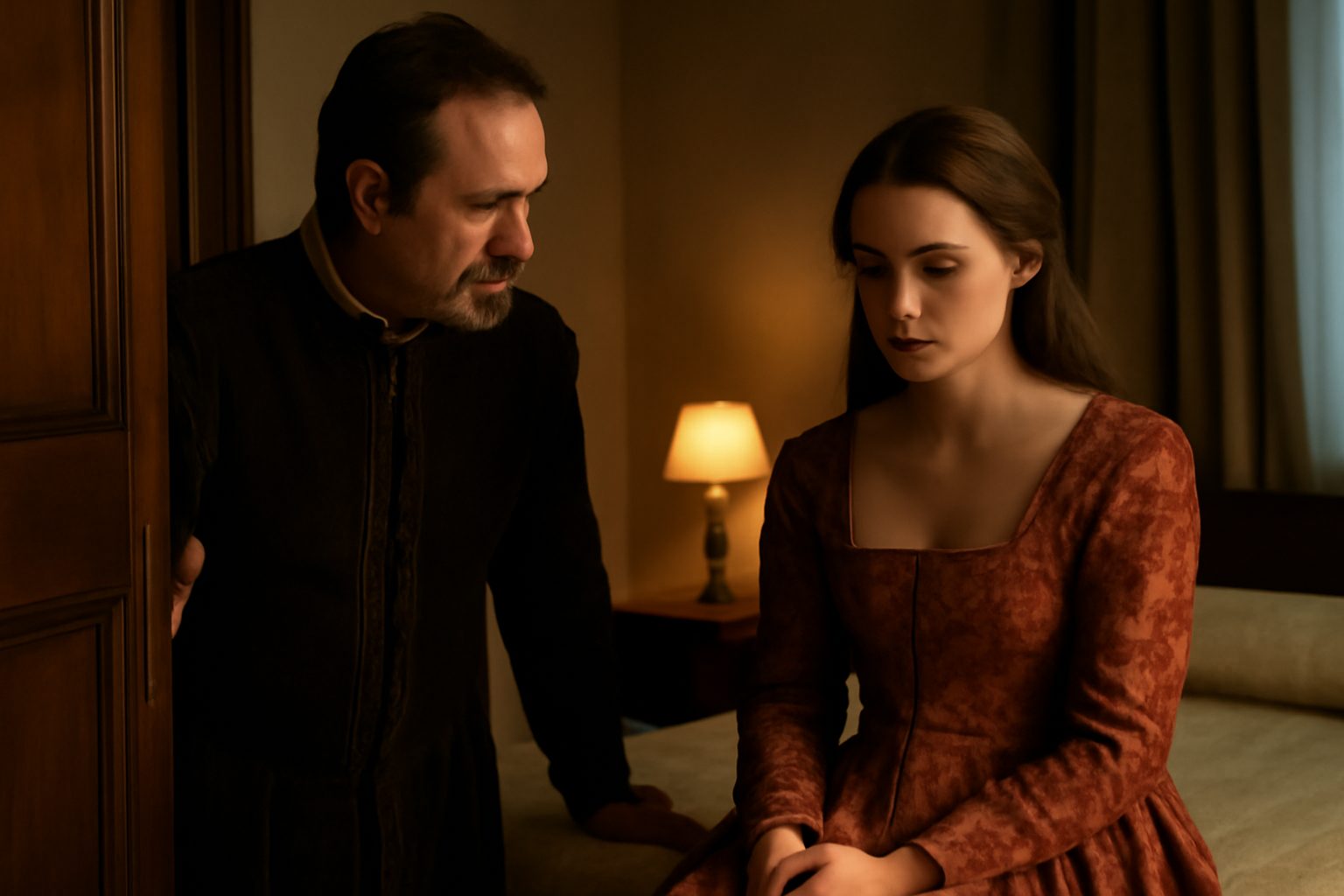
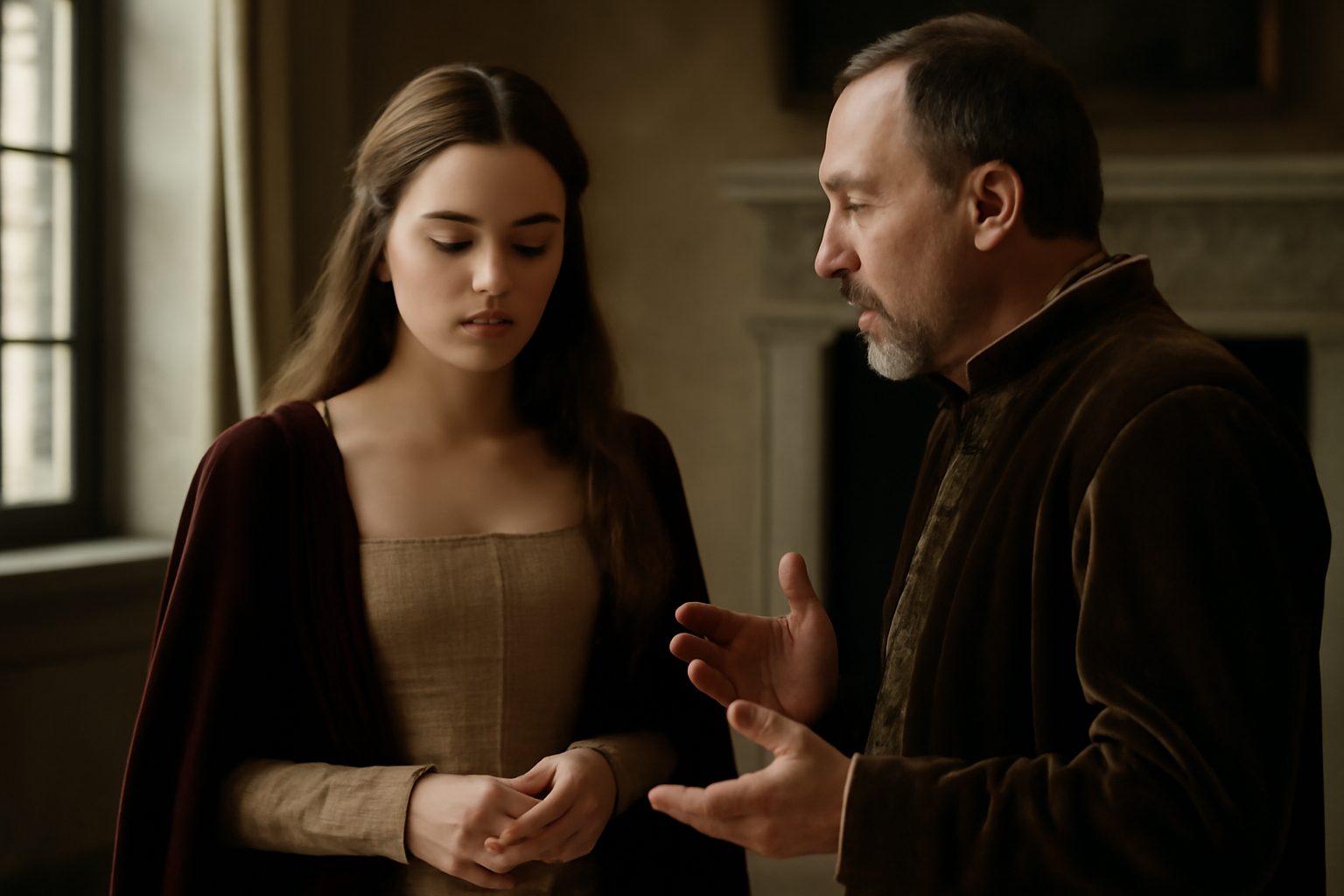
In Act 3, Scene 4 of Romeo and Juliet, Lord Capulet speaks to Paris about Juliet's recent grief over Tybalt's death. He explains that Juliet was deeply attached to her cousin, emphasizing her sorrow as a reason for her withdrawn behavior. This moment reveals Capulet's misunderstanding of Juliet's true distress, which stems not just from Tybalt's death but also from Romeo's banishment.
Capulet: "Look you, she loved her kinsman Tybalt dearly,"
In modern day english, we would say:
You should know she cared deeply for her cousin Tybalt.
Frequently Asked Questions
Who does Capulet say Juliet loved very much?
Her cousin Tybalt.
Connections to other verses:
Connections to "Look you, she loved her kinsman Tybalt dearly"
This line, spoken by Lord Capulet, serves as a justification for Juliet's current emotional state and the family's recent turmoil. It connects thematically and contextually to several other verses in the scene.
Grief and Timing
The verse directly relates to That we have had no time to move our daughter, where Capulet explains that Tybalt's death has disrupted normal proceedings. It also echoes To-night she is mew'd up to her heaviness, emphasizing Juliet's seclusion due to mourning.
Marriage Plans Amid Sorrow
Despite Juliet's grief, Capulet presses forward with wedding arrangements, as seen in Of my child's love: I think she will be ruled, where he assumes her compliance. This contrasts with his acknowledgment of her sorrow here, showing his prioritization of social alliances over her feelings.
References to Tybalt's Death
The mention of Tybalt as "kinsman" ties to Being our kinsman, if we revel much, where Capulet worries about appearances post-Tybalt's death. It also connects to For, hark you, Tybalt being slain so late, reinforcing how recent events influence their actions.
Contrast with Paris's Courtship
Capulet's focus on Juliet's love for Tybalt ironically juxtaposes his earlier instruction to Acquaint her here of my son Paris' love, highlighting the tension between her genuine grief and the forced marital plans.
Fatalistic Acceptance
The resigned tone aligns with And so did I:--Well, we were born to die, where Capulet accepts death as inevitable, yet here he uses it to rationalize pushing past mourning.