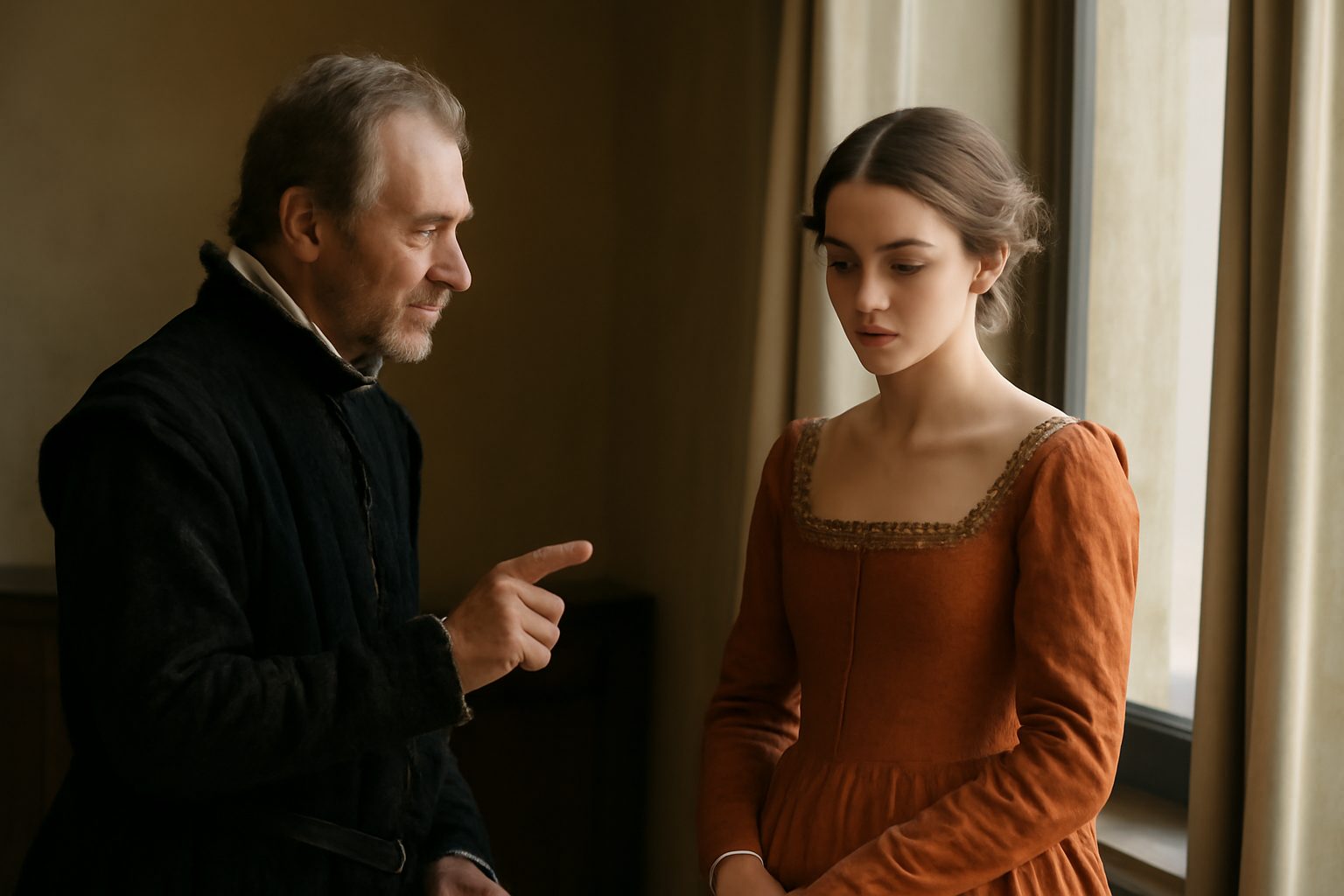
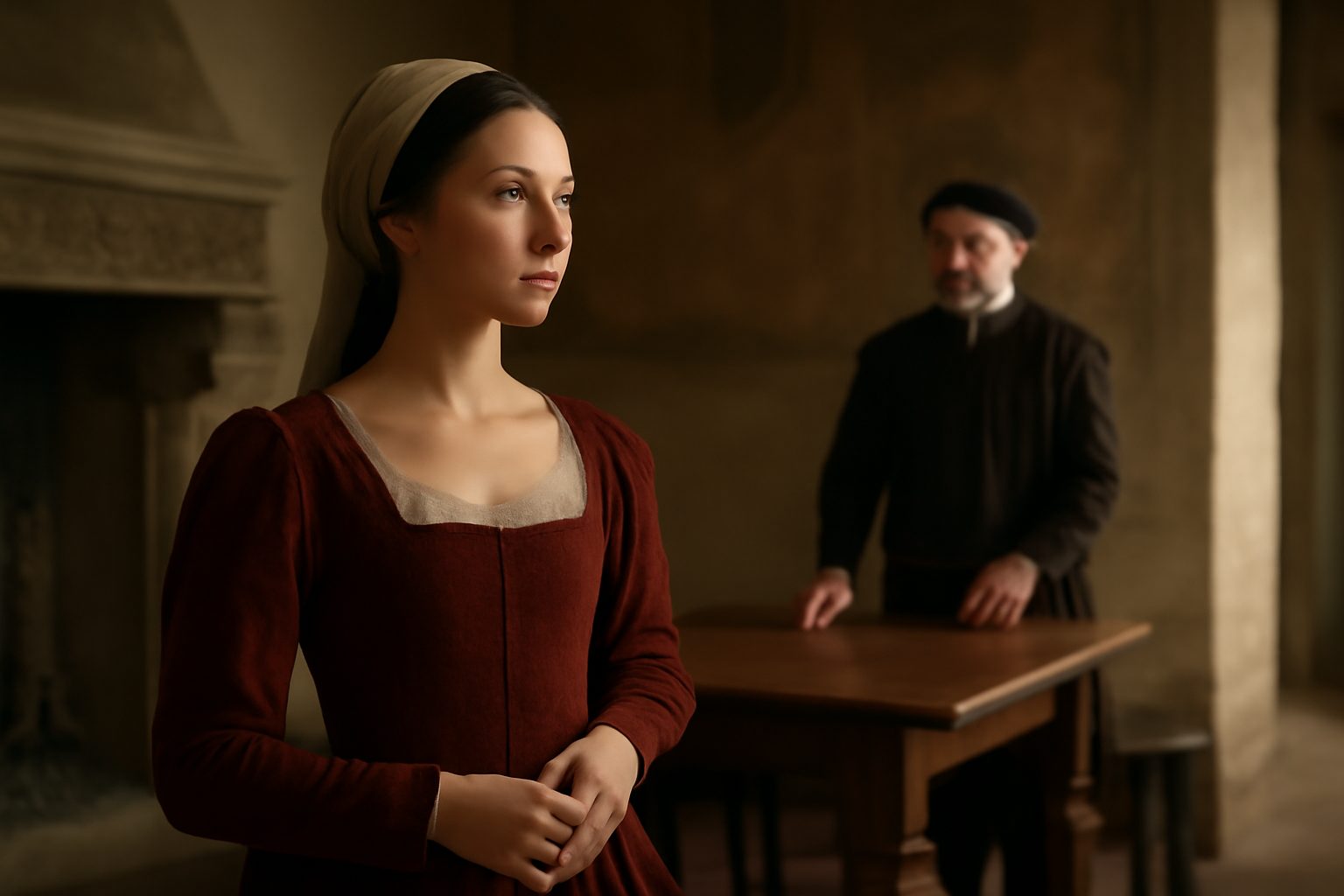
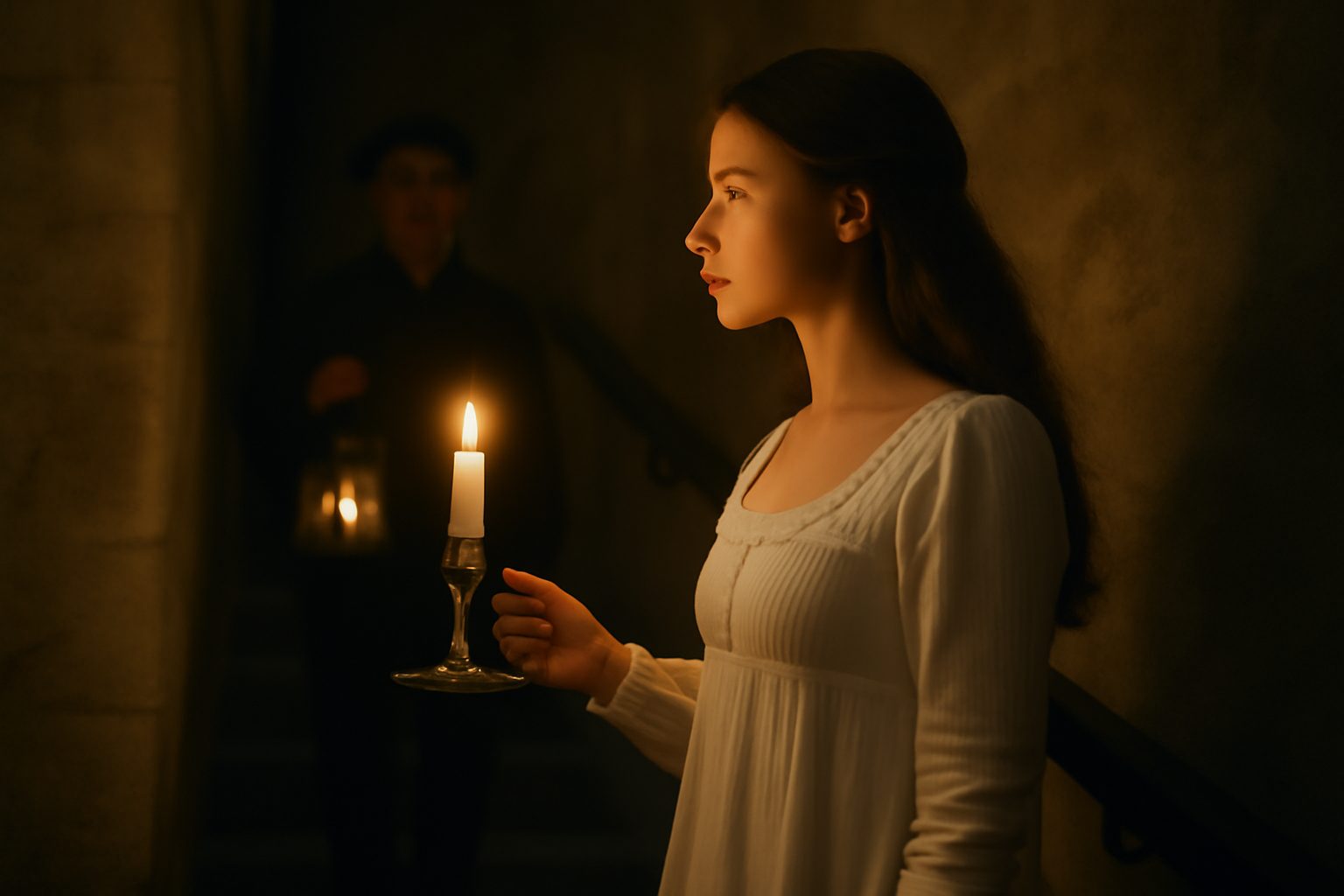
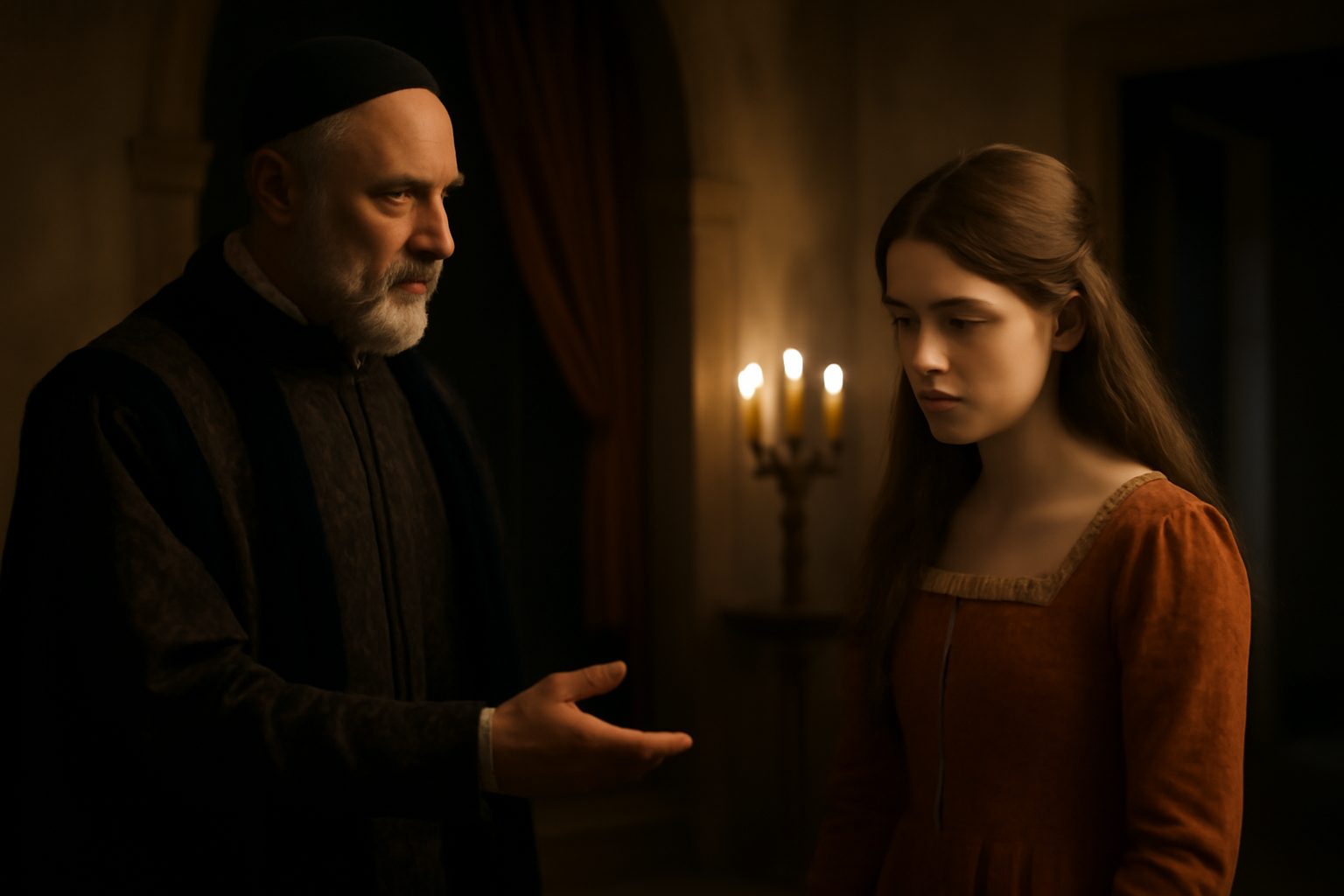
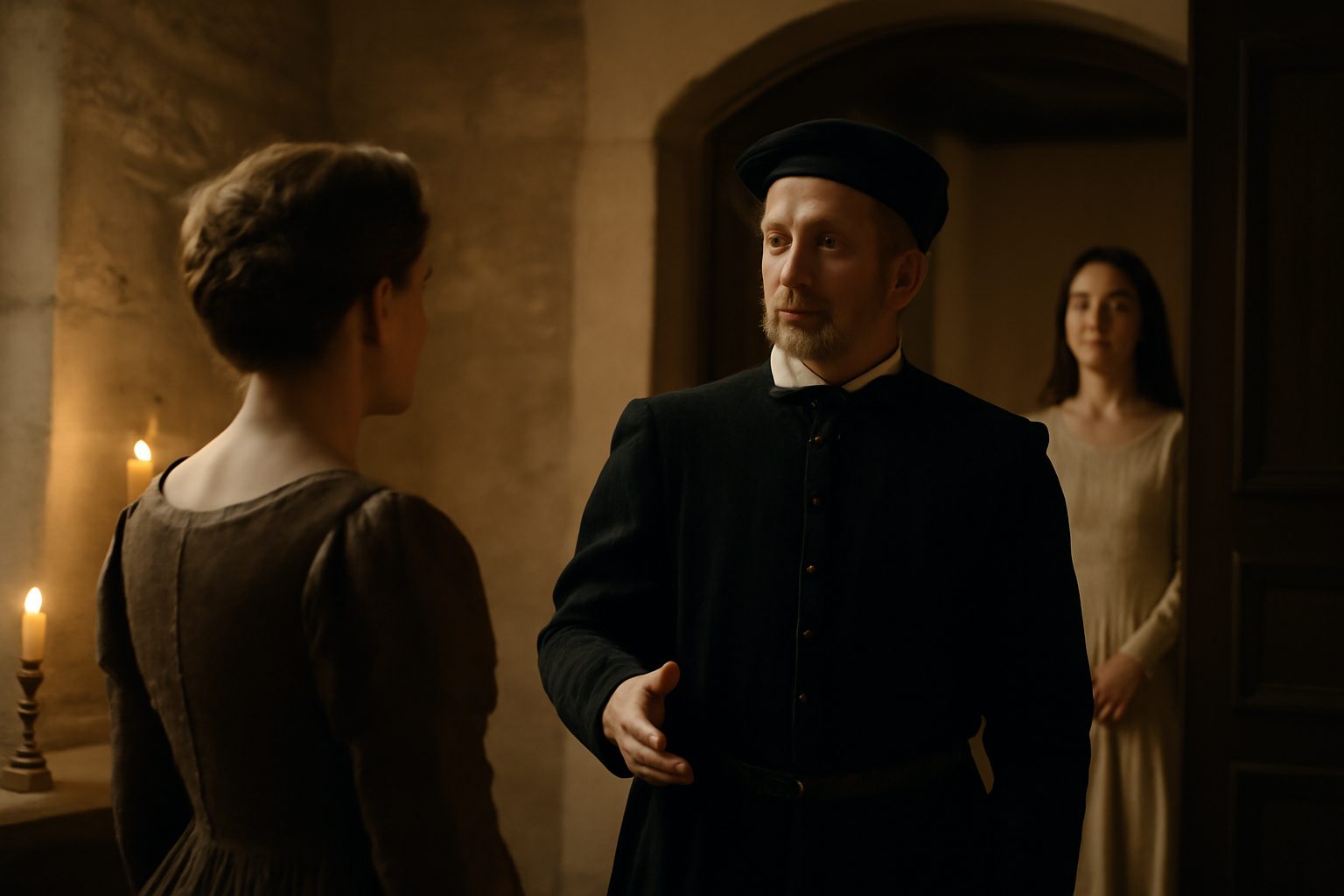
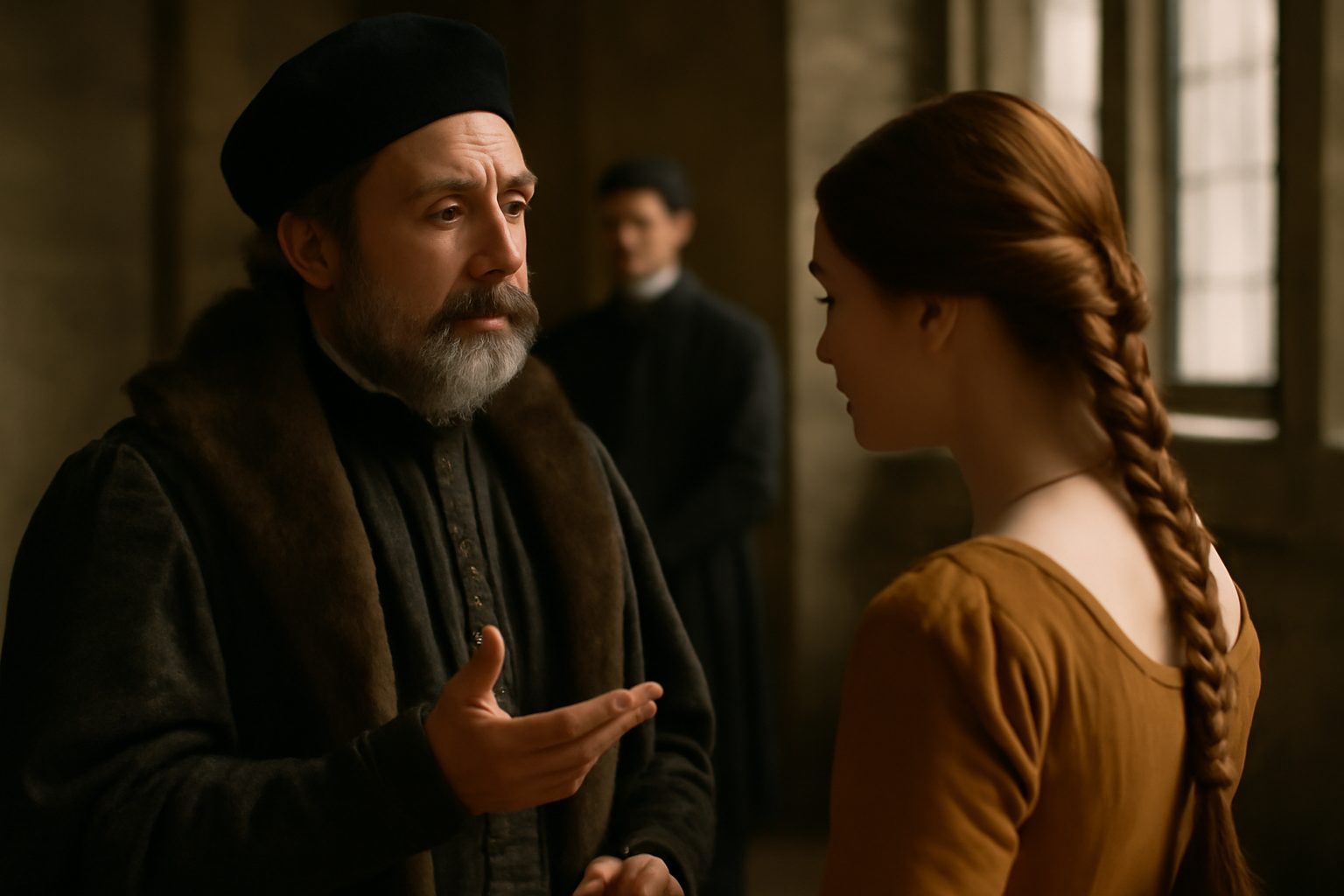
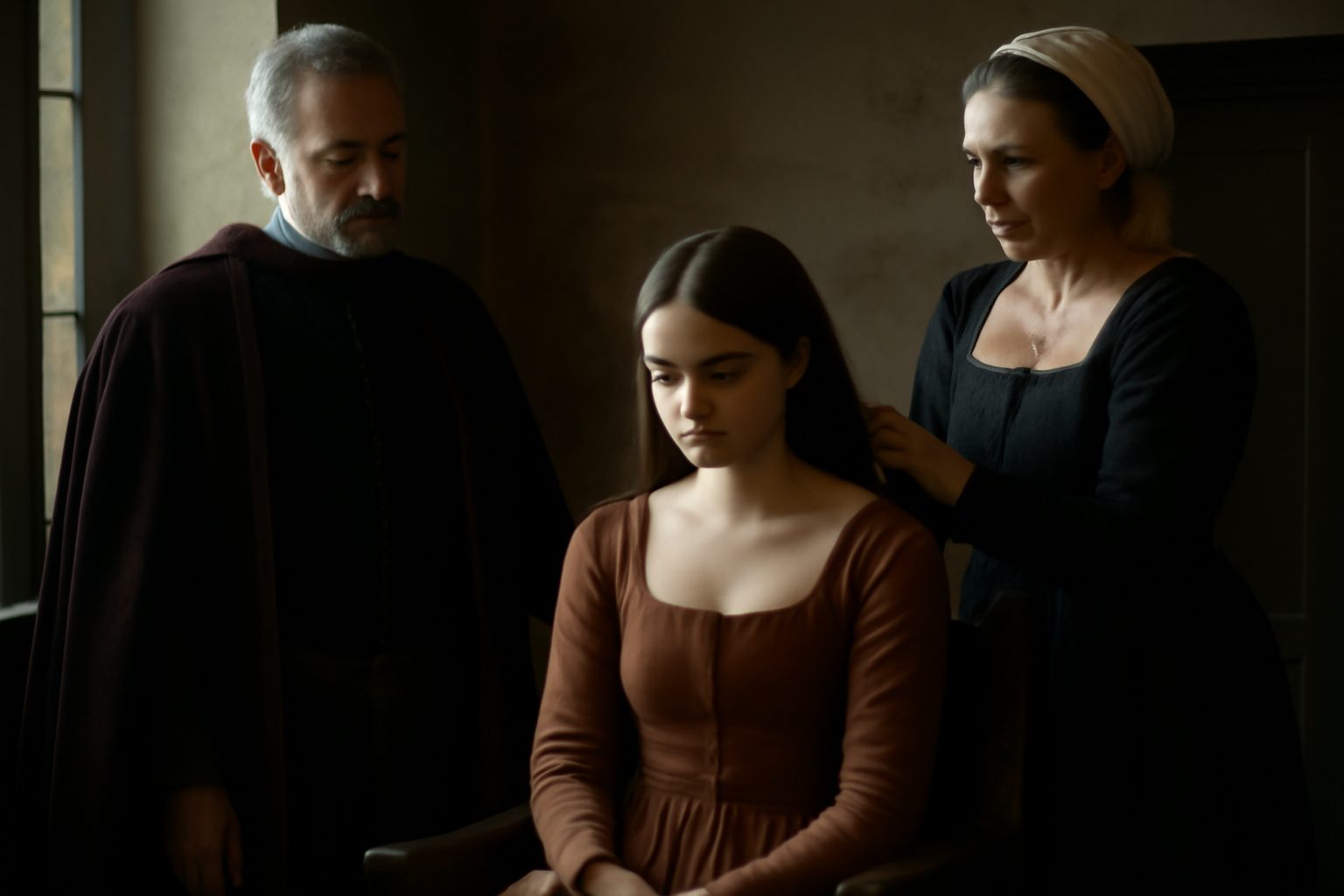
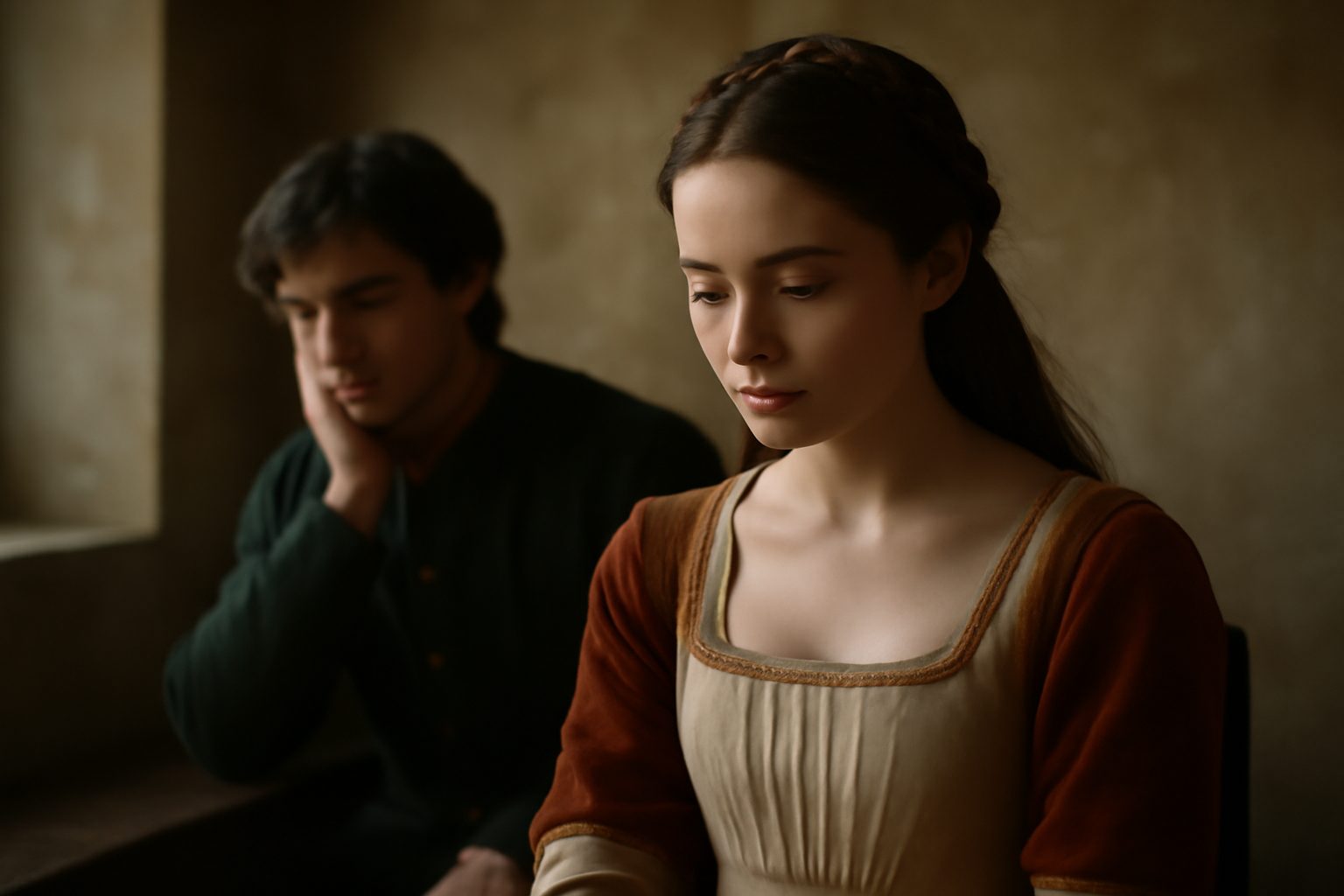
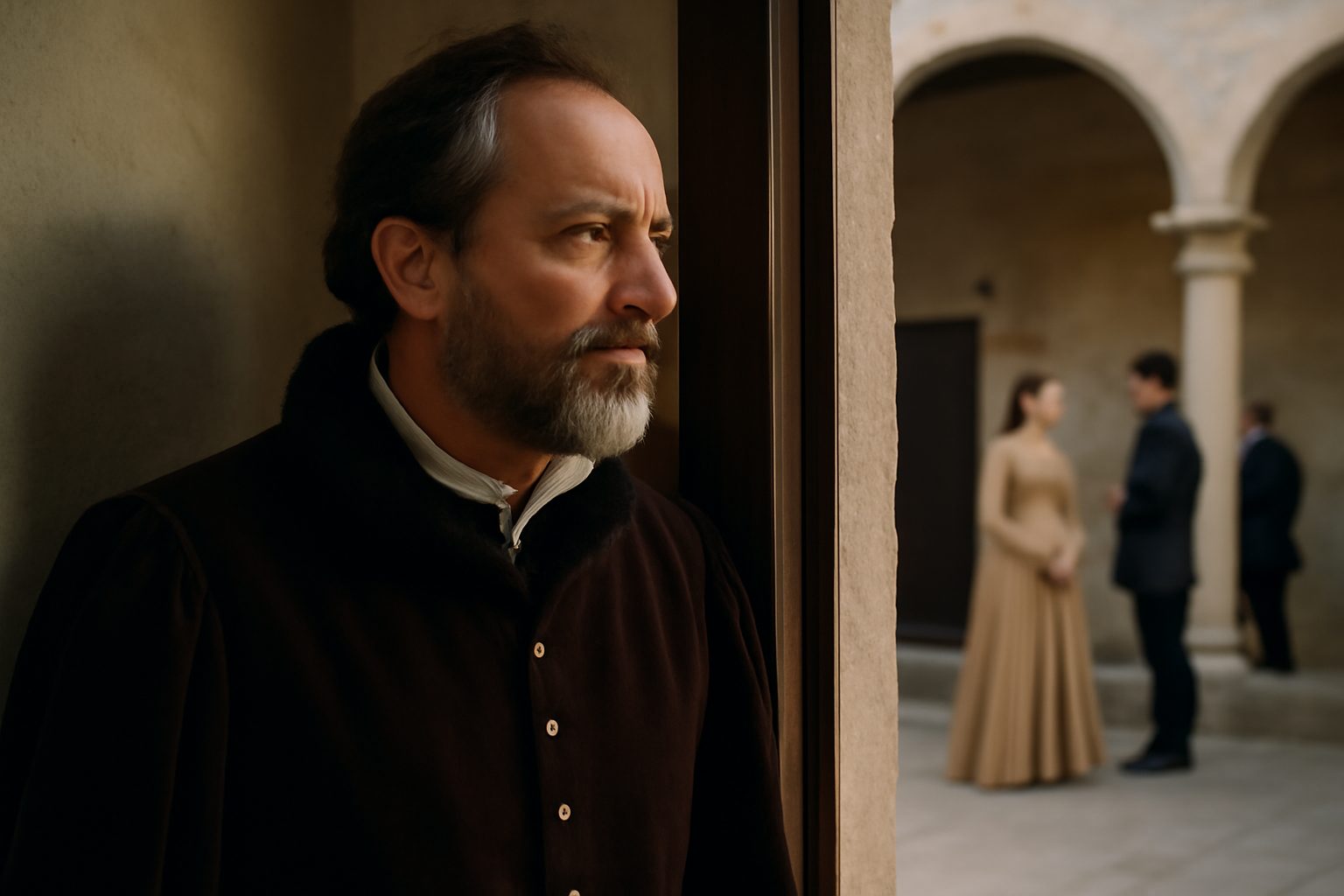
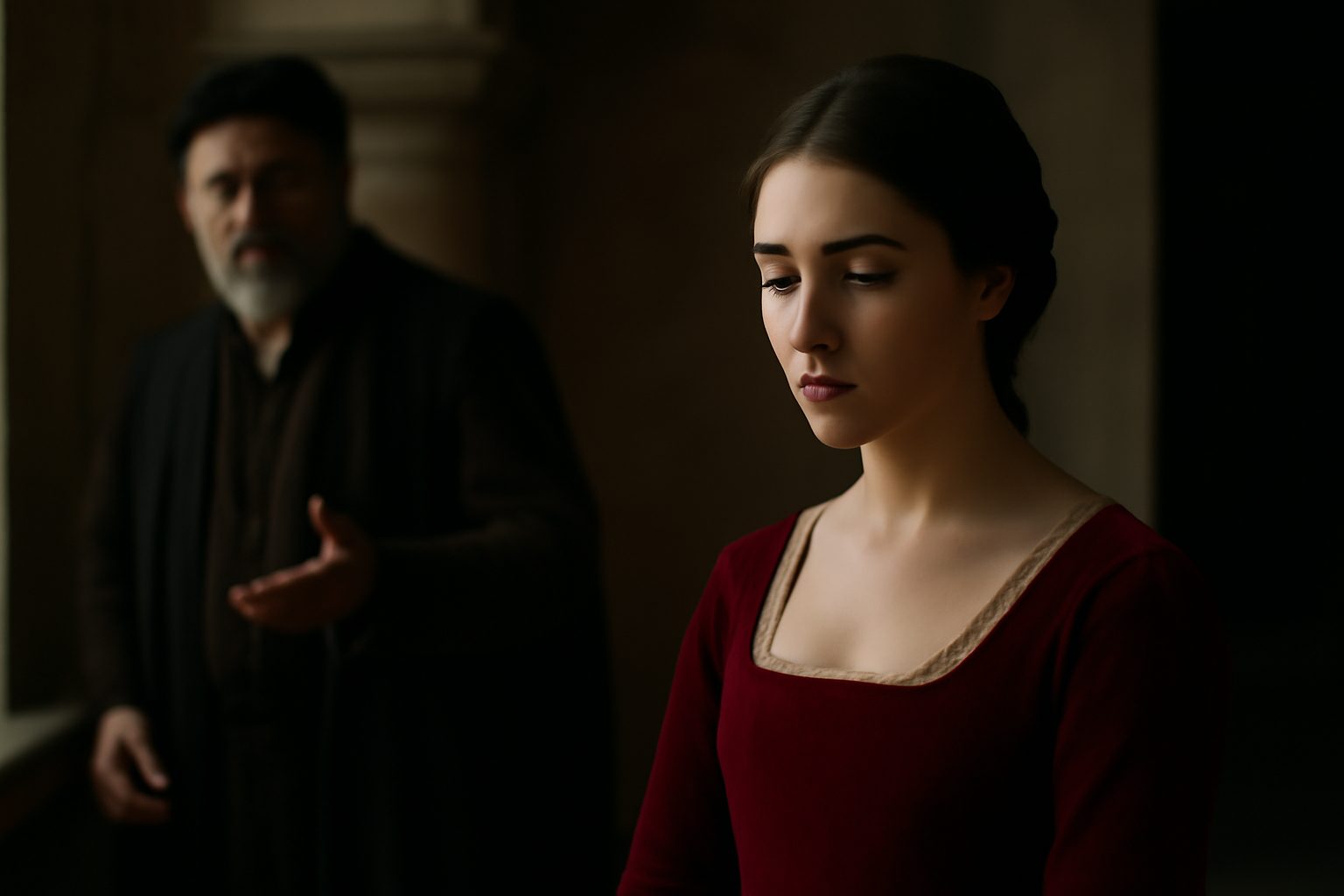
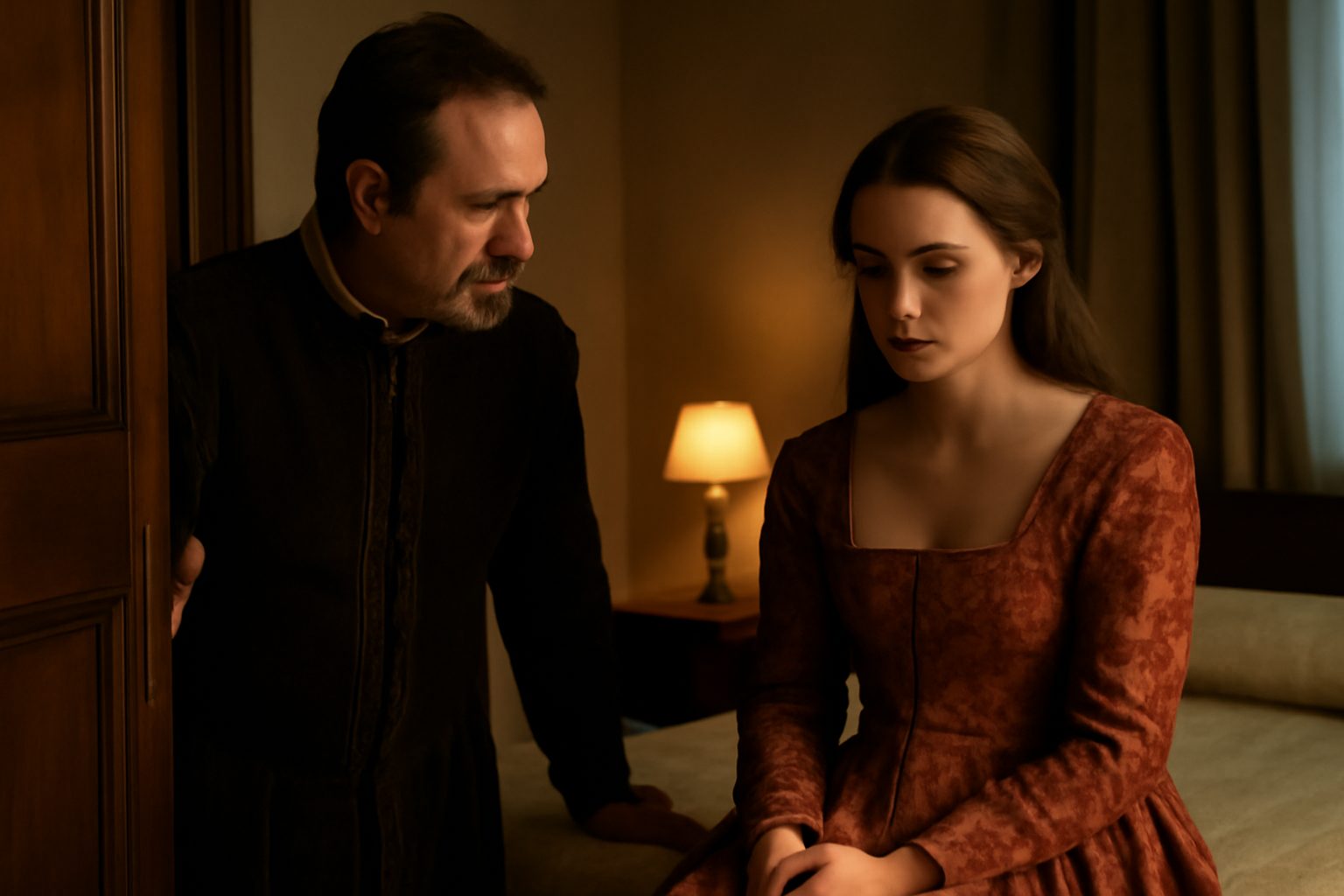
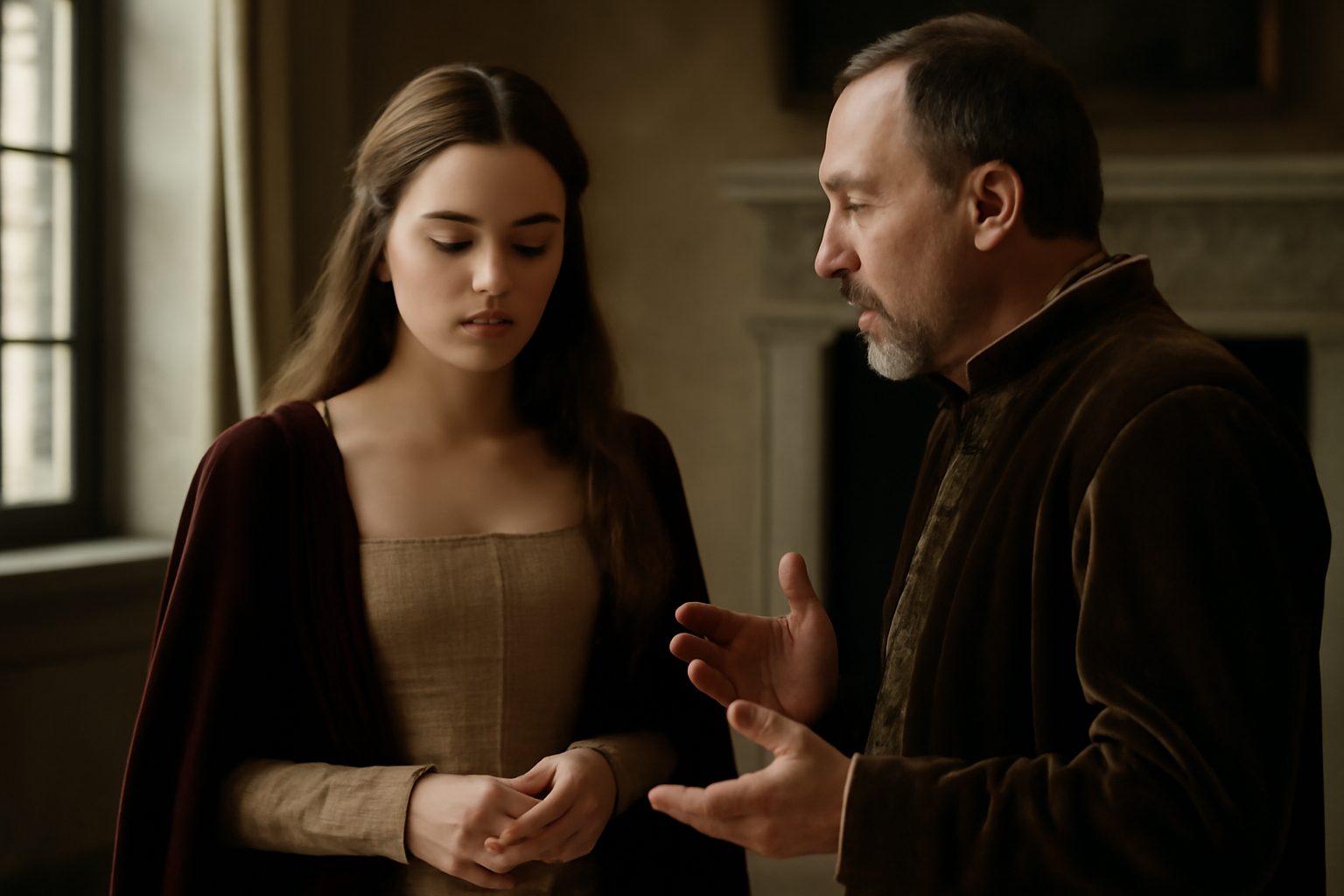
In Act 3, Scene 4 of Romeo and Juliet, Lord Capulet speaks these words to Paris, the nobleman seeking Juliet's hand in marriage. The scene takes place late at night, shortly after Romeo has secretly married Juliet and been banished for killing Tybalt. Unaware of these events, Capulet assumes Juliet is grieving for Tybalt and decides she will not come down to speak with Paris, though he promises they will proceed with the wedding in a few days.
Capulet: "Tis very late, she'll not come down to-night:"
In modern day english, we would say:
It’s too late; she won’t come down tonight.
Frequently Asked Questions
Who is Capulet talking about when he says it is too late for her to come down?
He is talking about his daughter Juliet.
Why does Capulet think Juliet will not come down tonight?
Because it is very late at night.
In which act and scene does Capulet say it is too late for Juliet to come down?
Act 3, Scene 4.
Connections to other verses:
Connections to "Tis very late, she'll not come down to-night:"
The line "Tis very late, she'll not come down to-night:" is spoken by Capulet to Paris, explaining Juliet's absence due to the late hour and her grief over Tybalt's death. This directly connects to "Afore me! it is so very very late," where Capulet again emphasizes the lateness of the hour, reinforcing the urgency and the impropriety of disturbing Juliet further.
Grief and Mourning
This verse also relates to "To-night she is mew'd up to her heaviness," which underscores Juliet's seclusion due to sorrow. Additionally, "Look you, she loved her kinsman Tybalt dearly," provides context for her grief, explaining why she is too distraught to join them.
Parental Assumptions and Plans
Capulet's assumption that Juliet will comply with his plans is evident in "Of my child's love: I think she will be ruled," and he instructs Lady Capulet in "Wife, go you to her ere you go to bed;" to inform Juliet of the marriage arrangement, despite her current state.
Urgency and Hastiness
The discussion of timing continues with "These times of woe afford no time to woo," highlighting the compressed timeline due to circumstances. Paris's eagerness is clear in "My lord, I would that Thursday were to-morrow," contrasting with Capulet's initial hesitation about the late hour.
Final Decisions and Instructions
The scene culminates with Capulet's decisive "Well get you gone: o' Thursday be it, then," settling the wedding date. He then bids "Madam, good night: commend me to your daughter," and calls for "Light to my chamber, ho!" as they retire, closing the discussion that began with Juliet's absence.