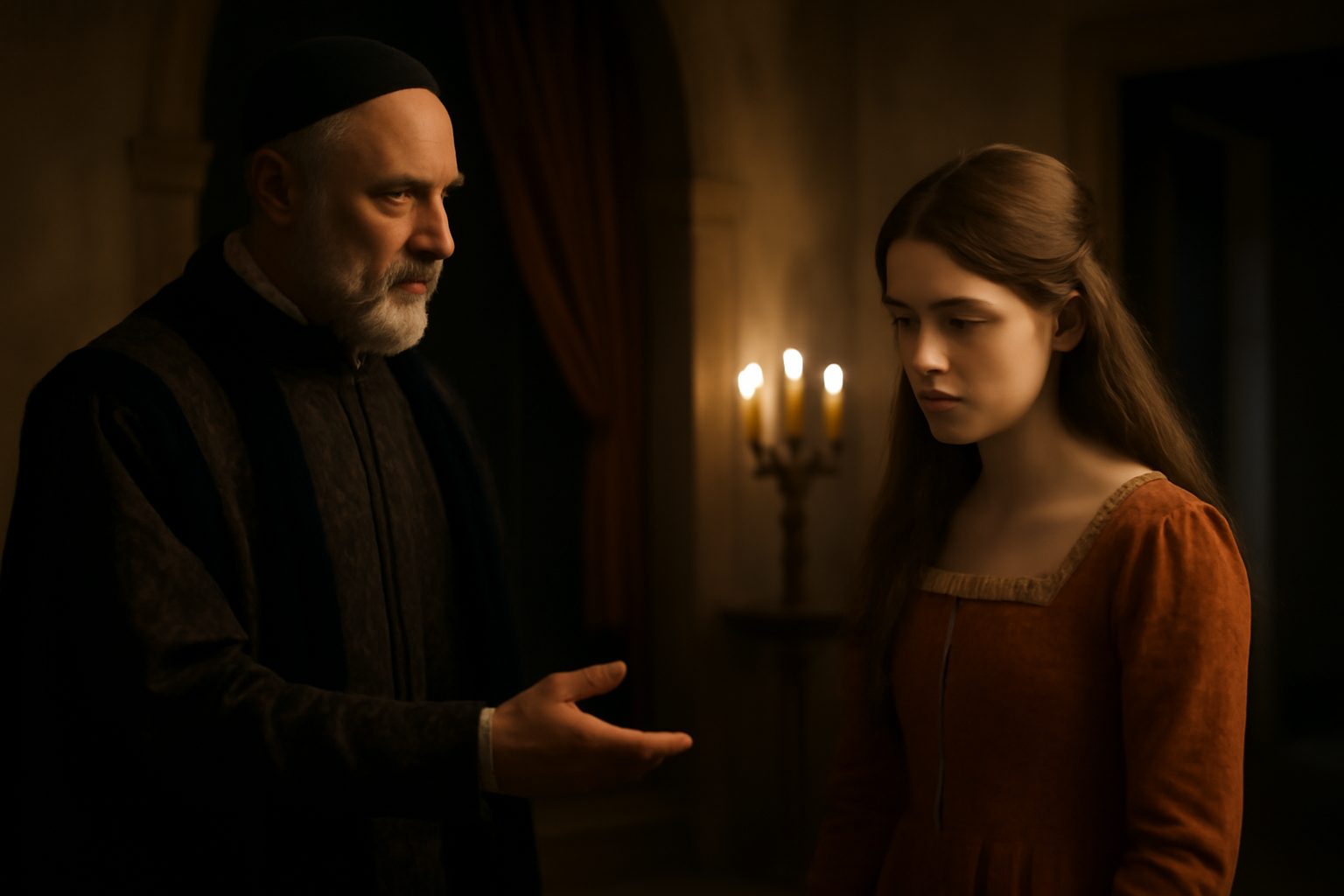
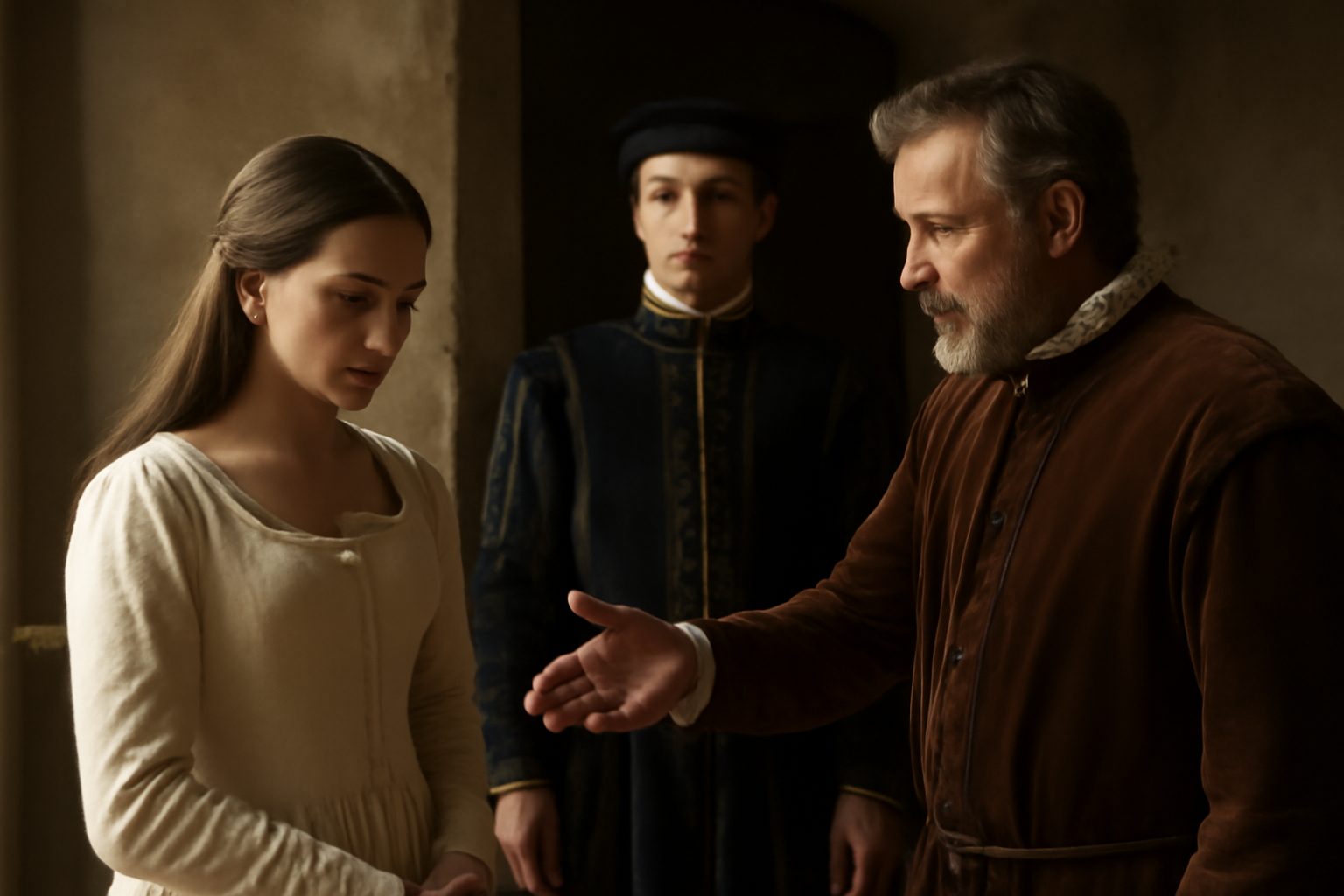
In Act 3, Scene 4 of Romeo and Juliet, Lord Capulet speaks this line while discussing Juliet's marriage to Paris. Amid the turmoil following Tybalt's death, he insists that haste is necessary, as grief leaves no room for courtship. The line underscores the tension between personal sorrow and societal expectations in the play.
Paris: "These times of woe afford no time to woo."
In modern day english, we would say:
Right now is a time of grief, not for romance.
Frequently Asked Questions
What does Paris mean when he says that sad times are not good for romance?
Paris means that during a period of grief and sorrow, it is not the right time to try to win someone's love or start a romantic relationship.
Connections to other verses:
Connections to "These times of woe afford no time to woo."
This verse, spoken by Lord Capulet, reflects the haste and pressure imposed by recent tragic events. It connects thematically and contextually to several other lines in the scene.
Context of Haste and Tragedy
The line directly responds to the chaotic aftermath of Tybalt's death, as noted in That we have had no time to move our daughter, where Capulet acknowledges the lack of opportunity to discuss Paris's proposal with Juliet due to the turmoil. Similarly, For, hark you, Tybalt being slain so late emphasizes the recency of the violence, justifying the rushed circumstances.
Parental Authority and Assumptions
Capulet's confidence in controlling Juliet's response is echoed in Of my child's love: I think she will be ruled, where he assumes her compliance. This contrasts with the reality of her secret marriage to Romeo, underscoring the irony of his haste. The urgency is further highlighted in Will you be ready? do you like this haste?, as Capulet pressures Paris despite the inappropriate timing.
Contradictions in Tone
While Capulet claims "no time to woo," he immediately proceeds to arrange the wedding, as seen in O' Thursday let it be: o' Thursday, tell her, revealing a disconnect between his words and actions. The phrase also contrasts with And so did I:--Well, we were born to die, where Capulet resigns to fate, yet here he actively forces a quick union amidst grief.
Structural and Emotional Links
The verse ties into the scene's overarching urgency, such as in Farewell, my lord. Light to my chamber, ho!, where characters rush to conclude matters late at night, mirroring the societal pressure to resolve conflicts through marriage despite personal sorrow.