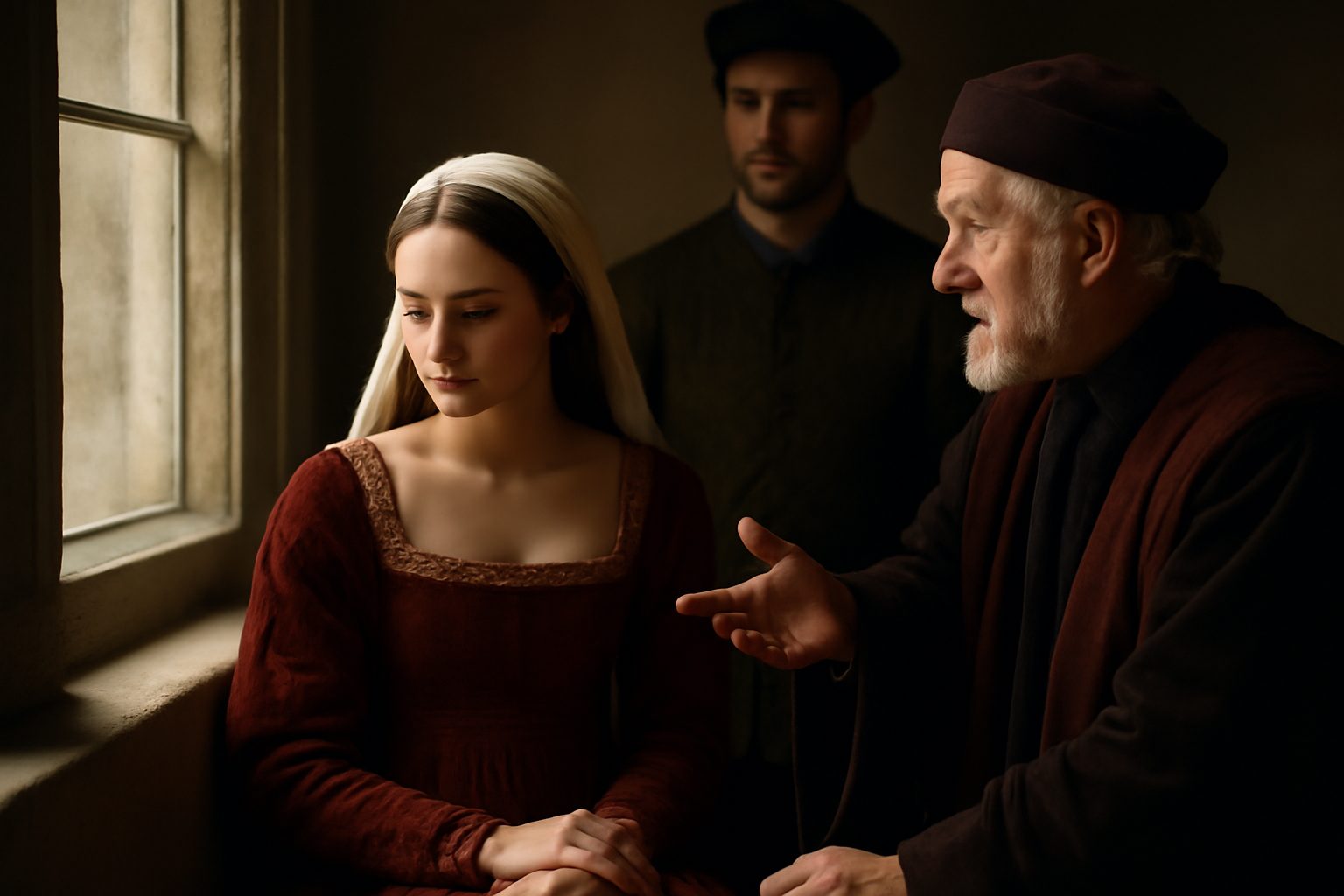
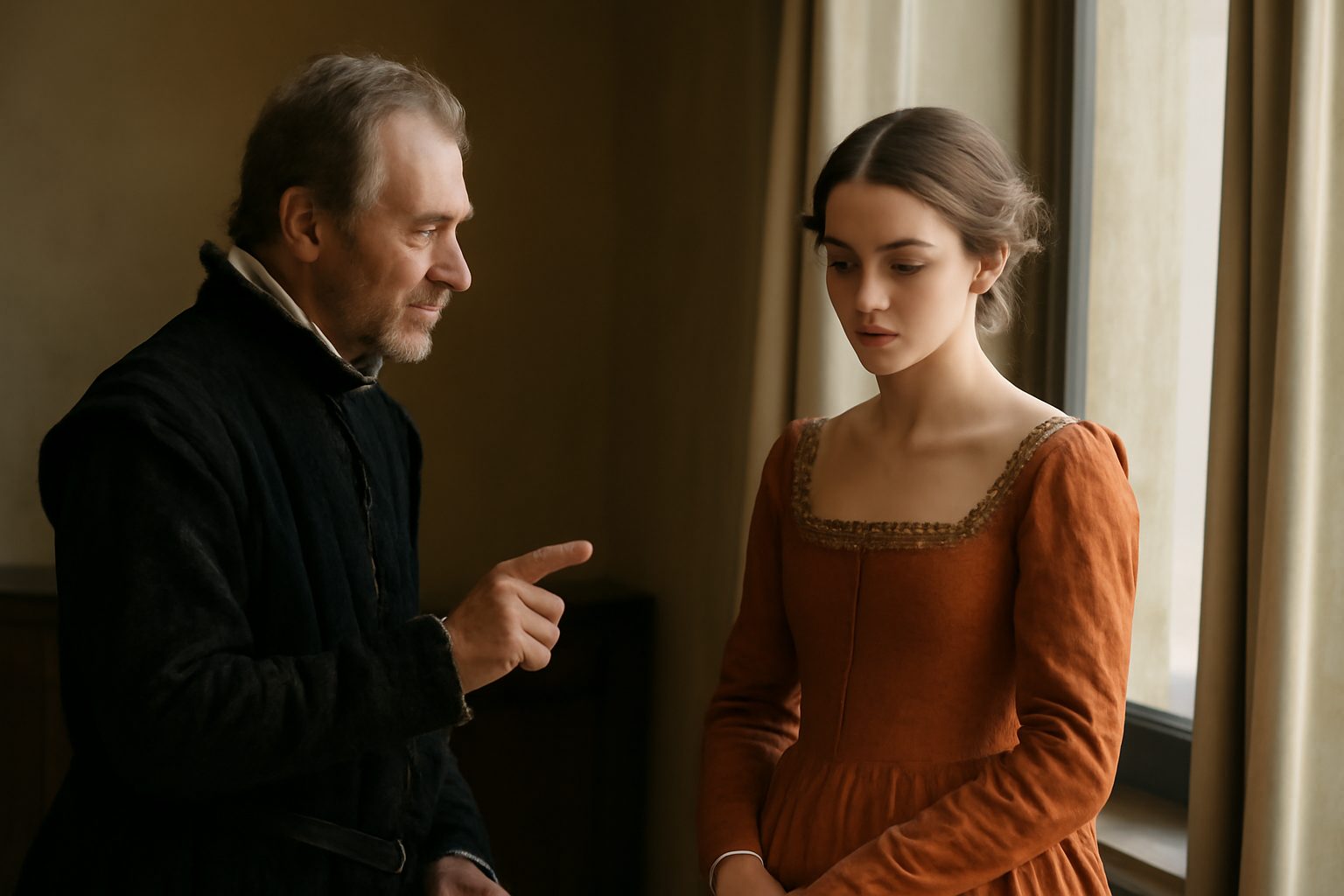
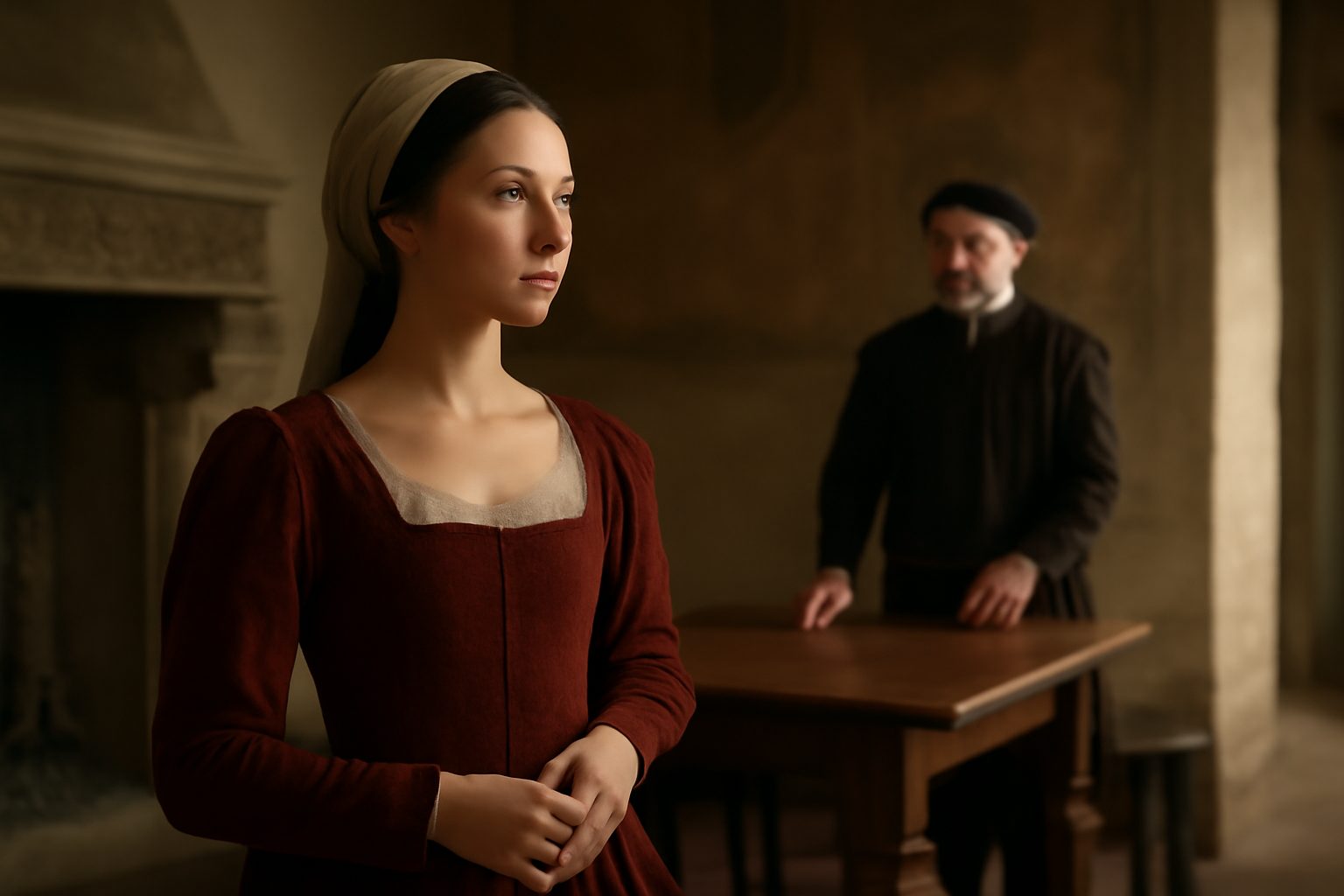
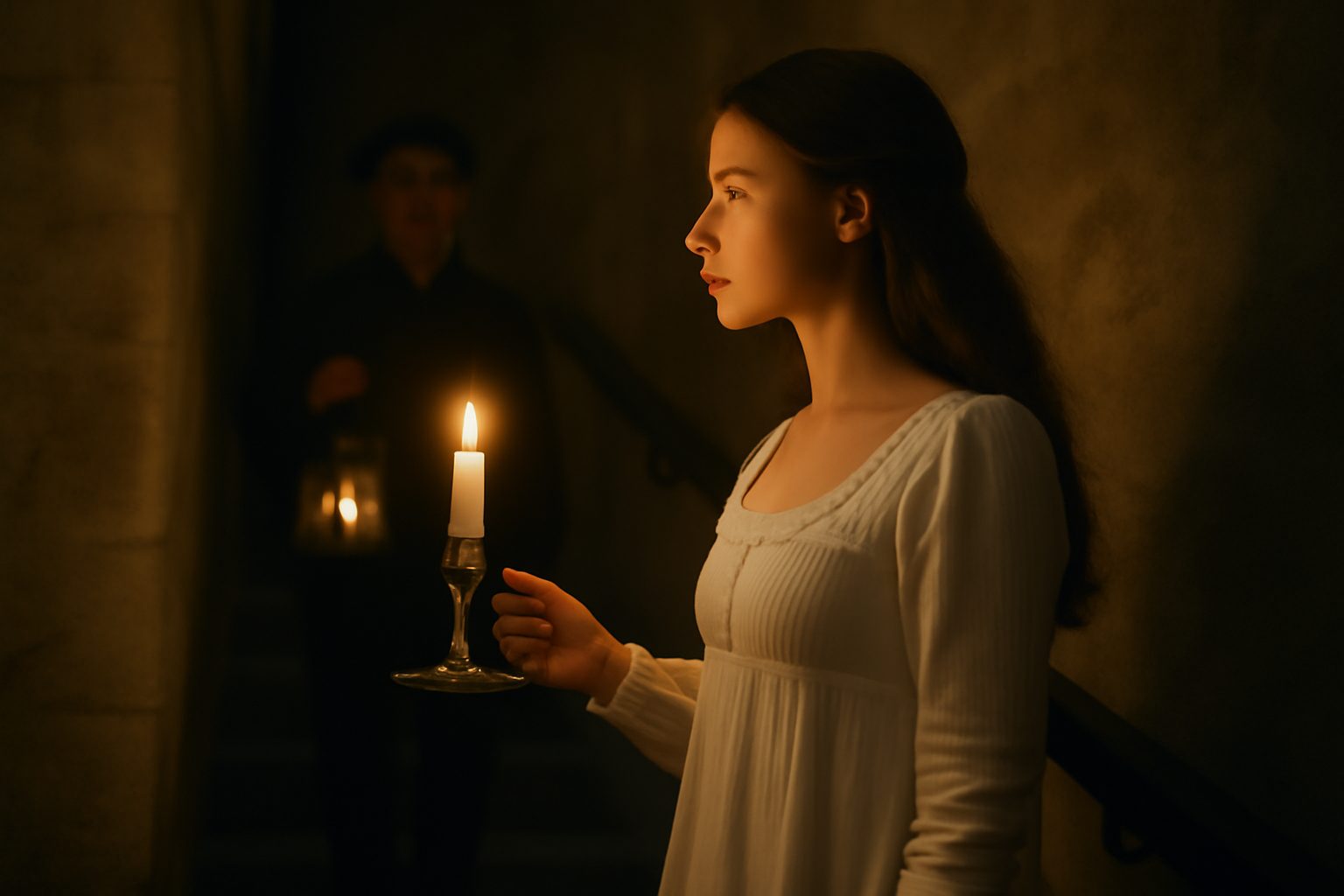
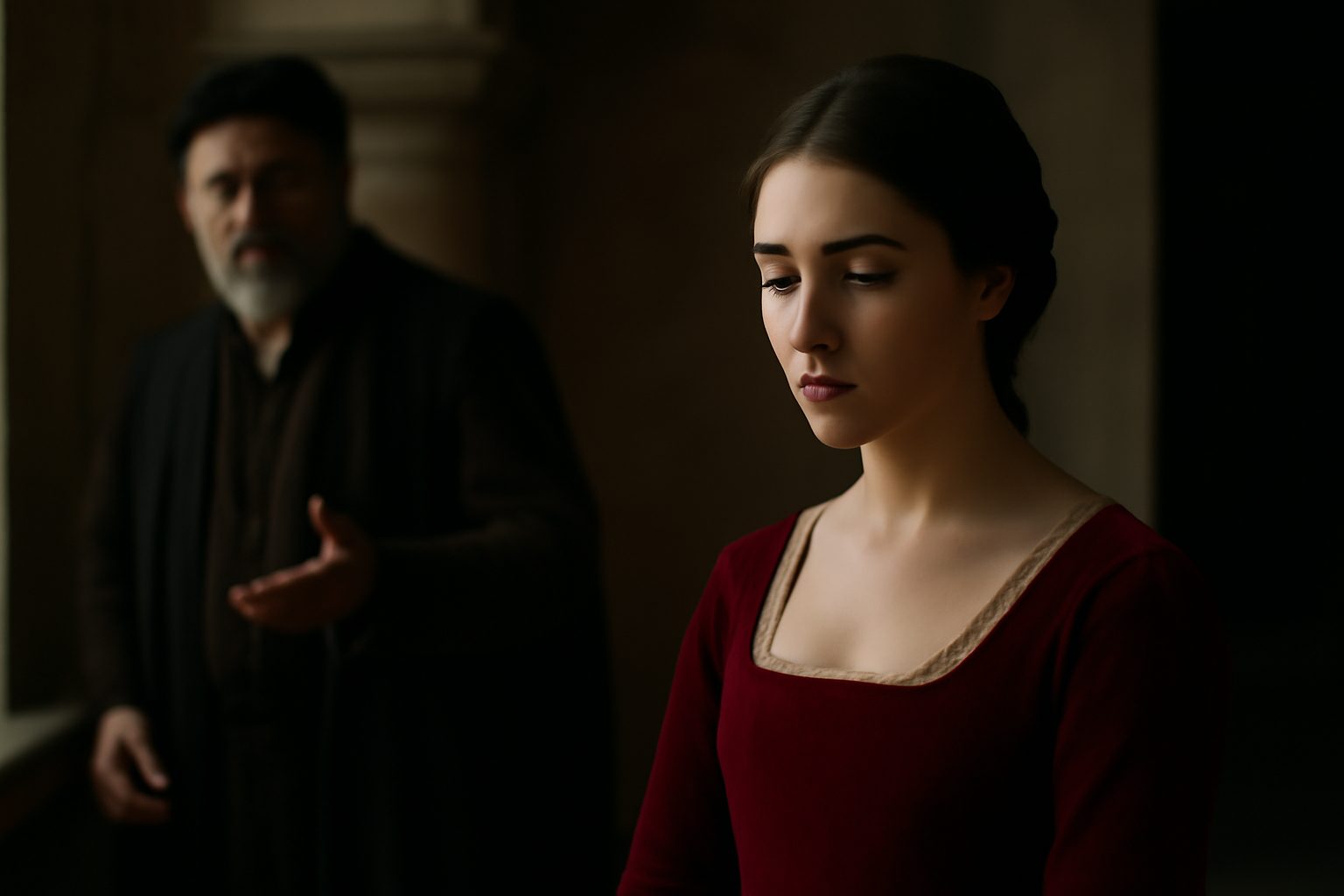
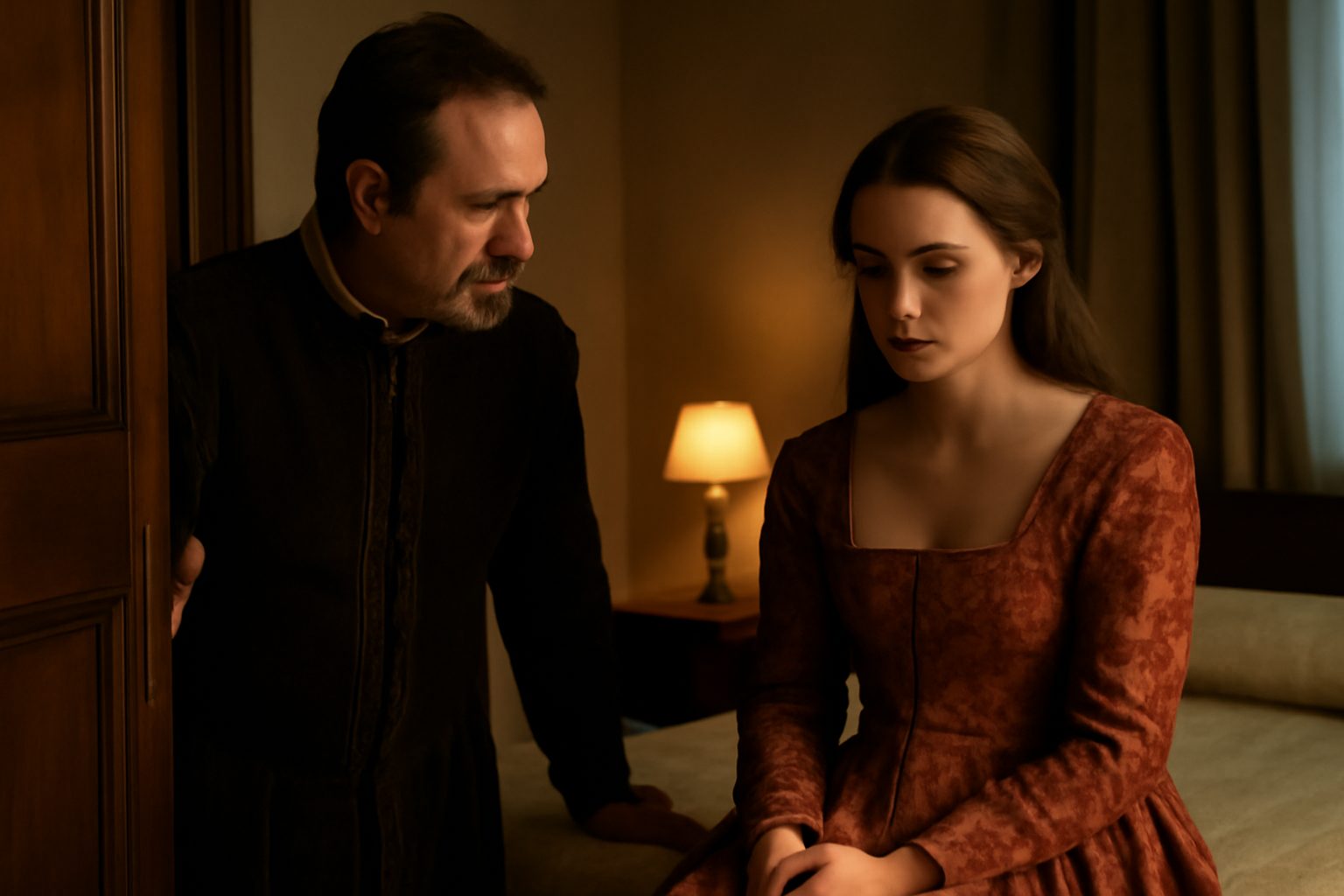
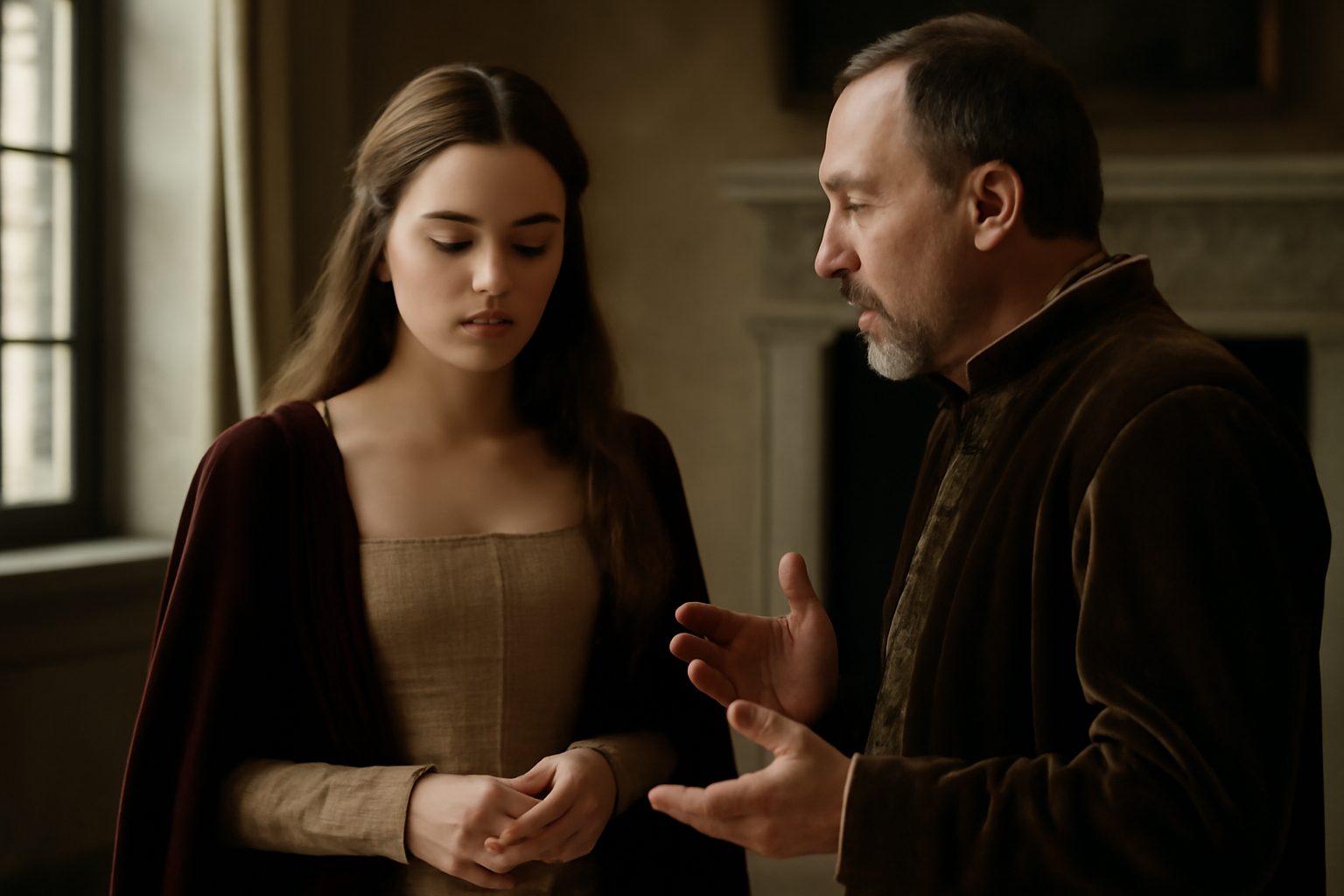
In Act 3, Scene 4 of Romeo and Juliet, Lord Capulet speaks these words to his wife as they retire for the evening, shortly after the violent confrontation between Tybalt and Mercutio. Unaware that Juliet is already secretly married to Romeo, he instructs Lady Capulet to pass along his regards, hinting at his plans to arrange her marriage to Paris. This moment underscores the disconnect between Juliet’s private turmoil and her father’s assumptions about her future.
Paris: "Madam, good night: commend me to your daughter."
In modern day english, we would say:
Good night, ma’am; please give my regards to your daughter.
Frequently Asked Questions
Who is speaking in this line from Romeo and Juliet?
Paris is speaking.
Who is Paris talking to in this line?
He is talking to Lady Capulet, Juliet's mother.
What does Paris ask Lady Capulet to do?
He asks her to give his greetings to Juliet.
Connections to other verses:
Connections to "Madam, good night: commend me to your daughter."
This line, spoken by Lord Capulet as he bids Lady Capulet goodnight, serves as a polite and formal instruction to convey his regards to Juliet. It reflects the formal, patriarchal dynamics of the Capulet household and sets the stage for the subsequent planning of Juliet's marriage to Paris.
Direct Context and Instructions
This verse is immediately followed by I will, and know her mind early to-morrow;, where Lady Capulet responds, indicating her intention to speak with Juliet the next morning. This shows the practical steps taken after the initial instruction.
Additionally, Lord Capulet reinforces this directive with Wife, go you to her ere you go to bed;, emphasizing the urgency and importance of communicating with Juliet about the marriage plans.
Marriage Arrangements and Urgency
The instruction to commend him to Juliet is tied to the broader context of arranging her marriage to Paris, as seen in Acquaint her here of my son Paris' love;, where Lord Capulet explicitly orders Lady Capulet to inform Juliet of Paris's affection.
This urgency is further highlighted by the discussion of the wedding date, such as in O' Thursday let it be: o' Thursday, tell her,, showing how the formal pleasantries are part of a rushed and decisive plan.
Juliet's Emotional State
The verse also connects to concerns about Juliet's well-being, as in To-night she is mew'd up to her heaviness., which explains her seclusion due to grief over Tybalt's death, providing context for why Lord Capulet does not speak to her directly.
This is echoed in Tis very late, she'll not come down to-night:, reinforcing the idea that Juliet is unavailable, making the commendation through Lady Capulet necessary.
Conclusion of the Scene
The formal farewell continues with Farewell, my lord. Light to my chamber, ho!, as Lady Capulet takes her leave, and finally, Good night., closing the scene with a sense of finality to the arrangements discussed.