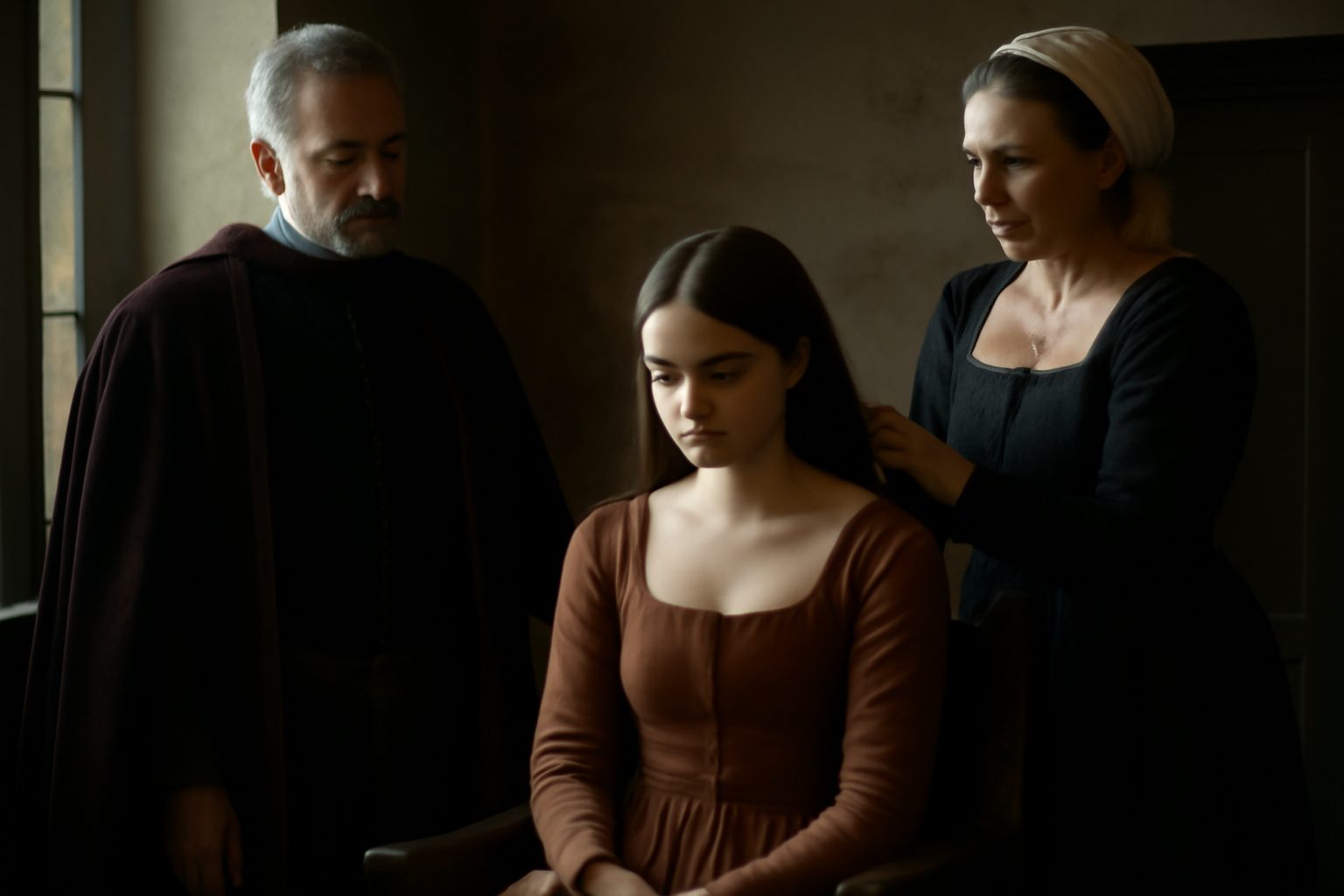
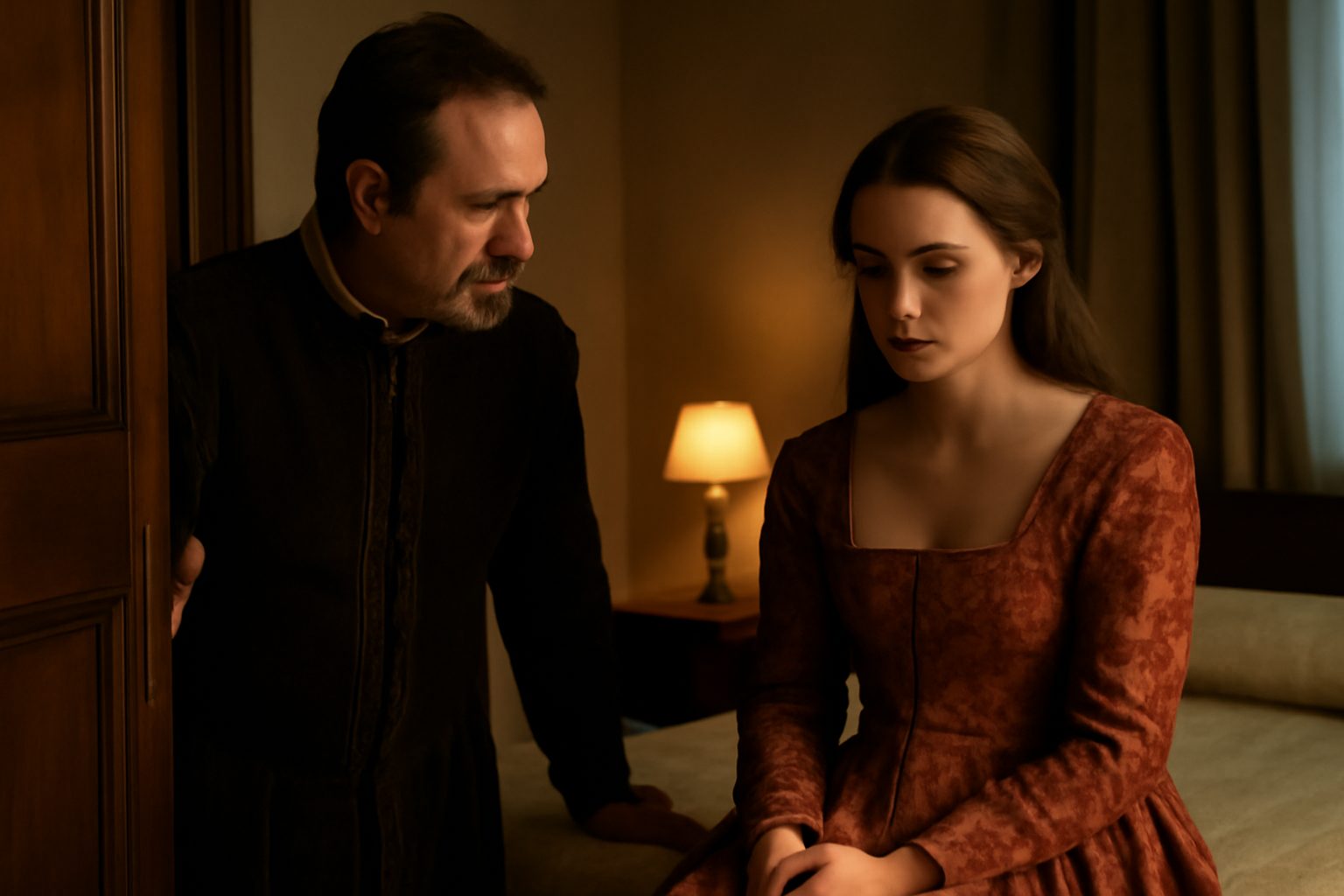
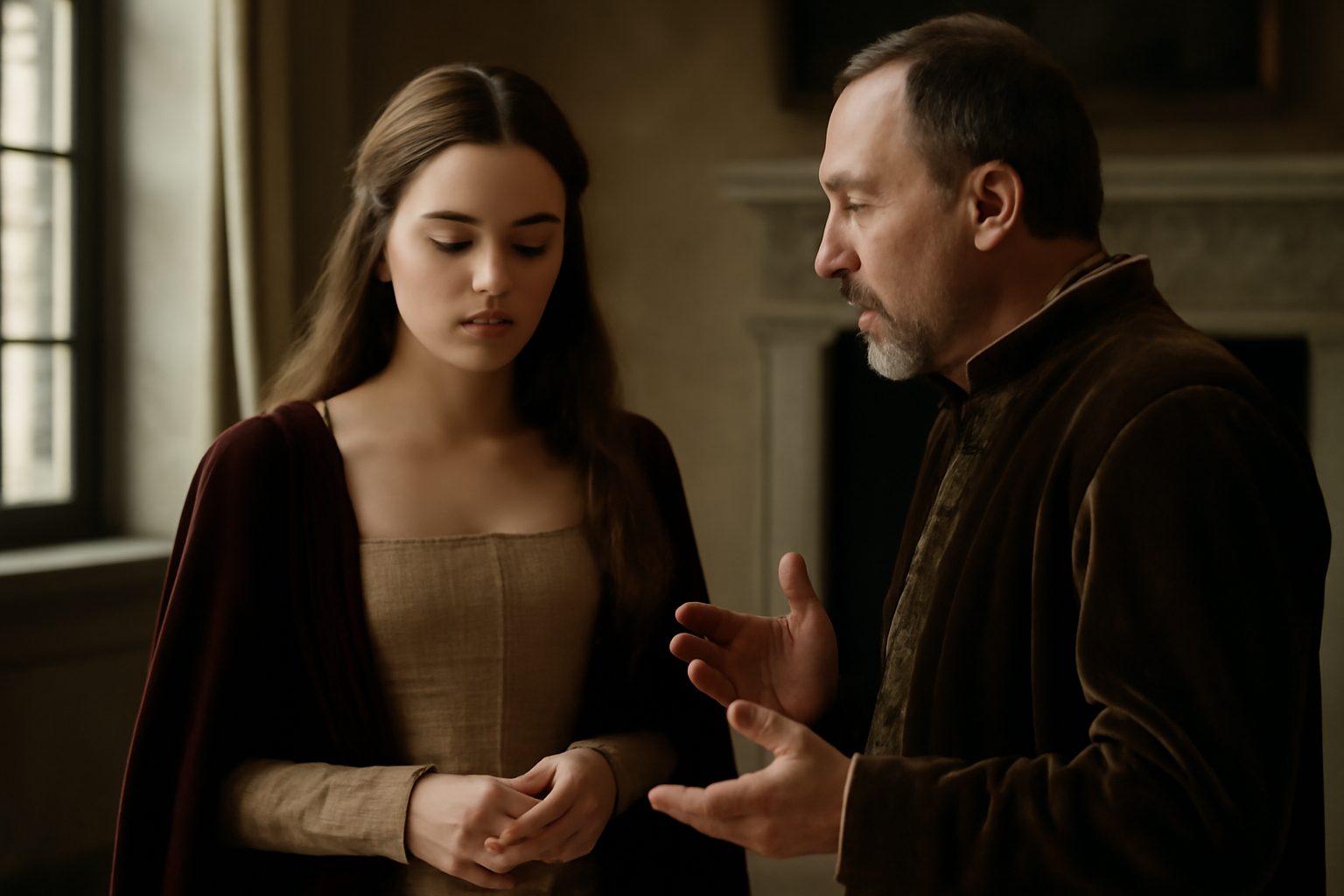
In Act 3, Scene 4 of Romeo and Juliet, Lord Capulet speaks to Paris about Juliet's apparent grief over Tybalt's death. Unaware that her sorrow stems from Romeo's banishment, he assumes she is mourning her cousin and describes her as confined by her sadness. This line reflects Capulet's misunderstanding of Juliet's true emotions and foreshadows the coming conflict over her arranged marriage to Paris.
Lady Capulet: "To-night she is mew'd up to her heaviness."
In modern day english, we would say:
Tonight she is shut away, grieving alone.
Frequently Asked Questions
What does Lady Capulet mean when she says Juliet is confined to her sadness tonight?
Lady Capulet means that Juliet is locked away in her room, overwhelmed by grief and sorrow.
Connections to other verses:
Connections to "To-night she is mew'd up to her heaviness"
This line, spoken by Lord Capulet, directly explains Juliet's absence and emotional state. It connects to several other verses in the scene that discuss her grief and the family's response.
Grief and Absence
Capulet's statement about Juliet being confined by her sorrow is immediately preceded by his explanation in "Tis very late, she'll not come down to-night", establishing her physical and emotional withdrawal. This heaviness stems from "she loved her kinsman Tybalt dearly", as Capulet acknowledges her deep affection for Tybalt, whose death has precipitated her seclusion.
Parental Concern and Arrangements
Despite her grief, Capulet is already planning her future, instructing Lady Capulet to "go you to her ere you go to bed" and to "Go you to Juliet ere you go to bed" to inform her of Paris's love. He expresses confidence that "I think she will be ruled / In all respects by me", underestimating the depth of her despair and her secret commitment to Romeo.
Hastening the Wedding
The urgency to counteract her sorrow is evident as Capulet pushes for a quick marriage, asking Paris "Will you be ready? do you like this haste?" and settling on "O' Thursday let it be: o' Thursday, tell her". This rush contrasts sharply with Paris's earlier acknowledgment that "These times of woe afford no time to woo", highlighting the disconnect between the parents' plans and Juliet's true emotional state.
Conclusion of the Scene
The scene ends with Capulet's final instructions to "Prepare her, wife, against this wedding-day", completely overlooking the "heaviness" that has mewed her up, setting the stage for the tragic conflict to follow.