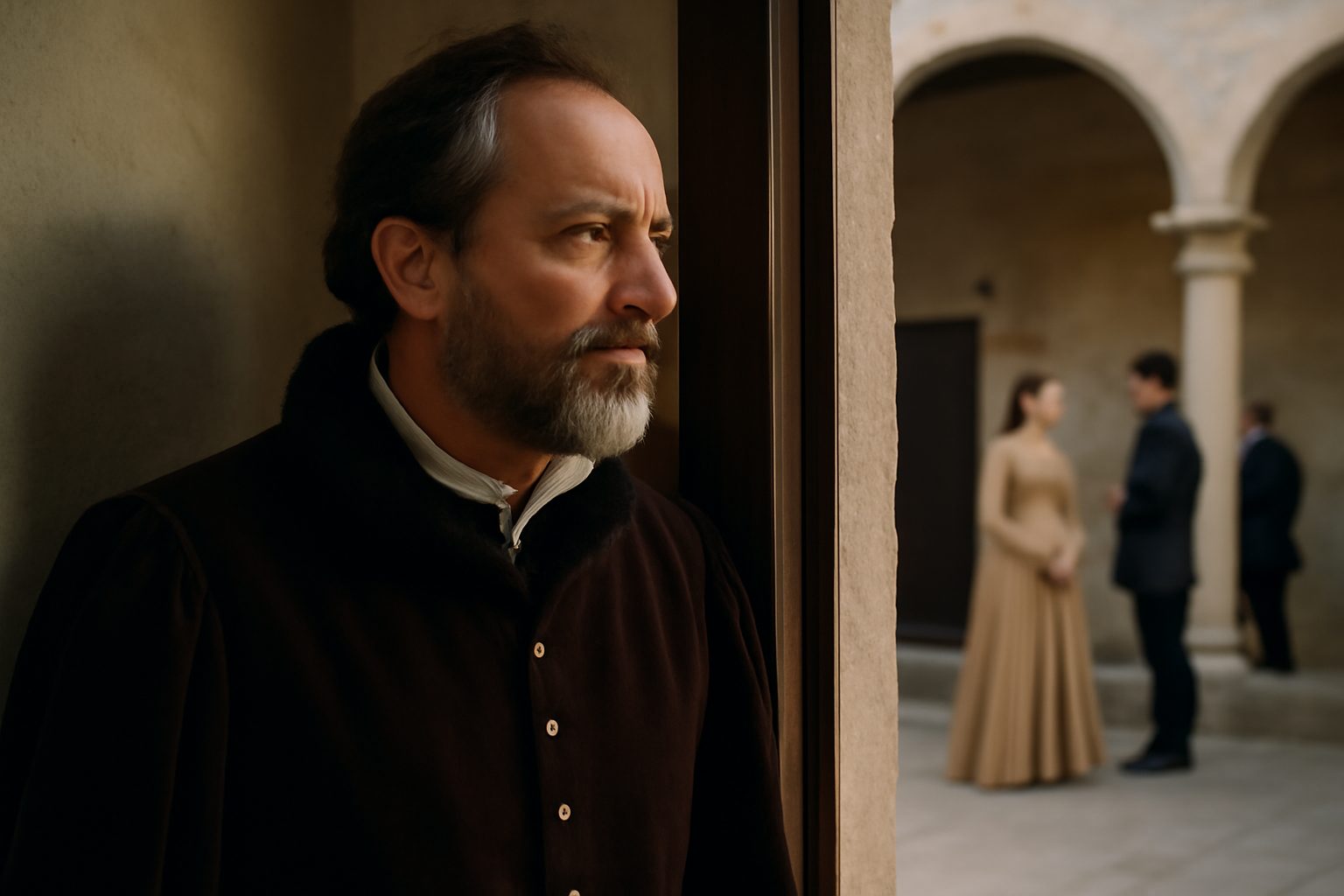
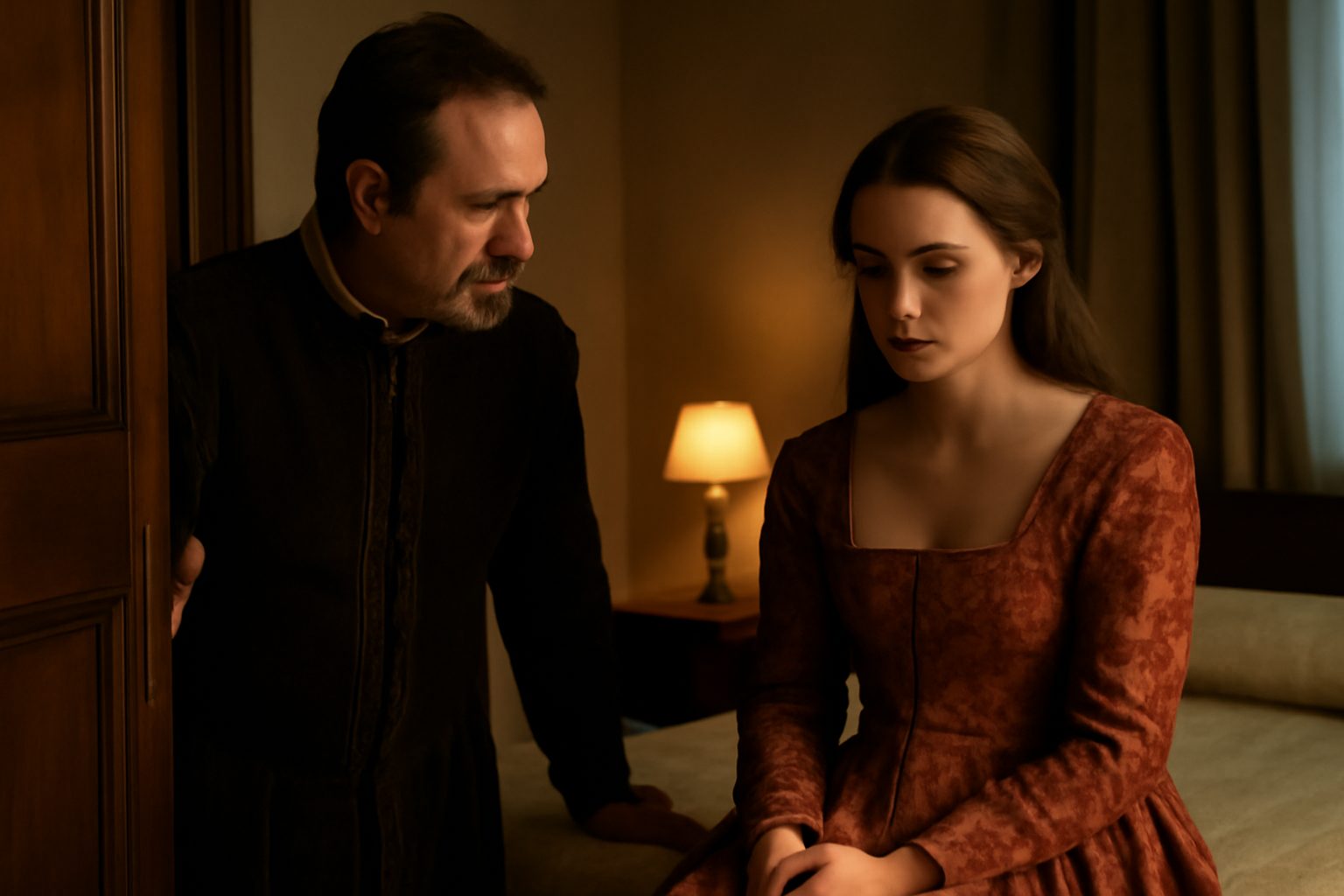
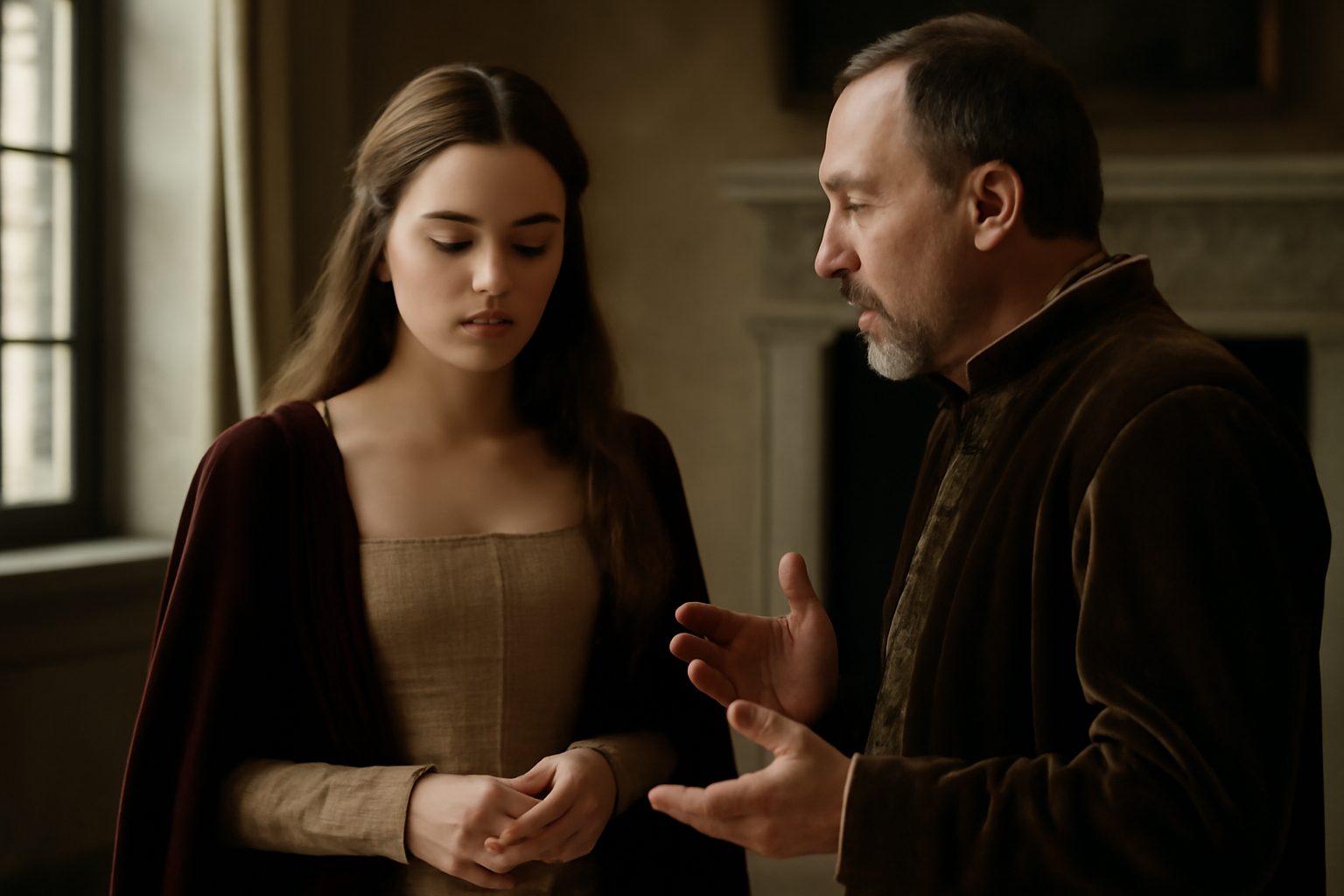
In Act 3, Scene 4 of Romeo and Juliet, Lord Capulet speaks these words to Paris, assuring him that Juliet will unquestionably obey his wishes and agree to their sudden marriage arrangement. This moment occurs shortly after Tybalt's death, with Capulet unaware of Juliet's secret marriage to Romeo, adding dramatic irony to his confident declaration. His certainty contrasts sharply with the turmoil Juliet will soon face when she learns of her father's plans.
Capulet: "In all respects by me; nay, more, I doubt it not."
In modern day english, we would say:
Lord Capulet is saying that Paris has his approval in every way, and he’s even more certain now—he doesn’t doubt it at all.
Frequently Asked Questions
What does Capulet mean when he says he doubts it not?
Capulet is saying he is completely sure about what he is agreeing to.
Connections to other verses:
Connections to Other Verses in Act 3, Scene 4
The verse "In all respects by me; nay, more, I doubt it not." spoken by Lord Capulet, reflects his confidence in Juliet's obedience and the arrangements for her marriage to Paris. This assurance is directly linked to earlier and later lines in the scene that establish the context and consequences of his decisions.
Confidence in Juliet's Compliance
Capulet's certainty is foreshadowed in Of my child's love: I think she will be ruled, where he expresses belief in her willingness to follow his plans. This connection highlights his paternal authority and misplaced trust in her acquiescence.
Immediate Action and Instructions
Following his confident assertion, Capulet gives direct orders, as seen in Wife, go you to her ere you go to bed;, instructing Lady Capulet to inform Juliet of the marriage decision. This shows how his certainty translates into swift, decisive action.
Setting the Wedding Date
His unwavering attitude contributes to the hasty scheduling of the wedding, evident in O' Thursday let it be: o' Thursday, tell her,, where the date is firmly set. This underscores the tragic irony of his confidence, as Juliet's secret marriage to Romeo makes compliance impossible.
Contrast with Earlier Hesitation
Capulet's bold statement contrasts with his earlier acknowledgment of complications in That we have had no time to move our daughter:, emphasizing his sudden shift to assertiveness after Tybalt's death, as he seeks to stabilize matters through marriage.
Fatal Misjudgment
This verse's confidence is tragically ironic when viewed alongside Tis very late, she'll not come down to-night:, where Capulet misreads Juliet's grief as mere sorrow for Tybalt, unaware of her true distress over Romeo's banishment. His certainty blinds him to her actual state, fueling the impending disaster.